Retro Television Review: Baywatch 2.18 “Sharks Cove”


Welcome to Retro Television Reviews, a feature where we review some of our favorite and least favorite shows of the past!  On Saturdays, I will be reviewing Baywatch, which ran on NBC and then in syndication from 1989 to 2001.  The entire show can be viewed on Tubi.
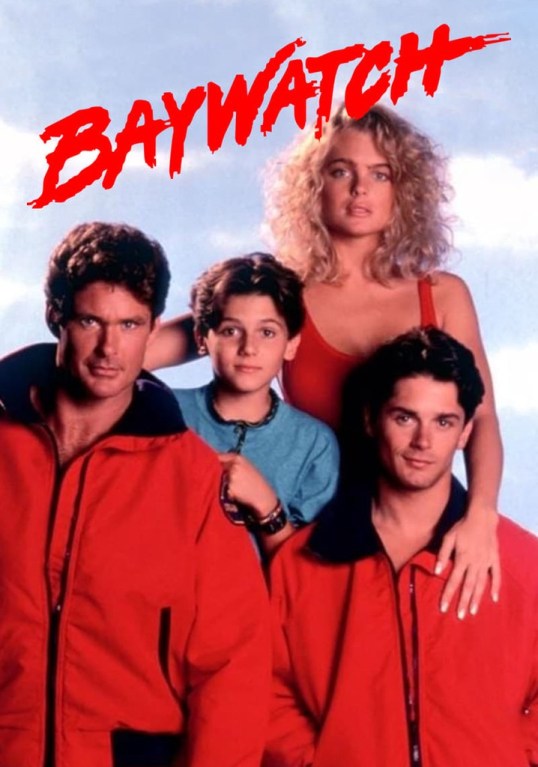
This week, we meet Eddie’s never-before mentioned brother.

Episode 2.18 “Sharks Cove”

(Dir by Monte Markham, originally aired on April 20th, 1992)

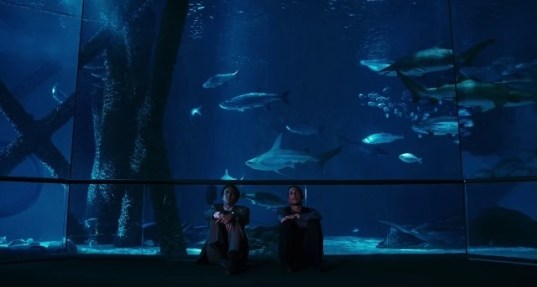
Shauni’s friend Debbie Kent (Monica Lacy) throws a party on the beach with her boyfriend, Zack (Spencer Rochfort). When Debbie and Zack get in the water, Debbie suddenly yells out Zack’s name and is then apparently pulled below the surface by something. Zack runs back to the beach and says that a shark got Debbie.

Shauni, who is still haunted by Jill’s shark-related death in season one, insists on investigating this one on her own. She quickly figures out that Debbie faked her death because her father (Ernie Lively) was putting too much pressure on her to become a competitive, Olympic-class swimmer. It turns out that Debbie has just been hiding out in Zack’s trailer for the past few hours.

Meanwhile, Eddie decides to bring his older half-brother, Bobby (Blake Gibbons), to the beach. Bobby is schizophrenic and lives on a ranch, but his therapist thinks it would be a good idea for Bobby to spend the weekend with Eddie. Bobby ends up stealing a lifeguard outfit and running off. When Eddie eventually finds him, Bobby is on the edge of the pier, trying to rescue someone who isn’t really there. Bobby plunges into the ocean. Eddie saves his life, and hopefully he pays to get Bobby a new therapist, because this one obviously had no idea what she was talking about.

This was a strange episode. Baywatch previously established Eddie as a former juvenile delinquent from Philadelphia who came to Malibu to get away from the gang life. This episode features flashbacks of Eddie and his brother growing up in California, and Eddie is presented as the one who pays for Bobby to stay at the ranch, despite the fact that Eddie was previously portrayed as having come to California without a dime to his name.  (Eddie even slept in his lifeguard tower until Gina and Craig agreed to take him in.)  The first season also established that Eddie had a younger sister who drowned.  In this episode, he has an older half-brother who was schizophrenic and, in the flashbacks, there’s no sign of a sister.  Baywatch is not exactly a monument to continuity.

As for Debbie, she returns home and is forgiven by her father. Considering that lifeguards and police officers have been spending the last day or so searching for her, I assumed she would be in a bit more trouble than she was. Faking your own death is not something that I would recommend.

The Hoff was barely in this episode. Maybe it was his week off.

Live Tweet Alert: Join #ScarySocial For The Last Shark!


As some of our regular readers undoubtedly know, I am involved in a few weekly live tweets on Twitter and Mastodon.  I host #FridayNightFlix every Friday, I co-host #ScarySocial on Saturday, and I am one of the five hosts of #MondayActionMovie!  Every week, we get together.  We watch a movie.  We tweet our way through it.

Tonight, at 10 pm et, #ScarySocial presents The Last Shark!

If you want to join us this Saturday, just hop onto twitter, start the movie at 10 pm et, and use the #ScarySocial hashtag!  It’s a friendly group and welcoming of newcomers so don’t be shy.

The Last Shark is available on Prime!  See you there!

Scenes That I Love: Aguirre Declares Himself To Be The Wrath of God


In honor of Werner Herzog’s birthday, today’s scene that I love comes from one of his best films.  1972’s Aguirre, The Wrath of God not only established Herzog as a major filmmaker but it also showed that he was the director who could get the best out of the notoriously difficult Klaus Kinski.

In this scene, Kinski plays the mad conquistador, Aguirre.  Lost with his men in the Amazon, Aguirre establishes control over the dwindling expedition.

8 Shots From 8 Films: Special Werner Herzog Edition


4 Or More Shots From 4 Or More Films is just what it says it is, 4 shots from 4 of our favorite films. As opposed to the reviews and recaps that we usually post, 4 Shots From 4 Films lets the visuals do the talking!

Today, the Shattered Lens wishes a happy birthday to one our favorite directors, the great Werner Herzog!  It’s time for….

8 Shots From 8 Werner Herzog Films

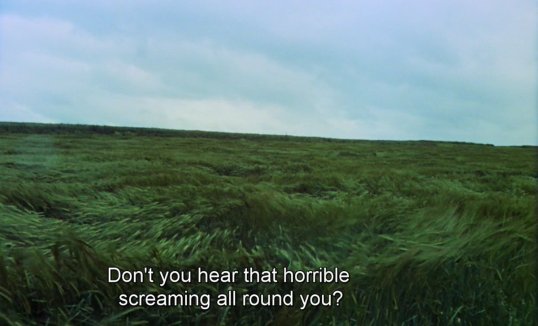
Fata Morgana (1971, dir by Werner Herzog, DP: Jörg Schmidt-Reitwein)

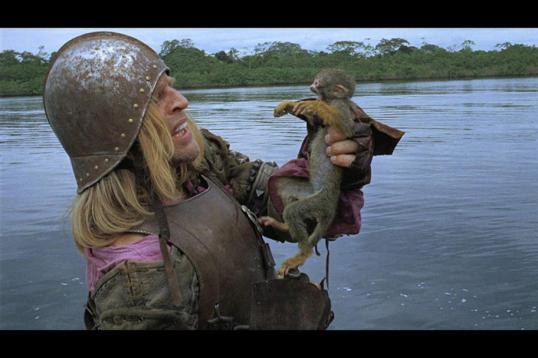
Aguirre The Wrath of God (1972, dir by Werner Herzog. DP: Thomas Mauch)

The Enigma of Kaspar Hauser (1974, dir by Werner Herzog, DP: Jörg Schmidt-Reitwein)

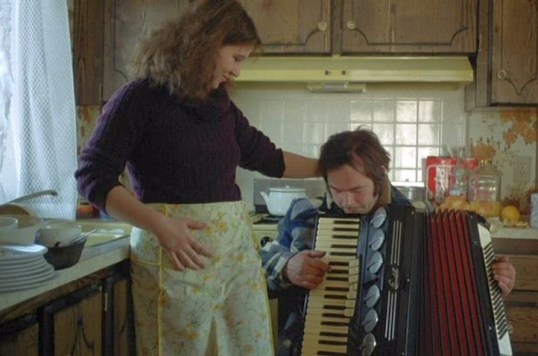
Stroszek (1977, dir by Werner Herzog, DP: Thomas Mauch)

Woyzeck (1979, dir by Werner Herzog, DP: Jorg Schmidt-Reitwein)

Nosferatu The Vampyre (1979, dir by Werner Herzog, DP: Jörg Schmidt-Reitwein)

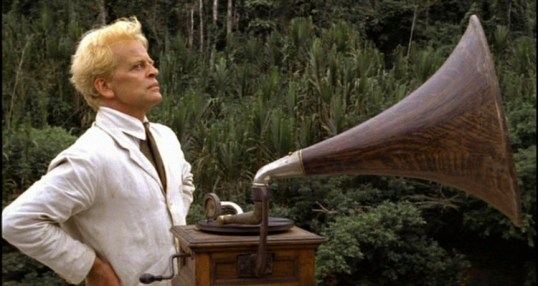
Fitzcarraldo (1982, dir by Werner Herzog, DP: Thomas Mauch)

Bad Lieutenant: Port of Call New Orleans (2009, dir by Werner Herzog, DP: Peter Ziedlinger)

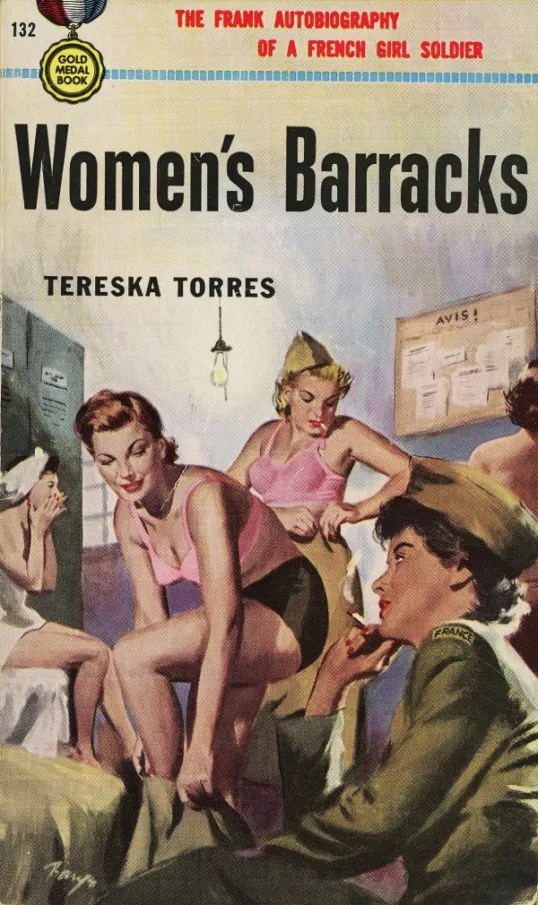
Artwork of the Day: Women’s Barracks (by Barye Phillips)


by Barye Phillips

This book first came out in 1950.  The cover and the book’s plot about five French women living together in London during World War II were so controversial that Canada banned it outright and the U.S. House held hearing on whether or not the book was immoral.  The controversy also made the book a best seller and helped launch the genre of lesbian pulp fiction.

Music Video of the Day: Heading Out To The Highway by Judas Priest (1981, directed by Julien Temple)


Rob Halford has said that this song is about “freedom.”  Once you are on the highway, you can go anywhere you want.  With it being Labor Day weekend, a lot of people are going to be taking advantage of that freedom today.

This video was one of the man to be directed by Julien Temple.  Temple will probably always be best known for his work with the Sex Pistols.

Enjoy!

Late Night Retro Television Review: Sledge Hammer 1.4 “They Shoot Hammers, Don’t They?”


Welcome to Late Night Retro Television Reviews, a feature where we review some of our favorite and least favorite shows of the past! On Fridays, I will be reviewing SLEDGE HAMMER!, a cop comedy which ran on ABC from 1986 to 1988. The entire series can be found on Prime!

This week, Hammer’s former partner break out of prison!

Episode 1.4 “They Shoot Hammers, Don’t They?”

(Dir by David Wechter, originally aired on October 17th, 1986)

At the annual police quick-draw contest, Hammer is once again named the department champion. His secret is to shoot every target, whether it represents a criminal or a civilian. He also attaches a “loudener” to the barrel of his gun, which not only makes a lot of noise but also causes a lot of damage.

Hammer is going to need all of his abilities, because his childhood friend and former partner on the force, John Kogan (Jack Thibeau), has broken out of jail and hijacked a bus. He announces that he’s going to drive the bus across the country and cause a lot of trouble unless Hammer meets him for a duel. Kogan, a corrupt cop, blames Hammer for sending him to prison. Captain Trunk refuses to allow Hammer to meet with Kogan. As Trunk puts it, Kogan is one man with a bus. How much damage can he do?

After a montage of buildings exploding and people running in fear, Hammer finally confronts Kogan. As Dori Doreau watches, Kogan and Hammer attempt to outdraw each other. Kogan turns out to be faster than Hammer. He shoots the gun out of Hammer’s hand, then keeps shooting the gun.

“Stop shooting my gun!” Hammer yells.

This was a funny episode, even if it didn’t quite reach the comedic heights of the previous three. While those episodes were often intentionally absurd and even surreal, this one tells a relatively straightforward story. That said, David Rasche continues to be gleefully unhinged as Hammer, and Anne-Marie Martin and Harrison Page provide good support as the two people tasked with keeping him under control.

The funniest scene involves Hammer using a pay phone to talk to an informant who is himself using another pay phone only about five feet away. When the informant demands $25,000 for his information, Hammer has to use another pay phone to call the station and get Trunk’s permission. Trunk has left for lunch, so Hammer then has to use yet another pay phone to call Trunk’s home. It’s a wonderfully chaotic visual gag, and it gives David Rasche a chance to show off some impressive physical comedy.

In the end, the city is saved. Trust Sledge Hammer. He knows what he’s doing.

Retro Television Review: St. Elsewhere 4.9 “Sanctuary”


Welcome to Retro Television Reviews, a feature where we review some of our favorite and least favorite shows of the past! On Fridays, I will be reviewing St. Elsewhere, a medical show which ran on NBC from 1982 to 1988.  The show can be found on Daily Motion.

This week, Westphall finds something else to feel depressed about.

Episode 4.9 “Sanctuary”

(Dir by Eric Laneuville, originally aired on December 4th, 1985)

Dr. Ehrlich has been demoted to gynecology, the department he most fears. He even begs Dr. Caldwell to allow him to return to plastic surgery, but Caldwell has no sympathy for him. Caldwell tells Ehrlich that he’s a loser and that he’ll always be a loser.

Well, Ehrlich may be a loser, but he also helps deliver a baby in this episode and learns that he can actually get through the day without offending someone. Bobby Caldwell, on the other hand, makes a joke about Lucy’s breasts in front of a patient and ends up getting reported for sexual harassment. When Lucy points out to Auschlander that Caldwell’s statement was both demeaning and uttered in front of a patient, Caldwell argues that Lucy is taking things too personally and that he was just joking. (Ugh. Every woman has had a Bobby Caldwell in her life.) Auschlander asks Lucy to leave the room and then tells Bobby that if he ever makes another joke like that, he’ll be fired. While it’s good that Auschlander makes it clear that Bobby’s conduct was unprofessional, sending Lucy out of the room beforehand only leaves her feeling more isolated. Auschlander is willing to reprimand Caldwell, but only in private, a consideration that Bobby wasn’t willing to show Lucy.

Lucy is angry, and it doesn’t help that Nurse Rosenthal essentially says that Lucy only has herself to blame for being too flirtatious with the doctors in the past. Oh God, this episode was not easy for me to watch. I used to work as an administrative assistant. My boss was a good guy who always treated me with respect. (It undoubtedly helped that he was a good friend of my mom’s and we had more of a father/daughter relationship than a standard boss/employee relationship.) However, I lost track of the number of other men who would tell me that they appreciated it whenever I wore a skirt or who would hang out at my desk and watch whenever I had to lean forward for any particular reason. I would smile and say something silly in response because that just seemed like the easiest way to deal with things. The other women who worked in the building always told me that I should “dress down,” but I didn’t want to do that. I just wanted to be myself.

Meanwhile, Dr. Fiscus loses a patient, a homeless man (Mark Casella) who once helped Fiscus move. Before the man dies, he sees an Egyptian sarcophagus being X-rayed and comments on how people still remember the rulers of ancient Egypt but no one is going to remember him. After he dies, Fiscus and his girlfriend, X-ray technician Mona Polita (Leah Ayres), wrap the man’s body and put him in an empty sarcophagus.

Finally, Westphall’s new housekeeper, Morena (Edith Diaz), is rushed to the ER with back pain. With the help of Dr. Morrison (who speaks fluent Spanish as a result of attending a South American medical school), Westphall learns that Morena was tortured in her native El Salvador. As usual, Dr. Westphall makes Morena’s tragedy all about himself by using her as an example of why the hospital needs to adopt Westphall’s plans to reach out to the community.

The next day, Westphall snaps at the residents about their lack of community spirit. Fiscus finally snaps that he’s sick of being lectured by Westphall and leaves the room. Good for Fiscus! Seriously, Westphall’s self-righteousness has been unbearable this season. Just because Westphall can’t figure out how to communicate with his autistic son, he’s been making everyone else’s life miserable.

This was another rather sad episode of St. Elsewhere. There’s not much happiness to be found in St. Eligius. That said, Lucy’s storyline was touching and also a reminder that, in some ways, 2026 is not that different from 1985. And I was glad that the poor homeless man was given a burial fit for a king. If nothing else, Fiscus will never forget him.

Song of the Day: Like a Stone (by Audioslave)


“Like a Stone” is one of Audioslave’s defining songs: a slow-burning rock ballad that feels enormous without ever becoming overly busy. Released on the band’s 2002 self-titled debut, it pairs a deceptively simple, steady arrangement with a mood of isolation, reflection, and patient longing. For a new listener, the easiest way to describe it is as a late-night song—one built around the feeling of sitting with your thoughts after everyone else has gone home. The track’s famous central image, waiting “like a stone,” gives it a spiritual, almost haunted quality.

That mood reflects Chris Cornell’s own explanation of the lyrics. Cornell said the other members of Audioslave asked him what the song was about, and his answer was death—specifically, imagining what it might be like to wait in the afterlife. That idea gives the narrator’s solitude a deeper meaning: he is not simply waiting for a person or living through ordinary heartbreak, but existing in a kind of suspended spiritual space, waiting to be reunited with those who have already passed on. It is a heavy premise, yet Cornell presents it with enough ambiguity that the song still feels personal to anyone hearing longing, regret, faith, or grief in its words.

The musical backbone is strikingly restrained. Tim Commerford’s bass and Brad Wilk’s drums hold down a deliberate, spacious groove, while Tom Morello plays a clean, chiming guitar figure that gives the song its mournful atmosphere. Unlike the aggressive, effects-heavy riffs people may associate with Rage Against the Machine, Morello largely serves the song’s emotional weight here; the guitar rings out like a distant signal rather than competing for attention. Chris Cornell’s vocals are soulful and powerful, but what makes the performance special is his control: he begins in a weary, intimate register, then gradually brings more ache and force into the chorus without losing the song’s sense of loneliness.

Morello gets his standout moment in the final stretch: his guitar solo begins at roughly 2:54 in the album recording. It is brief, but it is exactly the right kind of brief—more melodic and emotionally focused than flashy, rising out of the song like a final release of tension. He bends and sustains notes instead of turning the moment into a technical showcase, which fits the track’s somber atmosphere perfectly. “Like a Stone” is proof that Audioslave could make something as memorable through patience and feeling as they could through sheer volume: Cornell’s voice gives it its soul, and Morello’s guitar gives that soul a final, searching echo.

Like a Stone

On a cobweb afternoon, in a room full of emptiness
By a freeway, I confess I was lost in the pages
Of a book full of death, reading how we’ll die alone
And if we’re good, we’ll lay to rest anywhere we wanna go

In your house, I long to be
Room by room, patiently
I’ll wait for you there like a stone
I’ll wait for you there alone

And on my deathbed, I will pray to the gods and the angels
Like a pagan to anyone who will take me to Heaven
To a place I recall, I was there so long ago
The sky was bruised, the wine was bled, and there you led me on

In your house, I long to be
Room by room, patiently
I’ll wait for you there like a stone
I’ll wait for you there alone, alone

[guitar solo @2:54]

And on I read, until the day was gone
And I sat in regret of all the things I’ve done
For all that I’ve blessed, and all that I’ve wronged
In dreams until my death, I will wander on

In your house, I long to be
Room by room, patiently
I’ll wait for you there like a stone
I’ll wait for you there alone, alone

Great Guitar Solos Series

Live Tweet Alert: Join #FridayNightFlix for They Live!


As some of our regular readers undoubtedly know, I am involved in a few weekly watch parties.  On Twitter, I host #FridayNightFlix every Friday and I co-host #ScarySocial on Saturday.  On Mastodon, I am one of the five hosts of #MondayActionMovie!  Every week, we get together.  We watch a movie.  We tweet our way through it.

Tonight, at 10 pm et, I will be hosting #FridayNightFlix!  The movie?  John Carpenter’s They Live!

If you want to join us this Friday, just hop onto twitter, find They Live on Prime, start the movie at 10 pm et, and use the #FridayNightFlix hashtag!  I’ll be there happily tweeting.  It’s a friendly group and welcoming of newcomers so don’t be shy.

See you there!