Retro Television Review: St. Elsewhere 4.9 “Sanctuary”


Welcome to Retro Television Reviews, a feature where we review some of our favorite and least favorite shows of the past! On Fridays, I will be reviewing St. Elsewhere, a medical show which ran on NBC from 1982 to 1988.  The show can be found on Daily Motion.
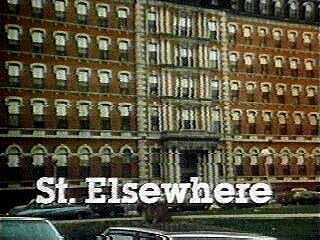
This week, Westphall finds something else to feel depressed about.

Episode 4.9 “Sanctuary”

(Dir by Eric Laneuville, originally aired on December 4th, 1985)

Dr. Ehrlich has been demoted to gynecology, the department he most fears. He even begs Dr. Caldwell to allow him to return to plastic surgery, but Caldwell has no sympathy for him. Caldwell tells Ehrlich that he’s a loser and that he’ll always be a loser.

Well, Ehrlich may be a loser, but he also helps deliver a baby in this episode and learns that he can actually get through the day without offending someone. Bobby Caldwell, on the other hand, makes a joke about Lucy’s breasts in front of a patient and ends up getting reported for sexual harassment. When Lucy points out to Auschlander that Caldwell’s statement was both demeaning and uttered in front of a patient, Caldwell argues that Lucy is taking things too personally and that he was just joking. (Ugh. Every woman has had a Bobby Caldwell in her life.) Auschlander asks Lucy to leave the room and then tells Bobby that if he ever makes another joke like that, he’ll be fired. While it’s good that Auschlander makes it clear that Bobby’s conduct was unprofessional, sending Lucy out of the room beforehand only leaves her feeling more isolated. Auschlander is willing to reprimand Caldwell, but only in private, a consideration that Bobby wasn’t willing to show Lucy.

Lucy is angry, and it doesn’t help that Nurse Rosenthal essentially says that Lucy only has herself to blame for being too flirtatious with the doctors in the past. Oh God, this episode was not easy for me to watch. I used to work as an administrative assistant. My boss was a good guy who always treated me with respect. (It undoubtedly helped that he was a good friend of my mom’s and we had more of a father/daughter relationship than a standard boss/employee relationship.) However, I lost track of the number of other men who would tell me that they appreciated it whenever I wore a skirt or who would hang out at my desk and watch whenever I had to lean forward for any particular reason. I would smile and say something silly in response because that just seemed like the easiest way to deal with things. The other women who worked in the building always told me that I should “dress down,” but I didn’t want to do that. I just wanted to be myself.

Meanwhile, Dr. Fiscus loses a patient, a homeless man (Mark Casella) who once helped Fiscus move. Before the man dies, he sees an Egyptian sarcophagus being X-rayed and comments on how people still remember the rulers of ancient Egypt but no one is going to remember him. After he dies, Fiscus and his girlfriend, X-ray technician Mona Polita (Leah Ayres), wrap the man’s body and put him in an empty sarcophagus.

Finally, Westphall’s new housekeeper, Morena (Edith Diaz), is rushed to the ER with back pain. With the help of Dr. Morrison (who speaks fluent Spanish as a result of attending a South American medical school), Westphall learns that Morena was tortured in her native El Salvador. As usual, Dr. Westphall makes Morena’s tragedy all about himself by using her as an example of why the hospital needs to adopt Westphall’s plans to reach out to the community.

The next day, Westphall snaps at the residents about their lack of community spirit. Fiscus finally snaps that he’s sick of being lectured by Westphall and leaves the room. Good for Fiscus! Seriously, Westphall’s self-righteousness has been unbearable this season. Just because Westphall can’t figure out how to communicate with his autistic son, he’s been making everyone else’s life miserable.

This was another rather sad episode of St. Elsewhere. There’s not much happiness to be found in St. Eligius. That said, Lucy’s storyline was touching and also a reminder that, in some ways, 2026 is not that different from 1985. And I was glad that the poor homeless man was given a burial fit for a king. If nothing else, Fiscus will never forget him.
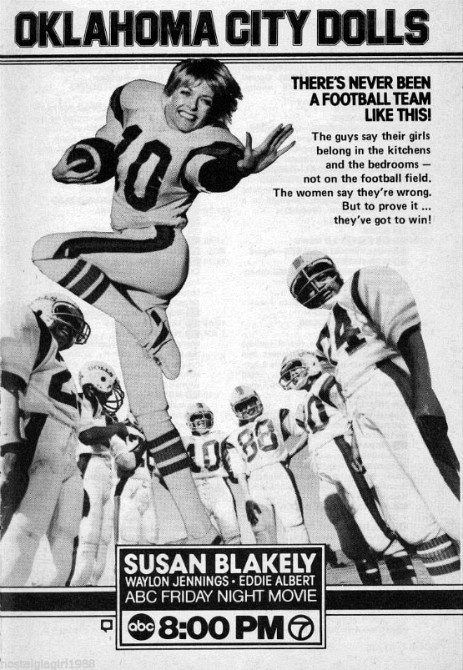
The Oklahoma City Dolls (1981, directed by E.W. Swackhamer)


At an Oklahoma manufacturing plant, the women are always expected to put in extra hours while their male co-workers practice as a part of the company’s football team.  Shop steward Sally Jo (Susan Blakely) files a complaint with the EEOC.  John Miller (Robert Hooks) pays a visit to the plant and says that the women have to be given the same opportunities and benefits as the man, including recreation time.  The plant’s foreman, J.D. Hines (David Huddleston), agrees.  The woman can have recreation time as long as they’re doing what the men are doing and that’s playing football.  Determined to show up Hines and all of her sexist co-workers (and her boyfriend, played by Waylon Jennings), Sally Jo puts together a football team and even gets a broken-down former NFL coach (Eddie Albert) to serve as their trainer.

There actually was a woman’s football team called The Oklahoma City Dolls.  They played in the National Women’s Football League and they won the league’s championship three times.  However, they don’t appear to have anything to do with this movie, which is as much about Sally Jo trying to get a fair treatment for the workers as it is about hitting the field and running it in for a touchdown.  There are some parts of the movie that work.  I liked Eddie Albert’s performance as the alcoholic coach and the scene where he discovered that his community service would include coaching a group of women who had never played football before.  Folk singer Ronee Blakley was good as the team’s emotionally fragile wide receiver.  I even liked that the women didn’t all automatically become the world’s best football players.  The movie’s main weakness was that Susan Blakely just wasn’t believable as someone who lived in a trailer park, used “ain’t” in every sentence, and spent her time organizing a union.  She was too glamorous for the role and her scenes with Waylon Jennings all felt overwritten and overacted.  The story couldn’t decide if it wanted to be a drama about working in a factory or a football comedy and it was pretty uneven as a result.  The good thing is that the movie’s heart was in the right place, even if it didn’t always score a touchdown.

As for the real life Oklahoma City Dolls, they were active from 1976 to 1979.  An attempt to revive the team in 1982 failed when their financial backers pulled out at the last seconds.  The National Women’s Football League folded in 1988.

The Unnominated: The Long Riders (Dir by Walter Hill)


Though the Academy of Motion Picture Arts and Sciences claim that the Oscars honor the best of the year, we all know that there are always worthy films and performances that end up getting overlooked.  Sometimes, it’s because the competition too fierce.  Sometimes, it’s because the film itself was too controversial.  Often, it’s just a case of a film’s quality not being fully recognized until years after its initial released.  This series of reviews takes a look at the films and performances that should have been nominated but were, for whatever reason, overlooked.  These are the Unnominated.

First released in 1980, The Long Riders is one of the many films to tell the story of the James/Younger Gang.

A group of former Confederate guerillas who became some of the most notorious bank robbers to roam post-Civil War America and who were based in Missouri, the brothers who made up the James/Younger Gang were hunted by the Pinkertons and beloved by the citizens who viewed them as being 19th Century Robin Hoods.  Following a disastrous attempt to rob a bank in Northfield, Minnesota, the Younger brothers were captured by the government while Jesse and Frank James made it back to Missouri.  Jesse was shot in the back by Bob Ford while Frank subsequently surrendered to authorities and made a good living on the lecture circuit.

The Long Riders tells the story of the gang, from their first encounter with the heavy-handed Pinkertons to the Northfield raid to Frank’s eventual surrender.  Director Walter Hill both celebrates the legend of the James/Younger Gang while also emphasizing that all the members of the gang were also individual humans who had their strengths and their flaws.  Hill emphasizes the idea of the gang being a group of post-war rebels, still fighting a war against a government that is more interested in protecting banks than looking after people.  The Long Riders deconstructs the legend while also celebrating it.

The main thing that sets The Long Riders apart from other films about the James/Younger Gang is the fact that the brothers are played by actual brothers.  David, Keith, and Robert Carradine plays the Youngers.  Randy Quaid plays Clell Miller while Dennis Quaid assumes the role of the cowardly Ed Miller.  Nicholas and Christopher Guest make a memorably creepy impression as Charley and Bob Ford.  And finally, Jesse and Frank James are played by James and Stacy Keach.  (The Keaches also worked on the film’s script).  And while Stacy is definitely the more charismatic of the Keach brothers, the film makes good use of James’s rather stoic screen presence.  While the rest of the gang enjoys the outlaw life, James Keach’s Jesse is rigid, serious, and ultimately too stubborn and obsessive for his own good.

Now, the casting might sound like a gimmick but it works wonderfully.  When Clell chooses the gang over Ed, it carries an emotional weight because we’re watching real brothers reject each other.  The comradery between the Carradines carries over to the comradery between the Youngers and it also informs their occasional rivalry with the better known James brothers.  While it is Stacy Keach and David Carradine who ultimately dominate the film, every brother in the cast makes a strong impression.  Also giving a memorable performance is Pamela Reed as a defiantly independent Belle Starr, who loves David Carradine’s Cole Younger but marries Sam Starr (James Remar).  The knife fight between Carradine and Remar is one of the film’s highlights, as is the violent and disastrous attempt to rob the bank in Northfield.

The Long Riders is an exciting and ultimately poignant western but sadly, it received not a single Oscar nomination, not even for the stunning cinematography or Ry Cooder’s elegiac score.  Fortunately, just like the legend of the James/Younger Gang, The Long Riders lives on.

Previous entries in The Unnominated:

  1. Auto Focus 
  2. Star 80
  3. Monty Python and The Holy Grail
  4. Johnny Got His Gun
  5. Saint Jack
  6. Office Space
  7. Play Misty For Me