“It feels like the treatments are only making things worse.” — George
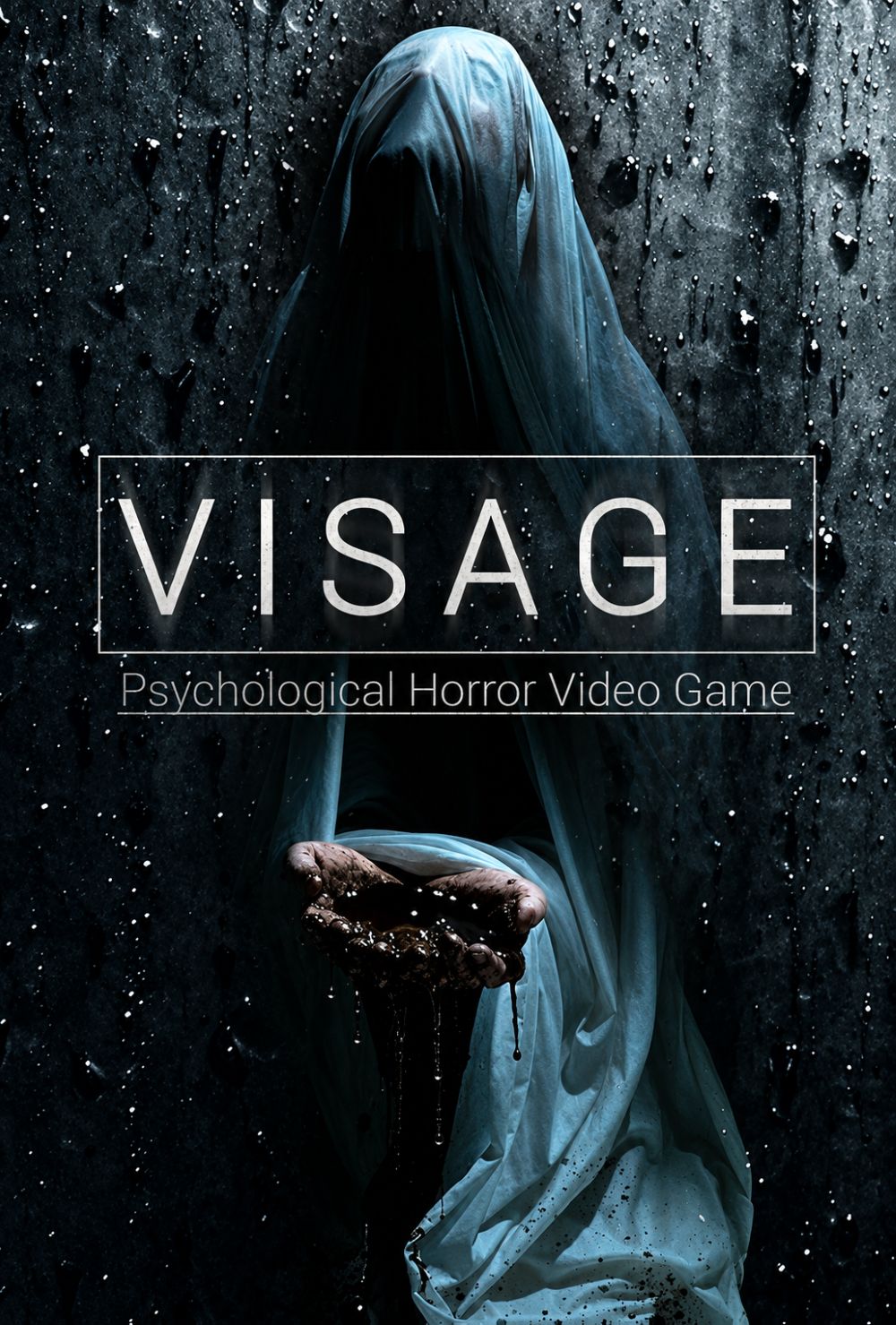
Visage knows how to make you dread the next room long before anything actually happens. Released in 2020 by SadSquare Studio, this indie psychological nightmare takes the familiar haunted-house setup and stretches it into something deeply uncomfortable. Its connection to P.T.—Hideo Kojima’s playable teaser for a canceled entry in the Silent Hill series—is obvious, but dismissing it as another imitator would overlook how much it brings to the table. There are proper survival mechanics, substantial exploration, and several distinct stories beneath its ghostly surface. It is also clumsy, confusing, and occasionally exhausting for the wrong reasons. Still, when everything clicks, its atmosphere makes those shortcomings surprisingly easy to forgive.
The setup puts you in the shoes of Dwayne Anderson, a man exploring a sprawling house burdened by the tragedies of its previous inhabitants. Before that exploration begins, though, the game opens with a deeply disturbing sequence involving family murder and suicide. That immediately establishes how ugly things can get. This is not a playful ghost story where a few spooky noises lead to a monster reveal. The house becomes a space for confronting violence, suffering, and uncertainty, with Dwayne’s connection to everything left deliberately murky. The mystery offers plenty to chew on, although anyone expecting straightforward answers should adjust those expectations early.
What makes the house so effective is how ordinary it feels before reality starts coming apart. These are recognizable domestic spaces rather than elaborate gothic chambers, and that familiarity does much of the heavy lifting. A dark corner does not need a creature standing in it to become threatening; the possibility is enough. Visage understands that horror often works best when the player is mentally filling in the blanks. Its environments create an uneasy relationship between recognition and suspicion: you know what a home should feel like, but this one keeps quietly violating that understanding. Even exploration can feel like trespassing.
The audiovisual presentation reinforces that discomfort without needing nonstop spectacle. The house looks convincingly lived-in, while shadows and unsettling creaks make its emptier spaces feel occupied. Technically, this is not a game that needs to outmuscle a blockbuster production. Its strength lies in how effectively the visuals and sound work together to make you distrust your surroundings. The jump scares certainly matter, but they land because tension has already done most of the work. The frightening part is often the stretch before something happens, when you are staring into darkness and wondering whether moving forward will finally trigger the thing you have been dreading.
Unlike a purely passive haunted-house tour, Visage gives you systems to manage while all that anxiety builds. Spending too long in darkness or experiencing disturbing events affects your sanity, introducing another layer of uncertainty through hallucinations. You also have to juggle objects between your hands and a limited inventory. Conceptually, this is a smart combination: navigating the environment becomes more involved than simply following the next corridor. You are not just witnessing frightening events; you are trying to stay functional inside them. That extra responsibility helps distinguish the game from horror experiences that rely almost entirely on scripted surprises.
Unfortunately, the inventory is also where that involvement becomes irritating. The two-handed control system sounds immersive until using a tool requires clearing your other hand, rearranging your possessions, or dropping something because there is no room left. There is a difference between making a character vulnerable and making basic actions unnecessarily awkward, and Visage does not always respect that distinction. Some friction suits survival horror, but menu and item-management friction can pull attention away from the environment entirely. When your biggest concern becomes figuring out how to hold the correct object, the haunting has temporarily lost its grip.
The chapter structure provides welcome variety. Lucy’s chapter leans closest to the intimate, oppressive horror associated with P.T., while Dolores’s puts greater emphasis on puzzles. Rakan’s moves toward more traditional survival-horror encounters, and the final chapter pushes further into surreal territory. That variation keeps the game from feeling like one idea repeated indefinitely. It also gives the house a broader identity, as though different tragedies have left different kinds of damage behind. The tradeoff is unevenness: depending on whether you prefer exploration, puzzles, or direct danger, some sections will naturally feel stronger than others.
Puzzle design is the biggest obstacle to enjoying that variety. There are satisfying moments of observation and deduction, but the game also slips into obscure interactions that can feel arbitrary rather than clever. Being lost in a haunted house should be frightening; being lost because you cannot identify the next required trigger is mostly annoying. Once exploration turns into repeatedly checking familiar rooms, suspense risks giving way to impatience. The game deserves credit for resisting constant hand-holding, but withholding direction is not automatically good design. A stronger balance between subtle guidance and uncertainty would preserve the mystery without draining so much momentum.
Ultimately, Visage is an impressive horror game with rough edges that genuinely matter. Its storytelling favors implication over resolution, its controls need patience, and its puzzles can interrupt an otherwise powerful sense of dread. Yet those problems do not erase how convincingly it turns an ordinary house into somewhere you desperately want to leave. It builds fear through familiarity, then steadily makes that familiarity unreliable. For players who value slow-burning psychological horror and can tolerate some frustration, there is a memorable experience here. It is not consistently elegant, but it understands something essential: the scariest room is often the one you have not entered yet.

