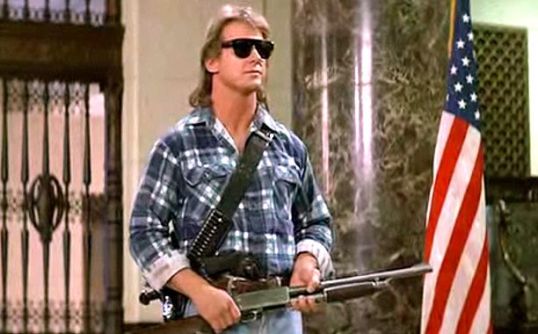
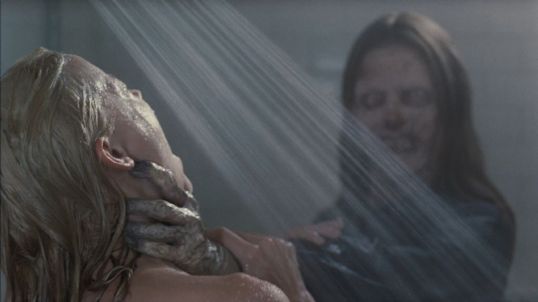
“I have come here to chew bubble gum and kick ass. And I’m all out of bubble gum.”
— John Nada (Roddy Piper)
Roddy Piper improvised the most famous line in 1988’s They Live.
When John Carpenter was casting They Live, he specifically sought someone who was not a film star to play John Nada. The character was meant to be a drifter, an often-homeless man who lived on the fringes of society and did what he had to do to survive. Carpenter viewed John as the epitome of “the forgotten man,” and he knew that casting a big star would sabotage what he was going for. Ultimately, Carpenter cast professional wrestler Roddy Piper as Nada, and history, as they say, was made. Piper showed up on set with a notebook full of one-liners he had jotted down but hadn’t gotten a chance to use while wrestling. The famous line was not in the script. Piper came up with it on his own and spontaneously used it in the bank scene. Carpenter kept it in the film.
The line worked because of its combination of unhinged humor and genuine bravado. It was a line that would have worked before a wrestling match but, even more importantly, a line that perfectly captured John Nada’s worldview after he put on the dark glasses and saw the reality of the world around him. The line was pure John Nada.
John Nada. John Nothing. It was the perfect name for a man with no home, no family, and, until he meets Keith David’s Frank Armitage, no real friends. He’s the 1980s version of Clint Eastwood’s Man with No Name. John has nothing, and once he puts on those glasses, that becomes his greatest strength. John has nothing to lose, and therefore the aliens who have convinced everyone else to “Obey” have nothing to offer him. Because society has given him nothing, he’s far less susceptible to being manipulated. He’s too angry to be controlled, and once he sees the truth, he becomes determined to share it with everyone. When he and Frank fight in the alley, it’s not just a fight scene. It’s John committing to opening his friend’s eyes, no matter how much pain it may cause. John, who lives on the fringes, who has no home, and who would probably get the police called on him if he ever showed up in the suburbs, sacrifices his life for humanity. He still manages to give the finger to the aliens before he goes, and somehow that feels like the character’s greatest triumph. He remains defiant to the end. No one brainwashes John Nada.
They Live works because of John Nada, and John Nada works as a character because he’s vulnerable throughout. If he were played by a traditional star, we would have no doubt about his ability to defeat the aliens. But with Piper in the role, we’re not quite sure. John Nada doesn’t set out to be a hero, but by the end of They Live, he definitely is one.
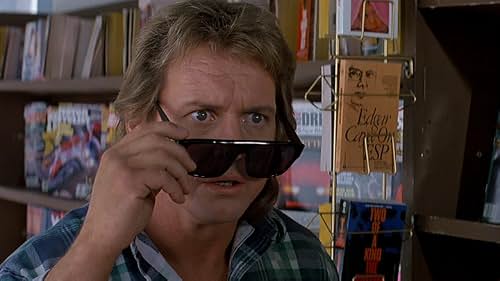
When it comes to John Carpenter’s 1988 masterpiece, They Live, everyone remembers the moment that a drifter named Nada (Roddy Piper) first puts on the dark glasses.
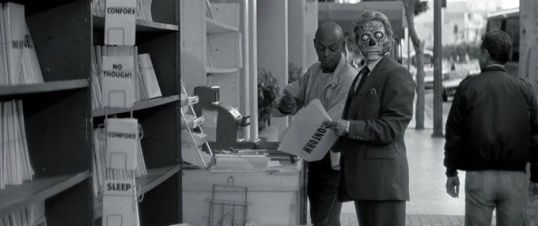
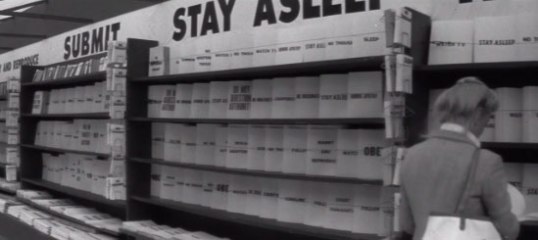
They remember him putting them on and suddenly seeing that the city of Los Angeles is stark black-and-white. They remember the mix of humans and skeletal-looking aliens that surrounded Nada and they remember how the aliens were the ones who went out of their way to be rude. What they especially remember are the billboards and the magazine covers reduced to simple orders like “OBEY,” “CONFORM/STAY ASLEEP,” “CONSUME,” “DO NOT QUESTION AUTHORITY,” and “NO INDEPENDENT THOUGHT.”
What is often forgotten is that it takes a while for the film to get to that point. Carpenter starts the film with a rather lengthy first act, in which Nada arrives in Los Angeles, tries to find work, tries to stay fed, and ends up camping out at a shanty town. Nada is one of America’s forgotten people, a drifter with no real home, no past, and it would appear no future. Nada hears a blind street preacher (Raymond St. Jacques) talking about how the rich and the powerful have been recruited to control humanity and he agrees, even before he puts on the glasses. It’s not until the shanty town has been destroyed in a police raid and Nada has put on the glasses that he sees just who exactly has been doing the recruiting.
After he puts on the glasses and sees the way the world really looks (it’s even suggested that what we perceive as color is something artificial that the aliens are using to distract us), Nada hardly ever takes them off. Some of that is for self-preservation. Wearing the glasses allows him to see who is an alien and who is not. But even more importantly, it’s a sign that having now seen the truth, Nada cannot return to the lie. Instead, Nada tries to win his freedom and expose the aliens. It’s not easy. It takes a lengthy and deservedly famous fight in an alley for him to convince his friend Frank (Keith David) to wear the glasses as well. Once Frank does put them on, he automatically understands what is happening. Wearing the glasses doesn’t leave one confused. Instead, wearing them makes everything suddenly make sense.
If this is not a traditional film review, that’s because They Live is one of those films that everyone seems to already know. Even those who have not watched the entire film know what happens when Nada puts on the glasses. For a film that was not a box office hit and which was initially dismissed by many critics, They Live has become very much a part of our shared culture. Today, everyone knows the messages that are being sent through media. Unlike Nada, most people don’t try to rebel. They don’t announce that they’re all out of gum. We’ve become used to it all.
They Live is often described as being an anti-capitalist film, though John Carpenter has said that it’s not. Carpenter has also been quick to say that it’s not meant to be a Marxist film either, regardless of what the film professors may say. Indeed, the messages of “NO INDEPENDENT THOUGHT” and “CONFORM” are about as Marxist as you can get. (Wearing the glasses can be compared to taking the red pill in The Matrix, except of course leaving The Matrix means becoming a part of Zion, a community whose slogan might as well be “DO NOT QUESTION AUTHORITY.”) They Live is a film that celebrates rebellion against the establishment, regardless of how that establishment might disguise itself. In They Live, the right and the left are different sides of the same manipulative coin. The aliens and their human allies thrive regardless of who might technically be in charge. It’s not really a surprise that my more Libertarian-minded friends tend to view They Live as being a sacred text.
It should be noted that there’s a savage humor running through They Live. It’s present in the first time that Nada puts on the glasses. It’s there in his one-liners. But it’s also present at unexpected moments. I love that this movie gives George “Buck” Flower an actual character to play and, when he shows up during the third act in a suit, I can’t help but smile. The aliens, when they are gathered together, still speak in the language of sales and stockholder meetings. They’re in business and business is good.
They Live is one of those films that feels even more relevant today than when it was first released. Anyone who lived through the COVID era will be able to relate to the media telling them to obey authority and to conform with everyone else. It’s easy to imagine that, if one put on the glasses today, they would see a lot of aliens. The sad truth is that there are no aliens to blame things on. The actions of the past few years were done without any help. Carpenter ended They Live with humanity waking up. Escape from L.A. ended with Kurt Russell shutting down the country. One can only imagine how things would end today.
4 Or More Shots From 4 Or More Films is just what it says it is, 4 shots from 4 of our favorite films. As opposed to the reviews and recaps that we usually post, 4 Shots From 4 Films lets the visuals do the talking!
With October approaching, it will soon be time for our annual Horrorthon here at the Shattered Lens. We’ve been working hard getting things ready! Here are 4 shots from 4 of the many films that we will be reviewing this October.
4 Shots From 4 Horror Films
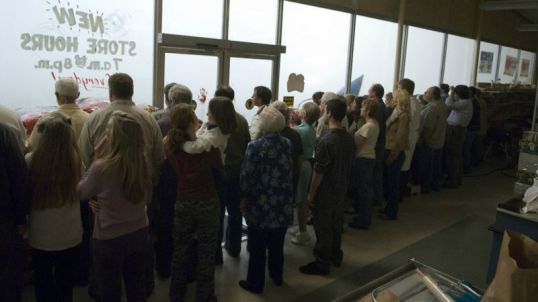
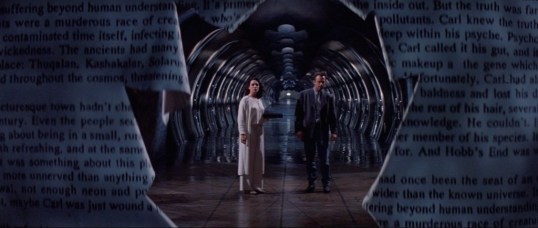
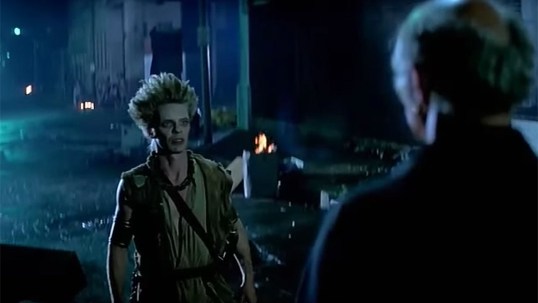
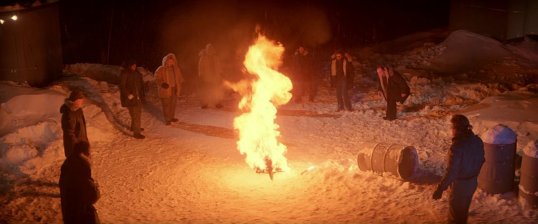
The Mist (2007, dir. by Frank Darabont)
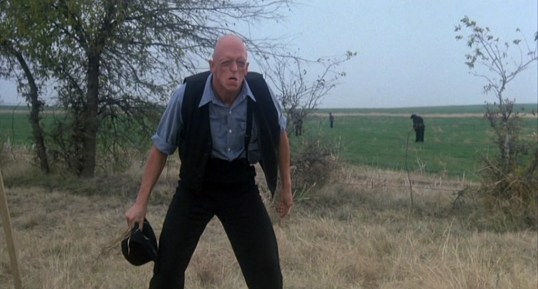
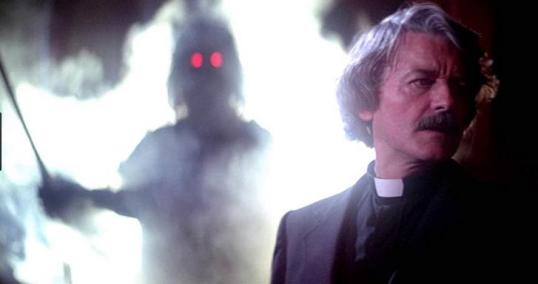
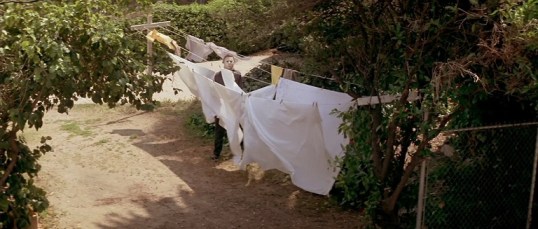
Deadly Blessing (1981, dir by Wes Craven)
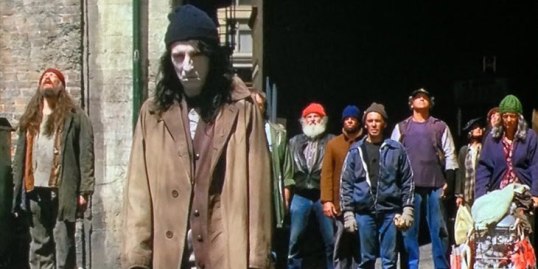
They Live (1988, dir by John Carpenter)
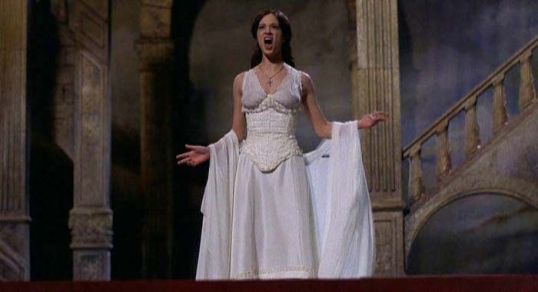
The Phantom of the Opera (1998, dir by Dario Argento)
As some of our regular readers undoubtedly know, I am involved in a few weekly watch parties. On Twitter, I host #FridayNightFlix every Friday and I co-host #ScarySocial on Saturday. On Mastodon, I am one of the five hosts of #MondayActionMovie! Every week, we get together. We watch a movie. We tweet our way through it.
Tonight, at 10 pm et, I will be hosting #FridayNightFlix! The movie? John Carpenter’s They Live!
If you want to join us this Friday, just hop onto twitter, find They Live on Prime, start the movie at 10 pm et, and use the #FridayNightFlix hashtag! I’ll be there happily tweeting. It’s a friendly group and welcoming of newcomers so don’t be shy.
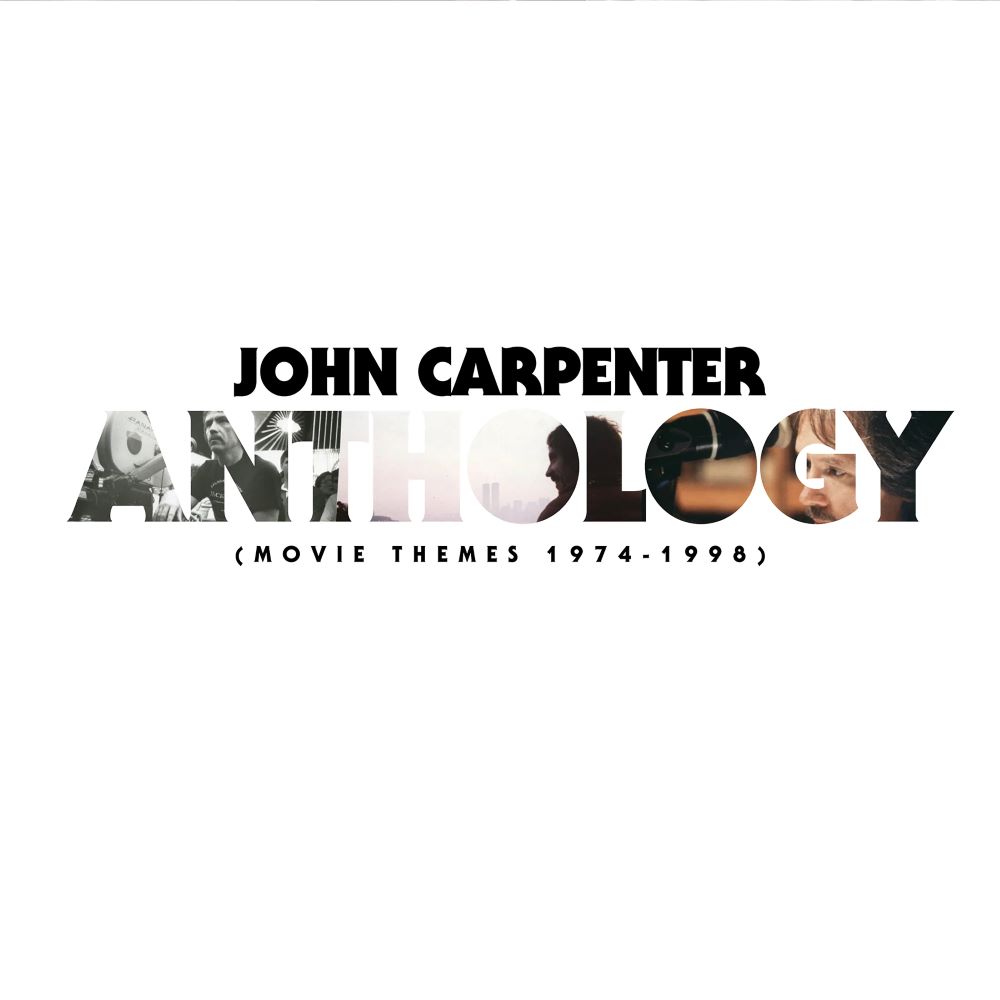
John Carpenter’s Anthology: Movie Themes 1974-1998 is an absolute gem of a compilation, breathing new life into 13 of his most unforgettable film themes with a killer mix of synth menace and live-band muscle that feels both nostalgic and freshly electrifying. Released in 2017 on the indie powerhouse Sacred Bones Records, this project pulls straight from Carpenter’s golden era of directing, spanning the lo-fi space oddities of Dark Star in 1974 all the way to the blood-soaked Western vibes of Vampires in 1998. Here, the master himself teams up with his son Cody Carpenter handling keyboards and his godson Daniel Davies ripping on guitar, delivering rerecorded versions that aren’t just facsimiles of the originals but revitalized beasts with modern production muscle. Clocking in at a tight 42 minutes, the album strikes that sweet spot between crystalline clarity and the warm, gritty analog fuzz of vintage synths, making it an essential spin for horror fans, synthwave enthusiasts, or anyone craving pure cinematic chills without firing up the projector. It’s the kind of record that turns your living room into a foggy, neon-lit nightmare factory, proving Carpenter’s scores were never mere background noise—they’re standalone monsters.
Right out of the gate, the album spotlights three absolute titans as its major standouts: the themes from The Thing, Halloween, and Escape from New York. These aren’t just tracks; they’re the sonic DNA of horror and sci-fi tension, retooled here to hit even harder with the benefit of hindsight and better gear. Take the Halloween theme—it’s the undisputed king of the collection, that iconic, haunting piano riff slicing through stabbing synth accents and a relentless, mechanical beat that creates this perfect off-kilter unease. It mirrors Michael Myers’ unstoppable, shambling lurch so viscerally that you can practically hear the Shape breathing down your neck; the simplicity is its genius—repetitive enough to burrow into your skull like a parasite, yet layered just right with those eerie high-end whistles and a pulse that never lets up. In this rerecord, the piano feels more intimate and ominous, the synths sharper, turning what was already a cultural earworm into something that demands volume cranked to 11.
Then there’s Escape from New York, which cranks everything up to gritty, dystopian overdrive with its crunchy guitar riff chewing through swelling synth waves and pounding, no-nonsense drums. It evokes Snake Plissken’s lone-wolf crawl through a prison-island Manhattan like a bluesy battle cry—mid-tempo swagger that’s tailor-made for high-stakes heists, shadowy escapes, and that pure ’80s anti-hero cool. Fans often mix it up with his Big Trouble in Little China groove because of the shared tough-guy energy, but here the rerecord leans harder into the guitar’s snarl and the synths’ ominous undercurrent, making it feel tougher, meaner, and ready for a modern apocalypse playlist. And don’t sleep on The Thing—it grabs Ennio Morricone’s frosty original cue and mutates it into peak Carpenter dread: deep, throbbing synth pulses underpin eerie, isolated stabs and desolate windswept effects that build a suffocating frozen isolation. This one’s all about the paranoia of shape-shifting aliens in an Antarctic hellscape—slow-burn horror that creeps under your skin, rewarding patient listeners with layers of tension that unfold over multiple spins. Critics might tuck it behind the flashier hits, but its subtlety makes it a powerhouse, especially in this version where the low-end rumble feels like cracking ice underfoot.
While those three rightfully dominate every conversation about the album (and they should, as they’re the heart-pounding peaks that define Carpenter’s sound), two deeply underrated gems absolutely deserve way more shine: the Christine theme and “Santiago (Vampires).” Christine sneaks up on you, opening with these foggy, ambient synth washes that evoke a quiet garage at midnight before exploding into full-on rock fury—fuzzy guitars screech, driving rhythms kick in, and it all nails the possessed Plymouth Fury’s vengeful, supernatural roar. It’s often overlooked amid the bigger icons, but this rerecord injects fresh menace, highlighting its dynamic arc from subtle creep to all-out chaos; imagine the car’s headlights flickering to life as the music revs up—pure possessed-machine terror that lingers like burnt rubber. “Santiago (Vampires)” is the other hidden firecracker, completely ditching the synth-heavy storm for sparse acoustic strums and reverb-drenched electric guitar in a sun-baked, dusty groove that screams Southwestern vampire hunt. It’s a total mood shifter—breezy yet tense, like a standoff in a ghost town at high noon—and criminally underappreciated next to the heavier hitters; the modal twang and open spaces give it a unique flavor that breaks up the album’s darker pulse beautifully, begging for more road-trip spins.
The rest of the tracklist does a stellar job setting up and framing these peaks without ever overshadowing them. “Assault on Precinct 13” barrels in early with its oppressive synth riff and militaristic pounding, hammering home that raw siege-mentality dread—still a total banger, but it takes a slight backseat to The Thing‘s more nuanced chill. “In the Mouth of Madness” dives from aggressive guitar riffs into vast ambient drifts, perfectly suiting the film’s reality-warping madness. “The Fog” floats delicate piano over misty, reverb-soaked swells that build a supernatural haze, like fog horns calling from the deep. “Prince of Darkness” broods heavy with slow, echoing riffs and a sense of gathering evil, feeding right into the album’s cohesive horror heartbeat. “Porkchop Express (Big Trouble in Little China)” grooves with that infectious trucker-rock energy, echoing Escape‘s swagger but with brighter, adventure-ready lifts for Kurt Russell’s wild ride. “They Live” layers in bluesy harmonica and slide guitar for a laconic, consumerist snarl, while “Starman” blooms into warm, romantic synth-orchestral bliss—think soaring melodies and rolling timpani for heartfelt ’80s alien love. The ultra-brief “Dark Star” blasts a proto-synth drone in under 90 seconds, more historical sketch than full banger, but it nods to Carpenter’s early experiments. All these solid supporting players keep the energy flowing, ensuring the majors land with maximum impact.
What ties it all together is Carpenter’s effortlessly cool style: deep, pulsating synth bass locks in with fuzzy, overdriven guitars and tight, hypnotic drumming to create grooves that build tension like a jump scare coiled to spring. The production is a standout—crisp and punchy, with Cody owning the rumbling low end while Davies carves sharp midrange bite, sidestepping the muffled haze of some vintage OST pressings. These themes thrive completely standalone now, untethered from their films but still evoking every shadowy corner. Yeah, there’s a touch of repetition in the fuzzy guitar tones and mid-tempo plods that can make straight-through listens feel a bit samey—it’s more killer playlist than wildly eclectic LP—but that’s a tiny nitpick when the big guns (The Thing, Halloween, Escape from New York, plus the slept-on Christine and Vampires) deliver one haymaker after another.
This collection doesn’t just compile; it cements Carpenter’s legacy as a shoestring-budget genius who scored generational nightmares with a handful of synths, guitars, and sheer instinct, directly inspiring synthwave legions like Perturbator, Carpenter Brut, and beyond. Don’t sleep on it; these tracks don’t just play—they haunt, they pump, and they endure for life, turning everyday moments into edge-of-your-seat thrills.
The brilliance of this scene is that it pretty much speaks for itself. It doesn’t need to be overanalyzed. It doesn’t need to be carefully explained. It works because it captures what almost everyone has always suspected, even if they didn’t necessarily have the courage to say so aloud.
4 Or More Shots From 4 Or More Films is just what it says it is, 4 shots from 4 of our favorite films. As opposed to the reviews and recaps that we usually post, 4 Shots From 4 Films lets the visuals do the talking!
Today, the Shattered Lens wishes a happy 78th birthday to one of this site’s favorite filmmakers and a patron saint of the independent spirit, the great John Carpenter!
In honor of the man and his legacy, here are….
6 Shots From 6 John Carpenter Films
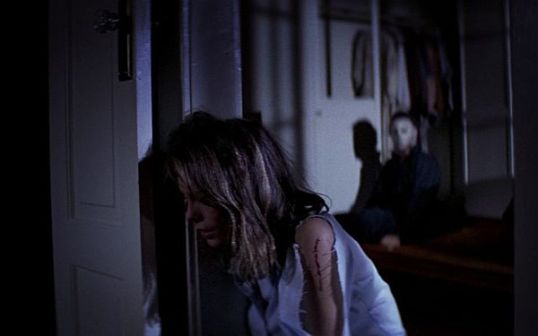
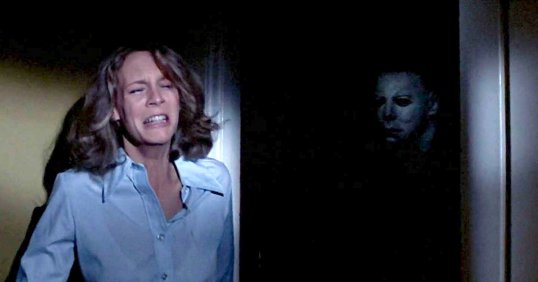
Halloween (1978, dir by John Carpenter. DP: Dean Cundey)
The Fog (1980, dir by John Carpenter, DP: Dean Cundey)
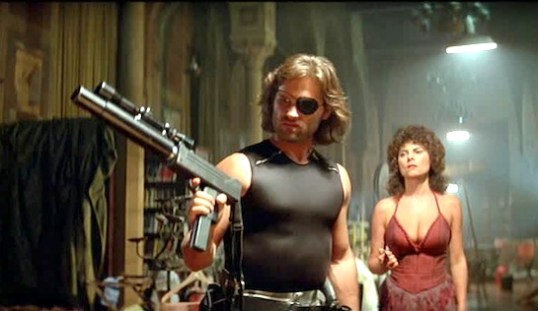
Escape From New York (1981, dir by John Carpenter, DP: Dean Cundey)
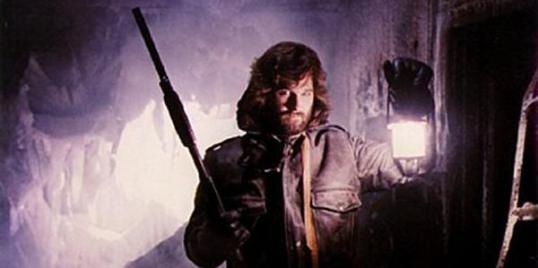
The Thing (1982, dir by John Carpenter, DP: Dean Cundey)
They Live (1988, dir by John Carpenter, DP: Gary B. Kibbe)
In The Mouth of Madness (1994, dir by John Carpenter, DP: Gary B. Kibbe)
They Live (1988, dir by John Carpenter, DP: Gary B. Kibbe)
Today, we continue to wish John Carpenter a truly happy birthday! Needless to say, today’s scene that I love comes from a Carpenter film, 1988’s They Live. Though They Live was apparently not a huge box office success when it was first released, it’s a film that feels more relevant with each passing day. Carpenter is often described as being a great horror director but, with this film and The Thing, he shows that he’s a master of capturing cinematic paranoia.
There’s definitely a reason why They Live continues to find new fans over 30 years since it was originally released. Who hasn’t experienced that secret message of “OBEY!”
4 Or More Shots From 4 Or More Films is just what it says it is, 4 shots from 4 of our favorite films. As opposed to the reviews and recaps that we usually post, 4 Shots From 4 Films lets the visuals do the talking!
Today, the Shattered Lens wishes a happy 77th birthday to one of this site’s favorite filmmakers and a patron saint of the independent spirit, the great John Carpenter!
In honor of the man and his legacy, here are….
6 Shots From 6 John Carpenter Films
Halloween (1978, dir by John Carpenter, DP: Dean Cudney)
The Fog (1980, dir by John Carpenter, DP: Dean Cudney)
Escape From New York (1981, dir by John Carpenter, DP: Dean Cundey)
The Thing (1982, dir by John Carpenter, DP: Dean Cundey)
Prince of Darkness (1987, dir by John Carpenter, DP: Gary B. Kibbe)
They Live (1988, dir by John Carpenter, DP: Gary B. Kibbe)
4 Shots From 4 Films is just what it says it is, 4 shots from 4 of our favorite films. As opposed to the reviews and recaps that we usually post, 4 Shots From 4 Films is all about letting the visuals do the talking.
Today’s director is the man who put Halloween on the map and a personal favorite of everyone here at TSL, John Carpenter!
4 Shots From 4 John Carpenter Films
Halloween (1977, dir by John Carpenter, DP: Dean Cundey)
They Live (1988, dir by John Carpenter, DP: Gary B. Kibbe)
In The Mouth of Madness (1994, dir by John Carpenter, DP: Gary B. Kibbe)
The Ward (2010, dir by John Carpenter, DP: Yaron Orbach)