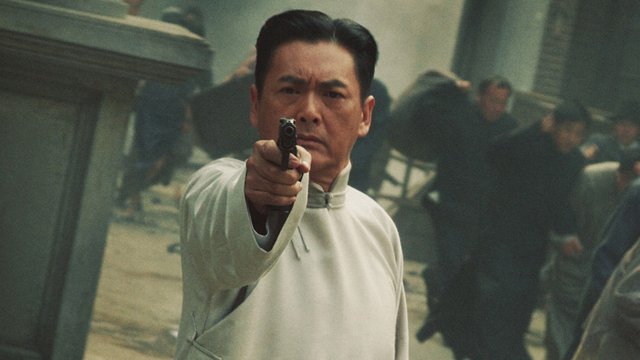
Brad reviews THE LAST TYCOON (2012), starring Chow Yun-Fat!


When fans of Hong Kong cinema think of high-quality film craftsmanship, the name Wong Jing doesn’t immediately come to mind. Sure, he directed one of my all-time favorite films, GOD OF GAMBLERS (1989), and he’s had his share of box office success over the years, but he’s also churned out a lot of crap. His name is not often the stamp of quality on a film production, but there’s something about working with Chow Yun-Fat that will sometimes bring out his best.

THE LAST TYCOON tells the story of Shanghai crime boss Cheng Daqi, portrayed here in two separate timelines by actor Huang Xiaoming in his younger years, and by the legendary Chow Yun-Fat in his older years. When we meet young Cheng, he seems like an awfully nice guy and then fate places him in a jail cell with the shady Mao Zai (Francis Ng). To escape and save his own life, and with a little help from Mao, Cheng commits his first murder. Forced to flee, Cheng aligns himself with a gang led by Hong Shouting (Sammo Hung). A natural leader, and as badass as it gets, Cheng rises rapidly in the ranks. The narrative isn’t as straight forward as this sounds so far, because it leaps frequently back and forth between younger Cheng and older Cheng. When the film finally settles in with Chow Yun-Fat for its latter half, we have seen how Cheng rose to become one of the most powerful men in Shanghai. We also understand how he has found himself in an extremely difficult wartime position with the Japanese that will test his loyalty to his country, as well as to the people he loves.

Right out of the gate, I want to give kudos to Wong Jing for putting together a highly entertaining film, set against an incredible 30-year backdrop of historical Shanghai! I don’t mention it in the summary above, but THE LAST TYCOON finds time to feature an abundance of romance between Cheng and the two loves of his life. We’re talking about grand melodrama done right, offset periodically with awesome action sequences, whether they be hand-to-blade street brawls, heroic bloodshed shoot-outs, or explosive wartime bombing raids. The emotions and the blood flow very strongly in this one!
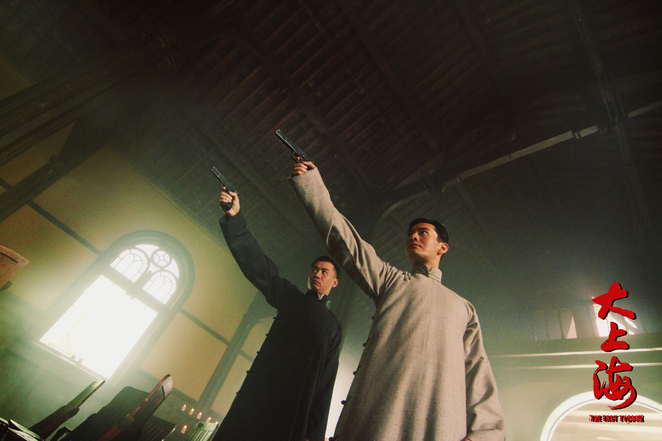
The role of Cheng Daqi fits Chow Yun-Fat like a glove. He emotes early and often, and when he takes a break from that, it’s usually to pick up a pistol that he’s able to wield with maximum precision and efficiency. For a long-time fan like me, it’s high-quality fan service that fits seamlessly into the pulpiness of the story. As the younger version of Cheng, Huang Xiaoming does a fine job with the romance and the action. It seems perfectly natural that he’d eventually turn into the legend. Huang gets a lot of screentime, and without his solid portrayal, I don’t think the film would have worked nearly as well.

I did want to mention some of the notable supporting performances in THE LAST TYCOON. Veteran Francis Ng is as reliable as ever as we see his character go from a mystery lifesaver at the beginning to an evil villain by the end. The role may be underdeveloped, but Ng makes it work. I’m going to be looking for more from actor Gao Hu, who’s a total badass in his role as Cheng’s loyal soldier Lin Huai. Present over the entire 30-year timeline of the film, the man’s expert switchblade skills and gun-handling abilities are crucial to Cheng’s safety! Yolanda Yuan and Monica Mok are very good as the two women in Cheng’s life. They are very different, but it’s easy to see why he loves them both, and I think the movie ultimately gets the ending right where the romance is concerned. Finally, I did want to mention that I was somewhat disappointed in the character of Hong Shouting, played by the legendary Sammo Hung. Even though he was a powerful boss, I don’t think he comes across very strongly in the film. For someone of his stature, I see this as one of the few missteps from writer / director Wong Jing.

Small quibbles aside, I recommend THE LAST TYCOON without any reservations. Fans of Chow Yun-Fat and Hong Kong cinema can’t go wrong!

THE LAST TYCOON is currently available for streaming on Amazon Prime, Tubi, PlutoTV, and Plex.
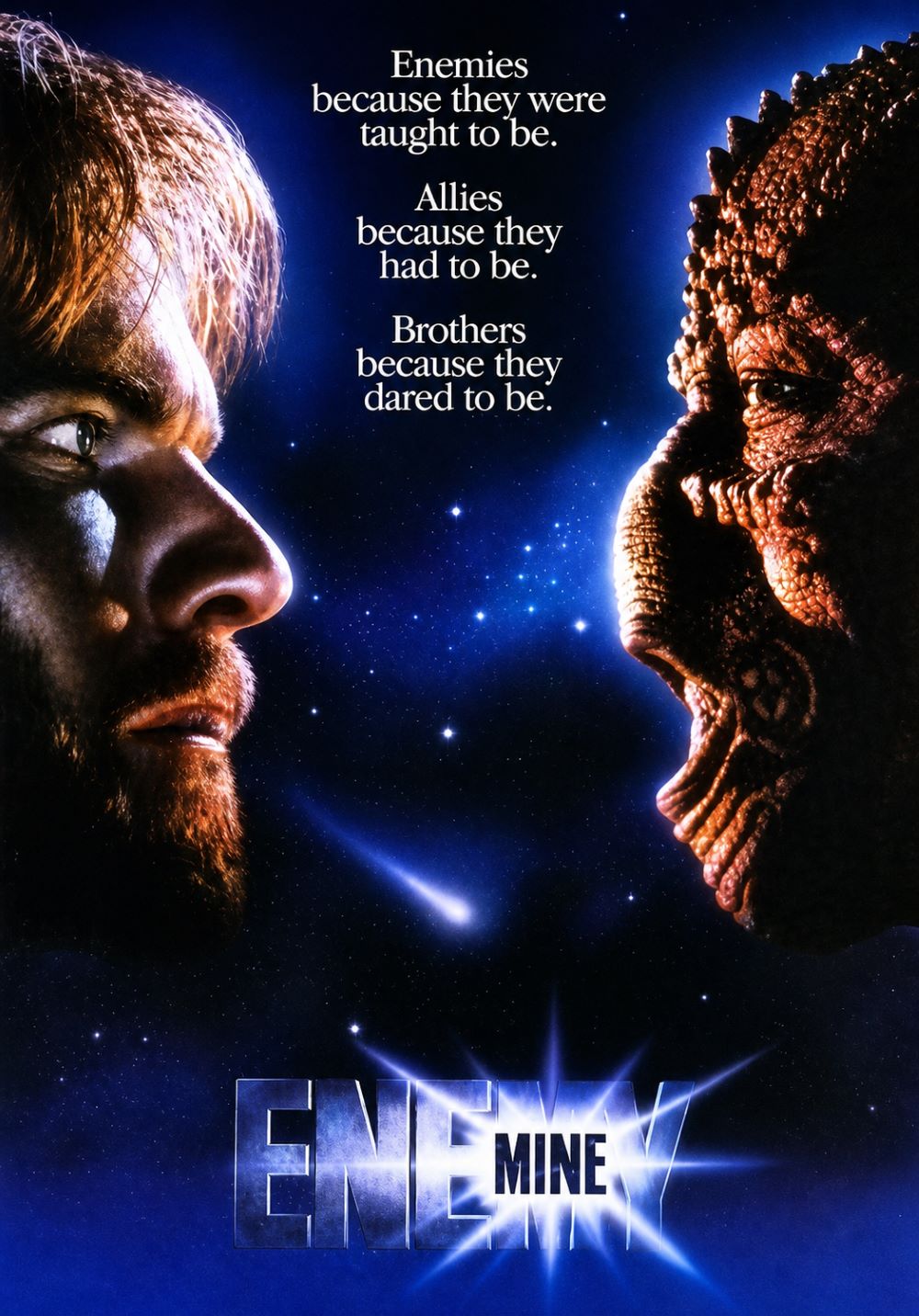
Review: Enemy Mine (dir. by Wolfgang Petersen)


“Truth is truth.” – Jeriba Shigan

One of those 1980s sci-fi movies that sneaks up on you with more heart than flash, Enemy Mine turns a pulpy premise into something genuinely moving under Wolfgang Petersen’s steady hand. What starts as a straightforward tale of enemies forced together ends up digging deep into survival, prejudice, and the unlikely bonds that form when everything else falls away.

The storyline kicks off in the middle of an interstellar war between humans and the Drac, a reptilian alien species. Human pilot Willis Davidge, played by Dennis Quaid, crash-lands on a harsh, storm-battered planet after a dogfight with Drac warrior Jeriba Shigan. At first, it’s pure hate: they clash, scheme, and barely survive the planet’s brutal environment—freezing winds, toxic air, and hungry scavengers. But necessity breeds uneasy teamwork, and from there, the film charts a slow thaw into mutual respect and friendship. The plot builds to bigger stakes when Jeriba faces a pregnancy unique to their species, leading to themes of parenthood, loss, and legacy that give the story real emotional weight.

Interestingly, Enemy Mine‘s basic premise echoes John Boorman’s 1968 war drama Hell in the Pacific, where an American airman (Lee Marvin) and a stranded Japanese soldier (Toshiro Mifune) wash up on the same deserted island and must cooperate to survive after initial violent antagonism. Both films hinge on that classic setup of mortal enemies isolated together, grappling with a language barrier that heightens the tension—grunts, gestures, and improvised signals become their only bridge. But where Boorman leans into raw cynicism, ending on an ambiguous and bleak note that questions if reconciliation is even possible, Enemy Mine flips the script toward optimism, letting understanding bloom into a full-fledged familial bond.

What elevates Enemy Mine beyond typical space opera is its focus on themes that feel timeless, even if the delivery is pure ’80s cheese. The human-Drac conflict is a clear stand-in for racism and xenophobia, showing how propaganda and fear turn “others” into monsters in our minds. Davidge starts spouting all the usual human supremacist lines, while Jeriba embodies alien pride, but isolation strips away those defenses. The movie argues that empathy isn’t innate—it’s forged through shared hardship, language lessons (Davidge memorably recites Drac poetry), and vulnerability. There’s a queer undercurrent too, in the intense, almost parental intimacy that develops, challenging binary ideas of enemy and ally.

Dennis Quaid nails Davidge as a cocky everyman with a hidden soft side. He brings brash energy to the early fights—grinning through gritted teeth, improvising weapons from junk—but lets cracks show as grief and responsibility hit. His arc from hothead to devoted guardian feels earned, especially in quieter moments like teaching the Drac child human songs. Louis Gossett Jr. is even more impressive under layers of prosthetics as Jeriba, giving the alien a dignified, wry voice that cuts through the makeup. He conveys wisdom and humor without preaching, making Jeriba’s final lessons about tolerance land with quiet power. Their chemistry carries the film; you buy the shift from foes to family because these two sell every beat.

Thematically, Enemy Mine shines brightest in its exploration of fatherhood across species lines. After tragedy strikes, Davidge steps up for Jeriba’s child, Zammis, turning the story into a tale of nurture over nature. It’s about breaking cycles—passing on culture, rituals, and values not to perpetuate war, but to build peace. The film critiques blind loyalty to one’s side, showing how the real enemy might be the systems that demand it. Petersen, fresh off Das Boot, keeps the tone earnest, balancing tense survival scenes with tender rituals like Jeriba’s egg-laying or Davidge’s makeshift cradle. Sure, the effects age unevenly—those Drac faces look rubbery now—but the emotional core holds up.

Revisiting it today, Enemy Mine feels like a forgotten gem in the era of Aliens and Star Wars sequels. It dares to be intimate amid the spectacle, prioritizing character over conquest. The climax, with its courtroom-like showdown back in human space, hammers home the anti-war message without feeling forced. Quaid and Gossett elevate the script’s earnestness, making the bromance-turned-familial bond resonate. It’s not flawless—the pacing drags in spots, and some twists feel convenient—but its sincerity wins out. In a genre often about blowing stuff up, this one’s about building something human (or Drac) from the wreckage.

Enemy Mine reminds us that enemies are just strangers we haven’t met yet. Through Davidge and Jeriba’s journey, it champions understanding over ideology, legacy over vengeance. Quaid’s charisma and Gossett’s gravitas make it stick, turning a B-movie setup into a heartfelt plea for connection. If you’re into thoughtful sci-fi with soul, it’s worth a rewatch—imperfect, but profoundly kind.

Scenes I Love: Simon Of The Desert


From Luis Bunuel’s 1965 short film, Simon of the Desert, the faithful Simon (Claudio Brook) finds himself transported from 6th Century Syria to the 1960s by the Devil (Silvia Pinal).  The song playing at the club is called Radioactive Flesh.  Simon wants to go home.  The Devil wants to dance.

4 Shots From 4 Films: Special Cinco De Mayo Edition


4 Or More Shots From 4 Or More Films is just what it says it is, 4 shots from 4 of our favorite films. As opposed to the reviews and recaps that we usually post, 4 Shots From 4 Films lets the visuals do the talking!

Happy Cinco De Mayo to all of our readers!  It’s time for….

4 Shots From 4 Mexican Films

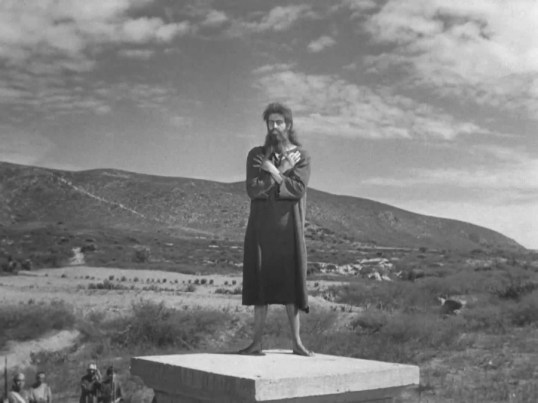
Simon of the Desert (1965, dir by Luis Bunuel, DP: Gabriel Figueroa)

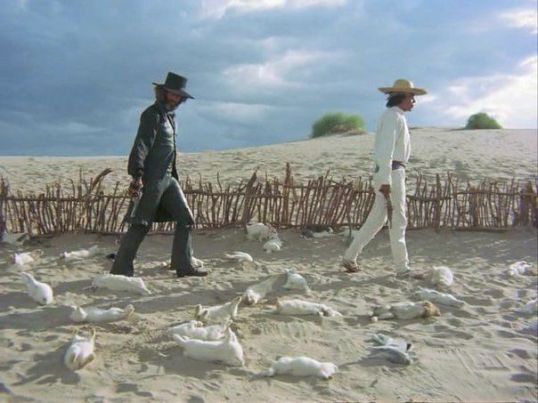
El Topo (1970, dir by Alejandro Jodorowsky, DP: Rafael Corkidi)

Like Water For Chocolate (1992, dir by Alfonso Arau, DP: Emmanuel Luzbeki)

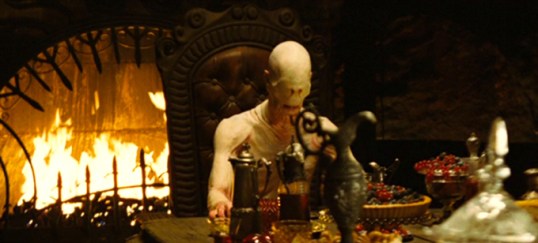
Pan’s Labyrinth (2006, dir. by Guillermo Del Toro, DP: Guillermo Nava)

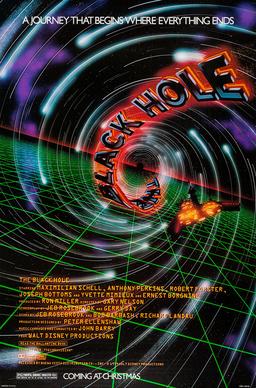
The Black Hole (1979, directed by Gary Nelson)


It’s the Future!  The USS Palamino is on a mission to explore deep space.  On the Palamino are Captain Dan Holland (Robert Forster), Dr. Alex Durant (Anthony Perkins), Lt. Charlie Pizer (Joseph Bottoms), Dr. Ellen McRae (Yvette Mimieux),  a trash can-looking robot named Vincent (voiced by Roddy McDowall), and a hard-drinking, out-of-place journalist named Harry Booth (Ernest Borgnine).

The Palamino has nearly completed its mission when it comes across a black hole.  They also come across the USS Cygnus, a ship that disappeared 20 years ago.  Boarding the Cygnus, they discover that it is ruled over by Dr. Hans Reinhardt (Maximilian Schell) and that the crew appeared to be made up of robots.  Dr. Reinhardt plans to direct his ship to fly through the Black Hole.  Dr. Durant is inspired by Reinahrdt’s determination to discover what lies on the other side.  The rest of the crew is suspicious of Reinhardt, especially after they meet Maximillian, the hulking red robot that serves as his bodyguard.

One of the studio’s first attempts to make a film for grown-ups, The Black Hole was also the first Disney film to receive a PG rating.  The Black Hole has a lot going for it.  The cast is stacked with talent.  (I haven’t even mentioned Slim Pickens as the voice of a beat-up robot.)  The plot is interesting and I think anyone watching will be able to relate to Reinhardt and Durant’s desire to explore what lies inside of the Black Hole.  Even when seen today, the special effects hold up fairly well.  Maximillian is actually frightening at times.   There are some violent moments that definitely earn that PG rating.

It’s just too bad that the movie is so damn boring.

The Black Hole is a movie that calls out for a director like Nicholas Meyer or even Douglas Trumbull.  Instead, the movie was directed by Gary Nelson, a television director who lets the story plod along at a slow pace. The movie goes through the motions but it never really captures the wonder or the excitement of being in space.  The journey through the Black Hole is visually impressive but it takes forever to get there and then it’s over too quickly.  Disney spent so much time on the special effects that they forgot to come up with a script worthy of them.

The Black Hole is a film that should have been much better than it was.  As long as Disney is remaking all of their old films, I say it’s time to remake The Black Hole.  Get the right director and make it the film that it should have been.

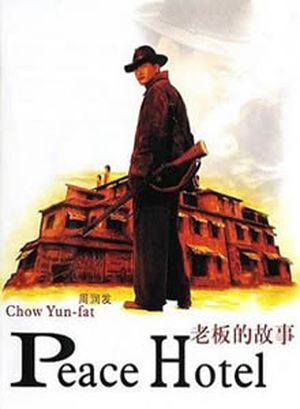
Brad reviews PEACE HOTEL (1995), starring Chow Yun-Fat!


Just like November is Charles Bronson month in my house, May is Chow Yun-Fat month. My favorite living actor, Chow made so many good movies during his Hong Kong heyday, he made a few good movies here in America, and he’s still working to this day! This year I plan on revisiting some of his lesser known films and sharing my thoughts on them with you. I don’t know how many reviews I’ll have time to write, but I’m certainly looking forward to the movies! To kick off the month, I decided to revisit PEACE HOTEL, which was the last Hong Kong film that Chow starred in prior to making his English language debut with THE REPLACEMENT KILLERS in 1998.

PEACE HOTEL is a Chinese “western,” which is certainly different for Chow Yun-Fat who made his name by playing heroic gangsters and badass cops. Even though it’s not a movie I revisit often, its uniqueness in his filmography is something I enjoy when the right mood hits. The story setup, which is credited to Chow, is classic. Chow plays the notorious “killer,” a reformed man who has set up a remote “hotel” where violence is never allowed, no matter who you are or who’s after you. When a desperate woman shows up at the hotel, with a horde of outlaws right behind her, the rules are tested. The outlaws set up shop just outside the gates of the hotel and give the residents a few days to get out, or they’re all going to die. Considering they’ll have to go through the killer, things are certainly going to get interesting. 

Fans of westerns and samurai films will recognize many of the story elements, but I’d have to say that this movie is less about originality and more about establishing a mythic mood. Director Wai Ka-Fai plays up the legend of the killer, so there’s a lot of setup to get through. This does require some patience for those used to the star’s wall to wall action-fests with director John Woo. Let’s just say the action is used sparingly, but when it comes, it’s good stuff. 

Chow Yun-Fat carries the film effortlessly. His charisma, toughness and charm is fully on display whether he’s horsing around with a small child, romancing the beautiful Cecilia Yip, or dispatching throngs of bad guys with his blade. The role certainly isn’t flashy, but he’s just so cool. Nobody can portray a noble killer as well as Chow Yun-Fat.

PEACE HOTEL is currently playing on Tubi. When I first saw the film back in the 90’s, I remember a sequence where Chow Yun-Fat slides down a ladder while mowing down bad guys with a machine gun. That sequence is not included in the cut playing on Tubi, which is a little disappointing for me. Still, the film has so much going in its favor, that I still give it an easy recommendation. It may not be balls-to-the-wall action like THE KILLER, FULL CONTACT or HARD BOILED, but I’ll definitely be reaching for PEACE HOTEL again someday when I’m in the mood for something different than your typical action film. 

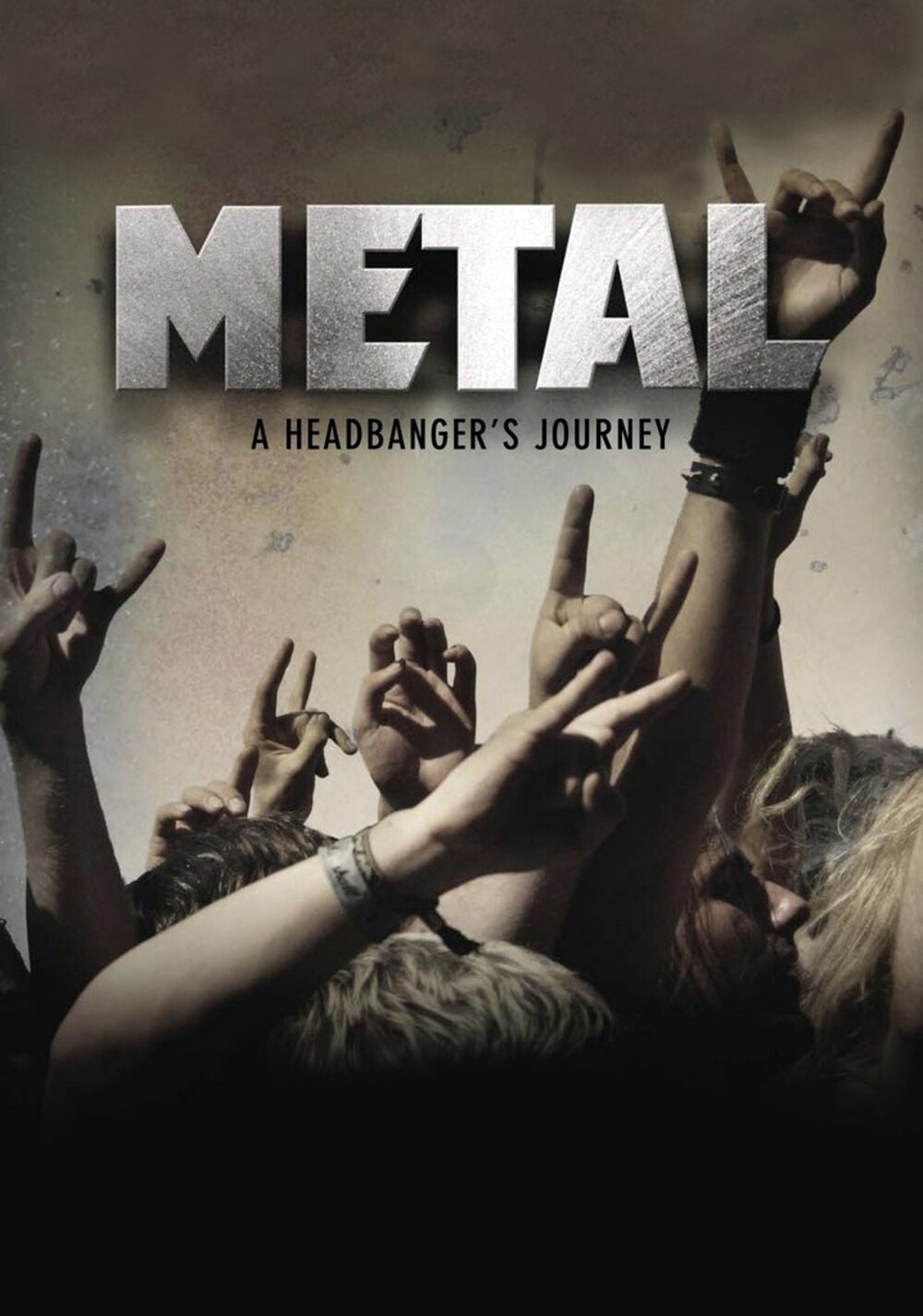
Metal: A Headbangers Journey Review (dir. by Sam Dunn with Scot McFayden and Jessica Wise)


“Metal confronts what we’d rather ignore. It celebrates what we often deny. It indulges in what we fear most. And that’s why metal will always be a culture of outsiders.” — Sam Dunn

Metal: A Headbanger’s Journey is the kind of documentary that feels like it was made by someone who actually gets heavy metal instead of just staring at it from the outside and treating it like a weird cultural problem to be solved. Sam Dunn, with Scot McFadyen and Jessica Wise, builds the film around a simple but very effective idea: if metal has spent decades getting mocked, misunderstood, and moral-panic’d into the ground, why not let a real fan and anthropologist go out and explain what the scene is actually about? That perspective gives the movie a relaxed confidence right away. It never acts like it has to apologize for loving metal, and that attitude makes the whole thing way more engaging than a dry music-history lecture.

What makes the documentary work so well is the mix of fandom and curiosity. Dunn is not posing as some detached academic who wandered into the pit by accident. He is clearly a lifer, and that matters because his enthusiasm keeps the film from turning into a lecture about subgenres, stereotypes, and cultural backlash. At the same time, he is smart enough to ask real questions about why metal exists, why it inspires such loyalty, and why it keeps attracting outsiders who feel like they do not fit anywhere else. That balance gives the movie its shape. It is informative without becoming stiff, and it is affectionate without becoming blind praise.

The film does a stellar job of tracing the evolutionary trajectory of the genre. It starts with the bedrock, showing how the heavy, blues-influenced rock of the late sixties and early seventies paved the way for everything else. Dunn maps out the genealogy of metal with a sense of wonder, illustrating how a common foundation in the hard rock of acts like Led Zeppelin or the dark, doom-laden riffs of Black Sabbath splintered into a massive, tangled family tree. You get to see the distinct shifts in tone, speed, and imagery as the music moved from the raw power of pioneers like Iron Maiden and Motörhead into the more extreme, experimental territories of bands like Cannibal Corpse or the provocative, atmospheric reaches of Mayhem. This structural focus turns the film into a clear guide for how metal constantly reinvented itself while holding onto that core aggressive energy.

The interviews are a huge part of why the film stays alive. Dunn talks to an incredible array of musicians who cover a lot of ground, including legends like Alice Cooper, Bruce Dickinson, and Ronnie James Dio, and the movie benefits from the fact that these people are speaking as insiders rather than museum curators. Some bring humor, some bring historical context, and some bring genuine passion that reminds you why this music matters to its fans in the first place. What’s especially nice is that the movie does not treat everyone with the same reverence. It lets personalities come through, which gives the film a looser, more conversational energy. That makes it easier to sit through even when it moves into territory that could have felt overly academic in less capable hands.

One of the most memorable things about Metal: A Headbanger’s Journey is the way it handles the old stigma around heavy metal. The film doesn’t just repeat the familiar story that “metal got unfairly attacked”; it also shows why those attacks stuck in the public imagination for so long. That gives the documentary more bite. It is not only defending the genre, but also explaining the cultural fear that surrounded it, whether that meant the PMRC era or the broader idea that loud guitars and dark imagery automatically equal danger. Dunn and company make a strong case that metal is often a release valve rather than a threat. For a lot of listeners, it is a place to channel anger, alienation, and frustration instead of acting them out in destructive ways.

The film also does not shy away from the darker controversies that have haunted the genre’s reputation, specifically the actions linked to the Norwegian black metal scene. Dunn confronts the violence and extremism associated with these artists head-on, including a chilling interview with Gaahl, the infamous frontman of the Norwegian black metal band Gorgoroth. By highlighting the intense, radical nature of Gaahl’s worldview and the violent history of the subculture he represented, the film addresses the deep, dark mark these controversies placed on the Norwegian scene. Acknowledging how these headlines fueled mainstream hatred toward the music is essential to the film’s narrative. However, the documentary’s nuance really shines in its later home video releases, where Dunn adds vital context to ensure viewers understand that those dark moments were extreme outliers rather than the standard for the community at large. By clarifying that these actions did not represent the vast majority of metal fans or artists, the film successfully separates the music’s spirit from the criminal acts of a few.

There is also a fun educational streak running through the whole thing. The movie likes to trace lines between older rock traditions and the more extreme corners of metal, and that gives it some useful perspective. It reminds you that the genre did not appear out of nowhere and that its DNA is tangled up with blues, hard rock, theatricality, and rebellion. Even if you already know a fair amount about the subject, the film still has a way of making those connections feel vivid rather than obvious. It does a solid job of showing how metal evolved into something bigger and more fragmented than casual listeners usually assume.

If the movie has a weakness, it is that it can feel a little too short for everything it wants to cover. There is so much material here that some topics get only a snapshot when they could have used a deeper dive. That is especially true if you are the kind of viewer who wants more on the later developments and regional differences within the scene. Still, the brisk runtime also helps the film stay punchy and rewatchable. It does not overstay its welcome, and it keeps moving at a pace that suits the subject. In a weird way, the documentary’s eagerness to pack in so much is part of its appeal.

Visually and structurally, the movie keeps things straightforward, which works in its favor. It is not trying to be slick in a way that would distract from the subject. Instead, it uses interviews, performance footage, festival scenes, and Dunn’s own traveling framework to keep the momentum going. That direct approach fits the personality of the material. Metal is not a genre that usually benefits from fancy packaging. It needs energy, attitude, and clarity more than polish, and this documentary understands that.

The best compliment you can give Metal: A Headbanger’s Journey is that it feels like a conversation with someone who loves the music enough to explain it honestly. It celebrates the bombast, the mythology, the anger, and the community without pretending metal is above criticism or complexity. It is smart, funny in places, and genuinely useful as both a fan piece and an introduction for newcomers. Even years later, it still comes off as a passionate and accessible guide to a scene that is often easier to caricature than understand. For metal fans, it is an easy recommendation. For everyone else, it is one of those documentaries that might actually change how you hear the genre the next time a riff kicks in.

10 Films For May the 4th


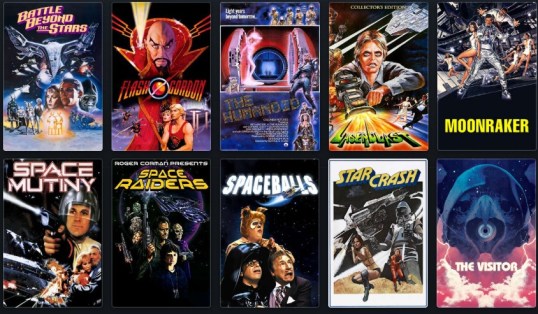
If you want to celebrate the 4th of May but you really don’t feel like sitting through any of the Star Wars films (especially now that you know that Leia, Luke, and Han’s struggle was pretty much for naught), here are ten other sci-films that will keep you entertained without ruinng your childhood memories!

  1. Starcrash (1978, dir by Luigi Cozzi) is not only the best of the so-called Star Wars rip-offs, it’s also one of the best space adventures ever made.  In fact, I would argue that Cozzi’s film is actually more entertaining than Star Wars, just because of Cozzi’s unabashed love of the genre and the fact that Starcrash had a bit more deliberate wit than George Lucas’s film.  Starcrash also had a once-in-a-lifetime cast of Caroline Munro, Marjoe Gortner, Joe Spinell, Christopher Plummer, and David Hasselhoff.  Starcrash is a true pop art masterpiece.
  2. Laserblast (1978, dir by Charles Band) — Fresh from menacing Mark Hamill in Corvette Summer, Kim Milford plays a totally 70s dude who finds a discarded alien weapon and turns into a green monster.  At one point, Milford blows up a Star Wars billboard.  Roddy McDowall is a small-town doctor.  Eddie Deezen and Dennis Burkley are bullies.  The Claymation aliens are adorable, especially when they start arguing with each other.
  3. Moonraker (1979, dir by Lewis Gilbert) –– James Bond in space!  I’m well aware that Moonraker does not have a great reputation as far as Bond films are concerned but actually, it’s one of Roger Moore’s most enjoyably ludicrous outings.  Daniel Craig’s Bond could never go into space but Roger Moore could.  That’s why Moore will always be the superior Bond.
  4. The Humanoid (1979, dir by Aldo Lado) — After playing Jaws in both The Spy Who Loved Me and Moonraker, Richard Kiel got to play a leading role.  “I believe that jacket belongs to Mr. Gilmore….”  No, this was before Happy Gilmore!  In The Humanoid, Kiel plays the kindly Golob who is transformed into a hulking, evil warrior.  Good Golob has a beard.  Evil Golob doesn’t.  This movie is a bit long but Kiel is always a delight to watch and it also features a cute dog robot.  Barbara Bach is the evil Lady Agatha, who is kept young by space virgin blood.  Ivan Rassimov, owner of the best hair in Italian exploitation, is Lord Graal.
  5. The Visitor (1979, dir by Giulio Paradisi) — What happens when you mix The Omen, The Exorcist, and Star Wars with a bunch of basketball stock footage?  You end up with one of the greatest Italian films ever!  John Huston is the alien/angel!  Lance Henriksen is the devil worshipper who owns a basketball team!  Franco Nero is Jesus, who lives on the Moon with a bunch of bald children!  Shelley Winters is Shelley Winters!  The Visitor is a film that simply has to be seen.
  6. Battle Beyond The Stars (1980, dir by Jimmy T. Murakami) — This Roger Corman-produced film never would have been made if not for the success of Star Wars.  That said, it’s actually a science fiction version of The Magnificent Seven, featuring the type of cast that only Corman could put together.  Richard Thomas, Robert Vaughn, George Peppard, Darlanne Fluegel, John Saxon, and Sybil Danning, they’re all in this terrifically entertaining space opera.
  7. Flash Gordon (1980, dir by Mike Hodges) — How many people have been driven mad after getting the theme song stuck in their head?  At every watch party that I host, Flash Gordon is always at the top of the list of films that people want me to select.  (Unfortunately, it’s not streaming anywhere for free right now.)  Like Starcrash and The Visitor, it’s a pop art masterpiece.  All together now: “Godon’s alive!”
  8. Space Raiders (1983, dir by Howard Cohen) — Roger Corman produced this film about a dumbass kid (David Mendenhall, who also played Stallone’s son in Over The Top) who stows away with a bunch of lovable space pirates and basically gets everyone killed.  This is worth seeing for Thom Christopher as Flightplan.  This film also features a scene where the kid tries to shout across space.  “HAWK!”
  9. Spaceballs (1987, dir by Mel Brooks) — Mel Brooks sends up the Star Wars saga as only he can.  It’s not totally successful but there are plenty of funny lines and Rick Moranis and John Candy are a delight.  Bill Pullman wisely plays his role straight and allows the supporting crew to get most of the laughs.
  10. Space Mutiny (1988, dir by Neal Sundstrom and David Winters) — “GO!  GO!  GO!” Reb Brown yells as Dave Ryder, the new head of security for Cameron Mitchell’s space fleet.  And Brown has a lot to yell about because John Phillip Law is leading a mutiny in plain sight.  Space Mutiny has a reputation for being one of the worst films ever made.  It may be.  But I still enjoy it.  Every space ship needs a disco.

Join #MondayMania For Midwest Obsession


Hi, everyone!  Tonight, on twitter, I will be hosting one of my favorite films for #MondayMania!  Join us for 1995’s Midwest Obsession!

You can find the movie on Prime and then you can join us on twitter at 9 pm central time!  (That’s 10 pm for you folks on the East Coast.)  See you then!

Scenes That I Love: Audrey Hepburn in Two For The Road


Today would have been the 97th birthday of one of my favorite actresses, the wonderful Audrey Hepburn!

We’re all Audrey Hepburn fans here at the Shattered Lens.  How could we not be?  She was one of the greats and, for that reason, today’s scene that I love comes from one of her best films, 1967’s Two For The Road.

In this scene, Albert Finney and Audrey Hepburn play a married couple who discuss their troubled but loving marriage while on the road.  This film features one Audrey’s best performances.