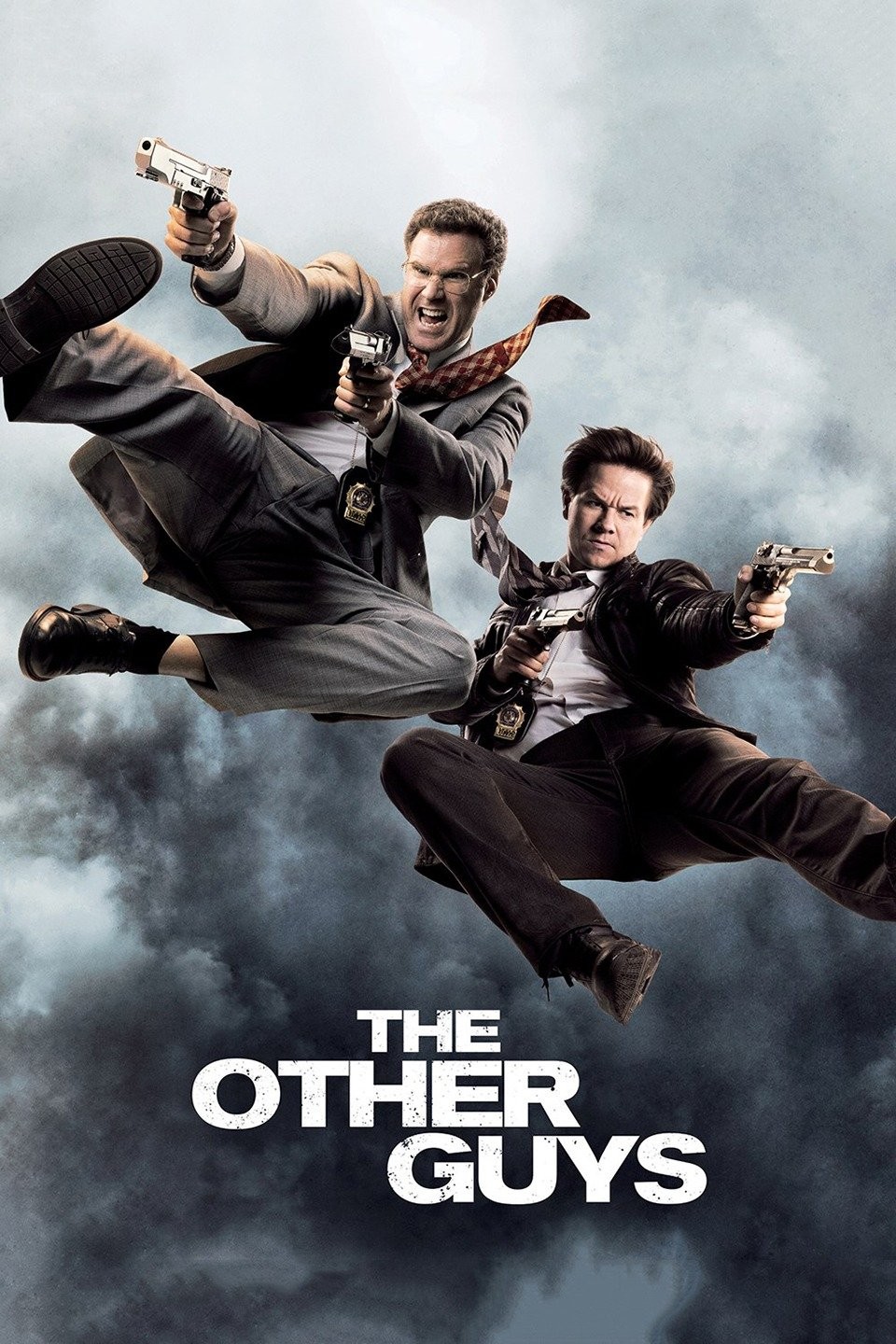
Review: The Other Guys (dir. by Adam McKay)


“We are gonna have sex in your car. It will happen again!” — Dirty Mike

Adam McKay’s The Other Guys feels like the moment a class clown who is secretly a genius finally snaps and decides to teach the entire school a lesson while making them laugh so hard they forget they’re being educated. Released in 2010, the film lands right in that sweet spot of McKay’s career where he was pivoting away from the pure, unhinged mania of Anchorman and Step Brothers and starting to smuggle razor-sharp satire into the multiplex under a mountain of stupidity. It is, without a doubt, one of the funniest movies of its decade, but calling it just a comedy feels like a disservice. It’s a buddy cop movie that hates the irresponsibility of buddy cop movies, a financial crisis explainer disguised as a screamo TLC tribute, and a showcase for two lead performances that should have spawned at least three sequels. If you’ve somehow managed to sleep on this one, it’s time to fix that.

The opening sequence is a masterclass in bait-and-switch. We are introduced to Danson and Highsmith, the city’s top cops, played with magnificent, self-serious swagger by Dwayne Johnson and Samuel L. Jackson. They’re chasing down a minor misdemeanor in a way that destroys half of downtown Manhattan, culminating in them heroically jumping off a twenty-story building to land safely in some bushes. Except they don’t. They splatter. It’s a shocking, hilarious, and instantly iconic death scene that serves as McKay’s thesis statement: the action movie logic you’ve been fed for decades is a lethal fantasy. With the heroes dead, the spotlight shifts painfully to the guys who have to do the paperwork on their mangled corpses, forensic accountant Allen Gamble and hot-headed loose cannon Terry Hoitz. These two are, emphatically, the other guys, and when circumstances force them onto a case involving corporate financial fraud, they stumble their way toward something resembling heroism, occasionally despite themselves.

What separates The Other Guys from the pile of mediocre comedy-action hybrids that came before and after it is the chemistry between Ferrell and Wahlberg, which is genuinely one of the more unexpected comedic pairings of that era. Ferrell plays Gamble as a deeply strange man who has weaponized milquetoast passivity into a superpower. His complete, serene contentment with a life of spreadsheets, Grand Theft Auto grand larceny sprees where he obeys all traffic laws, and a suspiciously beautiful wife played by Eva Mendes is a hypnotic thing to watch. Ferrell dials down the bombast and delivers something wonderfully weird and controlled, a man who is simultaneously a complete dork and, as we later discover, a shockingly capable pimp named Gator. Wahlberg, meanwhile, is doing something genuinely interesting here. Terry Hoitz is a walking wound, a great cop reduced to a desk jockey and public mockery for the unforgivable sin of accidentally shooting Derek Jeter during the World Series. He’s angry, humorless, and convinced of his own greatness despite ample evidence to the contrary. Wahlberg plays him completely straight, which is the exact right call, because his deadpan bewilderment at Ferrell’s behavior, the way his voice cracks with desperate, shrill anger when trying to explain a normal scenario, ends up being funnier than almost anything else in the film. Their chemistry is a perfect storm of a guy who wants to live inside a peaceful spreadsheet and a guy who wants to set that spreadsheet on fire while learning to dance the sardine.

This is the kind of comedy where the supporting cast keeps piling on gloriously unhinged performances, which makes Ray Stevenson’s work as the heavy all the more valuable. As Roger Wesley, the corporate enforcer who does the violent bidding of Steve Coogan’s billionaire fraudster, Stevenson operates in a completely different register from everyone else. While Ferrell is weaponizing passive-aggressive politeness, Wahlberg is screaming about peacocks, and Michael Keaton is unconsciously quoting Waterfalls while running a police precinct, Stevenson remains a granite slab of menace. He doesn’t crack jokes, he doesn’t do double-takes, and he certainly doesn’t care about the absurdity swirling around him. There’s something almost old-fashioned about his screen presence here, a grim, heavy-lidded seriousness that makes him feel like he wandered in from a real crime thriller and simply refused to leave. It’s the kind of straight-man performance that doesn’t just anchor the chaos; it makes the chaos funnier by contrast. When he’s methodically hunting down loose ends while Ferrell and Wahlberg are bickering about whether a lion could beat a tuna in open ocean, the collision of tones is pure McKay alchemy.

The plot, such as it is, involves the duo stumbling onto a massive white-collar crime conspiracy led by a billionaire played with smarmy, cowardly glee by Steve Coogan. It’s here that McKay’s deeper ambitions start to peek through the absurdity. While Terry is desperate for a classic action-movie shootout and car chase, the investigation leads them to the Lendl Global offices, where the real villainy isn’t drug lords or terrorists but leveraged buyouts and pension fund looting. There’s a perfect running gag where they keep trying to get into the action, preparing for a massive gunfight against a team of mercenaries, only to find that the corrupt corporate security detail is made up of ex-cops just looking to quietly retire with their benefits. It is the funniest anti-climax, a deliberate denial of violence that reinforces the film’s core idea that the most dangerous criminals wear suits, not ski masks. The financial villain is a thinly veiled stand-in for the kind of Wall Street grift that was very much in the cultural conversation in 2010, just a couple of years after the financial crisis. McKay would later go much deeper on that territory with The Big Short, but the seeds of that interest are planted all over this film.

The comedy in The Other Guys operates on two distinct but equally brilliant levels. There is the surface-level absurdity, the kind that produces quotes like “I’m a peacock, you gotta let me fly!” and the quiet, steady domination of Gamble’s totemic Prius, which somehow survives a fireball helicopter crash without a scratch. The “aim for the bushes” jump, the lion versus tuna debate that Hoitz treats with theological gravity, and the wooden gun gifted to Gamble are all top-tier ridiculousness. Then there is the deeper, more surreal well of humor that feels distinctly McKay. The entire subplot of Gamble’s past as a college pimp named Gator is a work of deranged genius, a slow-motion, honey-dripped flashback that reveals a world of casual, elegant pimping that Ferrell plays with a straight face so absolute it circles back around to being terrifyingly cool. The relentless jokes about Gamble unknowingly marrying way out of his league, his genuine confusion over why people think Eva Mendes is attractive, is a running gag that beautifully plays on Ferrell’s ability to be completely oblivious to the reality surrounding him. Eva Mendes is admittedly underused, though the film at least has fun with the joke by leaning into Wahlberg’s incredulous reaction every time she appears, which never gets old.

Visually, the film has a blandly competent sheen that actually works in its favor. Unlike the frattish haze of Anchorman, here McKay is directing a movie that looks like a real cop film, which makes the eruptions of insanity even more jarring. The action sequences are staged with real competence. The car chases aren’t played as joke sequences; they’re genuinely well-staged, particularly the Prius chase midway through where Gamble’s calm, methodical driving commentary clashes with a panicking Hoitz. It’s legitimately exciting before it goes completely off the rails in the best way. McKay never lets the plot drag even when the jokes need room to breathe. By this point in his career he’d clearly figured out the right pace for this kind of thing, and it shows. The movie moves. The film also showcases Michael Keaton in a delightful supporting role as Captain Gene Mauch, a cop who unconsciously works a second job at Bed Bath & Beyond while peppering his police work with retail slogans. Keaton’s deadpan delivery of lines about TLC references and towel specials, only to shout the chorus of Waterfalls at a moment of high tension, is a thing of beauty. Every single one of his scenes is a gift. It’s a running joke that never explains itself, and it’s all the better for it.

Then there is the ending. For a film that spends nearly two hours being aggressively stupid-smart, the final moments make a radical pivot. As the bad guy is caught, the movie doesn’t just roll credits. It stops dead and turns into a miniature economics lecture. With animated infographics and hard statistics, McKay lays out exactly how Ponzi schemes, bailouts, and income inequality have shattered the American middle class, all while the Rage Against the Machine cover of Maggie’s Farm thrashes on the soundtrack. It’s a jarring, preachy, and completely unexpected move. On first viewing, it feels like the director violently smashing the emergency brake on the comedy train. But in hindsight, it’s the only honest way this movie could end. McKay isn’t just telling us that bank robbers are less dangerous than bankers; he’s stopping us from leaving the theater without understanding the scale of the theft. It doesn’t undermine the fun at all. If anything it adds a layer of purpose that makes the whole thing feel a little more substantial than your average cop spoof. It’s the moment the class clown pulls out a graph showing your student debt will cripple you for life, and somehow, it works because he’s been earning your trust with jokes for the previous hour and a half.

There’s something almost nostalgic about watching a comedy this confident in its own weirdness. The Other Guys arrived at an interesting moment for this kind of movie, when the mid-budget, R-rated studio comedy was still a viable commercial proposition. It made decent money even if it wasn’t a runaway smash, but more importantly, it trusts that you’re going to be on board for a scene where Ferrell and Wahlberg argue about whether they’d rather be a lion or a tuna, and it’s right to trust that. The criticisms are relatively minor. The movie is maybe fifteen minutes too long, and a subplot involving Wahlberg’s ballet background gets introduced and then somewhat dropped. The villain’s scheme, by design, isn’t particularly cinematic, and the film occasionally strains to make the stakes feel real. But these are the kinds of complaints you make about a movie you liked, not a movie you didn’t, and none of them meaningfully dent the overall experience.

More than a decade later, The Other Guys has aged into something of a classic, a revered staple of late-night cable and quotable group chats. It sits at a fascinating crossroads, holding onto the absurdist, quote-heavy DNA of McKay’s earlier work while laying the formal and thematic groundwork for what he would do next with The Big Short and Vice. It proves that the jump from Ron Burgundy to a film about the 2008 housing crisis wasn’t actually that far at all. He just needed Wahlberg to yell a little bit, Ferrell to explain why a lion would still beat a tuna, even in open ocean, and Stevenson to stand in the middle of it all looking like he genuinely wants to murder everyone in the room. Whether you come for the laughs, the surprisingly competent action, or Michael Keaton mumbling TLC lyrics under his breath, you’re going to find something to love. Absolutely worth your time.
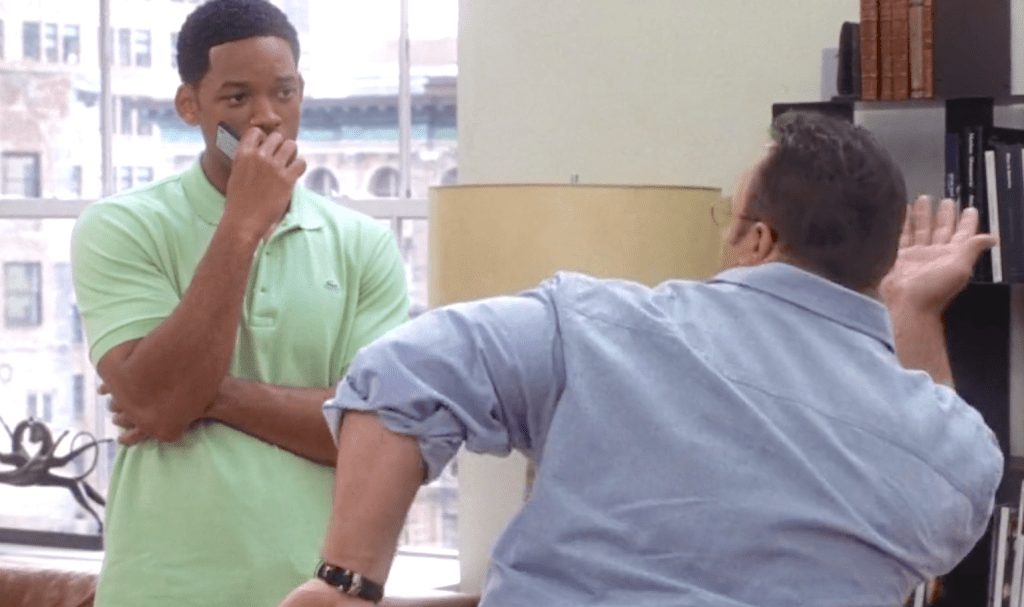
Brad reviews HITCH (2005), starring Will Smith and Kevin James!


I guess you can call this the holiday season of love for me, as I turn my attention today toward the 2005 romantic comedy HITCH. Will Smith stars as Alex “Hitch” Hitchens, a somewhat legendary and highly discreet consultant based in New York City. His specialty… helping less than perfect, even slightly awkward, men win the hearts of beautiful women. His methods are very effective, but he only works with men who are genuinely in love and not just chasing a one-night stand. His latest lovelorn client, the sweet and clumsy tax accountant Albert Brennaman (Kevin James), is smitten with a famous heiress named Allegra Cole (Amber Valletta), a client of the tax firm he works for. As Hitch works his magic for Albert, he also meets the cynical, but extremely beautiful tabloid journalist Sara Melas (Eva Mendes). Hitch finds himself falling for Sara at the same time that she’s on the trail of an urban myth of a “Date Doctor,” mistakenly believing that he is exploiting the emotions of women in the city for his own personal gain. When Sara and Amber discover who Hitch really is, will the guys’ true love win the day, or will the ladies believe it was all just a sleazy, manipulative setup?

HITCH is one of my favorite romantic comedies, and I watch it every year, usually multiple times. I’m a romantic at heart, and I really enjoy a film that plays with the idea of characters who truly care about, and respect, each other. This dynamic plays out through several different relationships. My favorite is the genuine friendship that develops between Hitch and Albert Brennamen. Hitch recognizes the sincere feelings that Albert has for Allegra, and he then goes all in to help him win her heart. While Will Smith is effortlessly charming and in peak movie star form, unsurprisingly, the character I identify the most with is Kevin James as Albert. His character is so sweet and earnest in his pursuit of Allegra that you just can’t help but pull for him. Balance that part of his character with James’ excellent physical comedy, whether it be his natural clumsiness or his unfounded confidence in his dance moves, and James gives the performance that takes this movie over the top for me. When teaching Albert the dance moves that he should stick with when he’s out on a date with Allegra, Hitch utters the line, “Don’t you bite your lip. Stop it!” It was that moment when I realized that, like Albert, I never dance without biting my own lip!

While the fraternal love between Hitch and Albert is my favorite relationship in the film, I also like the romantic relationship that develops between Hitch and Sara. I appreciate the way both characters step out of their comfort zones and risk their own hearts for each other. This is not easy for either of them, as Hitch’s charm and confidence actually masks deep insecurities based on his past relationships. Sara, on the other hand, has allowed herself to become very cynical towards all men, building walls so tall that no man can climb them. The fact that they truly open themselves up to each other, even if there are some serious complications along the way, gave me a strong rooting interest in their happiness.

The last performance I wanted to highlight in HITCH is that of Jeffrey Donovan, who plays sleazy narcissist Vance Munson. Munson tries to hire Hitch to help him get a vulnerable woman into bed, and in a moment of pure audience satisfaction, he pays the price for his disrespect. About the time I watched HITCH, Donovan was starring in a T.V. series that I really enjoyed called BURN NOTICE. I’m a big fan of Donovan, and he’s perfect here as a man you love to hate. In a movie full of likable characters, Vance Munson was a needed counterpoint, and his A-hole character really stands out.

No movie is perfect, but if you’re in the mood for something that’s lighthearted, funny, and makes you want to fall in love, then HITCH is about as close as it gets.

New Orleans Film Review: Bad Lieutenant: Port Of Call New Orleans (dir by Werner Herzog)


“Do you think fish dream?”

— Terrence McDonagh (Nicolas Cage) in Bad Lieutenant: Port of Call New Orleans (2009)

Happy Mardi Gras!

Since today is not only Fat Tuesday but also rapidly coming to a close, I think it’s time for me to share one final New Orleans film review.  Admittedly, though this film takes place and was filmed in New Orleans, it doesn’t feature any Mardi Gras scenes.  However, it does feature a lead performance that is perhaps as bizarre as anything that you’re likely to see in the French Quarter tonight.  Of course, I’m talking about Werner Herzog’s 2009 film, Bad Lieutenant: Port Of Call New Orleans.

Whenever I mention this movie to anyone, it only takes a few minutes before they get around to saying, “What was the deal with the iguanas?”  Everyone remembers the two iguanas who would randomly show up throughout the movie.  At one point, they were sitting in a coffee table while Lt. Terrence McDonagh (Nicholas Cage) and Sgt. Stevie Pruit (Val Kilmer) were watching a house across the street.  When McDonagh demanded to know why the iguanas were on his coffee table, Pruit replied, “There ain’t no iguanas.”  McDonagh looked down at them and grinned.  This was followed by several hand-held close-ups of the iguanas, looking around inquisitively while McDonagh kept giving them the side eye.

The iguanas show up a second time, after McDonagh has tricked one gangster into killing another gangster.  “Shoot him again,” McDonagh demands, “his soul’s still dancing!”  Herzog pans over to show us that, indeed, the man’s soul is still dancing next to his corpse.  After the soul gets shot down, an iguana wanders across the floor.

What do the iguanas represent?  Some people think that they actually are meant to be hallucinations.  As the result of a back injury that he received saving a prisoner during Hurricane Katrina, McDonagh has permanent back problems and this has led to him getting hooked on drugs.  The perpetually high McDonagh sees and does a lot of bizarre things over the course of this movie.  Perhaps the iguanas are just a part of his addiction.

Myself, I think the iguanas represent the fact that, no matter what McDonagh and anyone else in New Orleans does over the course of the film, the randomness of nature is going win out in the end.  After all, Bad Lieutenant: Port of Call New Orleans opens with Katrina, which is perhaps the ultimate example of how helpless modern society is in the face of nature’s whims.  The film takes places in neighborhoods that have yet to recover from the flooding.  Every corner of the film is full of physical, emotional, and mental debris.  McDonagh pops pills and snorts cocaine in an attempt to maintain some semblance of control but ultimately, the iguanas are going to show up regardless of how much control he thinks he has.  Just as how Klaus Kinski, at the end of Aguirre, The Wrath Of God, couldn’t keep the monkeys off of his raft, Terrence McDonagh can’t keep the iguanas off of his coffee table.

Bad Lieutenant: Port of Call New Orleans apparently started life as a reboot of Abel Ferrara’s 1992 film, Bad Lieutenant.  The script (which was credited to William M. Finkelstein) is full of moments that mirror scenes from Ferrara’s film.  Once again, the protagonist is a corrupt police lieutenant who spends almost the entire film fucked up on drugs and whose only friend is a prostitute.  Again, there’s a disturbing scene in which the lieutenant harasses a young woman in a parking lot.  Again, the lieutenant has gambling debts and again, the lieutenant has to solve a horrifying crime.

While promoting his film, Herzog always said that 1) he had never seen Bad Lieutenant and 2) he didn’t even know who Abel Ferrara was.  Judging from the way Herzog directs the film, which is the complete opposite of the approach that Ferrara took to similar material, I’m inclined to believe Herzog.  Whereas Ferrara’s film was a grim and humorless plunge into the depths of Hell, Herzog takes an almost satirical approach to the story.  The running joke throughout Herzog’s film is that the bad lieutenant gets results precisely because he is so thoroughly messed up and incompetent.  The final part of Herzog’s film features so many sudden twists and turns that it’s hard not to conclude that Herzog is poking fun at how American crime films always have to wrap everything up within the final fifteen minutes, regardless of how messy or convoluted their plots may be.  Whereas Ferrara’s film featured Harvey Keitel naked and bellowing in soul-searing pain, Herzog gives us Nicolas Cage grinning, laughing, and apparently having a ball.

This has got to be one of Nicolas Cage’s wildest performances.  He yells.  He bulges his eyes.  He grins maniacally at the strangest moments.  He interrogates a suspect while taking hits off a joint.  Because his character has a bad back, Cage moves stiffly, carrying himself almost as if he were a living Golem.  McDonagh may have his demons but, at the same time, he also seems to be having a blast every time we see him.  Wisely, Herzog also allows the character some quieter moments.  When the lieutenant talks about how he used to imagine there was pirate treasure buried in his back yard or when he and an ex-con sit in front of a gigantic fish tank, Cage gets a chance to show that there actually is something going on underneath all of McDonagh’s bluster.  This not only one of Cage’s most over the top performances but also one of his best.

Herzog not only gets the best out of Cage but also the best out of New Orleans.  He may not make New Orleans look beautiful but he still captures the atmosphere that has made New Orleans one of the most legendary cities in the world.  Cage, Herzog, and New Orleans make for a great combination.

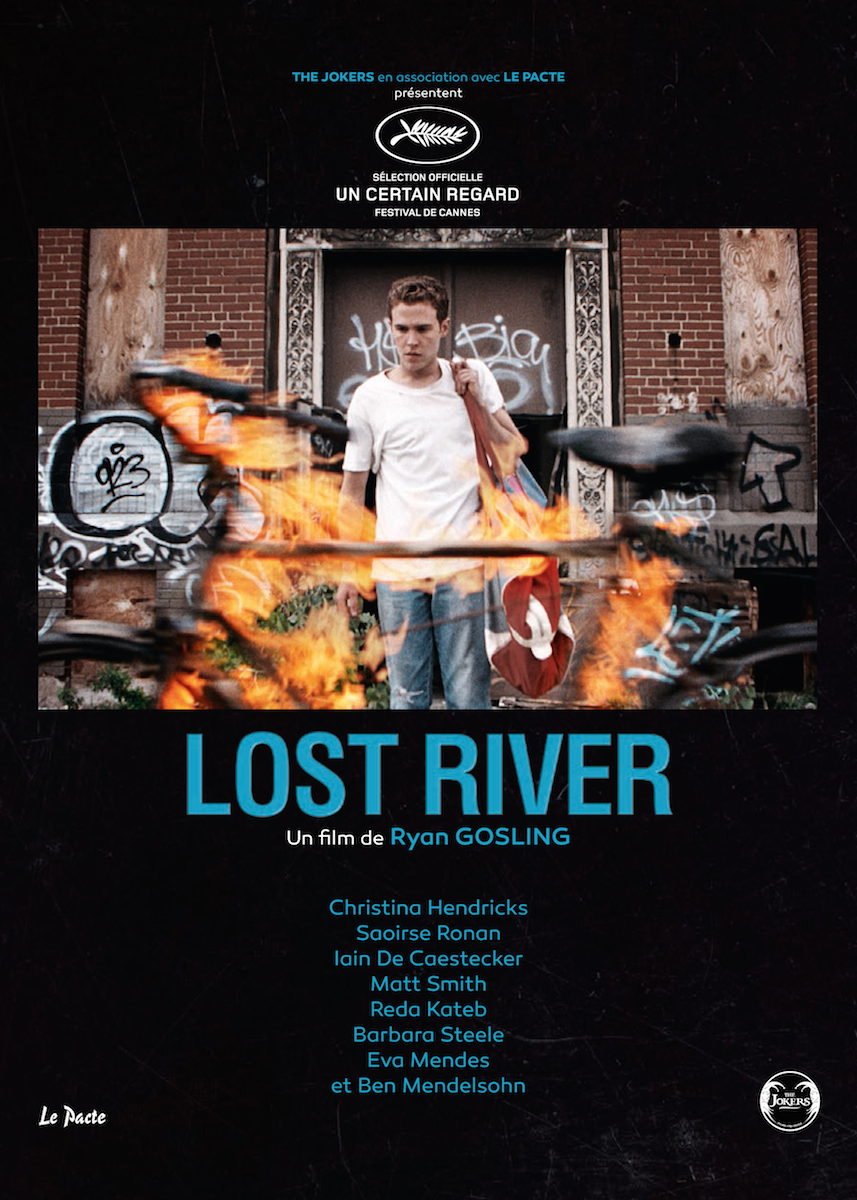
Film Review: Lost River (dir by Ryan Gosling)


Lost River

I had high hopes for Lost River.  Not only is it the directorial debut of one of my favorite actors, Ryan Gosling, but it was also booed at Cannes.  Some of the best and most interesting films ever made have been booed at Cannes.  The reviews that I had read of Lost River indicated that the film was a mess but it was, at the very least, a visually intriguing mess.  I was expecting the film to be pure style over substance but you know what?  I like style.

So, with all that in mind, I finally got a chance to sit down and watch Lost River last night and … bleh.  It’s not a terrible film.  You can watch it and feel that Ryan Gosling does have some promise as a director, if not as a writer.  (Along with directing, he also wrote the film’s screenplay.)  There are some nicely surreal images, though almost all of them appear to have been borrowed from other better films and, as a result, even the strangest of images are rather familiar.  (To be truly impressed by Lost River, it helps to have never seen anything directed by Mario Bava, Dario Argento, David Lynch, or Terrence Malick.)  He gets a memorably unhinged performance from the great Ben Mendelsohn but then again, when hasn’t Mendelsohn given a memorably unhinged performance?

Anyway, Lost River takes place in Detroit, presumably because Detroit features a lot of dilapidated neighborhoods that look interesting on film and allow Gosling to pretend that his film is about America urban decay.  Billy (Christina Hendricks) is on the verge of losing her house but, with the help of sleazy bank manager Dave (Ben Mendelsohn), Billy gets a job working as a performer at a club.  At the club, she and Cat (Eva Mendes) perform elaborate routines which always end with them pretending to die in some excessively brutal and bloody way.  The club’s largely affluent audience loves it.  Dave loves it so much that he’s inspired to sing a song on stage.  Later on in the film, Dave does an elaborate dance because every independent film has to feature an out-of-nowhere elaborate dance.

Meanwhile, Billy’s son, Bones (Iain De Caestecker), is trying to raise money to save the house by stealing copper out of abandoned buildings.  However, this gets him in trouble with Bully (Matt Smith, struggling to speak with an American accent), a psychopath who has declared his section of Detroit to be “Bullytown.”  Bully rides around in a convertible, sitting on a throne that’s been attached to the back seat.  When Bully discovers that Bones has been stealing copper from buildings in Bullytown, Bully declares that Bones must die.

(At some point, you have to wonder if Bully was doomed from the minute that his parents decided to name him Bully.  Maybe if they had named him The Doctor, he could have lived a very different life.)

Living next door to Billy and Bones is Rat (Saorise Ronan, who gives a good performance and deserves better than this role).  Rat is called Rat because she owns a pet rat that’s named Nick.  Got all that?  Rat also lives with her grandmother (Barbara Steele), who never speaks but spends all of her time watching old home movies.  Why would you cast an icon like Barbara Steele and then not allow her to do anything other than sit in a chair and silently stare at a television?

If Lost River was just an exercise in pure style, I probably would have enjoyed it a lot more.  I would much rather a film be too obscure as opposed to being too obvious.  Unfortunately, while Gosling the director is having a lot of fun being as stylish as he can be, Gosling’s the screenwriter proves himself to be heavy-handed and patronizing.  By setting the film in Detroit and having random characters show up to talk about how America is dying and the poor are getting poorer while the rich get richer, Gosling lets us know that Lost River is meant to be more than just an exercise in technique.

The problem is that, as well-intentioned as Gosling may be, you can’t help but get the feeling that he has absolutely no idea what it’s like to be poor or what it’s like to live in a dying American city.  According to the 2010 census, 82.7% of Detroit’s population is African-American.  If you’re making a movie the deals, no matter how strangely, with what it’s like to be poor and desperate in Detroit, why would you decide to exclusively cast affluent-looking Caucasians in all of the main roles?  The few black characters who appear in Lost River are largely there to either comfort or share wisdom with the main white characters before then quickly moving on, never to be seen again after their minute or so of screen time.  It comes across as being condescending in only the way something written by a wealthy white guy can be.

Lost River is a misfire, an attempt by a filmmaker to try to make a statement about something that he really doesn’t seem to know much about.  Judging from the film’s visuals, Gosling has some promise as a director but, in the future, he should probably try to work with a better screenwriter.  If you don’t listen to the dialogue and just consider the film as an exercise in visuals, it’s mildly diverting.  (That said, even the nonstop parade of surreal images gets boring after a while.)  Lost River is not terrible.  It’s just bleh.

Embracing the Melodrama #58: The Place Beyond The Pines (dir by Derek Cianfrance)


The-Place-Beyond-The-Pines

First released in 2013, the underrated (and, as far as end-of-the-year awards ago, underappreciated) The Place Beyond The Pines is actually three cinematic melodramas in one.  Much like a great novel, this movie is split into multiple pieces with each part telling a different part of a larger story.  It’s an interesting and ambitious concept, the type that we sometimes fear that audiences are no longer capable of appreciating.

The first third of the story centers on Luke Glanton (Ryan Gosling), a motorcycle stuntman who performs at state fairs.  During one such fair in upstate New York, he meets and has a brief affair with Romina (Eva Mendes, giving an excellent performance).  When he returns to New York a year later, Luke discovers that he is now a father.  Luke quits the fair and decides that he wants to be a part of his son’s life but Romina, who is now in a stable relationship with a good man named Kofi (Mahershala Ali), asks him to stay away.  Determined to be part of his son’s life and also looking to win back Romina, Luke stays in town and gets a job working with Robin (the always excellent Ben Mendelsohn).  Robin owns an auto garage and, as he explains to Luke, he also used to be a bank robber.  Soon, with Robin’s help, Luke is robbing banks and sending the money to Romina.

Place

Luke’s story is probably the strongest in the film.  Ryan Gosling is charismatic as the dangerous yet likable Luke and he and Eva Mendes have a lot of on-screen chemistry.  Ben Mendelsohn brings yet another one of his trademark burned out characters to life and Mahershala Ali is sympathetic as Kofi, a man, who despite being good and responsible, is simply no Ryan Gosling.

The second part of the story deals with Avery Cross (Bradley Cooper), the cop who chases Luke after one of his bank robberies.  Avery is the politically ambitious son of a former judge (Harris Yulin) and, much like Luke, he also has newborn son.  When Avery is originally hailed as hero for his pursuit of Luke, Avery’s feelings are far more ambivalent.  It gets even more difficult for him when he catches some of his fellow cops (led, of course, by Ray Liotta) stealing the money that Luke sent to Romina.  When Romina rejects Avery’s attempt to return the money to her, Avery is left with little choice but to try to take down the crooked cops himself.  It’s the only way for him to clear his conscience.

movies-the-place-beyond-the-pines-still-7

And, finally, in the third part of the story, teenager Jason Cankham (Dane DeHaan) meets and befriends Avery’s son, AJ (Emory Cohen).  What neither one of them realizes is that Jason is Luke’s son.  The interesting thing here is that the two sons have, on the surface at least, turned out to be the exact opposites of their father.  Jason is the good kid while AJ is probably one of the most despicable movie teenagers of all time.  When Jason learns the truth about both of their fathers, he has to decide whether he’s his father’s son or if he is his own human being.

the-place-beyond-the-pines03

As you might be able to guess from the above plot description, The Place Beyond the Pines is a big epic of a film and, perhaps not surprisingly, the end results are intriguing if occasionally uneven.  The film starts out so strongly with Ryan Gosling roaring down empty roads on his motorcycle that it’s hard for the rest of the movie to live up to that opening’s promise.  And yet somehow, the film manages to do just that.  Even the parts of the film that didn’t particularly intrigue me — like the whole subplot with the corrupt cops — were saved by the efforts of a perfectly chosen cast.  The third and final part of the film provides the perfect climax, helping us to both understand the legacy of Luke Glanton and Avery Cross but also to understand why both of their stories are important, both as individual tales and as parts of a greater whole.

The Place Beyond The Pines may not be perfect, not in the way that a film like Winter’s Bone is perfect.  However, we should still be glad that films like it are being made.

Place-Beyond-the-Pines

Here’s the Teaser Clip For Ryan Gosling’s Lost River!


Here is the teaser clip for Ryan Gosling’s directorial debut, Lost River, which was released ahead of the film’s premiere at Cannes.

So far, the majority of the reviews out of Cannes have been mixed.  The film has been called self-indulgent, incoherent, and pretentious and, perhaps worst of all, it has been compared by more than one reviewer to Richard Kelly’s Southland Tales.

Peter Bradshaw of the Guardian, a reviewer whose opinion I usually respect, writes: “Ryan Gosling’s Lost River is a conceited clunker – and yet there are great images and mad energy.”  That gave me some hope — I can forgive self-indulgence if it’s at least interesting to watch.  But then Jeff Wells had to pop up and start comparing it to Beasts of the Southern Wild.  As usual, Sasha Stone over at Awards Daily has some very strong feelings about the film, despite the fact that — as she readily admits — she hasn’t actually seen it.  (But Sasha’s so much smarter than the rest of us common people, so who are we to question her, right?)

Well, as you can probably guess, I don’t care what the critics think or say.  I’m still going to see it and judge it for myself.  Not only is the film directed by Ryan Gosling but it also stars three of my favorite actresses — Eva Mendes, Saoirse Ronan, and Barbara Steele.  Dr. Who fans will be happy to see Matt Smith while those of you who enjoy Agents of SHIELD can get a chance to apparently see a new side of Iain De Caestecker.

As for the teaser below — well, who knows what the Hell’s going on?  But aren’t you just a little bit intrigued to find out?

What If Lisa Marie Picked The Oscar Nominees…


With the Oscar nominations due to be announced this week, now is the time that the Shattered Lens indulges in a little something called, “What if Lisa had all the power.” Listed below are my personal Oscar nominations.  Please note that these are not the films that I necessarily think will be nominated.  The fact of the matter is that the many of them will not.  Instead, these are the films that would be nominated if I was solely responsible for deciding the nominees this year.  Winners are listed in bold.

You can check out my picks for 2010 by clicking here.

My picks for 2011 can be found here.

And, finally, here are my picks for 2012.

Best Picture

Best Picture

12 Years A Slave

American Hustle

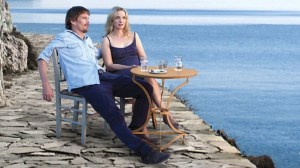
Before Midnight

Blue Is The Warmest Color

Frances Ha

Fruitvale Station

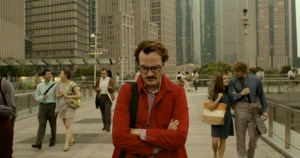
Her

Inside Llewyn Davis

Spring Breakers

Upstream Color

Shane+Carruth+Upstream+Color+Portraits+2013+DRHrpQS3Qacx

Best Director

Noah Baumbach for Frances Ha

Shane Carruth for Upstream Color

Spike Jonze for Her

Harmony Korine for Spring Breakers

David O. Russell for American Hustle

new-wolf-of-wall-street-trailer-leonardo-dicaprio-is-the-wealthiest-stockbroker-in-the-world

Best Actor

Bruce Dern in Nebraska

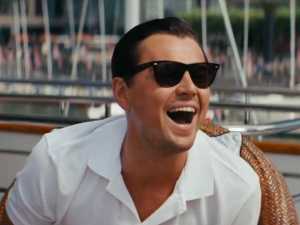
Leonardo DiCaprio in The Wolf Of Wall Street

Matthew McConaughey in Dallas Buyers Club

Joaquin Phoenix in Her

Dennis Quaid in At Any Price

This-one-is-good

Best Actress

Cate Blanchett in Blue Jasmine

Julie Delpy in Before Midnight

Adèle Exarchopoulos in Blue Is The Warmest Color

Greta Gerwig in Frances Ha

Amy Seimetz in Upstream Color

00290065-0000-0000-0000-000000000000_00000065-06d3-0000-0000-000000000000_20130903202205_Chandler

Best Supporting Actor

Barkhad Abdi in Captain Phillips

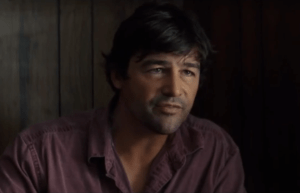
Kyle Chandler in The Spectacular Now

Bradley Cooper in American Hustle

James Franco in Spring Breakers

Jared Leto in Dallas Buyers Club

1380134395_Lawrence

Best Supporting Actress

Jennifer Lawrence in American Hustle

Eva Mendes in The Place Beyond The Pines

Lupita Nyong’o in 12 Years A Slave

Léa Seydoux in Blue Is The Warmest Color

Octavia Spencer in Fruitvale Station

Her

Best Original Screenplay

American Hustle

Blue Jasmine

Her

Inside Llewyn Davis

Upstream Color

Before-Midnight

Best Adapted Screenplay

12 Years A Slave

Before Midnight

Blue Is The Warmest Color

The Spectacular Now

The Wolf of Wall Street

November 1st, 2013 @ 20:49:52

Best Animated Feature

The Croods

Despicable Me 2

Ernest and Celestine

Frozen

Monsters University

STORIES-WE-TELL---SP-with-Super8cam-flatsc.JPG

Best Documentary Feature

20 Feet From Stardom

The Armstrong Lie

Pussy Riot: A Punk Prayer

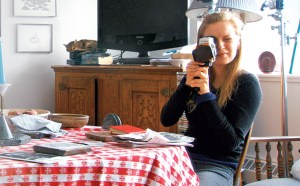
Stories We Tell

Tim’s Vermeer

Blue-is-the-Warmest-Color

Best Foreign Language Film

(Please note that I do things differently for this category than the Academy.   For this award, I am nominating the best foreign language films to be released in the United States in 2013.)

Beyond the Hills

Blue Is The Warmest Color

No

Renoir

White Elephant

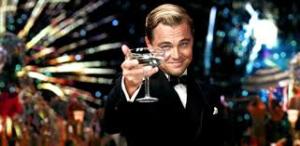
The Great Gatsby1

Best Production Design

12 Years A Slave

Gravity

The Great Gatsby

The Hobbit: The Desolation of Smaug

Oz: The Great and Powerful

Spring Breakers

Best Cinematography

Frances Ha

Inside Llewyn Davis

Nebraska

Spring Breakers

Upstream Color

American Hustle

Best Costume Design

12 Years A Slave

American Hustle

The Copperhead

The Great Gatsby

The Hunger Games: Catching Fire

Upstream Color

Best Film Editing

12 Years A Slave

American Hustle

Gravity

Her

Upstream Color

American Hustle 2

Best Makeup and Hairstyling

12 Years A Slave

American Hustle

Dallas Buyers Club

The Hobbit: The Desolation of Smaug

Warm Bodies

Maniac

Best Original Score

Gravity

Her

Maniac

Trance

Upstream Color

The Great Gatsby2

Best Original Song

“Let it Go” from Frozen

“A Little Party Never Killed Nobody (All We Got)” from The Great Gatsby

“Young and Beautiful” from The Great Gatsby

“The Moon Song” from Her

“I See Fire” from The Hobbit: The Desolation of Smaug

“Atlas” from The Hunger Games: Catching Fire

“Please Mr. Kennedy” from Inside Llewyn Davis

“So You Know What It’s Like” from Short Term 12

“Becomes The Color” from Stoker

“Here It Comes” from Trance

Iron Man 3

Best Sound Editing

All Is Lost

Iron Man 3

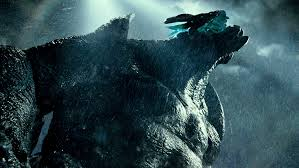
Pacific Rim

Rush

Upstream Color

Pacific Rim

Best Sound Mixing

All Is Lost

Iron Man 3

Pacific Rim

Rush

Upstream Color

Gravity

Best Visual Effects

Gravity

The Hobbit: The Desolation of Smaug

Iron Man 3

Oz: The Great and Powerful

Pacific Rim

List of Films By Number of Nominations:

9 Nominations — Upstream Color

8 Nominations — American Hustle

7 Nominations — 12 Years A Slave, Her

5 Nominations — Blue Is The Warmest Color

4 Nominations — Frances Ha, Gravity, The Great Gatsby, Inside Llewyn Davis, Spring Breakers

3 Nominations — Before Midnight, Dallas Buyers Club, Iron Man 3, Pacific Rim

2 Nominations — All Is Lost, Blue Jasmine, Frozen, Fruitvale Station, Nebraska, Oz The Great and Powerful, Rush, The Spectacular Now, Trance, The Wolf of Wall Street

1 Nominations — 20 Feet From Stardom, The Armstrong Lie, At Any Price, Beyond The Hills, Captain Phillips, The Copperhead, The Counselor, The Croods, Despicable Me 2, Ernest and Celestine, The Hunger Games: Catching Fire, Maniac, Monsters University, No, The Place Beyond The Pines, Pussy Riot: A Punk Prayer, Renoir, Short Term 12, Stoker, Stories We Tell, Tim’s Vermeer, Warm Bodies, White Elephant

List of Films By Number of Oscars Won

3 Oscars — American Hustle, Upstream Color

2 Oscars — The Great Gatsby

1 Oscar — Before Midnight, Blue is The Warmest Color, Frances Ha, Frozen, Gravity, Her, Iron Man 3, Maniac, Pacific Rim, The Spectacular Now, Spring Breakers, Stories We Tell, The Wolf of Wall Street