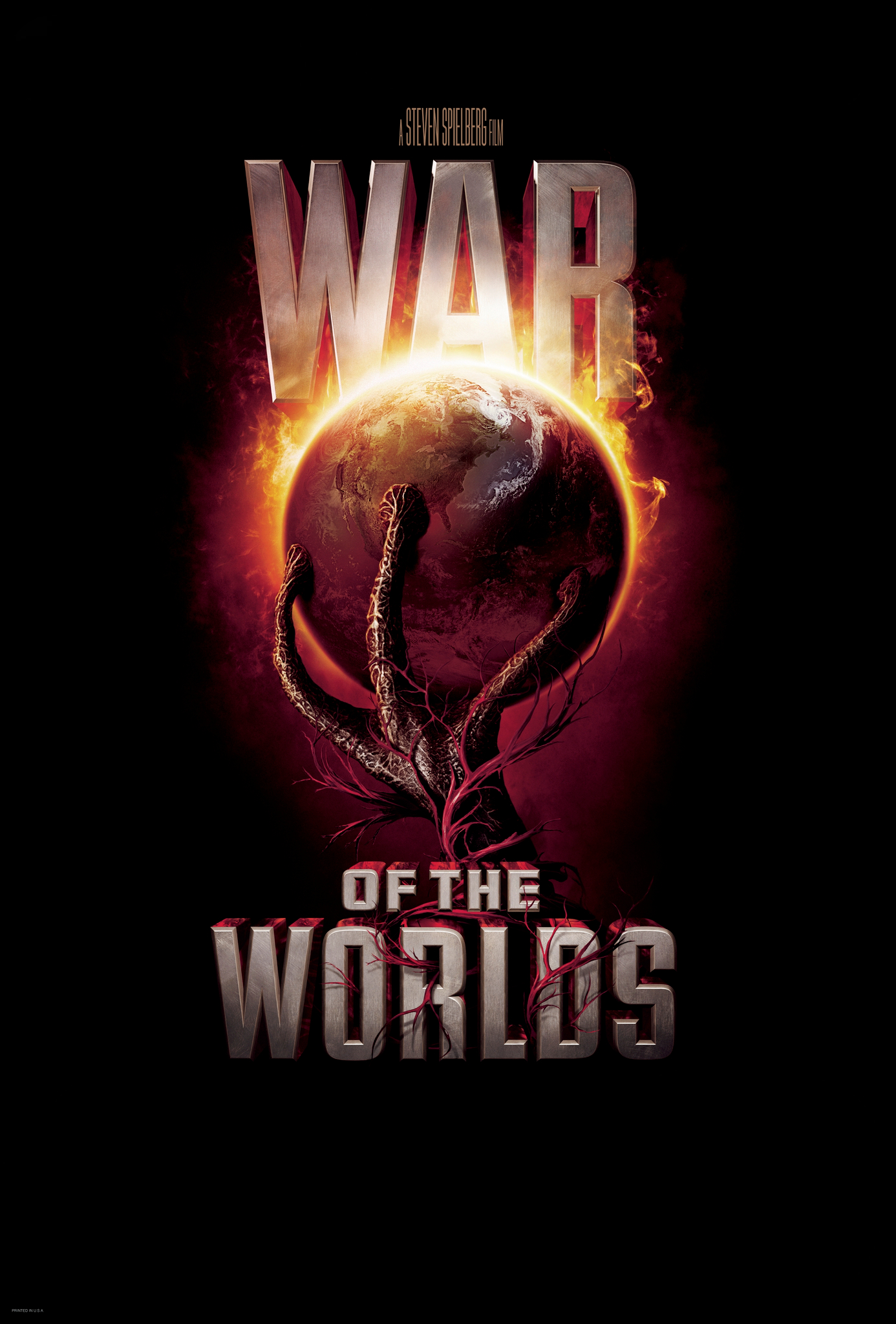
Review: War of the Worlds (dir. by Steven Spielberg)


“This is not a war any more than there’s a war between men and maggots… This is an extermination.” — Harlan Ogilvy

When looking back at the vast filmography of Steven Spielberg, science fiction usually evokes a sense of sweeping wonder, starry-eyed optimism, or at the very least, a deeply felt humanism. Films like Close Encounters of the Third Kindand E.T. the Extra-Terrestrial taught generations to look at the stars with hope rather than dread. Even when things took a darker turn in Jurassic Park or the neon-drenched corridors of Minority Report, there remained a foundational thrill—a cinematic ride that ultimately leaves the audience exhilarated. However, his 2005 adaptation of H.G. Wells’ classic novel, War of the Worlds, stands as a radically different beast altogether. It is arguably the bleakest, most claustrophobic blockbuster Spielberg ever directed, operating less as an adventurous alien invasion epic and more as a raw, nerve-shredding analog for collective trauma. Emerging a mere four years after the collapse of the Twin Towers, the film strips away the romanticism of cosmic exploration and replaces it with a visceral, ground-level nightmare of sudden, inexplicable annihilation.

The brilliance of Spielberg’s approach, working alongside screenwriter David Koepp, lies in how intensely localized the narrative remains. Rather than tracking the invasion from the traditional perspective of military command centers, global leaders, or brilliant scientists, the audience is trapped inside the chaotic, deeply flawed perspective of Ray Ferrier, played with a brilliant, unheroic franticness by Tom Cruise. Ray is not a savior; he is a deadbeat, blue-collar crane operator living in a graying New Jersey suburb. He is the kind of father who doesn’t know his son’s school schedule and has an empty refrigerator when his ex-wife drops off their two children, Robbie and Rachel. By centering the apocalypse around a fractured, working-class American family, Spielberg roots the cosmic terror in a painful reality. The impending destruction of the planet mirrors the collapse of Ray’s domestic stability, forcing a man who can barely manage basic parental accountability to suddenly navigate the literal end of the world.

From a purely technical standpoint, the first act of War of the Worlds features some of the most masterful suspense and terror ever committed to celluloid, heavily leaning on a barrage of explicit 9/11 visual imagery. The sequence where the first Martian Tripod emerges from beneath a New Jersey intersection is a masterclass in modern cinematic dread, directly weaponizing the fresh, collective trauma of the post-9/11 American public. Spielberg eschews the clean, omniscient visual language of standard disaster cinema for an organic, chaotic documentary style, mirroring the sudden, disorienting informational and electronic blackout experienced by millions during the real-world attacks. The camera lingers on heavy, ominous storm clouds moving against the wind, the eerie crackle of localized lightning strikes, and the unsettling silence of a neighborhood stripped of electronic life. When the asphalt fractures and the colossal, three-legged war machine rises from the earth, the sound design hits the audience like a physical blow. The Tripod’s horn—a terrifying, mechanical foghorn groan—instantly triggers an ancient, mammalian fight-or-flight response. As the machine opens fire with its disintegration beams, turning nearby pedestrians into literal puffs of ash, the camera tracks Ray running for his life through a massive, rolling cloud of dust and debris. When Ray finally makes it back to his house, the ash of his vaporized neighbors covers his clothes and face, an unmistakable and deeply unsettling visual that explicitly echoes the horrific reality of the streets of Manhattan on September 11, 2001.

This deliberate invocation of post-9/11 anxiety is the thematic engine that drives the entire film. Spielberg does not hide these parallels; he highlights them with a devastating accuracy that makes the film difficult to watch even decades later. When the invasion begins, a terrified, screaming Rachel asks her father if it is “the terrorists,” a line that perfectly encapsulates the collective, reactionary psyche of the mid-2000s American consciousness, where any sudden, catastrophic violence was instantly filtered through the lens of domestic terrorism. The imagery of walls plastered with photocopied missing-persons flyers, crowds of refugees trudging down desolate highways with whatever belongings they can carry, and a derailed, blazing passenger train hurtling past an abandoned station all tap into a very specific, historical vulnerability. In Independence Day, an alien invasion was an opportunity for global unity and triumphant, cigar-chomping counter-offensives. In Spielberg’s hands, the invasion is an overwhelming, asymmetric slaughter that reduces the world’s most powerful military to a collection of burning tanks rolling over a ridge into an invisible abyss.

However, while the film masterfully handles the grand-scale terror of the invasion, it stumbles significantly when navigating its internal family dynamics, particularly regarding Ray’s son, Robbie, played by Justin Chatwin. I completely agree with the widespread criticism that Robbie is an intensely annoying, deeply self-destructive presence whose actions and decisions repeatedly defy basic human survival instincts. Throughout the crisis, his behavior goes beyond typical teenage rebellion and crosses into pure narrative absurdity. Instead of helping protect his traumatized, screaming younger sister, Robbie consistently sabotages his family’s safety to aggressively gawk at a hopeless war zone. His sudden, obsessive urge to join a military force that is clearly being pulverized by an unearthly power feels entirely unearned and maddening to watch. His character arc reaches a peak of irritation when he blindly runs over a burning ridge directly into a mechanical meat grinder, abandoning his family for a bizarre, suicidal patriotic impulse. This makes his miraculous survival at the end of the film a massive narrative misstep; having him casually show up at his grandparents’ pristine Boston home after witnessing a literal military massacre completely undermines the high-stakes realism Spielberg spent two hours building, turning what should have been a tragic consequence of his own foolishness into a cheap, unearned happy ending.

As the narrative progresses past the family friction, the film shifts its focus from external spectacle to the internal breakdown of human morality under the weight of existential terror. This transition is embodied by the mid-movie introduction of Harlan Ogilvy, played with an unsettling, unhinged intensity by Tim Robbins. Trapped in a dark basement while the Martians harvest the surrounding countryside, Ray and Ogilvy represent two radically different, yet entirely believable, reactions to trauma. Ogilvy is consumed by a vengeful, nihilistic madness, obsessed with digging tunnels and launching a futile, suicidal guerrilla war against an enemy that operates on a completely different evolutionary plane. Ray, conversely, is driven solely by a desperate, animalistic urge to protect his daughter. The sequence culminating in Ray’s decision to kill Ogilvy behind closed doors to keep him from alerting the aliens is one of the darkest thematic beats in Spielberg’s career. It forces the audience to confront a disturbing truth: the true horror of the apocalypse is not just what the monsters do to us, but what we are willing to do to each other to survive another hour.

The film’s visual palette, masterfully crafted by cinematographer Janusz Kamiński, reinforces this pervasive sense of rot and despair. Kamiński utilizes a heavily bleached, high-contrast aesthetic that drains the world of vibrant color, leaving behind a cold, metallic landscape dominated by sickly slates, deep shadows, and stark whites. This visual harshness reaches its zenith during the infamous “Red Weed” sequence. As the Tripods begin carpet-bombing the landscape with human blood to fertilize an invasive, crimson alien flora, the film transforms into a surrealist, gothic horror show. The Earth itself is literally being terraformed by the bodily fluids of the slaughtered, creating a grotesque, bleeding ecosystem that visually mirrors the internal rot of the surviving human populations. It is a sequence that feels closer to the cinematic nightmares of H.R. Giger than the traditional whimsy of a Spielbergian adventure.

Despite its immense strengths, War of the Worlds is frequently criticized for its final act, a critique that deserves a nuanced evaluation. The abrupt resolution—wherein the seemingly invincible Martians suddenly succumb to Earth’s microscopic bacteria—is lifted directly from H.G. Wells’ original 1898 text. While narratively faithful, its execution in a modern Hollywood blockbuster can feel jarring, functioning as a biological deus ex machina that robs the human protagonists of a traditional, heroic victory. Furthermore, Robbie’s unearned survival represents a sudden, almost desperate pivot back toward Spielberg’s traditional family-first sentimentality. This neat resolution feels somewhat unearned given the preceding two hours of unrelenting, uncompromising nihilism, momentarily fracturing the film’s gritty, documentary-like reality.

Yet, looking past these structural stumbles, the final voiceover adaptation of Wells’ text offers a profound philosophical punctuation mark to the nightmare. The realization that humanity has earned its right to survive on this planet not through military might or moral superiority, but through millions of years of evolutionary struggle alongside the tiniest microbes, recontextualizes the entire ordeal. It reminds the audience of our inherent fragility and the hubris of believing ourselves to be permanently secure in our modern, technological fortresses. Spielberg’s War of the Worlds remains an incredibly potent piece of mainstream filmmaking precisely because it refuses to comfort its audience for the majority of its runtime. It stands as a brilliant, terrifying time capsule of an era defined by sudden vulnerability, demonstrating that even the master of cinematic wonder could look into the abyss of the cosmos and see nothing but our own reflections looking back in sheer terror.
Spielberg delves into Sci-Fi again with the Disclosure Day Teaser


Spielberg. Williams. Koepp. Kaminski. What the heck is Disclosure Day?

The teaser trailer for Steven Spielberg’s Disclosure Day hit my phone via Letterbox’d. This is connected to those weird X-Files looking posters I’ve been seeing as of late. It looks like another film with aliens, similar to Close Encounters of the Third Kind with a dash of Zemekis’ Contact or sprinkle of Villeneuve’s Arrival. The film stars Josh O’Connor (Wake Up Dead Man: A Knives Out Mystery), Emily Blunt (Jungle Cruise), Colin Firth (Kingsman), Coleman Domingo (The Running Man), Wyatt Russell (Marvel’s Thunderbolts), and Eve Newson (Robin Hood).

Spielberg and Koepp have a good track record together with the Jurassic Park films, and it’a always good to see a pairing with John Williams. Still, this all looks really weird. Either way, we’ll find out when the film is released next June.

Enjoy!

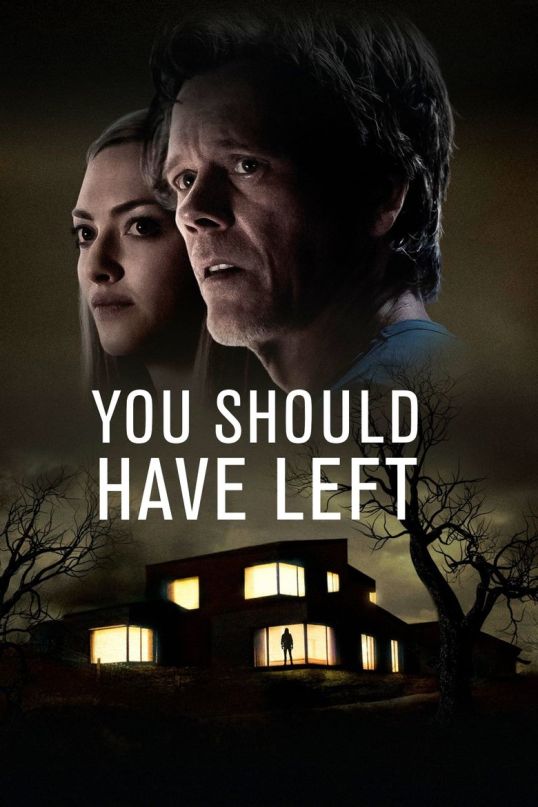
Horror Film Review: You Should Have Left (dir by David Koepp)


Oh, the high hopes I had for You Should Have Left.

Not only was this horror film reuniting one of my favorite actors with the man who directed him in one of his best performances but it also featured what appeared to be the perfect casting of Amanda Seyfried as Kevin Bacon’s daughter.  When I heard that the film featured Bacon trying to protect his family from an evil spirit, I was totally ready to watch a film that would feature ghosts trying to grab Amanda while Kevin yelled, “Leave me daughter alone!”

Of course, then I found out that Kevin Bacon and Amanda Seyfried were not playing father and daughter.  They were playing husband and wife.  And listen, I love Kevin Bacon.  I think he’s a great actor and he seems like a nice guy and I always appreciate the fact that he’s willing to make fun of himself and his up-and-down career.  But seriously, Kevin Bacon is 28 years older than Amanda Seyfried and hearing that they would not only be playing husband and wife but that they would also be playing the parents of a young girl …. well, I wasn’t expecting much.

To the film’s credit, it doesn’t attempt to ignore the age difference between Bacon and Seyfried.  This isn’t like one of those films where Michael Douglas is married to someone who just graduated from high school and everyone just shrugs it off as if there isn’t anything weird about it.  Instead, the age difference is a major plot point of the movie.  Kevin Bacon plays Theo, a retired, wealthy banker.  Amanda Seyfried plays Susanna, an actress.  From the start of the film, Theo obviously feels insecure about whether or not his much younger wife loves him.  When he has trouble gaining access to a film set where she’s acting, he gets a bit paranoid.  When he finds out that she was filming a love scene, he gets even more paranoid.  Throughout the film, Theo worries that Susanna is gong to leave him for a younger man.

Meanwhile, Susanna struggles with how to explain to their daughter why no one likes Theo.  It turns out that Susanna is Theo’s second wife.  Theo’s first wife drowned in a bathtub.  Theo was accused of murdering her but he was subsequently acquitted.  As Susanna explains what happened, it becomes a bit obvious that she has her own doubts about her husband and his innocence.

When they receive an invitation to stay at a house in Wales, both Theo and Susanna assume that the other one arranged it.  Actually, neither one of them arranged it!  Still, it’s a really nice house and it seems like the perfect place for them to repair their strained marriage and work on their trust issues …. except for the fact that there’s obviously somebody or something inside the house with them!

Now, really, You Should Have Left should have worked.  As I said before, I like Kevin Bacon and I think Amanda Seyfried is a far better actress than she’s actually given credit for being.  Add to that, You Should Have Left was directed by David Koepp, who previously directed Bacon in Stir of Echoes.  Remember how good that movie was?  And yet, while You Should Have Left has a few creepy moments, it ultimately falls flat.  What happened?

I think some of the problem is that, regardless of how much you may like the actors playing them, nether Theo nor Suzanna is a particularly compelling character.  Theo, in particular, keeps a meditation journal.  Stir of Echoes Kevin Bacon would have kicked the ass of You Should Have Left Kevin Bacon.  Seriously, the minute you break out the meditation journal, that’s the minute I stop taking you seriously as a protagonist.  The film also cheated a bit when it came to the issue of whether or not Theo murdered his wife.  Instead of saying yes or no, the film tried to keep things ambiguous and it just didn’t feel right.

In the end, the film just didn’t work.  The pacing was off.  The visual style was bland.  For all the build-up, there was nothing particularly interesting about the house’s secret.  For all the talent involved, the film just fell flat.

It happens.

The Trigger Effect (1996, directed by David Koepp)


Annie (Elisabeth Shue) and Matthew (Kyle MacLachlan) are a married couple with an infant daughter and a macho best friend named Joe (Dermot Mulroney).  When a suddenly blackout throws the city into chaos, Matthew and Annie can only watch as the world seems to go mad all around them.  Matthew quickly goes from being mild and straight-laced to stealing medicine from the local pharmacy and purchasing a shotgun with Joe.  When a potential burglar is killed by one of their neighbors, Annie, Matthew, and Joe decides that it’s time to get out of town and head up to Annie’s parents’ house.  Things do not go as planned as one of the three ends up seriously wounded and the members of the group have to decide how far they’ll go to survive.

The Trigger Effect has an interesting premise and raises some relevant questions about how far people will go to protect themselves in a crisis.  Unfortunately, the execution is almost totally botched.  Shue, MacLahclan, and Mulroney are all good actors but none of their characters are that interesting and an attempt to insert some sexual tension between Annie and Joe just feels like a cheap cliche.  Since the movie doesn’t make it clear who these three were before the blackout, it’s hard to be effected by what they do after the lights go out.

Michael Rooker has a cameo at the start of the film’s third act.  It involves him yelling and, because it’s a big dramatic moment, you won’t want to laugh but it’s hard not to because his rant just goes on for so long.  In that one moment, whatever reality has been created by the film goes straight out the window.  It all leads to a predictable ending that feels like it was taken from the Giant Book of Hollywood Cliches.  That’s a good book if you can find a copy.

This was David Koepp’s directorial debut and it has the weaknesses that you would expect to find in a first film.  Koepp’s second film, Stir of Echoes, would be a marked improvement.

Horror Film Review: Stir of Echoes (dir by David Koepp)


It’s blue collar horror!

As the 1999 film Stir of Echoes shows, ghost don’t only haunt the rich and famous.  Sometimes, they haunt ordinary guys who live paycheck to paycheck and just want to be able to take some pride in having a home that’s free of secrets and evil spirits.  “Ghosts, they’re a real pain the ass sometimes, y’know what I’m saying?”

For instance, in Stir of Echoes, Kevin Bacon plays Tom Witzky.  Tom is a phone lineman who lives in Chicago.  Tom wishes that he could have been something more than a phone lineman.  He wishes that his band could have taken off and he could have been a rock star.  But, now Tom’s reached his 40s, he’s got a wife named Maggie (Kathryn Erbe), a son named Jake (Zachary David Kope), and another child on the way.  So, he works hard and then he comes home and he has a beer and sometimes, he might go to a high school football game.  It’s not a glamorous life but at least it’s something with which Tom can be happy.

Of course, then Tom makes the mistake of going to a party that’s being given by his friend, Frank (Kevin Dunn).  When Maggie’s sister-in-law, Lisa (Illeana Douglas), says that she knows how to hypnotize people, Tom scoffs and challenges her to hypnotize him.  Lisa does so and, the next thing that Tom knows, he’s sitting there with tears in his eyes and everyone laughing at him.  Even though it was only a few seconds to Tom, he was apparently under hypnosis for quite a while.  He talked about being bullied as a child.  He stuck a safety pin through his hand.  He even accepted Lisa’s suggestion that he “try to be more open-minded.”  Upset over being revealed to be vulnerable, Tom leaves the party.

Tom soon learns what it means, in his case, to be more open-minded.  Soon, Tom is hearing voices and seeing what appears to be the ghost of a teenage girl in his house.  He starts to have disturbing and violent visions.  When Tom tries to pretend that nothing’s wrong, Jake tells him that it’s okay because he can see the ghost as well.

Growing obsessed with his visions, Tom is soon tearing his own house apart in an attempt to discover what the spirits are trying to tell him.  Is Tom truly seeing ghosts or, as so many in the neighborhood suspect, is he losing his mind?

When I first started rewatching Stir of Echoes for this review, I have to admit that I was a little bit concerned.  Kevin Bacon is one of the most likable actors on the planet and this film is usually cited as featuring one of his best performances but, in the first few scenes, he seemed to be almost going a little overboard with the whole “I’m just a working class guy” routine.  But, as the film progressed, I actually came to realize that Kevin Bacon was giving a brilliant performance.  The fact that he played Tom as being so rational and almost boring during the first half of the movie made it all the more effective when he started tearing his house apart during the second.  During those scenes, Bacon plays Tom as not only someone obsessed with discovering the truth but also as someone who just wants his life to be normal again.  If he has to destroy his life to get it back, that’s what he’s going to do.

(That said, my favorite character in the film was Lisa, mostly because we share the same name and she was played by the brilliant Illeana Douglas.  The thing I loved about Lisa is that, when she was informed that she had messed up Tom’s mind, she was both sorry and proud of herself at the same time.)

Stir of Echoes is still a frightening film, one with plenty of jump scares and a subtext of paranoia as it’s revealed that both the neighborhood and Tom’s friends are full of secrets.  Because they both came out in 1999, it often gets compared to The Sixth Sense.  I like The Sixth Sense but I actually prefer Stir of Echoes, just because it’s not quite as self-important as M. Night Shyamalan’s film.  The makers of Stir of Echoes didn’t set out to change the world.  They just wanted to make a scary ghost story and they succeeded.


4 Shots From 4 Films: The Blair Witch Project, The Rage: Carrie 2, The Sixth Sense, Stir of Echoes


4 Shots From 4 Films is just what it says it is, 4 shots from 4 of our favorite films. As opposed to the reviews and recaps that we usually post, 4 Shots From 4 Films lets the visuals do the talking!

This October, we’re using 4 Shots From 4 Films to look at some of the best years that horror has to offer!

4 Shots From 4 1999 Horror Films:

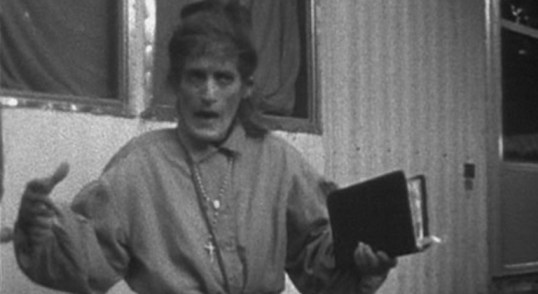
The Blair Witch Project (1999, dir by Daniel Myrick and Eduardo Sanchez)

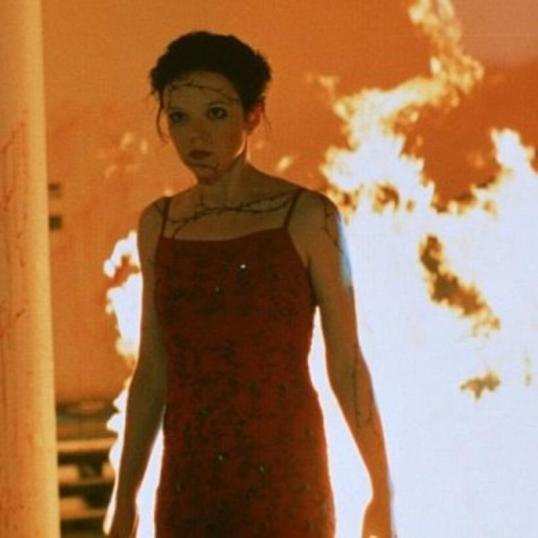
The Rage: Carrie 2 (1999, dir by Katt Shea)

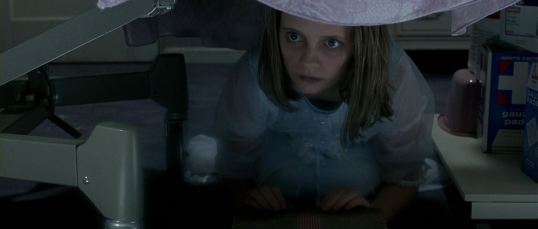
The Sixth Sense (1999, dir by M. Night Shyamalan)

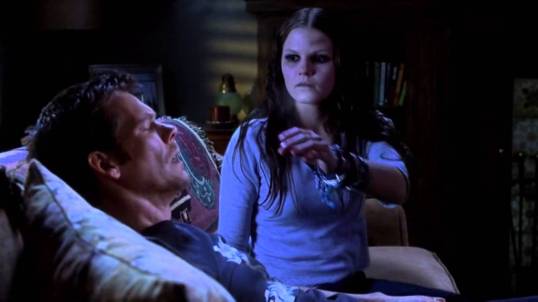
Stir of Echoes (1999, dir by David Koepp)