Review: The Other Guys (dir. by Adam McKay)


“We are gonna have sex in your car. It will happen again!” — Dirty Mike

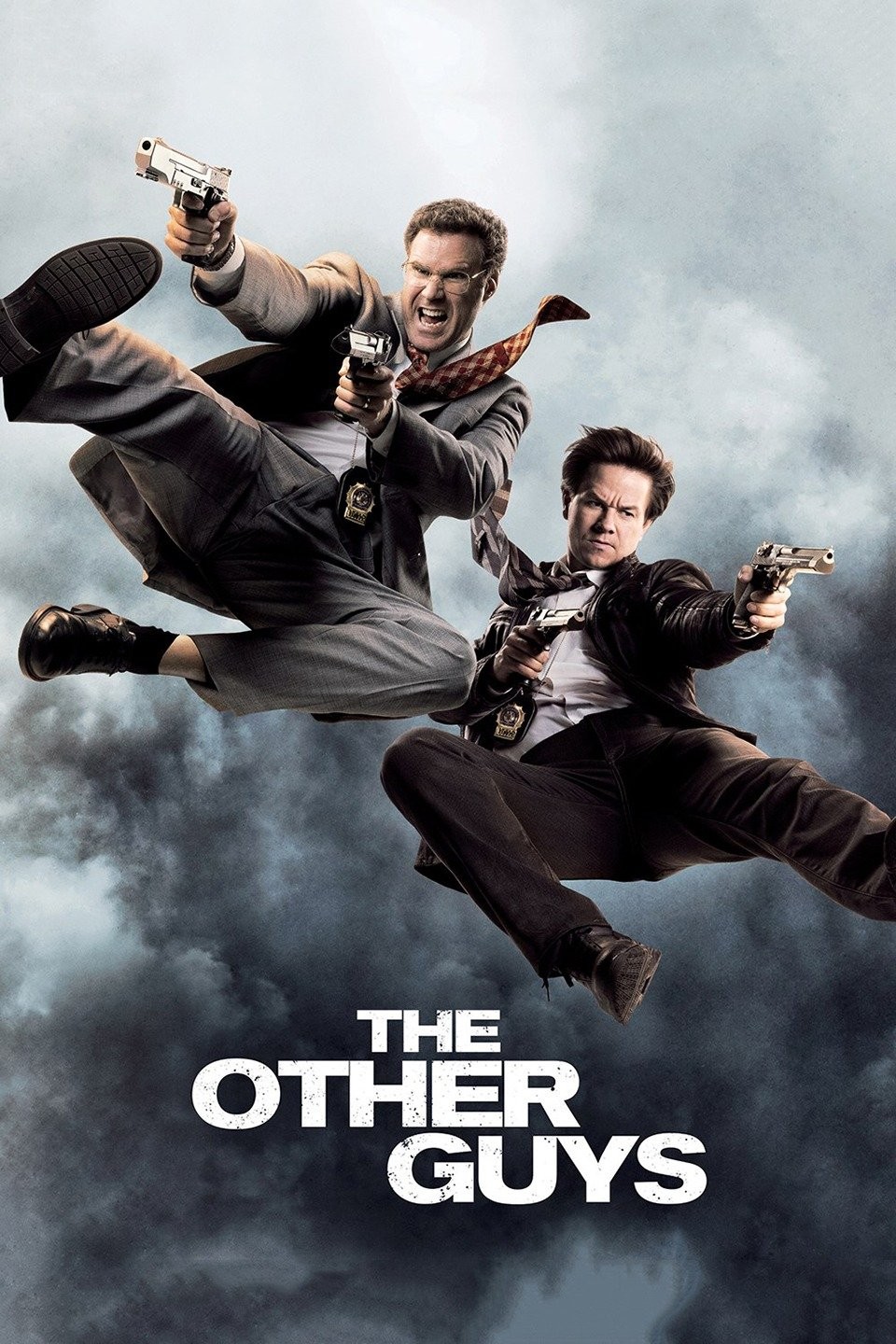
Adam McKay’s The Other Guys feels like the moment a class clown who is secretly a genius finally snaps and decides to teach the entire school a lesson while making them laugh so hard they forget they’re being educated. Released in 2010, the film lands right in that sweet spot of McKay’s career where he was pivoting away from the pure, unhinged mania of Anchorman and Step Brothers and starting to smuggle razor-sharp satire into the multiplex under a mountain of stupidity. It is, without a doubt, one of the funniest movies of its decade, but calling it just a comedy feels like a disservice. It’s a buddy cop movie that hates the irresponsibility of buddy cop movies, a financial crisis explainer disguised as a screamo TLC tribute, and a showcase for two lead performances that should have spawned at least three sequels. If you’ve somehow managed to sleep on this one, it’s time to fix that.

The opening sequence is a masterclass in bait-and-switch. We are introduced to Danson and Highsmith, the city’s top cops, played with magnificent, self-serious swagger by Dwayne Johnson and Samuel L. Jackson. They’re chasing down a minor misdemeanor in a way that destroys half of downtown Manhattan, culminating in them heroically jumping off a twenty-story building to land safely in some bushes. Except they don’t. They splatter. It’s a shocking, hilarious, and instantly iconic death scene that serves as McKay’s thesis statement: the action movie logic you’ve been fed for decades is a lethal fantasy. With the heroes dead, the spotlight shifts painfully to the guys who have to do the paperwork on their mangled corpses, forensic accountant Allen Gamble and hot-headed loose cannon Terry Hoitz. These two are, emphatically, the other guys, and when circumstances force them onto a case involving corporate financial fraud, they stumble their way toward something resembling heroism, occasionally despite themselves.

What separates The Other Guys from the pile of mediocre comedy-action hybrids that came before and after it is the chemistry between Ferrell and Wahlberg, which is genuinely one of the more unexpected comedic pairings of that era. Ferrell plays Gamble as a deeply strange man who has weaponized milquetoast passivity into a superpower. His complete, serene contentment with a life of spreadsheets, Grand Theft Auto grand larceny sprees where he obeys all traffic laws, and a suspiciously beautiful wife played by Eva Mendes is a hypnotic thing to watch. Ferrell dials down the bombast and delivers something wonderfully weird and controlled, a man who is simultaneously a complete dork and, as we later discover, a shockingly capable pimp named Gator. Wahlberg, meanwhile, is doing something genuinely interesting here. Terry Hoitz is a walking wound, a great cop reduced to a desk jockey and public mockery for the unforgivable sin of accidentally shooting Derek Jeter during the World Series. He’s angry, humorless, and convinced of his own greatness despite ample evidence to the contrary. Wahlberg plays him completely straight, which is the exact right call, because his deadpan bewilderment at Ferrell’s behavior, the way his voice cracks with desperate, shrill anger when trying to explain a normal scenario, ends up being funnier than almost anything else in the film. Their chemistry is a perfect storm of a guy who wants to live inside a peaceful spreadsheet and a guy who wants to set that spreadsheet on fire while learning to dance the sardine.

This is the kind of comedy where the supporting cast keeps piling on gloriously unhinged performances, which makes Ray Stevenson’s work as the heavy all the more valuable. As Roger Wesley, the corporate enforcer who does the violent bidding of Steve Coogan’s billionaire fraudster, Stevenson operates in a completely different register from everyone else. While Ferrell is weaponizing passive-aggressive politeness, Wahlberg is screaming about peacocks, and Michael Keaton is unconsciously quoting Waterfalls while running a police precinct, Stevenson remains a granite slab of menace. He doesn’t crack jokes, he doesn’t do double-takes, and he certainly doesn’t care about the absurdity swirling around him. There’s something almost old-fashioned about his screen presence here, a grim, heavy-lidded seriousness that makes him feel like he wandered in from a real crime thriller and simply refused to leave. It’s the kind of straight-man performance that doesn’t just anchor the chaos; it makes the chaos funnier by contrast. When he’s methodically hunting down loose ends while Ferrell and Wahlberg are bickering about whether a lion could beat a tuna in open ocean, the collision of tones is pure McKay alchemy.

The plot, such as it is, involves the duo stumbling onto a massive white-collar crime conspiracy led by a billionaire played with smarmy, cowardly glee by Steve Coogan. It’s here that McKay’s deeper ambitions start to peek through the absurdity. While Terry is desperate for a classic action-movie shootout and car chase, the investigation leads them to the Lendl Global offices, where the real villainy isn’t drug lords or terrorists but leveraged buyouts and pension fund looting. There’s a perfect running gag where they keep trying to get into the action, preparing for a massive gunfight against a team of mercenaries, only to find that the corrupt corporate security detail is made up of ex-cops just looking to quietly retire with their benefits. It is the funniest anti-climax, a deliberate denial of violence that reinforces the film’s core idea that the most dangerous criminals wear suits, not ski masks. The financial villain is a thinly veiled stand-in for the kind of Wall Street grift that was very much in the cultural conversation in 2010, just a couple of years after the financial crisis. McKay would later go much deeper on that territory with The Big Short, but the seeds of that interest are planted all over this film.

The comedy in The Other Guys operates on two distinct but equally brilliant levels. There is the surface-level absurdity, the kind that produces quotes like “I’m a peacock, you gotta let me fly!” and the quiet, steady domination of Gamble’s totemic Prius, which somehow survives a fireball helicopter crash without a scratch. The “aim for the bushes” jump, the lion versus tuna debate that Hoitz treats with theological gravity, and the wooden gun gifted to Gamble are all top-tier ridiculousness. Then there is the deeper, more surreal well of humor that feels distinctly McKay. The entire subplot of Gamble’s past as a college pimp named Gator is a work of deranged genius, a slow-motion, honey-dripped flashback that reveals a world of casual, elegant pimping that Ferrell plays with a straight face so absolute it circles back around to being terrifyingly cool. The relentless jokes about Gamble unknowingly marrying way out of his league, his genuine confusion over why people think Eva Mendes is attractive, is a running gag that beautifully plays on Ferrell’s ability to be completely oblivious to the reality surrounding him. Eva Mendes is admittedly underused, though the film at least has fun with the joke by leaning into Wahlberg’s incredulous reaction every time she appears, which never gets old.

Visually, the film has a blandly competent sheen that actually works in its favor. Unlike the frattish haze of Anchorman, here McKay is directing a movie that looks like a real cop film, which makes the eruptions of insanity even more jarring. The action sequences are staged with real competence. The car chases aren’t played as joke sequences; they’re genuinely well-staged, particularly the Prius chase midway through where Gamble’s calm, methodical driving commentary clashes with a panicking Hoitz. It’s legitimately exciting before it goes completely off the rails in the best way. McKay never lets the plot drag even when the jokes need room to breathe. By this point in his career he’d clearly figured out the right pace for this kind of thing, and it shows. The movie moves. The film also showcases Michael Keaton in a delightful supporting role as Captain Gene Mauch, a cop who unconsciously works a second job at Bed Bath & Beyond while peppering his police work with retail slogans. Keaton’s deadpan delivery of lines about TLC references and towel specials, only to shout the chorus of Waterfalls at a moment of high tension, is a thing of beauty. Every single one of his scenes is a gift. It’s a running joke that never explains itself, and it’s all the better for it.

Then there is the ending. For a film that spends nearly two hours being aggressively stupid-smart, the final moments make a radical pivot. As the bad guy is caught, the movie doesn’t just roll credits. It stops dead and turns into a miniature economics lecture. With animated infographics and hard statistics, McKay lays out exactly how Ponzi schemes, bailouts, and income inequality have shattered the American middle class, all while the Rage Against the Machine cover of Maggie’s Farm thrashes on the soundtrack. It’s a jarring, preachy, and completely unexpected move. On first viewing, it feels like the director violently smashing the emergency brake on the comedy train. But in hindsight, it’s the only honest way this movie could end. McKay isn’t just telling us that bank robbers are less dangerous than bankers; he’s stopping us from leaving the theater without understanding the scale of the theft. It doesn’t undermine the fun at all. If anything it adds a layer of purpose that makes the whole thing feel a little more substantial than your average cop spoof. It’s the moment the class clown pulls out a graph showing your student debt will cripple you for life, and somehow, it works because he’s been earning your trust with jokes for the previous hour and a half.

There’s something almost nostalgic about watching a comedy this confident in its own weirdness. The Other Guys arrived at an interesting moment for this kind of movie, when the mid-budget, R-rated studio comedy was still a viable commercial proposition. It made decent money even if it wasn’t a runaway smash, but more importantly, it trusts that you’re going to be on board for a scene where Ferrell and Wahlberg argue about whether they’d rather be a lion or a tuna, and it’s right to trust that. The criticisms are relatively minor. The movie is maybe fifteen minutes too long, and a subplot involving Wahlberg’s ballet background gets introduced and then somewhat dropped. The villain’s scheme, by design, isn’t particularly cinematic, and the film occasionally strains to make the stakes feel real. But these are the kinds of complaints you make about a movie you liked, not a movie you didn’t, and none of them meaningfully dent the overall experience.

More than a decade later, The Other Guys has aged into something of a classic, a revered staple of late-night cable and quotable group chats. It sits at a fascinating crossroads, holding onto the absurdist, quote-heavy DNA of McKay’s earlier work while laying the formal and thematic groundwork for what he would do next with The Big Short and Vice. It proves that the jump from Ron Burgundy to a film about the 2008 housing crisis wasn’t actually that far at all. He just needed Wahlberg to yell a little bit, Ferrell to explain why a lion would still beat a tuna, even in open ocean, and Stevenson to stand in the middle of it all looking like he genuinely wants to murder everyone in the room. Whether you come for the laughs, the surprisingly competent action, or Michael Keaton mumbling TLC lyrics under his breath, you’re going to find something to love. Absolutely worth your time.
Film Review: You People (dir by Kenya Barris)


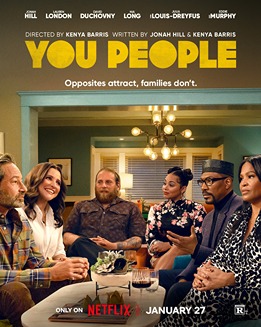
Ezra Cohen (Jonah Hill) and Amirah Mohammed (Lauren London) have been dating for six months.  Ezra is a Jewish atheist who works at a brokerage firm but who says his lifelong dream has been to be a podcaster.  Lauren is Black and a devout Muslim.  A graduate of Howard University, she is pursuing a career as a designer.  Despite coming from very different backgrounds, Ezra and Amirah are deeply in love and want to get married.  However, becoming engaged also means …. MEETING THE PARENTS!

Shelley and Arnold Cohen (played by Julia Louis-Dreyfus and David Duchovny) are self-styled progressives who immediately embarrass Ezra by going out of their way to trying to show how liberal and non-racist they are.  Shelley, in particular, goes out of her way to bond with Amirah but it’s immediately obvious that Shelley views Amirah as being more someone to show off than as an actual human being.  Meanwhile, Akbar Mohammed and Fatima Mohammed (played by Eddie Murphy and Nia Long) are members of the Nation of Islam who admire Louis Farrakhan and who claim that the Jews were behind the slave trade.

Just from that plot description, you can see a huge part of the problem with the new film, You People.  Whereas Shelley’s problem is that she’s too quick to brag about how much she loves the idea of having a black daughter-in-law, Akbar’s problem is that he’s an anti-Semite.  His main objections to Ezra are that 1) Ezra isn’t black and 2) Ezra’s Jewish.  While Shelley takes Amirah shopping, Akbar tries to get Ezra killed by tricking him into wearing “the wrong colors” to a barbershop.  While Shelley shows off Amirah to all of her liberal friends, Akbar shoves Ezra onto a basketball court.  While Shelley is awkwardly trying to prove that she’s an ally, Akbar is inviting himself to Ezra’s wild Las Vegas bachelor party.  (Akbar is disturbed to discover that Ezra has a “coke guy.”  If this film had been made ten years ago, Ezra would have had a weed guy and it would have been easier to buy the film’s contention that Akbar is being unreasonable.)  Shelley is certainly obnoxious and she fully deserves to get called out for her behavior.  But Akbar is an anti-Semite who peddles the type of conspiracy theories that have been at the center of the alarming rise in recent hate crimes.  Whereas Shelley is clueless, Akbar is actually malicious.  And while that’s a story that one certainly could try to tell, it also makes it a bit difficult to buy the film’s fanciful ending.  The movie ultimately can’t decide if it wants to be a fearless satire of race relations or a feel-good romcom.  The tone of the film switches from scene to scene and Kenya Barris’s direction is so inconsistent that he makes Judd Apatow look like a disciplined filmmaker by comparison.

The cast is full of talent but the characters are largely one-dimensional.  Jonah Hill is undoubtedly a good actor but he’s also nearly 40 years old and, with his full beard, he looks about ten years older, which makes it a bit hard to believe that he would be that concerned with getting the approval of his future in-laws.  At first, a role of Akbar would seem ideal for Eddie Murphy but, with the exception of a scene where Akbar quizzes Ezra on his favorite Jay-Z song in an attempt to trick Ezra into saying the “n-word,” Murphy doesn’t really get to do much other than stand around with a pained expression on his face.  Probably the most interesting performance in the film comes from Mike Epps, who plays Akbar’s brother and who is one of the few characters willing to call everyone out on their hypocrisy.  But, unfortunately, Epps is only in a handful of scenes and the film uses him as more of a dramatic device than a fully rounded character.

As I watched You People, I couldn’t help but think about another film about an interracial wedding, Rachel Getting Married.  That film provided a believable and multi-layered look at two different cultures coming together.  You People, however, can’t quite make up its mind what it believes or what it wants to say and, unfortunately, what it does say is often said with a surprising lack of self-awareness.  At times, it’s so proud of itself that it feels like it almost could have been written by Shelley Cohen.

You People is streaming on Netflix.

The Films of 2020: Valley Girl (dir by Rachel Lee Goldenberg)


Valley Girl is a remake of the 1983 film of the same name.  The original Valley Girl was a sweet but occasionally edgy comedy that starred Deborah Foreman and, in one of his first starring roles, Nicolas Cage.  Foreman played a popular rich girl who fell in love with a quirky punk rocker (Cage, of course).  Full of interesting characters and very much attuned to what it’s like to be a teenager in love, the original Valley Girl was fun and funny but it also had a serious subtext and the film, as whole, holds up surprisingly well.

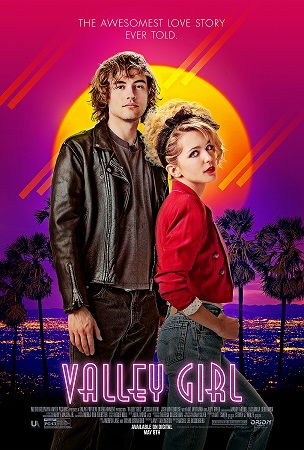
The remake of Valley Girl tells basically the same story.  Jessica Rothe plays Julie Richman.  Josh Whitehouse plays Randy.  They meet.  They fall in love.  They both have to deal with the fact that they’re from different parts of Los Angeles.  Their friends say that they don’t belong together.  The story still has potential but the remake falls flat.

A huge part of the problem is that the Valley Girl remake is a jukebox musical.  In the style of Rock of Ages, it features characters expressing themselves by singing songs from the 80s.  Like many jukebox musicals, Valley Girl picks the most obvious songs and then deploys them in the most literal way possible.  For instance, Julie’s jock boyfriend is named Mickey, just so the cheerleaders can perform Mickey during a pep rally.  When Randy and his punk friends show up for the first time, it’s time to sing Bad Reputation.  When it appears that his relationship with Julie is doomed, it’s time for Randy to offer up a rather wan version of Boys Don’t Cry.  When Julie and her friends go to the beach and start to talk about how they want have to fun …. well, can you guess what song they start singing?  The film does make good use of Kids In America but, for the most part, the song choices are too predictable and the cast performs them with a notable lack of enthusiasm.

As for the cast, Jessica Rothe has a few good moments and she at least bring some playful energy to her role.  Unfortunately, Josh Whitehouse is perhaps the least convincing punk rocker that I have ever seen.  There’s nothing quirky, angry, or dangerous about Whitehouse’s Randy.  Instead, he’s a nice young man who has some eccentric friends.  He’s the punk who you can take home to meet your parents.  He’s like the one jock who hangs out with the nerds and, as a result, everyone’s decided that he must be deeper than he actually is.

Speaking of jocks, Julie’s boyfriend — named Mickey, of course — is played by Logan Paul.  Yes, that Logan Paul.  Yes, he’s terrible in the role.  Josh Whitehouse may have not been a convincing punk rocker but Logan Paul gives a performance that’s so bad that he’s not even a convincing human being.  He comes across like an animatronic Disneyland character.  He should be in the Hall of Presidents, standing next to George Washington and stiffly nodding whenever Lincoln starts talking.  Logan Paul is a huge reason why the film doesn’t work.  He’s also a huge reason why Valley Girl sat on the shelf for about three years before finally being released, as Paul’s YouTube controversies led the studio to be weary about releasing a film featuring him.

I guess one reason why I got so annoyed with Valley Girl is that I wanted to like it.  Jessica Rothe was great in the Death Day films.  I love 80s music.  I wanted this to be a good film but it’s just not.  Like, sorry.

Film Review: Keanu (dir by Peter Atencio)


12829114_1216777971683294_3106090959957069555_o

“KEANU!”

Meow!

“ARE YOU OKAY, KEANU!?”

Meow!

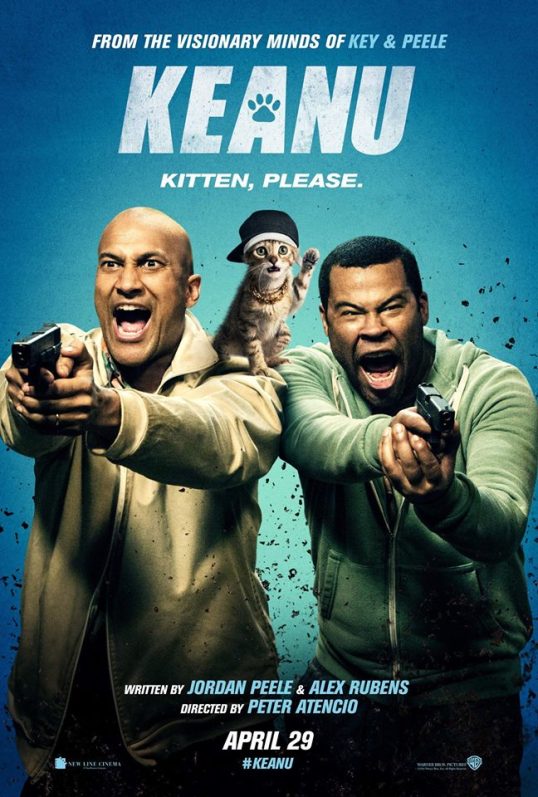
Greetings, fellow lovers of movies and cats!  So, Jeff and I just saw the new comedy, Keanu.  It’s the first film to star the quickly-becoming legendary comedy team of Keegan-Michael Key and Jordan Peele and it’s full of the type of humor that made their Comedy Central show, Key & Peele, such a success.  Perhaps even more importantly, the film stars an amazingly adorable little kitten!

You’ve seen the trailer, right?  You know how, when Peele first holds up his new kitten, Key immediately starts laughing and says, “Oh my God, that’s the cutest cat I’ve ever seen in my life!?”  Well, he’s not lying.  While I don’t think any cat is cuter than that one that I live with, Keanu the Kitten is definitely the cutest cat that I’ve ever seen in a movie.

Add to that, this kitten can act!  When this kitten stares, you truly believe that he’s listening to the dialogue being exchanged.  When he runs through a gunfight while bullets fly around him, you truly believe that this kitten is running for his life and you breathe a sigh of relief when he survives.  When he meows, your heart melts with each squeaky sound.  This is one amazingly talented kitten!

And it’s not surprising the everyone in the film wants Keanu.  The 17th Street Blips (led by Method Man and created as the result of a merger between the Bloods and the Crips) not only want Keanu but they want to rename him New Jack as well.  Their rival (played by Luis Guzman) wants Keanu and plans to rename him Eglesias.  Two mysterious assassins — the much feared, very sadistic, and always silent Allentown Boys — want Keanu too.  Since they don’t speak, they never say what they want to name him but it would probably be something cool.

And what really makes the film work is that none of them have a reason for wanting Keanu beyond the fact that he is literally the cutest kitten in Los Angeles.  This film is full of dangerous and violent people but all of them love this cat.  Everyone wants Keanu.

Well, I should say that everyone wants Keanu except for Anna Faris, who plays herself.  All Anna Faris wants is a chance to do the latest designer drug, Holy Shit.  (“It’s like smoking crack with God!” Method Man explains.)  It’s probably a good thing that Anna Faris doesn’t want a cat because, as this movie reveals, she also has a potentially dangerous fascination with sharp swords and playing truth or dare.

Of course, Keanu technically belongs to Rell (Jordan Peele).  They say that cats chose their owners and Keanu definitely does that when he shows up outside of Rell’s house.  Rell has just been dumped by his girlfriend and existence has no meaning for him.  But once Keanu shows up, Rell again learns to embrace life.  He spends two weeks taking pictures of Keanu reenacting scenes from classic movies.  But when the 17th Street Blips break into his house, mistakenly thinking that Rell has a supply of Holy Shit, they take Keanu for themselves.

Rell and his cousin Clarence (Keegan-Michael Key) team up to track down and retrieve Keanu from the Blips but there’s a problem.  Rell may brag about growing up in New York and Clarence may have stories about his childhood on the streets of Detroit but both of them are painfully out-of-place in the violent world of Blips and Anna Faris.  (Clarence is obsessed with George Michael while Rell “sounds like John Ritter all the time.”)  Fortunately, Rell and Clarence happen to look exactly like the Allentown Boys.  Method Man makes a deal with them.  If Rell and Clarence — who are now going by the names TekTonic and Sharktank — train the Blips then he will give them Keanu.

(Method Man’s character is actually named Cheddar.  Jeff just pointed out to me that Method Man previously played a character named Cheese on The Wire.)

While Rell struggles to fit in with the Blips, the nominally more straight-laced Clarence (who, unlike Rell, doesn’t even smoke weed) is soon having the time of his life.  It turns out that Clarence specializes in corporate team building and he’s excited to introduce these techniques to Blips.  (During one shootout, Clarence proudly announces, “They’re communicating!”)

Admittedly, Keanu is an uneven film.  It’s essentially a collection skits and some of them are funnier than others.  However, Key and Peele both bring so much commitment to bringing this insane story to life that they literally carry the audience over the occasional rough spot.  It may not be perfect but it’s a film that announces that, whether on TV or in the movies, Key & Peele are a comedic force to be reckoned with.

Plus, that kitten is so damn cute!

(And, in case you were wondering, Keanu Reeves does make an appearance of sorts.)

This film is 90 minutes of laughter and that’s certainly something that we all need right now!  See Keanu!

(Since you’ve probably already seen the trailer for Keanuhere it is, if you haven’t — let’s close this review with some exclusive audition footage.)