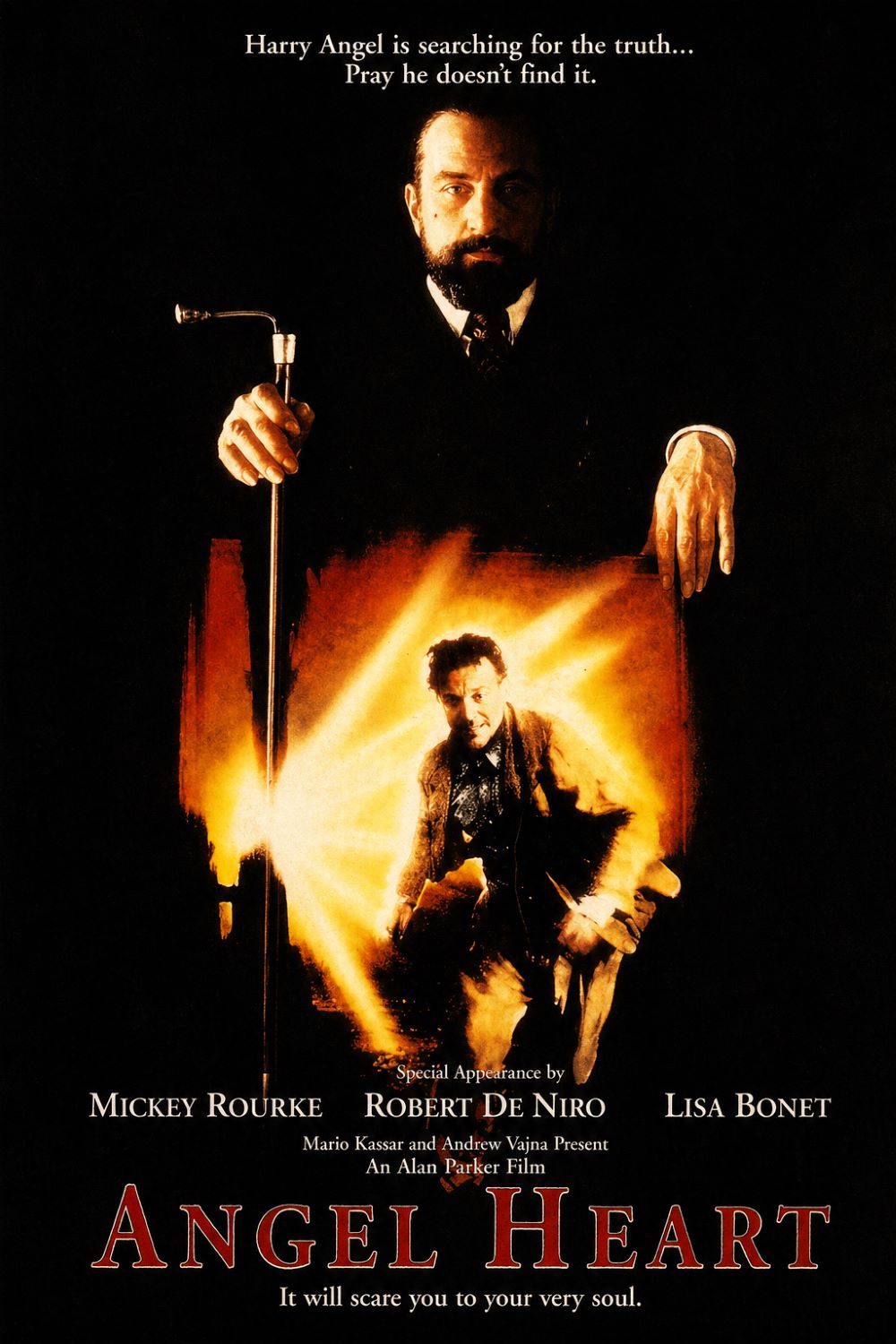
Review: Angel Heart (dir. by Alan Parker)


“They say there’s just enough religion in the world to make men hate one another, but not enough to make them love.” — Louis Cyphre

Angel Heart is one of those ’80s movies that sneaks up on you, starting like a gritty detective yarn before plunging into supernatural muck that leaves you questioning everything. Alan Parker’s 1987 neo-noir gem, adapted from William Hjortsberg’s Falling Angel, stars Mickey Rourke as Harry Angel, a down-and-out private eye in 1955 New York who gets pulled into a case that reeks of bad karma from the jump. It’s casual viewing at first—rain-slicked streets, fedoras, the whole bit—but Parker’s got a critical eye for blending hardboiled noir with occult horror, making it stick like gum on your shoe long after the credits roll.

Harry’s your classic hard luck of a gumshoe, hustling divorce cases in a dingy office when this slick mystery man named Louis Cypher (Robert De Niro, chewing scenery with devilish glee—get the name pun?) hires him to track down Johnny Favorite, a crooner who vanished after World War II. Cypher’s got cash to burn and an unsettling vibe that hints at deeper darkness, pulling Harry into a web of lies from the start. Harry follows the trail from NYC’s jazz dives to the steamy underbelly of New Orleans, where voodoo rituals, bloody murders, and hallucinatory nightmares start piling up like bodies in a back alley. Parker does a solid job adapting the source material’s clash of noir cynicism with Southern gothic rot, but his direction leans too heavily on the style of what he thinks a Southern gothic noir is supposed to look like—overripe with misty bayous and candlelit rituals—instead of letting the narrative drive the supernatural melding with the hardboiled detective beats.

What hooks you early is Rourke’s performance—he’s at his pre-meltdown peak here, all brooding intensity and rumpled charm, nailing the everyman unraveling under cosmic pressure. De Niro’s Cypher is a masterclass in minimalism; he lounges in that art deco office peeling a hard-boiled egg with surgical precision, dropping biblical barbs that land like gut punches. It’s not showy, but every word drips menace, elevating the whole film from B-movie territory to something almost operatic. Then there’s Lisa Bonet, fresh off The Cosby Show, diving headfirst into an X-rated role as Epiphany Proudfoot, Johnny’s daughter with a voodoo twist. Her steamy, sweat-drenched sex scene with Harry is erotic nightmare fuel—raw, uncomfortable, and unforgettable, pushing boundaries in a way that got the film slapped with an X rating before settling on R. Parker’s not afraid to get gory either; decapitations and ritual killings hit with visceral thud, but it’s the psychological slow burn that really twists the knife.

The film’s neo-noir DNA shines through in its voiceover narration, shadowy cinematography by Michael Seresin (those rain-lashed rooftops and fog-shrouded bayous are poetry), and a Trevor Jones score laced with eerie blues that pulses like a heartbeat from hell. Parker shifts gears from straight detective procedural to full-on supernatural dread, introducing occult hints gradually—a creepy voodoo ceremony here, a phantom vision there—until the genre flip feels inevitable yet shocking. New Orleans becomes a character itself, all humid decay and ritual undercurrents, contrasting sharp with New York’s cold urban grind. It’s Parker’s only stab at horror (he’s more Mississippi Burning or The Commitments guy), but while he nails the glossy nightmare aesthetic, the heavy stylistic hand sometimes overshadows the organic fusion of noir fatalism and otherworldly dread that the story begs for.

Critically, though, Angel Heart isn’t flawless. The late-game turns pack a wallop but drag a bit in laying out their logic, making you question the elaborate cat-and-mouse when a quicker path might’ve sufficed. Some dated effects in the dream sequences feel cheesy now, a minor blemish on an otherwise polished gem. Pacing sags slightly in the middle as Harry chases red herrings, and while the cast is gold, supporting players like Brownie McGhee as Toots Sweet add flavor without always deepening the mystery. Still, these are nitpicks; Parker’s atmospheric command and thematic depth—exploring guilt, denial, and the inescapability of one’s darker impulses—elevate it above pulp, even if the visuals occasionally feel more like a mood board than narrative propulsion.

Thematically, it’s a devil’s playground. Angel Heart riffs on classic Faustian tropes, but Parker’s critical lens probes deeper into fractured identity and moral rot. Harry’s journey mirrors the novel’s hardboiled cynicism, but the film amps the supernatural, turning noir fatalism into outright damnation. Mirrors recur obsessively—shattered glass, reflections warped by blood—symbolizing a crumbling self-image as buried truths bubble up. Voodoo isn’t just window dressing; it’s woven into the fabric, blending African diaspora mysticism with Catholic guilt for a uniquely American horror. Parker’s post-war setting adds layers, nodding to shell-shocked vets and racial undercurrents without preaching, letting the era’s shadows do the talking, though one wishes the story’s momentum had guided the gothic flourishes rather than the other way around.

Visually, it’s a feast. Seresin’s camera glides through rain-swept nights and candlelit rituals with painterly flair, while Parker’s British outsider gaze infuses Americana with alien menace—think Midnight in the Garden of Good and Evil but grimier. The egg-peeling scene alone is iconic, De Niro’s Cypher dissecting morality with yolk-stained fingers. And those final confrontations? Subtle, actor-driven tension that relies on faces, not effects, delivering chills through implication rather than revelation. Jones’ score weaves jazz horns with dissonant strings, amplifying the bluesy fatalism; it’s the perfect auditory companion to Harry’s descent, grounding the style in emotional truth.

For fans of the genre mashup, Angel Heart is essential—think Chinatown meets The Exorcist, with Parker’s glossy sheen making it pop. Rourke’s turn here is arguably his career best, raw and vulnerable before the tabloid implosion; De Niro proves he’s the king of charismatic evil. Bonet’s bold pivot shocked audiences, earning a career-defining role that proved her chops beyond sitcom smiles.

Rewatch value is sky-high; the slow build rewards patience, and clues hidden in plain sight make it a puzzle box. It’s not subtle—Cypher’s name screams spoilers—but that’s part of the fun, a winking nod to infernal cleverness. Parker’s eye for detail shines in production design: peeling wallpaper in tenements, incense-heavy apartments, gator-infested swamps. It’s immersive, oppressive, and oddly seductive, with every frame dripping atmosphere that pulls you deeper into the haze, even if the narrative sometimes plays catch-up to the visuals.

In a sea of jump-scare slop, Angel Heart stands tall as thoughtful horror-noir that lingers because it forces you to confront the monster in the mirror. If you’re digging into ’80s cult classics or just crave a detective tale with teeth, fire it up. It’s flawed, yeah—style occasionally eclipsing story—but those flaws make it human, much like Harry himself.

Blazing Bullets (1951, directed by Wallace Fox)


Johnny Mack Brown rides across the old west until he reaches a seemingly abandoned ranch.  Someone takes a shot at him with a gold bullet.  It’s because the the ranch has a reputation for being haunted and everyone knows that the only way to take care of a ghost is to shoot at it with gold bullets.

(It’s common frontier knowledge!)

Johnny may says that he’s a simple cowhand who has been hired to look after the ranch but actually, he’s a government agent who has been sent to investigate the disappearance of rancher John Roberts (Forrest Taylor) and the theft of government gold.  Bill Grant (House Peters, Jr.) is the main suspect in the Roberts disappearance but Roberts’s daughter (Lois Hall) insists that he’s innocent.  Even though Roberts forbid Grant from seeing his daughter, Johnny Mack Brown suspects that Grant is being set up as well.  Brown doesn’t buy the idea of the ranch being haunted either.  If Fuzzy Knight was there, he’d probably see a ghost but Fuzzy takes this film off.  Time for Johnny Mack Brown to investigate.

Despite the exciting title, Blazing Bullets is only a so-so B-western.  Working without his usual sidekicks, Brown just goes through the motions and there’s not nearly enough action.  A movie called Blazing Bullets should have had more blazing bullets in it.  Today, it’s impossible to watch the film without expecting Harvey Korman to show up as Hedley Lamarr.

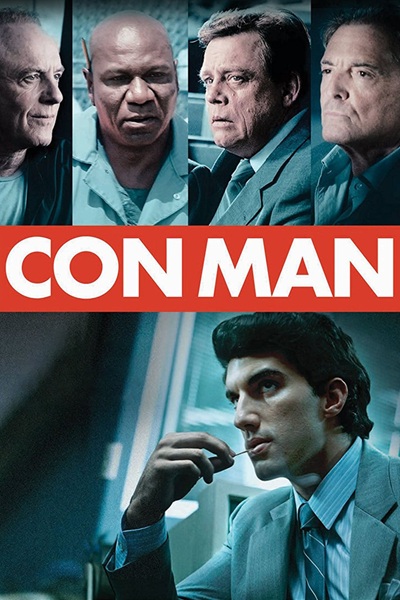
Icarus File No. 27: Con Man (dir by Bruce Caulk)


Originally filmed in 2010 but not released until 2018, Con Man is one of the strangest vanity projects that I’ve ever seen.

Originally entitled Minkow, Con Man tells the story of Barry Minkow.  When Minkow was a teenager, he started a carpet cleaning business and he quickly learned how to both promote himself and how to lie about how much money he was making.  The media ate up the story of the teenager became a millionaire by cleaning carpets.  His father (Mark Hamill) was proud of him.  His mother (Talia Shire) worried that he was moving away from God.  A local mobster (Armand Assante) decided to get involved.  It was eventually discovered that Barry was kiting checks, lying to insurance companies, and massively defrauding both his investors and his employees.  After being busted by the FBI (represented here by James Caan), Barry Minkow was sent to prison.

In the film, teenage Barry Minkow is played by a young, handsome, and charismatic Justin Baldoni.  When Barry gets out of jail, he’s suddenly been transformed into …. well, Barry Minkow.  That’s right.  Barry Minkow plays himself.  Needless to say, Barry Minkow looks nothing like Justin Baldoni.  It’s not just that the two men are different ages.  It’s also that there’s no way to imagine Justin Baldoni transforming into the gargoyle that is Barry Minkow.

In prison, Barry Minkow is converted to Christianity by a prisoner named Peanut (Ving Rhames).  After Minkow serves his sentence, he not only helps the FBI track down other con artists but he becomes the pastor of his local church.  Despite his past, everyone loves and trusts Barry Minkow.  Everyone talks about how charismatic he is, despite the fact that the adult Barry Minkow delivers his lines in a flat monotone and looks like he should be sitting over the entrance of a cathedral.  People who suspect that they’ve been a victim of financial fraud start to come to Barry, asking him for advice.  The always humble Barry is concerned that he’ll let people down but, in the end, even James Caan says that Barry is a great guy.  “I’m doing the work of God!” Barry proclaims.

Yes, the film is fueled by pure ego.  Unfortunately, it took more than ego to pay the bills so Minkow embezzled money from his own church, stole money from his congregation, and resorted to his old track of “clipping” checks to finance the whole thing.  Shortly after the film was completed, Minkow was arrested and sent back to prison.  (A hot mic caught Minkow bragging to James Caan about how he financed the film.  After his arrest, Minkow denied he had ever said that and dared anyone with proof to turn it over.  The film’s director proceeded to do just that.  Barry Minkow was not only a criminal.  He was a stupid criminal.)

As for the film, it sat in limbo for eight years.  Eventually, talking head interview with Minkow’s actual victims talking about how much they disliked Barry were sprinkled throughout the film.  (Shortly before Minkow starts playing himself, we hear one of his business partners say that everyone told him not to play himself.)  The original film ended on a triumphant note.  The new film — which was retitled Con Man — ended with real people talking about Barry Minkow going back to jail and casting doubt as to whether or not Barry ever even knew a prisoner named Peanut.

The film is a vanity project and not a very good one.  Minkow is a terrible actor and, just in case we forget that fact, he reminds us by trying to hold the screen opposite James Caan and Ving Rhames.  (Even Elisabeth Rohm manages to outact him.)  As bad as the film is, the story behind it is endlessly fascinating.  Barry Minkow was determined to become a star.  (Spielberg’s Catch Me If You Can was an obvious inspiration.)  Instead, he went back to prison and his vanity project was transformed into a roast.  And it probably couldn’t have happened to a more deserving guy.


Previous Icarus Files:

  1. Cloud Atlas
  2. Maximum Overdrive
  3. Glass
  4. Captive State
  5. Mother!
  6. The Man Who Killed Don Quixote
  7. Last Days
  8. Plan 9 From Outer Space
  9. The Last Movie
  10. 88
  11. The Bonfire of the Vanities
  12. Birdemic
  13. Birdemic 2: The Resurrection 
  14. Last Exit To Brooklyn
  15. Glen or Glenda
  16. The Assassination of Trotsky
  17. Che!
  18. Brewster McCloud
  19. American Traitor: The Trial of Axis Sally
  20. Tough Guys Don’t Dance
  21. Reach Me
  22. Revolution
  23. The Last Tycoon
  24. Express to Terror 
  25. 1941
  26. The Teheran Incident

The Last Whistle (2018, directed by Rob Smat)


Victor Trenton (Brad Leland) is a high school football coach who is determined to have an undefeated season so that he can score a college coaching job.  However, when one of his players, Benny Robison (Fred Tolliver, Jr.), dies of a previously undiagnosed heart condition during a grueling practice, Trenton’s plans fall apart.  Instead of rescheduling the next game, Trenton insists that his players play it.  When an assistant coach forfeits the game, Victor starts to become the town pariah.

This is a short and simple indie film about the price of win-at-all-costs competitiveness.  Even before Benny dies, Victor Trenton is not a particularly likable character.  A part of him does care about his players but an even bigger part sees them as pawns in his quest to get a college position.  When Benny dies, Trenton refuses to take any responsibility and descends into drinking and self-pity.  When Trenton is sued by Benny’s mother, Trenton insists that nothing is his fault.  By the end of the movie, Trenton has started to take some responsibility but the movie doesn’t end with a definite resolution.  It’s up to the viewer to decide whether or not Victor Trenton is responsible or truly sorry for Benny’s death.

It’s not a totally satisfying viewing experiences but Brad Leland gives one of the most authentic “coach” performances that I’ve ever seen.  He knows how to win football games and, for his hometown, that’s enough until it isn’t.

On The Edge (2002, directed by Fred Williamson)


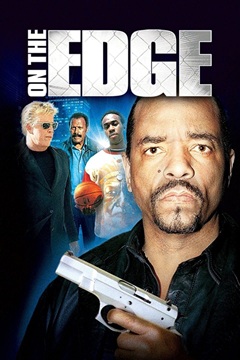
When a high school basketball player named Willie Joe Harris (Derrick Franklin) gets in some trouble with some local drug dealers, he goes to Dakota Smith (Fred Williamson), an ex-cop and private investigator who now spends his time golfing.  Realizing that the old neighborhood has been taken over by drug dealers like Slim Jim (Ice-T), Dakota and his friends come together to take back the streets.  Jim Brown is former football coach Chad Grant.  Ron O’Neal is Willie Joe’s guardian, Frank.  Bernie Casey is Rex Stevens, whose family was killed by hitmen looking for Willie Joe.  Together, they’re on the edge.  They’re not alone on the edge, though.  A manic Gary Busey plays a hitman named Felix.  Gloria Allred (!) plays Councilwoman Gloria Johnson, Dakota’s contact at city hall.

Fred Williamson directed On The Edge and, in tradition of Original Gangstas, the main appeal of the film is to see a bunch of former blaxploitation stars showing off that they could still own the screen.  Our stars may not move as quickly as they used to but they’re still good shots, they’re still good with a quip, and the ladies still love Fred.  The film also has an anti-drug “take care of your community” message but most people will just be watching to see Fred Williamson and Jim Brown doing their thing.  (The film’s cover art might feature Ice-T front-and-center but this is a Fred Williamson film all the way.)

The film itself isn’t great.  Sometimes, it was impossible to make out what the characters were saying and the scene with Gloria Allred mostly seemed to be there so that Fred could say that he knew Gloria Allred.  But the combination of Williamson, Casey. O’Neal, and Brown still carried a punch.  Say what you will about his films, few people were more confident on screen than Fred Williamson.

Brad revisits the Hong Kong classic POLICE STORY (1985), starring Jackie Chan!


I knew who Jackie Chan was well before I discovered Hong Kong cinema in the early 90’s through the works of John Woo and Chow Yun-Fat. I had seen him in the CANNONBALL RUN movies, including part 2 in the movie theater, and I recognized the VHS for THE PROTECTOR (1985) at my local video store, but I had no idea just how amazing he was as a filmmaker and performer until I became obsessed with Hong Kong’s local film industry in the mid-90’s. As I read about the incredible work that Chan had done or was doing in books like “Hong Kong Babylon,” I made notes on all of his movies that I wanted to see. Of course, the original POLICE STORY was at the top of the list. 

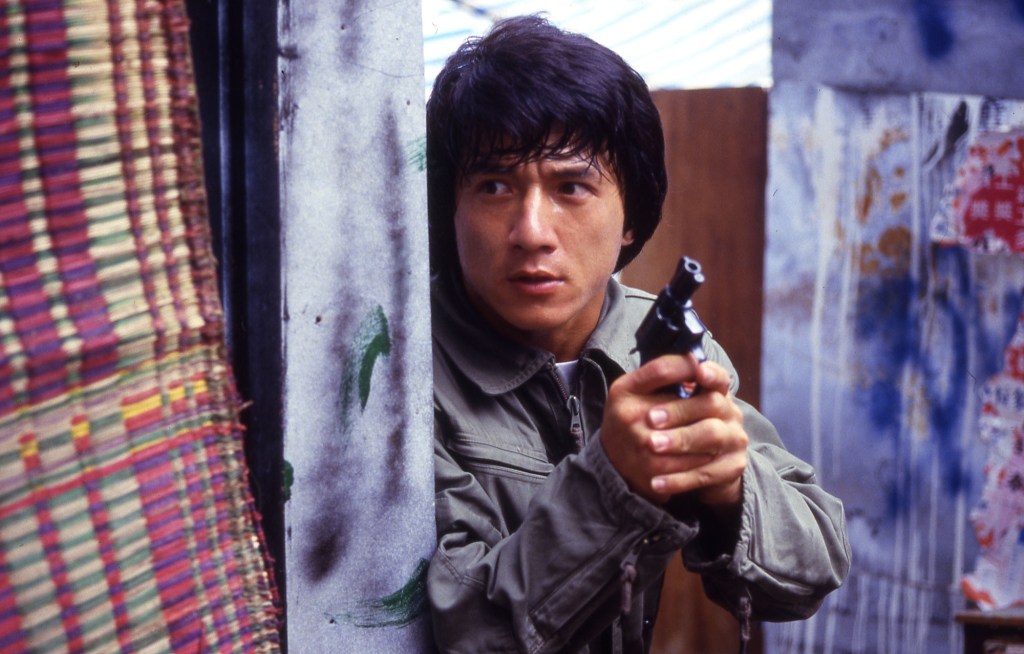
In POLICE STORY, Chan plays Hong Kong cop Chan Ka-Kui. In the film’s opening scene, he takes part in a sting operation to bring down Chu (Yuen Chor), one of Hong’s major drug kingpins. After the plan goes awry, we get an incredible action sequence where cars crash through a shantytown, bullets fly, cops piss themselves, Chan hangs off of a bus with the handle of an umbrella, runs down a mountain, arrests the drug lord, and we’re just getting started! 

From that amazing opening, Chan is assigned to protect the key witness, Salina (the gorgeous Brigitte Lin), whose testimony is key to bringing Chu down. This doesn’t go well. Between corruption in the police force, false accusations, and Chan’s tenuous relationship with his girlfriend May (Maggie Cheung), the ensuing chaos seems to indicate that Chu is going to get off on the drug charges and Chan just may end up dead.

But let’s be honest, the plot is just a reason to get to the action. And once you’ve seen a few of Jackie Chan’s Hong Kong movies, you just settle in for a loose story, lots of goofy humor (that doesn’t always work), and some of the most insane stunt work you’ll ever see. POLICE STORY is a perfect example of that formula, and quite honestly, it’s one of the great action films. The stunts feel and look dangerous. The final sequence, set in a shopping mall, is some of the best action I’ve ever seen in a movie. I sat there with my mouth open and shaking my head as great stunt after grunt stunt takes place. I can’t help but wonder how many people got injured doing those scenes as glass shatters, bodies fly, and Chan puts himself through hell for the sake of the scene. It can’t be described… it needs to be experienced.

And yet, for all the amazing action, I can relate to Jackie Chan. He messes up. He gets hurt. He argues with his girlfriend. I’ve done all of these things, and I love it when he gets his stuff together and uses his unique set of skills to save the day!

As awesome as POLICE STORY is, viewers need to be aware of the serious tonal shifts that take place in the Hong Kong cinema of the 80’s. It can be a little jarring if you’re not used to it, as the movie goes from slapstick comedy to brutal action to melodrama, sometimes within the same scene. In some ways, that’s part of the charm, but these films can feel very strange for the uninitiated.

At the end of the day POLICE STORY isn’t perfect, but it is Jackie Chan at his best… fearless, inventive, and committed to giving the audience their money’s worth. If you’re interested in the unique and dangerous films that Chan made at this physical peak, this is as good as it gets.

POLICE STORY is currently streaming on HBOMAX.

Review: Chef (dir. by Jon Favreau)


“I may not do everything great in my life, but I’m good at this. I manage to touch people’s lives with what I do and I want to share this with you.” — Carl Casper

Jon Favreau’s Chef is one of those modest, crowd‑pleasing films that wins you over by staying sincere. It is not trying to be more elaborate than it needs to be, and that restraint is part of its charm. The movie understands that a good meal, like a good story, does not need to be overloaded to leave an impression.

At its center is Carl Casper, a Los Angeles chef who has spent too long under the thumb of a controlling owner and a punishing routine. Favreau builds the character as a man with genuine talent who has gradually been boxed into serving the same familiar dishes until the spark goes out of his work. That setup gives the film emotional weight without making it needlessly grim, and the early conflict feels grounded in the kind of professional frustration that many viewers can recognize.

What makes Chef work so well is that it treats food as more than decoration. The kitchen scenes have the energy of a workplace movie, but they also carry the warmth of a film about craft, pride, and rediscovery. Favreau clearly cares about the details, and the movie’s culinary authenticity helps make the food feel alive rather than merely photogenic.

The film’s strongest material often comes from its sense of rhythm. Favreau lets scenes breathe, whether Carl is cooking, arguing, bonding with his son, or slowly finding his footing again through the food truck. The road‑trip structure gives the movie a loose, easygoing momentum that matches its themes of starting over and rebuilding a life from something more personal. It is a familiar shape, but Favreau handles it with enough warmth and confidence that it never feels mechanical.

The cast also helps carry the movie’s laid‑back appeal. John Leguizamo brings dependable energy as Carl’s friend and partner, while Emjay Anthony gives the father‑son relationship a needed emotional anchor. Sofía Vergara and Scarlett Johansson add texture to the supporting ensemble, and the cameos help the film feel like it belongs to a broader world without turning into a stunt parade. Robert Downey Jr.’s appearance is especially in the spirit of the movie’s playful, slightly scrappy personality.

If there is a weakness in Chef, it is that the stakes are sometimes as light as the movie’s tone. The conflict is easy to understand, but the film is not interested in digging especially deep into the pressures of restaurant life beyond what it needs for Carl’s personal reset. Some viewers may also feel that the story moves so smoothly that it can occasionally glide past tension rather than fully wrestle with it. Still, those softer edges are part of the movie’s comfort‑food approach, and they fit the film more often than they hurt it.

There is also something undeniably self‑referential about Favreau making a film like this at this point in his career. After years of working in large‑scale studio filmmaking, Chef feels like a deliberate return to basics, a movie about rediscovering joy in the craft rather than chasing spectacle. That choice gives the film a little extra meaning, because it plays not just as a story about a chef but as a story about an artist reconnecting with the thing that made him care in the first place.

That connection carried forward in a very natural way with Netflix’s The Chef Show, which Favreau made with Roy Choi after the film. The show turned the movie’s culinary curiosity into a full‑fledged project, with Favreau cooking alongside celebrity friends and guests across its two‑season run. In that sense, Chef was not just a one‑off passion project; it became the foundation for a longer creative obsession that blended cooking, conversation, and filmmaking into the same kind of easygoing pleasure the movie already had.

What lingers most about Chef is its tone. It is upbeat without being fake, personal without becoming self‑pitying, and relaxed without losing its sense of purpose. Favreau understands that small victories can matter just as much as dramatic ones, and he shapes the film around that idea with real affection. The result is a feel‑good film with enough flavor to satisfy, and enough honesty to keep it from feeling empty.

And for anyone who had never been especially drawn to a Cubano sandwich, Chef also worked like a terrific advertisement for giving one a try. The film made the sandwich look less like a simple handheld meal and more like a kind of culinary payoff, something warm, rich, and memorable enough to make viewers hungry before the scene was even over. While most audiences understandably gravitated toward those rapturous Cubano moments, for me the real standout was the scene featuring the mojo‑marinated pork. There was something about the way the meat was staged—the slow rendering of fat, the caramelized crust, the faint sheen of orange‑garlic sauce—that made it feel less like a quick bit of menu decoration and more like the heart of the film’s culinary language. That sequence, in its quiet way, captured the same blend of craft and desire that the whole movie is built on.

Overall, Chef is a warm, appealing, and thoughtfully made film that succeeds because it knows exactly what it wants to be. It is funny, heartfelt, and easy to enjoy, even when it does not push its dramatic material as far as it could. Favreau serves up a movie that celebrates food, family, and creative freedom in a way that feels genuine, and that sincerity is what gives the film its staying power.

Snake River Desperadoes (1951, directed by Fred Sears)


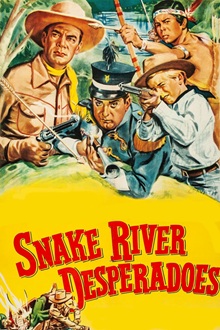
A young Indian brave named Little Hawk (Don Reynolds) runs across the countryside, hoping to run into the Durango Kid.  Instead, he runs into Steve Reynolds (Charles Starrett), who listens as Little Hawk explains that the Indians and the white men are about to go to war.  Steve promises to deliver the message to Durango.  That will be easy for Steve because he is Durango!

White bandits are disguising themselves as Native Americans and attacking stagecoaches.  The local townspeople are getting riled up.  Meanwhile, businessmen Jim Haverly (Monte Blu) is running a trading post and secretly selling weapons to the Indians.  Jim is hoping to profit from the upcoming war.  Jim is also the uncle to Little Hawk’s best friend, Billy (Tommy Ivo).  When Durango and his sidekick Smiley Burnette show up, they team up with Billy and Little Hawk and try to stop the war before it happens.

This is one of the many B-westerns that featured Charles Starrett as the Durango Kid.  The Durango Kid was always an agent of the federal government but he pretended to be an outlaw to make it easier for him to get information.  Sometimes, it really didn’t make sense for Steve to pretend to be the Durango Kid, like in this movie.  I guess no one wanted to give up the gimmick, just like no one wanted to give up Smiley Burnette’s musical comedy.

This one has all of the horse-riding and gun-shooting that fans of the genre would expect from a Charles Starrett western.  It also has a lot of stock footage that appeared in a countless number of other B-westerns.  Starrett is a convincing cowboy and Monte Blue is a good villain, as always.  The child actors can sometimes be difficult to tolerate but I imagine the kids in the audience preferred watching them to sitting through the romantic subplots that these films usually had.  Fans of the gerne will enjoy the film, if just on a nostalgic level.  Those who are not into westerns will still not be into them after watching.

Brad takes on THE MOB (1951), starring Broderick Crawford!


In my quest to see every movie and TV show that Charles Bronson ever appeared in, I finally decided to take on THE MOB this morning. I’ve held off for years because this early, uncredited role as a dockworker only gives Bronson a couple of lines. He looks like a natural fixture on the docks, but his screen time only adds up to a minute or two in total.

With Bronson being little more than some temporary dockside scenery, I settled in for a story about Johnny Damico (Broderick Crawford), a tough, no-nonsense cop who’s doing some rainy night ring-shopping for his girlfriend when a man is killed just outside the store. He bungles up the whole situation, and the killer gets away. It turns out the killing was a mob hit and soon Damico is going undercover as Tim Flynn from New Orleans so he can infiltrate and bust the organized crime ring operating on the waterfront. 

Broderick Crawford is so good in this role. His Damico / Flynn has a cynical sense of humor that I enjoyed. He thinks fast, he’s rough around the edges, and he even gets to slap some bad guys around a time or two. He’s one of those characters whose mouth should probably get him in more trouble. Well, now that I think about it, his mouth does almost get him killed a couple of times. Crawford and Bronson would work again together a few years later in the prison film BIG HOUSE USA (1955). 

With Crawford’s performance anchoring the movie, Director Robert Parrish delivers a tight, efficient and entertaining crime story that clocks in at just under an hour and a half. One of the things that made the film enjoyable for me is the interesting and recognizable supporting cast of actors who pop up throughout the film. I’ve already mentioned Bronson, but actors like Ernest Borgnine, Neville Brand and Frank DeKova all show up to torment our undercover cop at various points throughout the film. It’s always fun for me to see a cast full of familiar faces! 

At the end of the day, I enjoyed THE MOB. It doesn’t try to be anything more than a good crime film, and with Broderick Crawford’s excellent performance, it does its job well. 

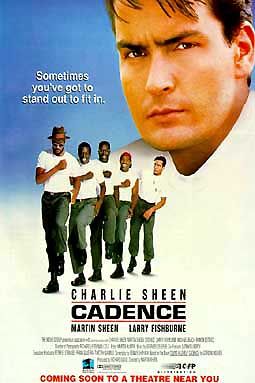
Cadence (1990, directed by Martin Sheen)


In the 1960s, druken Pvt. Franklin Fairchild Bean (Charlie Sheen) punches an MP in West Germany.  The rebellious Bean is hoping he’ll be discharged from the Army.  Instead, he’s sent to the stockade for 90 days.  The stockade is run by an alcoholic tyrant named Sgt. Otis McKinney (Martin Sheen) and, shortly after arrival, Bean discovers that he’s the only white prisoner.  With McKinney determined to break him, Bean befriends his fellow prisoners, including Roosevelt Stokes (Laurence Fishburne), and the two white corporals (James Marshall and Ramon Estevez) who try to protect the prisoners from McKinney’s erratic behavior.

Cadence is the only film to have been directed by Martin Sheen.  Considering that it co-stars two of his sons, it’s unfortunate that Cadence isn’t a better movie.  Charlie Sheen gives a one-note performance as Franklin Bean but he still does better than his father, who is such a raging monster as Sgt. McKinney that it’s difficult to take him or the movie seriously.  As a director, Martin Sheen always goes for the most ham-fisted shot and it’s hard to see what he’s really trying to say about the Army or Franklin Bean’s rebellion.

The supporting cast is better, especially James Marshall and Ramon Estevez.  Laurence Fishburne brings his trademark gravitas to the role of Stokes.  The other prisoners are played by Michael Beach, Blu Mankuma, John Toles-Bey, and Harry Stewart and they all make a good impression.  Stewart plays the most saintly and innocent of the prisoners.  Guess what happens to him.

Back in the day, this movie was an HBO mainstay.  Somehow, I always seemed to catch the end of it but never the beginning.