Icarus File No. 27: Con Man (dir by Bruce Caulk)


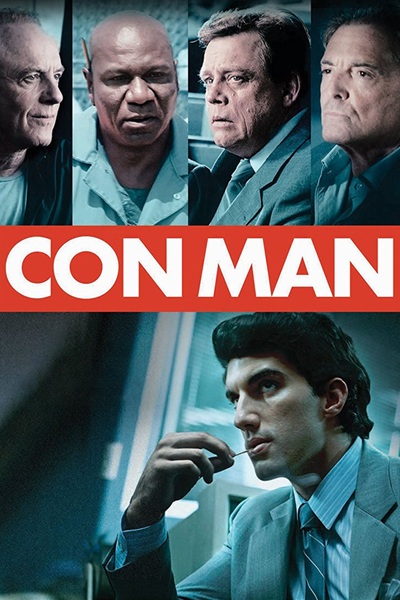
Originally filmed in 2010 but not released until 2018, Con Man is one of the strangest vanity projects that I’ve ever seen.

Originally entitled Minkow, Con Man tells the story of Barry Minkow.  When Minkow was a teenager, he started a carpet cleaning business and he quickly learned how to both promote himself and how to lie about how much money he was making.  The media ate up the story of the teenager became a millionaire by cleaning carpets.  His father (Mark Hamill) was proud of him.  His mother (Talia Shire) worried that he was moving away from God.  A local mobster (Armand Assante) decided to get involved.  It was eventually discovered that Barry was kiting checks, lying to insurance companies, and massively defrauding both his investors and his employees.  After being busted by the FBI (represented here by James Caan), Barry Minkow was sent to prison.

In the film, teenage Barry Minkow is played by a young, handsome, and charismatic Justin Baldoni.  When Barry gets out of jail, he’s suddenly been transformed into …. well, Barry Minkow.  That’s right.  Barry Minkow plays himself.  Needless to say, Barry Minkow looks nothing like Justin Baldoni.  It’s not just that the two men are different ages.  It’s also that there’s no way to imagine Justin Baldoni transforming into the gargoyle that is Barry Minkow.

In prison, Barry Minkow is converted to Christianity by a prisoner named Peanut (Ving Rhames).  After Minkow serves his sentence, he not only helps the FBI track down other con artists but he becomes the pastor of his local church.  Despite his past, everyone loves and trusts Barry Minkow.  Everyone talks about how charismatic he is, despite the fact that the adult Barry Minkow delivers his lines in a flat monotone and looks like he should be sitting over the entrance of a cathedral.  People who suspect that they’ve been a victim of financial fraud start to come to Barry, asking him for advice.  The always humble Barry is concerned that he’ll let people down but, in the end, even James Caan says that Barry is a great guy.  “I’m doing the work of God!” Barry proclaims.

Yes, the film is fueled by pure ego.  Unfortunately, it took more than ego to pay the bills so Minkow embezzled money from his own church, stole money from his congregation, and resorted to his old track of “clipping” checks to finance the whole thing.  Shortly after the film was completed, Minkow was arrested and sent back to prison.  (A hot mic caught Minkow bragging to James Caan about how he financed the film.  After his arrest, Minkow denied he had ever said that and dared anyone with proof to turn it over.  The film’s director proceeded to do just that.  Barry Minkow was not only a criminal.  He was a stupid criminal.)

As for the film, it sat in limbo for eight years.  Eventually, talking head interview with Minkow’s actual victims talking about how much they disliked Barry were sprinkled throughout the film.  (Shortly before Minkow starts playing himself, we hear one of his business partners say that everyone told him not to play himself.)  The original film ended on a triumphant note.  The new film — which was retitled Con Man — ended with real people talking about Barry Minkow going back to jail and casting doubt as to whether or not Barry ever even knew a prisoner named Peanut.

The film is a vanity project and not a very good one.  Minkow is a terrible actor and, just in case we forget that fact, he reminds us by trying to hold the screen opposite James Caan and Ving Rhames.  (Even Elisabeth Rohm manages to outact him.)  As bad as the film is, the story behind it is endlessly fascinating.  Barry Minkow was determined to become a star.  (Spielberg’s Catch Me If You Can was an obvious inspiration.)  Instead, he went back to prison and his vanity project was transformed into a roast.  And it probably couldn’t have happened to a more deserving guy.
 

Previous Icarus Files:

  1. Cloud Atlas
  2. Maximum Overdrive
  3. Glass
  4. Captive State
  5. Mother!
  6. The Man Who Killed Don Quixote
  7. Last Days
  8. Plan 9 From Outer Space
  9. The Last Movie
  10. 88
  11. The Bonfire of the Vanities
  12. Birdemic
  13. Birdemic 2: The Resurrection 
  14. Last Exit To Brooklyn
  15. Glen or Glenda
  16. The Assassination of Trotsky
  17. Che!
  18. Brewster McCloud
  19. American Traitor: The Trial of Axis Sally
  20. Tough Guys Don’t Dance
  21. Reach Me
  22. Revolution
  23. The Last Tycoon
  24. Express to Terror 
  25. 1941
  26. The Teheran Incident

Scenes That I Love: “I Love The Smell of Napalm in the Morning” from Apocalypse Now (Happy birthday, John Milius!)


Today, the Shattered Lens celebrates the 82nd birthday of the iconic screenwriter and director, John Milius!

While director Francis Ford Coppola definitely put his own stamp on 1979’s Apocalypse Now, the film started life as a script written by John Milius and the film itself is full of dialogue that could only have been written by Milius.  The most famous example is Robert Duvall’s monologue about the smell of napalm in the morning.  Actually, the entire helicopter attack feels like pure Milius.  Reportedly, Duvall’s character was originally named Colonel Kharnage but, by the time the movie was made, his name had become Kilgore.  It’s still not exactly a subtle name but it’s not quite as obvious as Kharnage.

(When James Caan read the script, he loved the role so much that he was offended to not be offered it and, as a result, he turned down offers to play not only Willard but also Kurtz.)

Happy birthday, John Milius!

“Someday, this war is going to end.”

Film Review: The Rain People (dir by Francis Ford Coppola)


1969’s The Rain People tells the story of Natalie Ravenna (Shirley Knight), a Long Island housewife who, one morning, sneaks out of her house, gets in her station wagon, and leaves.  She later calls her husband Vinny from a pay phone and she tells him that she’s pregnant.  Vinny is overjoyed.  Natalie, however, says that she needs time on her own.

Natalie keeps driving.  In West Virginia, she comes upon a young man named Jimmy Kligannon (James Caan).  She picks him up looking for a one-night stand but she changes her mind when she discover that Jimmy is a former college football player who, due to an injury on the field, has been left with severe brain damage.  The college paid Jimmy off with a thousand dollars.  The job that Jimmy had waiting for him disappears.  Jimmy’s ex-girlfriend (Laura Crews) cruelly says that she wants nothing more to do with him.  Natalie finds herself traveling with the child-like Jimmy, always trying to find a safe place to leave him but never quite being able to bring herself to do so.

Jimmy is not the only man that Natalie meets as she drives across the country.  Eventually, she is stopped by Gordon (Robert Duvall), a highway motorcycle cop who gives her a speeding ticket and then invites her back to the trailer that he shares with his young daughter.  (Gordon’s house previously burned down.)  Natalie follows Gordon back to his trailer, where the film’s final tragic act plays out.

The Rain People was the fourth film to be directed Francis Ford Coppola.  Stung by the critical and commercial failure of the big-budget musical Finian’s Rainbow, Coppola made a much more personal and low-key film with The Rain People.  While the critics appreciated The Rain People, audiences stayed away from the rather downbeat film.  Legendary producer Robert Evans often claimed that, when Coppola was first mentioned as a director for The Godfather, he replied, “His last movie was The Rain People, which got rained one.”  Whether that’s true or not, it is generally acknowledged that the commercial failure of The Rain People set back Coppola’s directing career.  (Indeed, at the time that The Godfather went into production, Coppola was better-known as a screenwriter than a director.)  Of course, it was also on The Rain People that Coppola first worked with James Caan and Robert Duvall.  (Duvall, who was Caan’s roommate, was a last-second replacement for Rip Torn.)  Both Caan and Duvall would appear in The Godfather, as Sonny Corleone and Tom Hagen respectively.  Both would be Oscar-nominated for their performances.  (It would be Caan’s only Oscar nomination, which is amazing when you consider how many good performances James Caan gave over the course of his career.)

As for The Rain People, it may have been “rained on” but it’s still an excellent film.  Shirley Knight, Robert Duvall, and James Caan all give excellent performances and, despite a few arty flashbacks, Coppola’s direction gives them room to gradually reveal their characters to us.  The film sympathizes with Knight’s search for identity without ever idealizing her journey.  (She’s not always nice to Jimmy and Jimmy isn’t always easy to travel with.)  As for Caan and Duvall, they both epitomize two different types of men.  Caan is needy but innocent, a former jock transformed into a lost giant.  As for Duvall, he makes Gordon into a character who, at first, charms us and that later terrifies us.  Gordon could have been a one-dimensional villain but Duvall makes him into someone who, in his way, is just as lost as Natalie and Jimmy.

The Rain People is a good film.  It’s also a very sad film.  It made my cry but that’s okay.  It earned the tears.

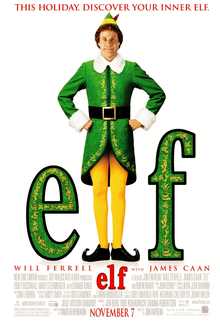
Why I Love Elf (2003, Dir. by Jon Favreau)


I love Elf!

I’m an adult and I learned the truth about Santa Claus a long time ago but I still put up the tree the day after Thanksgiving, still hang stockings with the names of my sisters on them, and I still get excited when I see the Christmas lights going up across the neighborhood.  I am unapologetically, deliriously in love with Christmas. And every single year, without fail, I curl up with the same worn-out blanket, the same bowl of freshly-popped popcorn, and I watch Elf.  I don’t watch it because it’s cool or ironic.  I watch it because it’s as unabashedly in love with Christmas as I am.

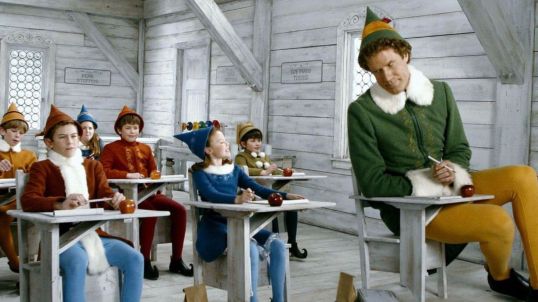
The older you get, the more cynical the world wants you to be about everything.  Elf doesn’t have time for cynicism.  Will Ferrell plays Buddy, a human who was raised by Santa’s elves and who goes to New York City to find his real father (James Caan) and who never loses his innocence and Christmas spirit, no matter what the world throws at him.  Buddy isn’t dumb, not really.  He’s someone who still believes in giving and celebration and love.  When he tells the fake Santa that he sits on a throne of lies, he’s not trying to make trouble.  Buddy knows the real Santa and he’s not going to let some fake in a beard steal the credit for his work.  (Especially when he’s played by Artie Lange!) Buddy is ridiculous. He’s too tall, too loud, too earnest, too everything. He puts maple syrup on spaghetti and calls it gourmet. He spins in revolving doors until he’s dizzy with joy.  Everyone should be as lucky as Buddy.  Everyone should be as filled with joy and wonder as Buddy.  Buddy doesn’t let the world get him down but, even more importantly, he never loses his belief.  Just as Linus will always wait for the Great Pumpkin, Buddy will always believe that Santa is coming.

This is my favorite Will Ferrell performance.  The way he throws himself into every moment makes me smile every time.  But I like everyone in this film, from Bob Newhart as Buddy’s adopted father to James Caan as his real father to Ed Asner as Santa.  When Zooey Deschanel starts singing Santa Claus Is Coming To Town, I feel it in my heart because I believe it.  Elf believes it too, without apology.  That’s what makes Elf a great movie.

I’m an adult.  I’ve been an adult for a while.  I still love Elf and I always will!

Scenes That I Love: The Diner Scene from Thief


Seeing as how I raved about this film and James Caan’s performance earlier this week, it only seems appropriate that today’s scene that I love should come from 1981’s Thief.  Here is the famous diner scene, featuring Caan and Tuesday Weld.  Caan later said that he considered this to be the best acting he had ever done.


April Noir: Thief (dir by Michael Mann)


1981’s Thief tells the story of Frank (James Caan).

Frank is a professional diamond thief, one of the best in the business.  He’s so cool that he even has his own Tangerine Dream soundtrack.  After doing a stint in prison, Frank lives his life very carefully and with discipline.  He’s determined not to return to prison.  His mentor (played by Willie Nelson) is still behind bars and will probably die there.  In fact, Frank has even found himself thinking about abandoning his criminal lifestyle.  He’s got two front businesses, both of which are doing well.  (Frank’s used car lot looks like some sort of alien world.)  He’s fallen in love with a cashier named Jessie (Tuesday Weld) and it’s starting to seem like now would be a good time to settle down and become a family man.  The only problem is that Frank is working for Leo (Robert Prosky) and Leo has absolutely no intention of allowing Frank to walk away.  As Leo puts it, Frank belongs to him.  That’s not a smart thing to say to someone like Frank.

Frank’s an interesting character.  He’s the film’s hero, not because he’s a good guy but because he’s a smidgen better than most of the other bad guys.  He’s a professional, one who goes out of his way avoid unnecessary complications.  When we see him on the job, it’s impossible not to admire just how good he is at stealing stuff.  When he uses a blowtorch to break into a store or a safe, the screen is full of sparks and, for a few minutes, Frank looks like some sort of cosmic super hero brought to life.  We admire Frank but we discover early on that he’s willing to get violent.  He’s willing to pull a gun and threaten his way out of a situation.  Frank is loyal.  He visits his mentor in prison.  He takes care of his partner-in-crime, Barry (Jim Belushi, making his film debut).  He truly loves Jessie.  But, at heart, he’s a criminal who doesn’t hesitate to pull the trigger when he has to.  The question the film asks is whether one can just go straight, after years of breaking the law and living in the shadows.  Can Frank abandon the lifestyle, even for love?  Or is he destined to always be a thief?

Thief was Michael Mann’s feature film debut.  (The Jericho Mile was Mann’s directorial debut but it was made for television.)  Thief is full of the usual Mann themes and also Mann’s signature style, showing that Mann knew exactly what type of films he wanted to make from the start of his career.  The nights are full of shadows.  The days are deceptively calm.  The neon of Frank’s car lot glows like another dimension.  The final bloody shoot out takes place at night, in the type of suburban neighborhood in which most people would probably love to live.  And holding the film together is James Caan, giving a coolly centered performance as a man who has learned to hold back his emotions and who won’t be controlled by anyone.  Halfway through the film, Caan delivers a seven-minute monologue about life in prison and it’s an amazing moment, one in which Caan shows just how good of an actor he truly was.  Thief is an effective and stylish neo-noir, one that sticks with you as the end credits roll.


Scenes That I Love: James Caan In The Godfather


Today would have been James Caan’s 85 birthday so today’s scene that I love comes from one of Caan’s best-known films, The Godfather.

This scene features Caan’s Sonny Corleone in all of his glory, congratulating Michael on his broken jaw and getting on Tom Hagen’s nerves.  Robert Duvall and James Caan were close friends in real life and that friendship definitely comes through in their performances as Tom and Sonny.


Monday Live Tweet Alert: Join Us For Downdraft and Rollerball!


As some of our regular readers undoubtedly know, I am involved in hosting a few weekly live tweets on twitter.  I host #FridayNightFlix every Friday, I co-host #ScarySocial on Saturday, and I am one of the five hosts of #MondayActionMovie!  Every week, we get together.  We watch a movie.  We tweet our way through it.

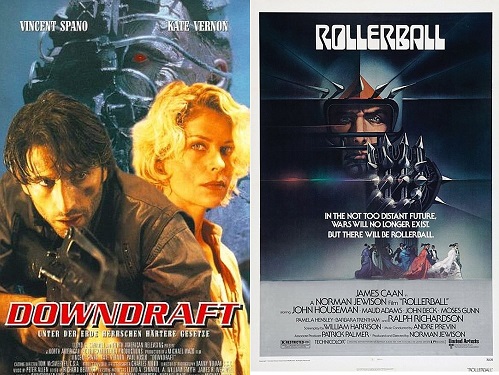
Tonight, for #MondayActionMovie, we are watching 1996’s Downdraft!  Selected and hosted by @RevMagdalen, Downdraft stars Vincent Spano and Kate Vernon in a story about computers and the damage that they do!  While the trailer below is in German, the film itself is Canadian.  That’s how you know it’s going to be good!

Following #MondayActionMovie, I will be filling in for my friends Brad and Sierra (who are on vacation this week) and guest hosting the #MondayMuggers live tweet.  We will be watching the original Rollerball, starring the great James Caan as a future athlete who is forced to choose between the comfort of selling out or the freedom of …. well, freedom.  It’s a classic sci-fi film, one that is more relevant today than ever.  We start at 10 pm et.  Here’s the trailer:

It should be fun and I invite all of you to join in.  If you want to join us, just hop onto twitter, start Downdraft at 8 pm et, and use the #MondayActionMovie hashtag!  Then, at 10 pm et, start Rollerball and use the #MondayMuggers hashtag!  I’ll be there tweeting and I imagine some other members of the TSL Crew will be there as well.  It’s a friendly group and welcoming of newcomers so don’t be shy.  And reviews of these films will probably end up on this site at some point this week.

Downdraft can be found on YouTube while Rollerball is available on both Prime and Tubi!

Enjoy!

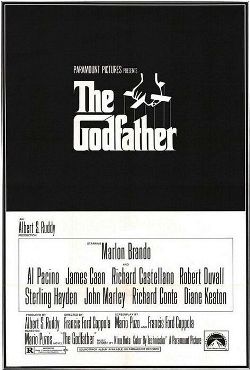
Scenes I Love: James Caan in The Godfather


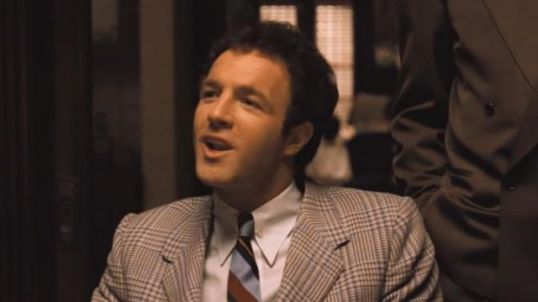
James Caan has passed away, at the age of 82.  There are a lot of great James Caan performances to choose from and to highlight.  For me, though, he’ll always be Sonny Corleone, the temperamental son of the Don who remains oddly likable, even as he cheats on his wife and threatens to kill every other gangster in New York.  Sonny is a force of chaos, which ultimately leads to his untimely death.  But, at the same time, it also makes him someone who you definitely fighting for you instead of against you.

The scene below is mostly cited for Al Pacino’s quiet intensity as he reveals that he’s truly become a member of the family.  While Pacino’s great, Caan’s reaction is just as important.

In the scene below, Sonny discovers that Carol has been beating up Connie so Sonny beats up Carlo.  Carlo really deserved it.  Now this scene is often cited for featuring one shot where it’s clear that Caan didn’t actually hit Gianni Russo.  That’s fair.  But still, Caan actually did make contact enough times that Russo ended up with a broken rib.  Look past that one shot and you’ll see that, in this scene, Caan clearly shows why Sonny was such a feared figure.  Even more importantly, this scene shows how important his family was to Sonny.  Who doesn’t want someone who would beat someone up for them?

And finally, in this scene, Sonny tells off the FBI.  How can’t you love that?  Apparently, the smashing of the camera was something that Caan improvised on the spot.

That said, there was a lot more to Caan’s career than just The Godfather.  Watch all of his films.  He was one of the greats and perhaps the only celebrity who was actually worth following on twitter. RIP.

Scenes That I Love: “I Love The Smell of Napalm in the Morning” from Apocalypse Now (Happy birthday, John Milius!)


Today, the Shattered Lens celebrates the 78th birthday of the iconic screenwriter and director, John Milius!

While director Francis Ford Coppola definitely put his own stamp on 1979’s Apocalypse Now, the film started life as a script written by John Milius and the film itself is full of dialogue that could only have been written by Milius.  The most famous example is Robert Duvall’s monologue about the smell of napalm in the morning.  Actually, the entire helicopter attack feels like pure Milius.  Reportedly, Duvall’s character was originally named Colonel Kharnage but, by the time the movie was made, his name had become Kilgore.  It’s still not exactly a subtle name but it’s not quite as obvious as Kharnage.

(When James Caan read the script, he loved the role so much that he was offended to not be offered it and, as a result, he turned down offers to play not only Willard but also Kurtz.)

Happy birthday, John Milius!