The Films of 2024: Horizon: An American Saga: Chapter One (dir by Kevin Costner)


Horizon: An American Saga: Chapter One is the rather unwieldy title of the first part of what Kevin Costner has said will be an epic four-part movie about the settling of the American frontier.

It’s very, very long.

It has a running time of three hours, during which time a lot of characters are introduced and a lot of plotlines are initiated but, because this is the only first chapter, none of them come to a close.  In fact, as the film ends, it’s still a mystery as to how some of the characters are even related.  I watched all three hours and I took my ADD meds this morning so you can be assured that I was actually paying attention.  That said, I still struggled to keep track of who everyone was or even where they were in proximity to each other.  Indeed, it was only towards the end of the film that I realized that several years were supposed to have passed over the course of the first chapter’s running time.

That’s not to say that the film is a disaster.  While it’s not quite the nation-defining epic that Costner obviously envisioned it as being, it’s also not quite the cinematic atrocity that several critics made it out to be.  It’s a throwback of sorts, to the epic westerns of old.  As such, the film features taciturn gunslingers, a woman with a past, dangerous outlaw families, fierce Indian warriors, and a wise Indian chief who has dreamed of the coming of the white man.  The film is full of actors — like Michael Rooker, Sienna Miller, Sam Worthington, Danny Huston, Will Patton, James Russo, Dale Dickey, and Kevin Costner himself — who feel as if they belong to a different era of filmmaking.  Just about everyone in the film is heading to the settlement of Horizon, which sits in Apache territory.  Despite the efforts of the Indians to kill every settler who shows up, they keep coming.  As one army officer explains it, the Indians have made the mistake of thinking that the settlers will come to believe the land is cursed while the settlers, all of whom are full of American optimism, instead chose to believe that the previous settlers were unlucky but that the next wave of settlers will make it work.  Costner has the right visual sensibility for a western.  The film reveals a director who is obviously in love with the Western landscape and the film is at its best when it simply frames the characters against the beauty of the frontier.  But when it comes to actually telling a compelling story, he struggles.  There are a lot of moving parts to the first chapter of Horizon and the problem is not that they don’t automatically connect but instead that Costner never gives us any reason to believe that they’ll ever connect.  There are no visual clues or bits of dialogue to assure the viewer that everything they’re watching is going to eventually pay off.  Costner asks his audience to have faith in him and remember that he directed Open Range and Dances With Wolves while forgetting about The Postman.

The first hour, which features a brutal raid on the settlement by a group of Indians, is the strongest.  It really drives home the brutality of what we now call the old west.  In the style of Michael Cimino’s The Deer Hunter, Costner closely observes the individual customs of the film’s settlers and carefully introduces several appealing characters who leave the viewer feeling as if they’ve met a very special and very unique community of people.  That makes it all the more devastating when the majority of those characters are subsequently wiped out with casual cruelty in a raid led by the Indian warrior Pionsenay (Owen Crow Shoe).  (Later — much later — a tracker played by Jeff Fahey will show similar brutality while wiping out a group of Apaches.)  The first hour establishes the frontier as being beautiful but also dangerous and it also drives home the mix of determination, desperation, and even madness that led so many to follow Horace Greeley’s advice and “Go west!”  Though the film was shot in early 2023, the brutality of the raid brought to mind the terrible images of the October 7th attacks on Israel.  The subsequent scenes in which Pionesenay and his followers ridiculed those in the tribe who wanted peace mirrored the current schism that’s driving apart the worldwide Left.  The U.S. Army, for their part, arrives a day late and can only offer up not-so subtle condescension.  The surviving settlers, however, remain determined to make a home for themselves.

The second hour focuses on Hayes (played by Costner), who rides into a mining town and gets involved with a family of outlaws who are looking for the woman who shot their father.  The second hour is a bit more of a traditional western than the first hour, though some of the violence is still shockingly brutal.  (Even being comedic relief won’t save you in this film.)  Abbey Lee gives a good performance as the woman with a past and a baby and Kevin Costner is  …. well, he’s Costner.  He could play this type of role in his sleep.

The third hour is a mess, introducing a wagon train and featuring a miscast Luke Wilson as the leader of the settlers and Jeff Fahey giving a strong performance as a ruthless tracker.  The third hour meandered as a whole new set of characters were introduced and I was left to wonder why the film needed new characters when the characters from the first two hours were perfectly adequate.  It was during the third hour that I started to really get impatient with the film and its leisurely approach to storytelling.

The film ends with a montage of what we can expect from the next few chapters of Horizon and I will say that the montage actually looked pretty cool.  That’s because the montage was almost totally made up of action scenes, with none of the padding that caused Chapter One to last an unwieldy three hours despite only having 90 minutes worth of story.  Still, one has to wonder if we’ll actually get to see the next three chapters.  The first chapter bombed at the box office and didn’t exactly excite critics.  Costner is producing and financing the films himself and I doubt he’ll give up on them.  The Horizon saga will be completed but will it made it to theaters or will it just end up on streaming?  Personally, I think the whole thing would work best as a miniseries but who knows?  (If Horizon was airing on Paramount, it would probably be a Yellowstone-style hit.)  All I really do know is that Chapter Two has yet to be released.  And that’s a shame because, for all of Chapter One‘s flaws, I’d still like to see how the story turns out.

Late Night Retro Television Review: Friday the 13th: The Series 2.16 “Scarlet Cinema”


Welcome to Late Night Retro Television Reviews, a new feature where we review some of our favorite and least favorite shows of the past! On Fridays, I will be reviewing Friday the 13th: The Series, a show which ran in syndication from 1987 to 1990. The show can be found on YouTube!

This week, a nerdy film students takes his love of a 1940s horror film too far!

Episode 2.16 “Scarlet Cinema”

(Dir by David Winning, originally aired on February 20th, 1989)

Darius Pogue (Jonathan Wise) is a nerdy film student who is obsessed with The Wolf Man.  When Darius steals an old antique movie camera, he discovers that, by looking through the camera’s view finder, he can bring The Wolf Man to life and send him to kill anyone who annoys him.  Darius kills a snooty antique store manager.  He kills a bully.  He kills his professor.  He even sends the wolf after Ryan and a girl that Darius likes.

However, as much as Darius enjoys sending the Wolf Man after people, he wants to be the Wolf Man himself.  After allowing the Wolf Man to scratch him, Darius shoots him with silver bullets.  Transforming into a werewolf himself, Darius goes after Ryan, Micki, and Jack.  Unfortunately, Darius didn’t consider that film stock is full of silver nitrate.  Live by the film, die by the film….

This episode was a case where the premise was pretty interesting but the execution didn’t quite work.  The episode mixes in archival footage from The Wolf Man with scenes of Darius’s victims meeting their fate.  So, for example, one sees Lon Chaney Jr. turning into the Wolf Man and then the viewer sees The Wolf Man killing one of Darius’s classmates.  The problem is that the Friday the 13th werewolf makeup doesn’t really look much like the Wolf Man makeup.  Regardless of how darkly lit each scene is, it’s pretty obvious that the Wolf Man from the film is not the same Wolf Man that is doing Darius’s bidding.  It not only negates the whole idea behind the cursed antique but it’s also pretty distracting for those of us just trying to watch the show.  And, again, it’s a shame because the idea behind this episode was actually pretty clever.

Myself, I’ve always liked the original Wolf Man.  Eventually, Larry Talbot got a bit too whiny for his own good and it’s pretty much impossible to buy the idea of the hulking, very American Lon Chaney, Jr. as the son of the sophisticated and very British Claude Rains.  But, even with all that in mind, The Wolf Man holds up as a classic American horror film, full of atmosphere and featuring a pretty impressive monster.  Friday the 13th deserves some credit for making Darius a Wolf Man fan because The Wolf Man, with its portrait of a man being driven mad by a curse that he cannot control, fits in perfectly with the main idea behind Friday the 13th.  Darius, like most of the villains on this show, isn’t really evil until he starts using the camera.  Each times he picks up the camera, his actions become progressively worse.  Just as Larry Talbott was cursed by the werewolf, Darius is cursed by the camera.  Much like a drug addict, Darius falls in love with the camera and he just can’t stop using it.  His addiction changes his personality as it becomes all-consuming,.  Eventually, it drives him to become the Wolf Man himself.

The episode ends with another cursed antique safely hidden away and Darius joining Larry Talbot in the cold embrace of death.  There was a lot of potential to this episode so it’s a shame that it didn’t quite work.

The Films of 2024: Gary (dir by Robin Dashwood)


Wow, what a depressing documentary!

I’m taking about Gary, which is currently streaming on Peacock.  Gary tells the story of former child actor-turned-security guard Gary Coleman, who went from being one of the top stars in television to eventually struggling to pay the bills.  The documentary tells the story of Coleman’s life, from his start as a cute kid with a mischievous smile to his stardom, his health struggles, and the controversy over why all the money that he made as a child eventually disappeared.  Gary blamed his parents.  His parents blamed Gary’s managers.  The woman who eventually married Gary blamed everyone.  Gary, himself, ended up as tabloid fodder, in which he was treated as not only being the poster child for the problems that young stars encounter but in which he was also regularly ridiculed for having those exact same problems.  Watching the documentary, one gets the feeling that the world took an odd joy in Gary Coleman’s downfall.  Coleman himself died under mysterious circumstances and the documentary, though even-handed, leaves one feeling that there’s definitely a lot about his death that could stand to be examined.

Gary Coleman’s stardom was a bit before my time, though I have seen a few episodes of Diff’rent Strokes online.  The show, to be honest, always seems a bit cringey to me but, still, it’s obvious that Coleman was a capable actor even when he was having to repeat the catch phrases that he came to hate.  Unfortunately, his kidney problem stunted his growth and, as he got older, the acting opportunities dried up.  He was reduced to parodying his former stardom, appearing on talk shows and sitcoms and repeating, “What you talkin’ about” to anyone who asked.  The documentary was painfully sad to watch.  Gary Coleman definitely comes across as being a bit of an eccentric but it’s hard not to feel that he never allowed to grow up and that the people who should have been looking out for him, like his parents and his manager and his wife, were only looking out for themselves.

The film features interviews with the people who failed Coleman.  None of them really take any sort of responsibility for their actions.  At first, his wife comes across like she really cared about him but, as the documentary progresses, we hear too many stories about her abusing and manipulating him to take anything she says at face value.  When she sells a picture of Coleman on his death bed to a tabloid, that’s pretty much last straw as far as any sympathy for her is concerned.  Coleman’s business manager also initially comes across as being genuine and sincere but, again, there are just too many stories of misusing Coleman’s money.  If he doesn’t seem to be as ruthlessly mercenary as Coleman’s wife, it’s still obvious that he shouldn’t have been managing Coleman’s career.  As for Coleman’s parents, the less said about them the better.  Everyone that is interviewed is very good at blaming someone else for what happened after Coleman’s stardom ended.

Again, this was depressing documentary.  Watching this, I really felt bad about Gary Coleman.  It’s hard to know what to do about child stars.  On the one hand, there are child stars who grow up to lead what appear to be perfectly normal and stable lives.  But, there’s also a lot like Gary Coleman, whose lives are pretty much destroyed by their early success.  No kid should be supporting their family.  And no family should be paying their bills exclusively with their kid’s salary.  To me, it all comes down to the parents.  You can’t depend on an industry to raise your child for you.  In the end, though, Coleman was let down by a lot of people.  There’s more than enough blame to go around.

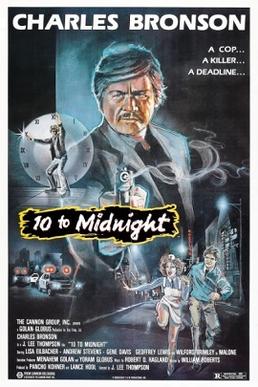
Bonus Horror Scene Of The Day: The End Of 10 To Midnight


The scene below is a major spoiler for the film 10 to Midnight so don’t watch if you haven’t seen the film yet.  And, to be honest, you probably shouldn’t even read the rest of this post, as the post itself is probably a spoiler as well.  There’s no way to truly talk about this film without talking about the ending.  10 to Midnight is a film that’s been on my mind a lot this year, largely because Charles Bronson plays a character who reminds me of my Dad.  Bronson’s relationship with his daughter (played by Lisa Eilbacher) also reminds me of my own relationship with my Dad.  I doubt there’s many people who get sentimental over a relatively unheralded vigilante horror film from 1983 but, as I’m still processing losing my Dad earlier this year, I am one of those people.

If you have seen the film, you know that this is one of the best endings that Charles Bronson ever filmed.  Indeed, in today’s chaotic world, there’s some very satisfying about both Bronson’s final line and his no-nonsense style of dealing with problems.  And indeed, with all the bad vibes that seem to have been unleashed on the world over the past few years, this scene feels like an exorcism of sorts.

Serial killer Warren Stacy (Gene Davis) thought he could game the system.  He thought he had everything figured out.  He smugly assumed no one could stop his reign of terror.

Well, Bronson disagrees.

And with that one wonderful final line, Charles Bronson brings this year’s Horrorthon to a close.

Lisa Marie’s Early Oscar Predictions For October


It’s that time of the month again!

While the rest of us were watching horror movies, the Oscar race was finally starting to take shape.  It’s a race that still doesn’t have any frontrunners but which does now have some definite contenders.

Be sure to check out my predictions for April, May, June, July, August, and September!

Best Picture

Anora

Blitz

The Brutalist

Conclave

Dune Part II

Emilia Perez

Gladiator II

The Piano Lesson

Saturday Night

September 5

Best Director

Jacques Audiard for Emilia Perez

Sean Baker for Anora

Edward Berger for Conclave

Brady Corbett for The Brutalist

Ridley Scott for Gladiator II

Best Actor

Adrien Brody in The Brutalist

Timothee Chalamet in A Complete Unknown

Daniel Craig in Queer

Colman Domingo in Sing Sing

Ralph Fiennes in Conclave

Best Actress

Pamela Anderson in The Showgirl

Karla Sofia Gascon in Emila Perez

Angelina Jolie in Maria

Mickey Madison in Anora

Demi Moore in The Substance

Best Supporting Actor

Yura Borslav in Anora

Kieran Culkin in A Real Pain

Samuel L. Jackson in The Piano Lesson

Guy Pearce in The Brutalist

Denzel Washington in Gladiator II

Best Supporting Actress

Danielle Deadwyler in The Piano Lesson

Selena Gomez in Emilia Perez

Saoirse Ronan in Blitz

Isabella Rossellini in Conclave

Zoe Saldana in Emilia Perez

Horror on the Lens: Night of the Living Dead (dir by George Romero)


Happy Halloween everyone!

Well, as another horrorthon draws to a close, it’s time for another Shattered Lens tradition!  Every Halloween, we share one of the greatest and most iconic horror films ever made.  For your Halloween enjoyment, here is George Romero’s Night of the Living Dead!

(Be sure to read Arleigh’s equally famous review!)

October Positivity: Chloe’s Mountain (dir by Wesley Bristol)


In 2021’s Chloe’s Mountain, teenaged orphan Chloe (Kenzie Mae) moves to her grandmother’s farm.

Grandma  (Donna Bristol) has white hair. Chloe has blue hair.

Chloe is an aspiring singer who like her music loud.  Grandma hasn’t listened to anything since Glenn Miller died.

Grandma is big into church.  Chloe is not.

Chloe smokes weed with her friends.  Grandma really likes her neighbor’s biscuits.

Chloe and Grandma don’t have much in common and, at first, Chloe doesn’t want anything to do with her grandmother.  But Grandma wins Chloe over through the power of her unconditional love.  But then, on Chloe’s 18th birthday no less, Grandma dies.  Chloe is heartbroken.  Grandma leaves Chloe her house, her farm, and all of her money.  If Chloe goes to a Christian university and graduates in four years, she’ll get the house when she’s 22.  If she doesn’t go to a Christian university or if she fails to graduate, she’ll have to wait until she’s 35 to collect her inheritance.

Knowing that this was a faith-based film, I was not surprised when Chloe agreed to go to the Christian university.  In many ways, the movie feels like a commercial for going to a Christian college.  Sure, the movie says, the rules are a little bit goofy and you have to spend a lot of time memorizing hundreds of bible verses but you will eventually get a good education …, maybe.  And yes, you’re roommate will probably really be into stuffed animals and the color pink but why can’t you just shut up and conform?

That said, the movie lost me as soon as it explained all the college’s rules.  Chloe learns that she can earn demerits for breaking the college’s rules and, if she ends up with too many, she can be expelled.  Talking too loudly?  That’s a demerit.  Late for class?  Demerit.  Loud music?  Demerit.  Public displays of affection?  Huge demerit right there.  Wearing revealing clothing?  Demerit.

Uhmm …. okay, isn’t Chloe 18 years old?  Aren’t universities supposed to give young adults an education so they can go out into the real world?  Chloe’s an adult. The viewer may or may not feel that Chloe always acts like an adult but, the fact of the matter, 18 year-olds are considered to be adults.  Telling an adult what she can or cannot wear, especially when she’s the one paying to attend your school, is beyond insulting.  “You wore a belly shirt,” the Dean says at one point while looking over Chloe’s demerits.  And?  I mean, a lot of people do.  I’ve certainly worn my share over the years.  You’re going to kick someone out of college because they wore a slightly revealing piece of clothing?  Seriously, Chloe, get out of there!  Drop out and go to a real school.  Grandma’s farm wasn’t really that nice to begin with.

Anyway, as for the rest of the film, Chloe does eventually make a friend, Nechelle (Shalayne Janelle).  Nechelle helps to change Chloe’s cynical outlook.  It’s a standard low budget, faith-based movie, full of jokes that fall flat and performers who give amateurish performances.  I thought Kenzie Mae actually gave a pretty likable performance as Chloe but she’s sabotaged by filmmakers who have no idea how to tell a story visually or how to make one scene flow into the next.  By the end of the movie, I felt as if I had been watching for four years.  Still, I stuck with the film and I didn’t quit, no matter how much I was tempted to do so.  So, seriously, where’s my farm?

Bonus Horror on TV: The Night America Trembled (dir by Tom Donovan)


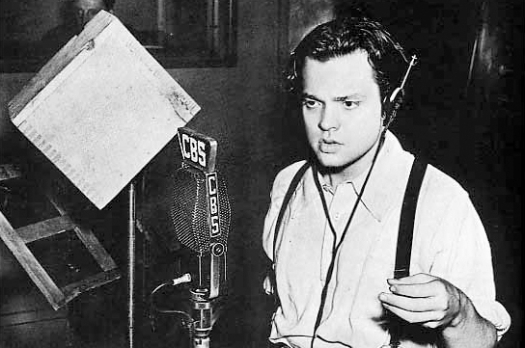
Filmed in 1957 for a television program called Westinghouse Studio One, The Night America Trembled is a dramatization of the night that Orson Welles terrified America with his radio adaptation of War of The Worlds.  

For legal reasons, Orson Welles is not portrayed nor is his name mentioned.  Instead, the focus is mostly on the people listening to the broadcast and getting the wrong idea.  That may sound like a comedy but The Night America Trembled takes itself fairly seriously.  Even pompous old Edward R. Murrow shows up to narrate the film, in between taking drags off a cigarette.

Clocking in at a brisk 60 minutes, The Night America Trembled is an interesting recreation of that October 30th.  Among the people panicking: a group of people in a bar who, before hearing the broadcast, were debating whether or not Hitler was as crazy as people said he was, a babysitter who goes absolutely crazy with fear, and a group of poker-playing college students.  If, like me, you’re a frequent viewer of TCM, you may recognize some of the faces in the large cast: Ed Asner, James Coburn, John Astin, Warren Oates, and Warren Beatty all make early appearances.

It’s an interesting little historical document and you can watch it below!

A Bonus Horrorthon Blast From The Past: The Tell Tale Heart (dir by Ted Parmlee)


This short, animated film is from 1953 and it features James Mason reading a story from America’s first master of suspense, Edgar Allan Poe!

Here, for your listening and visual enjoyment, is The Tell Tale Heart!  Along with featuring the voice of James Mason, the film was directed by Ted Parmlee.  It was the first animated film to ever be given an X rating by the British Film Board of Censors.

A Bonus Horrorthon Blast From The Past: Vincent (dir by Tim Burton)


Vincent Price was born, at the start of the 20th Century, in St. Louis, Missouri.  When he first began his film career in the 1930s, he was promoted as a leading man and he was even tested for the role of Ashley Wilkes in Gone With The Wind.  (Imagine that!)  However, Price would find his greatest fame as a horror icon. 

Among the fans of Price’s horror films was a young animator named Tim Burton.  In 1982, Price and Burton would work together for the first time, with Price providing the narration for a short, stop motion film that Burton had written and directed.  Called Vincent, the film was about a seven year-old boy named Vincent who wanted to be — can you guess? — Vincent Price!  The six-minute film follows Vincent as he gets involved in all sorts of macabre activities.  Of course, as Vincent’s mom points out, Vincent isn’t actually a monster or mad scientist.  He’s just a creative child with an overactive imagination.  (To say the short feels autobiographical on Burton’s part would be an understatement.)  The animation is outstanding and full of wit but it really is Vincent Price’s wonderful narration that makes this short film a classic.

Both Price and Burton would later call making this film one of the most creatively rewarding collaborations of their respective careers.

On Halloween Eve, enjoy Vincent!