Review: Enemy Mine (dir. by Wolfgang Petersen)


“Truth is truth.” – Jeriba Shigan

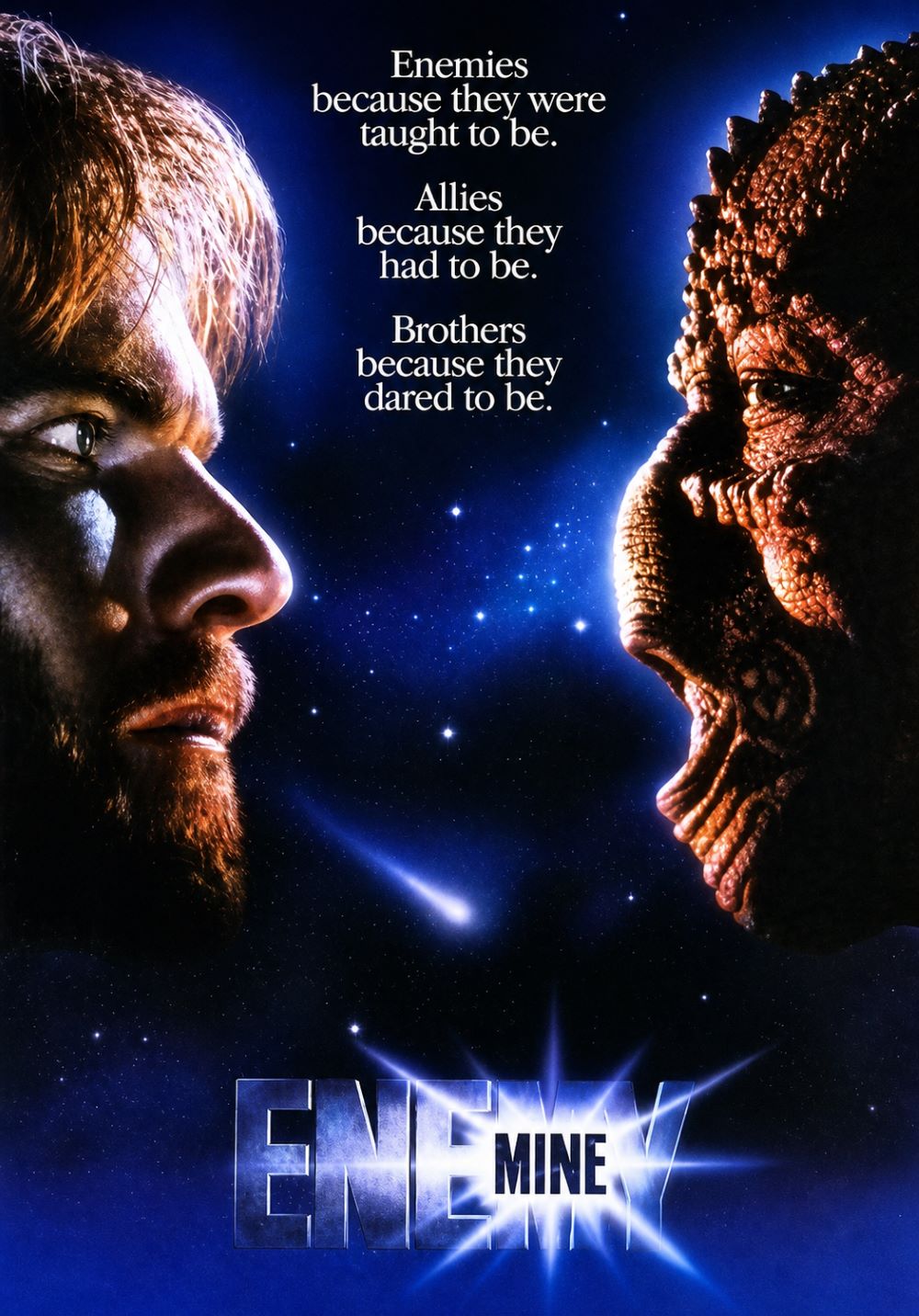
One of those 1980s sci-fi movies that sneaks up on you with more heart than flash, Enemy Mine turns a pulpy premise into something genuinely moving under Wolfgang Petersen’s steady hand. What starts as a straightforward tale of enemies forced together ends up digging deep into survival, prejudice, and the unlikely bonds that form when everything else falls away.

The storyline kicks off in the middle of an interstellar war between humans and the Drac, a reptilian alien species. Human pilot Willis Davidge, played by Dennis Quaid, crash-lands on a harsh, storm-battered planet after a dogfight with Drac warrior Jeriba Shigan. At first, it’s pure hate: they clash, scheme, and barely survive the planet’s brutal environment—freezing winds, toxic air, and hungry scavengers. But necessity breeds uneasy teamwork, and from there, the film charts a slow thaw into mutual respect and friendship. The plot builds to bigger stakes when Jeriba faces a pregnancy unique to their species, leading to themes of parenthood, loss, and legacy that give the story real emotional weight.

Interestingly, Enemy Mine‘s basic premise echoes John Boorman’s 1968 war drama Hell in the Pacific, where an American airman (Lee Marvin) and a stranded Japanese soldier (Toshiro Mifune) wash up on the same deserted island and must cooperate to survive after initial violent antagonism. Both films hinge on that classic setup of mortal enemies isolated together, grappling with a language barrier that heightens the tension—grunts, gestures, and improvised signals become their only bridge. But where Boorman leans into raw cynicism, ending on an ambiguous and bleak note that questions if reconciliation is even possible, Enemy Mine flips the script toward optimism, letting understanding bloom into a full-fledged familial bond.

What elevates Enemy Mine beyond typical space opera is its focus on themes that feel timeless, even if the delivery is pure ’80s cheese. The human-Drac conflict is a clear stand-in for racism and xenophobia, showing how propaganda and fear turn “others” into monsters in our minds. Davidge starts spouting all the usual human supremacist lines, while Jeriba embodies alien pride, but isolation strips away those defenses. The movie argues that empathy isn’t innate—it’s forged through shared hardship, language lessons (Davidge memorably recites Drac poetry), and vulnerability. There’s a queer undercurrent too, in the intense, almost parental intimacy that develops, challenging binary ideas of enemy and ally.

Dennis Quaid nails Davidge as a cocky everyman with a hidden soft side. He brings brash energy to the early fights—grinning through gritted teeth, improvising weapons from junk—but lets cracks show as grief and responsibility hit. His arc from hothead to devoted guardian feels earned, especially in quieter moments like teaching the Drac child human songs. Louis Gossett Jr. is even more impressive under layers of prosthetics as Jeriba, giving the alien a dignified, wry voice that cuts through the makeup. He conveys wisdom and humor without preaching, making Jeriba’s final lessons about tolerance land with quiet power. Their chemistry carries the film; you buy the shift from foes to family because these two sell every beat.

Thematically, Enemy Mine shines brightest in its exploration of fatherhood across species lines. After tragedy strikes, Davidge steps up for Jeriba’s child, Zammis, turning the story into a tale of nurture over nature. It’s about breaking cycles—passing on culture, rituals, and values not to perpetuate war, but to build peace. The film critiques blind loyalty to one’s side, showing how the real enemy might be the systems that demand it. Petersen, fresh off Das Boot, keeps the tone earnest, balancing tense survival scenes with tender rituals like Jeriba’s egg-laying or Davidge’s makeshift cradle. Sure, the effects age unevenly—those Drac faces look rubbery now—but the emotional core holds up.

Revisiting it today, Enemy Mine feels like a forgotten gem in the era of Aliens and Star Wars sequels. It dares to be intimate amid the spectacle, prioritizing character over conquest. The climax, with its courtroom-like showdown back in human space, hammers home the anti-war message without feeling forced. Quaid and Gossett elevate the script’s earnestness, making the bromance-turned-familial bond resonate. It’s not flawless—the pacing drags in spots, and some twists feel convenient—but its sincerity wins out. In a genre often about blowing stuff up, this one’s about building something human (or Drac) from the wreckage.

Enemy Mine reminds us that enemies are just strangers we haven’t met yet. Through Davidge and Jeriba’s journey, it champions understanding over ideology, legacy over vengeance. Quaid’s charisma and Gossett’s gravitas make it stick, turning a B-movie setup into a heartfelt plea for connection. If you’re into thoughtful sci-fi with soul, it’s worth a rewatch—imperfect, but profoundly kind.

4 Shots From 4 Films: Special Wolfgang Petersen Collection


4 Shots From 4 Films is just what it says it is, 4 shots from 4 of our favorite films. As opposed to the reviews and recaps that we usually post, 4 Shots From 4 Films lets the visuals do the talking!

Today, the Shattered Lens celebrates German director Wolfgang Petersen.  It’s time for….

4 Shots From 4 Wolfgang Petersen Films

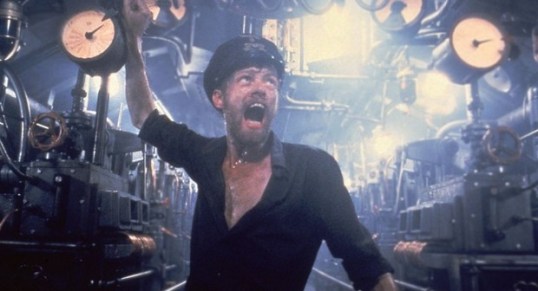
Das Boot (1981, dir by Wolfgang Petersen, DP: Jost Vocano)

The NeverEnding Story (1984, dir by Wolfgang Petersen, DP: Jost Vocano)

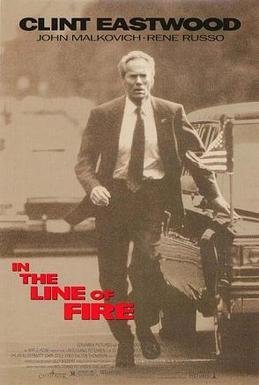
In The LIne of Fire (1993, dir by Wolfgang Petersen, DP: John Bailey)

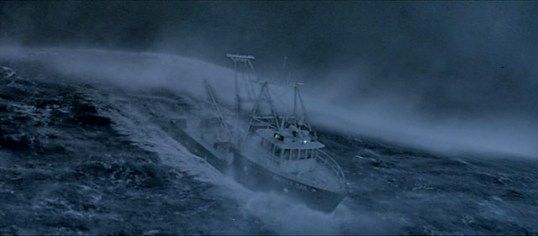
The Perfect Storm (2000, dir by Wolfgang Petersen, DP: John Seale)

Embracing The Melodrama: Poseidon (dir by Wolfgang Petersen)


The plot of 2006’s Poseidon may sound familiar.

There’s this cruise ship.  It’s a luxury liner and it’s sailing across the ocean on New Year’s Eve.  There’s a lot of passengers on the liner.  Most of them are wealthy and the majority of them are played by familiar actors.  Everyone is in the ballroom, celebrating the upcoming new year.  They do the countdown.  They cheer when they hit zero.  Kisses are exchanges.  Dances are danced.  A blonde woman sings a song.  Suddenly, a tidal wave smashes into the Poseidon, turning it over.  Explosions rock the ship as it ends up floating upside down.  The majority of the crew and the passengers are killed immediately.  The survivors face a decision.  Do they stay in the ballroom or do they attempt to climb upwards to safety?

Yep, Poseidon is a remake of The Poseidon Adventure.  It tells basically the same story but with slightly better special effects and slightly less histrionic actors.  The original Poseidon Adventure had Gene Hackman and Ernest Borgnine yelling at each other for over two hours while Shelley Winters swam until she died.  “WHERE’S YOUR GOD NOW, PREACHER!?” Borgnine shouted while Hackman yelled, “ROGO!” over and over again.  (Rogo was Borgnine’s character.  Hackman shouted the name with a wonderful amount of loathing.)  It was a very loud and every entertaining movie.  The cast of Poseidon is a bit more low-key but Poseidon is also more interested in special effects than any sort of human (melo)drama.

For instance, Josh Lucas plays a Navy veteran-turned-professional gambler.  He gives a good performance as the de facto leader of the survivors but he never gets to yell as much as Gene Hackman did in the original.  Richard Dreyfuss plays an architect and you would think that Dreyfuss, of all people, would chew up the scenery in this disaster film with relish but Dreyfuss is oddly subdued.  Jacinda Barrett is the mother who tries to protect her son (played by Jimmy Bennett).  Fergie is the singer who embraces the ship’s captain (Andre Braugher) as the ballroom floods.  Emmy Rossum is the rebellious teenager.  Mike Vogel is her boyfriend.  And Kurt Russell plays the former mayor of New York City.  He also happens to be a former fireman.

It’s a good cast.  Kurt Russell is especially good in his role, believable as both a fireman (a role that he’s played in a few films) and as a politician.  It’s a talented group of actors but no one really goes overboard in the way that Gene Hackman, Ernest Borgnine, Shelley Winters, Stella Stevens, Roddy McDowall, and even Leslie Nielsen did in the first one.  The premise of the film is so silly that it really does require the cast and the director to fully embrace the melodrama.  As opposed to the original, this film only gives the melodrama a quick hug and instead concentrates on explosions, water, and flames.  The special effects overshadow the humans and that’s unfortunate because there’s a lot of interesting people in this movie.  A good performance can last a lifetime.  There’s a reason why we still talk about Kurt Russell in films like Escape From New York and The Thing.  Good special effects, on the other hand, still look incredibly dated after three years.

I’m not really sure that it was necessary to remake The Poseidon Adventure in the first place.  I’m just glad they left Beyond The Poseidon Adventure alone.

4 Shots From 4 Films: Special Wolfgang Petersen Collection


4 Shots From 4 Films is just what it says it is, 4 shots from 4 of our favorite films. As opposed to the reviews and recaps that we usually post, 4 Shots From 4 Films lets the visuals do the talking!

Today, the Shattered Lens celebrates German director Wolfgang Petersen.  It’s time for….

4 Shots From 4 Wolfgang Petersen Films

Das Boot (1981, dir by Wolfgang Petersen, DP: Jost Vocano)

The NeverEnding Story (1984, dir by Wolfgang Petersen, DP: Jost Vocano)

In The Line of Fire (1993, dir by Wolfgang Petersen, DP: John Bailey)

The Perfect Storm (2000, dir by Wolfgang Petersen, DP: John Seale)

Film Review: In The Line of Fire (dir by Wolfgang Petersen)


Earlier today, it was announced that director Wolfgang Petersen had passed away.  He was 81 years old and had been suffering from pancreatic cancer.  Though Petersen started his career making films in his native Germany (and his 1981 film, Das Boot, remains the most Oscar-nominated German film of all time), Petersen eventually relocated to Los Angeles and established himself as a very successful director of thrillers and star-filled action films.

Last month, I watched one of Petersen’s films.  First released in 1993, In The Line of Fire stars Clint Eastwood as Frank Horrigan.  Frank is a veteran member of the Secret Service, still serving at a time when almost all of his colleagues have either retired or died.  When we first meet Frank, he and his new partner, Al (Dylan McDermott), are arresting a gang of counterfeiters and Frank (and the then 63 year-old Eastwood) is proving that he can still take down the bad guys.

But is Frank still up to protecting the President?  Of the agents that were with President Kennedy when he was assassinated in 1963, Frank Horrigan is the last one standing.  He’s the only active secret service agent to have lost a president and he’s haunted by what he sees as being his failure to do his job and the feeling that America has never recovered from Kennedy’s death.  Also obsessed with Frank’s history is a mysterious man who calls himself Booth.  Booth (played by John Malkovich, who received an Oscar nomination for his performance) starts to call Frank.  He informs Frank that he’s planning on assassinating the president, who is currently traveling the country as a part of his reelection bid.  Booth views Frank as being a worthy adversary and Frank, looking for redemption, requests to be returned to the Presidential Protective Division.

While Frank struggles to keep up with both the President and the younger agents, Booth slowly and methodically puts his plan in motion.  He builds his own wooden gun and tries it out on two hunters who are unfortunate enough to stumble across him.  Making a heart-breaking impression in a small role, Patrika Darbo plays the bank teller who, unfortunately, comes a bit too close to uncovering Booth’s secret identity.  Booth is friendly and sometimes apologetic and he quickly shows that he’s willing to kill anyone.  It’s a testament to both the skill of Malkovich’s performance and Petersen’s direction that the audience comes to believe that there’s a better than average chance that Booth will succeed.  He just seems to have such a strong belief in himself that the audience knows that he’s either going to kill the President or that he’s going to willingly die trying.

Meanwhile, no one believes in Frank.  The White House Chief of Staff (Fred Dalton Thompson, later to serve in the Senate and run for President himself) views Frank as being a nuisance.  The head of the detail (Gary Cole) thinks that Frank should be put out to pasture.  Only Lilly Raines (Rene Russo), another agent, seems to have much faith in Frank.  While Frank is hunting Booth, he falls in love with Lilly and she with him.  (Fortunately, even at the age of 63, Eastwood still had enough of his old Dirty Harry charisma that the film’s love story is credible, despite the age difference between him and Russo.)  The hunt for Booth reawakens something in Frank.  Just as Booth has a psychological need to be pursued and challenged, Frank needs an enemy to which he can re-direct all of his guilt and self-loathing.  Frank becomes a stand-in for everyone who fears that, because of one particular incident or tragedy, America will never regain the strength and promise that it once had.  (In Frank’s case, that strength is symbolized by his idealized memories of JFK.)  Defeating Booth is about more than just saving America.  It’s about redeeming history.

It all makes for an very exciting thriller, one in which Eastwood’s taciturn style of acting is perfectly matched with Malkovich’s more cerebral approach.  Just as the two characters are challenging each other, Eastwood and Malkovich also seem to challenge each other as actors and it leads to both men giving wonderful performances.  Wolfgang Petersen not only does a good job with the action scenes but also with generating some very real suspense.  The scene in which Malkovich attempts to assemble his gun under a table is a masterclass in directing and evidence that Petersen had not only watched Hitchcock’s films but learned from them as well.

As directed by Petersen and performed by Malkovich and Eastwood, In The Line of Fire emerges as a film that was more than just an exciting thriller.  It was also a mediation on aging, guilt, love, redemption, and the national traumas of the past.  It’s a film that stands up to multiple rewatches and as a testament to the talent of the man who directed it.

Scenes I Love: In the Line of Fire


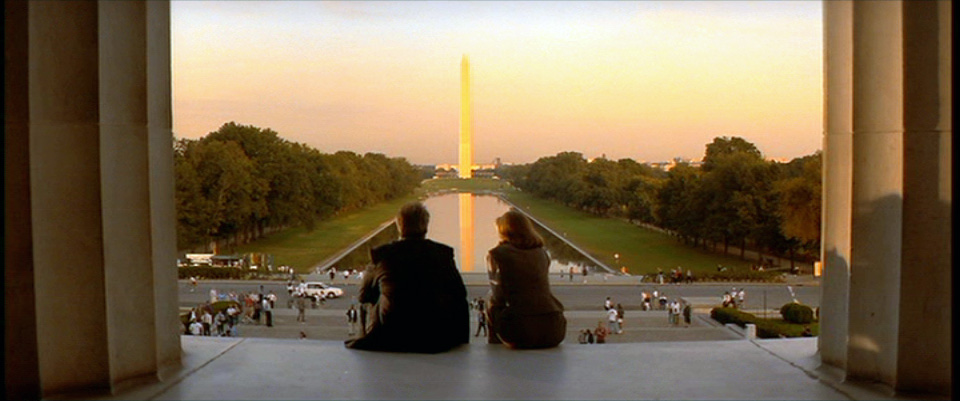
LincolnMemorial_InTheLineOfFire

1993’s In the Line of Fire was and continues to be one of my favorite action-thrillers. What’s not to like about a film that has John Malkovich playing a rogue and mentally-unstable CIA assassin who has decided that he wants to assassinate the current President of the United States. Then there’s Clint Eastwood as the last living Secret Service agent who failed to prevent Kennedy’s assassination in Dallas.

The film was directed by Wolfgang Petersen and was both tense and thrilling in equal amounts. Yet, the film also took some time to develop the relationship between Eastwood’s aging Secret Service agent with a much younger, but capable agent played by Rene Russo. This is a relationship that starts off as quite adversarial but one that gradually moves past that into one of respect then romance.

It was the scene with the two characters taking a break from the dangers of their job to debate the role of women in the Secret Service. It makes Eastwood’s character sound very old-fashioned and while it annoys Russo’s character to no end there’s a sort of playful and flirty byplay between the two throughout the scene. It’s a scene that culminates with Eastwood’s character predicting through years of experience that Russo’s agent character has shown interest in him and thus planting the seeds of a budding romance.

This is the scene I’ve chosen to continue the march towards next week’s Valentines Day.