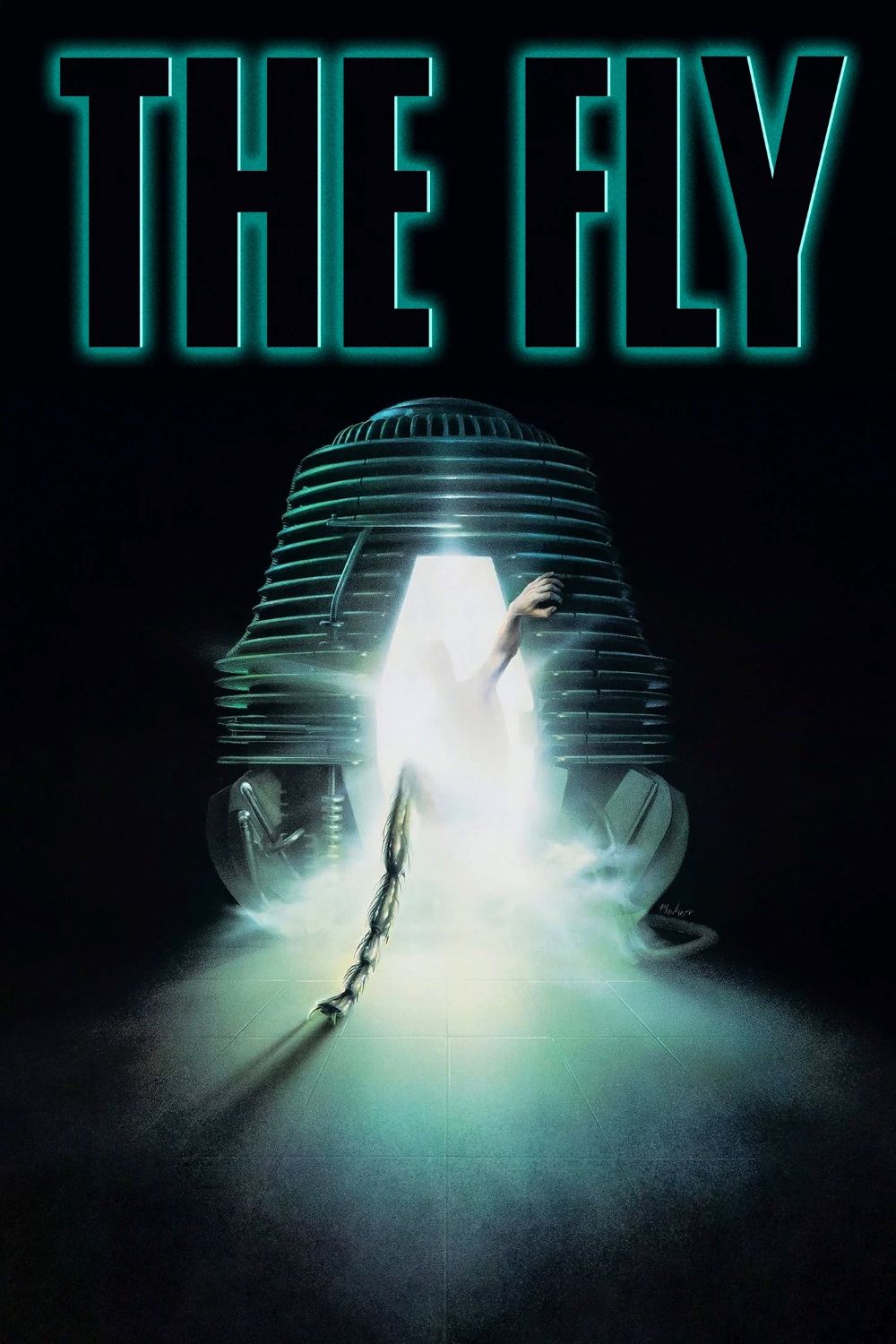
“I’m saying… I’m saying I – I’m an insect who dreamt he was a man and loved it. But now the dream is over… and the insect is awake.” – Seth Brundle
There’s a cruel little stretch in David Cronenberg’s The Fly (1986) when its central experiment seems to have worked out beautifully. Seth Brundle feels stronger, his confidence skyrockets, and the future looks wide open. Of course, we know better. The movie’s title alone tells us this isn’t heading anywhere pleasant. What makes the film so effective is how badly it makes us want to be wrong. Beneath the slime, broken flesh, and increasingly alarming eating habits is a romance worth caring about. Cronenberg gets us invested in a life just before showing us how horribly it can unravel.
A remake of the 1958 film of the same name, The Fly also draws from the original 1957 short story by French-British writer George Langelaan. Cronenberg takes considerable liberties with the plot, but his film really leans into the story’s darker themes and tone. Scientific curiosity leads to bodily catastrophe, and love becomes inseparable from the suffering it cannot prevent. Those ideas give the remake something substantial to build on. Cronenberg then adds his own fascination with unstable flesh and the loss of bodily control, creating a version that feels less like a retelling than a deeply personal reinvention.
For me, that combination makes it levels better than the original. The 1958 film remains an entertaining science-fiction nightmare, but Cronenberg makes the premise more emotionally involving by changing how the disaster unfolds. Instead of making the scientist’s altered appearance the central revelation, he turns transformation into a drawn-out process. We watch the damage develop alongside the characters, who keep trying to understand it, explain it, and bargain with it. The suspense isn’t simply about what Seth will look like next. It’s about how much of his old life will remain when the next change arrives.
Jeff Goldblum plays Seth as a brilliant scientist whose social skills haven’t quite caught up with his intellect. When journalist Veronica Quaife, played by Geena Davis, becomes interested in his teleportation research, their professional connection develops into something warmer. The attraction gives Seth’s otherwise isolated existence a welcome sense of possibility. Unfortunately, jealousy and alcohol eventually push him into testing the machine on himself. An unnoticed housefly enters the pod with him, and the resulting genetic fusion begins rewriting his body. His breakthrough works, just not in any way he intended.
Goldblum is terrific because he makes Seth’s awkwardness appealing without sanding down his less attractive qualities. His strange rhythms and sudden bursts of enthusiasm suggest someone who spends most of his time following thoughts other people haven’t caught up with. You can see why Veronica would find him fascinating, but you can also see the arrogance underneath his excitement. Once the transformation begins, Goldblum doesn’t abandon that characterization. He twists it. Curiosity becomes fixation, confidence becomes aggression, and Seth’s desire to share his discovery becomes a demand that someone else validate it.
Davis makes Veronica much more than the person standing nearby when the next horrible thing happens. She gives the relationship an emotional credibility that the entire movie depends on. Her affection for Seth feels genuine, as does her growing uncertainty about staying close to him. The film never pretends those feelings are mutually exclusive. She can love him and fear him, want to help him and recognize that she’s in danger. Davis handles those contradictions without making them feel like dramatic switches. They accumulate, leaving Veronica increasingly trapped between what she remembers and what she sees.
That tension becomes sharper because Seth initially welcomes his altered condition. His new strength and energy seem to confirm everything he wants to believe about his invention. He hasn’t damaged himself; he has supposedly improved himself. Cronenberg lets that delusion become seductive before exposing its ugliness. Seth’s denial isn’t just a convenient way to delay the inevitable. It grows naturally from his pride and the sheer awfulness of the alternative. Accepting the truth would mean admitting that the achievement meant to transform his life has instead made that life impossible.
Then the effects start making denial difficult for everybody. Chris Walas and his team give the transformation a wonderfully unpleasant physicality. Seth doesn’t simply sprout insect features and become a conventional movie creature. His body deteriorates, sheds pieces of itself, and develops functions he can barely comprehend. The makeup is remarkable, but its real achievement is how closely it works with Goldblum’s performance. Changes in posture, movement, and speech keep the effects attached to a recognizable person. We aren’t admiring an elaborate monster design from a safe distance. We’re watching someone struggle to inhabit his own skin.
Considering its 1986 release, the film can definitely be seen as an analogy for the AIDS crisis of the era. Seth’s deterioration and Veronica’s anguish as she watches someone she loves waste away give that reading real weight. Cronenberg originally understood the material as an analogy for disease more generally, rather than one specific illness. That broader intention doesn’t weaken the AIDS interpretation; it leaves room for it. The film captures the helplessness surrounding serious illness without requiring every detail to correspond to a single diagnosis. What matters is the frightening gap between recognizing that a body is failing and being able to do anything about it.
That’s also why the relationship becomes more upsetting as the creature effects become more extreme. The physical horror never replaces the human situation; it tightens its grip on it. Seth wants to survive, but his desperation increasingly threatens Veronica’s safety and autonomy. Her compassion cannot solve that conflict, and the film refuses to pretend otherwise. Cronenberg finds something genuinely tragic in the persistence of affection after the possibility of rescue has nearly disappeared. By the climax, we can be horrified by Seth’s actions without forgetting the frightened person behind them. Neither response cancels out the other, which makes the final stretch devastating.
The real achievement of The Fly is that its most outrageous images never overwhelm its simplest emotional truth: watching someone suffer can mean discovering how little power love actually gives you. Cronenberg turns a familiar monster-movie setup into something grotesque, intimate, and painfully sad without losing its dark humor or entertainment value. The original premise supplies the accident, but this remake makes every consequence matter. Long after the shock of the effects settles, what remains is the distance between the future Seth and Veronica briefly imagined and the ending neither could escape. That’s a far nastier thing to leave an audience with than a jump scare.

