Hi, everyone! Tonight, on Mastodon, I will be hosting the #TubiThursday watch party! Join us for The Giant Claw!
You can find the movie on Tubi and YouTube and you can join us on Mastodon at 9 pm central time! (That’s 10 pm for you folks on the East Coast.) We will be using #TubiThursday hashtag! See you then!
Mike Oldfield didn’t write Tubular Bells specifically for The Exorcist but it’s a song that works perfectly for the film. Oldfield’s song, which was rumored to have originally envisioned as being a Christmas instrumental, become an iconic horror them.
Today’s scene that I love comes from one of the best horror films of the past twenty years, 2012’s Cabin In The Woods. In this scene, the party starts just a little bit early….
4 Shots From 4 Films is just what it says it is, 4 shots from 4 of our favorite films. As opposed to the reviews and recaps that we usually post, 4 Shots From 4 Films lets the visuals do the talking!
4 Shots From 4 Horror Films
Die Screaming, Marianne (1971, dir by Pete Walker)
The Flesh and Blood Show (1972, dir by Pete Walker)
This was the second Grim Reaper video to be watched and commented upon by Beavis and Butt-Head. The only difference was that, opposed to See You In Hell, the band actually requested that Mike Judge roast this video. They were definitely good sports about that whole thing, unlike a certain singer named Kip Winger.
Here are Beavis and Butt-Head, with their thoughts:
“Did I say there’s a petting zoo downstairs? No! There are ghosts downstairs, Arthur!” — Dennis Rafkin
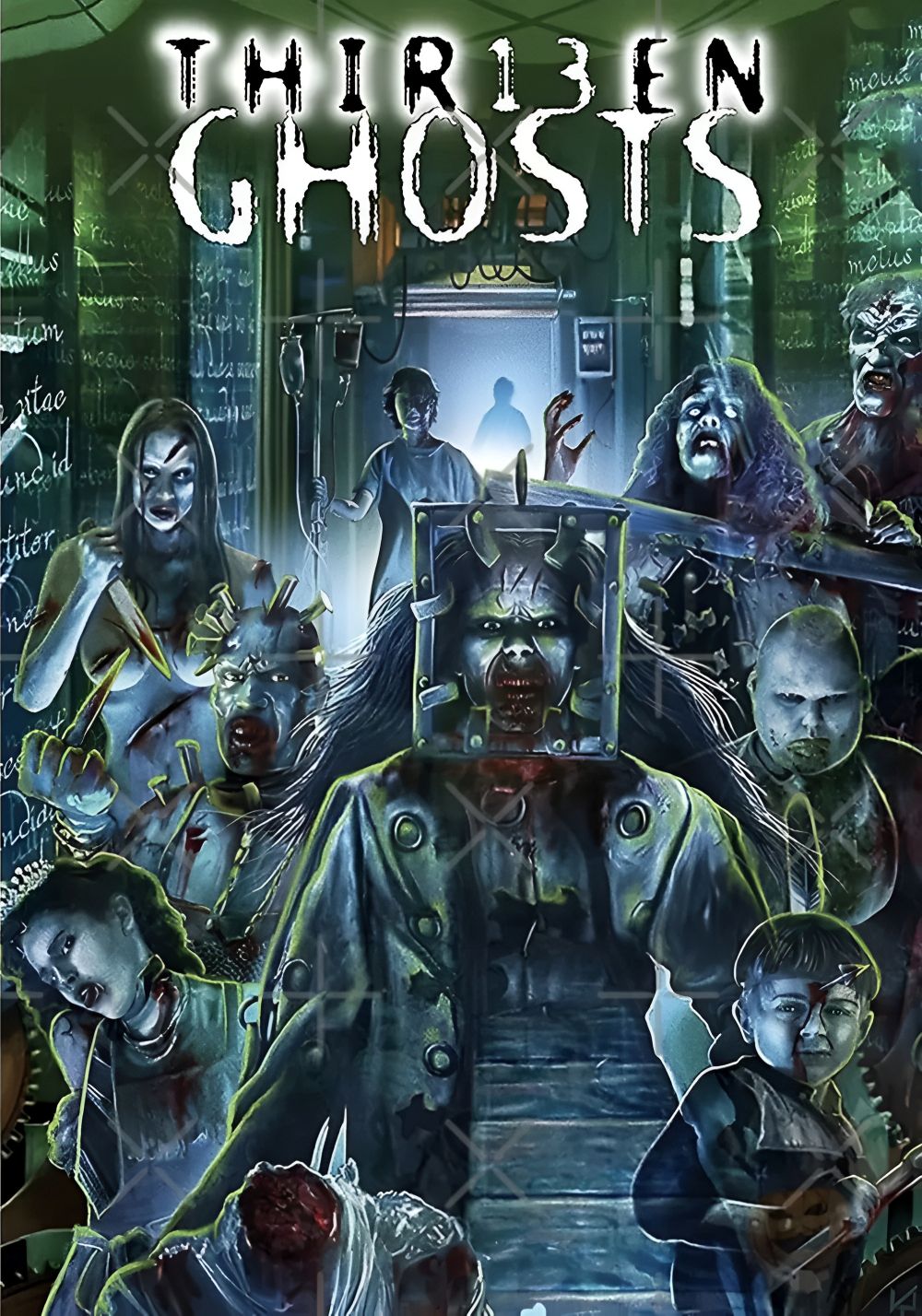
In Thirteen Ghosts, getting a spectacular house for free turns out to be considerably worse than struggling to afford one. That cruel little reversal gives Steve Beck’s 2001 horror film a promising starting point: a family’s apparent good fortune becomes another nightmare they have to survive. As a remake of William Castle’s 1960 film 13 Ghosts, though, it isn’t interested in preserving much of its predecessor’s low-budget charm. Beck trades playful spook-show entertainment for grotesque creatures and brutal violence. The result has an unmistakable identity, but its impressive visual imagination often outpaces its ability to tell a compelling story.
Tony Shalhoub plays Arthur Kriticos, a widowed father trying to provide some stability for his children. When his wealthy uncle Cyrus, played by F. Murray Abraham, leaves him an extraordinary house, it looks like the kind of opportunity he can’t afford to question. Arthur arrives with his family and their nanny, only to discover that their new home contains trapped spirits and some deeply suspicious machinery. Naturally, the house isn’t simply haunted. Its design has a purpose, and the people walking through it have become part of something they don’t understand.
There’s a nasty streak running through that setup, and the remake embraces it. Castle’s original has the scrappy appeal of an old carnival attraction, where the modest effects and ghost-viewing gimmick contribute to the fun. Beck’s version wants to hit harder. The ghosts look tortured, their attacks feel vicious, and the atmosphere offers little of the earlier film’s playful reassurance. That approach separates the remake from the original rather than leaving it feeling like a glossy imitation. Still, the difference is enormous. It keeps the basic inheritance premise while taking the experience about as far from Castle’s charmingly cheap thrills as possible.
The strongest part of that transformation is the house itself. Its glass walls, strange inscriptions, and mechanical components make it feel more like an elaborate trap than somewhere anyone could live. The transparency is especially effective. Haunted-house movies usually make darkness and concealment threatening, but here the characters can look through walls without knowing what they’re seeing or how to reach safety. Everything appears exposed, yet very little feels understandable. Even during stretches when the plot becomes clumsy, the setting holds your attention. There’s almost always an unsettling detail somewhere in the frame.
The special glasses that reveal the ghosts make good use of that environment. Without them, a seemingly empty room can contain something capable of killing you. With them, the house becomes even less inviting. It’s a clever connection to the original’s viewing gimmick, repurposed to suit the remake’s harsher personality. The bathroom encounter with the Angry Princess is particularly effective because it builds danger around a character’s limited awareness. For a moment, the film doesn’t need complicated explanations or frantic action. The simple possibility of sharing a confined space with an unseen threat does the work.
The creatures are equally important to the movie’s appeal. Their makeup, clothing, and physical behavior suggest distinct personalities and horrible histories. They aren’t interchangeable figures waiting to jump into the camera. Several look interesting enough to support much longer sequences, which makes their treatment frustrating. The movie introduces these elaborate designs and then rushes toward the next confrontation. You want to understand what separates one spirit from another, but the screenplay too often treats them as obstacles in a supernatural obstacle course. The imagination behind their appearances is stronger than the storytelling that puts them to use.
That hurry extends to the scares. Beck frequently pushes the action with rapid editing, loud sound effects, and sudden bursts of violence. There’s some fun in that aggressive approach, especially if you enjoy horror that refuses to be restrained. But the constant pressure eventually flattens the suspense. When nearly every encounter arrives at full volume, there’s little room for dread to build. An ugly figure lingering behind glass can be more disturbing than another noisy attack. The movie creates plenty of striking images, then seems nervous about letting the audience sit with them.
The actors help keep the chaos watchable. Shalhoub gives Arthur a weary sincerity that makes his concern for his children believable. Matthew Lillard brings an anxious, twitchy energy that fits the increasingly frantic situation, while Shannon Elizabeth and Rah Digga add life to the ensemble. Unfortunately, the family’s emotional circumstances get less attention than the machinery surrounding them. Arthur’s desire to turn an inheritance into security should make the house’s betrayal sting. Instead, the film keeps interrupting that thread to explain another supernatural complication or send everyone running. The characters remain likable enough, but they rarely become as interesting as their surroundings.
By the time the house has revealed its true colors, Thirteen Ghosts has made a better case for its production design than its storytelling. There’s real pleasure in its elaborate nastiness, and Beck deserves credit for giving the remake a personality separate from Castle’s original. This isn’t the same haunted-house ride with a fresh coat of paint; it’s a colder, bloodier attraction built on the old foundation. Whether that trade works depends on how much creature design and frantic violence you need to stay entertained. For me, there’s enough to enjoy, but not enough to stop wishing the movie would slow down and let its best ideas haunt us.
Filmed in Dallas, 1982’s Deadly Choice tells the story of a doctor and his daughter.
Dr. Bob Reasoner (Robert Ginnaven) is outraged that abortions are being performed at the hospital where he works. The film opens with a patient dying during an abortion and then cuts to Bob and a group of other doctors discussing how a premature baby was allowed to starve to death because the mother didn’t feel that she could care for it. Apparently, the policy of abortion and infanticide is an unofficial one, but it’s something that all the doctors know about. Bob and his colleagues decide to write an official statement opposing the hospital’s policy.
Meanwhile, Bob’s teenage daughter, BJ (Geraldine Leer), is pregnant. She hasn’t told her father because she’s scared of how he’ll handle it. Bob is religious while BJ is not. However, BJ has told her school’s guidance counselor, Vicky Stewart (Doris Hargrave). Vicky tells BJ that she needs to get an abortion and even drives BJ to the clinic. When BJ expresses doubts about going through with the procedure, Vicky is there to assure her that her baby isn’t even human yet. In fact, Vicky describes it as being “a cancer.”
I’ve seen a lot of movies about abortion. I’ve seen Pro-Life movies and I’ve seen Pro-Choice movies, and almost all of them have one thing in common: somebody has to die. In Pro-Choice movies, the death usually happens due to a back-alley abortion. In most Pro-Life movies, the death happens because the trained doctors who performed the abortion were dangerously incompetent and just didn’t care about the health of the woman getting the abortion. Deadly Choice changes things up a bit. BJ doesn’t die during the abortion. Instead, suffering from a huge amount of guilt, she takes an overdose of pills after the abortion.
Bob rushes BJ to the hospital, where he frantically tries to save her life. He desperately tries to get her heart beating again, just to be told that she’s dead. Dr. Leventhal (Hal Bennett), who earlier defended the hospital’s abortion policy, is the one who tells Bob that she’s dead, and he sort of smiles when he does it. (I imagine that has more to do with the actor than the character. This is Hal Bennett’s only credited performance and, watching this movie, I could see why.) Bob finally steps away from BJ. As soon as he does, her heart starts to beat and BJ comes back to life.
So, yes, BJ dies, but then she’s revived. Of course, even though she’s alive, she’ll always have to live with the guilt of her actions.
There’s nothing subtle about this Pro-Life film. It’s only 55 minutes long and it has the look of a television medical drama. Robert Ginnaven gives a good performance as Bob. For that matter, both Geraldine Leer and Doris Hargrave give good performances as well. That said, it’s definitely a film that was made to preach to the converted, and how you react to it will largely depend on whether or not you agree with the film’s message. It’s not a film that makes a case for its beliefs as much as it’s a film that says, “We’re right and they’re wrong.”
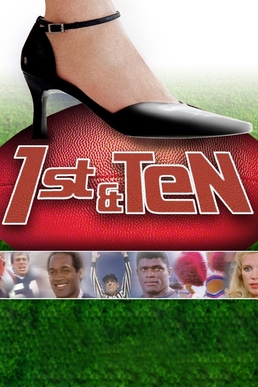
Welcome to Late Night Retro Television Reviews, a feature where we review some of our favorite and least favorite shows of the past! On Wednesdays, I will be reviewing 1st and Ten, which aired in syndication from 1984 to 1991. The entire series is streaming on Tubi.
This week, everyone’s trying to get laid.
Episode 5.9 “Gunn and Bullette”
(Dir by Stan Lathan, originally aired on December 13th, 1989)
Johnny Gunn tracks down Sunset West (Rebecca Ferratti), the daughter of one of Gunn’s friends in prison. Sunset is now working as a stripper. Her boss is an evil gangster guy named Achmed (Aharon Ipale). Achmed tells Johnny that, as a quarterback, he can have anyone at the strip club except for Sunset. Johnny wants Sunset. I wonder how Johnny’s prison friend would feel about Johnny becoming obsessed with his daughter.
In the end, it doesn’t add up to much. Sunset decides to go to the police about Achmed’s criminal activities. Achmed is arrested. Sunset goes into the Witness Protection Program. Johnny remains single. Who cares? It’s always funny to me how 1st & Ten will devote a show to some character we’ve never even met before and we’re suddenly supposed to have some sort of emotional stake in their story.
This episode’s second storyline featured Jenny (Shari Shattuck), a cheerleader who finds herself in trouble when Playpen Magazine publishes nude pictures that were taken years earlier by her boyfriend. Westwood offers to protect Jenny’s job if Jenny sleeps with him. Jenny gets revenge by inviting Michael to her apartment, dressing him up in a corset and stockings, and then having Bubba and Jethro snap some pictures. Westwood flees. It later turns out that Kristy is actually the one who came up with the idea of setting Westwood up. Kristy arranges for Jenny to get a new job in New York and Jenny gives Kristy the pictures.
The third and final storyline featured Kristy wanting to trade Dr. Death. Denardo convinces her to give Dr. Death another chance. Dr. Death has to have a good game to save his job. Dr. Death has a good game and he saves his job. Hey, that was easy!
The main thing that stood out about this episode was just how badly acted it was. I mean, I’m not surprised to see OJ Simpson and Shannon Tweed giving less than great performances. But even the usually reliable Christopher Meloni seemed to sleepwalk through this episode. The worst performance came from Aharon Ipale, who turned Achmed into the least intimidating gangster that I’ve ever seen.
This episode didn’t add up too much. Are the Bulls even trying to make the playoffs this year?