Brad reviews the South Korean thriller HIDE AND SEEK (2013)!


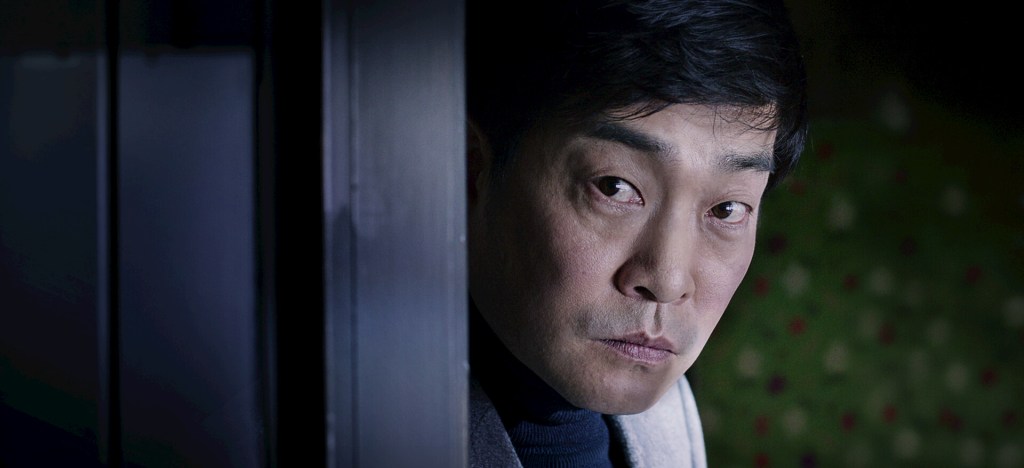
I haven’t spent one second of my life worrying about people squatting on my property. My wife, on the other hand, likes to tell me that squatters are a real risk and that we need to be careful and constantly on the lookout. After watching the South Korean thriller HIDE AND SEEK, I’m not saying my wife is completely right to be so concerned, but the idea of someone deciding to take over another person’s home is actually quite scary! This film takes that ordinary fear and turns it into something genuinely disturbing. Director Huh Jung finds some interesting ways to expand on that premise, creating an atmosphere where the most familiar surroundings no longer feel safe.

Sung-soo (Son Hyun-joo) has everything a man could want. He’s a successful businessman with a beautiful wife, two perfect kids, and a luxurious apartment. When he learns that his estranged older brother, Sung-chul, has disappeared, he sets out to get his belongings. In order to get his stuff, he goes to the rundown apartment complex where his brother had been living. While there, he discovers strange symbols carved beneath the doorbells of the apartments. The residents seem frightened of his brother, and nobody wants to answer his questions. Things become even more unsettling when Sung-soo returns home and discovers similar markings outside his own apartment. Sung-soo becomes convinced that someone, maybe his own brother, is stalking his family, and they are all in real danger.

Is there anything more unsettling than the thought that someone is watching you, maybe even going as far as secretly living in your home?! I take my responsibility to protect my family very seriously, and this movie leaves open the possibility that it’s not as easy as it appears. HIDE AND SEEK plays with the idea that we all seem to take our sense of security inside our homes for granted. When that safety net is taken away from us, we know that our characters are potentially in danger at all times. The idea that no place is safe, no matter how many locks we have, is disturbing and creates an effective and horrific atmosphere.

Son Hyun-joo is good as the family man whose increasingly erratic behavior makes it difficult to determine just how much of what he’s experiencing is real. Moon Jung-hee is also effective as Joo-hee, a woman he meets who is living in the rundown apartment complex where his brother lived. She is particularly scared of his brother and her circumstances become increasingly important as the story moves forward. I really like Jeon Mi-seon as Sung-soo’s wife. She’s not really prepared to have to deal with this sudden threat in her life, but when she realizes her kids are in danger, she’s about as badass as it gets.

There are a lot of good performances on display, but this is one of those movies where you think you’ve figured everything out, only to discover that things are not as simple as they appear. The story gives up its secrets piece by piece, but with enough sleight of hand that you can’t always trust your eyes. First-time writer and director Huh Jung seems to be having fun toying with us and delivers an impressive debut!

HIDE AND SEEK isn’t a perfect movie, and there are times where it stretches credibility, but there’s enough tension and freakiness here to make those shortcomings relatively easy to overlook. It’s an effective thriller that takes a familiar fear and reminds us that sometimes the most frightening thing isn’t what’s waiting outside our front door, but what might already be inside.
The Leshy, Short Film Review by Case Wright


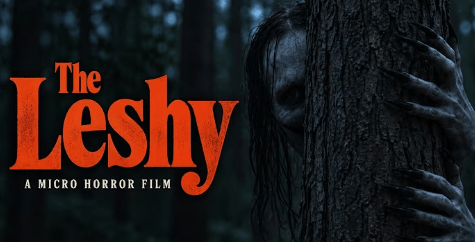
The Leshy is a “micro horror film”. Is it terrible? No. It’s not. Jon Kent, the creator, has some real brass. I was very skeptical that a short film could deliver a story in a minute, but it did. The characters are clear, there is a story, and a payoff. The Leshy checks all the blocks for an entertaining short and does not try to be more than it is.

A man is dragging a dead body in the woods and he gets hunted by the leshy. I don’t know the physiology of a leshy, but it seems hungry. I would highly recommend that you take a minute out of your day to watch this.

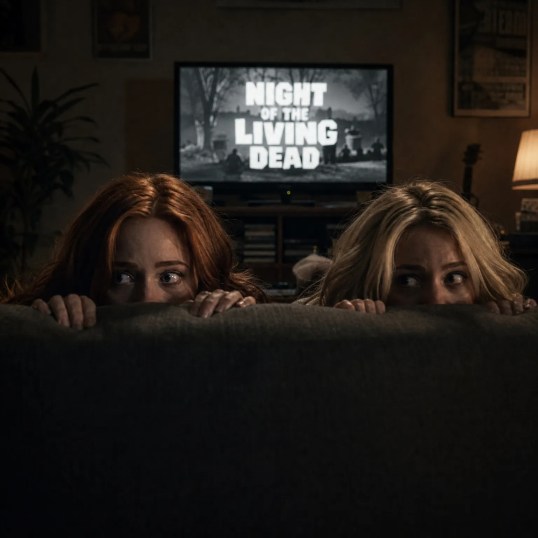
Horror On The Lens: Night of the Living Dead (dir by George Romero)


Happy Halloween!

Watching this movie is a Halloween tradition here at the Shattered Lens and I am honored to keep that tradition alive (!!!!) in 2026!

Be sure to check out Arleigh’s review!

For the record, you can count me amongst those who thinks that Ben got everyone killed.  We root for Ben because he’s the more likable character but, in the end, Harry was right and Ben ended up becoming a cold-blooded murderer.  These are the type of things that make Night of the Living Dead the scariest zombie film ever made.  The living are just as terrifying as the dead.

I should also note that, for all the criticism the character gets, Barbara has one of the most totally realistic reactions that I’ve ever seen in a horror movie.  She’s in shock and denial.  I would probably have the same reaction.

And now, here is the greatest zombie film ever made!


Music Video of the Day: Suspiria by Daemonia (2001, dir by ????)


Both on his own and as a member of Goblin. Claudio Simonetti has been responsible for some of the most iconic scores in the history of Italian horror cinema.  He is probably best known for Goblin’s score for Dario Argento’s Suspiria.  The minute you hear the opening of that score, you are immediately transported into Argento’s nightmarish world of witches, death, and ballet.

In 1999, Simonetti formed Daemonia, a heavy mental band that played updated version of his classic horror scores, along with new material.  In this video, they perform Suspiria and the end result is a perfect video for Halloween!

Divertiti!

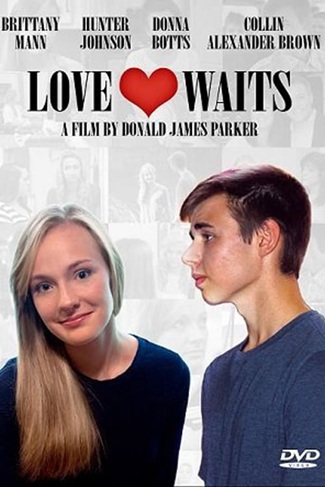
October Positivity: Love Waits (dir by Donald James Parker and Chip Rossetti)


I decided to review one more Donald James Parker film for October. Admittedly, Parker doesn’t have a huge role in 2015’s Love Waits. He plays a band director who offers some kind advice to one of his students, Cheri Martin (Brittany Mann), and tells her not to feel bad for challenging the other members of the band in her quest to move up to first chair. Indeed, there’s very little anger to be found in the band director, and that certainly sets him apart from the fire-and-brimstone characters that Parker usually plays. Parker is—dare I say it?—actually a bit likable in the role.

That said, the film was also directed and written by Parker, and it’s easy to see that his usual anger has been divided amongst several other characters. When the film first started, I was convinced that Cheri’s father was meant to be the film’s villain and that the movie would hopefully end with him being led away in handcuffs. Imagine my surprise when it became clear that Jeff Martin (played by Collin Alexander Brown) was meant to be a sympathetic character. When we first meet Mr. Martin, he’s coming home from work and throwing a fit when he discovers that his 14-year-old daughter has yet to start making dinner. She apologizes for forgetting. “That’s not going to fill my stomach!” he snaps. Later, when he’s again driving home, he catches Cheri out walking with Duke Williams (Hunter Johnson), a boy who is supposedly her own age. (I say supposedly because all of the actors playing the teen characters either look too young or too old.) Mr. Martin orders Cheri to get in his car and then starts yelling at her, freaking out like Terry O’Quinn in The Stepfather. Mr. Martin reminds Cheri that she’s not allowed to leave the house without permission and she’s not allowed to talk to a boy without having an adult present. Again, I assumed Mr. Martin was being set up as a villain, but the film actually treats him like a hero. One of the big problems is that Collin Alexander Brown yells almost all of his lines and comes across as an utter lunatic.

Of course, it’s not just Mr. Martin who orders Cheri around. When Cheri tries to practice her flute, her babysitter (Cheri is fourteen but cannot be left on her own) immediately starts to correct her. A major theme of the film appears to be that Cheri’s job is to follow orders and not complain, even if her father does seem to spend a lot of time yelling at her over the least little thing. Even beyond the adults around her, Cheri has to deal with her school’s resident mean girl, Judy (Haleigh Johnson). At the start of the film, Judy and her friends walk up to Cheri and say, “I hear you’re a virgin, Cheri Martin, and that makes you a loser.” When Cheri asks Judy’s friends if they’ve “done it,” one of them replies, “Duh, I’m nearly fourteen.” Eventually, Judy’s promiscuity leads to her getting her face slashed, and everyone in Cheri’s youth group agrees that, even though they don’t like Cheri, they didn’t want that to happen. “We should visit her in the hospital,” someone says. They don’t so much visit her to offer sympathy as to tell her “I told you so,” and that’s really all Judy needs to hear to change her ways and agree to wear a purity ring.

The message is about resisting peer pressure, and I actually happen to agree with that. You shouldn’t do anything unless you actually want to do it and that’s especially true when it comes to sex. That said, the film’s youth group seems to largely operate under a system of peer pressure, and the film also seems to suggest that things like sex education are actually a conspiracy to turn girls like Cheri into girls like Judy. I didn’t agree with that at all and I actually found the argument to be more than a little offensive, as if women can’t be trusted with the knowledge necessary to make their own decisions. The main thing is that, like all Parker films, Love Waits seems to take place in an alternate universe where 1850s morality is combined with a truly over-the-top bitterness. Also in typical Parker fashion, Love Waits takes a 15-minute story and stretches it out to a punishing two hours.

Every time the members of Cheri’s youth group proclaimed, “We have to do something!,” I found myself wishing someone would say, “No, you don’t.” Whenever a non-religious character was dragged into the school library so the youth group could pray over them, I was reminded of Hank Hill’s famous verdict on his town’s megachurch: “No offense, but your church just keeps coming at you.”

Late Night Retro Television Review: Sledge Hammer! 1.12 “Miss of the Spider Woman”


Welcome to Late Night Retro Television Reviews, a feature where we review some of our favorite and least favorite shows of the past! On Fridays, I will be reviewing SLEDGE HAMMER!, a cop comedy which ran on ABC from 1986 to 1988. The entire series can be found on Prime!

This week, Sledge might be DOA!

Episode 1.12 “Miss of the Spider Woman”

(Dir by Charles Braverman, originally aired on December 20th, 1986)

Sledge has been poisoned!

The poison takes five days to do its work.  Unfortunately, Sledge spent four days in a coma.  Plus, daylight savings time kicked in.  And also, his watch is broken.  So, by the time Sledge wakes up, he’s actually only got about four or five hours left to go.  While the doctors try to find an antidote, Doreau and Sledge investigate who poisoned him and why.

Actually, the why is easy to explain.  It was a mistake!  The mysterious Juanita (Eileen Barnett) wanted to poison Sledge’s neighbor but the woman who was hired to “deliver” the poison to Sledge was near-sighted and ended up in the wrong apartment. Whoops!  Instead of trying the poison trick again, Juanita just has Sledge’s neighbor shot.  It’s all because the neighbor was expecting a package that contained a valuable statue that Juanita wanted.

Through some good old-fashioned, death-fueled police work, Sledge tracks Juanita down to her boat.  Juanita gives him what she says is the antidote and then reveals that he actually just drank more poison.  Oh, Sledge!  At least Sledge is still able to subdue and arrest her.  Captain Trunk arrives at the last minute with actual antidote.  Sledge survives!  Later, he eats a powdered donut that had the fingerprints of a notorious serial killer.  Everything’s back to normal!

This was a good take on two classic film noirs, D.O.A. and The Maltese Falcon.  David Rasche made me laugh even while I was worrying about Sledge dying.  I was happy he survived.  The city wouldn’t be the same without him.


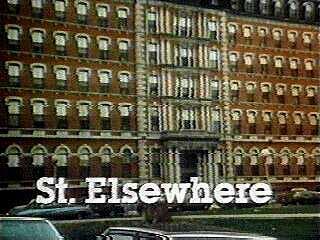
Retro Television Review: St. Elsewhere 4.17 and 4.18 “Time Heals”


Welcome to Retro Television Reviews, a feature where we review some of our favorite and least favorite shows of the past! On Fridays, I will be reviewing St. Elsewhere, a medical show which ran on NBC from 1982 to 1988.  The show can be found on Daily Motion.

In this special two-part episode, 50 years of St. Elsewhere are documented in just two hours.

Episodes 4.17 and 4.18 “Time Heals”

(Dir by Mark Tinker, originally aired on February 19th and February 20th, 1986)

Aired over two nights, “Time Heals” uses St. Eligius’s 50th anniversary to give us 50 years of history. While the staff prepares to observe half a century of serving Boston, the episode skips back and forth in time.

In 1935, a young and enthusiastic priest named Joseph McCabe (Edward Herrmann) prepares for the opening of a hospital that he hopes will serve the downtrodden and forgotten of Boston. Monsignor Senti (Norman Burton) views McCabe as a troublemaker. Meanwhile, a young Donald Westphall watches as his father helps bring a wounded man named Patrick O’Casey (William Russ) to the hospital. Later, Westphall’s sister and mother are killed in a house fire.

In 1945, a young liver specialist named Daniel Auschlander (James Stephens) is brought on staff and meets an angry teenage Donald Westphall (Michael Sharrett). Donald shines shoes in the hospital lobby. When Donald is caught stealing, Father McCabe takes him to the hospital’s gym and gives him a boxing lesson. As for Auschlander, he allows a returning serviceman named Patrick O’Casey to see his young daughter, who is suffering from polio and has been placed in an isolation ward.

In 1955, the Archdiocese sells the hospital to the city and Father McCabe is fired. McCabe gets drunk. Auschlander says that he intends to resign in protest. McCabe replies that that would be a mistake—Auschlander is the man McCabe has recommended as his replacement. Meanwhile, Patrick O’Casey’s daughter dies after spending ten years in an iron lung, and a cocky intern named Mark Craig (William Daniels, sans mustache) has a panic attack while performing his first operation. The demanding Dr. David Domedion (Jackie Cooper) orders Craig back into the operating room. Later, Craig tells another resident, Donald Westphall (Ed Flanders, his hair dyed black but still looking quite middle-aged), that he’s been offered a position at Boston General and will never return to St. Eligius.

In 1965, Dr. Craig returns to St. Eligius, bitter that he was passed over for chief of surgery at Boston General. While a young Luther Hawkins sits in the waiting room, a newly arrived nurse named Helen Eisenberg helps Dr. Westphall deal with Terence O’Casey (Brian Kerwin), a young man having a bad acid trip. “Get a haircut, hippie,” Dr. Craig says at one point.

In 1975, Terence O’Casey is back in the hospital, waiting as Dr. Craig performs open-heart surgery on his father, Patrick. Donald Westphall is appointed hospital administrator. The same night, his wife, Maureen (Anita Gillette), is in an auto accident that leaves her brain-dead. Westphall is the one who has to decide to remove her breathing tube and allow her to pass on.

In 1985, high school principal Terence O’Casey is brought to the hospital with sudden paralysis. His doctor, Jack Morrison, struggles to diagnose Terence’s condition until he goes down to the basement, looks through the earliest hospital records, and reads about Terence’s sister, who died in an iron lung. Jack diagnoses Terence with Guillain-Barré syndrome, a paralyzing condition that can resemble polio.

Meanwhile, Jack’s son, Pete, is apparently abducted by a man at the hospital. I say “apparently” because the plotline feels a bit underdeveloped. The episode ends with the police returning Pete to Jack during St. Eligius’s anniversary party. Pete seems to be physically unharmed, and we’re not really given any details as to who abducted him or how the police tracked him down.

The subplot featuring Morrison’s son being abducted is oddly undeveloped, but that’s really the only flaw to be found in “Time Heals.” This is not only a great episode of St. Elsewhere; it’s also one of the greatest episodes of television I’ve ever seen. That said, it isn’t just a great episode of television. It’s a great work of art, period, from the excellent performances to the way the episode seamlessly mixes the flashbacks so that they come together to tell one epic story of the 20th century. Featuring both the story of the hospital and the story of the O’Caseys, “Time Heals” is a portrait of how times change and how they remain the same.

A few random notes:

For those who think Dr. Craig is too hard on his residents, this episode shows that Craig’s mentor was equally hard on him, and that it helped turn Craig into the surgeon he is today. That said, it’s also amusing to see that young Mark Craig was just as obnoxious as Victor Ehrlich.

I’ve often complained about how depressed Westphall always seems to be. This episode shows that Westphall has a lot of reasons to be depressed. The man’s life has been one tragedy after another.

One cannot overlook the importance of the O’Caseys to this episode’s power. The O’Caseys represent the community St. Eligius is meant to serve. The hospital is part of the family’s life. History repeats itself throughout the O’Casey storyline. In 1935, Patrick O’Casey is injured and nearly killed in a fight. By 1945, he’s married and a member of the U.S. Army. In 1965, Patrick’s son, Terence, is a drug-abusing member of the counterculture. By 1985, he’s a conservative high school principal who has an estranged relationship with his gay son, Kevin (John Scott Clough). All of the male O’Caseys have more in common than they realize.

Each decade is shot in a different visual style, which helps us keep track of things. The 1935 scenes are shot in black and white. The 1945 scenes feature muted colors. As we move through time, the colors become clearer and more vibrant until we finally find ourselves in 1985.

“Time Heals” is touching, powerful, and even funny. It’s a true work of art.

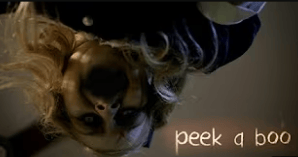
Peek a Boo, Short Film Review by Case Wright


A woman hears a noise so she checks out her attic. Then, she finds a mysterious box with a VHS tape inside. Okay lady, that’s enough. Go away from the cursed box and cursed VHS tape. Are you literally the only person who didn’t see “The Ring”. Enough! Stop! Put those evil things away and get a normal hobby. She lacks all survival skills.

She starts watching the film and it has creepy background music. She starts playing peek-a-boo with the girl in the film who did warn her not to cheat. Did she cheat? Yes. Did the girl become an evil ghost? Yes! I have no sympathy for her- at all.

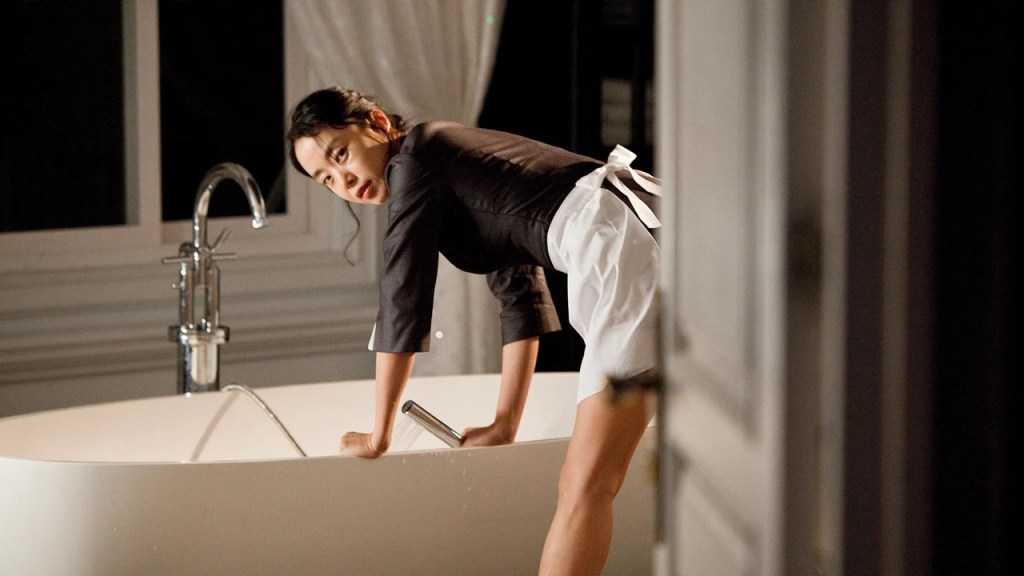
Brad reviews the South Korean film THE HOUSEMAID (2010)!


It’s hard for me to watch movies where decent, hardworking people are mercilessly crushed by the system. But that’s exactly where we find ourselves in THE HOUSEMAID, a slow burning South Korean film from director Im Sang-soo that’s not really a thriller or a horror film, but it’s disturbing as hell for anyone looking for something a little different.

Eun-yi (Jeon Do-yeon) takes a job as a housemaid for a wealthy family. Her responsibilities include caring for the family’s young daughter, Nami (Ahn Seo-hyun), and helping look after her pregnant mother, Hae-ra (Seo Woo). The household is overseen by the experienced housekeeper Byeong-sik (Youn Yuh-jung), who knows all too well how things work in this home. The head of the family is Hoon (Lee Jung-jae), a wealthy businessman who seems to always get whatever he wants. In this case, he wants a sexual relationship with Eun-yi, setting in motion a chain of events that will show just how ugly preserving wealth and privilege can be.

One of the hardest things to watch in the film is how the family reacts when they find out that Eun-yi is pregnant with Hoon’s child. Nobody confronts Hoon or asks him to take responsibility for his actions. They actually do the opposite by concealing it from him. First, they try to kill her by setting up a household “accident.” When she survives that, they offer her money to get an abortion and just go away. When she won’t take the money, they poison her. They just want the problem to disappear, by any means necessary. Hae-ra’s mother, Mi-hee (Park Ji-young), is a particularly nasty villainess who’s determined to protect the family’s reputation and lifestyle, even if it means taking another woman’s life. Who needs a serial killer or Michael Myers when you can simply destroy someone, and without an ounce of remorse?!!

Jeon Do-yeon gives a good performance as Eun-yi, a woman whose initially cheerful and kind personality makes her increasingly difficult circumstances all the more heartbreaking to watch. Lee Jung-jae is smooth and self-assured as Hoon, a man who believes that his wealth and position mean that he doesn’t have to play by the normal rules of society. And Youn Yuh-jung is excellent as Byeong-sik, whose years of service have taught her to recognize the cruelty behind the family’s polished facade. She understands the system she works within, and she protects it “almost” to the bitter end. Interestingly, Youn would win an Oscar for her outstanding performance in the film MINARI back in 2020. She’s an incredible actress and I’m glad she got the international recognition she deserves.

For most of its runtime, THE HOUSEMAID is a psychological thriller with elements of erotic melodrama and social satire. The tension comes from watching the characters maneuver against one another and wondering just how much more abuse Eun-yi can endure before something finally gives. But as the film moves toward its final act, it becomes clear that being discarded as less than human has taken its toll, and she’s going to do something about that. The question is what can she do about it, and the answer is quite disturbing and will probably stick with me for a while.

THE HOUSEMAID is an unsettling film about privilege, exploitation, and the lengths people will go to protect their own interests. It’s not a horror film, but its story does prove that real people are likely to be far more frightening than a masked killer.