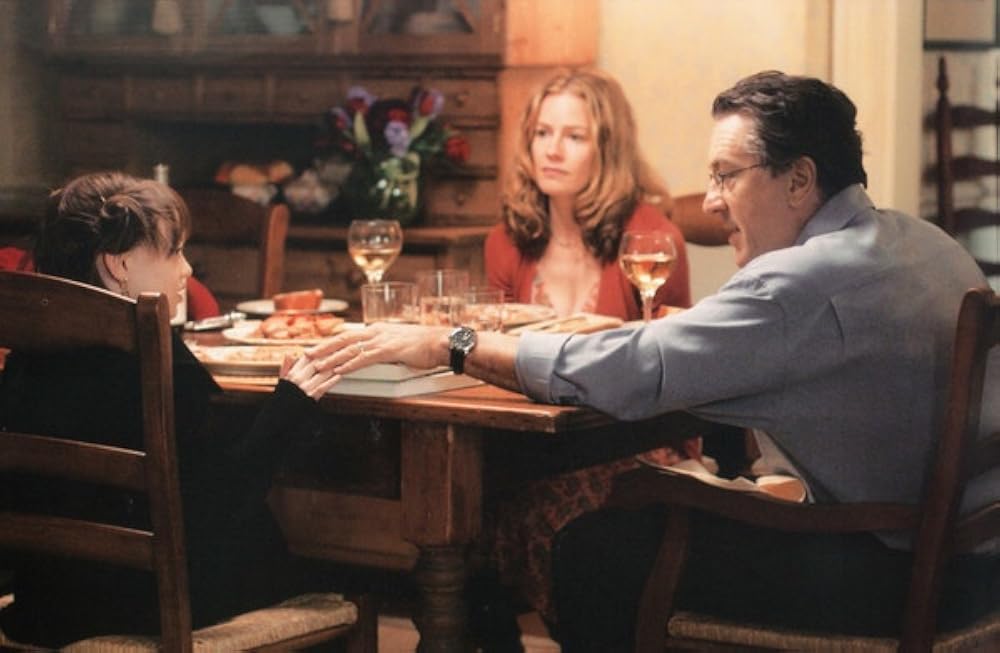
Hey, kids! This week, it looks like Count Floyd has a real scary one! Sit back and watch this preview for Tip O’Neill’s 3D House Of Representatives!
(This blast from the past comes to us from SCTV and the year 1983.)
Hey, kids! This week, it looks like Count Floyd has a real scary one! Sit back and watch this preview for Tip O’Neill’s 3D House Of Representatives!
(This blast from the past comes to us from SCTV and the year 1983.)
Black Friday! It’s an unofficial holiday, or at least it was until the COVID lockdowns screwed up everyone’s spending priorities. After spending Thanksgiving with family, eating turkey, and maybe watching a football game or two, people gather outside of their favorite stores and wait for the doors to open. When those doors open, the crowd rushes into the store with the energy of a riot. Getting in the store first presumably means that you’ll be the first to clear all of the marked-down merchandise off of the shelves. It’s your chance to get a good start on shopping for Christmas. If anyone gets in your way, knock them down. If anyone tries to grab what you’re trying to grab, beat them over the head with Junior’s future Christmas gift. Black Friday is a time when you have to be ruthless. Sure, you could just do all of your shopping online, but then you have to hope that your gifts actually arrive on time and without anyone else opening them. My sisters and I used to love Black Friday, though it’s been a while since we’ve participated. To be honest, I imagine it’s one of those traditions that will soon end. New generations will never know the joy of fighting over a silverware set.
That said, as much as customers love Black Friday and as much as business executives enjoy the extra money, I imagine it really has to suck for the poor people who actually work at the stores. I mean, you’re basically giving up your holiday weekend so that you can deal with a bunch of entitled jerks who think that the world is going to end unless they get the perfect gift, and they’re willing to get into a fight and potentially damage merchandise to do it. It has to suck, cleaning and straightening up after a human tornado has torn through your store. That’s why my sisters and I always went out of our way to not make too much of a mess and to pick up after ourselves on Black Friday.
That said, I don’t think that there’s much that we could have done to help out the crew in 2021’s Black Friday. The employees of We Love Toys already know that, as a toy store, they’re going to get hit hard. What they don’t expect is that a virus is going to break out and it’s going to turn the shoppers and anyone bitten by a shopper into the equivalent of a bloodthirsty zombie. The employees soon find themselves trapped in their store, forced to use toys as weaponry. Fortunately, their manager is played by Bruce Campbell, but Bruce isn’t playing Ash Williams here. Instead, he’s just playing a store manager who made the mistake of opening the doors on Black Friday.
Black Friday is occasionally amusing. I liked the fact that it was occasionally difficult to tell the difference between the infected lunatics and the crazed shoppers. I imagine the film itself would be a bit of wish-fulfillment for anyone who has ever worked in a store on Black Friday. It’s not a classic by any means. Some of the characters are a bit underwritten. But it does have Bruce Campbell, and you can’t go wrong there!
Anyway, this Black Friday, remember to be polite to the people who are just trying to collect a paycheck. They deserve to enjoy their holiday too.

1962’s Carnival of Souls was the only feature film to be directed by Herk Harvey. It was made on a budget of $33,000 and was filmed in Kansas and Utah, often without permits. The film was also the feature acting debut of model Candace Hilligoss, cast here as a emotionally withdrawn church organist who is involved in a serious car accident and then finds herself haunted by pasty-faced ghosts and surreal visions.
When it was initially released, Carnival of Souls was dismissed by American critics. Indeed, it would a little over twenty years before the film started to be appreciated as both a classic independent film and also a truly eerie horror movie. Today, it’s recognized as a classic of the genre, an expressionistic ghost story that also works as a character study of a woman who is haunted by not just physical death but also emotional malaise.
Carnival of Souls is a Halloween tradition here at the TSL offices. This year, the tradition continues. You can read Arleigh’s review here!
 In The Werewolf of Washington, Dean Stockwell plays an aide to the President of the United States who, during an assignment in Hungary, meets some gypsies, and ends up getting attacked by a werewolf. Soon, Stockwell is back in Washington and turning into a wolf under the glow of the full moon…
The Werewolf of Washington features a memorable performance from Stockwell and the werewolf effects are fairly effective. However, The Werewolf of Washington is mostly memorable as a document of its time. The film was first released in 1973 and it’s meant to be a social and political satire along with being a traditional werewolf movie. Admittedly, this is a low-budget and frequently uneven film but it’s worth seeing just for the scene where Stockwell gets his finger stuck in a bowling ball.
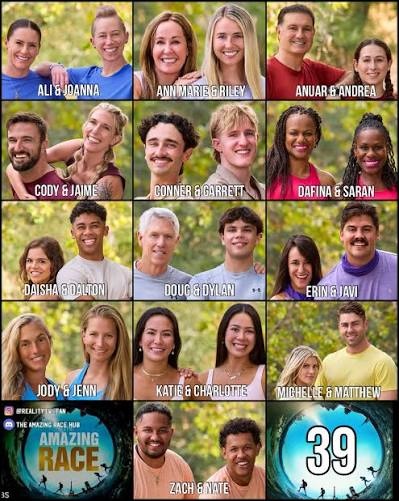
I really thought it was going to be a non-elimination leg.
With last week ending on a cliffhanger, I was certain that this week’s episode would open with either Doug and Dylan or Jodie and Jenn reaching the pit stop and Phil saying, “You are the last team to arrive. Fortunately, this is a non-elimination leg and you are still in the race….”
Instead, Jenn and Jodie showed up last and were promptly eliminated. Despite all of the attempts to use the magic of Amazing Race editing to make it look like they were neck-and-neck with Dylan and Doug, it seems pretty obvious that Jodie and Jenn were doomed by the jug-smashing roadblock. The lesson of their elimination? Don’t waste your express pass.
As for the rest of this episode, the teams remained in Morocco and had to complete three fairly tough tasks before they could move on to the Pit Stop. There are three teams that still have express passes: Michelle & Matt, Conner & Garrett, and Ali & Joanna. Interestingly, none of them used their express pass during this episode. All three of them appear to be saving it until they really need it. The express pass is only good for the next two legs of the race.
How did everyone do during this leg of the race? Let’s take it by the order they finished in:
Coming in first were Matt & Michelle. These two have developed a technique that works for them. Matt is laid back while Michelle yells at him. They purposefully declined to help any of the other teams. Personally, I think that was a smart move on their part. (It’s a race, after all.) That said, Phil sounded notably unenthusiastic when they were the first to show up. Phil always seems to dislike the teams that don’t help out.
Coming in second, for the second leg in a row, were Anuar and Andrea. They managed to come in second despite not having an express pass. I was pretty dismissive of this team when the season started, but I’m starting to think they might be dark horse contenders to make the final three.
Coming in third were Erin and Javi. After finishing seventh and eighth during the previous legs, Erin and Javi came on strong during the fourth leg. With them, it’s just a question of consistency. Can they keep finishing strong?
Coming in fourth were Daisha and Dalton. They had a good leg but, much as with Erin and Javi, it’s still a question of consistency. Did they get lucky or have they finally found their rhythm? We’ll see next week.
Coming in fifth were Conner & Garrett. Conner and Garrett have been a consistently strong team, despite the fact that they haven’t had a first-place finish yet. They’ve still got their express pass and they’ve got a good attitude. For all the nonsense about the Boss Lady Alliance (which, for the most part, seems to be an alliance where everyone helps Anne-Marie and Riley while Anne-Marie and Riley don’t help anyone else), it’s interesting that both Ali & Joanna and Dafina & Saran said that they wanted to work with Conner & Garrett.
Coming in sixth were Dafina and Saran, who burned off their Roadside Assistance advantage and really didn’t finish any stronger as a result. Dafina and Saran’s main strength is that they work very well together. In many cases, that’s the best advantage you can have in the race. But they’re going to need to break free from the bottom of the pack at some point.
Coming in seventh were Riley and Anne-Marie. I really can’t stand Riley and Anne-Marie. Everything about them just strikes me as being fake. Mostly, I’m just tired of them expecting everyone to “work together” at the roadblocks and detours. As Dafina & Saran learned, working together means that everyone helps Riley & Anne-Marie but Riley & Anne-Marie don’t help anyone else. For all of their “we’re strong, badass women” talk, their only strong finish was due to using the express pass.
Coming in eighth were Ali and Joanna. They’re strong and competitive, even if they did struggle during this leg. Conner and Garrett have made an alliance with them. I don’t know if I could be in an alliance with someone who won’t even stand for the national anthem. If you can’t be loyal to your country, why would you be loyal to me?
Coming in ninth were Dylan and Doug. I really like Dylan and Doug, but I’ve made peace with the fact that they probably won’t be around much longer.
Coming in tenth and last were Cody and Jaime. The siblings were amusing and I was touched by their desire to run the race for their mom. I’m sorry to see them go. This week, they just ran out of luck. Getting lost while carrying that carpet definitely did not help.
Next week, the racers finally leave Morocco and head to Albania! Judging from the previews, it looks like Anne-Marie & Riley are going to be upset because someone didn’t stick around to help them. I can’t wait.
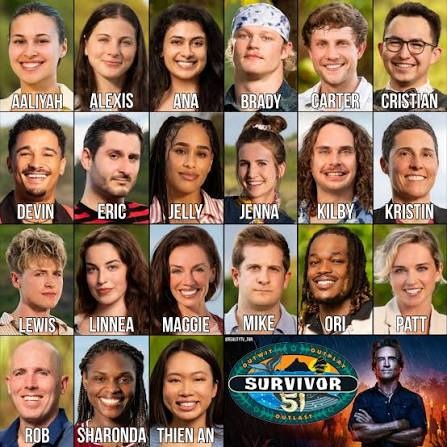
And then there were three.
For all the time the show spent teasing us that there was going to be an extremely early merge, last night instead turned out to be a tribal swap. The two big tribes became—sigh—three very small tribes. I know that Jeff Probst loves the three-tribe idea almost as much as he loves the idea of having a hundred different idols in the game at once. Myself, I can’t stand the three-tribe thing because, inevitably, one tribe is always extremely weaker than the other two, and the smaller tribes make it easier for bullies to survive. Three bullies on a tribe of ten are a nuisance. Three bullies on a tribe of five are a majority. We discovered that last night when Jenna was finally voted out and Devin flashed his big smile.
Here are the new tribes:
SAVU:
DINA:
TOKA:
On the new Toka tribe, Kristin went out of her way to try to make herself useful and came across as being a bit of a know-it-all. However, that appears to have impressed Brady, who is a bit of a know-nothing.
On the Dina tribe, I have to admit that I was pretty worried about Lewis, who spent most of this episode dealing with a sudden illness. However, the main thing that happened on Dina was the sudden bromance between Eric and Kilby. It turns out that they’re both equally annoying! And they’re both into improv! Who would have guessed (other than everyone)? That said, Eric is coming on a bit strong and Kilby doesn’t strike me as being the most loyal guy on the island.
Finally, on the new Savu, Devin, Ori, and Jelly had a majority because they’re all members of the Helicopter Alliance. The minute they lost immunity, it was pretty obvious that Jenna was going to get voted out. The only person surprised by it was Jenna. There was really no reason to vote out Jenna, beyond the fact that Devin was too stupid to accept that she’s a wedding photographer.
As far as Devin goes, it’s hard to think of a more worthless player. He’s condescending. He’s rude. He thinks he’s a badass, but whenever his tribe goes to tribal council, it’s largely because of his own piss-poor leadership skills and the fact that he sucks in competitions. Devin’s an actor and, as such, he’s always on and he comes across as being very fake. And yet somehow, he’s become a leader. My hope is that the show’s editors are setting Devin up for a big fall because I really don’t want to sit through an entire season just to see this preening jerk end up in the final three. Then again, it would be satisfying to see him get eliminated due to a firemaking challenge.
And that’s it for this week!
If you’ve ever watched The Horror of Party Beach, you’ll definitely remember this song, which was performed by a Patterson, New Jersey band called The Del-Aires!
Everybody’s doing the zombie stomp!
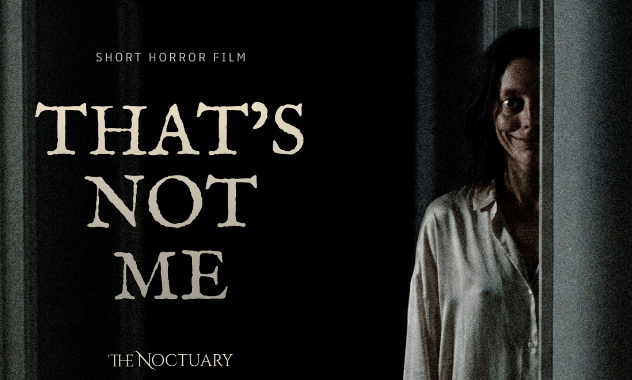
“That’s Not Me” is proof that you don’t need a lot of time to build concern and suspense for your protagonist. Honestly, I’m not sure why I like short films so much. It’s obvious why I like AI films- I’m a NERD like a REAL NERD like, studies math for fun, NERD! I think I like short films because I like instant gratification sometimes. It’s fun to enter a world, exit it, and be moved in less than thirty-minutes.
The mirror scare is a cliche and is inherently in a private/vulnerable space. Think of ALL of the things that you have done in a bathroom; now, imagine if you did the exact things in a hotel lobby, 4/5 of the people there would be upset.
Our protagonist is brushing teeth, but the reflection is not hers. It’s a predator and it’s hunting her. “That’s Not Me” delivers a good quick scare!

2026’s The Fort opens with a group of children and teenagers huddled in what appears to be an empty classroom. The atmosphere is gray and bleak. One gets the feeling that this is a place where they have been hiding for a long time.
Billy Magnus (Kevin Sorbo) enters the room and sits down in front of the children. The viewer notices the graffiti written on the walls and the dry erase boards behind him. “2×4=7?” someone has written. As I watched the film, I have to admit that I had a hard time looking away from 2×4=7. Was that meant to indicate that the educational system had collapsed or was it an homage to Orwell’s claim that followers of the State will convince themselves that one plus one equals three? Or was it a call back to the numerology of the Bible, in which seven is presented as the perfect number?
Billy tells a story about what life used to be like, before whatever happened to send everyone into hiding in abandoned buildings. He talks about how normal society collapsed under the weight of financial hardship, civil unrest, and a pandemic that was used as an excuse to strip people of their civil liberties. (Hmmm …. sounds familiar.) Billy tells how a former army chaplain named Cooper (Tim Perez-Ross) lost his family to the pandemic and how he subsequently defeated Aamon (Richard Grieco), who claimed to be a follower of a group of people who called themselves the “Light Bringers.” Ammon died in his encounter with Cooper but was later brought back to life by a demon named Balthazar (Dean Cain) and then….
Okay, okay. I hear you snickering out there. Dean Cain as a demon? Richard Grieco as a wandering enforcer of evil? Yes, it’s easy to mock and I should point out that this is definitely a low-budget production so Balthazar brings Aamon back to life involves a very small electrical charge. And yet, it was more effective than I was expecting. The blank-eyed look of the demons was effectively creepy and Richard Grieco’s wasted appearance captured the character’s self-destructive energy.
Eventually, Cooper ends up leading a group of people to The Fort, a village that he runs with a firm but benevolent hand. Unfortunately, some citizens of The Fort chafe under all of Cooper’s rules and Cooper himself often doesn’t seem as if he truly wants the burden of being in charge of everyone. When a fallen priest shows up with a doctor (Eddie McClintock) who claims that he has the curse for the latest pandemic, the people of the Fort are tempted to reject Cooper’s rules.
The Fort is another low-budget film from Jason Campbell. That budget is noticeable in the film’s sometimes risible special effects. At the same time, there are other moments that effectively capture the isolation of being separated from the rest of the world. Tim Perez-Ross gives a pretty good performance as Cooper, playing him as a man who struggles with his own anger and doubts. In the end, I appreciated that this film was more about redemption and forgiveness than punishment. That’s an important theme that a lot of end-of-the-world films tend to miss.