Lisa’s Way Too Early Oscar Predictions for February


Well, with the 2018 Oscars finally out of the way, we can now shift our focus to the 2019 race.

As of February, that race is totally cloudy.  The predictions below should be taken with a grain of salt because 1) they’re mostly wild guesses and 2) the Oscar race never starts to become clear until after the summer.  You could probably argue that doing predictions this early in the year is a pointless exercise but here we are!

Best Picture

A Beautiful Day In The Neighborhood

Call of the Wild

Captain Marvel

Harriet

The Irishman

The Last Thing He Wanted

Little Women

Once Upon A Time In Hollywood

The Report

Toy Story 4


Best Director

Greta Gerwig for Little Women

Kassi Lemmons for Harriet

Chris Sanders for Call of the Wild

Martin Scorsese for The Irishman

Quentin Tarantino for Once Upon A Time In Hollywood


Best Actor

Christian Bale in Ford v Ferrari

Robert De Niro in The Irishman

Taron Egerton in Rocketman

Tom Hanks in A Beautiful Day In The Neighborhood

Ian McKellen in The Good Liar


Best Actress

Amy Adams in The Woman In The Window

Cynthia Erivo in Harriet

Saoirse Ronan in Little Women

Emma Thompson in Late Night

Alfre Woodard in Clemency


Best Supporting Actor

Willem DaFoe in The Last Thing He Wanted

Matt Damon in Ford v Ferrari

Harrison Ford in Call of the Wild

Al Pacino in The Irishman

Brad Pitt in Once Upon A Time In Hollywood


Best Supporting Actress

Annette Bening in The Report

Nicole Kidman in The Goldfinch

Janelle Monae in Harriet

Margot Robbie in Once Upon A Time in Hollywood

Meryl Streep in Little Women


After checking out my pointless predictions for February, be sure to check out my even more pointless predictions for January!

6 Good Films That Were Not Nominated For Best Picture: The 1990s


Continuing our look at good films that were not nominated for best picture, here are 6 films from the 1990s.

Dazed and Confused (1993, dir by Richard Linklater)

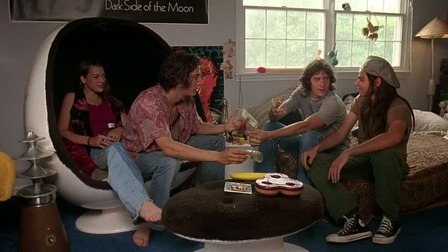
 An ensemble cast that was full of future stars, including future Oscar winners Matthew McConaughey and Ben Affleck.  A killer soundtrack.  A script full of quotable lines.  Dazed and Confused seemed like it had everything necessary to score a Best Picture nomination and perhaps it would have if the film had been set in Los Angeles instead of the suburbs of Atlanta.  Unfortunately, Richard Linklater’s classic was overlooked.

Casino (1995, dir by Martin Scorsese)

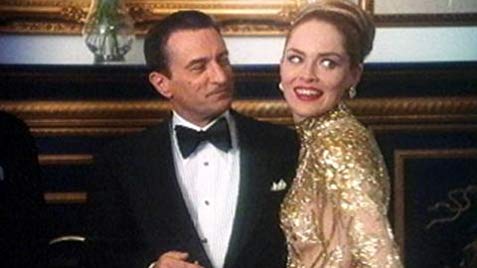
Martin Scorsese’s epic gangster film had all the glitz of Vegas and Joe Pesci to boot!  Despite being one Scorsese’s best, the Academy largely overlooked it, giving a nomination to Sharon Stone and otherwise ignoring the film.

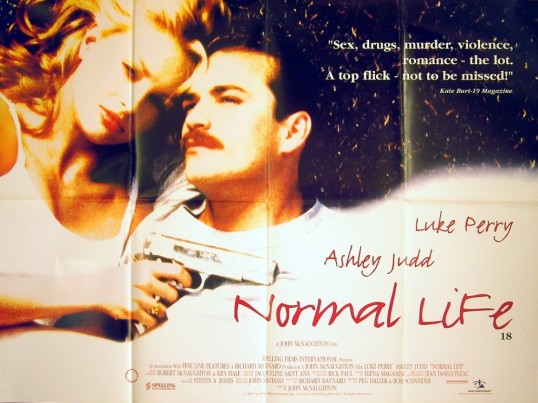
Normal Life (1996, dir by John McNaughton)

Life, love, crime, and death in the suburbs!  John McNaughton’s sadly overlooked film featured award-worthy performances from both Ashley Judd and Luke Perry and it definitely deserves to be better-known.  Unfortunately, the Academy overlooked this poignant true crime masterpiece.

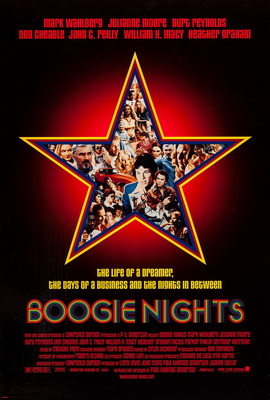
Boogie Nights (1997, dir by Paul Thomas Anderson)

Paul Thomas Anderson first made a splash with this look at the porn industry in the 70s and 80s.  Along the way, he made Mark Wahlberg a star and briefly rejuvenated the career of Burt Reynolds.  Though both Reynolds and Julianne Moore received nominations, the film itself went unnominated.  Oh well.  At least Dirk Diggler got to keep his award for best newcomer.

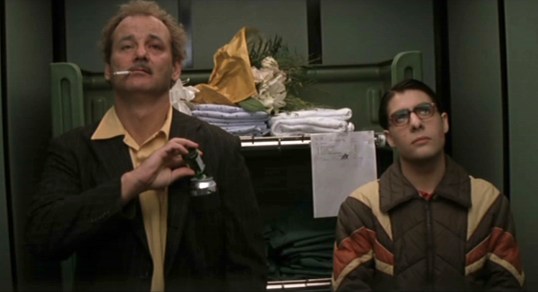
Rushmore (1998, dir by Wes Anderson)

Though the film was nominated for its screenplay, the Wes Anderson classic missed out on best picture  Even more surprisingly, Bill Murray was not nominated for his funny yet sad performance.  Murray would have to wait until 2003’s Lost In Translation to receive his first nomination.  Meanwhile, a Wes Anderson film would not be nominated for best picture until Grand Budapest Hotel achieved the honor in 2015.  (That same year, Boyhood became the first Richard Linklater film to be nominated.)

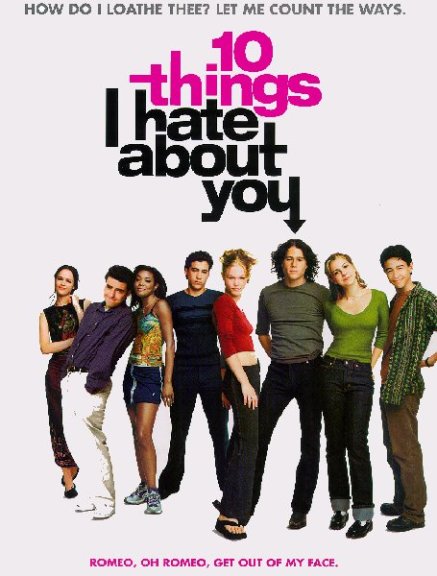
10 Things I Hate About You (1999, dir by Gil Junger)

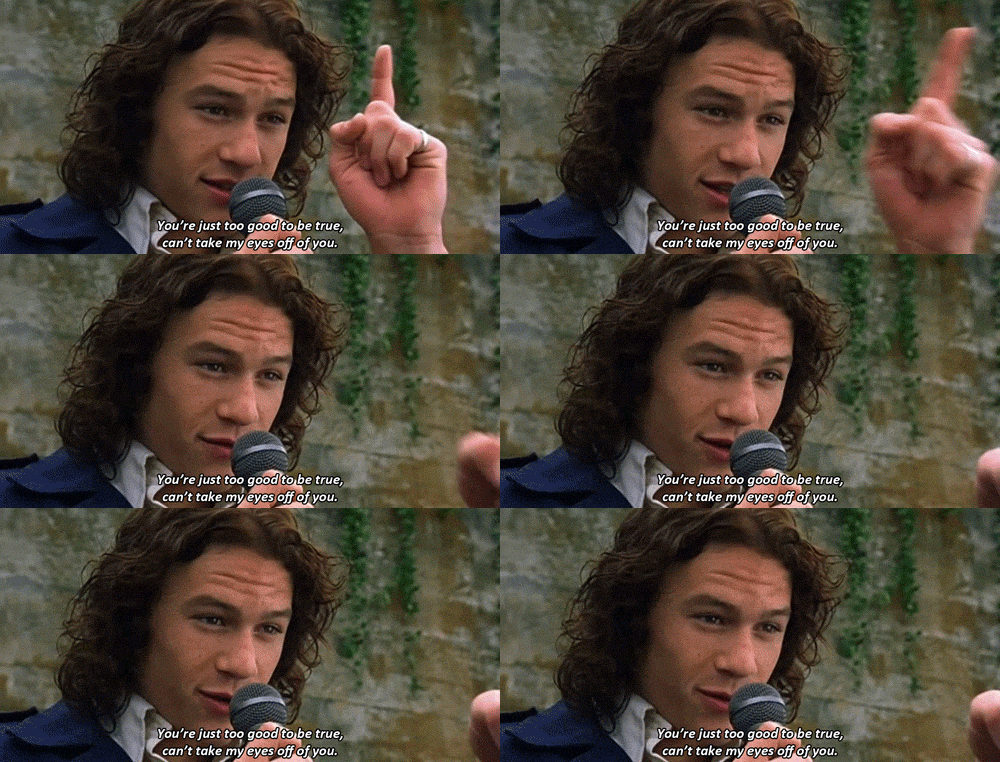
This wonderful take on Shakespeare not only introduced the world to Heath Ledger but it also proved that a teen comedy need not be stupid or misogynistic.  Because it was viewed as being a genre film (and a comedy to boot!), it didn’t get any love from the Academy but it continues to be loved by film watchers like me!

Up next, in an hour or so, the 2000s!

Film Review: American Boy: A Profile of Steven Prince (dir by Martin Scorsese)


In Martin Scorsese’s 1976 film, Taxi Driver, there’s a scene where homicidal Travis Bickle (Robert De Niro) has a meeting with an extremely helpful gun dealer.  The dealer’s name is Easy Andy and if you want to buy it, Andy’s got it.  Andy’s the type who not only has every gun imaginable in his attaché case but he’ll also toss in a specially made holster for free.  “Ain’t that a little honey?” Andy asks as Travis aims a gun out a window and imagines what it would be like to shoot a random passerby.

It’s only a 4-minute scene but it’s one of the most memorable moments in a film that’s full of them.  Easy Andy was played by a man named Steven Prince and, for those 4 minutes, Prince easily stole the picture from De Niro.  As soon as Easy Andy shows up on screen and starts taking, you can’t look away from him.  He’s a bit like the chemist that Patrick McDermott played in The French Connection.  He’s sleazy but he’s got an undeniable charm.

Just based on his performance in Taxi Driver, you would think that Steven Prince was one of those 70s character actors who split their time between Scorsese, Altman, and the occasional big studio film.  However, Steven Prince was actually not an actor.  Instead, he was a member of Martin Scorsese’s entourage, a friend who was something of a personal assistant to the director in the 70s.

In 1978, two years after Prince stole 4 minutes of Taxi Driver away from Robert De Niro, Martin Scorsese directed a documentary about his friend, American Boy: A Profile of Steven Prince.  Essentially a 55-minute conversation between Prince, Scorsese, and actor George Memmoli, American Boy was Scorsese’s homage to Shirley Clarke’s 1967 documentary, Portrait of Jason.  Both documentaries feature a night spent with a New York-based raconteur and both feature plenty of stories about drugs, death, and celebrity.  The main difference is that you watch Portrait of Jason frightened that Jason is on the verge of having a mental breakdown whereas you spend most of American Boy expecting Steven Prince to drop dead at any second.

From the minute that Steven Prince arrives at George Memmoli’s house, he looks like he’s on the verge of collapsing.  He’s painfully thin and his face is skeletal.  His eyes are sunk deep into his head and surrounded by dark circles and his teeth are noticeably brown and rotten.   Prince was only 29 or 30 when American Boy was filmed but one look at his face and you know that he’s lived a lifetime in those three decades.  When he speaks, his voice is a nasal croak.

When Prince first shows up, he and Memmoli get into a wrestling match that seems to go on forever.  Watching the heavy-set Memmoli collapse onto the cadaverous Prince, you find yourself worrying about what’s going to be left of Prince once they’re finished.  (At first, the wrestling seems terrible self-indulgent but actually, it’s classic Scorsese.  His feature films have often dealt with men who, because of their hang-ups, still act like children.  Why should a documentary be any different?)  When the wrestling finally ends and Prince starts to talk about his life, his charisma is evident but you’re still weary.  Prince is the type of story teller who knows how to bring you into his world but, whenever you start to get too close to what’s actually going on inside of him, he pushes you away with a sudden punchline or a sarcastic quip.  It’s appropriate that Prince starts things off by telling a story about getting stoned because he has an addict’s charisma.  He has the charm of a man who has to be charming because, otherwise, he’d probably be dead.

And yet Prince is such a skilled story teller that, despite your better instincts, you do start to let your guard down.  He talks about growing up and how much he loves his family and Scorsese shows us home movies so we can compare the happy child that Steven Prince was to the recovering addict who is now talking to us.  He tells a story about tricking a man into drinking vodka, little realizing that the man was an alcoholic who was trying to stay away from booze.  He tells us about a female friend who OD’d and how he had to use a medical book, a magic marker, and a shot of adrenaline to bring her back to life.  (That story was later recreated in Tarantino’s Pulp Fiction.)  He talks about the time he spent working for Neil Young and he talks about his own struggle with heroin.

He also talk about the time that he killed a man.  Prince was working at a gas station when he caught a man stealing tires.  Prince ended up shooting the man in self-defense and, for a few brief moments, we see one of the reasons why Scorsese and Memmoli find Prince to be so intriguing.  What they’ve only done in the movies, Steven Prince has done in real life.

Much as with Portrait of Jason, you find yourself wondering how much of American Boy was spontaneous and how much of it was planned out beforehand.   Were Prince and Memmoli really wrestling or were they just following stage directions?  Is Prince really telling us the story of his life because he wants to or because Scorsese keeps asking him questions?  Throughout the film, Scorsese continually reminds us that everyone in the film — including himself — is essentially performing for the cameras.  (Early on, we see and hear Scorsese asking if the camera’s rolling.  At another point, he says that he’ll just edit an awkward moment out of the film.)  And so, we’re left to wonder: are we seeing a true profile of Steven Prince or are we seeing what Scorsese wants us to see of Steven Prince?  Is Steven Prince a real person or is he just another one of Scorsese’s troubled outsiders?

It’s not always an easy film to watch.  Charismatic or not, a little bit of Steven Prince can go a long way.  And yet, it’s still a film that, once you start watching it, you really can’t look away from it.  It’s a bit like Prince himself; imperfect but always intriguing.  And, as unwell as Prince often appears to be in American Boy, he’s still with us.  (In 2009, he even did a follow-up to American Boy, American Prince.)  Steven Prince survives.

Lisa’s way, way, way, way, way too early Oscar predictions for January


Attempting, in January, to predict what will be nominated for an Oscar next year is a largely pointless exercise but it’s one that I do every year.  What can I say?  I like the Oscars.  I like rituals.  And I like making lists.

But seriously, don’t take these predictions too seriously.  For the most part, they’re based on wild guesses and familiar names.  For instance, The Irishman is listed because it’s a Scorsese film but that didn’t really help out Silence.  Once Upon A Time In Hollywood is listed because it’s a Tarantino film.  Tom Hanks is listed because …. well, he’s Tom Hanks.  Late Night and The Report are listed because of the excitement they generated at Sundance but Sundance hype doesn’t always last for a full 12 months.  I’d love to see Amy Adams finally win an Oscar for The Woman In The Window but, to be honest, I couldn’t visualize anyone other than Naomi Watts in the lead role when I read the novel.

At this time last year, no one had heard of Green Book.  Bohemian Rhapsody looked like it might just end up going straight to HBO.  No one suspected Black Panther would be the first comic book movie to be nominated for best picture.  Richard E. Grant was on no one’s radar and anyone who says they thought Roma and The Favourite would be the most nominated films of the year is a damn liar.  It’s too early to make any sort of real guess about what will be nominated next year.

However, it’s never too early to make some cray, wild guesses!

Here are my way, way, way, way, way too early Oscar predictions for January.  Some day, perhaps tomorrow, we’ll look back at these predictions and laugh.  And then I’ll cry because it’s never fun when people laugh at you….


Best Picture

A Beautiful Day In The Neighborhood

Call of the Wild

The Irishman

Late Night

Little Women

Once Upon A Time In Hollywood

The Report

Toy Story 4

Where’d You Go, Bernadette?

The Woman in the Window

Best Director

Nisha Ganatra for Late Night

Greta Gerwig for Little Women

Martin Scorsese for The Irishman

Quentin Tarantino for Once Upon A Time In Hollywood

Joe Wright for The Woman In The Window

Best Actor

Robert De Niro in The Irishman

Leonardo DiCaprio in Once Upon A Time In Hollywood

Tom Hanks in A Beautiful Day In The Neighborhood

Joaquin Phoenix in Joker

Brad Pitt in Once Upon A Time In Hollywood

Best Actress

Amy Adams in The Woman In The Window

Annette Bening in The Report

Cate Blanchett in Where’d You Go, Bernadette?

Saoirse Ronan in Little Women

Emma Thompson in Late Night

Best Supporting Actor

Harrison Ford in Call of the Wild

Damon Herriman in Once Upon A Time In Hollywood

Sir Ian McKellen in Cats

Al Pacino in The Irishman

Wyatt Russell in The Woman In The Window

Best Supporting Actress

Dame Judi Dench in Cats

Laura Dern in Little Women

Nicole Kidman in The Goldfinch

Anna Paquin in The Irishman

Margot Robbie in Once Upon A Time in Hollywood

Celebrate Roger Corman’s Birthday With These 12 Trailers!


Roger Corman in The Godfather Part II

Today is a very special day!  It’s Roger Corman’s 92nd birthday!

Here at the Shattered Lens, we traditionally celebrate this day with a special edition of Lisa Marie’s Favorite Grindhouse and Exploitation Film Trailers!  Below, you’ll find the trailers for 12 films that were either directed by,  produced by, or distributed by the legendary Roger Corman!

  1. Five Guns West (1955)

This western was the first film that Roger Corman was credited with directing.

2. The Day The World Ended (1955)

Though Corman worked in almost every type of film genre imaginable, he’s probably best remembered for his science fiction and horror films.  This was one of the first of them.

3. Machine Gun Kelly (1958)

Along with westerns and sci-fi films, Corman also directed several gangster classics.  Machine Gun Kelly is remembered as one of his best.

4. The Intruder (1962)

Corman was an exploitation filmmaker with a conscience.  At a time when other films were avoiding social issues, Corman dove right in with challenging films like The Intruder.

5. The Terror (1963)

Corman was famous for his ability to spot new talent.  His 1963 film The Terror starred a then unknown actor named Jack Nicholson.

6. The Masque of the Red Death (1964)

In the 60s, Corman was also well-known for his Edgar Allan Poe adaptations, the majority of which starred Vincent Price.  With these colorful and flamboyant films, Corman showed himself to be a pop artist at heart.

7. Boxcar Bertha (1972)

In the 70s, Corman moved away from directing and focused on producing.  His ability to spot talent undiminished, Corman helped to launch the careers of the some of the important directors of all time.  In 1972, he hired a young director named Martin Scorsese to direct Boxcar Bertha.

8. Cries and Whispers (1973)

While Corman was producing exploitation films, he was also distributing “difficult” foreign-language films that might otherwise have never been seen in an American theater.  In 1973, he distributed this classic Ingmar Bergman film.  Cries and Whispers was nominated for best picture of the year, losing to The Sting.

9. Caged Heat (1974)

Jonathan Demme was another director who got his start directing Corman-produced films like Caged Heat.  Demme would later thank Corman by casting him in several of his films, including the 1991 Best Picture winner, The Silence of the Lambs.

10. Piranha (1978)

Piranha was one of Corman’s biggest hits as a producer.

11. Carnosaur (1993)

With Carnosaur, Corman showed that you didn’t need a lot of money to bring dinosaurs back to life.

12. Dinocroc vs Supergater (2010)

Corman has continued to produce films in the 21st century.  Films like Dinocroc vs Supergator not only won him legions of new fans but they also paved the way for films like Sharkando.

Happy birthday, Roger Corman!

8 Sure Shot Best Picture Nominees That Were Not


Let’s be honest.

Predicting the Oscar nominees is not an exact science.  The fact of the matter is that a lot of it is guesswork, especially in the early months of the year.

“Oh, Scorsese has a movie coming out?  Well, Martin Scorsese’s movies are always nominated!”

“Last year’s best seller is being adapted into a movie?  The Academy loves best sellers!”

“David Fincher’s directing High School Musical 4?  I LOVE DAVID FINCHER!  Best Picture for sure!”

That’s why, every year, there are films that seem like they’re guaranteed to reap Oscar glory.  These are the films that, in July, are listed on all of the awards sites as probable best picture nominees.  And every year, several of those sure shots turn out to actually be long shots.

Since Arleigh founded Through the Shattered Lens back in 2009, there’s been many guaranteed Best Picture contenders that, when the nominations were announced, were nowhere to be found.  Here are just 8 examples:

1. J. Edgar (dir by Clint Eastwood)

Remember how Leonardo DiCaprio was going finally win his first Oscar for playing J. Edgar Hoover in the 2011 Oscar biopic?  There was also some speculation that Armie Hammer would pick a supporting nod and, of course, the film was going to be a best picture nominee.  Then the movie came out, fell flat, and received not a single Oscar nomination.

2. The Dark Knight Rises (dir by Christopher Nolan)

I was not as big of a fan of this movie as some people who write for this site.  In fact, I thought it was kind of a mess.  Still, back in 2012, a lot of people assumed the Academy would make up for not nominating The Dark Knight by nominating the sequel.  (In a particular noxious example of fanboy culture, Christy Lemire was attacked online when she gave The Dark Knight Rises its first negative review.)  For all of the hyper and controversy, The Dark Knight Rises was totally ignored when the 2012 Oscar nominations were announced.

3. The Monuments Men (dir by George Clooney)

As strange as it may seem today, this now-forgotten World War II film was originally considered to be a surefire Oscar contender.  Throughout most of 2013, the majority of the experts on Gold Derby listed The Monuments Men as their number one prediction for Best Picture.  The logic was that it was based on an interesting true story, it featured Bill Murray in a serious role, and it was directed by George Clooney.  Then, suddenly, the release date was pushed back to 2014.  That was the first sign of trouble.  Then the movie came out and it turned out to be a complete mess, one that underused Murray and which reminded us that, regardless of his skill as an actor, George Clooney is a remarkably dull director.

4. Lee Daniel’s The Butler (dir by Lee Daniels)

From 2013, this is a good example of a film that tried so hard to be an Oscar contender that it basically knocked itself right out of contention.  Between the blind and dated worship of JFK and John Cusack’s performance as Richard Nixon, this film almost seemed like a parody of a bad Oscar contender.

5. Interstellar (dir by Christopher Nolan)

Personally, I liked 2014’s Interstellar more than I liked The Dark Knight Rises but ultimately, this turned out to be just another Christopher Nolan film that didn’t get much of a reaction from the Academy.  (Despite the nominations given to both Dunkirk and Inception, it’s hard not to feel that the Academy will always resent Nolan for being both successful and ambitious.)

6. Joy (dir by David O. Russell)

Many of us thought it would be one of the films to be nominated for best picture of 2015.  That was until we actually saw the damn thing.  David O. Russell’s worst movie still managed to net Jennifer Lawrence a nomination but not much else.

7. Silence (dir by Martin Scrosese)

Martin Scrosese’s 2016 passion product was expected to be a major contender and, on many sites, it was listed as a probable winner all the way through December.  However, when the nominations were announced, Silence only received one nomination, for cinematography.

8. Logan (dir by James Mangold)

At the start of 2017, a lot of critics stated that Logan might be the first comic book movie ever nominated for Best Picture.  For a month or two, I certainly thought it would be.  Ultimately, though, it only picked up a nomination for adapted screenplay.

Which 2018 sure short will turn into a long shot?  We’ll find out next year!

Horror Film Review: Cape Fear (dir by Martin Scorsese)


And I beheld as Scorsese remade a classic movie and, Lo, there was De Niro, decorated in india ink and speaking in tongues…

In 1991, Martin Scorsese remade the 1962 horror thriller, Cape Fear.  Both versions deal with the same basic story but each tells it in a very different way.  If the original Cape Fear was straightforward and to the point, Martin Scorsese’s version is so stylized that occasionally, it’s tempting to suspect that Scorsese might be parodying himself.  Zoom shots, negative shots, sweeping camera movements, Scorsese’s Cape Fear is full of all of them.  When a storm rolls in for the film’s operatic finale, the red clouds look as if their on fire.  Hell is coming to North Carolina, the film appears to be announcing.

While the plot largely remains the same, there are a few significant changes to the characters involved:

In the first Cape Fear, Robert Mitchum’s Max Cady was an arrogant, swaggering brute.  In the remake, Robert De Niro’s Cady is still an arrogant, swaggering brute but he’s now also an evangelical who is tattooed with bible verses and who speaks in tongues.  Cape Fear‘s approach to Cady’s religion is so over-the-top that it almost makes Stephen King’s approach to religious characters seem subtle and nuanced.  De Niro also speaks in a broad Southern accent.  Occasionally, De Niro gets the accent right but most of the time, he sounds like he’s in a Vermont community theater production of Cat On A Hot Tin Roof.

In the first Cape Fear, Gregory Peck’s Sam Bowden was a lawyer who caught Max while Max was attacking a woman and who then testified against Max in court.  That’s not the case with the remake’s version of Sam Bowden.  Despite being played by Nick Nolte, the remake’s Sam Bowden is such a wimp that you can’t help but dislike him.  His wife (Jessica Lange) doesn’t trust him.  His teenage daughter (Juliette Lewis) resents him and his attempts to control her life.  In this version, Sam didn’t testify against Max in court.  Instead, Sam was Max’s lawyer and withheld evidence that could have secured Max’s acquittal.  What Sam didn’t realize is that Max would spend his time in prison studying the law and that Max would eventually figure out what Sam did.

As in the original film, Max shows up in North Carolina and proceeds to stalk the Bowdens.  Unlike Mitchum, who was all quiet menace, De Niro plays Max as being loud and obnoxious, the type who will sit in a theater, light a cigar, and intentionally laugh at the top of his lungs.  Max knows enough about the law that he knows exactly what he can get away with.  He poisons Sam’s dog.  He rapes Sam’s associate, Lori (played, in a heart-breaking performance, by Ileana Douglas).  In one of the film’s most unsettling scenes, he pretends to be the new drama teacher and toys with Sam’s daughter.

With the help of a private eye (Joe Don Baker), Sam tries to get Max out of his life.  Eventually, Sam pretends to be out-of-town, all as part of a ruse to get Max to break into his house so that he can be shot in self-defense.  It’s here that Nolte’s wimpy performance becomes an issue.  It’s impossible not to laugh at the sight of Sam, all hunched down and desperately trying to run from room to room without being spotted through any of the windows.

To a certain extent, I suspect that were meant to see Sam as being a rather pathetic figure.  Scorsese doesn’t really seem to have much sympathy for him or his dysfunctional family.  If anything, the film seems to argue that Sam has been a bad lawyer, a bad husband, and a bad father and Max has been sent as a type of divine retribution.  Only by defeating Max can Sam find forgiveness and hope to have the type of life that Gregory Peck enjoyed in the first movie.

Scorsese’s Cape Fear is an uneasy mishmash of styles.  Is it an art film, a religious allegory, a horror film, or just a generic thriller?  It doesn’t seem to be sure.  Cape Fear‘s a Scorsese film so, of course, it’s always going to be worth watching.  But there are times when the film definitely runs the risk of overdosing on style.  Sometimes, Scorsese seems to be trying too hard to remind everyone that he’s a legitimately great director and ends up getting so invested in the film’s visuals that he runs the risk of losing the story.  De Niro has some scenes in which he is genuinely chilling but then he has other scenes where he is basically just a live action cartoon character.  The same can be said of the film itself.  It’s always watchable.  At times, it’s rather frightening.  But other times, it’s just too cartoonish to be effective.

If anything, this remake proves that sometimes, it’s best to keep things simple.

4 Shots From 4 Films (John Heard): Chilly Scenes Of Winter (1979), Cutter’s Way (1981), After Hours (1985), Big (1988)


I know everyone knew John Heard from the Home Alone series, but he did others things as well. Early on he was even given lead roles. I tried to pick a mixture of his early stuff, and when he was moved to largely playing character and supporting roles.

Rest in peace, John Heard.

Chilly Scenes Of Winter (1979, dir. Joan Micklin Silver)

Cutter’s Way (1981, dir. Ivan Passer)

After Hours (1985, dir. Martin Scorsese)

Big (1988, dir. Penny Marshall)

Here Are The DGA nominations!


la-la-land-full-poster-image-691x1024

The Director’s Guild announced their feature film nominations earlier today.

A DGA nomination is one of the biggest prizes of the precursor season.  In general, if the DGA nominates a film then it’s likely that film will also get nominated for best picture.  There have been exceptions, of course.  (David Fincher was nominated for his bastardized rehash of Girl With The Dragon Tattoo.)  But, for the most part, the DGA is the most reliable precursor available.

Five directors were nominated.  The usual suspects were there — Lonergan, Jenkins, and Chazelle.  Fortunately, Denis Villeneuve picked up a nomination, which is good news for Arrival.  The fifth nominee was a bit of a surprise.  Garth Davis was nominated for Lion, which I guess means I’ll have to go see that movie now, even though I have little real desire to do so.

Martin Scorsese was not nominated for Silence, which probably means that the film will be dead-in-the-water as far as Oscar nominations are concerned.

Also not nominated — Tim Miller for Deadpool, a film that’s been doing surprisingly well with the precursors.  If Tim Miller had been nominated, heads would have exploded.  It would have been fun to watch the twitter reaction.

Instead, we just got this —

Just to make it official, here are the five DGA nominees:

Denis Villeneuve — Arrival

Damien Chazelle — La La Land

Garth Davis — Lion

Kenneth Lonergan — Manchester By The Sea

Barry Jenkins — Moonlight

manchester-by-the-sea-sundance-2016

The National Board of Review names Manchester By The Sea the best of 2016!


manchester-by-the-sea-sundance-2016

Oscar season has officially begun!

Earlier today, The National Board of Review named their picks for the best of the year.  They went with Manchester By The Sea and a whole lot of other films that I hope to finally get to see in December!

My favorite two winners?  Amy Adams for best actress and Kubo and the Two Strings for Best Animated Film.

A cavaet: Of the so-called “major” precursors, The National Board of Review is usually the one that seems to match up the least with the actual Oscar results.

Here are the winners!

Best Film:  Manchester by the Sea

Best Director:  Barry Jenkins, Moonlight

Best Actor:  Casey Affleck, Manchester by the Sea

Best Actress: Amy Adams, Arrival

Best Supporting Actor: Jeff Bridges, Hell or High Water

Best Supporting Actress:  Naomie Harris, Moonlight

Best Original Screenplay:  Kenneth Lonergan, Manchester by the Sea

Best Adapted Screenplay:  Jay Cocks and Martin Scorsese, Silence

Best Animated Feature:  Kubo and the Two Strings
Breakthrough Performance (Male): Lucas Hedges, Manchester by the Sea

Breakthrough Performance (Female): Royalty Hightower, The Fits

Best Directorial Debut:  Trey Edward Shults, Krisha

Best Foreign Language Film:  The Salesman

Best Documentary:  O.J.: Made in America

Best Ensemble:  Hidden Figures

Spotlight Award: Creative Collaboration of Peter Berg and Mark Wahlberg

NBR Freedom of Expression Award:  Cameraperson

Top Films

Top 5 Foreign Language Films

  • Elle
  • The Handmaiden
  • Julieta
  • Land of Mine
  • Neruda

Top 5 Documentaries

  • De Palma
  • The Eagle Huntress
  • Gleason
  • Life, Animated
  • Miss Sharon Jones!

Top 10 Independent Films

  • 20th Century Women
  • Captain Fantastic
  • Creative Control
  • Eye in the Sky
  • The Fits
  • Green Room
  • Hello, My Name is Doris
  • Krisha
  • Morris from America
  • Sing Street

Kubo_and_the_Two_Strings_poster