I review BLOOD WORK (2002) – starring Clint Eastwood and Jeff Daniels!


Here at The Shattered Lens, we’re celebrating Clint Eastwood’s 95th birthday on May 31st. As part of that celebration, I decided to revisit his 2002 film, BLOOD WORK. 

BLOOD WORK finds Clint Eastwood as retired FBI profiler, Terry McCaleb (Clint Eastwood), a man who has recently had a heart transplant. Despite the wishes of his doctor Bonnie Fox (Angelica Huston), the beautiful Graciella Rivers (Wanda De Jesus) is able to guilt McCaleb into investigating the death of her sister, Gloria, when she reveals to him that it’s her sister’s heart that is now beating in his chest. Unable to drive due to his heart condition, McCaleb hires his goofy next-boat neighbor Buddy (Jeff Daniels) as his driver. The two set out to find any clue or follow any lead they come across. Eventually McCaleb is able to uncover that Gloria’s killer may be the “Code Killer,” the very same killer that he was after when his heart gave out on him, forcing his retirement. He’s going to do everything he can to catch the killer this time, even if it kills him in the process! 

BLOOD WORK puts Clint Eastwood smack dab in the middle of one of my favorite genres, the serial killer film, and the result is somewhat of a mixed bag. On the positive side, it contains a really good performance from a 72 year old Clint Eastwood as the retired FBI guy and recent heart transplant recipient. This character trait strips away Eastwood’s ability to be a Superman as he has been so many times before in his career. As a matter of fact, we feel his pain when a big Russian throws him down, or when he has to dive out of the way of a car trying to run him over. We worry for him when he gets a fever, which could actually kill him. But even in his fragile state, every so often he’ll grab a shotgun and start blasting away at the inhabitant of a car he sees watching him. His character has to rely on his intellect more than his strength and Eastwood is fun to watch in the role, with his performance the highlight of the movie. Of the other performances, I really like Angelica Huston in the relatively small role of his doctor. You believe that she really wants him to get better, and she’s pissed off that he’s gotten himself involved in this murder investigation. I’m not that impressed with Jeff Daniels here. I normally like his work, so I think the problem is that his character isn’t written that well. Wanda De Jesus is a lovely woman, and she has some good moments, but there are a couple of times that she’s way over dramatic, and I couldn’t help but roll my eyes. 

As I mentioned earlier, I usually enjoy serial killer movies, and I did enjoy BLOOD WORK. It hits most of the expected notes of the genre… the serial killer taunting the lawman, the visits to the family members of the victims, the sudden discovery of clues / evidence, the eleventh hour reveal of the killer, etc. With Eastwood at the center of it all as both actor and director, you can’t really go wrong even if the movie does drag some during its middle portion. And even though it’s presented as a whodunit, there’s not a lot of mystery to the identity of the killer. I suspect most filmgoers will figure it out before the final reveal. But at the end of the day, BLOOD WORK is definitely worth a viewing for fans of Clint Eastwood and fans of serial killer movies. Not his best work, but still better than most! 

I’ve included the trailer for BLOOD WORK below:
Love on the Shattered Lens: Something Wild (dir by Jonathan Demme)


1986’s Something Wild opens with Charlie Driggs (Jeff Daniels) eating lunch in a New York diner.

Charlie is a stockbroker.  He wears a suit.  He’s quiet and mild-mannered.  He just got a promotion at work.  He carries a picture of his kids in his wallet.  Everything about Charlie shouts that he’s a nice guy who is extremely conventional in his outlook and behavior.  But then, Charlie sneaks out of the diner without paying and is spotted by a woman (Melanie Griffith) who says that her name is Lulu.

Dressed in black and with a brunette bob that makes her look like Louis Brooks (and which is later revealed to be a wig), Lulu chases after Charlie.  She offers him a ride back to his job, downtown.  However, when Charlie gets in the car, Lulu instead speeds off towards New Jersey.  Lulu grabs Charlie beeper and throws it away.  (I guess that was the 80s equivalent of stealing someone’s phone.)  She stops off at a liquor store and robs the place while Charlie unknowingly waits out in the car.  She takes him to a motel and, after handcuffing to the bed, has sex with him and calls his office….

And then the film takes an unexpected turn.  What started out as one of those NSFW stories that occasionally cropped up on Internet message boards suddenly turns into a quirky slice of Americana.  Lulu and Charlie head to Pennsylvania for Lulu’s high school reunion.  Lulu reveals that her real name is Audrey and she’s actually blonde.  Audrey introduces Charlie to her family as being her husband and Charlie plays along with her.  At the reunion, Charlie turns out to be just as skillful a liar as Audrey.  But there’s nothing particularly mean-spirited about their lies.  Audrey wanted to be able to brag about having a wonderful husband at her reunion and Charlie, whose wife left him for a dentist, wanted to pretend that he was still married and still a regular part of his children’s lives.  The reunion itself is a masterful set piece, one in which director Jonathan Demme balances his trademark quirky humor with a genuine love for small town American.  With the old school bands playing in front of an American flag, Demme transforms the reunion into a metaphor for everything good about this country.  It’s a place where two lonely people can find each other.  The weekend may have started out like a middle-aged man’s fantasy but Charlie finds himself falling in love with the real Audrey.  It’s very sweet and humorous and it makes you feel good about life in general….

And then Ray shows up and the film takes another unexpected turn.  Played by Ray Liotta, Ray is Audrey’s ex-husband.  He’s a charmer, as one might expect from a character played by a young Ray Liotta.  Ray is friendly with Charlie, telling him stories about how wild Audrey was in high school.  It’s only as the night progresses that it becomes obvious that Ray is a sadistic sociopath and he wants Audrey back.

The violence in the film’s second half is a bit jarring.  After the good-natured, screwball comedy of the film’s first 50 minutes, it’s shocking to suddenly see Ray pistol-whipping a clerk and then breaking Charlie’s nose.  At the same time, meeting Ray allows us to know what it was that attracted Audrey to Charlie.  Charlie is the opposite of Ray, a good man who truly cares about other people.  Ray is the type of bad boy who is very attractive when you don’t know any better.  Charlie is the guy who seems conventional but, underneath it all, turns out to be something wild as well.

Directed by Jonathan Demme, Something Wild has a good eye for the quirkiness of America.  It portrays the world out of New York with love and none of the condescension that tends to show up in so many other road trip movies.  Daniels, Griffith, and the much-missed Ray Liotta all gives performance that take the viewer by surprise.  None of them are who we originally assume them to be and Griffith’s deconstruction of the type of character who would later be termed a “manic pixie dream girl” is probably her best and most honest performance.  Even Ray, for all his violent tendencies, has moments of humanity.  Something Wild is a celebration of life, rebellion, and love.  Like Charlie and Audrey, it’s more than worth taking a chance on.

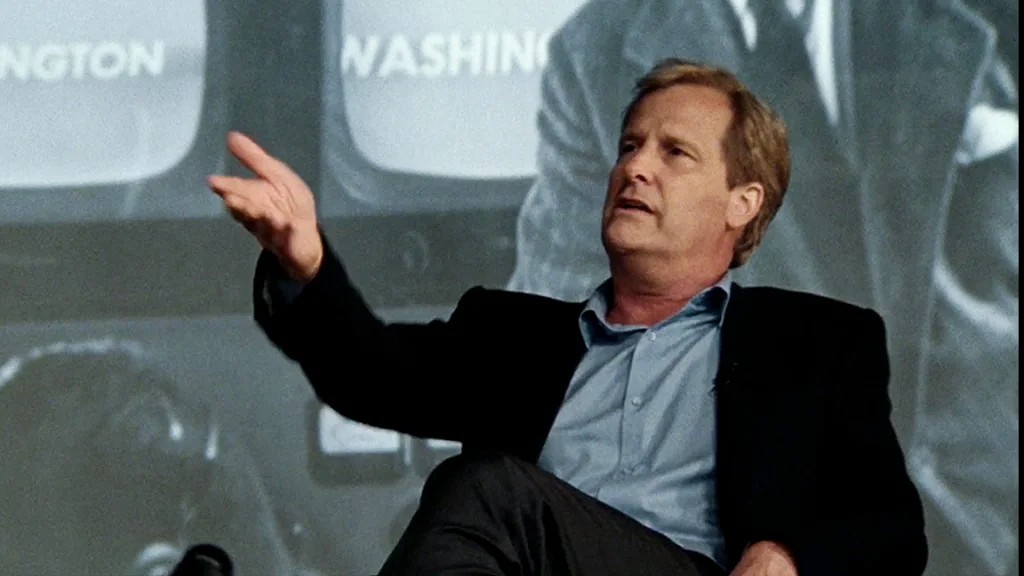
Scenes I Love: Newsroom


No matter what side of the ideological aisle one stands on this speech should be watched, debated and studied not just for the powerhouse acting throughout the monologue but as to its content.

There’s opinions and discussion to be had about differing takes on the first half of the speech, but it’s the latter half when Will McAvoy (played with an equal amount of life-earned cynicism and hope by Jeff Daniels) explains why we as a country has lost its way and how we’ll never get back on track until we realize there is a problem and a problem to be solved not through hate and fear but through understanding and hope.

“We sure used to be. We stood up for what was right! We fought for moral reasons, we passed and struck down laws for moral reasons. We waged wars on poverty, not poor people. We sacrificed, we cared about our neighbors, we put our money where our mouths were, and we never beat our chest. We built great big things, made ungodly technological advances, explored the universe, cured diseases, and cultivated the world’s greatest artists and the world’s greatest economy. We reached for the stars, and we acted like men. We aspired to intelligence; we didn’t belittle it; it didn’t make us feel inferior. We didn’t identify ourselves by who we voted for in the last election, and we didn’t scare so easy.

And we were able to be all these things and do all these things because we were informed. By great men, men who were revered. The first step in solving any problem is recognizing there is one—America is not the greatest country in the world anymore.”

I’m sure there’ll be those who will disagree vehemently about the scene’s message and content. Yet, no one seem to be able to find a strong argument as to why they disagree or debunk what was said in the monologue.

The decade since Newsroom aired it’s final episode we see more and more the truth in Will McAvoy’s words and it may take a decade or decades to right the ship.

Film Review: The Caine Mutiny Court-Martial (dir by Robert Altman)


In the 1980s, director Robert Altman found himself even more outside of the Hollywood system than usual.  A series of films that confused critics and repelled audiences had led to Altman becoming something of a pariah.  As no studio was willing to give Altman a chance to make the type of quirky feature films that he made his name with in the 70s, Altman instead directed a series of low-budget theatrical adaptations.  These films may not have gotten the attention of his earlier films but they allowed Altman to show off his talents, especially when it came to working with actors.

1988’s The Caine Mutiny Court-Martial was one of those films.  Made for television and based on the play by Herman Wouk, The Caine Mutiny Court-Martial was a courtroom drama that Altman brought to life with his usual flair.  Anyone who has read either the play or Herman Wouk’s original novel (or who has seen the 1953 film version, The Caine Mutiny) will know the story.  In the final days of World War II, Lt. Steven Maryk (Jeff Daniels) has been court-martialed for mutiny.  During a particularly violent storm, Maryk took command of the USS Caine away from Lt. Commander Queeg (Brad Davis).  Maryk and his fellow officers, including aspiring novelist Lt. Thomas Keefer (Kevin J. O’Connor), claim that, after several incidents that indicated he was mentally unstable, Queeg froze up on the bridge and had to be relieved of command.  Queeg claims that everything he did was to enforce discipline on the ship and that he never froze.  Prosecuting Maryk is Lt. Commander John Challee (Peter Gallagher).  Defending him is Lt. Barney Greenwald (Eric Bogosian), who is determined to win the case even though he doesn’t necessarily agree with Maryk’s actions.

The Caine Mutiny Court-Martial is very much a filmed play.  Almost all of the action takes place in one location, a gymnasium that has been converted into a court of military law.  We don’t actually see what happened on the Caine when Maryk took control.  Instead, we just hear the testimony of those involved.  Queeg defends himself, ably at first but soon he starts to show signs of the pressure of being in command.  Maryk explains his actions and we want to believe him because he’s played by fresh-faced Jeff Daniels but, at the same time, there’s something a little bit too smug about his declaration that Queeg was not fit for command.  The other officers on the Caine testify.  Under Greenwald’s skillful cross-examination, Queeg is continually portrayed as being a flawed officer.  But only Greenwald understand that Queeg was isolated not only by the loneliness of being in charge but also by members so his own crew, like Keefer, who hated the Navy and didn’t want to take their part in the war effort seriously.  As a Jew who is very much aware of what’s at stake in the war, Greenwald has mixed feelings about the way that Queeg was treated.  It ends with a party, where a drunk Greenwald calls out the true architect of The Caine Mutiny.  As opposed to the way the scene was portrayed in the 1953 film or in Willam Friedkin’s recent adaptation), Altman focuses not so much on Greenwald but on the party occurring around him.  If the other versions of this story ended on a note of triumph for Greenwald, this one ends on a note of sadness with Greenwald’s words being almost unheard by the officers of the Caine.

Altman gets excellent performances from the entire cast and, even more importantly, he avoids the downfall of so many other theatrical adaptations.  The Caine Mutiny Court-Martial may be a talky film and it may largely take place in only one location but it’s never boring.  Altman’s camera is continually prowling around the makeshift courtroom, reflecting the tension of the case in every movement.  The end result is one of Altman’s best theatrical adaptations.

Film Review: Speed (dir by Jan De Bont)


“Awwwww, Keanu and Sandra are so cute together!”

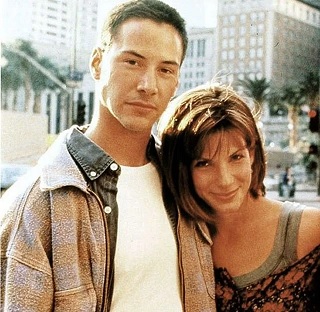
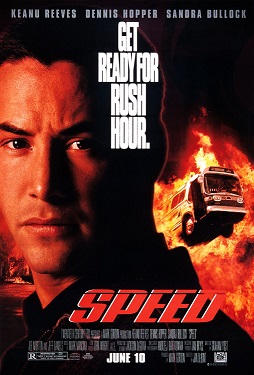
That was my main thought when I recently rewatched the 1994 film, Speed.  There’s a lot of reasons why Speed remains popular 28 years after it was initially released but I think a huge (if underrated) factor is that it’s just a good love story.  At this point, everyone knows that the film is about a bus that has been wired to explode if it goes under 50 miles per hour.  Most people know that Dennis Hopper plays Howard, the mad bomber, Keanu Reeves plays Jack, the cop who jumps on the bus and tries to figure out how to defuse the bomb, and Sandra Bullock plays Annie, the passenger who takes over driving the bus after the driver is incapacitated.  (If you’re fan of the work of John Hughes, you might also know that Speed was the film where Ferris Bueller‘s Alan Ruck broke free of his Cameron typecasting and established himself as a dependable character actor.)  Most people remember what the cops do in an attempt to trick Dennis Hopper and, for that matter, they also remember the one mistake that led to Hopper figuring out their ruse.

And yet, even though most viewers will know exactly what is going to happen, the film remains a fun watch because of the chemistry between Keanu Reeves and Sandra Bullock.  This was one of Sandra’s first major roles.  This was also one of Keanu’s earliest attempts to helm a big budget, major studio action picture.  (Director Jan de Bont insisted on casting him after seeing him in the film Point Break.  The studio preferred Tom Cruise.)  In Speed, both Keanu and Sandra are young, likable, attractive, enthusiastic, and they have smiles that light up the screen.  As soon as Sandra takes over driving and Keanu tells her that she cannot allow the bus to slow down under any circumstances, the two of them just seem to belong together.  The film’s enduring popularity is about more than just watching a bus try not to go under a certain speed.  The popularity of Speed is also about watching the characters played by Keanu and Sandra fall in love.

Who would have guessed it?  Well, certainly not whoever put together the film’s original theatrical trailer.  Check this out:

As you can see, the original trailer doesn’t feature much of Sandra Bullock.  For that matter, it’s not quite as Keanu-centric as you might expect it to be.  Instead, the trailer is dominated by things exploding and Dennis Hopper’s over-the-top performance as the bomber.  And make no doubt about it, Dennis Hopper is definitely an entertaining part of the film.  There’s not a subtle moment to be found in his performance and that makes him the perfect for the role of a man whose response to a cheap retirement present is to go on a bombing spree.  That said, the film belongs to Keanu and Sandra.

That said, it would be a mistake to ignore the other people on the bus.  One of the things that I like about Speed is that the other passengers on the bus come together to survive their ordeal.  They may start out as weary commuters but, by the end of the film, they’ve become a family.  They may get annoyed with each other but, when it comes time to climb from one bus to another, they hold on to each other and they hug one another on the other side.  The bomber, like all terrorists, thought that he could turn people against each other through his threats and his violence.  Instead, the people came together provided one another with comfort and protection.  There’s an important lesson there, one that’s even more important in 2022 than it probably was in 1994.

(On a personal note, I’m not usually a public transportation person.  However, in high school, I would occasionally catch the DART bus — that’s Dallas Area Rapid Transportation — if it was raining.  The buses were often not in particularly good shape.  One that I boarded actually had a hole in the floor and, since it was raining, the passengers would have to hold up their feet whenever the bus splashed through a puddle.  Personally, I was kind of amused by the weirdness of it all but I think I was the only one.  Would the passengers of that bus bonded together to defeat a mad bomber?  One can only hope.)

Speed may be a film about a bomb on a bus but, ultimately, it’s also a film about humanity at its best.  And that’s why, after all this time, it remains a classic.

Here Are The 78th Annual Golden Globe Nominations!


I’m totally turned off by the self-importance of the Golden Globes and I resent every time that I have to write about them.

That said, despite the fact that no one is quite sure who actually votes for the damn things and stories of corruption in the Hollywood Foreign Press Association have been rampant for years, the Golden Globes have still emerged as one of the main Oscar precursors.  So, you kind of have to pay attention to them.  Bleh.

There really aren’t any huge shocks in the list of nominees below, with the exception of maybe Jared Leto for Best Supporting Actor and James Corden’s Prom nomination.  I mean, if you’re that determined to nominate someone for The Prom, why would you go for James Corden as opposed to Meryl Streep?  That’s just odd.

Anyway, here are the nominations:

Best Motion Picture, Drama
“The Father”
“Mank”
“Nomadland”
“Promising Young Woman”
“The Trial of the Chicago 7”

Best Motion Picture, Musical or Comedy
“Borat Subsequent Moviefilm”
“Hamilton”
“Music”
“Palm Springs”
“The Prom”

Best Director, Motion Picture
Emerald Fennell, “Promising Young Woman”
David Fincher, “Mank”
Regina King, “One Night In Miami”
Aaron Sorkin, “The Trial of the Chicago 7”
Chloé Zhao, “Nomadland”

Best Performance by an Actress in a Motion Picture, Drama
Viola Davis, “Ma Rainey’s Black Bottom”
Andra Day, “The United States vs. Billie Holiday”
Vanessa Kirby, “Pieces of a Woman”
Frances McDormand, “Nomadland”
Carey Mulligan, “Promising Young Woman”

Best Performance by an Actress in a Motion Picture, Musical or Comedy
Maria Bakalova, “Borat Subsequent Moviefilm”
Kate Hudson, “Music”
Michelle Pfeiffer, “French Exit”
Rosamund Pike, “I Care a Lot”
Anya Taylor-Joy, “Emma”

Best Performance by an Actress in a Supporting Role in any Motion Picture
Glenn Close, “Hillbilly Elegy”
Olivia Colman, “The Father”
Jodie Foster, “The Mauritanian”
Amanda Seyfried, “Mank”
Helena Zengel, “News of the World”

Best Performance by an Actor in a Motion Picture, Drama
Riz Ahmed, “Sound of Metal”
Chadwick Boseman, “Ma Rainey’s Black Bottom”
Anthony Hopkins, “The Father”
Gary Oldman, “Mank”
Tahar Rahim, “The Mauritanian”

Best Performance by an Actor in a Motion Picture, Musical or Comedy
Sacha Baron Cohen, “Borat Subsequent Moviefilm”
James Corden, “The Prom”
Lin-Manuel Miranda, “Hamilton”
Dev Patel, “The Personal History of David Copperfield”
Andy Samberg, “Palm Springs”

Best Performance by an Actor in a Supporting Role in any Motion Picture
Sacha Baron Cohen, “The Trial of the Chicago 7”
Daniel Kaluuya, “Judas and the Black Messiah”
Jared Leto, “The Little Things”
Billy Murray, “On the Rocks”
Leslie Odom Jr., “One Night In Miami”

Best Screenplay, Motion Picture
Emerald Fennell, “Promising Young Woman”
Jack Fincher, “Mank”
Aaron Sorkin, “The Trial of the Chicago 7”
Florian Zeller and Christopher Hampton, “The Father”
Chloé Zhao, “Nomadland”

Best Original Score, Motion Picture
Alexandre Desplat, “The Midnight Sky”
Ludwig Göransson, “Tenet”
James Newton Howard, “News of the World”
Trent Reznor and Atticus Ross, “Mank”
Trent Reznor, Atticus Ross and Jon Batiste, “Soul”

Best Original Song, Motion Picture
“Fight For You,” Judas and the Black Messiah”
“Hear My Voice,” The Trial of the Chicago 7”
“Io Sì (Seen),” The Life Ahead”
“Speak Now,” One Night In Miami”
“Tigress & Tweed,” The United States Vs. Billie Holiday”

Best Motion Picture, Animated
“The Croods: A New Age”
“Onward”
“Over the Moon”
“Soul”
“Wolfwalkers”

Best Motion Picture, Foreign Language
“Another Round”
“La Llorona”
“The Life Ahead”
“Minari”
“Two Of Us”

Best Television Series, Drama
“The Crown”
“Lovecraft Country”
“The Mandalorian”
“Ozark”
“Ratched”

Best Television Series, Musical or Comedy
“Emily in Paris”
“The Flight Attendant”
“The Great”
“Schitt’s Creek”
“Ted Lasso”

Best Limited Series, Anthology Series or a Motion Picture made for Television
“Normal People”
“The Queen’s Gambit”
“Small Axe”
“The Undoing”
“Unorthodox”

Best Performance by an Actress in a Television Series, Drama
Olivia Colman, “The Crown”
Jodie Comer, “Killing Eve”
Emma Corrin, “The Crown”
Laura Linney, “Ozark”
Sarah Paulson, “Ratched”

Best Performance by an Actress in a Television Series, Musical or Comedy
Lily Collins, “Emily In Paris”
Kaley Cuoco, “The Flight Attendant”
Elle Fanning, “The Great”
Jane Levy, “Zoey’s Extraordinary Playlist”
Catherine O’Hara, “Schitt’s Creek”

Best Performance by an Actress in a Limited Series, Anthology Series or a Motion Picture Made for Television
Cate Blanchett, “Mrs. America”
Daisy Edgar Jones, “Normal People”
Shira Haas, “Unorthodox”
Nicole Kidman, “The Undoing”
Anya Taylor-Joy, “The Queen’s Gambit”

Best Performance by an Actress in a Television Supporting Role
Gillian Anderson, “The Crown”
Helena Bonham Carter, “The Crown”
Julia Garner, “Ozark”
Annie Murphy, “Schitt’s Creek”
Cynthia Nixon, “Ratched”

Best Performance by an Actor in a Television Series, Drama
Jason Bateman, “Ozark”
Josh O’Connor, “The Crown”
Bob Odenkirk, “Better Call Saul”
Al Pacino, “Hunters”
Matthew Rhys, “Perry Mason”

Best Performance by an Actor in a Television Series, Musical or Comedy
Don Cheadle, “Black Monday”
Nicholas Hoult, “The Great”
Eugene Levy, “Schitt’s Creek”
Jason Sudeikis, “Ted Lasso”
Ramy Youssef, “Ramy”

Best Performance by an Actor in a Limited Series or a Motion Picture Made for Television
Bryan Cranston, “Your Honor”
Jeff Daniels, “The Comey Rule”
Hugh Grant, “The Undoing”
Ethan Hawke, “The Good Lord Bird”
Mark Ruffalo, “I Know This Much is True”

Best Performance by an Actor in a Television Supporting Role
John Boyega, “Small Axe”
Brendan Gleeson, “The Comey Rule”
Daniel Levy, “Schitt’s Creek”
Jim Parsons, “Hollywood”
Donald Sutherland, “The Undoing”

18 Days of Paranoia #15: Marie (dir by Roger Donaldson)


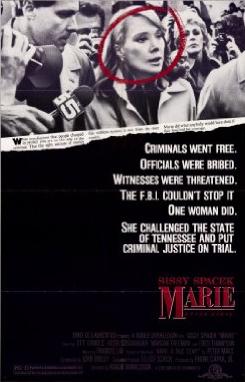
The 1985 film, Marie, tells a true story.

(In fact, the film’s official title is Marie: A True Story, just in case there was any doubt.)

The film opens in Tennessee, in the early 70s.  Marie Ragghianati (Sissy Spacek) has left her alcoholic and abusive husband and is now living with her mother and trying to raise three children, one of whom is chronically ill, on her own.  Though she manages to win a scholarship to Vanderbilt University, she quickly discovers that having a degree does not necessarily translate into getting a job.  However, while Marie was a student, she became acquainted with Eddie Sisk (Jeff Daniels), a seemingly friendly lawyer who now has a job as the counsel for the newly elected governor of Tennessee, Ray Blanton (Don Hood).  Marie goes to see Eddie and she soon finds herself working in the governor’s office.

With Eddie’s support, Marie rises up through the ranks.  Of course, he does get a little bit annoyed whenever Marie asks him why the governor is so eager to offer clemency to certain criminals.  At first, Eddie claims that it’s because the governor is against the death penalty and he doesn’t want to send anyone to die in “Old Sparky.”  Later, Eddie claims that it’s because the state has been ordered to do something about prison overcrowding.  And finally, Eddie admits that, on occasion, it’s done as a political favor.  It appears that some of the children of Tennessee’s wealthiest families have a really bad habit of getting arrested for some very serious crimes.

Eventually, there’s an opening on the state parole board and Eddie recommends that Marie be appointed the board’s new chairperson.  As Eddie explains it, the governor wants to put a Democrat on the board and he wants to appoint a woman.  (Despite the governor’s insistence that he wants to bring more women into state government, the film makes it clear that the Blanton administration was essentially a boys club.)  Marie agrees and soon, she’s making over a hundred dollars a day!  (That was apparently an unusual thing in the 70s.)

No sooner has Marie moved into her new position than she is informed that some of the governor’s aides have been selling pardons.  When Marie goes to Eddie about the situation, his charming facade disappears as he gets angry with her and accuses her of trying to ruin his career.  When rumors get out that she may have gone to the FBI, Marie becomes a pariah.  The governor demands her resignation, which she refuses to give.  She finds herself being followed by strange cars and harassed by the police.  (At one point, she is arrested for drunk driving despite being sober.)  Meanwhile, people start to show up dead.

When Blanton fires Marie on trumped-up corruption charges, she decides to take the governor to court.  Fortunately, Marie is friendly with a lawyer named Fred Thompson.  The future U.S. Senator and presidential candidate plays himself in this film and he gives such an authoritative performance that he went on to have a busy career as a character actor whenever he wasn’t running for or serving in office.

Marie is a strangely disjointed film.  On the one hand, you’ve got Sissy Spacek, Fred Thompson, and Jeff Daniels all giving excellent performances and you’ve also got an inspiring true story.  On the other hand, the film attempts to combine so many different genres that it sometimes feels as if you’re watching multiple films at once.  The film starts out as the story of a single mom trying to restart her life and then it becomes a workplace drama as Marie has to deal with gossip about her relationship with Eddie and hostile co-workers like fellow board member Charles Traughber (Morgan Freeman, in a small role that would probably be forgettable if it was filled by anyone other than Morgan Freeman).  Then it becomes a courtroom drama, with Fred Thompson cross-examining witnesses and giving final arguments.  Meanwhile, at the same time, it’s also a political thriller in which two men are brutally murdered before they can testify against the governor.  And then finally, it’s also a crime drama as detectives try to track down a career criminal who has friends in the governor’s office.  It’s a film of many good parts but those parts don’t always seem to easily fit together and the end result is somewhat awkward whole.

(Interestingly enough, some of the film’s moments that seem as if they’re most likely to be fictionalized are actually based on fact.  For instance, two men who could have brought down Blanton were mysteriously murdered at the same time that Marie was suing the state.)

In the end, Marie doesn’t really come together but it has a good cast and a good lesson: Never trust a politician.

Other Entries In The 18 Days Of Paranoia:

  1. The Flight That Disappeared
  2. The Humanity Bureau
  3. The Private Files of J. Edgar Hoover
  4. The Falcon and the Snowman
  5. New World Order
  6. Scandal Sheet
  7. Cuban Rebel Girls
  8. The French Connection II
  9. Blunt: The Fourth Man 
  10. The Quiller Memorandum
  11. Betrayed
  12. Best Seller
  13. They Call Me Mister Tibbs
  14. The Organization

Film Review: The Catcher Was A Spy (dir by Ben Lewin)


I was so impressed with Paul Rudd’s performance in Avengers: Endgame that, last night, I decided to watch another Paul Rudd film, 2018’s The Catcher Was A Spy.

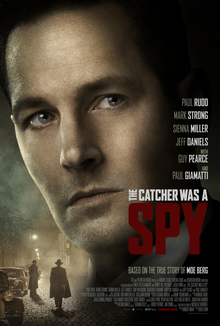
Based on a true story, The Catcher Was A Spy tells the tale of Moe Berg (Paul Rudd).  When we first meet Moe, it’s towards the end of World War II and Moe has been sent behind enemy lines to investigate just how close the Nazis are to building an atomic bomb.  Intelligence suggests that physicist Werner Heisenberg (Mark Strong) is leading the Nazi effort and, if the intelligence turns out to be true, Moe has been ordered to assassinate Heisenberg.  As Moe considers whether or not he’s actually capable of killing a man, we get flashbacks to how Moe eventually ended up working as a spy.

What we learn is that, in the 1930s, Moe Berg was a major league baseball player.  He was a catcher and, though he was never a great player, he was famous for being far more educated than the average professional athlete.  At a time when open anti-Semitism was socially acceptable among America’s upper classes, Moe Berg managed to get an Ivy League education.  Not only does he keep up with current events but he can also speak several languages.  The other players aren’t quite sure what to make of Moe, nor does Moe ever seem to make much of an effort to open up to anyone, including his girlfriend, Estella (Sienna Miller, playing yet another girlfriend in yet another biopic).

Because he can speak Japanese, Moe is selected to be a part of a delegation of players who will be sent to Japan.  While the rest of the players hang out around the hotel, Moe hangs out with an intellectual named Kawabata (Hiroyuki Sanada), discusses inevitably of war, and — for reasons that the film deliberately leaves unclear — decides to shoot a film of Tokyo Harbor.

Five years later, with the United States now at war with the Axis powers, it’s that film that leads to Moe getting a meeting with the head of the Office of Strategic Services, Bill Donovan (Jeff Daniels).  No longer a baseball player and apparently bored with coaching, Moe wants to become a spy.  Donovan notes that Moe has never married and asks him flat out if he’s gay.  Moe smiles slightly and says, “I’m good at keeping secrets.”

And indeed, he is!  Unfortunately, Moe is so good at keeping secrets that we never quite get into his head.  It’s hard not to compare this film to the superficially similar The Imitation Game.  But whereas that film made you feel as if you were seeing the world through Alan Turing’s eyes, The Catcher Was A Spy always seems to be standing outside of Moe Berg.  In the film’s final title cards, it refers to Moe as being an “enigma” and that’s pretty much the way he is throughout the entire film.  We like him because he’s played by Paul Rudd but we never really feel like we know him.  The closest the film comes to suggesting what’s going on inside the head of its main character is when Moe — who has described himself as non-religious — attends a Kol Nidrel service at a Zurich synagogue and, for a few minutes, Moe lets his guard down.  But, for the majority of the film, Moe remains unknowable.

With the exception of one battle scene, it’s also a rather low-key spy film, one that’s more in the style of Tinker, Tailor, Soldier, Spy than SPECTRE.  Again, that may be true to the actual story but, considering that it’s a film about a possibly gay Jew working to take down a homophobic, anti-Semitic war machine, it’s still hard not to regret the film’s lack of big “stand up and cheer” moments.  Clocking in at a rather brisk 97 minutes, it’s hard not to feel that there’s some big pieces missing from the film’s story.

Here’s the good news: Paul Rudd proves himself to be a thoroughly charismatic leading man in this film, showing that he can hold the audience’s attention even without special effects or a punch line.  Rudd does an excellent job playing a character who, to be honest, has very little in common with what we may think of as being a typical Paul Rudd role.  Rudd is always watchable, even while Moe Berg remains an enigma.  Hopefully, Rudd will get more opportunities in the future to show us what he’s truly capable of doing as an actor.

Here Are The 70th Annual Emmy Winners!


To be honest, I didn’t actually watch the Emmys this year.  For one thing, I was upset that Twin Peaks was not nominated for Best Limited Series and I was even more upset that Kyle MacLachlan was totally overlooked.  It’s hard for me to take seriously an awards show that snubs Twin Peaks but honors Alec Baldwin’s uninspired Donald Trump impersonation.

However, I did kind of follow the ceremony on twitter.  I was happy, for instance, to learn that Bill Hader and Henry Winkler won for Barry and that Thandie Newton won for Westworld.  The Emmy that should have gone to Twin Peaks went to The Assassination of Gianni Verscace, which was good but uneven.  (The first five episodes were brilliant.  The final three felt somewhat superfluous.)  Ryan Murphy beat David Lynch for Best Director.  I mean, what the Hell?

Anyway, here’s the winners!

Best Comedy: “The Marvelous Mrs. Maisel” (Amazon)

Best Drama:“Game of Thrones” (HBO)

Best Limited Series: “The Assassination of Gianni Versace: American Crime Story” (FX)

Best Actress, Comedy: Rachel Brosnahan, “The Marvelous Mrs. Maisel”

Best Actor, Comedy: Bill Hader, “Barry”

Best Actress, Drama: Claire Foy, “The Crown”

Best Actor, Drama: Matthew Rhys, “The Americans”

Supporting Actress, Drama: Thandie Newton, “Westworld”

Supporting Actor, Drama: Peter Dinklage, “Game of Thrones”

Supporting Actress, Comedy: Alex Borstein, “The Marvelous Mrs. Maisel”

Supporting Actor, Comedy: Henry Winkler, “Barry”

Best Actress, Limited Series or TV Movie: Regina King, “Seven Seconds”

Best Actor, Limited Series or TV Movie: Darren Criss, “The Assassination of Gianni Versace: American Crime Story”

Supporting Actress, Limited Series or a Movie: Merritt Wever, “Godless”

Supporting Actor, Limited Series or Movie: Jeff Daniels, “Godless”

*Television Movie: “Black Mirror: USS Callister” (Netflix)

Variety Sketch Series: “Saturday Night Live” (NBC)

Variety Talk Series: “Last Week Tonight With John Oliver”(HBO)

Reality Competition Program: “RuPaul’s Drag Race” (VH1)

*Reality Host: RuPaul, “RuPaul’s Drag Race”

*Structured Reality Program: “Queer Eye” (Netflix)

*Unstructured Reality Program: “United Shades Of America With W. Kamau Bell” (CNN)

*Guest Actress, Drama: Samira Wiley, “The Handmaid’s Tale”

*Guest Actor, Drama: Ron Cephas Jones, “This Is Us”

*Guest Actress, Comedy: Tiffany Haddish, “Saturday Night Live”

*Guest Actor, Comedy: Katt Williams, “Atlanta”

*Documentary or Nonfiction Series: “Wild Wild Country” (Netflix)

*Animated Program: “Rick And Morty” (Adult Swim)

Writing for a Comedy Series: Amy Sherman-Palladino, “The Marvelous Mrs. Maisel” (Pilot)

Writing for a Drama Series: Joel Fields & Joe Weisberg, “The Americans” (“Start”)

Writing for a Limited Series, Movie or Drama: William Bridges & Charlie Brooker, “Black Mirror: USS Callister”

Directing for a Comedy Series: Amy Sherman-Palladino, “The Marvelous Mrs. Maisel” (Pilot)

Directing for a Drama Series: Stephen Daldry, “The Crown” (“Paterfamilias”)

Directing for a Limited Series: Ryan Murphy, “The Assassination Of Gianni Versace: American Crime Story” (“The Man Who Would Be Vogue”)

*Directing for a Variety Series: Don Roy King, “Saturday Night Live” (Host: Donald Glover)

Writing for a Variety Special: John Mulaney, “John Mulaney: Kid Gorgeous At Radio City”

Directing for a Variety Special: Glenn Weiss, “The Oscars”

*Awards presented during the Creative Arts Emmy ceremony on Sept. 8-9.

Lisa’s Way Too Early Oscar Predictions for January!


How early can one predict the Oscars?

Well, it depends on how you look at it.  You can predict the Oscars at any time during the year.  However, predicting them correctly is next to impossible before October.  That said, I’m going to give it a shot!

Now, to be clear, this is not an attempt to predict who and what will be nominated later this month.  Instead, these are my predictions for what will be nominated next year at this time!  I’ll be updating my predictions every month of this year.

So, with all that in mind, here are my way too early predictions for what will be nominated in January of 2019!  As of right now, these predictions are a collection of instinct and random guesses.  For all we know, some of these films might not even get released in 2018.  In all probability, we’ll look back at this list in December and laugh.


Best Picture

Chappaquiddick

First Man

Lizzie

Mary Queen of Scots

The Miseducation of Cameron Post

Mortal Engines

A Star is Born

Widows

Wildfire

The Women of Marwen


Best Director

Desiree Akhavon for The Miseducation of Cameron Post

Damien Chazelle for First Man

Paul Dano for Wildfire

Steve McQueen for Widows

Robert Zemeckis for The Women of Marwen


Best Actor

Steve Carell in The Women of Marwen

Jason Clarke in Chappaquiddick

Ryan Gosling in First Man

Jake Gyllenhaal in Wildfire

Joaquin Phoenx in Don’t Worry, He Won’t Get Far On Foot


Best Actress

Viola Davis in Widows

Chloe Grace Moretz in The Miseducation of Cameron Post

Carey Mulligan in Wildfire

Saoirse Ronan in Mary Queen of Scots

Chloe Sevigny in Lizzie


Best Supporting Actor

Jeff Daniels in The Catcher Was A Spy

Bruce Dern in Chappaquiddick

Sam Elliott in A Star is Born

Robert Duvall in Widows

Hugo Weaving in Mortal Engines


Best Supporting Actress

Elizabeth Debicki in Widows

Claire Foy in First Man

Leslie Mann in The Women of Marwen

Kate Mara in Chappaquiddick

Kristen Stewart in Lizzie