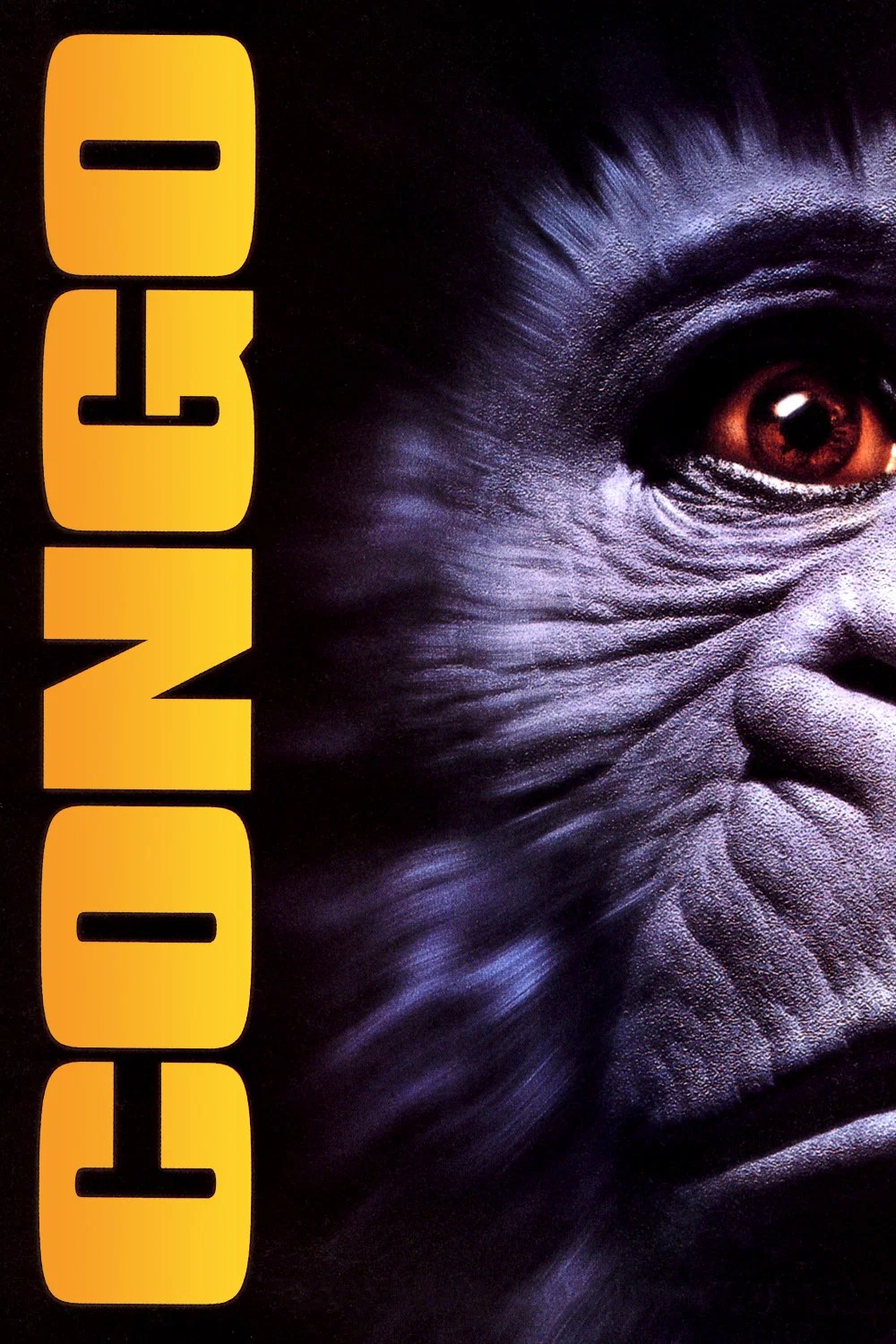
Guilty Pleasure No. 129: Congo (dir. by Frank Marshall)


Congo is the kind of movie that makes perfect sense as a guilty pleasure because it is always hovering just above the level of complete nonsense, yet it has enough energy and conviction to remain enormously watchable. Directed by Frank Marshall, the 1995 film turns Michael Crichton’s jungle-thriller premise into a sprawling mixture of monster movie, treasure hunt, corporate conspiracy, technological anxiety, and old-fashioned adventure serial. It is loud, messy, often ridiculous, and loaded with moments that should not work at all. But that is the pleasure of Congo: it commits so completely to its bizarre material that the movie becomes difficult to dislike.

The setup is wonderfully overstuffed. A corporate expedition disappears while searching for a legendary diamond mine in the Congo, apparently after encountering some mysterious, deadly force. At the same time, primatologist Peter Elliot is preparing to return Amy, a gorilla he has raised and taught sign language, to the wild. Amy has recurring dreams—or perhaps memories—of a strange jungle city, and she communicates through a glove that translates her signs into a robotic voice. Before long, Peter, Amy, corporate representative Karen Ross, Romanian explorer Herkermer Homolka, and a mercenary guide named Captain Munro Kelly are all headed toward the same lost city, where diamonds, ancient ruins, and murderous white gorillas await.

That synopsis alone explains why Congo has developed such a devoted guilty-pleasure reputation. It is a movie where satellites, laser weapons, genetically engineered guard apes, corporate greed, sign-language research, volcanoes, and ancient African mythology all exist in the same story without anyone pausing to question the sheer overload of it. The movie treats every development with sincere urgency, even when the audience is watching Amy the gorilla say “Amy good gorilla” through a computerized voice device. It is impossible not to admire the confidence. Congo never winks at the audience, never admits that its premise is wild, and never cuts itself down to a more manageable size. It simply keeps adding more adventure-movie ingredients until the whole thing becomes strangely hypnotic.

Laura Linney’s Karen Ross and Dylan Walsh’s Peter Elliot are meant to anchor all of that craziness, but they are also among the film’s blandest elements. Linney is a talented actress, and she brings a professional focus to Karen’s corporate mission, but the character is written in such functional terms that she rarely feels like more than the person carrying the plot’s technological and business-related exposition. Karen is competent, determined, and occasionally vulnerable, but she never develops a particularly distinctive personality. Linney plays her with a seriousness that fits the film’s overall tone, yet that seriousness can make her feel oddly distant. She is there to make sure the satellite plot, the diamond plot, and the rescue plot keep moving, rather than to provide much spark on her own.

Walsh has an even tougher assignment as Peter. He is essentially the emotional center of Amy’s story, and the film needs the audience to believe in his paternal, almost codependent relationship with her. But Peter is such a mild, generic protagonist that he often gets swallowed by the movie’s more eccentric ideas. Walsh is not bad, exactly; he is simply too subdued for a film filled with volcanic eruptions, killer gorillas, and Tim Curry speaking every line as though he is announcing the end of civilization. His performance has a sincere gentleness that helps the scenes with Amy, but it also makes him feel like he wandered in from a quieter, more conventional family adventure. When the movie becomes bigger and stranger, Peter’s personality does not expand with it.

That blandness becomes especially noticeable because Ernie Hudson and Tim Curry are having such an obviously fantastic time in their roles. Hudson plays Captain Munro Kelly with the relaxed confidence of someone who knows he is the coolest person in the room. Munro is a professional guide, a fighter, a pilot, and a survivor, but Hudson does not turn him into a grim action-movie cliché. He gives the character humor, charisma, and a reassuring calm under pressure. Whenever the group faces another disaster—whether it is hostile terrain, dangerous animals, mercenaries, or the increasingly unhinged situation inside the lost city—Hudson makes Munro feel like the one person who might actually know what he is doing.

Hudson’s performance also gives Congo a sense of fun that the central characters sometimes lack. He has an easy screen presence, and he seems to understand that the film works best when it leans into the pleasures of a grand, pulpy adventure. Munro is not a particularly deep character, but Hudson makes him memorable through timing, attitude, and sheer likability. The movie becomes livelier whenever he takes charge, whether he is negotiating with people in the field or calmly reacting to another completely absurd revelation. If Karen and Peter are the story’s functional leads, Munro is the character who gives the audience someone to enjoy following.

Then there is Tim Curry as Herkermer Homolka, who delivers what can only be described as a masterclass in hammy, scenery-chewing entertainment. Curry does not merely play Homolka; he devours the role with a kind of operatic enthusiasm. Every line is delivered in his grand Romanian accent with the force of a proclamation, and every gesture suggests that Homolka believes he is the hero of the greatest expedition in history. Curry appears to be enjoying himself so much that it becomes infectious. He is not interested in realism, restraint, or subtle characterization. He is there to make every scene larger, louder, and more theatrical.

Homolka is already a ridiculous figure on the page: a pompous explorer with a famous family name, an exaggerated ego, and a dramatic flair that makes him seem less like a real adventurer than a flamboyant villain from a lost serial. Curry recognizes that the only correct way to play him is at maximum volume. His performance turns every bit of dialogue into an event. He gives the impression that he has spent years preparing speeches for this exact jungle expedition, waiting for the chance to announce his discoveries to the world. Even when Homolka is making selfish or foolish decisions, Curry makes him too entertaining to hate.

The contrast between Curry and the more restrained leads is one of the reasons Congo feels so odd. Linney and Walsh approach the material with a level of seriousness that suggests they are trying to preserve some emotional credibility. Hudson and Curry, by contrast, seem to recognize that credibility is not really the point. Hudson brings a cool, knowing charm, while Curry turns the movie into a one-man theatrical spectacle whenever he appears. Neither approach is necessarily wrong, but the difference creates a tonal imbalance. The film’s heroes feel flat because its supporting players are so much more alive.

The killer gorillas, of course, are another major source of the film’s guilty-pleasure appeal. These are not normal gorillas defending their territory. They are pale, vicious creatures bred to protect the diamond city of Zinj, and they attack with the exaggerated menace of monsters in a haunted-house ride. The effects have not aged gracefully. The suits and animatronics are visible, the movements can be stiff, and the creatures are often more amusing than frightening. Yet they remain memorable because the movie gives them a distinct, nightmarish look: white fur, glowing eyes, sharp teeth, and sudden appearances from dark corridors or jungle fog.

Frank Marshall directs the action with enough pace and polish to keep Congo from collapsing under the weight of its own silliness. The jungle setting, the ruined city, the expedition equipment, the satellite imagery, and the volcanic finale all give the movie a bigger sense of scale than its reputation might suggest. It feels like a genuine studio blockbuster from a time when Hollywood would spend serious money on an unapologetically strange idea. The film is not elegant, and it is certainly not believable, but it is never boring for long.

As a conventional adventure movie, Congo is uneven. Its African setting is often treated as a vague, dangerous backdrop, and its plot is overloaded with enough corporate jargon and techno-babble to distract from the more entertaining monster-movie material. But as a guilty pleasure, it is hard to beat. The movie is too bizarre to be generic and too sincere to feel cynical. Laura Linney and Dylan Walsh may be stuck playing bland characters at the center of the chaos, but Ernie Hudson and especially Tim Curry make the journey worth taking. Curry’s performance alone is a treasure: a joyous, magnificent display of overacting that turns Congo from a merely strange blockbuster into something genuinely unforgettable.

Previous Guilty Pleasures

  1. Half-Baked
  2. Save The Last Dance
  3. Every Rose Has Its Thorns
  4. The Jeremy Kyle Show
  5. Invasion USA
  6. The Golden Child
  7. Final Destination 2
  8. Paparazzi
  9. The Principal
  10. The Substitute
  11. Terror In The Family
  12. Pandorum
  13. Lambada
  14. Fear
  15. Cocktail
  16. Keep Off The Grass
  17. Girls, Girls, Girls
  18. Class
  19. Tart
  20. King Kong vs. Godzilla
  21. Hawk the Slayer
  22. Battle Beyond the Stars
  23. Meridian
  24. Walk of Shame
  25. From Justin To Kelly
  26. Project Greenlight
  27. Sex Decoy: Love Stings
  28. Swimfan
  29. On the Line
  30. Wolfen
  31. Hail Caesar!
  32. It’s So Cold In The D
  33. In the Mix
  34. Healed By Grace
  35. Valley of the Dolls
  36. The Legend of Billie Jean
  37. Death Wish
  38. Shipping Wars
  39. Ghost Whisperer
  40. Parking Wars
  41. The Dead Are After Me
  42. Harper’s Island
  43. The Resurrection of Gavin Stone
  44. Paranormal State
  45. Utopia
  46. Bar Rescue
  47. The Powers of Matthew Star
  48. Spiker
  49. Heavenly Bodies
  50. Maid in Manhattan
  51. Rage and Honor
  52. Saved By The Bell 3. 21 “No Hope With Dope”
  53. Happy Gilmore
  54. Solarbabies
  55. The Dawn of Correction
  56. Once You Understand
  57. The Voyeurs 
  58. Robot Jox
  59. Teen Wolf
  60. The Running Man
  61. Double Dragon
  62. Backtrack
  63. Julie and Jack
  64. Karate Warrior
  65. Invaders From Mars
  66. Cloverfield
  67. Aerobicide 
  68. Blood Harvest
  69. Shocking Dark
  70. Face The Truth
  71. Submerged
  72. The Canyons
  73. Days of Thunder
  74. Van Helsing
  75. The Night Comes for Us
  76. Code of Silence
  77. Captain Ron
  78. Armageddon
  79. Kate’s Secret
  80. Point Break
  81. The Replacements
  82. The Shadow
  83. Meteor
  84. Last Action Hero
  85. Attack of the Killer Tomatoes
  86. The Horror at 37,000 Feet
  87. The ‘Burbs
  88. Lifeforce
  89. Highschool of the Dead
  90. Ice Station Zebra
  91. No One Lives
  92. Brewster’s Millions
  93. Porky’s
  94. Revenge of the Nerds
  95. The Delta Force
  96. The Hidden
  97. Roller Boogie
  98. Raw Deal
  99. Death Merchant Series
  100. Ski Patrol
  101. The Executioner Series
  102. The Destroyer Series
  103. Private Teacher
  104. The Parker Series
  105. Ramba
  106. The Troubles of Janice
  107. Ironwood
  108. Interspecies Reviewers
  109. SST — Death Flight
  110. Undercover Brother
  111. Out for Justice
  112. Food Wars!
  113. Cherry
  114. Death Race
  115. The Beast Within
  116. Girl Series
  117. Gone in 60 Seconds
  118. Swordfish
  119. Marked For Death
  120. The Internship
  121. The Angry Red Planet
  122. 2012
  123. Old School
  124. No Escape
  125. In Death Series
  126. Alligator
  127. Little Annie Fanny
  128. Wicked Wanda

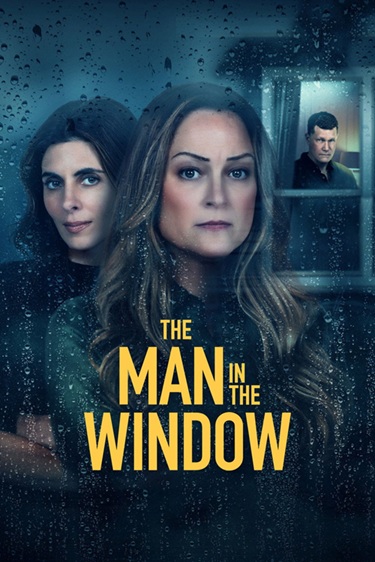
Lifetime Film Review: The Man In The Window (dir by Richard Switzer)


After her husband is killed in a car accident, Sarah (Teri Polo) retreats to their gigantic suburban home.  She spends her time painting pictures and resisting the efforts of her daughter (Jonetta Kaiser) and her best friend (Jamie-Lynne Sigler) to get her to move on with her life.  To me, it seemed pretty obvious that Sarah was deeply depressed and everyone should really have just backed off and let her recover at her own pace.  However, in the film, six months have passed since her husband’s death and, in the world of Lifetime, that means that it’s time to get back on the dating scene.  Sarah’s daughter assures her that “Dad” would have wanted her to move on.

(Yes, I’m sure that Dad is sitting in the afterlife, thrilled at the idea of his widow finding a new lover less than a year after his death.)

Sarah accompanies her daughter to a speed-dating event.  She goes on 20 dates in two hours.  19 of those dates are duds.  But the twentieth — oh my God.  Jack (Dylan Walsh) is handsome and successful and, as a widower, he understands what Sarah is going through.  Even more importantly, Jack has just moved in across the street from Sarah!  What a romantic coincidence!  Soon, Sarah is falling for Jack and Jack appears to be falling for Sarah.

But then the neighbor turns up dead.

For reasons that aren’t really clear, Sarah doesn’t seem to have really liked Sylvia (Deborah Rennard) that much.  Sylvia was nosy, the type of neighbor who stood out on her balcony and kept an eye on what everyone else was doing.  Sarah and her daughter referred to Sylvia as being “the neighborhood watch” and they would go out of their way to avoid talking to Sylvia.  I think the film means for us to sympathize with Sarah but, seeing as how we only see Sylvia being polite and friendly to Sarah, it’s a bit difficult to really be on Sarah’s side.  If anything, in this case, Sarah seems like the bad and judgmental neighbor.  Ultimately, it doesn’t matter, though.  Someone breaks into Sylvia’s house and strangles her.  And Sarah comes to suspect that the culprit might have been …. JACK!

This Lifetime movie had a fairly interesting mystery.  I will admit that I figured out what was going on long before Sarah did but then again, I’ve probably watched a lot more Lifetime films than she has.  The best thing about the film is that everyone lived in an extremely big house.  It’s always nice to see that the Lifetime tradition of huge suburban houses is still alive.  I also liked the fact that Sarah had enough money that she could deal with her grief by painting for six months.  There’s no tragedy so great that it can’t lead to more leisure time.

That said, Sarah was not a particularly likable protagonist.  I think if the film had been set a year after her husband’s death, as opposed to just six months, I probably would have had more sympathy for both her and her daughter.  As it was, it seemed like Sarah’s daughter was trying to force her mom to move on too quickly and it also seemed like Sarah was constantly allowing herself to be pushed into a situation for which she wasn’t emotionally ready.  Jamie-Lynne Sigler’s character was actually far more interesting than Sarah’s.  Maybe Sigler and Teri Polo should have switched roles.  There’s no way Sigler would have allowed herself to be guilted into speed dating.

Oh well.  It may not have been a perfect film but at least the houses were lovely to look at.


I review BLOOD WORK (2002) – starring Clint Eastwood and Jeff Daniels!


Here at The Shattered Lens, we’re celebrating Clint Eastwood’s 95th birthday on May 31st. As part of that celebration, I decided to revisit his 2002 film, BLOOD WORK. 

BLOOD WORK finds Clint Eastwood as retired FBI profiler, Terry McCaleb (Clint Eastwood), a man who has recently had a heart transplant. Despite the wishes of his doctor Bonnie Fox (Angelica Huston), the beautiful Graciella Rivers (Wanda De Jesus) is able to guilt McCaleb into investigating the death of her sister, Gloria, when she reveals to him that it’s her sister’s heart that is now beating in his chest. Unable to drive due to his heart condition, McCaleb hires his goofy next-boat neighbor Buddy (Jeff Daniels) as his driver. The two set out to find any clue or follow any lead they come across. Eventually McCaleb is able to uncover that Gloria’s killer may be the “Code Killer,” the very same killer that he was after when his heart gave out on him, forcing his retirement. He’s going to do everything he can to catch the killer this time, even if it kills him in the process! 

BLOOD WORK puts Clint Eastwood smack dab in the middle of one of my favorite genres, the serial killer film, and the result is somewhat of a mixed bag. On the positive side, it contains a really good performance from a 72 year old Clint Eastwood as the retired FBI guy and recent heart transplant recipient. This character trait strips away Eastwood’s ability to be a Superman as he has been so many times before in his career. As a matter of fact, we feel his pain when a big Russian throws him down, or when he has to dive out of the way of a car trying to run him over. We worry for him when he gets a fever, which could actually kill him. But even in his fragile state, every so often he’ll grab a shotgun and start blasting away at the inhabitant of a car he sees watching him. His character has to rely on his intellect more than his strength and Eastwood is fun to watch in the role, with his performance the highlight of the movie. Of the other performances, I really like Angelica Huston in the relatively small role of his doctor. You believe that she really wants him to get better, and she’s pissed off that he’s gotten himself involved in this murder investigation. I’m not that impressed with Jeff Daniels here. I normally like his work, so I think the problem is that his character isn’t written that well. Wanda De Jesus is a lovely woman, and she has some good moments, but there are a couple of times that she’s way over dramatic, and I couldn’t help but roll my eyes. 

As I mentioned earlier, I usually enjoy serial killer movies, and I did enjoy BLOOD WORK. It hits most of the expected notes of the genre… the serial killer taunting the lawman, the visits to the family members of the victims, the sudden discovery of clues / evidence, the eleventh hour reveal of the killer, etc. With Eastwood at the center of it all as both actor and director, you can’t really go wrong even if the movie does drag some during its middle portion. And even though it’s presented as a whodunit, there’s not a lot of mystery to the identity of the killer. I suspect most filmgoers will figure it out before the final reveal. But at the end of the day, BLOOD WORK is definitely worth a viewing for fans of Clint Eastwood and fans of serial killer movies. Not his best work, but still better than most! 

I’ve included the trailer for BLOOD WORK below:

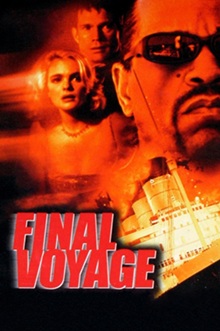
Final Voyage (1999, directed by Jim Wynorski)


Aaron (Dylan Walsh) has been hired to sever as a bodyguard for spoiled heiress Gloria (Erika Eleniak) while she takes a cruise.  Things go wrong when Josef (Ice-T) and Max (Claudia Christian) hijack the cruise.  They think that they’ll make a fortune by taking everyone hostage and searching the boat.  Little do they know that the boat is very slowly sinking.  (They would known except they killed the engineers when they first took over.)  Aaron and Gloria have to defeat the terrorists before the boat sinks.

Imagine Die Hard or Under Siege made not with expensive special effects but instead with a healthy supply of stock footage and built not around proven action stars like Bruce Willis and Steven Seagal but instead around the charisma-free Dylan Walsh and you have a pretty good idea why Final Voyage is one of the more forgettable movies to be ripped off from either one of those two films.  At least Dylan Walsh has the excuse of being miscast.  Erika Eleniak actually was in Under Siege and still seems clueless as to what she’s supposed to be doing during Final Voyage.  Ice-T is an amusing villain and the movie opens with a gunfight on an airplane that is so poorly choreographed and improbable that it becomes entertaining to watch.  Otherwise, Final Voyage is a cruise best not taken.

This is a Jim Wynorski film so there’s plenty of gratuitous bra and cleavage shots for those who are specifically looking for that.  Jim Wynorski definitely has a style and he manages to bring it to every film that he makes, even when it doesn’t really make sense for the story being told.  Give Wynorski this, he understands why people are watching his movies.

SECRETARIAT (2010) – The greatest racehorse of all time?


I’ll admit that I’m not a huge fan of horse racing, although I will periodically go to the Oaklawn Racetrack in Hot Springs, AR, and watch them run. I did enjoy the horse racing movie SEABISCUIT (2003) when I saw it a decade or so ago, and I always enjoy driving past the beautiful horse farms in Lexington, KY, when I’m on my way to see my wife’s family in West Virginia. This weekend was the Kentucky Derby, and I saw a stat that every horse running is a descendant of the 1973 triple-crown winner, Secretariat. I thought that was pretty cool stuff. I told my wife about it, so we decided to watch the movie SECRETARIAT (2010) this morning. 

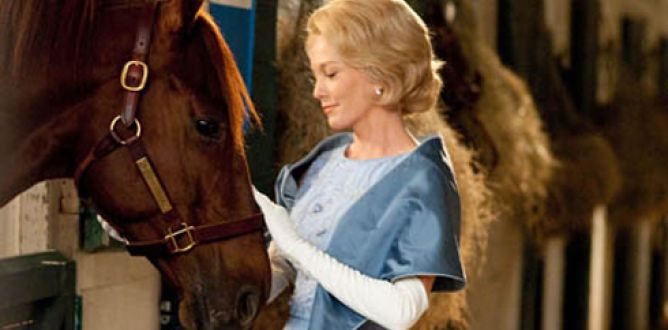
The film centers on Penny Chenery Tweedy (Diane Lane), a Boulder, CO housewife who takes over the management of her dad’s horse stables in Virginia when his health gets so bad that he can no longer handle it himself. The business is facing a lot of financial problems, and her husband just wants her to sell everything and come on back home. But Penny doesn’t want to sell, especially when the stable acquires a young colt that just may have to the right combination of speed and stamina to become a great racehorse. Wanting to see her horse get a chance to run, she hires eccentric trainer Lucien Laurin (John Malkovich) and the aggressive jockey Ron Turcotte (Otto Thorwarth) in order to give “Secretariat” a chance to reach his potential. And boy does he ever, ultimately becoming the first “Triple Crown” winner in 25 years. 

I’ll go ahead and say that I pretty much got exactly what I was expecting with SECRETARIAT. It’s a “feel-good” movie that made me happy at the end. Outside of him being a triple crown winner, I didn’t know much about Secretariat’s story, so it was fun just seeing how dominant he truly was during his legendary run in 1973. And the performances from the leads are very good. Diane Lane is beautiful and convincing as the housewife determined to give every thing she has to make Secretariat a winner. John Malkovich’s eccentric horse trainer is the kind of role he excels in, and he’s both funny and emotionally engaging. I liked Otto Thorwarth and Nelson Ellis as Secretariat’s jockey and groomer, respectively. Each of them had their individual moments to shine. I also wanted to mention how impressive the camerawork is during the racing sequences. For a film like this to be exciting, the races have to be exciting and director Randall Wallace and cinematographer Dean Semler deliver in spades. If I had any complaint about the film, it would probably be the oversimplification of some of the supporting characters. For a film based on a true story, it was odd to see the owner of Secretariat’s primary competition reduced to almost a comic book villain in his behavior. That aside, I enjoyed the film and I’m glad I watched it. 

I’ve include the trailer for SECRETARIAT below:

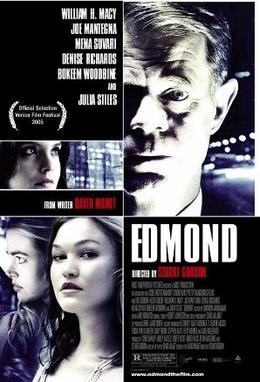
Days of Paranoia: Edmond (dir by Stuart Gordon)


Based on a one-act play by David Mamet, 2005’s Edmond tells the story of Edmond Burke (William H. Macy).

Edmond shares his name (if not the actual spelling) with the philosopher Edmund Burke.  Edmund Burke was a strong believer that society had to put value in good manners to survive and that religious and moral institutions played an important role in promoting the idea of people treating each other with respect and decency.  Edmund Burke knew what he believes and his writings continue to influence thinks to this day.  Edmond Burke, on the other hand, doesn’t know what he believes.  He doesn’t know who he wants to be.  All he knows is that he doesn’t feel like he’s accomplished anything with his life.  “I don’t feel like a man,” he says at one point to a racist bar patron (played by Joe Mantegna) who replies that Edmond needs to get laid.

On a whim, Edmond steps into the shop of a fortune teller (Frances Bay), who flips a few Tarot cards and then tells Edmond that “You’re not where you’re supposed to be.”  Edmond takes her words to heart.  He starts the night by telling his wife (played by Mamet’s wife, Rebecca Pidgeon) that he’s leaving their apartment and he won’t be coming back.  He goes to the bar, where he discusses his marriage with Mantegna.  He goes to a strip club where he’s kicked out after he refuses to pay $100 for a drink.  He goes to a peep show where he’s frustrated by the glass between him and the stripper and the stripper’s constant demand that he expose himself.  He gets beaten in an alley by three men who were running a three-card monte scam.  Edmond’s problem is that he left home without much cash and each encounter leads to him having less and less money.  If he can’t pay, no one wants to help him, regardless of how much Edmond argues for a little kindness.  He pawns his wedding ring for $120 but apparently, he just turns around and uses that money to buy a knife.  An alley-way fight with a pimp leads to Edmond committing his first murder.  A one-night stand with a waitress (a heart-breaking Julia Stiles) leads to a second murder after a conversation about whether or not the waitress is actually an actress leads to a sudden burst of violence.  Edmond ends up eventually in prison, getting raped by his cellmate (Bookem Woodbine) and being told, “It happens.”  Unable to accept that his actions have, in one night, led him from being a businessman to a prisoner, Edmond says, “I’m ready to go home now.”  By the end of the film, Edmond realizes that perhaps he is now where he was meant to be.

It’s a disturbing film, all the more so because Edmond is played by the likable William H. Macy and watching Macy go from being a somewhat frustrated but mild-mannered businessman to becoming a blood-drenched, racial slur-shouting murderer is not a pleasant experience.  Both the play and the film have generated a lot of controversy due to just how far Edmond goes.  I don’t see either production as being an endorsement of Edmond or his actions.  Instead, I see Edmond as a portrait of someone who, after a lifetime of being willfully blind to the world around him, ends up embracing all of the ugliness that he suddenly discovers around him.  He’s driven mad by discovering, over the course of one night, that the world that is not as kind and well-mannered as he assumed that it was and it all hits him so suddenly that he can’t handle it.  He discovers that he’s not special and that the world is largely indifferent to his feelings.  He gets overwhelmed and, until he gets his hands on that knife, he feels powerless and emasculated.  (The knife is an obvious phallic symbol.)  It’s not until the film’s final scene that Edmond truly understands what he’s done and who he has become.

Edmond is not always an easy film to watch.  The second murder scene is truly nightmarish, all the more so because the camera remains on Edmond as he’s drenched in blood.  This is one of William H. Macy’s best performances and also one of his most disturbing characters.  That said, it’s a play and a film that continues to be relevant today.  There’s undoubtedly a lot of Edmonds out there.