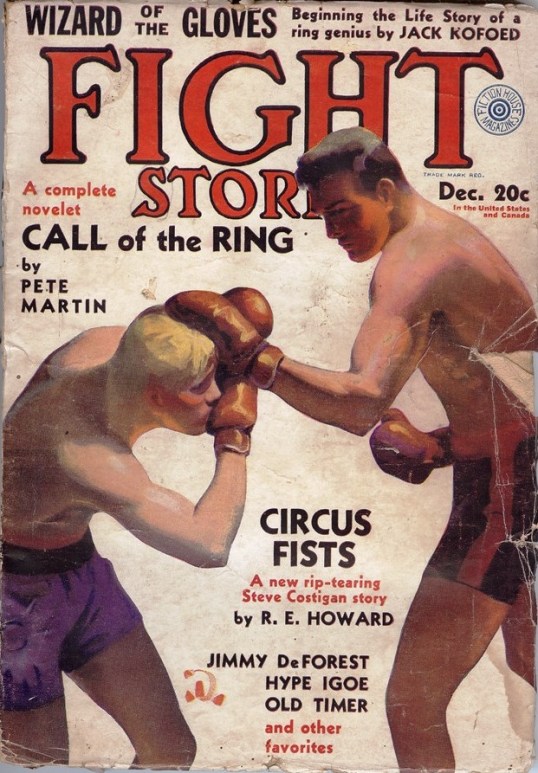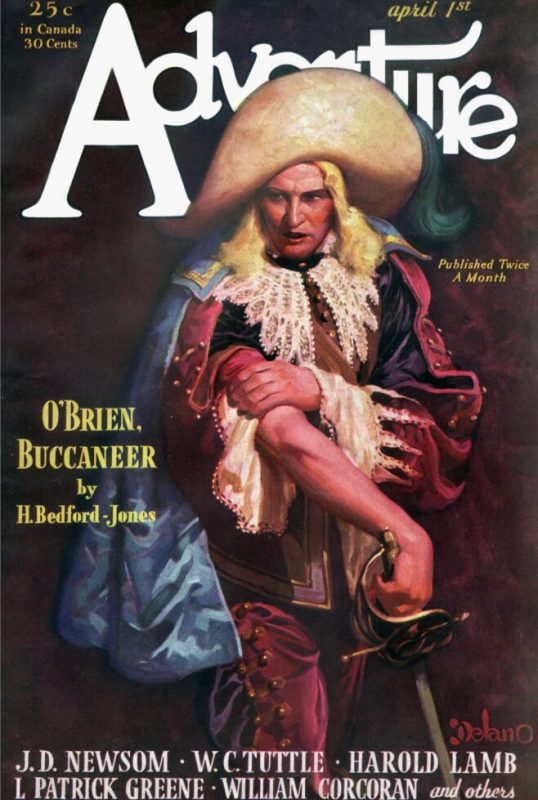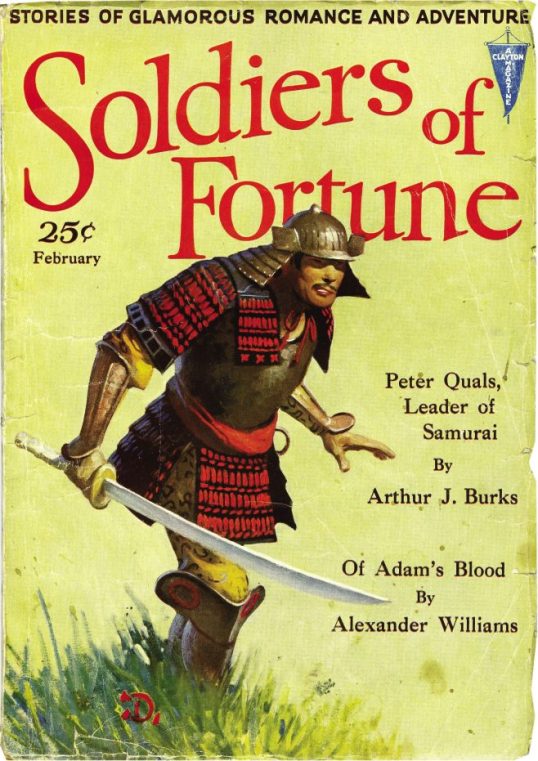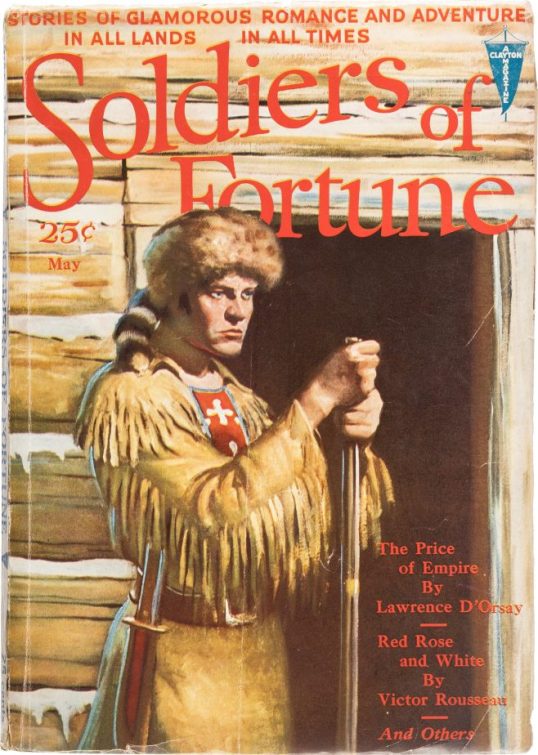
Artist Profile: Gerard C. Delano (1890 — 1972)


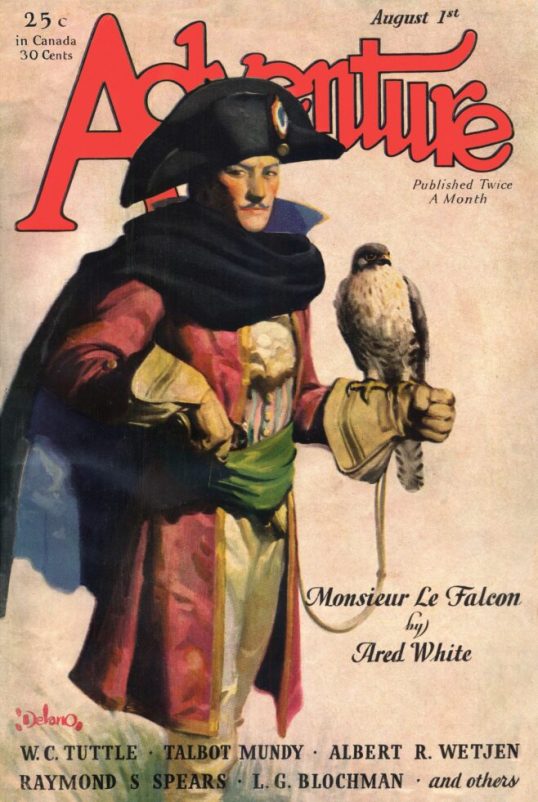
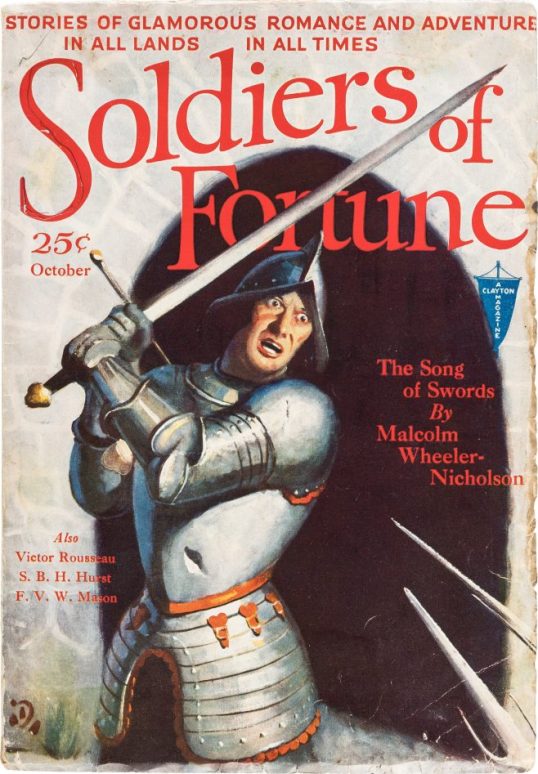
As a painter, Gerard C. Delano was best-known for his paintings of the Navajo people and their way of life.  Before he took up painting, he worked as an illustrator and cover artist for several pulp publications.  He was educated at the Art Students League of New York and the Grand Central School of Art.  He is often credited as being the first western artist to regularly include cactus in the background of his paintings.

Here’s a small sampling of Delano’s work for the pulps.

Icarus File No. 33: A Chorus Line (dir by Richard Attenborough)


A Chorus Line always leaves me feeling angry.

Now, I should make clear that I’m talking about the 1985 film adaptation and not the show that ran for 6,137 performances on Broadway.  The original show was a tribute to the so-called Broadway gypsies, the dancers who went from show to show and performed anonymously behind the star.  It was a portrait of both the veteran performers and the young up-and-comers who still dreamed of someday moving out of the chorus and becoming stars on their own.  When it opened in 1975, it was considered to be groundbreaking in its frankness about things like sexuality and aging.  It featured heartbreaking monologues and, even more importantly, amazing songs.  The show was a true tribute to people who lived to be on stage.

The movie, on the other hand, is about a jerk of a director named Zack (Michael Douglas) and his ex-girlfriend, a rather self-absorbed dancer named Cassie (Alyson Reed).

My main issue with the film can be seen right at the start.  We watch as a large group of dancers are put through a strenuous audition process.  Everyone is working hard, trying to make an impression on Zack in the little time that they have.  Zack sits in the darkness of the theater, a malevolent presence with a sharp, cigarette-shaped voice.  Most of the dancers will only know him as the pitiless voice that dismisses them from the audition.  We watch as everyone pushes themselves.  The older dancers try to ignore the aches and pain that come with age.  The younger dancers are desperate to finally get their big break.  It’s an exciting sequence, one that shows just how much hard work goes into even getting through the auditions to be a finalist for a part in the chorus.

The only dancer who isn’t there is Cassie.  Cassie has just flown into New York.  She’s stuck in traffic.  She doesn’t arrive until towards the end of the initial eliminations.  She is greeted by the assistant choreographer, Larry (Terrence Mann, who gives one of the better performances in the film).  At first, Zack refuses to allow Cassie to audition.  Cassie says she needs the job.  Zack replies that she’s too good to just be a member of the Chorus Line.

Now, actually, Zack is right about one thing.  Cassie should not be allowed to audition.  But it’s not because she’s too good to be in the chorus.  She shouldn’t be allowed to audition because she didn’t show up on time!  She’s showed up late!  There are sixteen finalists and only 8 spots available.  The other finalists showed up on time and have spent the entire day dancing and proving themselves.  They’ve worked hard for their spot.  They fought for the opportunity.  Cassie just shows up late and basically acts as if she’s entitled to take away one of their spots.

We’re continually told that Cassie is special but we don’t really see any evidence of it.  A lot of that is because the film was rather stodgily directed by Richard Attenborough, who stages each scene in a way that makes everyone — including Cassie — seem rather bland.  One wishes the film could have been directed by a Bob Fosse or a Stanley Donen or a Vincente Minnelli or even a Rob Marshall.  All four of those director knew (or, in Marshall’s case, know) how to shoot a dance number so that the dancer’s personality and skill comes through.  Under Attenborough’s direction, everyone comes across as being vaguely generic.  Indeed, Attenborough focuses the film so much on Zack and Cassie’s relationship that the other performers get pushed to the side.  Some of the show’s best songs are either not featured or just occur in the background.  Attenborough’s film takes a show that was meant to be a celebration of an ensemble and instead turns it into a star vehicle.

Both the film and the show end with a rather heart-breaking scene in which 8 dancers are told to step forward before Zack thanks them for their time and sends them home.  In the show, it’s reflection of life on Broadway.  The director picks who he thinks is best for the show.  Sometimes, that means that a likable or talented actor is still not cast.  In the film, it feels cruel because we notice that Zack sent home 8 dancers who showed up on time and worked hard but still made room for Cassie, who didn’t.  (Notably, in the show, Cassie and Zach had the same relationship as in the film but Cassie also showed up on time for the audition.)  Now, I will say that Zach casting someone with whom he had a personal relationship over someone who he didn’t is probably realistic but it’s still annoying.

It’s debatable whether A Chorus Line could have ever been made into an effective film.  That said, picking Richard Attenborough to direct and an apparently disinterested Michael Douglas to star certainly didn’t help matters.

Previous Icarus Files:

  1. Cloud Atlas
  2. Maximum Overdrive
  3. Glass
  4. Captive State
  5. Mother!
  6. The Man Who Killed Don Quixote
  7. Last Days
  8. Plan 9 From Outer Space
  9. The Last Movie
  10. 88
  11. The Bonfire of the Vanities
  12. Birdemic
  13. Birdemic 2: The Resurrection 
  14. Last Exit To Brooklyn
  15. Glen or Glenda
  16. The Assassination of Trotsky
  17. Che!
  18. Brewster McCloud
  19. American Traitor: The Trial of Axis Sally
  20. Tough Guys Don’t Dance
  21. Reach Me
  22. Revolution
  23. The Last Tycoon
  24. Express to Terror 
  25. 1941
  26. The Teheran Incident
  27. Con Man
  28. Looker
  29. 1776
  30. Here
  31. The Adventures of Brisco County, Jr.
  32. The Cable Guy

Film Review: The Music Machine (dir by Ian Sharp)


In 1979’s The Music Machine, Gerry Pearson (Gerry Sundquist) is a directionless young man who is living in Camden, North London.  He lives with his parents (Brenda Fricker and Johnnie Wade) and he really doesn’t have much to look forward to in life.  He can spend his days living on the dole or he can get a job that will leave him with no hope for advancement.  It’s London.  It’s England.  It’s 1979.  There’s no chance for moving up in the world.  The only thing that Gerry has going for him is that he loves to dance at London’s most low-key discotheque, The Music Machine.

Wow.  Trust the British to make a depressing disco movie!

Actually, that’s not quite fair.  The Music Machine was obviously inspired by Saturday Night Fever and, once you get past the image of John Travolta in that white suit, that’s not a particularly happy movie either.  Indeed, one could argue that Saturday Night Fever is even more depressing than The Music Machine.  I mean, in Saturday Night Fever, Barry Miller jumps off a bridge and John Travolta spends the entire film treating Donna Pescow like crap.  Even Karen Lynn Gorney isn’t smart enough to realize that she was insulted by Laurence Olivier.  Travolta may look good in that white suit but he ultimately ends up sitting alone on a subway with a big bandage on his face.

That said, Saturday Night Fever is not an unbearable depressing film to watch.  That’s because the film’s narrative moves with an infectious energy, there are small moments of humor that lighten the mood, and Travolta gives such a charismatic performance as Tony that it’s hard not to forgive him even when he’s at his worst.

Unfortunately, The Music Machine doesn’t really have any of that.

It does have a plot that closely follows Saturday Night Fever.  Gerry wants to win a dance contest and the chance to appear in a film.  His partner is the sophisticated Claire (Patti Boulaye).  Whereas Tony Manero had the confidence to come up with his own moves, Gerry is mentored by DJ Laurie (a youngish Clarke Peters, who would later go on to appear in The Wire and Da Five Bloods).  Unfortunately, the film itself never comes close to capturing Saturday Night Fever‘s relentless narrative drive and, in the lead role, Gerry Sundquist comes across as being more petulant than smoldering.  If we forgave Tony Manero his missteps because he seemed to be so committed to his dancing, it’s harder to forgive Gerry because he’s just so whiny.  The Music Machine soundtrack is full of generic disco tunes.  There’s no Bee Gees.  There’s no Yvonne Elliman.  There’s not even a Fifth of Beethoven!

Of course, the main problem with The Music Machine is that it’s painfully obvious that Gerry Sundquist didn’t know how to dance.  That’s a bit of problem when the entire movie is supposed to be a celebration of moving with the music.  The director handles Sundquist’s lack of dancing ability by filming him from the waist up and having the other dancers move around him.  It doesn’t help.  In fact, it just makes you even more embarrassed for him.  Watching this film, I thought about how, in Silver Linings Playbook, the whole point of the dance scene was that Bradley Cooper and Jennifer Lawrence were terrible dancers but they still went out and gave it their all without apology.  In that case, it was charming.  In the case of The Music Machine, you just feel bad for everyone else on the dance floor.

Oh, this review is becoming so negative!  I don’t like ending on a negative note so let me just say that Clarke Peters’s charisma shines through.  He’s definitely the best part of the film.

Join #MondayMania For Secrets In The Air!


Hi, everyone!  Tonight, on twitter, I will be hosting one of my favorite films for #MondayMania!  Join us for 202o’s Secrets In The Air (a.k.a. Mile High Escorts)!

You can find the movie on Prime and then you can join us on twitter at 9 pm central time!  (That’s 10 pm for you folks on the East Coast.)  See you then!

Scenes That I Love: Tony Soprano Dreams Of A House In The Sopranos


With our annual Horrorthon starting in three days, I thought that this would be an appropriate time to share a creepy scene that I love from The Sopranos.

The Sopranos was well-known for its dream sequences. For me, this dream from the season 4’s Calling All Cars is one of the best and scariest of the series. It’s full of menace and ominous atmosphere, from the minute we see Tony being led to the house by the deceased Ralphie. And then, when that mysterious shadow appears on the staircase — AGCK!

I look forward to inviting you inside the TSL House of Horrors this October.

4 Shots From 4 Films: Special Horrorthon Preview


4 Or More Shots From 4 Or More Films is just what it says it is, 4 shots from 4 of our favorite films. As opposed to the reviews and recaps that we usually post, 4 Shots From 4 Films lets the visuals do the talking!

With October approaching, it will soon be time for our annual Horrorthon here at the Shattered Lens.  We’ve been working hard getting things ready!  Here are 4 shots from 4 of the many films that we will be reviewing this October.

4 Shots From 4 Horror Films

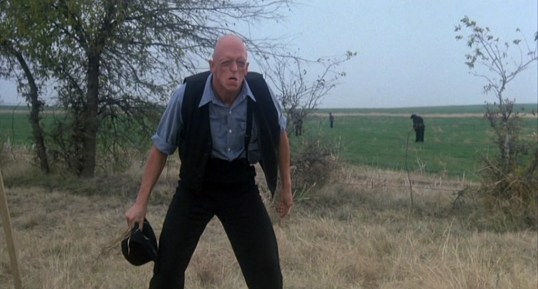
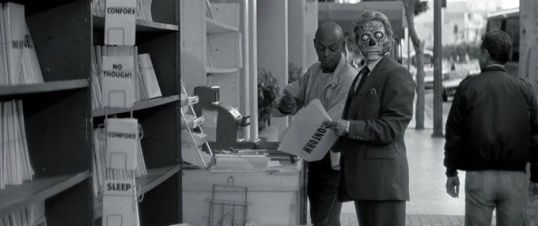
The Mist (2007, dir. by Frank Darabont)

Deadly Blessing (1981, dir by Wes Craven)

They Live (1988, dir by John Carpenter)

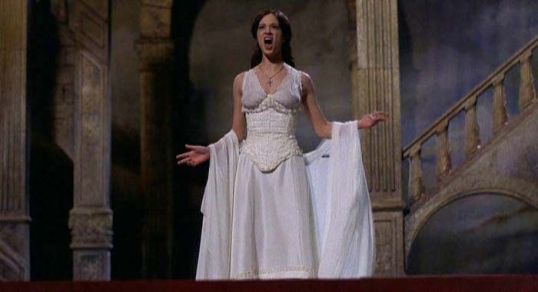
The Phantom of the Opera (1998, dir by Dario Argento)

Monday Live Tweet Alert: Join Us for A Better Tomorrow!


As some of our regular readers undoubtedly know, I am involved in hosting a few weekly live tweets on twitter and occasionally Mastodon.  I host #FridayNightFlix every Friday, I co-host #ScarySocial on Saturday, and I am one of the five hosts of Mastodon’s #MondayActionMovie!  Every week, we get together.  We watch a movie.  We snark our way through it.

Tonight, for #MondayActionMovie, the film will be John Woo’s A Better Tomorrow!

If you want to join this watch party, just hop onto Mastodon, pull up A Better Tomorrow on YouTube, start the movie at 8 pm et, and use the #MondayActionMovie hashtag!

Enjoy!

Film Review: o.k. (dir by Michael Verhoeven)


A German film from 1970, o.k. opens with a black-and-white shot of a group of men walking into a two-story house that’s sitting near a forest. The camera tracks them as they walk through the front hallway and enter a larger room. Uniforms of the U.S. Army hang on a rack in the room. Members of a film crew greet the men. A young woman sits quietly at a window and looks at the forest outside.

One by one, the men turn to the camera and introduce themselves. They give their name, their age, their religion, and their marital status. Two say that they are Roman Catholic but are no longer members of the Church. One Protestant says that he also no longer attends services. Another actor introduces himself as being a 28-year-old virgin and then briefly looks as if he regrets his candor. Director Michael Verhoeven joins the men to explain that the film we are about to see was filmed in Bavaria but it takes place in Vietnam. The film is based on an actual incident that occurred in 1966, when the Vietnam War was still in its early stages. While on patrol, four soldiers abducted, raped, and killed a young Vietnamese girl. Only one soldier refused to take part and reported the incident to his superiors, all of whom said that it was simply the type of incident that takes place in all wars.

(Known as the Incident on Hill 192, this crime also served as the basis of Brian De Palma’s far more straightforward Casualties of War.)

I have to admit that my first reaction to this was to think, “I’m not sure if I’m in the mood to be lectured about war crimes by the Germans.” However, one gets the feeling that Verhoeven himself knew that this would be the reaction of quite a few viewers and he was prepared for it. His actors explain that they didn’t film in Vietnam because Vietnam is “far away.” Instead, they filmed in Bavaria because “Here is closer.” I found myself thinking about that turn of phrase quite a bit as I watched o.k. “Here is closer.” o.k. may have been inspired by what happened in Vietnam but it was also about what happens in every war. The American soldiers, who have lost their humanity to war, all have American names but the actors make no effort to hide their German accents. The Vietnamese girl who was killed is played by German actress Eva Mattes and, again, no attempt is made to hide the fact that she is German. The characters emerge as universal soldiers and universal victims, playing out the same cycle, war after war. Verhoeven is not attacking America. He’s portraying the cost of tossing people into a situation where they have no control over their fates. The soldiers adopt a philosophy of kill-or-be-killed. Civilians, like Phan Ti Mao (played by Mattes), have no choice but to try to live in the middle of a war zone. The film is simply-told and starkly shot. We are continually reminded that we are watching a film, a production. We’re put at a distance and asked to just consider the film’s story and message without having the benefit of any of the usual war movie clichés or adrenaline-fueled action scenes to provide us with an emotional escape. Here is closer.

o.k. engendered more than a little controversy when it was released. It was entered into the 1970 Berlin Film Festival. Director George Stevens was the head of the jury that year and he led an effort to have the movie removed from competition. He cited a festival by-law that stated that the films at the festival should “contribute to a better understanding between nations.” When the jury voted 7-2 to remove o.k., the other filmmakers at the festival withdrew their films in solidarity and the Berlin Film Festival was canceled for that year. o.k. was later submitted as Germany’s entry for the Best Foreign Language Film Oscar (as it was known back then) but it was not nominated.

Seen today, o.k. can sometimes seem a bit too studied for its own good but again, that was the point. It was a film that was deliberately made to force the audience to consider the production’s anti-war message without the benefit of easy sentiment. That said, it makes its argument effectively. It’s a film that epitomizes its own difficult era.


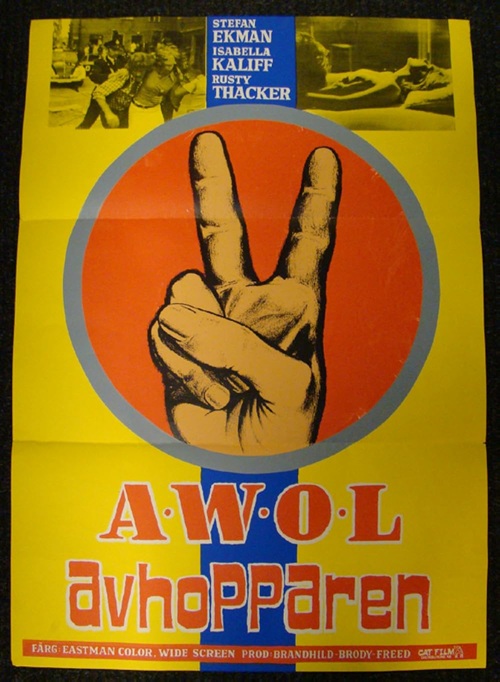
Film Review: AWOL (dir by Herb Freed)


1972’s AWOL tells the story of an American soldier named Willy (Russ Thacker) who decides that he’s no longer going to fight in Vietnam. He goes to Sweden and informs the police that he has decided to desert. The bored policeman tells him to stay out of trouble. “No narcotics,” he says. “Of course,” Willy says, shocked to discover just how easy it is to desert.

Willy struggles to adapt to life in Sweden. At first, he has fun seeing the sights and wearing a silly little hat and visiting the carnival. Unfortunately, he has little money and no friends, and he soon finds himself feeling lonely. A job working on an adult film leads to him meeting another American expatriate, Mohammed G (Glynn Thurman). Mohammed introduces Willy to his friends, a group of rather shallow Leftists. Willy starts a relationship with Inga (Isabella Kaliff). They don’t agree on the merits of Che Guevara, but they fall in love anyway.

(Just a quick sidenote: Che was a racist butcher who executed thousands of innocent Cubans and who is only remembered today because of one good picture and the fact that he was executed by the Bolivians. The fact that he’s held up as some sort of icon is proof of just how shallow most political activists actually are.)

Meanwhile, the CIA wants Willy to come back home. A corpulent agent with the name of Cupp (Dutch Miller) continually appears and tries to bribe Willy into returning. He promises that nothing bad will happen to Willy if he returns to America. At worst, he’ll be required to do a few months of therapy. When that doesn’t work, Cupp drags Willy to his station house and has Willy’s parents appear on television. There’s a big moose head on the wall of the station house and its eyes glow red.

AWOL‘s a bit of an odd film, which should not be taken to mean that it’s necessarily an interesting film. The tone is all over the place. Willy and Mohammed discuss America and whether or not they can love the country from which they’ve fled. Cupp appears and uses a mini-camera hidden in his class ring to take pictures of Willy and Inga. Willy and Inga get a falling in love montage, complete with a syrupy ballad. Cupp offers Willy a briefcase full of American candy bars and soft drinks. There is footage of a demonstration. There are moments of goofy humor, and Russ Thacker wanders through the film with a somewhat dazed look on his face, a Vietnam-era Candide, a stranger in a Swedish land. The film ends on a dark note, leaving one to wonder if the film is trying to punish us for smirking at the shallowness of its politics. It’s not necessarily a good film, but it is definitely a film of its time.

AWOL was directed by Herb Freed, who got his start in commercials and later went on to direct the classic slasher, Graduation Day. The film was obviously meant to appeal to a combination of hippies and fans of Swedish sex films. That said, the sex is fairly tame and the film itself doesn’t seem to really have much affinity for the counterculture. If anything, the film’s Leftists come across as being so self-righteous that they make the openly amoral CIA agent seem likable by comparison. It’s tempting to compare this film to An American Hippie In Israel. An American Hippie was also a counter-culture film about a soldier who was traumatized by Vietnam and, like AWOL, it was tonally all over the place. But An American Hippie In Israel worked because, whatever else you might want to say about it (and I love the film), it’s actually sympathetic to the main character and his plea for people to “stop pushing buttons.” AWOL, on the other hand, doesn’t seem to even like Willy, much less understand him.

AWOL is very much a film of its time and, when it is interesting, it’s interesting as a portrayal of the early 70s. It’s a time capsule, one that is fit to be dug up and investigated at least once before being forgotten about again.