The TSL Horror Grindhouse: Psychomania (dir by Don Sharp)


In 1973’s Psychomania, Tom Latham (Nicky Henson) is the leader of The Living Dead, a motorcycle gang identified by their skull masks, their bad attitude, and their bizarre love of folk music. Under Tom’s leadership, the members of The Living Dead terrorize the small English town in which they live. They also spend a lot of time hanging out at the cemetery. Tom is death-obsessed. While talking to his girlfriend, Abby (Mary Larkin), Tom suggests that they should kill themselves. “Not that again, Tom,” Abby sighs.

One of the more clever aspects of Psychomania is that, for all of his attempts to be a nihilistic rebel who refuses to conform to the demands of society, Tom is actually a spoiled rich kid who is devoted to his mother (Beryl Reid) and who is still looked after by his butler, Shadwell (George Sanders). Tom’s followers may all be from the lower classes, but Tom most definitely is not. Instead, Tom is very much aware that his mother and Shadwell worship a toad god that can give its followers eternal life, but only if they kill themselves first. After Tom does kill himself, the members of The Living Dead bury him sitting on his motorcycle. He later bursts out of the ground on that same motorcycle and leads his followers on a rampage. Soon, nearly every member of The Living Dead has committed suicide and come back to life as an immortal. The only holdout is Abby.

Psychomania is an enjoyable, chaotic combination of genres. When they first appear, Tom and The Living Dead feel as if they came straight over from one of the many British films about the ’60s rivalry between the rockers and the mods. The Living Dead love their motorcycles and their leather jackets, and they’re not going to let anyone tell them what to do. They’re the type of characters who have appeared in countless biker films. It’s easy to imagine Tom looking at himself in a mirror and trying to imitate Marlon Brando as he says, “What have you got?” However, the film then adds a dash of the witchcraft films popularized by Hammer and Amicus in the late ’60s. Indeed, Tom’s fussy mother and the urbanely sinister Shadwell almost feel like parodies of the type of characters who appeared in those films. (It’s impossible not to smile when the giant toad appears.) The Living Dead then literally become the living dead and prove themselves to be just as relentless as the zombies in the films of George Romero. (That said, the self-amused bikers have more in common with the sanity-deprived characters in Romero’s The Crazies than with the shambling corpses of Night of the Living Dead.) The film ends on a note of sudden reversal, one that brings to mind countless Roger Corman films that featured villains who just didn’t know when to quit.

With all those different genres mashed together, it’s no surprise that Psychomania’s tone is all over the place. Moments of humor and parody are mixed with scenes of the resurrected Living Dead terrorizing their small town and Tom’s mother worrying, along with Shadwell, that perhaps Tom was too immature to be given immortality. Between the suicide montage, the giant toad, and the sight of Tom being buried while sitting on his motorcycle, Psychomania is relentlessly strange and all the more enjoyable for it. Director Don Sharp doesn’t let the action lag, and the film’s mix of bright color, biker imagery, and campy magic combine to make it a truly enjoyable work of pop art.

George Sanders committed suicide shortly after completing this film. He left behind a note that reportedly read, “I’m bored.” He doesn’t have a huge role in Psychomania, but his performance is one of the most memorable things about the film. He imbues Shadwell with a wonderful sense of arch disdain. He may have raised Tom, but that doesn’t mean he has to like him.
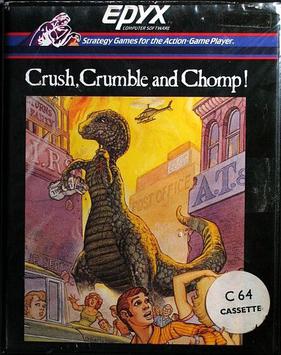
Horror Game Review: Crush, Crumble, and Chomp! (1981, Epyx)


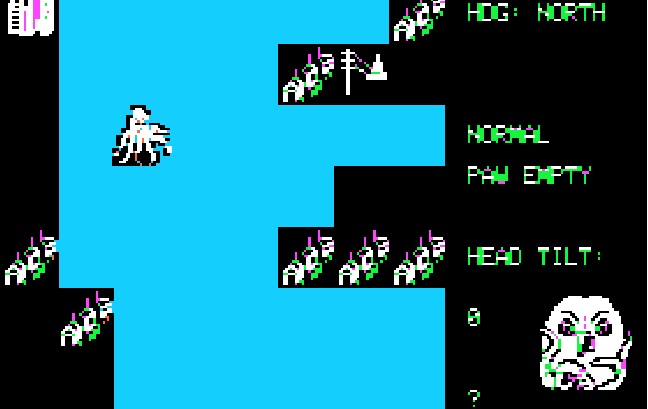
Crush, Crumble, and Chomp! is a terrifically addictive old-school PC game where you get to play the role of a giant monster and destroy the city of your choice. (Actually, your choices are pretty much limited to New York, San Francisco, and Tokyo.) You can play as a famous movie monster like Godzilla or you can create a monster of your own. As Serpentor the Giant Snake, I terrorized New York. As Swampy the Sea Monster, I terrorized San Francisco. As Tony Roboto, I terrorized Tokyo with mechanical precision.

Now, to be clear, when I say that this is an old-school PC game, I mean it’s very old school. Don’t bother trying to point-and-click. This game is totally keyboard-driven and, since it’s 45 years old, it’s not like there’s a manual lying around with all the commands in a neat list. I had to play the game a few times and push a lot of random buttons to learn just how to make my monster move from one part of the map to the other. But it was all worth it. Once you do learn that M is for move and L is for changing direction and that pushing G allows you to grab people and eat them, the game becomes very easy to learn.

If you create your own monster, you’ll be given a set of points and some powers to buy. Don’t make the mistake of buying every expensive power that you see because you’re also going to need to use whatever points you have left over to set how quickly your monster heals and how tough its hide is. Of the powers, I suggest purchasing the supersonic scream and the power to zap helicopters. The supersonic scream can destroy enemies even if they’re not in the square adjacent to you. As for the helicopters, they appear to be your greatest foe. They’re difficult to grab. Better just to zap them.

Once you get used to it and feel confident with the keyboard (and I do suggest keeping a list of what happens when you push each button), Crush, Crumble, and Chomp! is a monstrous good time. It can be played at the Internet Archive.

Wonder Woman (1974, directed by Vincent McEveety)


A set of code books revealing the identities of all of America’s secret agents has been stolen. Because the agents are all in deep cover, the government has no way to contact them and warn them that their identities have been compromised. Government agent Steve Trevor (Kaz Garas) has received a ransom demand. Rather than just pay, he assigns the case to his best operative, Diana Prince (Cathy Lee Crosby). Most people think that Diana is Steve’s secretary, but actually she’s an Amazon from Paradise Island who has been sent to America to show the world the value of women. Diana heads to Paris to investigate the mysterious Abner Smith (Ricardo Montalban) and his main operative, George (Andrew Prine).
Before Gal Gadot and Lynda Carter, there was Cathy Lee Crosby. The former tennis player turned actress was the first to play Wonder Woman in a made-for-television movie that was a pilot for a possible series. Cathy Lee Crosby’s Wonder Woman did not wear the famous costume, she did not carry a golden lariat, and she never flew in an invisible plane. Her only superpower was that she was athletic. She was also blonde. In fact, if not for the title of the movie, you wouldn’t know she was Wonder Woman at all. She’s a female James Bond. When the movie aired, it got respectable ratings, but it wasn’t the hit that some expected. Later, another made-for-TV movie was produced with Lynda Carter in the role. That movie stayed true to the comic-book version of the character and led to the fondly remembered television series.

As for this first version of Wonder Woman, it’s an acceptable spy thriller if you can ignore that it’s being sold as a Wonder Woman show. Cathy Lee Crosby had just the right mix of spunky but serious attitude to play a spy in a cheap 1970s production. I liked Ricardo Montalban and Andrew Prine as the villains, though I thought it was funny that they kept trying to hide Montalban’s face. As soon as I heard his voice, I knew it was him. Diana also faces off against Ahnjayla (Anitra Ford), an Amazon gone bad. The funniest scene in the movie is when Diana is approached on a city street by an Amazon messenger who tells her that Ahnjayla has left Paradise Island. None of the people walking nearby seem to think it’s strange that a woman in a blue toga has suddenly appeared.

Cathy Lee Crosby did her best, but Lynda Carter is still the definitive Wonder Woman.

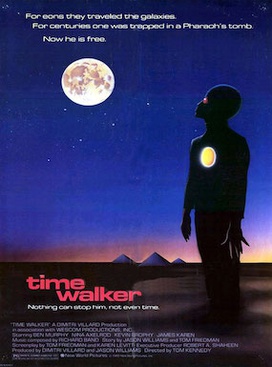
Time Walker (1982, directed by Tom Kennedy)


While exploring the Egyptian tomb of King Tut, Prof. Douglas McCadden (Ben Murphy) finds a previously undiscovered chamber and a sarcophagus with a mummy inside. He takes the sarcophagus back to the California University of the Sciences, where he discovers that the mummy is covered in a dangerous green fungus. McCadden orders everyone not to touch the mummy. However, one of his students decides to steal the jewels that were buried with the mummy and also gives it a strong dose of X-ray radiation. The mummy, which was actually a hibernating alien, comes back to life and is soon causing havoc on campus. Frat boys and mummies make for a dangerous combination!

Time Walker was released in 1982 and features plenty of scantily clad coeds and green-tinted stalking scenes shot from the mummy’s POV. But the movie itself has more in common with the old Hammer and Amicus films than with the Friday the 13th era. The mummy is a throwback to the kind of monsters that used to haunt horror movies, and its alien origins bring to mind an old Quatermass serial, with Ben Murphy’s prickly American scientist serving as a stand-in for Quatermass himself. The idea of an extraterrestrial crash-landing in ancient Egypt and being buried in a pharaoh’s tomb is an interesting one. It’s just too bad that the film’s half-baked script and Tom Kennedy’s uneven direction don’t really do it justice.  This was Tom Kennedy’s only film as a director.  He was best-known for being one of Hollywood’s premier advertising men, overseeing the trailers for both the Indiana Jones films and the early Star Trek films.

Time Walker tries to be a little of everything: an homage to the old mummy movies, a slasher, and finally a sci-fi film about how humans should be nicer when greeting visitors from another planet. There are a few dependable character actors in the mix (it’s always good to see James Karen), but Ben Murphy is bland in the lead. The film ends on an overdramatic note and with the promise of “To be continued.”

The story would not be continued, but Time Walker later found new life and a new title when it showed up on Mystery Science Theater 3000 as Being From Another Planet. The joke I always remember from that episode is Joel Hodgson suggesting that the mummy was actually Pete Duel. Even Tom Servo and Crow were shocked.

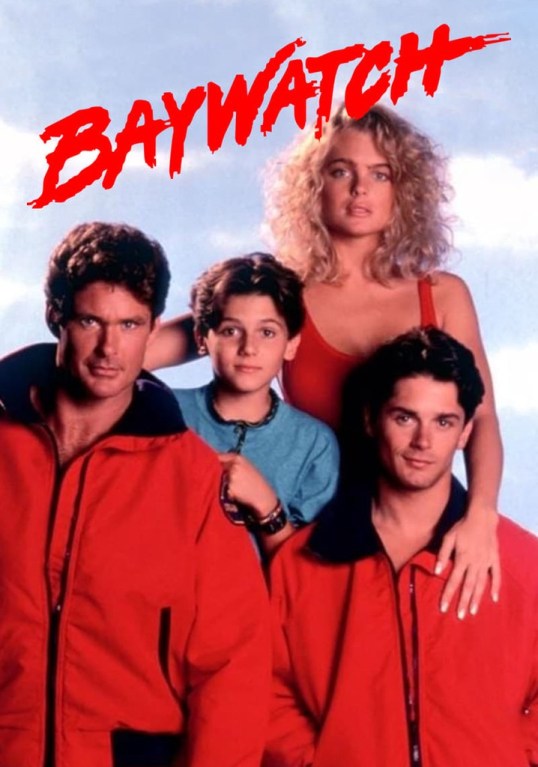
Retro Television Review: Baywatch 2.22 “Summer of ’85”


Welcome to Retro Television Reviews, a feature where we review some of our favorite and least favorite shows of the past!  On Saturdays, I will be reviewing Baywatch, which ran on NBC and then in syndication from 1989 to 2001.  The entire show can be viewed on Tubi.

This week, season 2 comes to an end!

Episode 2.22 “Summer of ’85”

(Dir by Michael Berk, originally aired on May 18th, 1992)

This was the second-season finale, and it is an odd note to end on. David Hasselhoff is billed and never appears. Baywatch without Mitch is already a strange choice for a season finale; making the hour an Eddie-and-Shauni murder-mystery-slash-old-flame reunion makes it stranger. Tom McTigue’s Harvey has a prominent role in this episode but Hasselhoff, the show’s center of gravity is missing, and you feel it.

As for the plot: frustrated by life on a cramped boat and partly at Harvey’s urging, Shauni drags Eddie to a psychic named Rosalind (the one and only Toni Basil!). Eddie is a skeptic. When Rosalind tells him he will soon meet his first true love, Eddie says that Shauni already is. Rosalind disagrees.

Soon afterward, Eddie spots a woman sketching on a sailboat who looks painfully familiar. He is sure she is Lorna Cosgrove (Michelle Rogers). Eddie was fifteen when he first met her while vacationing at a friend’s place on Nantucket. Lorna asked if she could paint him. He agreed. Eventually he lost his virginity to her but, later that night, he saw an older man at her door, got jealous and never spoke to her again.

When Eddie approaches the woman, she denies being Lorna and calls herself Caitlin. The next day, she pays a boy to deliver a copy of the painting to Eddie’s tower. That not only proves she is Lorna; it also proves she was a terrible painter. I have seen motel art more impressive than her portrait of Eddie fishing.

Shauni is suspicious, and with good reason. There is a warrant for Lorna’s arrest. The same night Eddie slept with her, her husband was shot, and Lorna was the prime suspect. Can Eddie prove she is innocent?

That continuity, for those who care about that sort of thing, in this episode is a mess. In “Point of Attack,” Eddie claimed he did not even see the ocean until he was nineteen.  The first season established that he was Philadelphia street kid who grew up in the foster system.  And yet, in this episode, here he is at fifteen, on Nantucket, fishing, posing, and losing his virginity in a beach house. As well, this episode plants Shauni and Eddie on a houseboat, with Shauni announcing that they have to get an apartment. The previous episode, “Game of Chance,” had just moved her onto that boat after a fight with her father. Earlier in the season, though, the show had already treated them as live-in partners, sometimes in an apartment. Continuity be damned, I guess.  It’s almost as if the show’s writers just didn’t care.

In the end, Baywatch without Hasselhoff is pointless. That said, Toni Basil is amusing as Rosalind.  This is definitely a case of a performer giving a better performance than the material deserved.

That closes the first syndicated season of Baywatch, and the second season of the series overall. For the most part, season 2 was dumb and fun. The best episodes used Hasselhoff’s innate earnestness. The worst got too cutesy, especially “Now Sit Right Back and You’ll Hear a Tale,” the one where Eddie dreams he is on Gilligan’s Island. Billy Warlock and Erika Eleniak were both adequate as Eddie and Shauni, but neither was happy with the show’s turn once it entered syndication, and that unhappiness often showed.

Next week, we start season 3!

Lifetime For October: Killing All My Sisters (dir by Haylie Duff)


Killing All My Sisters

Oh no. Should Erin or I be worried?

Fortunately, the sisters in the title of this 2024 Lifetime film are not biological sisters. (Or blood sisters, in tribute to the Halloween season.) They’re sorority sisters. Well—one of them is. Most are just pledges, so they don’t really count yet. Don’t get me wrong: killing sorority sisters is still bad. It is simply not as bad as killing a biological sister. Of course, only one sorority sister actually dies on screen, so “all my sisters” is doing a lot of marketing work. It’s a Lifetime film. It happens.

Emily (Isabella Carlsen) is worried because her roommate, tennis phenom Jenna (Muguet Del Toro), is trying to join the Beta sorority. (“Beta forever!” Is that really a good slogan?) Led by Brittany (Grace Patterson), the house is deeply committed to hazing. Emily refused to join after a trust exercise nearly sent her off the roof of a multi-story building. When Jenna disappears, Emily is convinced Brittany’s ex-boyfriend Spencer (Stephen Gray) abducted her. The police won’t take her seriously because Jenna hasn’t been missing a full 24 hours, so Emily drags her artist mother Allie (Muretta Moss) into the search. Becoming a Beta, it turns out, can be dangerous.

Haylie Duff directed. She has starred in enough Lifetime movies that if this had been made ten years earlier, she probably would have played Emily. I have liked some of her other directing work, but Killing All My Sisters falls curiously flat. Too many scenes meander, as if no one had the nerve to tell Haylie the shot added nothing. In a movie that is supposed to be a race against time and which is supposed to be suspenseful, we get a lot of scenes that don’t actually do anything to tighten the drama. Indeed, the narrative often seems to move at a rather casual pace. We get an entire scene of Emily’s mother flirting with the neighbor. It adds up to nothing. I mean, it’s nice that Mom is still making the effort. Emily’s no longer living at home so why shouldn’t a conversation about landscaping turn into more? The scene itself just sits there.

The mystery is easy to solve. There is a bit where Emily announces she has to look for Jenna and then stands in the middle of campus looking left and right. I have to admit that I laughed out loud before I started narrating: “Is Jenna behind that tree? Maybe she’s coming out of that building?” The bigger problem is that some of the most important events happen off-screen. We had time for Mom hitting on the neighbor. We did not have time to watch a fairly important character wake from a coma and name her attacker.

This movie makes me glad I never joined a sorority. I was invited, same as I was invited to try out for cheerleading in high school. Neither was for me. I like my independence. I like my movie nights.

Brad’s Scene of the Day features Chuck Norris in SILENT RAGE!


One of the first movies I chose to write about when I started contributing to this site was SILENT RAGE. It was the Chuck Norris movie I watched most as a kid, because they played it all the time on one of our local TV stations. I thought it was pretty scary at the time as Chuck took on the type of indestructible killer who could have walked straight off of a horror film set. I think this opening scene sets the stage pretty well on why I liked the film. It’s violent, Chuck is badass, and Stephen Furst even provides a little bit of sweet and silly humor. Enjoy!

Horror Book Review: First Blood by David Morrell


First published in 1972, David Morrell’s First Blood tells the story of two men who go to war in what was then contemporary Kentucky.

Police Chief Wilfred Teasle runs Madison, Kentucky. He’s a Korean War veteran trusted with keeping his town quiet. When he spots a young, long-haired drifter, he harasses him and tries to run him out. When the drifter keeps coming back, Teasle arrests him. What Teasle doesn’t understand is that the young man is Rambo, a Vietnam veteran and former Green Beret still carrying the PTSD from his time as a POW. Triggered by a claustrophobic cell and the deputies putting hands on him, Rambo escapes into the mountains. One deputy dies in the station. Three more die on the first pursuit. Teasle becomes obsessed with taking him down even as his own injuries mount. Rambo knows he could slip the net and keep walking. The fight feels too good to leave. Many more people die before the novel reaches its tragic conclusion.

First Blood the novel is not a novelization of the film it later inspired. Rambo is not the misunderstood victim of the movie. He’s a mentally unstable man who kills numerous deputies and National Guardsmen. Teasle is not the snarling cartoon sheriff of the movie. He’s a stubborn, decorated chief who develops a strange respect for Rambo and feels a kinship because both of them served overseas. The difference is that Teasle was welcomed home. Society treats Rambo as a pariah, the walking symbol of an unpopular war.

Before we get into why this belongs in the horror column, First Blood is a very well-written novel. The chapters cut back and forth between Rambo and Teasle; both men are vividly drawn. The ending is dark and feels earned. Readers who expect the Stallone movie on paper will be surprised, and hopefully pleased.

As for the horror: you can read First Blood as Vietnam brought home. The same way Last House on the Left dragged overseas atrocity onto American porches, Morrell imagines the war fought in Kentucky hills. Rambo uses what the jungle taught him. Teasle becomes the stand-in for generals who cannot understand the enemy they created. The deputies and Guardsmen Rambo kills become the local version of the bodies left in the trees. Rambo is a monster. Like Frankenstein’s creature, he was shaped by the arrogance and carelessness of the people who made him.

No wonder Teasle feels sorry for him in the end.

October True Crime: Suitcase Killer: The Melanie McGuire Story (dir by Nicole L. Thompson)


In 2004, the body of New Jersey resident Bill McGuire washed up in Virginia. He had been dismembered and his remains had been placed in three different suitcases, all of which someone apparently tried to dispose of by tossing them into the Chesapeake Bay. The subsequent investigation centered on Bill’s wife, Melanie.

The police theorized that Melanie, a nurse at a fertility clinic, was having an affair with a doctor and murdered Bill so that she could end her marriage without losing custody of her kids. Melanie claimed that Bill, a Navy veteran who was a computer programmer at the time of his death, was chronically unfaithful and abusive. She also claimed that he had huge gambling debts and that he had probably been murdered by the mob.

Melanie McGuire went on trial in 2007. At that time, I wasn’t quite the Court TV fiend that I would later become, but I can still remember hearing about the case. The media dubbed Melanie “the Suitcase Killer” and reported on all of the strange things that Melanie had done in the days leading up to Bill’s death. For her part, Melanie had an excuse for every bit of evidence presented against her. For instance, when she was accused of moving Bill’s car, she claimed that it was just a prank that she enjoyed playing on him. When it was pointed out that she had taken a sudden trip to Delaware after the murder, she said she was taking advantage of Delaware’s lack of a sales tax. (That actually makes sense to me. Taxation is theft!)

Did Melanie murder her husband? When it comes to questions like that, it’s always good to remember the wisdom of Occam’s razor. Which possibility makes more sense? Was Bill shot and dismembered by someone who not only had the motive and the opportunity to kill him, but who had also recently traveled to Pennsylvania to buy a gun? Or was Bill murdered by a mysterious gambling syndicate that he had apparently never mentioned to anyone in the past? Personally, I thought Melanie McGuire was obviously guilty. The jury agreed.

In 2022’s Suitcase Killer: The Melanie McGuire Story, Lifetime tells the story of the ill-fated McGuire marriage. Candice King plays Melanie. Michael Roark plays Bill. Wendie Malick appears as the prosecutor who made the case against Melanie. As is typical of Lifetime true-crime films, it attempts to give equal credence to both sides. As such, Roark plays Bill as a temperamental philanderer, while Candice King plays Melanie as someone who is a bit too quick to smile whenever her story is challenged. Of course, by showing both sides, the film actually reminds us that Melanie’s story never made any sense at all.

If you’re a fan of true crime, the film will hold your interest. That said, it’s also a Lifetime film and, as such, some of the more gruesome details are downplayed. We see a hand in one of the suitcases, but that’s about it. We’re left to imagine what else was stuffed in that Kenneth Cole luggage. Myself, I was left to wonder why you would waste not only one but three suitcases on something like this. That’s another reason why I don’t buy Melanie’s excuse that the Mafia did it. The Mafia would have found a much more efficient way of getting rid of the body.

In the end, the main reason to watch this movie is Wendie Malick’s performance as the prosecutor who is determined not only to get a conviction but to have fun doing it. Seriously, Malick deserved her own spin-off.

As for the real Melanie McGuire, she is currently in prison, but she will not be eligible for parole until she is about 101.

Horror Film Review: Ogroff (dir by Norbert Moutier)


Who is Ogroff, the Mad Mutilator?

Ogroff (Norbert Moutier) is a masked man who lives in a shack in the French countryside. The walls of the shack are covered with pictures of naked women and Charles de Gaulle. In a dresser drawer, he keeps newspaper clippings about his time as a hero of the French Resistance and about how he refuses to talk about the prisoners he tortured and killed during the war. Outside the shack, the ground is littered with body parts. Ogroff especially seems to have a bad habit of leaving hands all over the place. A few limbs get buried in the garden. A few others get eaten for dinner. Ogroff leaves every morning with his trusty hatchet.

Ogroff is established as having gone AWOL from the army. Now he apparently spends all of his time waiting for people to park on the side of the road so that he can attack and kill them. This happens quite frequently throughout 1983’s Ogroff. Despite a newspaper headline about all the people who have vanished in the wilderness, people still keep hanging out there, and Ogroff keeps attacking them. In one of the film’s more over-the-top moments, Ogroff fights a chainsaw-wielding lumberjack. Ogroff only has a tiny hatchet, but he makes it work.

The film takes a turn about 40 minutes in. That is when yet another killer decides to invade Ogroff’s forest and ends up getting decapitated by a potential victim. Ogroff appears to fall in love. Romance will have to wait, however, until after the zombie attack. “Les morts-vivants arrivent! Vite! Vite!” shouts Ogroff’s girlfriend. And then, to top it all off, Euro-horror regular Howard Vernon shows up for an enjoyably demented cameo.

Norbert Moutier not only starred as Ogroff but also directed the film. At the time, Moutier owned a video store and decided to make a film of his own to sell to his customers. The film was shot on Super 8 and quickly developed a cult following. The gore is surprisingly realistic, and the film moves at a kinetic, almost frantic pace. Beyond that, it plays out like a filmed nightmare. The forest is dark and full of ominous (and, even more importantly, natural) shadows. Many of the chase scenes take place while the sun is either setting or rising in the background, bringing to mind the classic final shot of the original The Texas Chain Saw Massacre. There is little dialogue, but the droning musical score (which, at its best, is reminiscent of Goblin) creates an atmosphere of relentless danger and horror. If the first 40 minutes perfectly capture the fear most people feel when they find themselves isolated in an unknown landscape, the second half plays like a deliriously deranged homage to the Italian zombie films that were all the rage in Europe in the early ’80s. Much like Tobe Hooper, George Romero, Jess Franco, and Jean Rollin, Norbert Moutier appears to have had an instinctual understanding of how to get the most from a low budget.

Ogroff may be a pastiche of American horror films, but it plays through the lens of French culture. Ogroff’s shack is decorated with pictures of French cultural icons. The aforementioned photograph of de Gaulle not only establishes Ogroff as a soldier but also identifies him as a man from a different era in French history. While American slasher films feature victims who head into the woods to have sex and smoke weed, Ogroff features victims who sneak into the woods to play chess. Much like Rollin’s The Grapes of Death, Ogroff shows that horror is universal without losing its own cultural identity.

Norbert Moutier passed away in 2020, at the age of 78. Ogroff, however, will live forever.