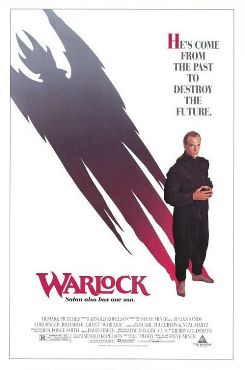
Before he can be executed in the late 17th century, an unnamed warlock (Julian Sands) is propelled through time by Satan. He ends up in 20th-century Los Angeles, where he seeks the three pieces of the Grand Grimoire, a legendary spellbook that, when reassembled, can undo creation. The Warlock is pursued by Giles Redferne (Richard E. Grant), a witch hunter whose wife was previously killed by the Warlock and who manages to make it through the Warlock’s time portal. Helping Giles navigate the modern world is Kassandra (Lori Singer), a woman who made the mistake of taking the Warlock in and got hit by an aging spell for her trouble. Giles and Kassandra pursue Warlock across the the country as he searches from the three pieces of the book. It’s a quest that takes them from Los Angeles to a Mennonite community and finally to modern-day Massachusetts where the final piece of the Grimoire turns out to be in a very unexpected location.
Warlock definitely benefits from David Twohy’s clever script and Steve Miner’s no-nonsense, energetic direction, but the real secret of its success was the performance of Julian Sands as the Warlock. If you were of a certain age in 1991, Julian Sands will always primarily be the Warlock to you. With his coldly self-amused manner and his unapologetic cruelty, Sands was the epitome of cool evil. The first time I saw Warlock, I was surprised at just how far the film’s villain was willing to go in his quest. Warlock is one of those films where the characters who usually survive do not. No one is safe from the warlock.
The film also benefits from Richard E. Grant taking his role seriously. As for Lori Singer, she’s stuck with a lot of bad old-age makeup and delivers her lines with a lack of enthusiasm. Her performance, though, still doesn’t distract from this surprisingly entertaining film. When I recently rewatched, I recognized Mary Woronov in the role of a psychic. As always when it comes to Mary Woronov, I wished her role had been larger.
Warlock was released in Europe and Australia in 1989 but, because of the financial difficulties of New World Pictures, it didn’t get an American release until 1991. The film did moderately well at the box office and went on to become, for a while, a mainstay on HBO and Cinemax. Julian Sands, who had mostly played young romantic up until that point, was subsequently typecast as a cool, Continental villain. It was followed by two sequels.
“Believe me, you don’t want Hannibal Lecter inside your head.” — Jack Crawford
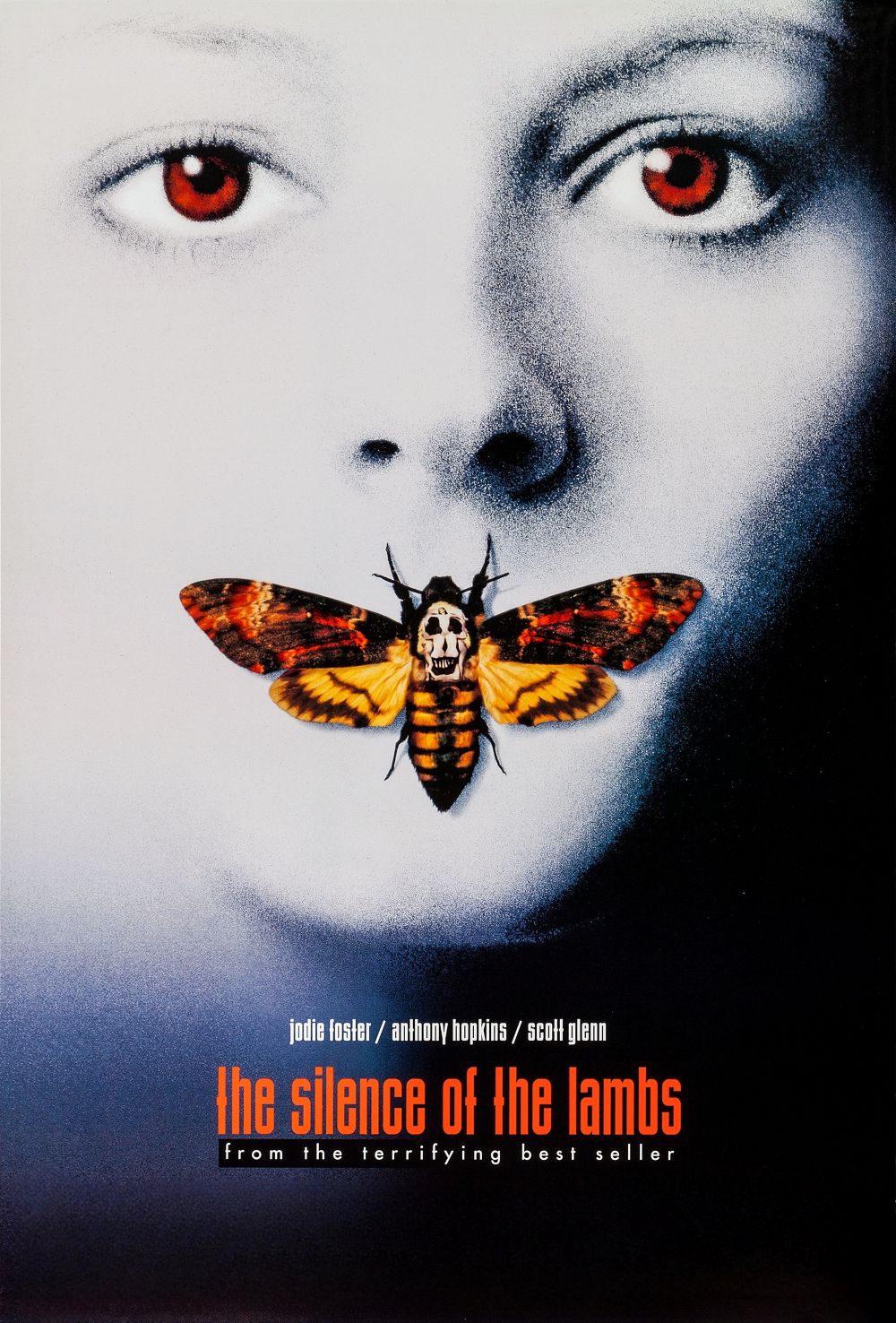
Some thrillers get louder as they become more frightening. The Silence of the Lambs often goes the other way, drawing its power from a lowered voice, a held stare, or the uncomfortable silence before someone answers a question. Jonathan Demme understands that an audience will lean into a scene when the actors give them something worth watching. His 1991 film has plenty of gruesome material, but its finest effects come from the precision of the performances and the intimacy of the camera. It is a horror movie that can make two people talking feel more dangerous than an outright attack.
Adapted by Ted Tally from Thomas Harris’s novel, the story follows FBI trainee Clarice Starling as she helps investigate Buffalo Bill, a serial killer targeting women. She seeks information from imprisoned psychiatrist and cannibal Hannibal Lecter, who demands personal disclosures in exchange for his insight. That premise creates an ideal setting for actors: professional conversations keep slipping into confrontations neither participant experiences in quite the same way. Clarice needs answers, while Lecter wants access to the person asking the questions. Demme builds the film around that imbalance without letting the investigation overwhelm the people involved.
Jodie Foster gives Clarice a mixture of determination and discomfort that makes her compelling well before the danger becomes immediate. Her performance is carefully modulated, especially in the contrast between her formal speech and the emotions passing across her face. She wants to project competence, but Foster lets us notice when that projection requires work. A tightened expression or a slight hesitation suggests someone evaluating how much of herself she can safely reveal. Those details make Clarice feel inexperienced without making her seem incapable. She has the intelligence for the job; what she lacks is the luxury of feeling secure in it.
Foster is particularly impressive when Clarice encounters something painful and has to continue functioning. She allows the reaction to register, then shows the effort of turning it into concentration. It is a subtle distinction, but an important one: Clarice’s professionalism does not depend on suppressing every trace of feeling. Her compassion often seems to make her more attentive. Foster also avoids the opposite trap of constantly advertising sensitivity. She can be brisk, guarded, or visibly irritated. The result is a character whose emotional responses feel specific to each encounter rather than arranged to remind us that she is sympathetic.
Anthony Hopkins approaches Lecter with a much more conspicuous sense of presentation. His speech is precise, his gaze sustained, and his pauses carefully placed. The performance has theatrical flair, but Lecter himself is theatrical, enjoying the opportunity to arrange an encounter around his preferences. Hopkins makes restraint the source of his menace. Because he gives so little away physically, the smallest change becomes noticeable. A slight movement forward can feel like an intrusion. Even his courtesy has an aggressive quality, as though good manners are another standard by which everyone around him is certain to disappoint.
What makes Foster and Hopkins so effective together is the difference in how they occupy a scene. Hopkins invites us to study the performance Lecter is giving, while Foster draws us toward the reactions Clarice would prefer to conceal. Their exchanges develop through that contrast. She does not merely receive his provocations; she assesses them, resists them, and sometimes challenges his assumptions. His interest in her can look like respect, but neither actor lets that resemblance become comforting. There is an unsettling intimacy in the attention they give each other, with Foster continually reminding us that attention can also be a form of pressure.
Demme photographs those exchanges with an intimacy that makes the viewer feel implicated. Faces often turn almost directly toward the lens, putting us close to the position of the person being addressed. The effect is especially uncomfortable when Clarice is being examined, patronized, or challenged. Rather than watching someone endure scrutiny from a convenient distance, we experience something of its force ourselves. Demme also gives reactions time to develop. He understands that a face listening can be as expressive as a face speaking, and he rarely seems impatient to interrupt an actor’s thought with unnecessary visual decoration.
Tak Fujimoto’s cinematography gives that approach a strong physical foundation. Close-ups matter partly because the surrounding spaces are so clearly established: offices, corridors, examination rooms, and cells all have their own arrangements of authority and confinement. Clarice frequently appears exposed within environments that supposedly represent order. The compositions make us aware of who occupies the space comfortably and who must negotiate a place within it. Fujimoto does not need to make every room look sinister. The ordinary institutional surfaces are convincing enough that an intrusive face or an ominous stretch of corridor can disturb their apparent neutrality.
The supporting performances help maintain that tension without duplicating the central pairing. Scott Glenn gives Jack Crawford a subdued authority that can feel supportive and calculating at once. Anthony Heald makes Dr. Chilton’s vanity unpleasantly recognizable, finding irritation in the way he presents himself as indispensable. Brooke Smith gives Catherine Martin a forceful combination of fear, anger, and practical determination. Ted Levine takes Buffalo Bill in a more volatile direction, creating a disturbing contrast with Lecter’s composed self-display. Together, these actors give the film different social temperatures; Clarice cannot approach every person with the same defenses.
The film’s treatment of Bill remains its most troubling element. Although the dialogue distinguishes him from transgender people, its imagery still associates gender nonconformity with disgust and danger. The qualification cannot entirely undo the visual impression, especially in a film this skilled at making images stick. Elsewhere, the craftsmanship is remarkably cohesive. Howard Shore’s score supplies a mournful undertow, while the editing allows conversations to breathe before tightening our experience of danger. In the climactic passages, restricted visibility becomes frightening because Demme has already taught us how much depends on looking, reading expressions, and understanding the space around a person.
The lasting achievement of The Silence of the Lambs is how completely its style serves its actors. Demme and Fujimoto bring us close enough to catch Foster’s fleeting uncertainty and Hopkins’s smallest calculated gesture, then trust those details to do the work. The film can be shocking, but it is rarely more gripping than when someone is simply deciding what to say next. That is what keeps it from becoming a museum of familiar lines and notorious images. Beneath all the cultural baggage, the performances still feel alive, and the camera still knows how to make us uneasy about watching them.
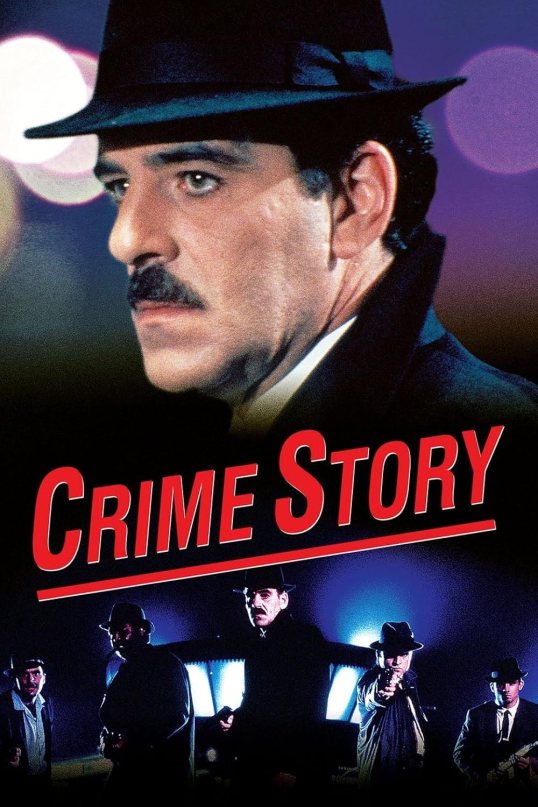
Welcome to Retro Television Reviews, a feature where we review some of our favorite and least favorite shows of the past! On Mondays, I will be reviewing Crime Story, which ran on NBC from 1986 to 1988. The entire show can be found on Tubi!
This week, a major player returns! Actually, two major players….
Episode 2.4 “Atomic Fallout”
(Dir by Bill Duke, originally aired on October 27th, 1987)
Two new members of the Task Force, who were assigned to keep an eye on Max Goldman, are discovered dead and burned to a crisp at a landing strip in the desert. At the same time, a scientist who is suspected of being a serial killer disappears from Las Vegas just as Torello is on the verge of arresting him.
Torello immediately assumes that the two things are connected. Unfortunately, the Atomic Energy Commission wants Torello to back off on his investigation of Dr. Gantman (George Bartenieff), the scientist-turned-serial killer. Gantman is working on a special project for the government. Torello and the Task Force head to Mexico to capture him anyway.
Torello isn’t the only Vegas resident in Mexico. Manny Weisbord is visiting Mexican crime boss Jorge Senterro (Ismael “East” Carlo). Two old friends of Manny’s are currently living with Senterro, and I bet you can already guess who they are.
That’s right! LUCA AND PAULI LIVE!
Despite having found themselves on a nuclear testing site at exactly the wrong time, Pauli and Luca survived. Pauli appears to be no worse for the experience. Luca, meanwhile, has only recently had his bandages removed. His back is scarred. Weisbord watches as Luca receives a shot from a very large hypodermic needle held by a chain-smoking doctor. Luca has survived, but he’s changed. He’s no longer content with building a national crime syndicate. Luca tells Manny that he’s planning on going international.
Weisbord is impressed with Luca’s ambition. However, he’s considerably less happy to learn that Luca and Senterro have teamed up to smuggle heroin into the United States. Weisbord has always been opposed to getting involved in the drug trade. Luca used to be opposed as well, but, as he explains it, drugs are where the money is going to be in the future. When Weisbord says that dealing drugs will cause the Justice Department to come after him, Luca says that he’s being protected by the U.S. government. The implication is obvious. The time of honorable crime bosses like Manny Weisbord has come to an end. Luca is the future.
While Luca is talking to Weisbord, Torello and his men are tracking down Dr. Gantman. They find him in a small safehouse, protected by Mexican soldiers. After a gunfight with the soldiers (and one has to wonder how that’s not going to become a diplomatic incident), Torello bursts in on Gantman just as he’s about to murder another woman. Torello guns the scientist down, and whatever information Gantman may have had about what the U.S. government is doing in Mexico dies with him.
In the episode’s final scene, Lt. Col. Milton Dance (Richard Zobel) meets with Luca and Pauli. Luca mentions that he heard about Gantman’s death and asks who was responsible. Dance replies that it was no one that Luca would know. Dance then hands Luca and Pauli their passports so that they can return to the United States.
This episode was a true treat for those of us who are interested in conspiracy theories. Dr. Gantman brought to mind the Nazi rocket scientists who were recruited by the CIA after World War II and who eventually ended up working for NASA. Luca working for the government would be implausible if not for the fact that the CIA and the Mafia actually did work together in the early ’60s to try to assassinate Fidel Castro. This episode was full of atomic imagery. When Luca talked about surviving the nuclear test, there was a quick flashback to a mushroom cloud rising over the desert. Torello and his men enjoy hanging out at a bar decorated with neon signs of mushroom clouds. A picture of a mushroom cloud was prominently displayed in Gantman’s house. This episode was all about atomic-age paranoia.
Best of all, Luca and Pauli are back. The first few episodes of the second season suffered because Torello himself seemed directionless without Luca to pursue. With this episode, we know that Luca is returning. Torello might not know it, but we know it.
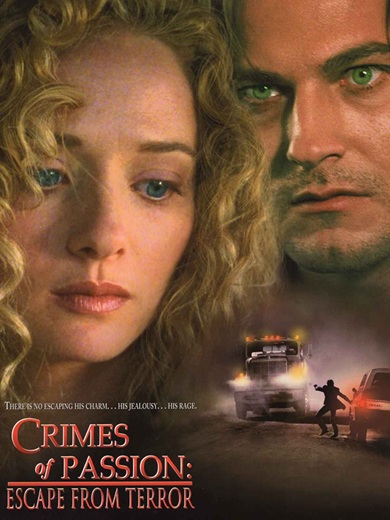
First aired in 1995, Escape From Terror stars Maria Pitillo as Theresa Stamper. When the film begins, Theresa is a naive 23-year-old woman who lives in Oklahoma with her mother (Cindy Williams). She gets a job working as a secretary for Paul Stamper (Adam Storke), the owner of Stamper Oil Company. She soon becomes more than just Paul’s secretary. At first, Paul is charming. He’s a little rough around the edges and he’s quick to get jealous, but Theresa just tells herself that Paul is under a lot of stress and that she can fix whatever’s wrong with him.
Paul and Theresa get married in Las Vegas and things quickly go downhill. Paul becomes physically abusive, along with being emotionally manipulative. He fires her from her job because no wife of Paul Stamper is going to work, especially not where other men can look at her. Theresa continues to tell herself that Paul is just under stress. Everyone else tells her that Paul is clearly on drugs and they point out that he always wears long sleeves, even in the Oklahoma heat. When Theresa eventually catches Paul hanging out at a bar and shooting up heroin in the bathroom, he proceeds to beat her badly enough to send her to the hospital. When Theresa takes her daughter and leaves Paul, Paul goes crazy and shoots her new boyfriend.
Paul goes on the run. Eventually, he’s arrested and convicted, but he manages to escape from prison and then he disappears. Five years later, Theresa starts to get threatening calls and realizes that, wherever he is, Paul is still obsessed with her. What can Theresa do?
How about telling her story to Unsolved Mysteries?
Escape From Terror was produced by Unsolved Mysteries, so it shouldn’t be a surprise when a good deal of the film’s final moments is dedicated to showing just how efficiently the show and its audience were able to track down Paul Stamper. Sheriff Bill Douglas (Brad Dourif), who has been manning the Unsolved Mysteries phone lines, tells everyone in the studio to quiet down after word comes in that Paul has been arrested. “I’ve got one more call to make,” he says.
And yes, it would be tempting to call this movie out for mythologizing the people who produced it, but the fact of the matter is that it is a true story and the real Paul Stamper actually was arrested (and subsequently sentenced to 35 years in prison) after Unsolved Mysteries aired a story about him, so the show is probably justified in patting itself on the back. It’s kind of like America’s Most Wanted. As easy as it was to occasionally make fun of the show, it did work.
As for the movie, it’s actually not bad. I’ve spent enough time in rural Oklahoma that the film seems very familiar to me. Maria Pitillo and Adam Storke gave good performances as Theresa and Paul, with Adam Storke doing an especially good job of capturing Paul’s manipulative nature. It was also nice to see Brad Dourif playing a sympathetic character. Dourif may have made his name playing bad guys, but in this film, he’s the ideal small-town lawman.
I might binge Unsolved Mysteries after Horrorthon is over. Who knows? Maybe one of my older neighbors has been on the run since the ’90s. There’s really only one way to find out!
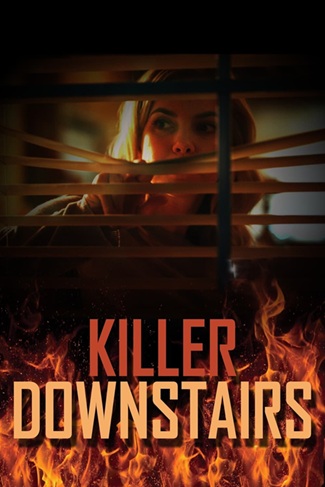
In this 2019 Lifetime film, Cindy Busby stars as Allison. Allison spent a lot of money on law school, but she hasn’t been able to get a job with a top-rated firm. Instead, she’s working at a grocery store that is definitely not meant to be Target, despite the fact that it looks like Target and all of the employees appear to be wearing blue versions of the Target uniforms.
Despite having a low-paying job and what one can only assume is a mountain of student debt, Allison lives in a mansion. One of the most comforting things about Lifetime films is that, no matter how bad life gets, everyone can still always afford to live in a giant house with a really impressive kitchen. (This is why I’m a capitalist.) Still, Allison could use a little extra money to help pay the bills, so she puts her basement up for rent on MiCassaSuCasa.com.
Soon, she gets a tenant. James (Marcus Rosner) is handsome, sensitive, and in need of companionship after his divorce. James is the type of guy who will show up at work and save you from your obnoxious boss while still finding time to make you a fabulous dinner. He seems like he’s perfect, but, of course, this is a Lifetime film, so no one has any excuse to be shocked when James starts planting secret cameras all over the house. James is clever enough to worm his way into Allison’s life and to start to win her heart, but he’s not smart enough to turn off his laptop whenever he leaves the basement. Nor does he really seem to be prepared for Allison’s best friend, Sarah (Donna Benedicto), and her skill at doing Google searches. That said, James does manage to kill a few people without anyone noticing him lurking around beforehand, and he also sabotages Allison’s upcoming interview with a law firm. What is James’s plan?
The Killer Downstairs is a typical Lifetime film, in that the plot depended upon Allison being way too trusting and James being way too eager to try to take over her life. If you’ve watched enough of these films, you’ll be able not only to guess exactly who James is going to kill but also when he’s going to do it. Unfortunately, Allison has never watched a Lifetime film and, as such, she’s noticeably slow to consider that maybe it’s the mysterious new guy in her life who is disrupting everything. Maybe it’s due to the fact that I spent several years as an office administrator for an actual attorney, but there’s absolutely nothing about Allison that suggests she would be a particularly good lawyer. Even before James shows up, she seems to be a bit scatterbrained. Ultimately, the message of this film becomes that some people are just meant to work in a grocery store, but that’s okay because they can still live in a mansion with a really nice kitchen. In the end, isn’t that what life is all about?
In 2004’s The Card Player, a serial killer is haunting the streets of Rome. He’s abducting women and then taunting the police by demanding that they play online poker with him. If the police win a hand, the woman goes free. If the police lose, the woman is tortured and killed on a webcam. Unfortunately, it turns out that the police are lousy at playing poker. Actually, they’re lousy at just about everything. Whenever I watch The Card Player, I find myself imagining that I’m watching an episode of Law & Order: Remedial Police Unit. That’s a spin-off from the original Law & Order. It features incompetent, poorly trained detectives who are constantly forgetting to Mirandize suspects. I’m surprised that no one else has ever seen it.
There are two cops who are slightly competent. Anna Mari (Stefania Rocca) is the daughter of a man who wrote a book about how to play poker. (Hey, that might be helpful!) John Brennan (Liam Cunningham) is a tough Irish cop who is sent to Italy after the Card Player kills two British tourists. While the rest of the police force stands around and stares at the office computer all day, Anna Mari and Brennan actually try to track the killer down.
Oh, The Card Player. This film is often cited as being Dario Argento’s worst. To be honest, I think that’s a bit of an overreaction. The film’s not so much bad as it’s just kind of boring. It plays out like a police procedural and there’s little of Argento’s signature visual flair. There are way too many shots of people staring at screens with serious expressions on their faces. Like so many other directors before him, Argento struggles to find a way to make watching someone else play an online game interesting. Eventually, the police do win a hand and I cringed as all of the extras in the police station broke out into cheers. It felt corny and a bit silly. It definitely did not feel like Argento.
That said, the murders are memorably gruesome and the scenes where the bodies are recovered and then examined in the morgue are pure nightmare fuel. Argento tosses in a dancing coroner who takes way too much pleasure in discussing things like the cause of death. The sight of the coroner dancing brings to mind the moment in Tenebrae where John Saxon is stabbed in public and none of the witnesses seem to be particularly disturbed. There’s a chilling callousness to the moment and a reminder of why Argento often portrays insects as being more trustworthy and empathetic than humans. Stefania Rocca gives a good performance in a role that was originally meant to be played by Asia Argento. Liam Cunningham is today known more for his political vacuousness than his acting talent but he’s still believably rugged and cynical as Brennan.
Finally, the film’s depiction of online poker is very much a late-90s version of the Internet. Everything loads slowly, the graphics are awkward and stiff, and the whole thing projects a feeling of “Can you believe people actually pay for this?” Seen in 2026, it’s actually kind of charming. The old internet was so dorky that it was impossible not to love it.
The Card Player is pretty forgettable, especially when compared to Argento’s earlier films or, for that matter, a film like Sleepless. It’s not as bad as some say but it’s definitely not top-rate Argento.
“If I see in the darkness it’s because there is light.” — Frank Black
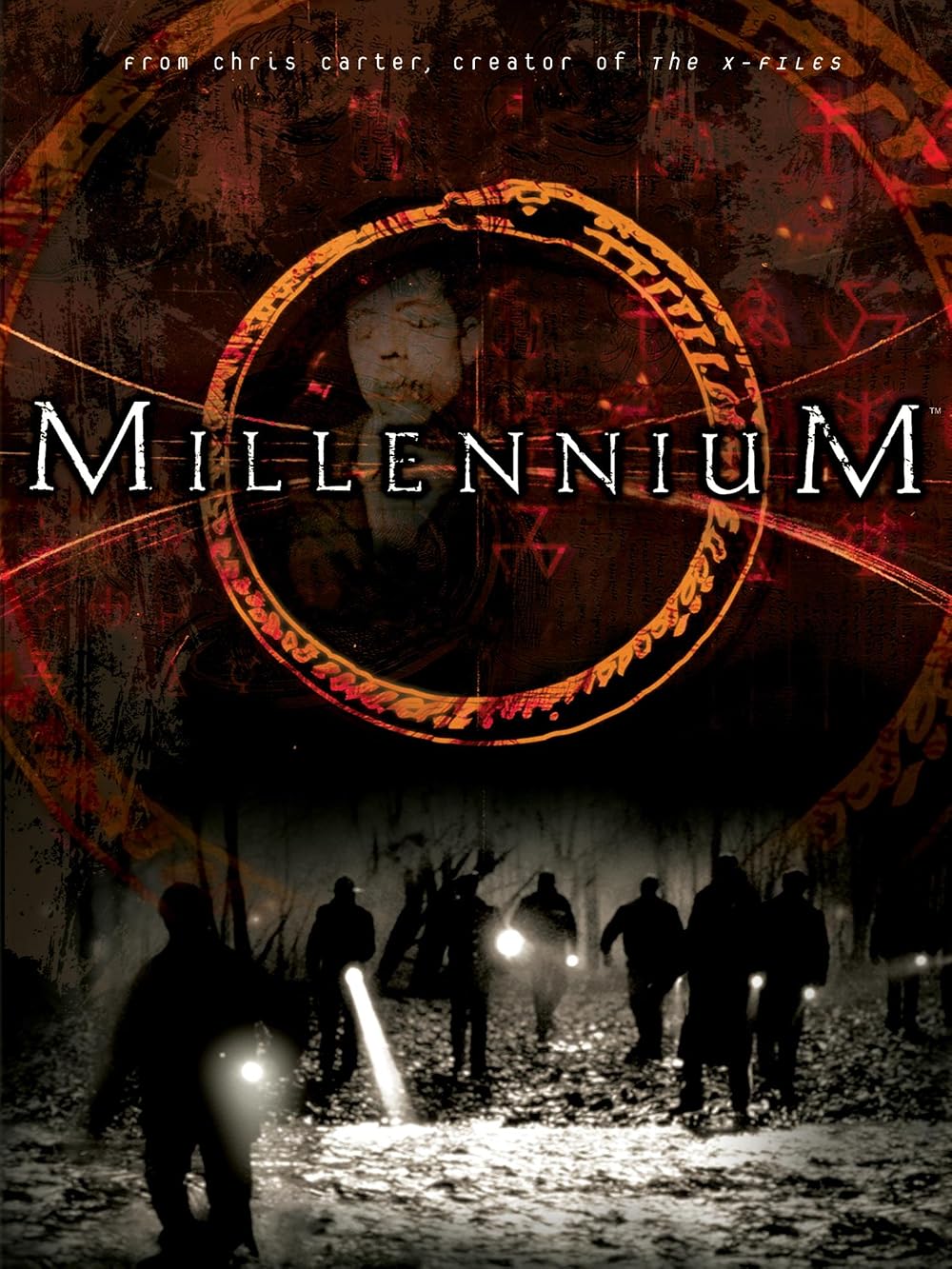
The most unsettling thing about Millennium is how rarely catching the killer feels like a victory. Someone may be stopped, a case may be closed, but the damage remains—and another investigation is already waiting. Created by Chris Carter, who also created The X-Files, the series takes a familiar crime-show structure and drains away much of its reassurance. Its real subject is the strain of repeatedly confronting the worst people can do without accepting that cruelty defines everyone. That makes it a difficult show to spend time with, but also a more humane one than its grim reputation suggests.
Much of that humanity comes from Lance Henriksen as Frank Black, a former FBI profiler whose insight into violent minds borders on the supernatural. The show renders his understanding through sudden flashes of disturbing imagery, making each breakthrough feel like an intrusion rather than an achievement. Henriksen plays Frank with restraint, suggesting exhaustion without reducing him to a permanently tortured expression. His measured voice and weathered features carry authority, but the gentleness underneath matters more. Frank is compelling because he understands terrible people without treating everyone else as a potential monster.
The first season establishes that distinction through its story-of-the-week format. Working with the Millennium Group, initially presented as a network of experienced investigative specialists, Frank encounters crimes driven by obsession, resentment, and distorted belief. The investigations offer procedural momentum, but the show cares as much about the emotional aftermath as the solution. An arrest cannot undo what happened or remove the images lodged in Frank’s head. That approach produces powerful television, although it can become repetitive when another grotesque crime seems designed merely to confirm that the world is a terrible place.
What gives those cases a larger purpose is the suggestion that they are symptoms of something spreading. Religious imagery, social alienation, and anxiety about the approaching millennium connect seemingly separate acts of violence. Again and again, people turn private grievances into fantasies of judgment or purification. Long before the Group’s secrets dominate the narrative, the weekly stories establish the mythology’s central concerns: who claims to recognize evil, what authority that recognition grants them, and how easily conviction becomes an excuse for cruelty. The serialized story is strongest when it develops those questions rather than simply adding more secrets.
Frank’s home life provides the necessary counterweight. Catherine and Jordan are not just vulnerable loved ones waiting to motivate the next investigation. They represent a life that requires his attention and emotional availability, things his work steadily consumes. His determination to protect them can make him distant, and his awareness of danger does not necessarily help him recognize what they need. Henriksen’s warmth gives these scenes their weight. The show may surround Frank with reasons to despair, but it also gives him tangible reasons not to. Without that balance, the darkness would become empty provocation.
Season two, guided by Glen Morgan and James Wong, makes the relationship between the cases and the mythology more ambitious. The Millennium Group stops being a dependable source of professional support and becomes an organization whose beliefs, divisions, and hidden intentions require investigation themselves. Frank now has to question not only the evidence but the people directing his attention toward it. That shift makes the weekly stories more unstable in an interesting way. A case can reveal something about a criminal while also exposing the priorities of an institution that may be manipulating Frank’s understanding.
This is where Millennium becomes most adventurous—and occasionally most frustrating. Religious conspiracy and apocalyptic horror give the second season momentum, while black humor and unusual detours loosen its oppressive atmosphere. But expanding the mythology does not always clarify what is at stake. Sometimes the show mistakes cryptic information for depth, allowing uncertainty to become muddle. What keeps the escalation meaningful is its connection to Frank’s family and fragile sense of purpose. The threat of catastrophe works because it might destroy something the series has taught us to value, not simply because the mythology announces another approaching disaster.
The third season struggles to maintain that connection. Frank’s return to the FBI and partnership with Emma Hollis restore a clearer investigative framework, while his opposition to the Group preserves the serialized conflict. There are worthwhile tensions between institutional loyalty and personal experience, but the procedural and conspiracy elements do not always reinforce each other. Across three seasons, the series repeatedly changes its approach, creating both memorable experiments and visible seams. Its willingness to evolve deserves credit, though the larger narrative never feels entirely under control.
That instability was one obstacle to broader success; the sustained bleakness was another. The X-Files could be frightening, but humor, adventure, and Mulder and Scully’s chemistry made its darkness easier to revisit. Millenniumventured further into territory its sibling series generally stopped short of inhabiting for long. It lingered over cruelty and its consequences, often refusing the escape hatch of a joke or an exhilarating discovery. That uncompromising approach probably contributed to its demise. What distinguished it creatively also made it harder to turn into a pop-cultural phenomenon: audiences were not always eager to return to such an emotionally punishing world.
Seen now, however, that commercial disappointment looks less like proof of a dead end than evidence of an early arrival. Criminal Minds, Dexter, Hannibal, and Mindhunter would explore related territory through murderous psychology, damaged investigators, and the uncomfortable intimacy between hunters and their targets. Those shows have their own creative roots, so direct influence should not be assumed, but Millennium helped sketch the possibilities of psychologically punishing crime television. It also challenged the idea that television horror needed sanitizing, anticipating a landscape where American Horror Story and The Walking Dead could flourish in the 2010s. Its once-alienating qualities became increasingly acceptable television fare.
Millennium deserves appreciation without having its shortcomings explained away. Its mythology can wander, its solemnity can wear thin, and its darkness sometimes overwhelms the people meant to give it meaning. Yet the weekly investigations, the Group’s grand designs, and Frank’s threatened family all return to a struggle worth watching: how to remain compassionate when fear keeps offering easier alternatives. Like Icarus, the series soared too high and burned before it could be fully appreciated. But its lasting achievement is quieter than its apocalyptic ambitions. It made one exhausted man’s refusal to stop caring feel as consequential as the end of the world.
I was browsing through my streaming services this morning in search of a scary movie to watch when I came across THE OTHER. The poster featured a creepy-looking kid, and the movie was made in 1972, so I decided I would dig a little deeper. The first thing I saw in the credits was that it was directed by Robert Mulligan, the same guy who directed the classic TO KILL A MOCKINGBIRD, and that it was written by actor Tom Tryon. Now truly intrigued, I decided to go ahead and hit play, because there aren’t that many opportunities these days for me to experience a movie while knowing next to nothing about it. And good grief, I wasn’t emotionally prepared for what I was about to see.
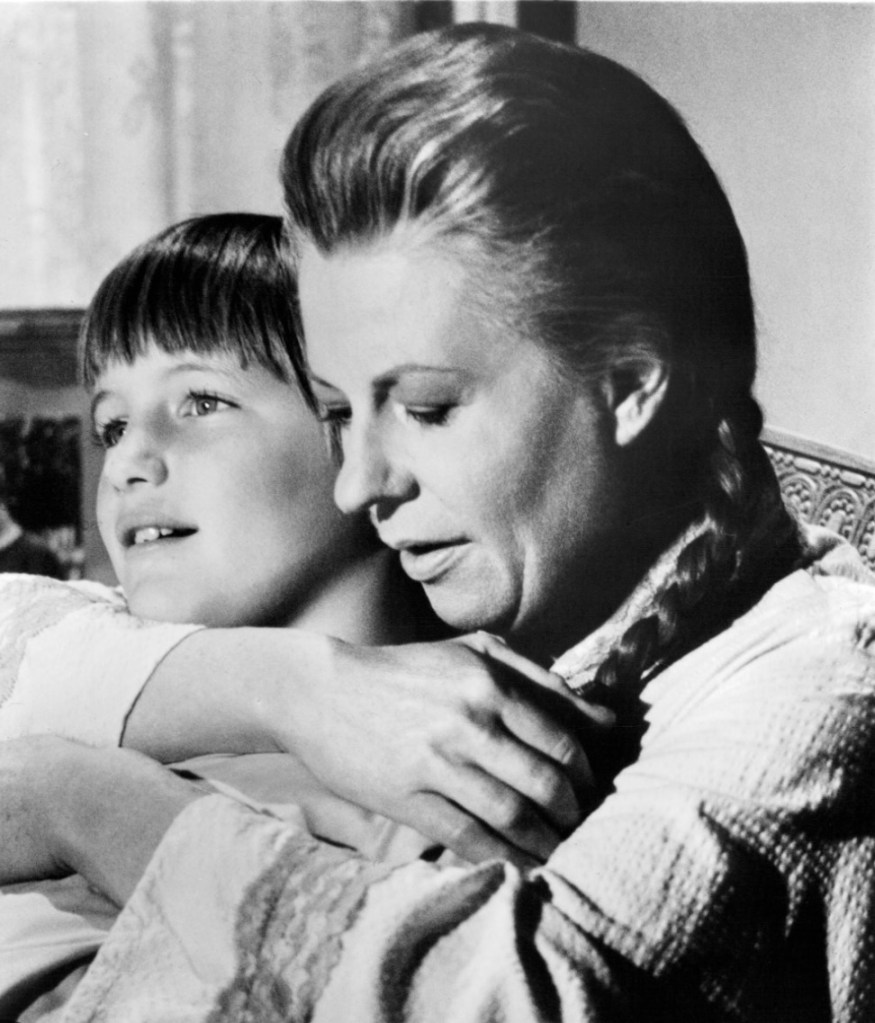
THE OTHER takes place in the summer of 1935, with twin brothers Niles and Holland Perry (Chris and Martin Udvarnoky) spending their days playing, fishing, and swimming on their family farm. At first it seems like we’ve stumbled across one of those perfectly nostalgic movie summers, but as we meet the rest of the family, we learn that there has been a lot of tragedy in their lives. Their father has recently died and their mother Alexandra (Diana Muldaur) seems to be lost in the grip of depression, which leaves their grandmother Ada (Uta Hagen) to give the boys most of the attention that they need. She’s even taught them fun games to play that allow them to use their imaginations. While it may all look innocent enough, it soon becomes clear that something is very wrong as bad things just keep happening.
This is a movie that takes its time building a world that changes dramatically from the beginning to the end as we slowly learn more about what’s really happening. When I was a kid, during the summers my brother and I would play in the woods behind our house. We mapped them, named the creeks our own made-up names, shot at trees with our BB guns, and walked as far as we could until we’d start thinking our mom would be mad at us. If we weren’t doing that, you might find us fishing on the pond behind our house. That’s the kind of stuff that these boys are doing at the beginning of the film and that connection to a simpler time drew me in. But once the initial layer is peeled back, we begin to realize that things aren’t how they appear. With each succeeding frame, I became more and more uncomfortable, and it doesn’t let up. I won’t spoil the movie’s surprises, but it pulls no punches.
Since THE OTHER relies on creeping dread to create its horror, as opposed to gore and jump scares, the performances need to be good, and they are really strong here. This is the only film that the Udvarnoky twins would appear in, and I think they’re very effective, with “Niles” coming off as particularly sweet and innocent. With their blue eyes, there were a couple of times they even reminded me of a young Kurt Russell. The fact that so much of the story revolves around children makes the events that follow that much more disturbing.
I found Uta Hagen to be fascinating as their grandmother Ada, whose extreme love for them comes with a whole bunch of unintended consequences. I didn’t know anything about her before watching this film either. After enjoying her performance here, I read up on her legendary career on the stage where she won multiple Tony awards, as well as a special Lifetime Achievement award. Diana Muldaur doesn’t have a lot to do, but she does have a couple of strong moments as the boys’ mother where she conveys a lot of information without being able to say a word. And while I enjoyed seeing John Ritter and Victor French pop up in various roles, no one is safe from extreme emotional or physical harm in this movie, so I can’t say there was anything fun about their characters.
In some ways, I’m quite surprised that I’d never heard about THE OTHER before now. But that’s been one of the best things about being part of TSL’s Horror-Thon, as I’ve been actively seeking out these types of films. This one stirred up a lot of emotions, with some of its visuals especially disturbing. And the less you know going in, the stronger the impact the film will have. I can just about guarantee that I will never watch it again, but there’s also a very good chance I’ll never forget it either!
Almost everyone I know is scared of snakes but most of them are harmless. Our cats regularly bring us little grass snakes and drop them at our feet and then act surprised when we say, “No, kitty! Get that way from me!” If a snake is really bothering you, you can get rid of it by chopping off its head with a shovel. That was something that my mom taught me how to do when we were visiting her parents in South Texas and there actually were potentially dangerous snakes around. Or you can just wait for it to leave. Most snakes aren’t that bad. Of the 4,000 known species of snake, 83% are harmless.
The other 17% are like the ones featured in these classic pulp covers!