4 Shots From 4 Films: Special 1964 Edition


4 Or More Shots From 4 Or More Films is just what it says it is, 4 shots from 4 of our favorite films. As opposed to the reviews and recaps that we usually post, 4 Shots From 4 Films lets the visuals do the talking!

Today, we pay tribute to the year 1964 with….

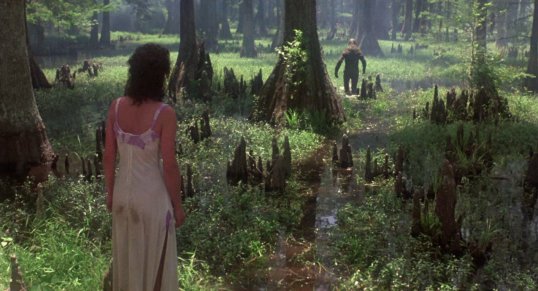
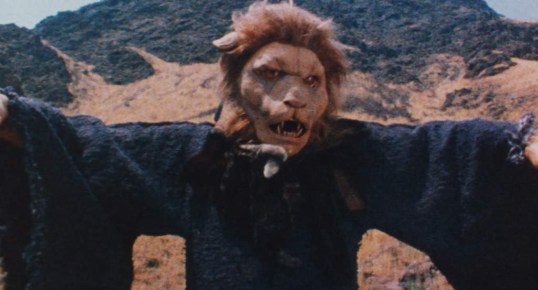
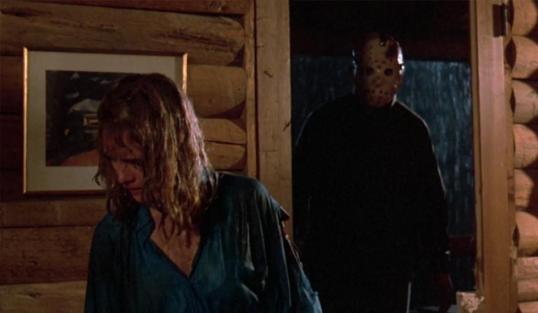
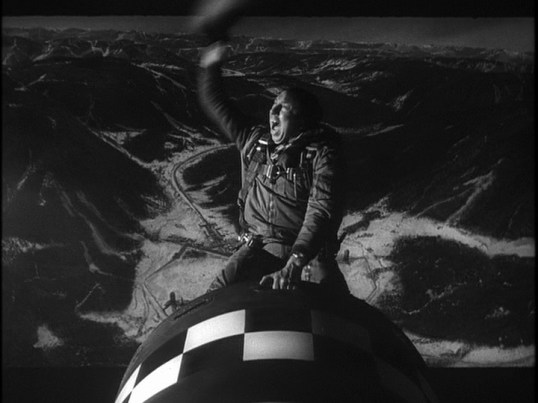
4 Shots From 4 1964 Films

Dr. Strangelove or: How I Learned to Stop Worrying and Love the Bomb (1964, dir. Stanley Kubrick, DP: Gilbert Taylor)

A Hard Day’s Night (1964, dir by Richard Lester, DP: Gilbert Taylor)

Goldfinger (1964, dir by Guy Hamilton, DP: Ted Moore)

Strait-Jacket (1964, dir by William Castle, DP: Arthur E. Arling)

A War in Three Acts: Platoon, Full Metal Jacket, Hamburger Hill


“It don’t mean nothing, man. Not a thing.” — Motown

Between 1986 and 1987, American cinema gave us three tightly packed visions of the Vietnam War: Platoon, Full Metal Jacket, and Hamburger Hill. Released in rapid succession, these films all wrestle with the same historical trauma, but they do so in wildly different voices, rhythms, and moral registers. Together, they form a kind of triptych: one film leans into psychological moral chaos, another into ironic, machine‑like detachment, and the third into a quietly punishing realism that refuses to dress up the slaughter in metaphors. More than just their content, the way each film moves through its story is shaped entirely by the director’s fingerprint—Oliver Stone, Stanley Kubrick, and John Irvin—so the narrative flow of each movie becomes a direct extension of its directorial worldview.

The timing and the directorial context

The dates matter, because they show how a single era of pop culture could generate such divergent treatments of the same war. Platoon hit in 1986, right when Hollywood was trying to reframe Vietnam as a moral and psychological disaster, not just a geopolitical blunder. Then, almost as if the studios had hit “play” on a three‑channel experiment, Full Metal Jacket and Hamburger Hill both arrived in 1987. That tight window turns the comparison into something richer: same war, same decade, but three very different directors reordering the same raw material into different cinematic engines.

What’s even more interesting is that the three directors arrive with fully formed styles already in place. Stone, the veteran turned auteur; Kubrick, the perfectionist ironist; Irvin, the no‑frills dramatist—each brings his own choreography to the war, so the way each story unfolds matches the way each director thinks about power, systems, and the human body under pressure. That’s why, when you watch them back‑to‑back, the transitions feel organic: the emotional spiral of Platoon slides into the clinical detachment of Full Metal Jacket, which then hardens into the attritional grind of Hamburger Hill.

Oliver Stone and Platoon: an emotional spiral

Oliver Stone’s background as a Vietnam veteran inflects Platoon with a semi‑autobiographical, almost fever‑dream energy. The film doesn’t just tell a story; it feels like a memory returning in fragments, haunted by shock, guilt, and moral erosion. The narrative is built around Chris Taylor’s voice‑over, which acts less like exposition and more like a confessional diary. That choice gives the film a lyrical, almost jagged rhythm: quiet jungle moments bleed into sudden night attacks, tenderness collapses into atrocity, and moral clarity dissolves into confusion.

Because Stone thinks of war as a kind of moral purgatory, the story doesn’t march steadily toward a clear climax. Instead, it spirals. The Barnes–Elias conflict—brutal, pragmatic Barnes versus idealistic, wounded Elias—functions as a kind of internal compass for Chris, and the film’s pacing keeps snapping back to that moral tug‑of‑war. Action sequences are often disorienting, with overlapping sound, quick cuts, and long stretches of jungle unease, so the narrative feels less like a linear plot and more like a psychological collapse happening in real time. The whole movie feels like a descent that only slows down long enough for Chris to realize how far he’s fallen.

In aesthetic terms, Stone leans into handheld camerawork, natural light, and a gritty, almost documentary‑like texture, which makes the violence feel unfiltered and immediate. But it’s the emotional rhythm that’s most Stone‑ian: the film is never neutral. It wants you to feel the weight of each decision, each atrocity, and that emotional burden is coded into the editing and the pacing. So when the narrative moves from boot‑camp–like introduction to jungle chaos, it’s not just a setting change; it’s a shift into a darker, more volatile psychological state.

Stanley Kubrick and Full Metal Jacket: geometry and detachment

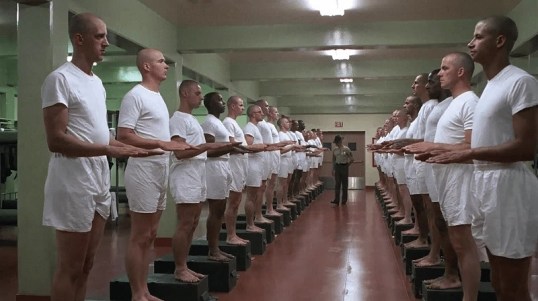
If Stone’s Platoon feels like a pressure cooker of emotions, Kubrick’s Full Metal Jacket feels like a cold, geometric diorama. The film’s narrative is famously bipartite: the first half is boot camp, the second half is Vietnam, and the shift between them is as abrupt as a switchblade. This structure doesn’t just happen to be there; it reflects Kubrick’s obsession with systems, control, and the way institutions prepare men for violence. The story doesn’t so much build as it compartmentalizes: each section is a discrete unit of dehumanization.

Kubrick’s directorial signature—tight symmetry, precise framing, and a wry, almost clinical camera—means that the narrative never settles into the raw, unsteady rhythm of Platoon. Instead, events feel staged, rehearsed, and ritualized. The drill‑instructor sequences play like a grotesque performance, where brutality is delivered in rhythm and repetition. Even when the film moves to Vietnam, it keeps cutting back to Joker’s voice‑over and to moments of ironic distance, so the story feels controlled, almost surgical. The famous “I am the Monster” line doesn’t land as a catharsis so much as a rehearsed line in a larger script, and that’s very Kubrick: the narrative refuses to offer a neat emotional arc. There’s no gradual hero’s journey, no tidy redemption.

The sniper sequence at the end may feel like a climax, but it’s really more of a microcosm: it condenses the film’s themes into one tight, brutal encounter. Conceptually, the narrative is more like a diagram than a journey, and that’s why it feels so natural that Full Metal Jacket follows Platoon in any viewing order. Where Stone’s film is all about internal collapse, Kubrick’s is about systemized violence, so the transition from spiral to schema feels logical. The aesthetics and the narrative are perfectly aligned: every composition and every cut reinforces the idea that war is a machine, and the men are its interchangeable parts.

John Irvin and Hamburger Hill: attrition as narrative

If Platoon spirals inward and Full Metal Jacket diagrams the machinery, Hamburger Hill simply grinds. John Irvin’s directing style is lean and actor‑driven, which means the film’s narrative is built around one real‑life battle—the assault on Hill 937 in the A Shau Valley—and the story basically becomes a relay race without a finish line. Irvin doesn’t reach for mythic symbolism the way Stone does, nor does he sculpt the war into a cold diagram the way Kubrick does; he just lets the hill devour the men, assault after assault.

The pacing is deliberately slow and physical, so the narrative feels less like a progression and more like an accumulation. The film lingers on the weight of the packs, the mud, the smoke, and the bodies stacked around the soldiers. There’s little in the way of elaborate visual flourishes or philosophical monologues; instead, the story keeps returning to the climb, the push, the retreat, and the regrouping. That repetition is the core of its storytelling: the film isn’t about a big reveal, but about the slow erosion of morale and the body’s limits.

In aesthetic terms, Irvin’s Hamburger Hill is stripped‑down: handheld shots, naturalistic lighting, and a focus on small, believable interactions between soldiers. There’s no overt symbolism hovering over the hill; just a convergence of stubborn orders, exhausted bodies, and the slow wearing‑down of the unit. The narrative feels like it’s being pulled forward by physical exhaustion rather than by psychological revelation, so the film’s rhythm is the one you’d expect from a unit that’s been told to “take it again” one too many times. In this sense, the director’s hand is most visible in the absence of embellishment: the story isn’t dressed up, it’s simply put through a meat grinder.

How the narrators shape the story

Each film also has its own kind of narrator, which alters the way the story flows. In Platoon, Chris Taylor’s voice‑over is the bloodstream of the film: it stitches together the chaotic action into a kind of moral confession. The narrative feels like it’s being filtered through his memory, so the pacing isn’t about strict chronology; it’s about emotional emphasis. In Full Metal Jacket, Joker’s voice‑over is cooler and more ironic, functioning less as confession and more as commentary. The film’s over‑voice creates distance, so the narrative feels like it’s being watched from the outside, even as it moves through intimate scenes. In Hamburger Hill, there’s no guiding voice‑over at all; the story is driven by the unit itself, by group dynamics and shared experience rather than a single pair of eyes.

That absence of a narrator makes the film feel more “collective,” so the narrative flows like a shared burden rather than a private reckoning. If you line up the three films, you can see how the narration evolves: Platoon gives you one man’s haunted monologue, Full Metal Jacket gives you a dead‑pan reporter’s voice, and Hamburger Hill gives you silence broken only by commands and gunfire. Each mode of narration pulls the story in a different psychic direction.

Structure, tone, and psychological design

Beyond the directorial fingerprints, each film’s structure gives it a different kind of spine. Platoon is the most traditionally dramatic of the three, even though it still feels raw and unstable. The story follows Chris Taylor’s descent into Vietnam and uses the Barnes–Elias conflict as a moral engine, giving the film a clear emotional axis. Even when the film feels episodic—raids, patrols, drug‑fueled downtime—it keeps snapping back to that central tension, so the narrative never fully loses its dramatic center.

Full Metal Jacket breaks free from that kind of unified arc altogether. The boot‑camp half is about the making of soldiers, while the Vietnam half is about the disintegration of everything those soldiers were taught. The film’s structure feels like a diptych because Kubrick wants you to see how the two halves talk to each other: the drills, the chants, the dehumanizing rituals all come back to haunt the men once they’re in combat. The sniper sequence condenses all of that into a single, brutal encounter, so the narrative feels like a series of boxes that, when opened, reveal the same underlying machinery.

Hamburger Hill has the most straightforwardly procedural structure. It doesn’t really spiral inward like Platoon’s moral descent, nor does it fracture into symbolic set‑pieces like Full Metal Jacket; it just keeps going. The story is anchored to a single objective—the hill—and the narrative returns to it over and over, each pass costing more lives and more sanity. That repetition is the core of its storytelling: the film isn’t about a big reveal, but about the slow wearing‑down of the unit as a collective body.

All of this shows up in how each film handles tone and psychological design. Platoon behaves like a psychological tragedy, where violence is an ethical test and every atrocity marks a turning point in Chris’s moral collapse. Full Metal Jacket operates more like a satire with a pulse, where violence is part of a system that has already turned people into functions. Hamburger Hill doesn’t really ask whether the soldiers are good or bad, enlightened or corrupted; it asks why they keep climbing the same damn hill. Thematically, the movie is about shared suffering, endurance, and the absurdity of trying to locate meaning inside a slaughterhouse mission. The narrative doesn’t privilege any one character’s epiphany; it spreads the weight of the experience across the unit, so the moral landscape feels diffuse and worn‑down rather than dramatically concentrated.

Violence, realism, and the final arc

Each director also decides what violence means in the story, which shapes the final arc. In Platoon, violence is moral theater: night raids, village atrocities, and the final confrontation between Barnes and Elias are framed as defining moments. The film behaves like a tragedy, where action reveals character and character collapses under pressure. The narrative circles back to these scenes, so the emotional arc feels like it’s being built on top of a foundation of shock and guilt.

In Full Metal Jacket, violence is more alienated and ironic. The first half turns cruelty into institutional theater, while the second half turns combat into fragmentation and shock. The sniper sequence is the film’s most intense set‑piece, but it’s also one of its coldest, because it’s framed as a ritual: the men perform their roles, repeat their lines, and then disengage. The narrative doesn’t really resolve; it just stops, which feels right for a film that treats war as a never‑ending system.

Hamburger Hill treats violence as exhaustion made visible. The hill itself is a passive, almost indifferent character: it keeps taking bodies without offering any higher meaning. Each assault costs more than it gains, and the film steadily strips away any illusion that heroism or sacrifice will redeem the effort. The narrative doesn’t pause to moralize; it just shows the cost in bodies, bandages, and broken faces, so the film’s tone feels more like a grim balance sheet than a philosophical treatise.

Final round‑up: one war, three cinematic engines

If you line them up in a viewing order that makes sense narratively, the sequence feels almost organic. Platoon introduces you to the war as a psychological and moral descent, with Stone’s direction bending the narrative into a jagged, emotionally charged spiral. Full Metal Jacket then reframes that same war as a machine, where Kubrick’s clinical distance and formal structure turn the story into a diagram of dehumanization. Finally, Hamburger Hill strips away both the myth and the diagram, leaving only the physical, grinding reality of a hill that keeps eating men.

In the end, these three films don’t just show different angles on the Vietnam War; they show how three very different directors—Stone, Kubrick, and Irvin—can reorder the same raw material into entirely different cinematic engines. Stone’s Platoon gives you the wounded soul of the genre, Kubrick’s Full Metal Jacket gives you the machine, and Irvin’s Hamburger Hill gives you the mud, blood, and repetition underneath both. Together, they form a kind of trilogy of approaches: spiral, schema, and slog. And that’s why, when you watch them in sequence, the transition from one to the next feels less like a jump and more like a steady, grim evolution of how war cinema learned to talk about the same nightmare.

Review: Full Metal Jacket (dir. by Stanley Kubrick)


“You write ‘Born to Kill’ on your helmet and you wear a peace button. What’s that supposed to be, some kind of sick joke?” — Colonel

Full Metal Jacket is the kind of war movie that sticks in your craw like old metal shavings. It’s 1987, Stanley Kubrick’s last film released in his lifetime, and it plays less like a traditional Vietnam War saga and more like a taunt packed into two very different acts. One half is a barracks horror show about how the military turns boys into killers; the other is a grubby, almost casual descent into the chaos of combat. Together, they make a movie that feels intentionally disjointed so it can drill down on the same idea from two angles: war doesn’t just brutalize your body, it reshapes your mind into something barely human.

The film follows Private J.T. “Joker” Davis, played by Matthew Modine in one of those quietly watchful performances that’s easy to underestimate. Joker starts as a kind of archetypal smart‑mouth recruit, the guy who thinks he’s above the hysteria until he realizes he isn’t. Around him swirls a platoon of young Marines going through basic training at Parris Island under the merciless Gunnery Sergeant Hartman, played with shark‑like relish by R. Lee Ermey, who was actually a real‑life Marine drill instructor. Hartman’s whole job is to obliterate softness and replace it with drilled‑in aggression, and Kubrick lingers on every insult, every barked command, until the abuse stops feeling like a setup for a war movie and starts feeling like the main event.

The first half of Full Metal Jacket is basically a single, sustained initiation ritual. The camera stays tight, almost claustrophobic, trapping you in the barracks with the recruits, so you feel the same sensory overload they do. The lighting is harsh, the colors washed out, and the camera often locks in on Hartman’s face mid‑rant, making you uncomfortably intimate with his cruelty. This isn’t training so much as a manufactured psychological war waged on the platoon’s collective brain. The recruits are constantly degraded, mocked, and forced into grotesque rituals of humiliation, and the film never lets you forget that this is the system’s idea of “making Marines.” Kubrick doesn’t fake the perverse appeal of this process either; there’s a weird, ugly thrill in how effective it is, in how the boys start enjoying the brutality once they’re inside it.

The standout character in this section is Leonard “Gomer Pyle” Lawrence, played by Vincent D’Onofrio in a performance that’s almost physically uncomfortable to watch. D’Onofrio’s Pyle is this thick‑set, awkward kid who can’t keep up, and the movie doesn’t soften his edges to make him likable. He’s genuinely bad at the routine, slow, clumsy, but he’s also clearly just trying to survive. The film lets you watch, in a very matter‑of‑fact way, how the system turns his inadequacy into a target. The other recruits are instructed to punish him, and soon everyone starts in. The film doesn’t moralize about it; it just shows that this kind of group cruelty is baked into the structure. The infamous scene where the platoon holds Leonard down with piled‑on bed sheets while whacking him with a bar of soap wrapped in a towel is less about a single act of violence than about what it means to normalize dehumanization before you ever see combat.

What’s so unsettling about Full Metal Jacket is that it never pretends Hartman is some rogue sadist. He’s not an outlier; he’s the product of the system, and he’s also the system’s avatar. In that sense, the first half of the film functions like a kind of industrial horror. The Marines are being processed like defective parts on a factory line, streamed through a machine designed to break them and then rebuild them as compliant killers. The film toys with the idea that the military doesn’t want robots so much as creatures that hunger for violence on command. The line about “we don’t want robots, we want men” is repeated with a kind of grim irony because what the film actually shows is the production of something in between: not quite human, not quite machine, but something that can pull a trigger without hesitating.

Jumping from Parris Island to the streets of Huế during the Tet Offensive, the second half of Full Metal Jacket feels like a different movie in tone but the same one in thesis. Joker, now a combat correspondent with a Stars and Stripes hat and a “Born to Kill” slogan on his helmet, is literally split down the middle between observer and participant. He carries a camera and a rifle; he’s supposed to report, but he also has to fight. The film doesn’t resolve that tension the way a more sentimental war movie would. Instead, it lets Joker drift in that gray zone where war is equal parts absurdity and atrocity. The Vietnamese civilians are largely faceless, and the war itself is shown as a series of loosely connected vignettes—raids, ambushes, random firefights—rather than a grand narrative of heroism or tragedy.

Kubrick’s Vietnam is less a country and more a ruined theater set. The cityscapes are wide, desolate, and oddly beautiful in their destruction, as if the war has turned everything into a series of bleak tableaux. The camera doesn’t linger on gore for shock value; it lingers to make the war feel like a permanent, almost aesthetic state of ruin. Individual soldiers pop in and out: Animal Mother, the violently unhinged Marine played by Adam Baldwin; Cowboy, the earnest, almost naive replacement; and the rest of the squad, who oscillate between fear, boredom, and bursts of casual cruelty. None of them are given the kind of tragic backstories that usually make you emotionally invested in a war film. Instead, they’re presented as fragments of a larger machine, each one another cog in the same indifferent system.

The film’s most famous structural trick is its way of keeping politics at arm’s length while still radiating a deeply skeptical view of the war. It doesn’t really bother telling you who’s right or wrong, or why the Marines are there. It just shows what they become and what they do. The movie doesn’t ask you to sympathize with the Marines in the way some war films do; it asks you to recognize the mirror. The famous ending, where the Marines march through flaming ruins to the tune of Mickey Mouse, is pure Kubrick dark surrealism. The cheerful cartoon theme clashes violently with the apocalyptic imagery, and the soldiers chant along with a kind of manic innocence that feels like the last vestige of humanity being cannibalized by the war itself. It’s hard to tell whether the moment is tragic, absurd, or both, and that’s the point.

Full Metal Jacket is also a film about storytelling and the way narratives are weaponized. Joker, as a reporter, is supposed to package the war for a distant audience. He’s there to turn chaos into digestible stories, but the movie quietly undermines that idea by showing how unreliable those narratives are. The soldiers’ own stories are laced with jokes, bravado, misogyny, and casual racism, and the film doesn’t clean them up. It lets you sit with the ugliness, even when it’s delivered with a laugh. The film doesn’t romanticize the Marines’ camaraderie or soften their cruelty; it just lets you watch them behave like ordinary guys who happen to be doing something extraordinary and monstrous.

The cinematography in Full Metal Jacket is cold and precise, which is exactly what the material needs. The camera behaves like a reluctant witness, framing the Marines in symmetrical, almost clinical compositions that make their brutality look routine rather than spectacular. The score is minimal, and the film often relies on diegetic sound—machine‑gun fire, jeep engines, distant explosions, Hartman’s voice echoing off concrete walls—to ground you in the sensory overload of military life. Even the few moments of levity feel like concessions to show business more than true relief. The soldiers’ jokes are rarely funny in a wholesome way; they’re the kind of gallows humor that keeps you from noticing how broken you’ve become.

What ultimately makes Full Metal Jacket endure is that it refuses to offer catharsis. By the time the film ends, nothing has been “resolved” in the way Hollywood usually expects. Joker survives, but the war doesn’t; it just keeps going, and the Marines keep marching, chanting, and killing. The film doesn’t build toward a big speech about the futility of war or a tear‑jerker about fallen comrades. It just suggests, quietly and persistently, that the process outlined in the boot‑camp half is drafted, again, in the streets of Vietnam. You go in as a boy, you’re molded into something sharper and meaner, and then you’re sent out into a world that rewards that sharpness. The movie doesn’t need to say this out loud; it just shows it happening in scene after scene.

In that sense, Full Metal Jacket is one of the most honest anti‑war films precisely because it doesn’t pretend to be a plea for peace. It’s a portrait of a machine that feeds on itself, and of the people who get caught in its gears. It’s funny, disturbing, infuriating, and occasionally mesmerizing, sometimes all at once. It’s not a movie that wants to hold your hand or make you feel better about the human race. It wants you to stare at the gleam on that full metal jacket bullet and wonder what it took to make someone pull the trigger. That’s the real power of Full Metal Jacket: it doesn’t try to redeem the war, the soldiers, or the audience. It just makes sure you can’t look away.

Scene That I Love: 2001’s Stargate Sequence


Today would have been the 84th birthday of special effects maestro, Douglas Trumbull.

Today’s scene that I love come from 1968’s 2001: A Space Odyssey.  The famous stargate sequence was designed by Trumbull and it remains one of the most influential science fiction moments of all time.  In one of their greatest oversights, the Academy neglected to include Trumbull when they nominated the film for its special effects.  As a result, the Oscar only went to Stanley Kubrick.  Trumbull was not happy about that and, sadly, Kubrick and Trumbull did not speak to each other for years afterwards.

Despite not being included in the nomination, Douglas Trumbull’s work has stood the test of time.

4 Shots From 4 Films: Special 1975 Edition


4 Or More Shots From 4 Or More Films is just what it says it is, 4 shots from 4 of our favorite films. As opposed to the reviews and recaps that we usually post, 4 Shots From 4 Films lets the visuals do the talking!

Today, we pay tribute to the year 1975.  It’s time for….

4 Shots From 4 1975 Films

Barry Lyndon (1975, dir by Stanley Kubrick, DP: John Alcott)

Deep Red (1975, dir by Dario Argento, DP: Luigi Kuveiller)

Mirror (1975, dir by Andrei Tarkovsky, DP: Georgy Rerberg)

Three Days Of The Condor (1975, dir by Sydney Pollack, DP: Owen Roizman)

Scenes That I Love: President Merkin Muffley in Dr. Strangelove


Since today is Presidents Day, my scene that I love features one of my favorite fictional presidents!  In this scene from 1964’s Dr. Strangelove, President Merkin Muffley (Peter Sellers) attempts to explain why something funny might happen with the bomb to his Russian counterpart.

Sellers reportedly based President Muffley on Adlai Stevenson, the self-styled “rational intellectual” who twice ran for President against Dwight Eisenhower.

Ah, Eisenhower.  There’s a President that I wish I could have voted for.

4 Shots From 4 Holiday Films: Christmas In the 90s


4 Shots From 4 Films is just what it says it is, 4 shots from 4 of our favorite films. As opposed to the reviews and recaps that we usually post, 4 Shots From 4 Films is all about letting the visuals do the talking.

4 Shots From 4 Holiday Films

Home Alone (1990, dir by Chris Columbus)

Home Alone (1990, dir by Chris Columbus)

The Nightmare Before Christmas (1993, dir by Henry Selick)

The Nightmare Before Christmas (1993, dir by Henry Selick)

The Santa Clause (1994, dir by John Pasquin)

The Santa Clause (1994, dir by John Pasquin)

Eyes Wide Shut (1999, dir by Stanley Kubrick)

Eyes Wide Shut (1999, dir by Stanley Kubrick)

Scenes that I Love: Kirk Douglas in Paths of Glory


Today’s scene that I love comes from 1957’s Paths of Glory.  In this scene, Colonel Dax (Kirk Douglas) fights a losing battle to save the lives of three soldiers who have been accused of cowardice after refusing to take part in a suicidal attack during World War I.

Douglas not only starred in this film but his also production company also helped to finance it.  The film was co-written and directed by Stanley Kubrick.

4 Shots From 4 Films: Special Kirk Douglas Edition


4 Or More Shots From 4 Or More Films is just what it says it is, 4 shots from 4 of our favorite films. As opposed to the reviews and recaps that we usually post, 4 Shots From 4 Films lets the visuals do the talking!

Today would have been the 109th birthday of actor Kirk Douglas!  It’s time for….

4 Shots From 4 Kirk Douglas Films

Champion (1949, dir by Mark Robson, DP; Franz Planer)

The Bad and the Beautiful (1952, dir by Vincente Minnelli, DP: Robert L. Surtees)

Spartacus (1960, dir by Stanley Kubrick, DP: Russell Metty)

Saturn 3 (1980, dir by Stanley Donen, DP: Billy Williams)