Film Review: The Black Godfather (dir by John Evans)


The 1974 film, The Black Godfather, opens with two black men attempting to break into the house of a white drug dealer.  Unfortunately, the drug dealer happens to be home.  Both of the men are shot.  One dies in the alley.  The other, J.J. (Rod Perry), is shot in the arm but survives.

J.J. may not have been able to rob the dealer but his bravery impresses Nate Williams (Jimmy Whitherspoon), a powerful neighborhood crime lord.  Nate allows J.J. to hide out at his place and, while J.J. heals, Nate offers up some advice on how to survive on the streets.  J.J. says that he’s only interested in making some “bread,” but Nate thinks that J.J. has what it takes to become one of the top men in his organization.

One opening credits montage later and J.J. has indeed become a powerful man on the streets.  Though he may sell drugs, J.J. is a gangster with a conscience.  As he explains to his old friend, Diablo (Damu King), there’s no way to create change unless you make some money beforehand.  Diablo is a political militant who has no interest in working with J.J. until he discovers that J.J. is planning on running Tony (Don Chastain) out of the neighborhood.  Tony is a white gangster who has made a fortune by destroying black communities with heroin.  Diablo and his followers become J.J.’s enforcers as he wages war against Tony.

Unfortunately, the always pragmatic Nate doesn’t want J.J. to wage war against Tony.  Nate believes that it is important to keep the peace.  That Nate is tying to prevent a war doesn’t matter to Tony, of course.  As soon as Tony finds out that J.J. has been seeing Nate’s daughter, Yvonne (Diane Sommerfeld), he makes his move.

Made at the height of the Blaxploitation era, The Black Godfather‘s title brings to mind memories of Don Corleone, Michael, Sonny, and Tom Hagen.  And it is true that the wise and patient Nate does, in many ways, come across like a black version of Don Corleone.  Nate is pragmatic and cautious almost to a fault.  Just as Don Corleone resisted going to the war with the Tattaglias, Nate resists going to war with Tony.  (And, much like the Tattaglias, Tony proves himself to be unworthy of Nate’s generosity.)  However, J.J. has far more in common with Sonny than with Michael.  Unlike the  calculating and patient Michael, J.J. is in a hurry to prove that he’s the most powerful gangster in the community.  Like Sonny, J.J. doesn’t hesitate before striking back at his enemies.

Unfortunately, despite having an intriguing premise, The Black Godfather is a bit of a chore to sit through.  The story moves slowly and even the scenes of gangster violence feel rather rudimentary.  Rod Perry projects a confident charisma and Jimmy Witherspoon does a good job as the wise Nate but otherwise, the cast is stiff and unconvincing.  It’s a shame.  The mix of crime and militant politics had potential.  Early on, Diablo and J.J. debate whether or not good can come out of bad, with J.J. arguing that money can get a lot more done than idealism.  It’s a debate that’s still relevant today but it’s also an issue that the film abandons fairly quickly.  Based on the film’s title, I had some hope for The Black Godfather but, in the end, it’s just too slow and amateurish to really be memorable.

Retro Television Review: Roll, Freddy, Roll (Dir by Bill Persky)


Welcome to Retro Television Reviews, a feature where we review some of our favorite and least favorite shows of the past!  On Sundays, I will be reviewing the made-for-television movies that used to be a primetime mainstay.  Today’s film is 1974’s Roll, Freddy, Roll!  It  can be viewed on YouTube!

Poor Freddy Menlo!

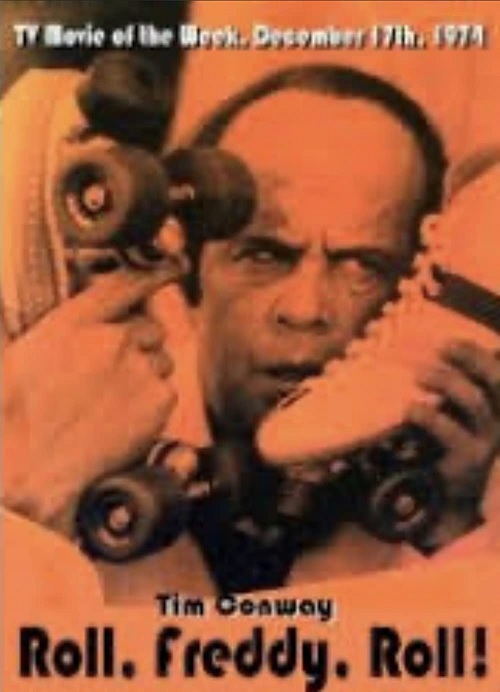
Played by Tim Conway, Freddy is a well-meaning guy who gets absolutely zero respect from the rest of the world.  He works as a computer programmer but his boss (Henry Jones) doesn’t think much of him and an attempt to score a contract with the U.S. Navy falls through when Admiral Norton (Scott Brady) announces that he doesn’t think much of computers.  Meanwhile, his ex-wife (Ruta Lee) has fallen in love with and married “Big Sid” Kane (Jan Murray).  Big Sid is a millionaire who made his fortune selling used cars.  Big Sid is seen every day on television.  And, due to catching the biggest bluefish tuna on record while on his honeymoon, Big Sid Kane is now in the Guinness Book of the World Records.

A lesser engineer would crack under the pressure and go on a rampage through Los Angeles, Falling Down-style.  But Freddy just wants to be a good father.  He just wants his son, Tommy (Moosie Drier), to look up to him the way that he now looks up to Big Sid.  Freddy takes Tommy to a roller skating rink and awkwardly skates around while Tommy talks about how much he enjoys going to Big Sid’s car lot.  When it’s time to leave the rink, Freddy is informed that his shoes have been lost.  An angry Freddy refuses to return the rink’s skates until he gets back his shoes.  Freddy then takes Tommy down to Big Sid’s used car lot, where Big Sid has invited other people to come and try to set world records of their own.  A local news reporter sees that Freddy is on roller skates and announces that Freddy is seeking to set the world record for the most time spent rolling around!  Finally, Freddy has found a way to impress his son!

Excuse me while I catch my breath.  That was a lot of plot to cram into just two paragraphs.

Roll, Freddy, Roll is not a particularly complicated movie.  For the most part, it exists solely so that Tim Conway can do some mild physical comedy while trying to balance himself on roller skates.  It only has a 73-minute run time and it basically feels like an extended episode of an old sitcom.  With all that in mind, it still seems like it takes forever to actually get Freddy into those roller skates and once he does put them on, the movie keeps up coming with implausible excuses to keep him from taking them off until he finally decides to go for the world record.  The story would have been stronger if Freddy has been the one to look at his feet and say, “I’m going to set a world record,” as opposed to him just being bullied into it by a news reporter.  Tim Conway’s likable but there’s only so many times you can watch someone fall on roller skates before the joke starts to wear thin.

It would not surprise me if Roll, Freddy, Roll was meant to be a pilot for a sitcom.  It’s easy to imagine Tim Conway trying to impress his son and win back his wife by doing something stupid on a weekly basis.  As far as I know, Roll, Freddy, Roll did not lead to a television series and that’s probably a good thing.  Freddy had a hard enough time just rolling around Los Angeles for two days!  Who knows what would have happened if he had tried to do it on a weekly basis!?

Retro Television Reviews: The Day The Earth Moved (dir by Robert Michael Lewis)


Welcome to Retro Television Reviews, a feature where we review some of our favorite and least favorite shows of the past!  On Sundays, I will be reviewing the made-for-television movies that used to be a primetime mainstay.  Today’s film is 1974’s The Day The Earth Moved!  It  can be viewed on YouTube!

Sitting in the middle of the Nevada desert, there’s a town called Bates.

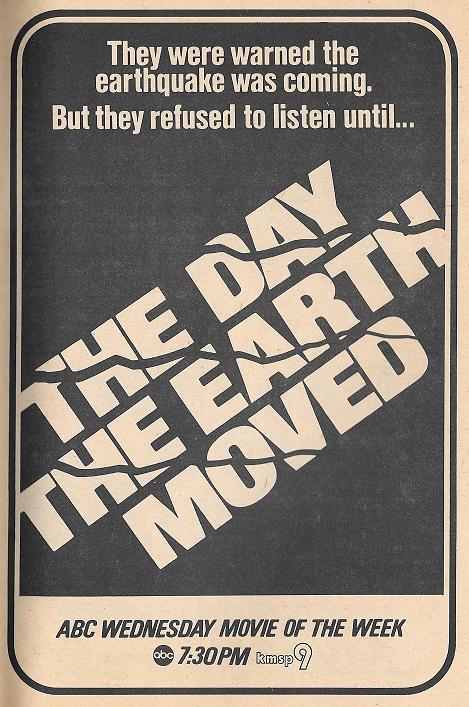
Bates was once a thriving community but the years and the hot Nevada winds have not been kind to it.  Now, it consists of only a  few buildings and a speed trap.  Judge Tom Backsler (William Windom) is the most powerful man in this tiny community and he’s determined to return Bates to its former glory.  His plan is to open up a Christmas park and to remake Bates as “Santa Claus’s home away from the North Pole.”  In order to raise the money for that project, he and the police run an aggressive speed trap.  When pilot and photographer Steve Barker (Jackie Cooper) is caught in the speed trap, it turns out that he doesn’t have enough money to pay his fine.  So, his car is impounded and he’s put to work, sweeping up the dust and helping to get the Christmas park ready to open.

With the help of friendly little townsgirl, Steve is finally able to escape from Bates and return to his job.  He works with his wife, Kate (Stella Stevens), and his best friend, Harley (Cleavon Little), as surveyors.  When someone wants to buy a stretch of the Nevada desert, Steve and Harley fly over the land and take pictures.  Looking over the latest batch of pictures, Steve deduces that not only is there going to be an earthquake but it’s going to destroy the town of Bates!  Can Steve return to the town that once held him prisoner and convince the townspeople to leave with him before disaster hits!?

In many ways, The Day The Earth Moved is a standard made-for-TV disaster flick.  Only Steve and Kate realize what’s about to happen and they struggle to get anyone else to believe them.  Indeed, it seems like the world is almost conspiring to keep them from warning everyone about the incoming earthquake.  The film’s story checks off all of the expected disaster movie plot points.  That said, the town of Bates itself — with its gigantic Santa Claus standing in the middle of the desert — is a nicely surreal location and the repeated shots of a deserted farm being gradually destroyed by minor tremors achieve a certain ominous grandeur.  Jackie Cooper and Stella Stevens are believable as a husband and wife who love each other despite the fact that they’re often very annoyed with each other.  To the film’s credit, William Windom’s character is not portrayed as being a cardboard villain but instead as someone who simply wants to give his neighbors some place decent to live.  The Day The Earth Moved is predictable but well-done.

Of course, the main reason anyone will have to watch this film will be for the earthquake.  Unfortunately, this is where viewers will run into a common problem that has afflicted many made-for-TV movies.  The low-budget earthquake is just not that impressive.  For all the scenes of people yelling, it’s always pretty obvious that the camera is doing most of the shaking.  But you know what?  It’s a made-for-TV movie from 1974.  Cut it some slack and just go with it.

Retro Television Reviews: Linda (dir by Jack Smight)


Welcome to Retro Television Reviews, a feature where we review some of our favorite and least favorite shows of the past!  On Sundays, I will be reviewing the made-for-television movies that used to be a primetime mainstay.  Today’s film is 1973’s Linda!  It  can be viewed on YouTube!

If nothing else, Linda has a wonderfully opening.

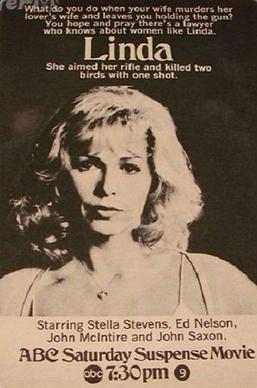
Two couples are on the beach.  Paul Reston (Ed Nelson) is talking to Anne Braden (Mary-Robin Redd) about his troubled marriage and his plans to leave his wife.  Paul’s wife, Linda (Stella Stevens), is talking to Jeff Braden (John Saxon) and looking at the rifle that he’s just handed her.  It doesn’t take long to notice that Paul and Linda seem to be closer, respectively, to Anne and Jeff than to each other.

When Anne stands up and walks toward the ocean, Linda shoots her in the back.  When Jeff runs over to Anne’s body, Linda pulls the trigger again and Jeff collapses.  Stunned by his wife’s actions, Paul runs back to his car and drives into town to get the police.  (This is another one of those movies that could have only been made in the pre-smartphone era.)  When Paul and the police return, they find Anne’s body but Jeff and Linda are nowhere to be seen.

Suddenly, Linda and Jeff come walking down the beach.  Jeff is carrying a bunch of fish and a fishing pole.  They look shocked when they see the police.  Then, when Jeff sees Anne’s body, he accuses Paul of killing her and attacks him.  Paul is arrested and taken to jail.

As I said, it’s a wonderful opening, full of twists and entertaining overemoting.  In fact, it’s so good that it’s difficult for the rest of the film to keep up.  After being charged with Anne’s murder, Paul hires a folksy attorney named Marshall Journeyman (John McIntire).  Unlike everyone else, Journeyman believes Paul’s story that he’s being framed by Jeff and Linda.  Journeyman sets out to prove that Paul is innocent.

Of course, the audience already know that Paul is innocent because the audience saw exactly what happened.  Watching the film, it was hard for me to not to feel that the story would have benefitted by a little more ambiguity as to whether or not Paul was a victim or if he truly was the delusional madman that both Linda and Jeff tried to paint him as being.  We know from the start what Jeff and Linda are doing so the only question really becomes how Journeyman is going to trick them into revealing the truth.  Unfortunately, even getting them to do that turns out to be a bit too easy.  The movie suggests that Journeyman is a brilliant investigator but, in the end, it all really just comes down to the villains not being very smart.

That said, the film’s cast does a good job.  Ed Nelson is sympathetic as the confused husband and John McIntire brings so much homespun charm to Journeyman that I got the feeling that this film was probably designed to be a pilot for a possible series.  Best of all, John Saxon and Stella Stevens play the scheming couple.  Saxon gets to wear a swimsuit and dramatically shout to the Heavens as he pretends to be shocked over Anne’s murder.  Stevens smirks at every question and accusation and appears to be having a great time playing an old school femme fatale.  The cast makes this movie worth it.

Film Review: Ant-Man and the Wasp: Quantumania (dir. by Peyton Reed)


I once read somewhere that in joining Marvel Comics, you could never get started writing or drawing any of the top tier characters like Spider-Man or any of the X-Men. Instead, you were left to work with some of the lesser known (or less famous) characters like the The Fantastic Four, Moon Knight or Namor and then work your way up to the big wigs. I don’t know if that’s true, but after having completed both Avengers: Infinity War and Avengers: Endgame, the MCU feels like it’s in the same position for me. Most of the S and A-Tier level heroes and villains were used in some way. Even their B-Class characters are in play (like who was the Multitude of Madness‘ Black Bolt, anyway?), so all they really have left are characters only the deepest comic fans know. It might be great for the movie fans who are just learning about them all (like myself, who primarily danced in the Spider-Man circles), but I wonder about the comic book fans and whether it’s all still holding up for them.

All that aside, it’s still better than getting a reboot of the same two or three heroes we keep getting over at DC – though they are learning. I’ll give Disney/Marvel credit for the attempt. I’m still waiting for DC to give either Green Arrow a try on film or Green Lantern another chance.

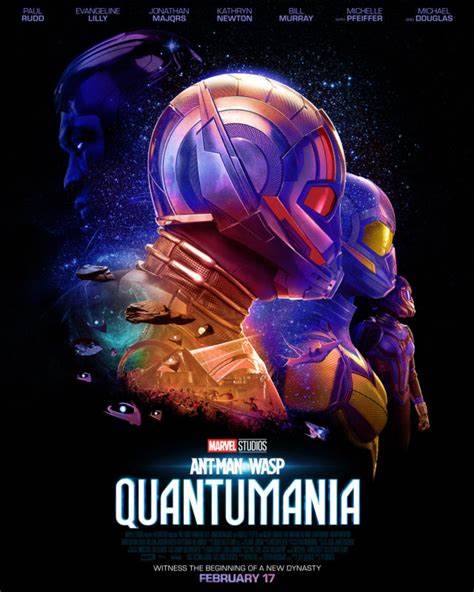
Ant-Man and the Wasp: Quantumania (or just Quantumania) finds Scott Lang (Paul Rudd) enjoying his life after the events of Avengers: Endgame. He’s a best selling author now, a welcome change from being unknown in Avengers: Endgame. He has a wonderful family in Hope Van Dyne (Evangelline Lilly), along with her parents, Hank Pym (Michael Douglas) & Janet Van Dyne (Michelle Pfeiffer). If only his daughter Cassie (Kathryn Newton, taking over for Endgame‘s Emma Fuhrmann) wasn’t getting into trouble all the time, things might just be perfect.

Cassie explains to Scott that with her free time, she’s been studying the Quantum Realm and managed to create a device that can track objects within it. At hearing this, Janet balks and demands Cassie shut down the device. This leads to a malfunction that pulls the entire family in to the Quantum Realm. The realm is full of life, much like the alternate dimensions that Doctor Strange has travelled. There is also a great evil dwelling in Kang (Jonathan Majors, Creed III), who hopes to escape. Can the family find a way back home, while dodging the threats that lie within?

The acting in Quantumania is fine. We’re introduced to some interesting supporting characters with William Jackson Harper (Midsommar) and Katy O’Brian’s (Syfy’s ZNation) performances. We’re also reunited with some familiar faces. Paul Rudd is charming and funny as always, as is Evangelline Lilly. Although we won’t get to know how Emma Fuhrmann would have done as Cassie this time, Kathryn Newton’s good here. It’s Marvel, I get it. Recasts can and do happen. We could argue that we’re a bit out of touch with this new casting, butCassie is given a lot to do in this installment, which really brings her full circle with some of the conversations she had with Scott, pre-Blip and all.

They all take a bit of a back seat to Michelle Pfeiffer, however. Janet Van Dyne is tight-lipped about the Quantum Realm, and Pfeiffer carries her experience there flawlessly. Her character is scared at the thought of returning, but once she arrives, Janet has layers of secrets that peel back. She and Kang were the most interesting characters of the group. There’s almost a covert agent quality to Janet, and I wouldn’t mind seeing a backstory of more of her adventures. An animated Adventures of The Wasp in the Quantum Realm, Disney?

And then there’s Jonathan Majors. You can’t have a good hero without a good villain, and his portrayal of Kang is scary. Anyone who watched Da 5 Bloods, The Harder They Fall or HBO’s Lovecraft Country knows that Majors can easily shift between quiet and reserved to explosive. He’s also physical enough to back his character’s words. I’m not entirely convinced of Kang’s motives for doing what he’s doing, but Majors’ presence is definitely felt when he’s in a scene.

Quantumania is basically 2010’s Tron: Legacy with a fresh coat of paint. Family gets pulled into another realm. Said realm is ruled by a major villain who wishes to spread their evil outside of the realm. Family must find a way to escape realm, yet ensure that the villain doesn’t get out as well. Quantumania‘s execution of the plan is far better than Tron‘s and I found myself truly worrying about the fates of the Lang/Van Dyne family in some of the scenes. I have to give a bit of kudos to whoever had the idea to have “the little guy” in Ant-Man be the first to square off with such a villain like Kang. For me, the end result was the opposite of watching the Hulk’s first interaction with Thanos. Back then, audiences may have thought that if the Hulk was dispatched so easily, what would that say for everyone else? In Quantumania, Scott and Hope give it their all, despite only really having their wits, fists, family & science. It was a bit more rewarding for me. There’s also something of a heist element to Quantumania, but it’s unfortunately weaker than the first two films. I would have loved to see a plan/info gathering/execution chapter to it all, but it never gets there.

Musically speaking, it’s nice to have Christophe Beck back on board for another installment. He’s taken the Ant-Man theme to new heights and the music throughout fits the film well. While there aren’t any standout songs like “Anthropodie” on the last film, the score overall turns a simple heist theme into an epic fight of good vs. evil.

Although the 3D in the film is nice, it’s not really required. For me, the effect faded after a while, only to resurface in key sequences. That could be mostly my fault for sitting in the front row, or perhaps the Avatar films have spoiled me. There’s a lot of CGI at work with the Quantum Zone, and I thought they did okay with it, for the most part. There’s nothing to complain about. Then again, we’ve kind of seen it before in every other multiverse story leading up to this.

Overall, Quantumania is a fun ride into the Quantum Zone. We’re given a chance to see Janet Van Dyne shine in her element. Every member of the entire Ant-Man family has something to offer (even Michael Douglas, who is smooth with the one liners), and it wasn’t particularly bad, as third films go.

Retro Television Reviews: The Tower (dir by Richard Kletter)


Welcome to Retro Television Reviews, a feature where we review some of our favorite and least favorite shows of the past!  On Sundays, I will be reviewing the made-for-television movies that used to be a primetime mainstay.  Today’s film is 1993’s The Tower!  It  can be viewed on YouTube!

The plot of 1993’s The Tower could probably best be described as, “Paul Reiser gets a job and gets everyone killed.”

Technically, Paul Reiser is playing Tony Minot, a guy who would rather spend his time in his apartment, composing new age synthesizer anthems and eating left over pizza, than actually go to work. But make no mistake about it. Tony is basically Paul Reiser, all the way down to the neurotic mannerisms and the bad jokes.

Anyway, through the help of an old friend, Tony has gotten a job. He’s going to be working in a state-of-the-art tower, one that is totally run by a computer system known as CAS. CAS is designed to eliminate any and all security threats. For instance, when an unauthorized pigeon lands on the tower’s roof, it doesn’t take long for CAS to reduce that pigeon to a bunch of floating feathers. Tony has been told that it’s very important that 1) he have his security card with him at all times and 2) that he not damage his security card in any way.

So, of course, Tony damages his security card.

With the help of a security guard, Tony still manages to get inside the tower but, since his card doesn’t work, CAS considers Tony to be a security risk. When Tony proceeds to casually violate several security rules and stays in the building after hours, CAS decides to destroy him. Unfortunately, since Tony is kind of needy and always has to have people around him, everyone else in the building ends up getting killed too.

(This is a 1993 film and it was made for television so none of the kills are especially interesting. One guy gets caught in the closing doors of an elevator. Someone else gets trapped in an overheated sauna.)

The majority of the film deals with Tony crawling around the building, just like Bruce Willis in Die Hard. CAS is determined to kill both him and his potential love interest. We’re supposed to be angry at CAS and concerned about the world’s dependence on technology but you know what?

THIS IS ALL TONY’S FAULT!

Seriously, if Tony hadn’t damaged his card, none of this would have happened. Tony was specifically told not to damage his card but obviously, it didn’t occur to him that maybe he should try to follow the rules of his new workplace during his first day on the job!

The Tower is very much a film of its time. That’s obvious just from the cartoonish CGI and the fact that someone thought casting Paul Reiser as a Die Hard-style action hero was a good idea. Beyond that, it’s a film that’s very concerned about the rise of computers and technology. In 1993, I’m sure audiences were like, “OH MY GOD! COMPUTERS CAN’T BE REASONED WITH!” but, when I watched the film last night, I was just like, “So, they don’t have voice or facial recognition? What type of company is this?”

Anyway, The Tower is not exactly a good movie but it’s oddly watchable. Maybe it’s just because of how strange it is to see Paul Reiser doing the whole Die Hard thing. (Before anyone asks, The Tower was not meant to be a spoof. In fact, it takes itself pretty seriously.) Or maybe it’s just the fact that, by the end of the movie, you’ll totally be on the Tower’s side.

Go, CAS, go!

Retro Television Reviews: Haunts of the Very Rich (dir by Paul Wendkos)


Welcome to Retro Television Reviews, a feature where we review some of our favorite and least favorite shows of the past!  On Sundays, I will be reviewing the made-for-television movies that used to be a primetime mainstay.  Today’s film is 1972’s Haunt of the Very Rich!  It  can be viewed on YouTube!

The 1972 made-for-TV movie Haunts of the Very Rich opens with a lengthy shot of Lyle (Tony Bill) and Laurie (Donna Mills) sharing a very long kiss.  Obviously, they’re very happy and why shouldn’t they be?  They’re young.  They’re beautiful.  They’re in love.  They’re newly married.  And …. they’re on an airplane!

It’s a private plane, one that’s heading towards a resort called The Portals of Eden.  There’s only a few other people on the plane.  David Woodrough (Lloyd Bridges) is a businessman who is looking forward to spend some time away from his wife, especially if it means a chance to get to know one of the other passengers, Ellen Blunt (Cloris Leachman).  Annette Larner (Anne Francis) is also traveling alone and is hoping she might finally be able to get some sleep without having to take a handful of pills beforehand.  Rev. Fellows (Robert Reed) appears to have lost his faith.  And then there’s Al Hunsicker (Ed Asner).  Hunsicker’s a little bit confused about how he ended up on the airplane.  As far as he knows, he’s supposed to be on his way to a business meeting in Dallas.  Portals of Eden?  Al’s never heard of the place!  Of course, nobody on the plane really seems to be sure where they’re going or how they even got on the plane in the first place.  Strangely, Al appears to be the only one who finds any of this to be strange.

When the plane lands, they discover that the Portals of Eden is a large hotel sitting at the edge of a tropical wilderness.  Their host, the always polite Mr. Seacrist (Moses Gunn), welcomes them but avoids answering anyone’s questions.  Seacrist tells them to enjoy their stay.

For the first day, that’s exactly what everyone does.  They relax.  They indulge in a little pampering.  David gets to know Ellen.  Al is still worried about getting to his business meeting but he is assured that he can always fly out to Dallas the following day.

The night, a violent storm hits.  The next day, everyone wakes up to discover that the resort is nearly deserted.  There’s no electricity.  There’s no way to call out.  There’s not much food.  Seacrist tells them not to worry.  He assures them that help is on the way.  As the guests wait to be rescued, they finally start to wonder just how exactly the ended up at the resort in the first place.  They realize that they’ve almost all had a recent brush with death.  David swears to Ellen that he’ll file for divorce as soon as they get back home but what if they don’t have a home to which to return?  Occasionally, the guests hear a plane flying overhead.  At one point, they even see one land.  But every time, just when it seems like they’re on the verge of finally being rescued, the plane vanishes.

And things just get stranger from there.

If Jean-Paul Sartre had ended up in the United States, writing for The Bold and the Beautiful, the end result would probably look a lot like Haunts of the Very Rich.  Considering that this is a made-for-TV movie from the early 70s, Haunts of the Very Rich is a surprisingly effective and atmospheric little horror film.  The story itself won’t exactly win any points for originality.  You’ll guess the secret of Portals of Eden long before any of the characters in the film.  But still, it’s a well-directed and nicely acted film, one that’s topped off with a suitably surreal (if somewhat abrupt) finale.

Haunts of the Very Rich can currently be found on YouTube and I recommend it for anyone who likes their melodrama served with a side of existential dread.

2022 In Review: Lisa Marie’s Top 30 Films of 2022


Without further ado, here are my top 30 films of 2022!

(Why 30?  Because Lisa doesn’t do odd numbers!  Also, be sure to check out my picks for 2010201120122013201420152016201720182019, 2020, and 2021!  Wow, I’ve been doing this for a while!)

30. Marcel The Shell With Shoes On (dir by Dean Fleischer Camp)

An animated film with heart, Marcel The Shell With Shoes On would probably be ranked higher if Marcel’s favorite news show had been something other than 60 Minutes.  Still, questionable viewing habits aside, Marcel and Nana Connie and all the other shells were amazing characters and the end of the movie brought tears to my mismatched eyes.  With this film and I Want You Back, Jenny Slate had quite a year.

29. Ted K (dir by Tony Stone)

Released in February of this year, this film about Ted Kaczyski and his descent into madness was unfairly overlooked. Sharlto Copley was perfectly cast as Ted K.  This is a film that probably won’t make Ted’s supporters happy but, at the same time, it also avoids painting him as just being a straight-out madman.  It’s refusal to simplify makes the film far more than just another true crime biopic.
28. Dashcam (dir by Rob Savage)

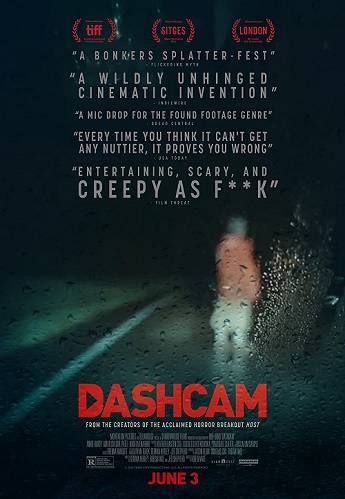
Starring Annie Hardy as herself, this low-budget horror film is a scathing satire of life during the age of COVID and performative “wokeness.”  After the past few years, there’s something rather cathartic about Hardy’s refusal to obey.

27. The Batman (dir by Matt Reeves)

At this point, I’m fairly cynical about comic book movies in general and Batman films in specific.  I mean, how many Batmen have we had over the past ten years?  (Actually, I think only four but it feels like a lot more!)  That said, I enjoyed The Batman, for both its noirish atmosphere and it’s willingness to embrace the melodrama.  You have to love the fact that the villain was basically a nerdy podcaster.

26. Operation Mincemeat (dir by John Madden)

Based on a true story, this film was a throwback to the earnest World War II films of the past.  Colin Firth, Kelly MacDonald, Matthew McFayden, and Johnny Flynn were all well-cast and did their part to bring this moment of WWII history to life.
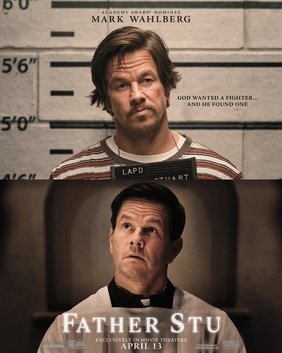
25. Father Stu (dir by Rosalind Ross)

You don’t have to be from a Catholic background to appreciate Father Stu but it probably helps.  This was one of those roles that only Mark Wahlberg could have pulled off.

24. See How They Run (dir by Tom George)

This stylized murder mystery was terrifically entertaining and witty.  Sam Rockwell and Saoirse Ronan are both treasures.

23. I Want You Back (dir by Jason Orley)

Two friends conspire to win back their respective romantic partners and end up falling in love with each other instead.  This was an enjoyable comedy, one that was blessed with an outstanding cast that included Jenny Slate, Charlie Day, Scott Eastwood, and Gina Rodriguez.  The scene in which Jenny Slate sings Suddenly Seymour is a classic.

22. Ambulance (dir by Michael Bay)

This was the film that Michael Bay was born to direct.  For once, Bay’s hyperkinetic style was perfectly matched by the story being told.  It also helped that the ambulance was a real ambulance and not a robot pretending to be an ambulance.

21.Send Me (dir by Nick Palmisciano)

This is a heart-breaking documentary about the efforts of 12 veterans to evacuate as many allies as they could during the disastrous withdraw from Afghanistan.  This film deserved more attention than it got.

20. The Bombardment (dir by Ole Bornedal)

Based on a true story, this Danish film deals with the accidental bombing of a school during World War II.  It’s been overshadowed a bit by All Quiet On The Western Front but, in its quieter way, The Bombardment is also a strong look at the horrors of war.

19. Goodnight Oppy (dir by Ryan White)

This is a poignant documentary about Opportunity, the NASA exploration rover that spent 15 years exploring Mars.  This movie proves that a robot can make you cry.

18. Dark Glasses (dir by Dario Argento)

Don’t listen to the critics.  This enjoyably over-the-top giallo was an entertaining return-to-form for Dario Argento.

17. Wildcat (dir by Melissa Lesh and Trevor Fost)

This poignant documentary follows a depressed veteran as he finds purpose helping to raise a baby ocelot in Peru.  Be prepared to cry.

16. Apollo 10 1/2 (dir by Richard Linklater)

Richard Linklater’s animated film was well-received by critics but it’s still hard not to feel that it’s been a bit overlooked.  Narrated by Jack Black, the film details the 1969 moon landing from the perspective of a child with a very active imagination.  Nostalgic, sweet-natured, and ultimately rather moving, Apollo 10 1/2 is a film that celebrates life.

15. Three Minutes: A Lengthening (dir by Bianca Stigner)

This haunting and moving documentary, which is narrated by Helena Bonham Cater, examines a three-minute snippet of 16mm film that was shot in a Jewish town in Poland in 1938, shortly before the Nazis invaded.  By examining every aspect of those three minutes, this documentary becomes both a memorial for the inhabitants of that town and a much-needed reminder of the horrors and reality of the Holocaust.  With anti-Semitism and Holocaust denial on the rise, this is an important documentary.

14. The Northman (dir by Robert Eggers)

The Northman is occasionally thrilling and occasionally ludicrous but it’s always watchable.  Robert Eggers finds moments of humor and odd beauty in this Viking epic.  Nicole Kidman embraces the melodrama and goes all out.  I just hope Valhalla was actually worth all the trouble.

13. Puss In Boots: The Last Wish (dir by Joel Crawford)

Yeah, you knew this film was going to show up on my list.  To be honest, the film could have been about just about anything.  I’d watch Puss In Boots read the phone book as long as Antonio Banderas returned to do his voice.  The fact that the film itself was cute and even touching was an added bonus.

12. Guillermo del Toro’s Pinocchio (dir by Guillermo del Toro and Mark Gustafson)

Yes, a puppet can make you cry.

11. Babylon (dir by Damien Chazelle)

Was it flawed?  You bet.  Did it run a little bit too long?  Yes, it did.  Could I have done without the scene with the elephant?  You better believe it.  That said, this film was so gloriously excessive and over-the-top that it was easy for me to forgive its flaws.  The critics may not have liked it but Babylon is a film that will be rediscovered.

10. The Fabelmans (dir by Steven Spielberg)

I went back and forth over whether to put The Fabelmans or Babylon in the number ten spot.  In a way, they’re kind of similar in that they have their flaws but they’re both saved by their director’s obvious love of cinema.  In the end, David Lynch’s role as John Ford moved The Fabelmans into the 10th spot.

9. Everything Everywhere All At Once (dir by the Daniels)

To be honest, I think some people are going a little bit overboard in their praise for this film.  Yes, it’s one of the year’s best but 2022 wasn’t that strong of a year and Everything is one of those probable Best Picture winners that, like Nomadland and CODA, will probably not be quite as celebrated after it actually wins.  That said, Michelle Yeoh and especially Ke Huy Quan deserve all the praise that they’ve received and I appreciated that the film featured the destruction of an IRS office.  It’s not as perfect as some say but, due largely to the cast, it still deserves to be in my top ten.

8. Nitram (dir by Justin Kurzel)

This is another unfairly overlooked film, this time from Australia.  Caleb Landry Jones gives a powerful and disturbing performance as a troubled young man named Nitram who commits an act of shocking violence.  Anthony LaPaglia and Judy Davis play Nitram’s parents, who are both troubled in their own individual ways.  Essie Davis plays the older woman who falls in love with Nitram, despite the fact that Nitram is incapable of loving anyone.

7. Emily the Criminal (dir by John Patton Ford)

Aubrey Plaza plays Emily, who discovers that not only does crime pay but, in the gig economy, it’s one of those few ways to get ahead.  Part thriller and part satire, Emily the Criminal reminds us that Plaza is one of the most interesting actresses working today.

6. All Quiet On The Western Front (dir by Edward Berger)

This German anti-war epic stays true to the themes of its source material while updating the plot for the modern era.  The contrast between the generals and the diplomats planning battles and the soldiers dying in them is a powerful one.

5. Elvis (dir by Baz Luhrmann)

This wonderfully excessive biopic features good music, a great performance from Austin Butler, and a wonderfully eccentric one from Tom Hanks.  Luhrmann is hardly a subtle director but Butler’s performance keeps the film from spiraling out of control.

4. Vengeance (dir by B.J. Novak)

This whip-smart satire of both true crime podcasts and the red state/blue state divide deserved far more attention than it received.  Ashton Kutcher has actually become a surprisingly dependable character actor.  Director and screenwriter Novak tells the story with sensitivity and a sharp eye for the absurd.
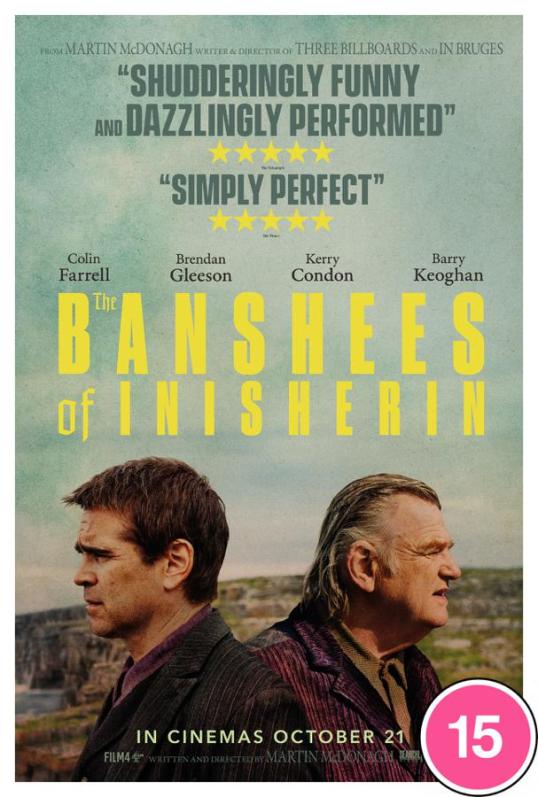
3. The Banshees of Inisherin (dir by Martin McDonagh)

In his best film yet, Martin McDonagh examines friendship, art, violence, and anger in Ireland.  Brendan Gleeson no longer wants to be Colin Farrell’s friend.  Farrell’s attempts to discover why leads to all sorts of surprising and macabre developments.  Gleeson and Farrell have never been better.  Kerry Condon and Barry Keoghan offer up poignant support.

2. Tar (dir by Todd Field)

Lydia Tar is a brilliant artist.  Does it matter that she also might be a terrible human being?  Todd Field’s return to filmmaking meditates on the meaning of art, morality, and the consequences of hubris.  Cate Blanchett is perfectly cast.  The scene where Tar talks to a student who objects to playing music by a white male is a real litmus test.  Do you think Tar is a bully or do you think the student is being too sensitive?  For all the talk about how Lydia dismisses the student’s claims, many also fail to note that the student is the one who calls her a “bitch” and runs out of the room.  Much as in Field’s previous film, no one is as perfect or as justified or as blameless as they may believe.

And, finally, my top film of 2022 is….

  1. Top Gun: Maverick (dir by Joseph Kosinski)

After 2 years of lockdowns and pessimism, Top Gun: Maverick was finally released and it reminded audiences of what they loved about movies in the first place.  Top Gun: Maverick was the movie that we needed in 2022.

Well, that concludes my late look back at 2022!  Now, let’s focus on 2023!

Lisa Marie’s 2022 In Review:

  1. 16 Worst Movies
  2. 10 Favorite Songs
  3. 10 Top Non-Fiction Books
  4. Lisa Marie’s Favorite Novels
  5. The Best of Lifetime
  6. 10 Good Things I Saw On Television
Insomnia File #59: True Spirit (dir by Sarah Spillane)


What’s an Insomnia File? You know how some times you just can’t get any sleep and, at about three in the morning, you’ll find yourself watching whatever you can find on cable or Netflix? This feature is all about those insomnia-inspired discoveries!

If you were having trouble getting to sleep last night (or this night, for that matter), you could have turned over to Netflix and passed the time watching True Spirit, a rather wholesome biopic from Australia.

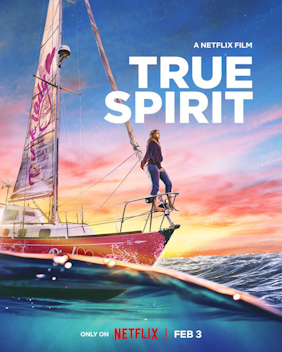
Teagan Croft stars as Jessica Watson, who, at the age of 16, became the youngest person ever to sail solo, non-stop around the world.  For Jessica, it was not only the fulfilment of a childhood dream but it was also a true test of survival as, towards the end of her journey, she got trapped in a very violent storm and, at one point, her boat was actually 15 feet below the surface of the ocean.  For the nation of Australia, it was a moment of great pride despite the fact that many of the same people who celebrated Jessica’s accomplishment had earlier tried to prevent her from making the journey.  (Indeed, the film suggests that one reason why Jessica was in such a hurry to start her voyage was because the Queensland legislature was literally putting together a bill that, once passed, would have made it illegal for her to do so.)  The film begins with Jessica already in training for her voyage.  One mistake during a trial run leads to her boat nearly crashing into a tanker, a reminder that, as beautiful as the ocean may be, it can still be a dangerous place.  With the help of Ben Bryant (Cliff Curtis) and the support her parents (Anna Paquin and Josh Lawson), Jessica is determined to make her voyage.  She not only wants to set a world record but she also wants to prove that, even though she’s dyslexic, she can still accomplish anything that she sets her mind too.

There’s really nothing that surprising to be found in True Spirit.  Even if you didn’t already know the true story on which the film was based, you wouldn’t be surprised by how Jessica’s voyage goes.  But, at the same time, it’s a well-intentioned and almost achingly sincere film, one that celebrates a worthy accomplishment and which features a likable lead performance from Teagan Croft.  It’s a film that is determined to focus on the positive, though it certainly doesn’t shy away from the fact that nature can be frightening and unpredictable.  There’s nothing particularly edgy about True Spirit.  Despite a nicely executed storm scene, this isn’t All is Lost.  But it will hold your attention and it’ll probably leave you in a good mood.  It did for me!

Finally, I can’t complete this review without mentioning that Todd Lasance plays a rather obnoxious television journalist named Atherton.  Would it be too much to hope that his name was meant to be a reference to William Atherton, who played a similar reporter in the first two Die Hards?

Previous Insomnia Files:

  1. Story of Mankind
  2. Stag
  3. Love Is A Gun
  4. Nina Takes A Lover
  5. Black Ice
  6. Frogs For Snakes
  7. Fair Game
  8. From The Hip
  9. Born Killers
  10. Eye For An Eye
  11. Summer Catch
  12. Beyond the Law
  13. Spring Broke
  14. Promise
  15. George Wallace
  16. Kill The Messenger
  17. The Suburbans
  18. Only The Strong
  19. Great Expectations
  20. Casual Sex?
  21. Truth
  22. Insomina
  23. Death Do Us Part
  24. A Star is Born
  25. The Winning Season
  26. Rabbit Run
  27. Remember My Name
  28. The Arrangement
  29. Day of the Animals
  30. Still of The Night
  31. Arsenal
  32. Smooth Talk
  33. The Comedian
  34. The Minus Man
  35. Donnie Brasco
  36. Punchline
  37. Evita
  38. Six: The Mark Unleashed
  39. Disclosure
  40. The Spanish Prisoner
  41. Elektra
  42. Revenge
  43. Legend
  44. Cat Run
  45. The Pyramid
  46. Enter the Ninja
  47. Downhill
  48. Malice
  49. Mystery Date
  50. Zola
  51. Ira & Abby
  52. The Next Karate Kid
  53. A Nightmare on Drug Street
  54. Jud
  55. FTA
  56. Exterminators of the Year 3000
  57. Boris Karloff: The Man Behind The Monster
  58. The Haunting of Helen Walker

Retro Television Review: After The Promise (dir by David Greene)


Welcome to Retro Television Reviews, a feature where we review some of our favorite and least favorite shows of the past!  On Sundays, I will be reviewing the made-for-television movies that used to be a primetime mainstay.  Today’s film is 1987’s After the Promise!  It  can be viewed on YouTube!

Mark Harmon is, in many ways, the ideal television actor.  He’s handsome in a distinguished but not overwhelming sort of way.  He projects a pleasant personality.  He’s likably low-key.  He’s a talented actor but he’s also a bit of a safe and predictable actor.  It’s been said that the difference between a TV star and a movie star is that a movie star combines charisma with danger whereas a TV star combines a likable screen presence with reliability.  Mark Harmon’s been a reliable TV presence for longer than I’ve been alive.

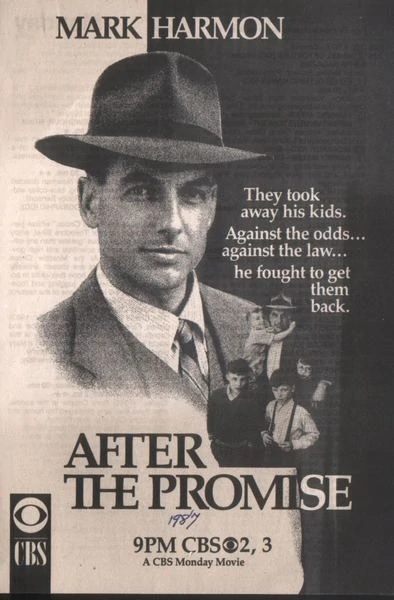
In 1987’s After the Promise, Harmon plays Elmer Jackson, a carpenter who is just trying to survive day-to-day in Depression-era California.  Though his wife (who is implied to be a Christian Scientist) begs him not to take her to the hospital when she gets ill, Elmer goes against her wishes.  When he gets her to the hospital, he is treated rudely by the staff.  A cop approaches him in the waiting room and brusquely orders him to move his car.  When a doctor finally does approach Elmer, he calmly explains that Elmer’s wife has did of TB and that she should have been brought to the hospital weeks ago.

Now a widower, Elmer is determined to keep the last promise that he made to his wife and give his four sons the best life that he possibly can.  Unfortunately, the government is determined to keep Elmer from doing that.  When Elmer goes to the government to try to get temporary financial assistance, the government reacts by taking his children away from him and forcing them into foster care.  When Elmer, during one of his weekly visits, tries to take the children for a ride, the government bans him from having any contact with his children.  When Elmer’s sons try to escape from the foster home, they’re separated and sent to separate facilities.

Informed that he can only get his children back if he proves that he’s financially stable, Elmer becomes an itinerant worker.  It’s only after he meets and marries Anna (Diana Scarwid) that Elmer finally gets a chance to be reunited with his sons but, after years of abuse, his sons have their own traumas to deal with before they can accept Elmer as being their father.

This is a movie that really pulls at your heartstrings!  There’s nothing subtle about it but, at the same time, its portrait of bureaucrats without empathy is one that feels very real and contemporary.  Over the course of the film, Elmer learns that the rules are not being written to help out a blue collar worker who doesn’t have a lot of money and, watching the film, it’s hard not to consider that the rules haven’t really changed that much over the years.  Elmer isn’t just fighting to reunited his family.  His fighting to save them from a system that is designed to dehumanize.  It’s an ideal role for a television star like Mark Harmon, as Elmer isn’t a terribly complex man but he is a very determined one.  It’s a role that demands a lot of sincerity and Harmon certainly delivers.  For that matter, so does this simple but emotionally resonant film.