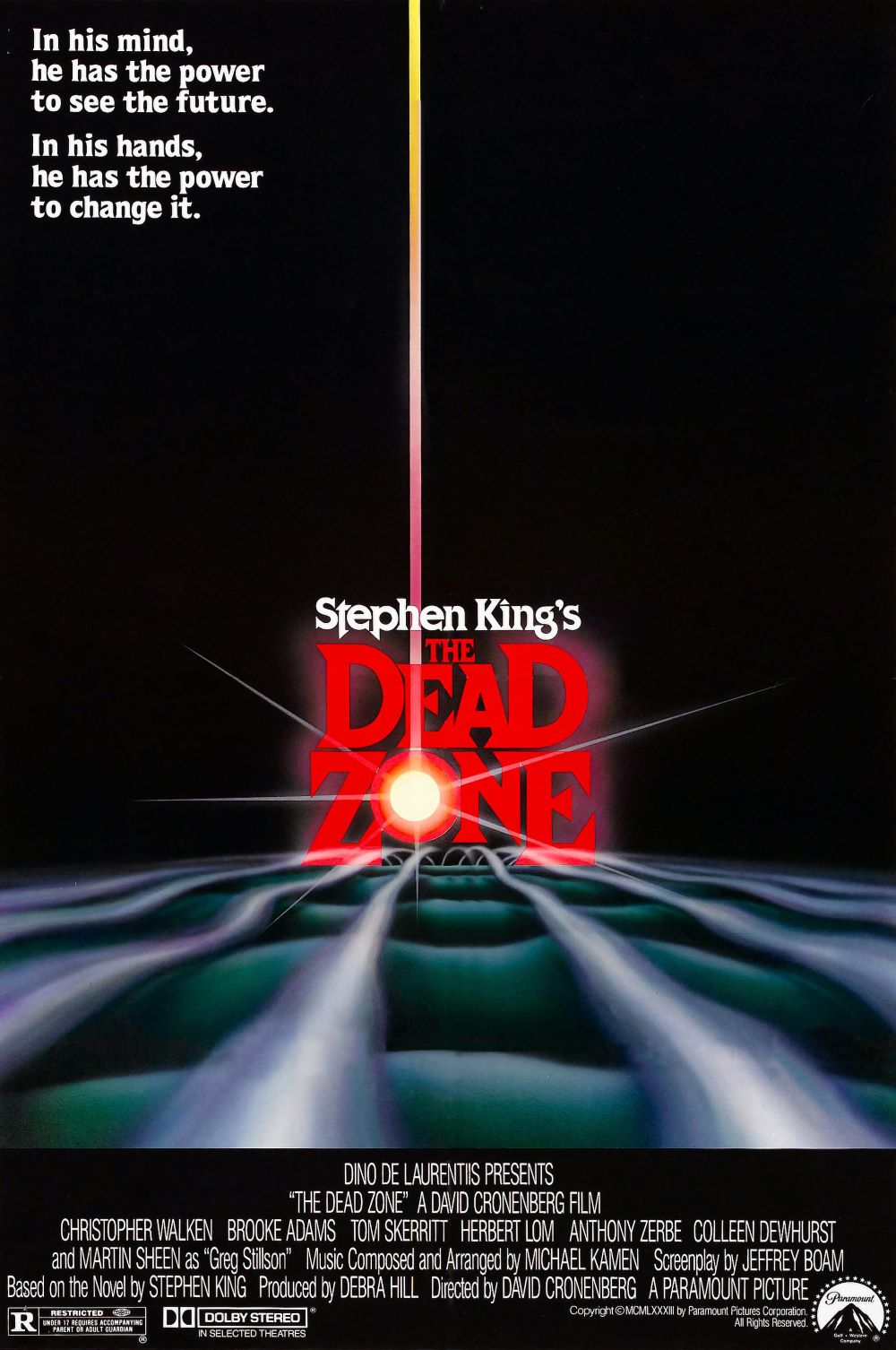
Horror Review: The Dead Zone (dir. by David Cronenberg)


“Bless me, Father, for I have sinned. I had the power… and I tried to prevent what I saw.”Johnny Smith

In 1983, David Cronenberg adapted Stephen King’s The Dead Zone with a distinctive emphasis on mood, morality, and psychological depth rather than traditional horror spectacle. The film follows Johnny Smith (Christopher Walken), a small-town schoolteacher whose life transforms irrevocably after a traumatic car accident leaves him in a five-year coma. Upon awakening, Johnny discovers he possesses psychic abilities that allow him to see the past and future by touch. Rather than a gift, this power becomes a heavy burden, isolating him and forcing him into wrenching moral choices.

Cronenberg’s direction is meticulous and deliberately restrained. The film’s muted color palette and stark winter landscapes visually echo Johnny’s emotional isolation and the fragility of human existence. His careful, often gliding camera movements create a mounting sense of quiet dread, while minimalistic sound design underscores moments of revelation with haunting subtlety. This subdued style elevates the film’s psychological impact, transforming it into a thoughtful and melancholy meditation on the cost of harrowing knowledge.

Significantly, The Dead Zone marks a departure from Cronenberg’s signature body horror. Instead of the grotesque physical transformations and visceral mutations that characterize much of his other work, here Cronenberg turns inward. The real horror lies in the malleability of the mind and the elusive nature of perception—how reality, memory, and the future are unstable constructs that can shift and fracture under psychic strain. This thematic focus on the impermanence and distortion of mental reality touches on some of Cronenberg’s deepest artistic fascinations.

The restrained treatment of body horror in The Dead Zone previews the director’s later, more psychologically driven films such as A History of ViolenceEastern Promises, and A Dangerous Method, where character studies and narrative depth take precedence over startling visuals. In this early pivot, Cronenberg demonstrates that his mastery lies not only in visual spectacle but in probing the profound emotional and moral dilemmas faced by his characters. The vision-focused horror here is cerebral and grounded, rooting supernatural phenomena in human frailty and ethical complexity.

Christopher Walken’s nuanced portrayal is the emotional heart of the film. He captures Johnny’s vulnerability, weariness, and profound solitude, portraying a man burdened by a cursed knowledge that isolates him from the world. Martin Sheen plays Greg Stillson, the ambitious and morally bankrupt politician whose rise Johnny must foretell and who embodies the film’s central threat. The supporting cast, including Brooke Adams as Johnny’s lost love Sarah and Tom Skerritt as Sheriff Bannerman, delivers compelling and authentic performances that humanize the film’s intimate, small-town environment.

Several changes from King’s novel sharpen the film’s thematic focus. The novel’s sprawling plot, including a serial killer subplot and a brain tumor storyline symbolizing Johnny’s mortality, is pared down or omitted. Despite this trimming, the serial killer element retained in the film remains chilling and effective. It highlights the darker repercussions of Johnny’s psychic gift and injects a tangible sense of dread, reinforcing the psychological weight Johnny carries. This subplot grounds the supernatural within a disturbing reality, illustrating the violent and tragic circumstances Johnny must grapple with as part of his burden.

The concept of the “dead zone” itself shifts in meaning. Originally, the term referred to parts of Johnny’s brain damaged by the accident, blocking certain visions. Cronenberg reinterprets it as a metaphor for the unknown and unknowable parts of the future—the gaps in psychic clarity that allow for free will and change. This subtle shift reshapes the narrative toward a more ambiguous, hopeful meditation on destiny and human agency.

Compared to King’s novel, Cronenberg’s Johnny is more grounded and isolated. The novel frames Johnny’s struggle within a broader spiritual and fatalistic context, highlighted by the looming presence of a brain tumor and a nuanced exploration of hope versus resignation. The film, by contrast, focuses on the emotional and moral fatigue induced by Johnny’s psychic gift, emphasizing his loneliness and reluctant responsibility rather than supernatural destiny.

Walken’s restrained, haunting performance strips away mythic grandeur to reveal a deeply human character. The film’s narrowed narrative tightens focus on Johnny’s internal anguish and his difficult ethical choices, making his plight intimate and richly relatable.

On a thematic level, The Dead Zone contemplates fate, free will, and sacrifice. Johnny’s psychic abilities act as a draining, almost chthonic force, transforming him into a reluctant prophet who is tasked with intervening in grim futures at great personal cost. The film’s bleak winter setting visually reflects Johnny’s alienation, while its deliberate pacing highlights the exhaustion and heartbreak that comes with such knowledge.

Ultimately, Cronenberg’s The Dead Zone goes beyond supernatural thriller conventions. It is a profound meditation on empathy, sacrifice, and the human condition—where the greatest horrors are internal, and the cost of knowledge is both psychic and emotional. Johnny Smith emerges as a tragic, flawed figure wrestling with unbearable burdens.

Cronenberg’s direction and the impeccable performances make The Dead Zone a standout in King adaptations. The film’s enduring impact lies in its rich thematic texture, its moral ambiguity, and its unflinching exploration of human frailty, all conveyed through a director shifting skillfully from physical body horror to psychological and existential terror. The film remains as haunting and resonant now as it was upon release, a testament to the synergy of Cronenberg and King’s extraordinary talents.

Horror Comics Review: Evil Ernie


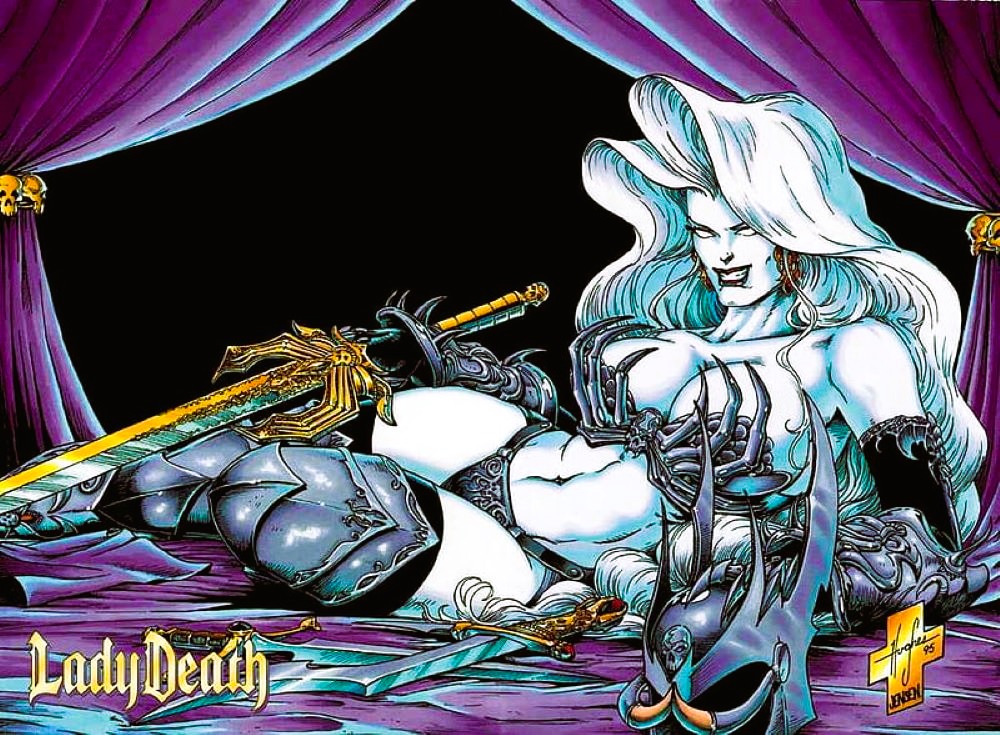
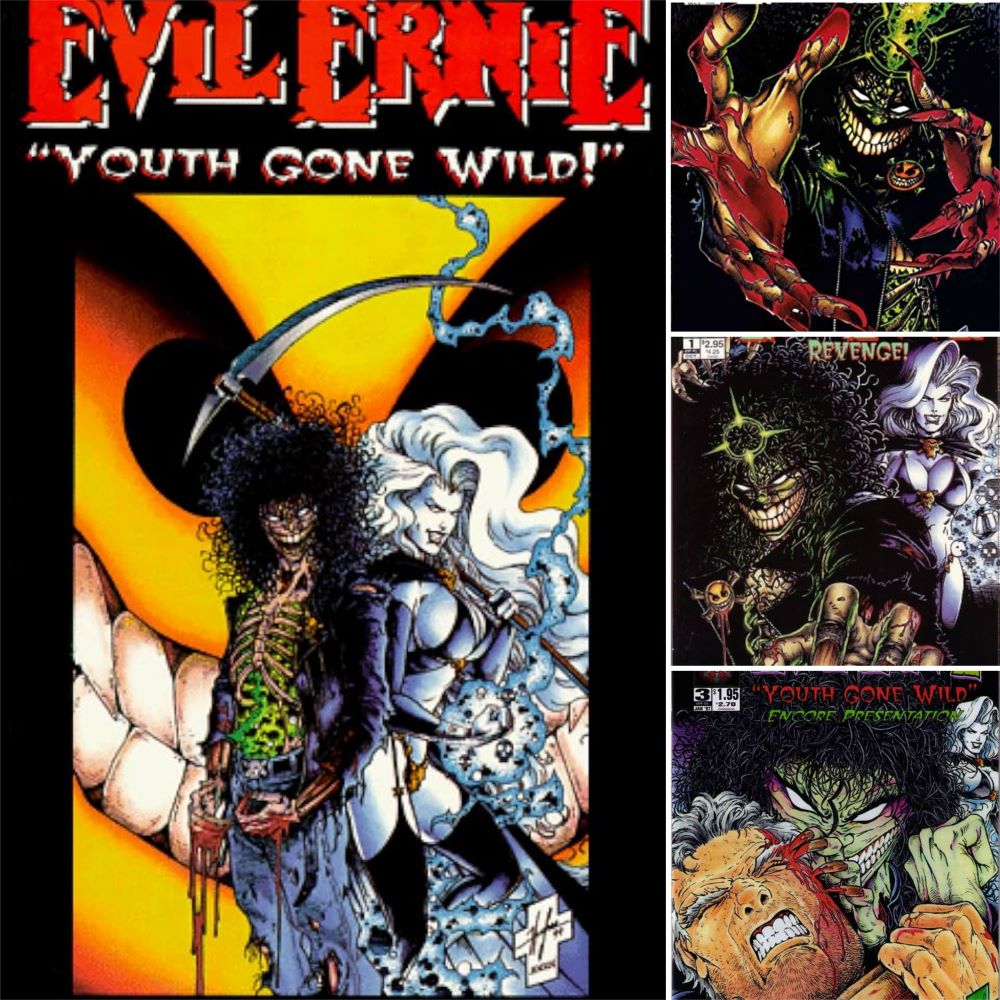
Evil Ernie’s legacy began with two key comic series that deeply shaped his character and cemented his place in horror comic history. Firstly, the original Evil Ernie mini-series, published in 1991 by Eternity Comics, introduced readers to Ernest Fairchild—a tortured, telepathic boy whose severe abuse and trauma spiraled into the transformation that birthed Evil Ernie. This five-issue series laid the foundation for the character’s dark mythology, blending psychological horror with supernatural violence and heavy metal influences. Here, Ernie’s pact with Lady Death and the introduction of his iconic “Smiley” button set the tone for his psychotically violent crusade against humanity, portraying him as a vengeful, undead antihero fueled by rage and heartbreak.

Following the original run, the Chaos! Comics imprint expanded on Ernie’s mythos with significant titles like Evil Ernie: Resurrection and Youth Gone Wild. These series pushed the narrative further into apocalyptic territory, showcasing Ernie’s increasing power, his undead army, and the world-spanning consequences of his rampage. Resurrection delved into Ernie’s return from death with amplified powers, setting the stage for his global campaign of destruction. Youth Gone Wild, evokes the rebellious spirit captured both visually and thematically, tying Ernie’s anger and chaos to a larger cultural moment reflective of 1990s heavy metal and punk ethos.

Crucially, the role of Lady Death in these series cannot be overstated. Initially a spectral figure who offers Ernie the love and acceptance he craves in exchange for his violent pledge, Lady Death evolved into the defining character of the Chaos! Comics universe. Her complex origins as the mortal Hope, betrayed and transformed into the queen of Hell, give the stories emotional depth and mythic resonance. Her “bad girl” gothic aesthetic and tragic backstory resonated powerfully with fans, propelling her to overshadow even Ernie himself in popularity and cultural impact.

Evil Ernie’s narrative and character design were heavily influenced by the prevailing heavy metal and splatter punk subcultures of the time. His wild hair, leather attire, and violent, nihilistic persona echoed the sonic aggression and rebellious imagery of bands like Slayer and Overkill, who also explored themes of alienation, death, and wrath. This cultural synergy imbued the comics with an authenticity that attracted a dedicated fanbase attuned to these genres. The explicit violence and body horror scenes showcased the splatter punk influence, pushing boundaries in graphic storytelling to depict raw, unapologetic gore that underscored Ernie’s tragic antiheroism.

The Evil Ernie series was more than just a comic about zombies and destruction; it was a cultural artifact infused with the angst, aggression, and rebellion of ‘90s youth subcultures. It forged a new path in horror comics by blending psychological trauma, supernatural terror, and social outcast narratives while crafting a mythos that was both cosmic and personal. The enduring popularity of Ernie, alongside characters like Lady Death and Purgatori, validated Brian Pulido’s vision and solidified a franchise that remains influential in horror and dark fantasy comics.

In summary, the original Evil Ernie mini-series set the brutal, tragic tone that defines the character, while subsequent series like Resurrection and Youth Gone Wild expanded his mythic scope, fueled by a unique fusion of horror, metal, and punk. Lady Death’s rise within these narratives added emotional complexity and gothic grandeur that enriched the universe Pulido created, creating a layered, compelling world that still captivates cult fans today. Together, these series and characters have left an indelible mark on horror comics, affirming the powerful cultural interplay between music, graphic storytelling, and dark fantasy.

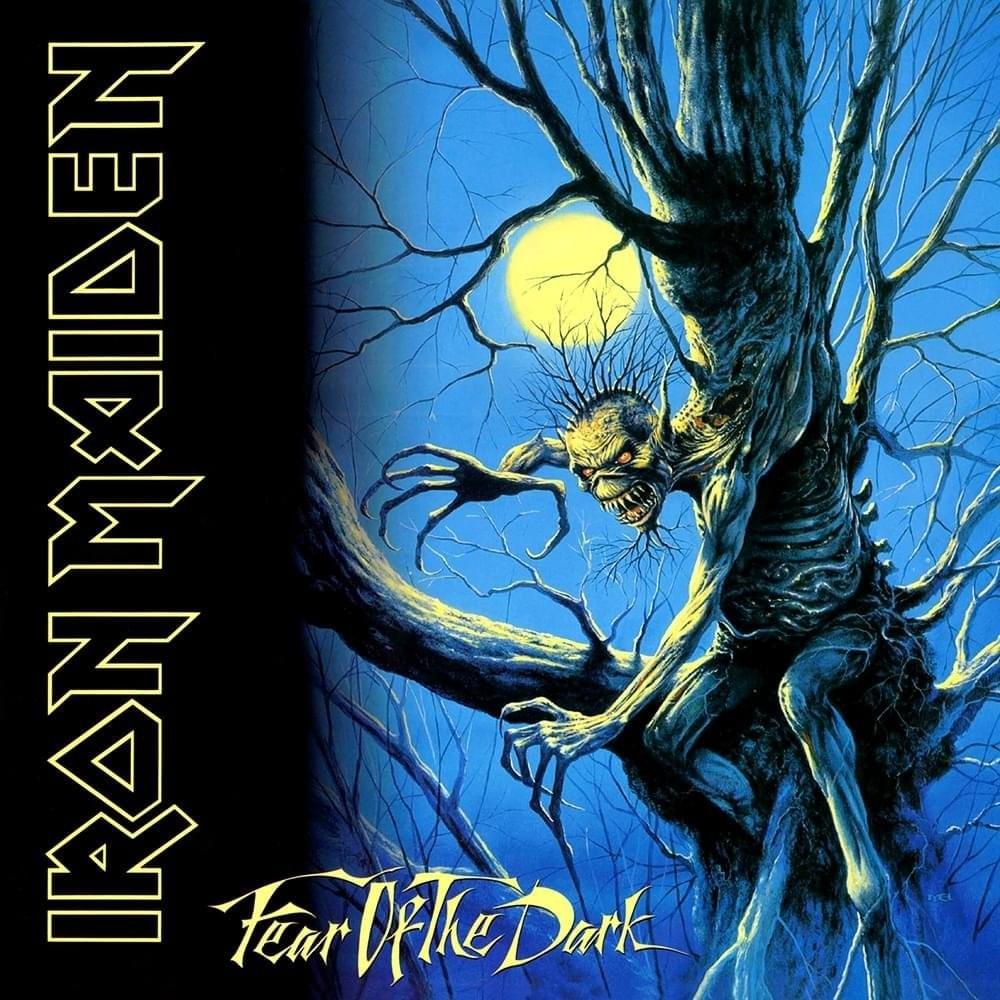
Horror Song of the Day: Fear of the Dark (by Iron Maiden)


If you’re new to Iron Maiden and want to experience a melodic metal song that doubles as a horror anthem, “Fear of the Dark” is a must-listen. Written and composed by Steve Harris, Iron Maiden’s bassist and primary songwriter, the song vividly captures that feeling of walking alone at night with the uneasy sensation that something might be lurking just out of sight. It’s a powerful exploration of a common fear—the discomfort and paranoia that darkness brings—which makes it feel like a spooky bedtime story set to powerful music.

What really makes this song stand out is how the music and Bruce Dickinson’s dramatic vocals work together to build tension and then release it. The guitars start slow and eerie, setting a creepy atmosphere, then shift into faster, catchy melodies that ramp up the excitement and nervous energy. Dickinson’s voice is full of drama and really sells that feeling of fear mixed with urgency. It’s not just heavy music; it’s storytelling with heart and melody.

Plus, the lyrics reference classic horror themes like watching scary movies and ancient folklore, which makes the song feel timeless and accessible. It’s a perfect gateway into how metal bands can blend melody with horror themes, making it approachable even if you’re not usually into heavy music. Overall, “Fear of the Dark” showcases Iron Maiden’s skill at creating music that is not only thrilling but also emotionally gripping and narratively rich.

Fear of the Dark

I am a man who walks alone
And when I’m walking a dark road
At night or strolling through the park
When the light begins to change
I sometimes feel a little strange
A little anxious when it’s dark

Fear of the dark, fear of the dark
I have a constant fear that something’s always near
Fear of the dark, fear of the dark
I have a phobia that someone’s always there

Have you run your fingers down the wall
And have you felt your neck skin crawl
When you’re searching for the light?
Sometimes when you’re scared to take a look
At the corner of the room
You’ve sensed that something’s watching you

Fear of the dark, fear of the dark
I have a constant fear that something’s always near
Fear of the dark, fear of the dark
I have a phobia that someone’s always there

Have you ever been alone at night
Thought you heard footsteps behind
And turned around, and no one’s there?
And as you quicken up your pace
You find it hard to look again
Because you’re sure there’s someone there

Fear of the dark, fear of the dark
I have a constant fear that something’s always near
Fear of the dark, fear of the dark
I have a phobia that someone’s always there

Watching horror films the night before
Debating witches and folklore
The unknown troubles on your mind
Maybe your mind is playing tricks
You sense, and suddenly eyes fix
On dancing shadows from behind

Fear of the dark, fear of the dark
I have a constant fear that something’s always near
Fear of the dark, fear of the dark
I have a phobia that someone’s always there

When I’m walking a dark road
I am a man who walks alone

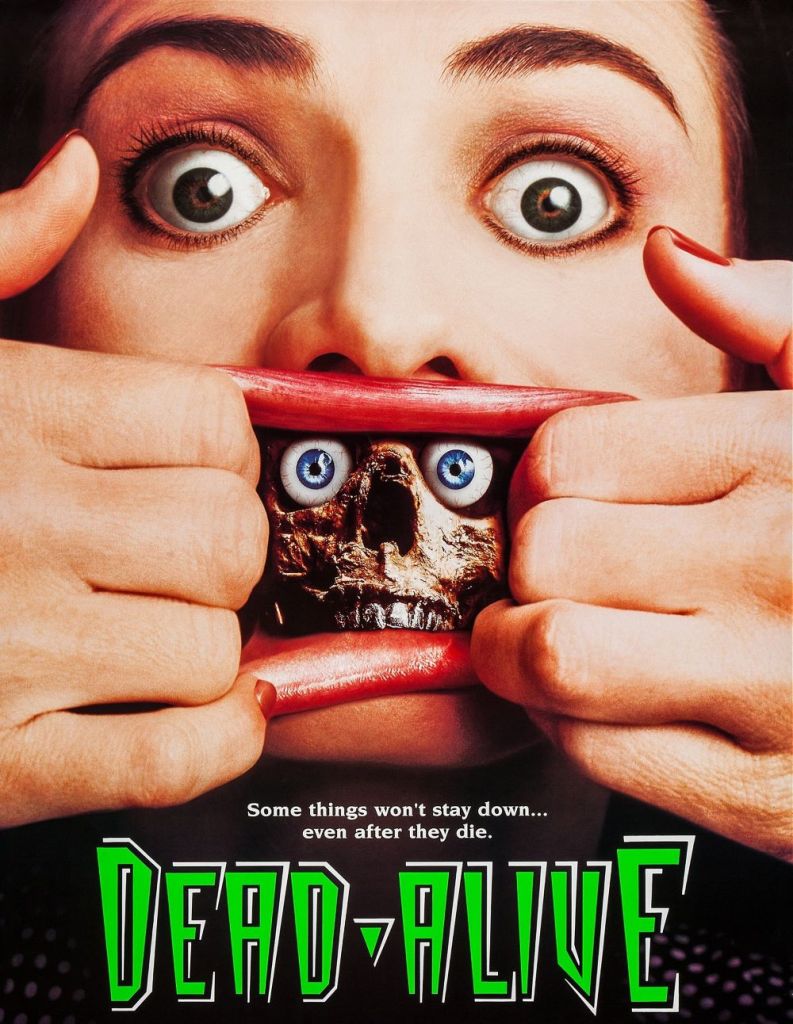
Horror Review: Dead Alive aka Brainded (dir. by Peter Jackson)


“I kick ass for the Lord!” — Father McGruder

Peter Jackson’s Dead Alive (or Braindead, if you’re fancy about it) is what happens when deranged genius meets a barrel of fake blood and zero self-restraint. It’s equal parts grand guignol and Saturday morning cartoon—one of the bloodiest and funniest films ever made. Long before Jackson became the cinematic architect of The Lord of the Rings, he was a scrappy splatter artist, weaponizing gore and absurdity with childlike glee. And while his first two features, Bad Taste and Meet the Feebles, showcased raw chaos and puppet debauchery, Dead Alive marks his evolution—still insane, but sharpened, confident, and shockingly heartfelt in its bizarre way.

The film opens on Skull Island, that mythic symbol of cinematic imperialism, where bumbling white explorers snatch a grotesque hybrid creature—the infamous Sumatran Rat-Monkey. When one of them is bitten, the native tribesmen panic, shrieking “Singaya! Singaya!” while pointing at the wound. It’s grotesquely hilarious—dark humor rooted in colonial parody. For a few fleeting moments, Jackson seems to flirt with serious themes: the toxicity of imperial arrogance, cultural desecration, and the viral consequences of exploitation. You could easily write a twenty-page graduate thesis connecting this opening to the cannibal panic of 20th-century western adventure cinema. But then the movie rolls into prosthetic carnage and butt jokes, and you realize—thankfully—that Dead Alive is no place for academic solemnity.

The story moves to Wellington, New Zealand, where Lionel Cosgrove (Timothy Balme) lives under the suffocating grip of his passive-aggressive mother, Vera. She’s the kind of matriarch who vacuum-seals her son’s adulthood. When Lionel starts falling for Paquita (Diana Peñalver), a kind-hearted shop girl whose grandmother insists destiny has chosen them, Vera’s jealousy leads her to sabotage the romance—and right into a bite from the cursed Rat-Monkey. That’s when everything turns gleefully revolting.

Vera’s infection transforms her into a dripping monument of decay, devouring neighbors and spewing black sludge at tea parties. Lionel, too timid to kill her, instead tries to sedate and hide the growing zombie horde in his basement. Naturally, this plan collapses with the speed of a B-movie funeral, leading to an escalating chain reaction of undead madness. By the one-hour mark, Jackson isn’t directing a film anymore—he’s conducting a symphony of splatter.

Part of what makes Dead Alive endure is just how expertly it moves between the grotesque and the hilarious. Every melted face and gory evisceration is framed like a punchline. Jackson’s camera zooms, tilts, and spins through crimson chaos with joyous purpose. The gore isn’t meant to horrify; it’s kinetic comedy, pure visual rhythm. By the time Lionel revs up his lawnmower for the film’s final massacre—quite possibly the most ambitious use of landscaping equipment in film history—Dead Alive has transcended genre. It’s no longer horror or comedy. It’s delirium art.

Of course, the cast of oddballs steals plenty of the show. Father McGruder, the kung-fu priest, delivers the film’s single most quoted line—“I kick ass for the Lord!”—before dropkicking zombies with ecclesiastical authority. The zombie baby, born from two reanimated corpses who just couldn’t keep their limbs off each other, is another masterstroke of twisted creativity. Lionel’s attempt to civilize the infant, leading to a playground brawl between man and monster-stroller, might be the most deranged slapstick sequence ever shot.

It’s the tactile nature of Dead Alive that makes it timeless. The production team drenched every set in homemade latex, goo, and fake blood—over 300 liters for the finale alone. No digital shortcuts, just pure craft and chaos. You can see Jackson’s imagination fermenting into the precision that would one day fuel his massive fantasy epics. Every scene here, beneath its slime and slapstick, demonstrates an intuitive cinematic intelligence.

If someone wanted to, they could absolutely load an academic essay with postcolonial readings, Freudian analyses, or references to Julia Kristeva’s theory of abjection—arguing that Vera embodies the grotesque maternal figure polluting the symbolic order. You could apply Deleuze and Guattari, Lacan, or even Foucault if you were persistent (and a little delusional). But Dead Alive doesn’t invite theory—it belly-laughs in the face of it. This isn’t a film to decode; it’s a film to experience, preferably with popcorn and zero pretension. Jackson knows exactly what he’s making and relishes every revolting frame of it.

More than thirty years later, Dead Alive remains the filthiest funhouse in horror history—an outrageous blend of low-budget energy, visual wit, and pure imagination. It might gesture briefly toward colonial rot and unchecked power, but ultimately, this movie isn’t about guilt or grandeur. It’s about having the best possible time making the worst possible mess.

For scholars, it’s a nightmare to analyze. For horror lovers, it’s cinematic nirvana. And somewhere in between all the entrails and laughter, you realize Peter Jackson’s greatest early lesson: sometimes, the most profound statement a film can make is “Relax—it’s just blood.”

Isolation to Madness: The Dark Genius of Carpenter’s Apocalypse Trilogy


“Reality’s not what it used to be.” – Sutter Cane

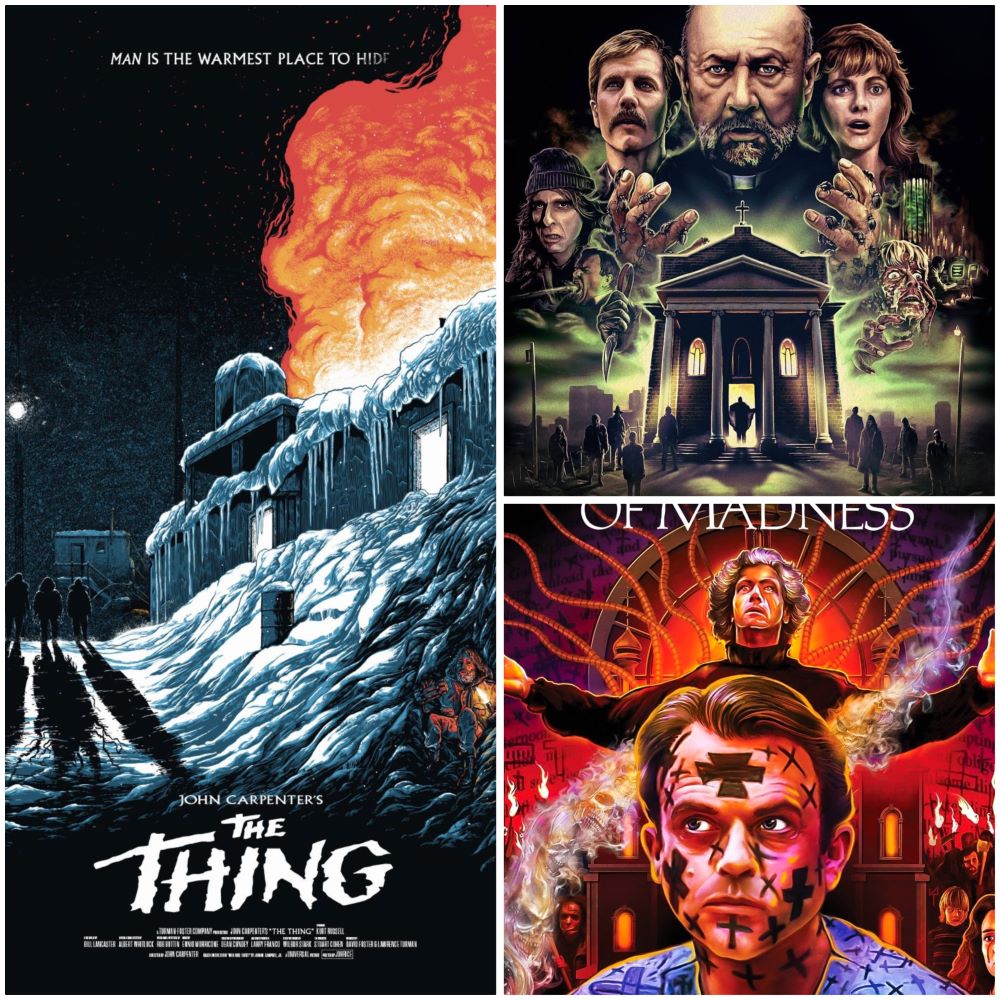
John Carpenter’s Apocalypse Trilogy is widely regarded as a foundational pillar of modern horror cinema, uniting three seemingly diverse films—The Thing (1982), Prince of Darkness (1987), and In the Mouth of Madness (1994)—under a singular thematic and philosophical canopy. Together, they explore cosmic horror, a subgenre of horror fiction that emphasizes humanity’s profound insignificance in a vast, indifferent, and often hostile universe. This trilogy traces a carefully crafted trajectory of escalating menace—from tangible physical fears to metaphysical anxieties, culminating in deep epistemological crises. By doing so, Carpenter’s trilogy challenges the audience’s very perceptions of reality, identity, and trust, pushing viewers to confront existential questions cloaked within horror narratives.

This study offers a comprehensive analysis of each film in sequence, revealing their major thematic concerns and unpacking Carpenter’s distinctive stylistic choices that unite the trilogy into one cohesive vision of apocalypse and despair. The analysis reveals that the trilogy extends beyond horror storytelling, engaging instead with the anxieties surrounding human perception, the limitations of knowledge, and cosmic insignificance.

John Carpenter and the Cosmic Horror Tradition

John Carpenter is celebrated for his ability to move beyond conventional scares, crafting atmospheric and philosophical horror that delves deeply into existential dread. While his debut with Halloween secured his place in slasher cinema, Carpenter’s Apocalypse Trilogy marks his most profound engagement with the tradition of cosmic horror, heavily influenced by the works of H.P. Lovecraft. These films focus less on conventional monsters and more on entities and forces beyond human comprehension that systematically erode sanity, faith, and the familiar social order.

In essence, Carpenter’s cosmic horror examines the frailty of human understanding in the face of vast, unknowable forces. His films suggest that the perceived stability of reality, morality, and identity are slender constructs that can unravel rapidly when exposed to those cosmic truths. This philosophical underpinning provides the connective tissue for the trilogy, positioning it as a sustained meditation on humanity’s precarious and often deluded sense of place within the universe.

Carpenter combines his hallmark minimalist aesthetic with unsettling soundscapes to create settings steeped in dread and uncertainty. These environments refuse to offer comfort or clarity. Instead, they become spaces where reality’s veneer thins, paranoia grows, and the audience is drawn into the slow disintegration of order.

The Thing: The Anatomy of Isolation and Paranoia

The trilogy begins in the frozen desolation of an Antarctic research station—a brutally unforgiving landscape depicted through Carpenter’s distinct minimalist style. The opening, consisting of sweeping, stark aerial shots paired with Ennio Morricone’s haunting bass synth score, plunges viewers into an environment defined by isolation and claustrophobia.

The physical environment functions as an active force in the story, enhancing tension and alienation. It becomes impossible for the characters—and the audience—to escape the oppressive atmosphere, emphasizing themes of entrapment and despair.

Carpenter’s adaptation of Campbell’s Who Goes There? foregrounds psychological horror, centering around an alien organism that perfectly imitates any living creature it infects. This ability destroys the survivors’ social cohesion, as the possibility that anyone might be the alien breeds constant suspicion and fear. The alien infection acts metaphorically, symbolizing humanity’s deepest anxieties about identity, otherness, and contamination.

Rob Bottin’s practical special effects remain iconic, transforming the concept of body horror into palpable cinematic terror. Scenes such as the infected dogs blending with the humans visually communicate the indivisibility of friend and foe, reinforcing the thematic belief that not even one’s own body is fully trustworthy.

The film’s ambiguous finale, where the surviving characters share an uneasy, silent distrust, masterfully underscores existential despair. Echoing Sartre’s famous assertion that “Hell is other people,” Carpenter closes with no clear resolution, reinforcing a bleak worldview that permeates the entire trilogy.

Prince of Darkness: When Science Meets Metaphysical Terror

The second chapter shifts from Antarctic physicality to a metaphysical siege within a Los Angeles church, where scientists and clergy confront a cryptic green liquid imprisoning an ancient quantum entity identified as Satan. Carpenter weaves a thematic collision between faith and science, positioning the characters in a supernatural standoff that tests the limits of rational belief.

This paradigm collision is central to the film’s tension. Characters engage in empirical inquiry and theological reflection, yet neither fails to fully grasp or control the cosmic forces unleashed. Dreams broadcast across neural networks, quantum mechanics concepts, and disorienting visions unravel the sense of coherent reality and blur lines between the physical and the spiritual.

Mirrors act as critical motifs, symbolizing portals or gateways that problematize identity and perception. As reality itself becomes infected and fractured, the boundaries between natural and supernatural, self and Other, disintegrate. This thematic decay anticipates the disintegration of reality that reaches its apex in In the Mouth of Madness. The siege allegory encapsulates humanity’s futile attempts to impose order over chaos.

In the Mouth of Madness: The Apocalypse of the Mind

The trilogy culminates in a meta-textual horror narrative tracing John Trent, an insurance investigator ensnared by the vanishing horror novelist Sutter Cane. This film explores the erosion of reality and identity as Trent journeys into a fictional world that becomes concrete, gradually dissolving the distinctions between fact and fiction, sanity and madness.

Drawing explicitly on Lovecraftian ideas of forbidden knowledge and cosmic despair, Carpenter situates the archetypal theme in a modern media environment. Cane’s novels exert a parasitic force upon readers, triggering apocalyptic psychological and ontological shifts that implicate society itself.

The narrative layering intensifies to a climax wherein Trent watches a film adaptation of his destructive unraveling, collapsing the barrier between spectator and spectacle. This recursive structure evokes chilling reflection on the instability of identity and reality.

The phrase “losing me” becomes a haunting leitmotif. Characters’ gradual loss of selfhood illustrates cosmic horror’s existential core: the dissolution of individuality under the weight of incomprehensible cosmic forces, a theme central to the trilogy as a whole.

Escalating Terror: From Bodily Invasion to Psychic Annihilation

This collection of films explores a profound and unsettling meditation on humanity’s place in an uncaring, vast cosmos, using horror as a lens to examine themes of isolation, paranoia, faith, knowledge, and the tenuous nature of reality. Without explicitly presenting themselves as a connected series, they create a rich thematic tapestry that invites viewers to contemplate not only external terrors but the fragility of human systems meant to protect meaning and identity.

The opening confronts the visceral and physical: a mysterious alien force invades bodies, dissolving trust and social cohesion. This invasion is deeply symbolic, reflecting fears of contamination, loss of self, and the breakdown of community ties. The body becomes a battleground where identity is no longer stable, and the enemy might be anyone—including oneself. This phase grounds horror in concrete fears but already sows the seeds of existential uncertainty.

From there, the narrative moves to a metaphysical plane where science, religion, and philosophy—humanity’s traditional pillars of understanding—struggle and fail to contain an ever-spreading cosmic evil. This shift from physical threat to metaphysical chaos illustrates how human knowledge and faith are insufficient to explain or confront the vast, dark unknown. The intermingling of scientific inquiry and religious dread reveals a universe that defies compartmentalized understanding, forcing a reckoning with ambiguity and the unknown. With reality itself starting to fray at the edges, the threat becomes more abstract yet no less terrifying.

The final movement confronts the fragility of perception and reality itself. As realities collapse, identities dissolve, and narrative and truth blur, the horror becomes psychological and epistemological—loss of sanity, loss of self, loss of a stable world. This breakdown reveals the highest level of terror, where nothing can be trusted, no truth is certain, and reality is malleable. It captures the profound human fear of mental disintegration and the obliteration of meaning in an indifferent universe.

Together, these stages chart a journey from external bodily threat to metaphysical disruption and ultimately to existential collapse. They reveal horror not just as fear of outward monsters but as internal decay of mind, belief, and identity, underscoring human vulnerability not only to external forces but to the fragility of cognition and existence. This arc reflects deep anxieties about human limitations: no matter the knowledge or faith, cosmic forces remain beyond control, making certainty an illusion. By layering escalating horrors, the films engage on emotional and intellectual levels, inviting lasting reflection on fear, reality, and humanity’s place in the cosmos.

The Limitations of Human Knowledge

Across all three films in John Carpenter’s Apocalypse Trilogy, the limits of human knowledge are a central theme. Characters—whether scientists, clergy, or ordinary people—try to impose order and meaning on forces they cannot understand or control. But they consistently face phenomena far beyond their cognition, revealing the fragility of human certainty. This motif challenges anthropocentrism and critiques human arrogance by exposing absolute truth and certainty as illusions in a vast, indifferent cosmos.

In The Thing, the alien defies identification or control, sowing paranoia among the survivors. Scientific tests fail, and certainty dissolves into fear that anyone could be the monster. The alien symbolizes the unknown randomness and uncontrollability threatening human identity and social bonds.

Prince of Darkness deepens this theme by confronting the limits of both science and faith. A cosmic evil trapped in a mysterious liquid defies both scientific and religious understanding. The film blurs boundaries between science, theology, and metaphysics, suggesting human knowledge is incomplete and vulnerable to forces beyond comprehension. The inevitability of apocalypse underscores the insufficiency of human understanding.

In In the Mouth of Madness, epistemological collapse is central. Reality and fiction merge, and the protagonist loses grip on truth. Carpenter suggests reality depends on belief and narrative, making truth unstable. This reveals the ultimate vulnerability of human cognition and identity.

Together, these films show that no human system—scientific, religious, or cultural—can fully grasp or control the universe’s nature. This breeds existential horror, highlighting human fragility and limited knowledge on a cosmic scale.

Carpenter’s trilogy aligns with Lovecraftian cosmic horror, updating its themes with contemporary anxieties. The films go beyond simple scares to challenge viewers to confront the fragility of knowledge, reality, and identity, giving the trilogy lasting philosophical weight and emotional power.

Stylistic Mastery: Minimalism and Ambiguity

Carpenter’s hallmark minimalist style is a key part of what makes the Apocalypse Trilogy so effective and enduring in its impact. His careful framing often restricts what the audience can see, focusing attention on essential details while leaving much to the imagination. This approach compels viewers to fill in unseen gaps themselves, which creates heightened suspense and engages the viewer’s own fears. Rather than overwhelming the audience with explicit gore or frantic action, subdued movements and carefully controlled pacing allow tension to build slowly and organically. This slow burn style deepens engagement by forcing the audience into a state of heightened alertness and anticipation.

Carpenter’s sound design is equally important to the films’ mood. Low-frequency drones and eerie synth scores envelop viewers in an unsettling sonic atmosphere that mirrors the creeping dread in the story. These soundscapes don’t seek to startle but to create pervasive unease—a feeling that danger lurks just beyond perception. The music often mimics the alien or supernatural presence itself—unpredictable, cold, vast—helping to reinforce themes of existential dread and the incomprehensibility of the cosmic forces involved.

The combination of minimalism in visuals and sound creates a liminal space where reality feels unstable and disorienting. Audiences experience not only the narrative horror but also a profound sense of ambiguity and existential uncertainty. This stylistic restraint deliberately avoids clear answers or visual excess, underlining the theme that the real terror is ineffable and beyond human understanding. The unknown and unseen become the most frightening elements, much in line with the tradition of cosmic horror that Carpenter’s trilogy embodies.

In addition, ambiguity in character behavior and narrative direction invites multiple interpretations. Questions are often left unanswered—What exactly is the alien’s goal? How much control do the characters really have? What is the nature of the “darkness” in Prince of Darkness? This lack of closure compels viewers to wrestle with uncertainty and the limits of human cognition, mirroring the trilogy’s philosophical concerns.

In integrating this stylistic mastery, Carpenter crafts a cinematic experience that is not merely about monsters or scares but about immersing viewers in the unsettling, unstable space where human understanding falters. This immersive uncertainty evokes the core cosmic horror concept: that our place in the universe is fragile, our perceptions unreliable, and the forces around us ultimately unknowable.

Subtextual Depth and Cultural Legacy

These three films transcends traditional horror by engaging deeply with contemporary anxieties about faith, knowledge, identity, and the influence of mass media on how reality is perceived. It reflects the emotional and intellectual struggles of postmodern individuals trying to navigate a fragmented, uncertain world. Rather than offering simple resolution or catharsis, Carpenter’s bleak vision portrays apocalypse as a slow, creeping dissolution of human confidence and coherence. This approach adds philosophical weight and emotional resonance that have secured the trilogy’s lasting impact on horror cinema and cosmic horror traditions.

The films challenge viewers to confront fears beyond the supernatural or monstrous, focusing instead on the fragility of belief systems and the vulnerability of identity in a world where truth is unstable. By threading themes of epistemological uncertainty and spiritual crisis throughout, the trilogy mirrors the postmodern condition, where mass media distorts reality, and personal and collective certainties erode. Carpenter’s work thus becomes an exploration not only of cosmic terror but also of cultural disintegration and psychological fragility.

This subtextual richness extends the trilogy’s legacy beyond genre boundaries, influencing later horror films and narratives that explore existential dread and the human condition’s limits. The trilogy’s refusal to simplify or resolve its themes encourages ongoing reflection on the nature of fear, reality, and human understanding — making it a profound philosophical statement as well as a cinematic achievement.

The Enduring Power of Carpenter’s Dark Vision

The Apocalypse Trilogy by John Carpenter is far more than a collection of horror films; it is a profound meditation on humanity’s fragility, the dissolution of trust, and the shattering of reality itself. Through The Thing, Carpenter explores the primal fear of isolation and the collapse of social bonds when faced with an enemy that hides among us, perfectly embodying the horror of paranoia and mistrust. Moving into Prince of Darkness, the trilogy confronts the collision of science and faith, unraveling the foundations of knowledge and belief as cosmic evil seeps into the rational world and forces characters to confront metaphysical chaos. Finally, In the Mouth of Madness pushes this existential crisis to its zenith, dismantling the very concept of reality and identity through a meta-narrative that implicates not only its characters but also its viewers in the apocalypse of the mind.

What ties these films together, beyond surface narrative dissimilarities, is their shared thematic obsession with the limits of human understanding and the erosion of the self. Each film intensifies the scale of horror—from bodily invasion to spiritual contagion to the complete annihilation of the individual’s perception of reality—revealing Carpenter’s uniquely bleak worldview steeped in Lovecraftian cosmic horror. Through restrained yet evocative stylistic choices, utilizing minimalist visuals and sound design, Carpenter immerses audiences in atmospheres of claustrophobia, dread, and creeping madness. This underlines a core message: true horror lies not in external monsters but in the internal unravelling of everything we rely on—trust, faith, and the coherence of reality.

The Apocalypse Trilogy is a quintessential study of “losing me,” a phrase echoed in In the Mouth of Madness but foreshadowed throughout the series. It captures a universal existential anxiety about identity’s fragility in the face of implacable, incomprehensible forces. Carpenter’s films, in their relentless exploration of despair and dissolution, resist offering hope or redemption, instead presenting apocalypse not as spectacular destruction but as a slow, inevitable erosion of the human condition itself.

John Carpenter’s Apocalypse Trilogy stands as a landmark achievement in horror cinema and cosmic horror literature adaptation. It confronts viewers with unsettling questions about what makes us human and how easily those foundations may crumble. More than a trilogy of scares, it is a dark genius unfolding in three acts—charting a terrifying journey “from isolation to madness” that challenges the very nature of reality, faith, and the self. It demands that we not only watch the horror but reckon with the unsettling possibility that within each of us lies the capacity for both fear and dissolution in equal measure.
Horror Trailer: Send Help


Send Help is a darkly comedic psychological thriller directed by Sam Raimi. The film centers on two coworkers, Linda Liddle and Bradley Preston, who are the only survivors of a plane crash that leaves them stranded on a deserted island. Two people who shouldn’t be together in the same room must now collaborate to survive. The film looks to play on the two characters darkly comedic battle of wills and wits to what looks like survival of the fittest. The film is a mix of survival drama, sharp psychological tension, and Raimi’s signature style, blending horror and black comedy elements.

The film stars Rachel McAdams as Linda Liddle and Dylan O’Brien as Bradley Preston, with a supporting cast including Edyll Ismail, Dennis Haysbert, Xavier Samuel, Chris Pang, Thaneth Warakulnukroh, and Emma Raimi. Send Help is produced by Sam Raimi and Zainab Azizi, with a screenplay by Damian Shannon and Mark Swift, and features music by frequent collaborator, Danny Elfman. It is scheduled for theatrical release nationwide on January 30, 2026, distributed by 20th Century Studios.

Blood Mirrors: How I Saw the Devil, Cold Fish, and Revenge Redefine the Horror of Retribution


“Revenge reveals the darkest reflection we hide within.”

Horror cinema has long functioned as a reflective surface, exposing humanity’s deepest fears, desires, and moral uncertainties. The films I Saw the Devil (2010), Cold Fish (2010), and Revenge (2017) serve as “blood mirrors,” revealing not merely the visceral violence inflicted upon their characters but also the profound psychological and ethical transformations that vengeance ignites. Emerging from South Korean, Japanese, and French cinematic traditions, respectively, these works reconceptualize the trauma of retribution into nuanced explorations of identity, power, justice, and morality. This essay unpacks how such acts of revenge fracture and distort the avengers themselves—blurring the boundary between hunter and hunted—and challenge audiences to consider the complicated ethics of vengeance.

Becoming the Monster: I Saw the Devil and the Infinite Cycle of Vengeance

Kim Jee-woon’s I Saw the Devil opens with searing loss. Government agent Kim Soo-hyun’s fiancé is gruesomely murdered by the psychopathic serial killer Jang Kyung-chul. Rather than delivering immediate justice, Kim embarks upon a merciless cycle of capture and release aimed not at ending Kyung-chul’s life but extending his suffering to mirror the anguish Kim feels. This circular vengeance becomes a vehicle for exploring grief’s corrosive power, blurring the avenger’s and victim’s identities.

The film’s structure, with its repetitive cat-and-mouse dynamic, becomes a visual metaphor for obsession and moral degradation. With every brutal encounter, Kim sacrifices more of his humanity, evolving into the very monster he’s vowed to destroy. Lee Mo-gae’s cinematography blends stark clinical detachment with visceral brutality; meticulously framed shots contrast vividly with the film’s emotional chaos, compelling the audience into uncomfortable identification with Kim’s dark crusade. The snowy landscapes and cold colors evoke spiritual desolation, emphasizing the film’s existential chill.

Kim’s work transcends procedural thriller conventions by resisting catharsis—vengeance is portrayed not as liberation but endless torment. Critics laud the film for masterfully challenging traditional revenge narratives by suggesting that acts of retribution can perpetuate cycles of violence, consuming both victim and perpetrator. The tension not only lies in physical danger but in the moral disintegration of a man who becomes what he hates.

Hidden Rage Beneath Ordinary Lives: Social Collapse in Cold Fish

Sion Sono’s Cold Fish presents revenge as an eruption of buried rage within the façade of mundane suburban existence. The gentle tropical fish store owner, Nobuyuki Syamoto, leads a restrained, law-abiding life until meeting the domineering and psychopathic Murata. Their relationship becomes a dance of psychological and physical domination, exposing latent violence simmering under cultural conformity.

Unlike the clinical precision of I Saw the DevilCold Fish captures chaos and collapse. Syamoto’s eventual violent revolt is neither heroic nor cathartic but an enactment of existential despair born of oppressive social codes emphasizing politeness, hierarchy, and silence. The oppressive suburban setting becomes almost a character itself—sterile, suffocating, and emotionally barren. The circling fish motif highlights the recursive cycles of repression and violence that trap the characters.

Sono’s cinematic approach balances absurdist, at times black humor with grim horror. This tonal dissonance destabilizes viewer complacency, forcing reflections on how individual suffering is structured and concealed by social and cultural norms. Syamoto’s dissolution challenges viewers to reconsider traditional narratives of justice and victimhood, emphasizing the fragility of identity under systemic pressures.

From Exploitation to Empowerment: Revenge and the Reclamation of Agency

Coralie Fargeat’s Revenge radically revisits the “rape and revenge” genre notorious since 1970s grindhouse cinema. While drawing inspiration from films like I Spit on Your Grave and The Last House on the LeftRevenge rejects those works’ often exploitative male gaze, recasting the survivor’s story through a fully realized lens of autonomy and violent reclamation.

Jen’s transformation—from a sexualized object within a hyper-saturated, colorful visual palette to a mythic force of nature marked by the symbolic phoenix brand—signifies death and rebirth. Fargeat’s use of chiaroscuro lighting, surreal settings, and visceral violence elevates physical trauma to the level of mythic metamorphosis.

This film subverts traditional victim and villain binaries. Jen’s ascent dismantles deeply embedded patriarchal structures, underscoring a reclamation of body, gaze, and power. The climactic chase, drenched in blood and primal energy, becomes a ritualistic unshackling rather than mere revenge. Through this revival of grindhouse aesthetics, Fargeat forges a new grammar of feminist survival and cinematic empowerment.

Power, Gender, and Hierarchies in Contemporary Revenge Narratives

These films foreground power dynamics traditionally gendered but reinterpreted here in ways promoting gender-neutral critique. In Cold Fish, toxic masculinity manifests as violent domination versus passivity within strict social codes, both Syamoto’s submission and Murata’s cruelty reinforcing systemic violence.

I Saw the Devil portrays injured masculine pride and control as drivers of vengeance. Kim’s obsession symbolizes fragile protector ideals collapsing into moral ruin. Female characters often exist as symbolic voids, underscoring systemic gender violence and erasure.

Revenge, by contrast, deconstructs these codes. Jen transcends rigid gender norms and victimhood, suggesting power as a fluid, elemental force beyond biology. The film’s desert setting serves as a symbolic womb of transformation, projecting possibilities of autonomy and sovereignty through defiance of hierarchical structures.

National Contexts: Morality, Control, and Crisis

Each film emerges from distinct cultural anxieties and historical trajectories. I Saw the Devil reflects South Korean skepticism about institutional justice amid rapid modernization and lingering traditionalism. Private vengeance becomes a desperate, isolating reaction to systemic failure.

Cold Fish critiques a Japanese culture steeped in social conformity and emotional repression, revealing the violent potential beneath controlled civility. The film reflects post-war tensions and growing awareness of societal alienation.

France’s Revenge draws from the New Extremity movement, blending philosophical and visceral approaches to suffering, reflecting intellectual and artistic responses to modern oppression. Fargeat’s fusion of grindhouse with feminist critique signals contemporary cultural struggle for voices outside dominant systems.

Narrative and Visual Style: Diverse Paths to Transformation

The narrative architectures differ but complement one another. I Saw the Devil’s repetitive structure illustrates cyclical moral decay; Cold Fish depicts downward spiral into absurd chaos; Revenge follows mythic death-and-rebirth arc.

Their visual languages communicate complex ethical positions: Kim’s symmetrical, controlled shots reflect calculated cruelty; Sono’s frenetic, disorienting camera work conveys mental disintegration; Fargeat’s vivid, stylized imagery channels surreal transcendence.

Each film implicates the viewer uniquely. I Saw the Devil seduces with calculated violence; Cold Fish overwhelms with chaotic brutality; Revenge reorients the gaze empathetically to survivor experience. Together, they articulate a profound inquiry into horror spectatorship and ethical engagement.

Societal Reflections: Alienation and Moral Fragmentation

These films manifest collective crises of modernity—gendered hierarchies, failed justice, fractured communities—within intimate personal revenge stories. They diagnose alienation and fragmentation, transforming revenge into language for voicing trauma and injustice. This intersection exposes how power, violence, and identity intertwine in contemporary cultural narratives.

The Horror of Becoming

Ultimately, I Saw the DevilCold Fish, and Revenge frame horror as a meditation on transformation rather than pure evil. Vengeance reshapes the self, often toward destruction. Kim becomes the hunted devil; Syamoto lives his oppressor’s violence; Jen transcends human limits through fiery renewal.

Together, they depict revenge as curse, collapse, and painful rebirth—a global meditation on violence and selfhood. Their shared revelation: revenge unmasks the darkness dwelling quietly within us all, proving that horror’s deepest mirror reflects ourselves.

Horror Song of the Day: Call of Ktulu (by Metallica)


Metallica’s “The Call of Ktulu” is like an eerie soundtrack to something ancient and terrifying lurking just beneath the surface. The whole song feels like a slow, deliberate wake-up call for an otherworldly monster straight out of Lovecraft’s nightmares. Without any lyrics, it’s the music itself that tells the story—starting off quiet and haunting, then gradually building layers of tension like the air getting heavier before a storm, pulling you into an unsettling experience of growing dread.

What’s cool is how each instrument adds its own flavor to that feeling. Cliff Burton’s bass rumbles low and deep, almost like the sea itself is grumbling, while the guitars slowly creep in with sharp, sometimes almost claw-like riffs. Lars Ulrich’s drums keep everything feeling urgent without rushing it, like the heartbeat of something big and unstoppable. It’s not just playing metal riffs; it’s like they’re painting a picture of a cosmic beast stirring from an ancient sleep, and you can’t look away even though you’re scared.

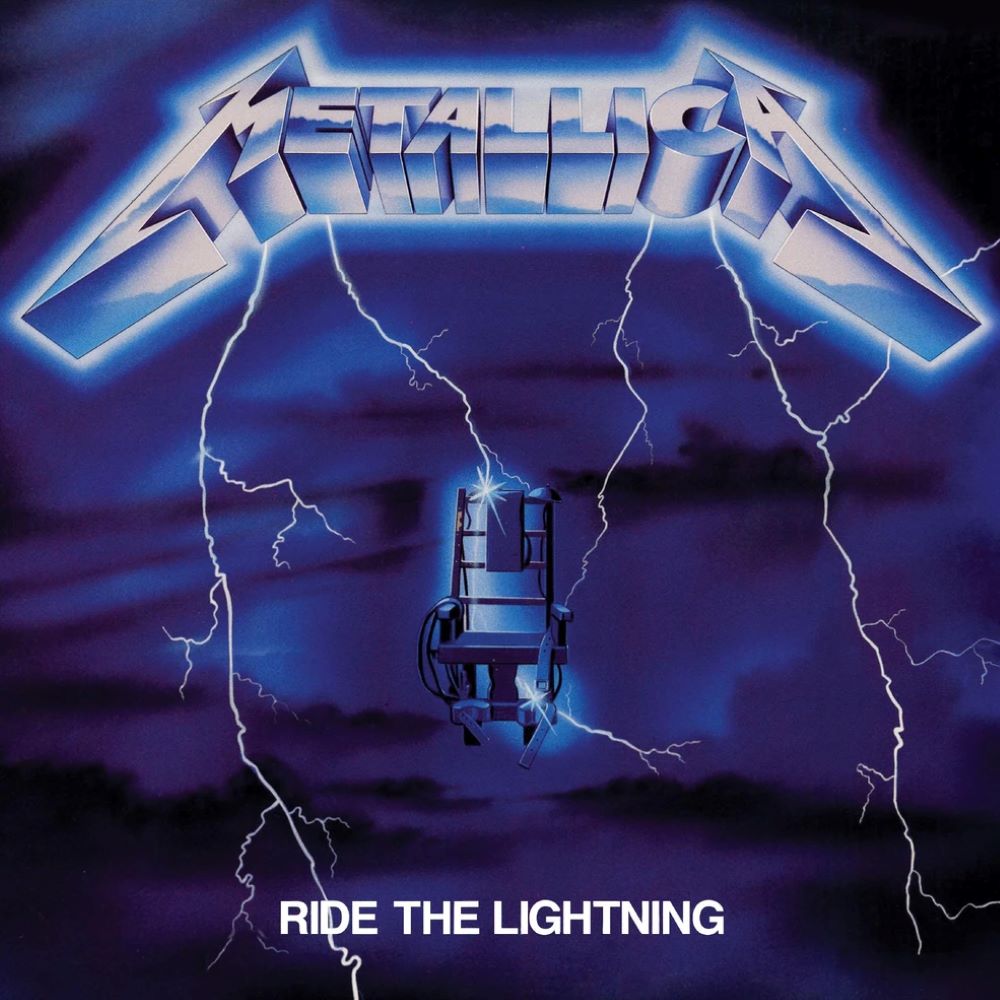
Interestingly, “The Call of Ktulu” was initially started by Dave Mustaine before his dismissal from Metallica, but it ultimately became a collaborative piece among all four original band members. Released as part of their 1984 album Ride the Lightning, the song reached new heights when performed with the San Francisco Symphony Orchestra on the live album S&M. The legendary composer Michael Kamen arranged and conducted the orchestral parts, adding sweeping strings and powerful brass that turned the track into an apocalyptic ritual of sound, blending Metallica’s heavy riffs with symphonic grandeur and amplifying the song’s cosmic horror vibe to an unforgettable level.

Horror Review: Revenge (dir. by Coralie Fargeat)


“Violence is a language written in blood; it tells the story of those who refuse to be silenced.”

Coralie Fargeat’s 2017 film Revenge is an intense and striking blend of horror and thriller that refreshes the rape-revenge genre with a strong emphasis on female empowerment and resistance. At its core, the film follows Jen, a young woman who is brutally assaulted and left for dead in a desert. Against all odds, she survives and seeks brutal revenge on her attackers. What makes Revenge stand out is its blend of graphic, realistic violence and a striking, highly stylized visual approach, resulting in a film that is both visceral and symbolic.

Revenge sits within a long tradition of rape-revenge films that includes both grindhouse exploitation and serious art films. One of the earliest and most influential films in this tradition is Ingmar Bergman’s The Virgin Spring (1960), a somber and moral exploration of a father’s response to his daughter’s rape and murder in medieval Sweden. Bergman’s film inspired many later works, including Wes Craven’s famously brutal The Last House on the Left (1972), which reinterprets the same story through the lens of exploitation horror. Other notorious examples include I Spit on Your Grave (1978), known for its graphic depiction of sexual violence and violent retaliation. More recent films like Jennifer Kent’s The Nightingale (2018) revisit these narrative themes with psychological and political depth. Fargeat’s Revenge draws on this history, combining symbolic storytelling and thematic depth with the raw brutality and energy of grindhouse exploitation.

The narrative structure of Revenge is familiar: Jen, introduced as the mistress of a wealthy man, is assaulted by his friends. Her lover Richard tries to silence her by pushing her off a cliff, but Jen survives, severely injured and impaled on a tree. Her journey is one of intense physical suffering, but also resurrection and fierce empowerment. The film’s use of bright, vivid colors such as hot pinks and blues shifts the story into a surreal, symbolic space where gender roles are exaggerated and the desert becomes a mythic battleground where Jen fights to reclaim control.

Fargeat depicts Jen’s trauma and physical recovery through graphic and detailed body horror—not simply for shock, but as a visual metaphor for reclaiming agency. For example, Jen’s self-treatment of her impalement wound with a hot beer can brands her skin and symbolizes her rebirth and determination. These elements mark a clear departure from earlier rape-revenge films that sensationalized female suffering, shifting the focus to the survivor’s power and autonomy.

Cinematographer Robrecht Heyvaert’s work enhances this dynamic, contrasting the bright, harsh desert landscape with the cold, sterile luxury of Richard’s home. This contrast symbolizes the clash between raw survival and social control. The violence throughout the film is explicit and often hard to watch, but it is deeply rooted in the reality of trauma rather than fantasy.

Matilda Lutz’s performance as Jen is a key strength of the film. She transforms from a vulnerable, objectified figure into a fierce, focused avenger. The male antagonists are less developed, serving as archetypes of toxic male dominance—entitlement, violence, and cowardice—and their downfall reflects the collapse of that social order.

While Revenge maintains the fast pace and suspense of a thriller, its focus on graphic body horror and trauma places it firmly within the horror genre, aligning with the French Extremity movement known for its intense depictions of suffering and transgression. The source of horror here is not supernatural but very much rooted in the physical and psychological impact of violence.

The film has been praised for its technical skill and its focus on female resistance and empowerment. Instead of exploiting female suffering, it forces audiences to confront violence and trauma in a way that centers strength and rage. This is a clear reimagining of the revenge narrative through a modern lens that highlights resilience.

Revenge stands as both a tribute and a reinvention within its genre. It nods respectfully to the moral complexity of Bergman’s The Virgin Spring, the shock tactics of grindhouse staples like The Last House on the Left and I Spit on Your Grave, and the psychological depth of The Nightingale. Yet it simultaneously reinterprets these influences, making a statement that is both timely and provocative.

Coralie Fargeat’s Revenge is a powerful and contemporary entry into the rape-revenge genre, blending horror and thriller conventions with a focus on survival and agency. The film explores the physical and emotional effects of trauma and the possibility of reclaiming power through violence. Its vivid visuals, symbolism, and intense violence challenge audiences to rethink assumptions about gender, justice, and survival. It is a film that provokes strong reactions while delivering a deeply felt story of empowerment and resilience.

Horror Review: Cold Fish (dir. by Sion Sono)


“Life is pain.” — Nobuyuki Syamoto

Unflinching, subversive, and dripping in corrosive dark humor, Sion Sono’s Cold Fish (2010) doesn’t just showcase Japan’s taste for genre-bending horror—it rips open the underbelly of polite society and exposes what writhes beneath. If I Saw the Devil was a descent into the abyss of revenge, Cold Fish is a fever-dream trek through manipulation, depravity, and the most repressed corners of the psyche. Built around the crucible of violence and sex, Sono’s film dares viewers to question not only the shape of evil, but whether the forces that awaken it could be lurking in anyone.

Before Cold Fish, Sono had already established himself as a subversive force in horror with his earlier film Suicide Club (2001), which helped him gain a loyal cult following and introduced him to the genre scene at large as an innovative and provocative filmmaker unafraid to challenge conventions. With Cold Fish, Sono refined his style, offering a tighter, more psychologically driven narrative that accelerates the intensity while probing deep societal anxieties.

Inspired by the real-life Saitama serial murders of the 1990s, committed by dog breeder Gen Sekine and his common-law wife Hiroko Kazama, Cold Fish draws chilling authenticity from these events. Sekine and Kazama ran a pet shop and poisoned several customers before dismembering their bodies to conceal the murders. Sono reimagines this disturbing history by transforming the pet shop into a tropical fish store and fictionalizing details while preserving the core themes of manipulation, complicity, and violence.

The story opens with Nobuyuki Syamoto, the definition of a beaten-down everyman: a tropical fish shop owner whose daughter openly hates her stepmother, whose marriage is half-drowned in silent resentment, and who drifts through life as little more than a shadow. From the outset, Syamoto’s passivity sets a tremulous undertone—terrible things are happening, but he isn’t doing much to stop them. That changes the moment his daughter Mitsuko is caught stealing and rescued by the charismatic Yukio Murata, proprietor of a flashier fish store. Murata’s manners and generosity are overwhelming, almost caricatured, yet there’s an edge of anticipation: something is amiss, and Sono lets the feeling gradually curdle beneath his gentle facade.

Murata’s initial charm morphs into coercive control as he manipulates the Syamoto family into his orbit. When Syamoto is coerced to become Murata’s “business partner,” the narrative takes its first graphic, kinetic turn: a sales pitch for a rare tropical fish goes lethally wrong. Murata poisons a buyer in cold blood, then erupts into violence, forcing Syamoto and his wife into complicity by helping dispose of the body. The shift is immediate and nightmarish—the performance by Denden (Murata) snaps from quirky salesman to a near-mythical monster, as terrifying for his unpredictability as for his casual approach to killing.

From here, Cold Fish dives into a spiral of murder, sexual domination, and psychological torture. Murata and his partner Aiko have murdered dozens, perfecting the art of erasing their victims. As the body count rises, Sono’s camera remains hauntingly restrained: eschewing frantic cuts for long takes, keeping his characters center-frame, locking viewers in Syamoto’s dread-soaked POV. We are forced to witness every mechanical step in the pair’s routine—the body disposal, the literal scattering of ashes, the casual cruelty.

What makes Cold Fish such a disturbing experience is not merely the gore (though the final act is blood-soaked chaos), but the way deviance is normalized, even made bureaucratic. Murata’s operation feels part nightmare, part dull corporate job. This banality breeds horror. At times, Sono punctuates scenes with black comedy: surf rock tunes play in the background as mutilated bodies are processed in Murata’s shop, and his wife’s participation has a twisted, deadpan humor that makes the violence doubly unsettling.

Syamoto’s trajectory is the film’s secret weapon. By trapping us in his perspective, Sono draws out the uncomfortable reality of learned helplessness, craven compromise, and the latent violence beneath a repressive facade. Syamoto isn’t a hero or anti-hero, but a study in desperation and dissolution. His initial submission slowly ferments into rage, and when he finally snaps, the violence is primal and cathartic—a vengeance that feels less like triumph and more like an act of obliteration. Instead of a neat moral arc, Sono’s script is obsessed with the ambiguity of retribution: what festers beneath apathy, what trauma does when left unaddressed, and what the need to act breeds when suppressed for too long.

This thematic preoccupation connects Cold Fish to the likes of I Saw the Devil: both movies use revenge not as justice, but as a mirror for corruption—how far can the ordinary man go before he becomes indistinguishable from the monsters tormenting him? Sono’s film is ultimately more nihilistic, using social commentary as a subtle undertow, with critiques of Japanese conformity, sexuality, and family decaying beneath the surface. The result is a film that is both emotionally exhausting and intellectually provocative.

Technically, Cold Fish offers Sono at his most focused. The cinematography is subtle but relentless, with natural camera movement amplifying character reactions rather than indulging in spectacle. The use of Mount Fuji as a backdrop for scenes of violence is striking and effective. Costume, color palette, and setting all speak of an ordinary world slowly overtaken by surreal terror. The score plays off these moments, with music choices ranging from nervy tension to surf-rock irony.

The performances are uniformly superb. Denden is magnetic as Murata—making each mood shift obvious, unpredictable, and horrifying. Mitsuru Fukikoshi’s portrayal of Syamoto is raw, fragile, and ultimately explosive. The supporting cast amplifies the film’s extremes without ever feeling cartoonish. Sono pushes them to the edge, finding both tragedy and queasy humor in their unraveling. The sound design, especially in scenes of dismemberment and violence, is overwhelming and intense—forcing the audience into a sensory trap that mirrors Syamoto’s psychological implosion.

Yet Cold Fish isn’t just an exercise in gore or cruelty—it’s an autopsy of repression, cowardice, and compulsion, watched through the lens of a culture known for its traditions of obedience. The film asks what drives people to murder, what keeps them silent, and what happens when those limits are breached. It never gives viewers easy sympathies or clean answers, and the ending is deliberately unnerving—Syamoto’s transformation is complete, but it isn’t heroic, nor is it redemptive.

For some, the film’s length and relentless tone will be too much. Others have pointed out its over-the-top final act, and some feel the excessive violence is hard to justify. However, these very qualities are what cement Cold Fish as a significant work in contemporary Japanese horror—it’s the sort of movie that claws at you for days, sticking in the brain with its grim humor and powerful sense of unease. Like I Saw the Devil, it’s less about catharsis than about exposing the permanent scars left by evil and revenge, and the horrifying possibility that what lurks under the surface of normality is just waiting for an invitation to come out.

Ultimately, Sion Sono’s Cold Fish is an important piece of modern horror—not simply for its brutality, but for its relentless psychological excavation and perverse humor. By channeling the real Saitama serial murders into a study of psychological torment and complicity, Sono creates a film that is designed to provoke, to disturb, and to make audiences ask where the boundaries of morality might finally break. For genre fans, it’s a bracing, unforgettable experience; for those who approach with caution, it’s both a warning and an invitation to glimpse the heart of darkness just beneath the surface.