Horror Film Review: Evil Dead II (dir. by Sam Raimi)


“Swallow this.” — Ash Williams

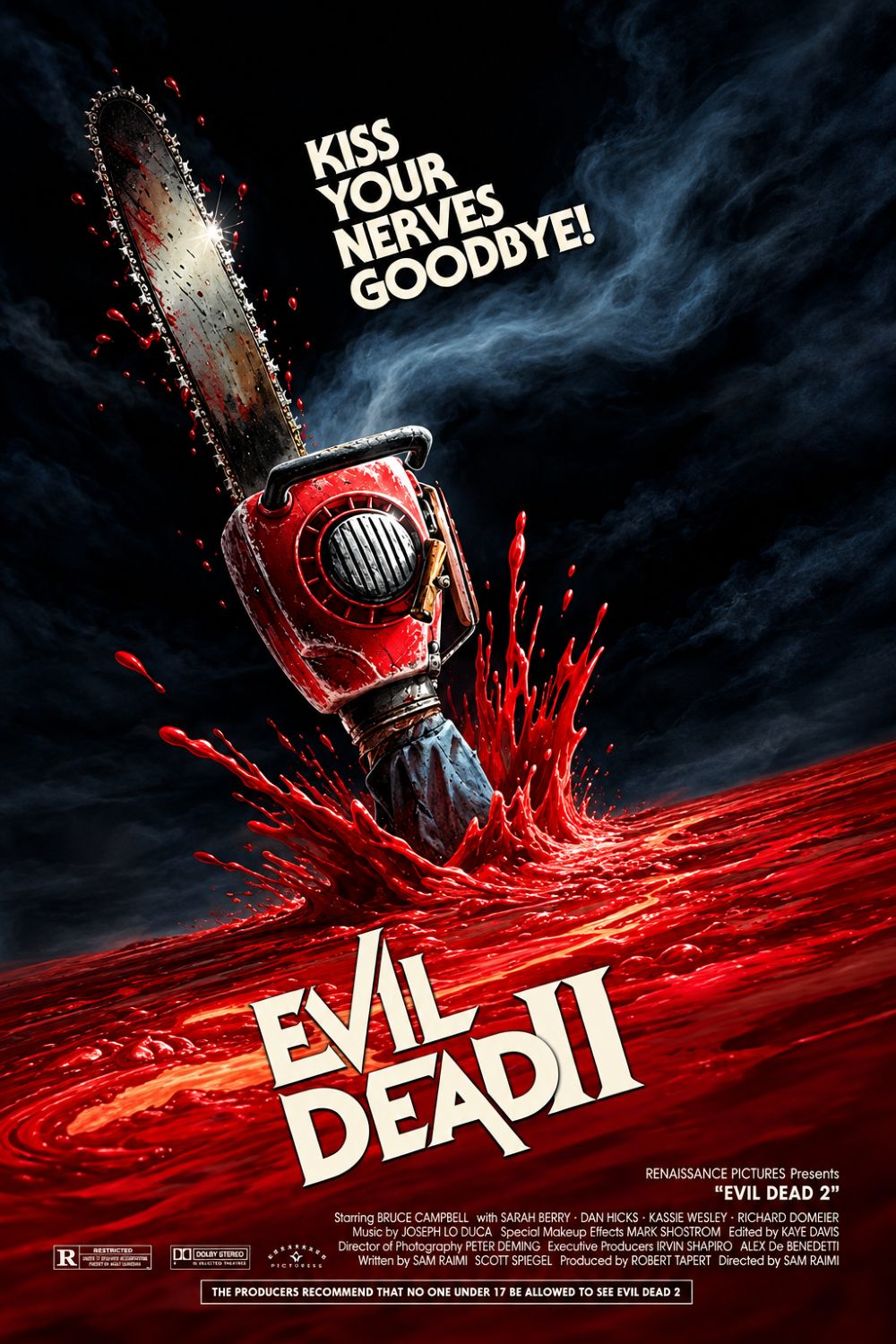
With Evil Dead II, Sam Raimi took the basic cabin-in-the-woods nightmare of The Evil Dead and turned it into a frantic horror-comedy fever dream. Released in 1987, the film occupies a strange and wonderful place between a genuine continuation of The Evil Dead and a wildly exaggerated reimagining of it. It is nastier, funnier, more technically ambitious, and considerably more confident than its predecessor, yet it retains the homemade, anything-can-happen energy that made the original such a cult landmark. If The Evil Dead was a lean, rough-edged cabin-in-the-woods nightmare made by young filmmakers determined to prove themselves, Evil Dead II is Raimi and star Bruce Campbell returning with more resources, sharper instincts, and a total willingness to push every idea until it becomes cartoonishly grotesque.

The film begins with Ash Williams and his girlfriend Linda arriving at the infamous isolated cabin in the woods. It does not take long for them to stumble across the Necronomicon, the ancient book responsible for awakening flesh-hungry Deadites. What follows is an escalating barrage of possession, bodily mutilation, flying blood, demonic laughter, severed limbs, possessed household objects, and increasingly deranged attempts by Ash to survive the night. On a basic story level, it is familiar material. A group of people trapped in a remote location awaken evil forces and become possessed one by one. Raimi’s great achievement is that he never treats the formula as a limitation. Instead, he turns it into a delivery system for visual invention, slapstick timing, and creative violence.

The question of whether Evil Dead II is a sequel, a remake, or both has followed the movie for decades, and the honest answer is that it is effectively a sequel with a condensed remake-style opening. Raimi could not simply reuse footage from The Evil Dead, so the beginning retells the essential premise of the first film with Ash and Linda as the only characters at the cabin. That recap changes details, leaves out the original group of friends, and presents a shortened version of Ash’s first encounter with the Deadites. Once Ash survives the opening stretch and the evil returns, the movie continues beyond the events of The Evil Dead, making it a genuine sequel. Still, because the first act recreates so much of the original’s setup in a more polished and heightened form, it understandably feels like a remake before it becomes a continuation.

Bruce Campbell is the center of everything, and his performance is a huge part of why the film remains so beloved. Ash begins as an ordinary, frightened guy in over his head, but Campbell slowly transforms him into the character audiences recognize today: bruised, filthy, angry, absurdly resilient, and just arrogant enough to make his suffering hilarious. One of the movie’s most impressive qualities is how long Campbell can hold the screen almost entirely by himself. For substantial stretches, Ash has no real human companion to play off. He is acting opposite fake hands, props, stop-motion creatures, splattering fluids, camera movements, and the hostile architecture of the cabin. Campbell has to sell physical terror while also land jokes with the precision of a silent-film comedian.

The famous scene in which Ash’s possessed hand attacks him is probably the clearest example of what makes Evil Dead II special. In another horror movie, a man losing control of his hand might be played as disturbing body horror. Raimi turns it into a manic live-action cartoon. Ash battles his own hand with plates, books, a mousetrap, and anything else within reach, while Campbell throws himself around the room with astonishing commitment. The scene is funny because it is so excessive, but it never entirely stops being gruesome. Ash is still bleeding, suffering, and increasingly losing his mind. That balance is essential to the movie. Raimi does not abandon horror for comedy; he makes the comedy emerge from the intensity of the horror.

The cabin itself becomes one of the film’s great characters. In The Evil Dead, the location feels claustrophobic and decayed, a believable place that happens to become a site of supernatural violence. In Evil Dead II, it becomes something closer to a haunted funhouse. The walls seem alive, furniture appears to mock Ash, mounted animal heads laugh at him, and the entire building seems to participate in his breakdown. The sequence where Ash starts laughing alongside the room’s objects is especially memorable because it captures the film’s unstable tone. It is visually ridiculous, but there is genuine unease underneath it. Ash may be seeing a supernatural manifestation, losing his sanity, or both. Raimi keeps the audience off-balance by making laughter and fear feel almost inseparable.

Raimi’s direction is ferocious. The camera is constantly moving, rushing through forests, crashing into rooms, swooping toward characters, and creating the impression that the evil itself is an invisible force with a point of view. The “demon-cam” technique, in which the camera races through the woods toward its victims, returns from the first film but feels even more aggressive here. It gives the Deadites a strange presence despite the fact that they are often unseen. You do not merely hear something approaching; you feel the camera barreling toward Ash as if the movie has become possessed.

The practical effects remain a major reason to watch the film. They are intentionally messy, tactile, and sometimes obviously artificial, but that artificiality is part of the charm. The Deadites look like diseased puppets dragged out of a nightmare, their faces stretching into exaggerated masks of rot and rage. Blood does not behave like blood; it sprays in impossible volumes and bizarre colors. Bodies deform, heads spin, limbs detach, and tiny monsters swarm the frame. Rather than striving for realism, the effects aim for maximum impact. They create a world where physical rules have broken down, which suits a story about ancient evil invading the ordinary world.

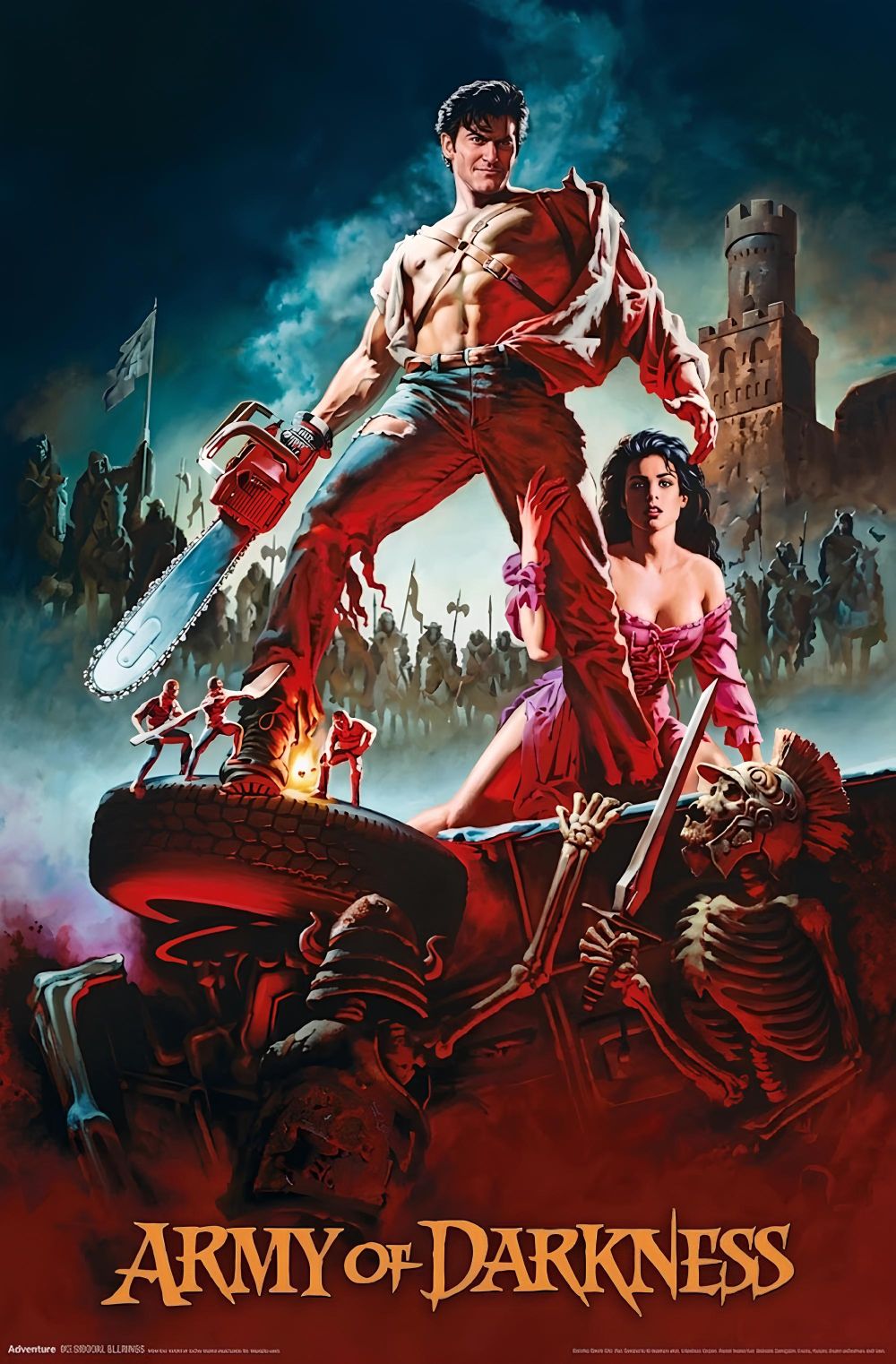
The film’s humor also deserves credit for never making Ash too cool too early. Later installments, especially Army of Darkness, would lean more heavily into the swaggering, wisecracking version of the character. In Evil Dead II, he earns every bit of confidence through suffering. He is not a superhero with a chainsaw hand; he is a man forced to improvise a grotesque solution because he has no better option. When he straps the chainsaw onto his stump and prepares for battle, it is triumphant, but it is also the result of one of the most painful and grotesque scenes in the movie. The iconic image works because Raimi lets the audience experience the desperation behind it.

The supporting cast arrives later than expected, including Annie Knowby, daughter of the archaeologist connected to the Necronomicon, along with several others whose involvement predictably goes terribly wrong. They are not developed with the same attention as Ash, but that is not really the point. Their function is to give the Deadites fresh bodies to possess, create new complications, and help move the story toward its gleefully chaotic finale. Sarah Berry gives Annie an appealing mix of intelligence and panic, while Ted Raimi’s Henrietta becomes one of the movie’s most monstrous creations. The cellar scenes involving Henrietta are nasty, darkly funny, and among the strongest reminders that Raimi still knows how to make the audience uncomfortable even amid all the comedy.

By the time the film reaches its ending, Evil Dead II has become larger than its cabin setting. Its final twist sends Ash somewhere no viewer could reasonably have expected, turning what began as a contained survival-horror story into the launching point for the more openly fantasy-driven Army of Darkness. Yet the ending works precisely because the entire film has trained us to expect escalation. Every scene somehow finds a way to become more exaggerated than the last. A possessed girlfriend becomes a dancing corpse. A severed hand becomes a homicidal creature. A cabin becomes a carnival of insanity. A man with a chainsaw becomes an accidental hero.

More than three decades later, Evil Dead II still feels alive because it has a personality that no polished studio production could replicate. Its effects are physical, its performances are fearless, and its direction is so energetic that the movie seems ready to burst through the screen. It is gross, loud, silly, inventive, and sincerely scary in flashes. Raimi understands that horror can be horrifying and hilarious without weakening either quality. Evil Dead II is not merely a cult classic because people quote Ash or remember the chainsaw. It is a cult classic because it transforms limitations, madness, and handmade craftsmanship into a one-of-a-kind cinematic experience.

Review: Greenland 2 – Migration (dir. by Ric Roman Waugh)


Greenland 2: Migration is a sequel that mostly leans into “if it ain’t broke, don’t fix it,” for better and for worse. It delivers sturdy spectacle, a committed Gerard Butler, and a tense family-through-hell journey, but it also rehashes a lot of the first film’s beats and pushes the plausibility envelope more often this time around. If you were on board with Greenland as a grounded, human-scale disaster movie, this one feels like the more bombastic, road-movie expansion pack rather than a full evolution.​

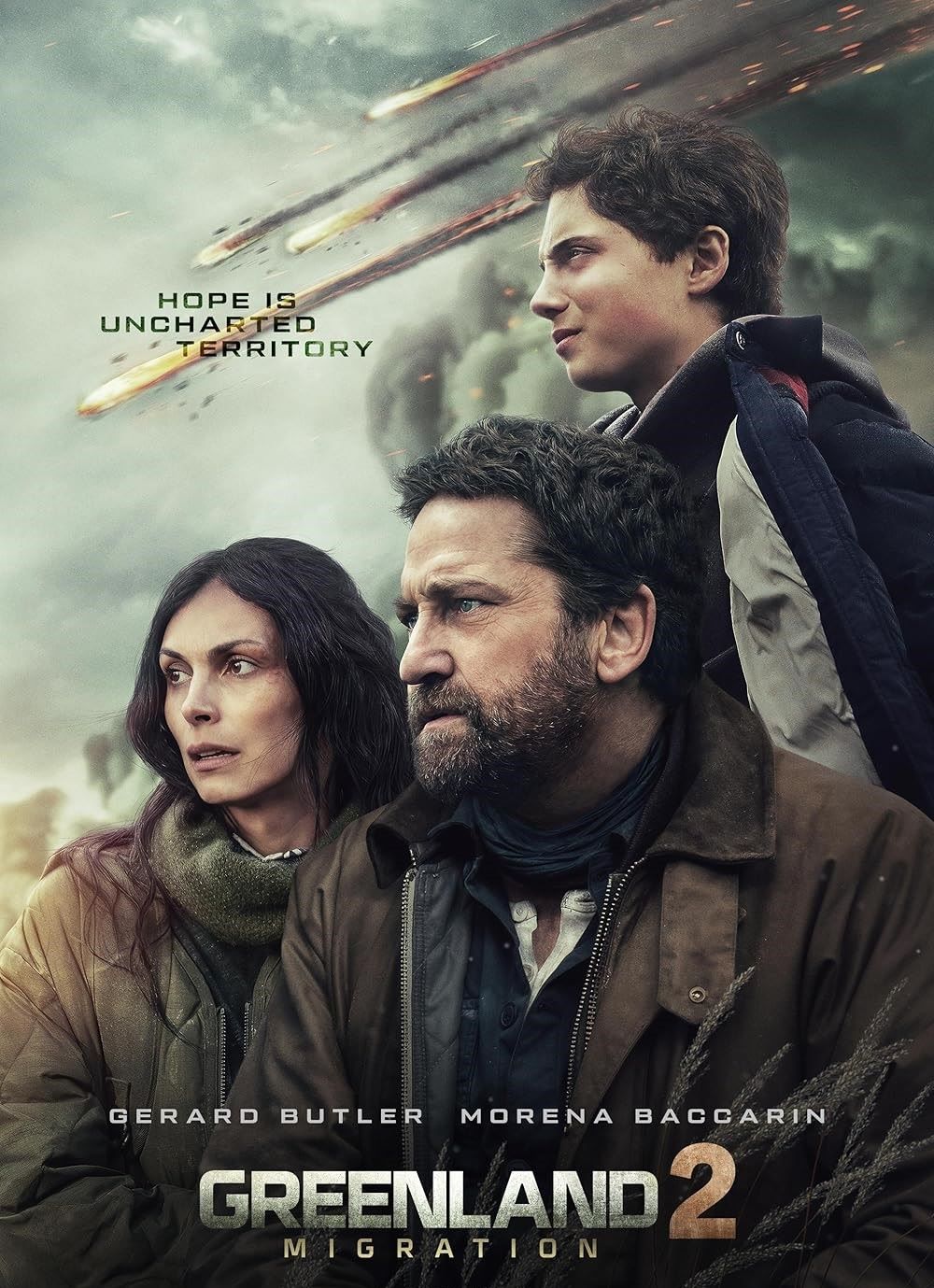
Set about five years after the comet strike that wiped out most of civilization, Greenland 2: Migration finds the Garrity family still holed up in the Greenland bunker complex, part of a fragile community waiting for the surface to become livable again. John (Gerard Butler) now works as a scout/engineer, Allison (Morena Baccarin) has stepped into more of a leadership role within the bunker, and their son Nathan is older, restless, and itching to prove himself outside the relative safety of underground life. When escalating quakes, electromagnetic storms, and general planetary chaos literally collapse the bunker around them, the film quickly turns into a survival trek across a devastated Europe toward the Clarke impact crater in southern France, rumored to be the one spot on Earth that has actually healed.​

As a premise, the film works; it gives the story a clear A-to-B structure and justifies the shift from the contained panic of the first movie to a post-apocalyptic road odyssey. The script keeps the stakes straightforward: reach the crater region or die trying, while dodging unpredictable weather events, territorial military forces, and desperate survivors who are just as dangerous as the environment. There is something appealingly old‑school about how it plays as a throwback survival picture—less interested in intricate worldbuilding and more in reaction, improvisation, and narrow escapes.​

The downside is that you can feel the film constantly echoing Greenland’s structure: another long, peril-filled journey, another series of escalating close calls, another parade of briefly sketched side characters who exist to either help or threaten the Garritys for a single sequence. The first film had novelty on its side and a sharper sense of dread as the comet approached; here, the formula is familiar enough that you can often tell who will live, who will die, and roughly when another set piece is about to kick off. That predictability doesn’t kill the tension outright, but it does flatten the emotional peaks, especially if you walked in hoping for a genuinely new angle on this world.​

Gerard Butler remains the anchor, and this is squarely in his comfort zone. He plays John as perpetually exhausted yet stubbornly practical, the kind of guy who will grumble his way through heroism, and there’s an easy, weathered charm to that. Morena Baccarin gets a bit more agency this time, with Allison often driving decisions instead of just reacting to them, though the movie still stops short of really turning her into a co-lead with equal interiority. Roman Griffin Davis steps in as the older Nathan, and he brings a nervous, teenage energy that fits the “kid who grew up in a bunker and wants to see the world” vibe, even if the character’s arc hits pretty familiar notes about bravery and responsibility.​

The script does flirt with heavier themes: the psychological toll of surviving the end of the world, the guilt of those who made it into the bunkers versus those left outside, and the question of what “home” even means when the planet itself has effectively turned against you. There are moments—like the chaotic clashes around remaining bunkers or the wary interactions with other survivor groups—that suggest a more morally murky, Children of Men‑style story lurking underneath. But the movie rarely lingers on these ideas; it tends to touch them, nod, and then hurry back to the next escape sequence or visual spectacle.​

Visually, though, Greenland 2: Migration is where the sequel justifies its existence. Director Ric Roman Waugh and the crew make great use of European locations and Icelandic landscapes to sell a world that has been carved up by tectonic violence and choked with ash, but is slowly, unevenly rebuilding. The dried-out English Channel, the ravaged coastlines, and the eerie, storm‑lit skies give the film a distinct apocalyptic texture that feels different enough from the North American focus of the first movie. While some of the physics and survival odds strain credibility—especially as the Garritys walk away from setpiece after setpiece—there’s no denying the spectacle is engaging on a big screen.​​

The pacing is generally brisk; at around an hour and a half, the film doesn’t overstay its welcome, and it’s usually onto the next problem before you have time to overthink the last one. That said, the middle stretch starts to feel a little modular, like a video game where each region is an encounter: Liverpool bunker standoff, English Channel crossing, roadside bandits, insurgent ambush, and so on. Each of these sequences is competently staged, but because the emotional throughline is fairly simple—protect the family, get to the crater—the movie risks becoming a string of obstacle courses rather than a journey that deepens the characters in meaningful ways.​

Where the film does land emotionally is in its treatment of sacrifice and the long-term cost of survival. John’s cumulative radiation exposure, picked up over years of scouting the hazardous surface, is a smart, quietly tragic detail, and the way the story gradually brings that to the forefront gives the third act a genuine sense of finality. The losses along the way, including allies who join the trek and do not make it, often feel a bit telegraphed, but they at least reinforce the idea that survival in this world comes with a steep bill that keeps coming due. The film’s ending, at the Clarke crater, delivers a cautiously hopeful image without completely sugarcoating what it took to get there, and that balance of bleakness and optimism fits the series well.​

On the more mechanical side, the editing and sound design do a lot of heavy lifting. The cross‑cutting in the disaster scenes keeps geography mostly clear, and the low, grinding rumble of shifting earth and sudden storms adds tension even when the visuals are mostly people running or driving. The score is functional rather than memorable, but it meshes with the film’s focus on constant forward momentum instead of big thematic musical statements. It’s the kind of craft that doesn’t call attention to itself, which suits a movie that wants to feel like a direct, unpretentious survival yarn.​

In terms of how it stacks up to the original, Greenland 2: Migration is solid but clearly a step less distinctive. The first film surprised people by grounding its spectacle in everyday logistics—pharmacy runs, traffic jams, family arguments—and by keeping the camera mostly at human scale during an extinction‑level event. The sequel, by comparison, nudges closer to standard disaster‑franchise territory: bigger vistas, more action, and a stronger sense of franchise‑building, but less of that “this could be you and your neighbors” feeling that made Greenland stand out. Depending on what you want from a sequel, that may be a selling point or a letdown.​

Overall, Greenland 2: Migration is a competent, occasionally affecting continuation that doesn’t embarrass the original but also doesn’t redefine it. If all you’re looking for is another round of grounded‑ish apocalypse survival with Gerard Butler grimly shepherding his family through increasingly wild scenarios, this delivers exactly that, with a few striking images and some sincere emotional beats along the way. If you were hoping for a more daring thematic leap or a significantly different narrative shape, this will probably feel like a polished retread with a new coat of ash and ice. Either way, it’s an easy recommendation for fans of the first film and a decent mid‑winter disaster flick for anyone in the mood to watch people crawl through the end of the world one more time.

Review: The Accountant 2 (dir. by Gavin O’Connor)


“Is there anything better than punching somebody in the face who’s got it coming?” — Braxton

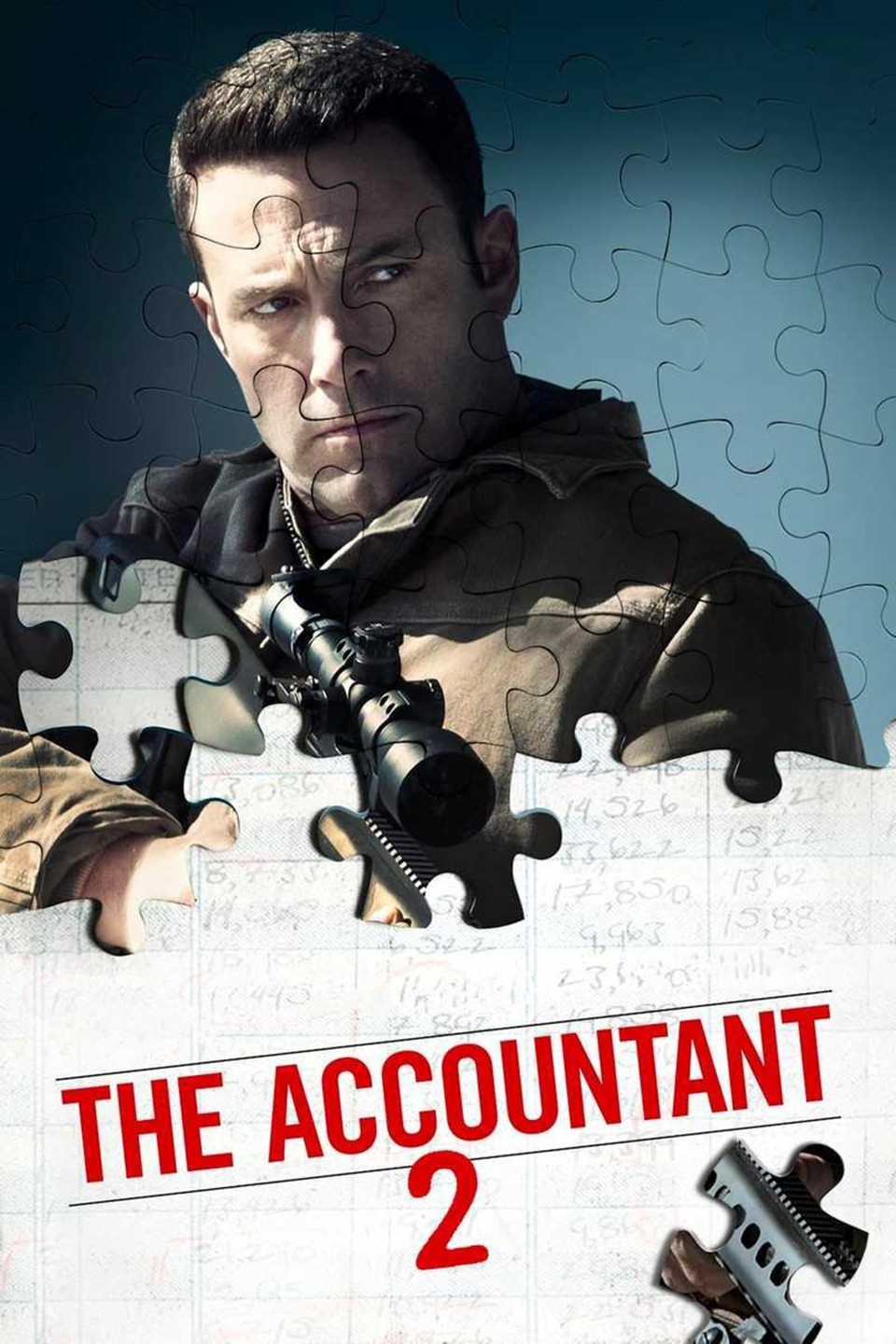
The Accountant 2 plunges back into the offbeat world of Christian Wolff, Ben Affleck’s autistic accounting savant who wields a calculator and a combat prowess with equal deadliness. Directed by Gavin O’Connor, the sequel reunites Christian with his wayward brother Braxton (Jon Bernthal) as they unravel a conspiracy triggered by the murder of FinCEN director Raymond King (J.K. Simmons), pulling in agent Marybeth Medina (Cynthia Addai-Robinson) for a tense alliance. It cranks up the action and brotherly banter from the 2016 original, delivering bursts of gritty fun, but bogs down in bloated plotting and uneven tone that dilute its punchy premise.​

The story explodes open with King’s brutal assassination, his dying message—”find the accountant”—dragging Christian out of his trailer-bound solitude. Medina taps Wolff’s uncanny financial insight to sift through King’s jumbled clues, tracing a trail from a pizza parlor’s money-laundering scheme to a vicious human trafficking ring straddling the Juarez border. A sleek assassin named Anaïs (Daniella Pineda) haunts the edges, her fragmented memories linking to Christian’s murky history, while Braxton joins for brawn and levity, transforming the probe into a chaotic sibling odyssey. The narrative sprawls across factories, motels, and hacker dens, blending forensic number-crunching with explosive confrontations, though it piles on subplots—like selfie-stalking tech whizzes and cartel infighting—that strain coherence without sharp resolutions.​

Affleck deepens Christian’s portrayal, blending rigid logic with flashes of wry humor that feel more lived-in than the first film’s stiffness. He shines in quirky beats, like speed-dating disasters fueled by probabilistic algorithms or spotting fiscal fraud in pizza dough sales, then enforcing confessions with a vicious finger-twist. Yet the character teeters into trope territory, his neurodivergence often serving as shorthand for unstoppable violence rather than a nuanced lens on isolation. Bernthal dominates as Braxton, his raw charisma and emotional cracks—vulnerable confessions evolving into rowdy bar dances teaching Christian social flow—infuse the film with infectious warmth. Their rooftop schemes and escort-aided stakeouts pulse with buddy-movie spark, a major merit that carries weaker stretches.

​

Action remains the film’s powerhouse, surpassing the original in raw ferocity if not elegance. The pizza factory brawl erupts from interrogation into a whirlwind of pipes, knives, and improvised carnage, while garage pursuits and a border compound siege unleash R-rated savagery—precise headshots, joint-snapping grapples, even a sniper duel echoing thriller classics. O’Connor’s practical stuntwork and sweaty cinematography ground the chaos effectively, with a throbbing score that heightens tension without flash. These sequences thrill, but the climax devolves into a generic bullet storm, missing the original warehouse fight’s balletic intimacy, and the 132-minute runtime drags amid repetitive cop-agenta standoffs.​

Medina’s arc offers steady grit, as Addai-Robinson charts her shift from protocol-bound skeptic to off-book partner, her rapport with Christian adding subtle friction to the bromance. Simmons maximizes his opener, fending off thugs in a dive bar before a fatal shot, nailing a tone of immediate peril. Pineda’s Anaïs cuts a striking figure—poised killer grappling with resurfaced trauma—but her threat fizzles, undermined by sparse buildup and a rushed tie-in to the brothers’ past. Lesser foes like the greasy pizza kingpin or border thug Tomas propel the plot competently yet forgettably, while Christian’s handler Justine (Annie Oosterom) doles out remote wisdom that’s underutilized.​​

At its core, The Accountant 2 wrestles with family bonds and hidden pains, pitting Christian’s analytical shell against Braxton’s impulsive soul in redemption-tinged flashbacks. Lighter quirks—honky-tonk flirtations, cat cameos, goofy T-shirts—humanize without diluting the edge, crafting a playful hyperviolence that charms in detours like smart-home hacks gone absurd. These merits shine brightest in hangout vibes, where meandering chats and line dances breathe life into the formula. Failures creep in through diluted quirks: the accounting genius takes a backseat to rote crime-thriller beats, cartel clichés overwhelm the fresh oddity, and pacing lurches from taut kills to listless exposition.​

Technical craft holds firm, with O’Connor’s no-frills visuals capturing industrial grime and motel seediness, favoring tangible impacts over CGI gloss. The R-rating justifies itself via unflinching gore and profanity, satisfying gorehounds, though humor occasionally jars—like trailer quips amid slaughter—disrupting tonal balance. Compared to the debut’s sleeper surprise, this entry coasts on familiarity, expanding the Wolff mythos with teases of future clashes but lacking the tight ingenuity that sparked cult love.​

The Accountant 2 succeeds as a rowdy sequel when leaning on its stars’ chemistry, visceral fights, and odd-couple heart, making it a blast for action cravings. It falters, however, in overreaching scope, diluting Christian’s uniqueness amid familiar shadows and slack momentum. Solid for fans seeking sibling sparks and calculated brutality, it lands as entertaining excess rather than essential evolution—catch it for the highs, forgive the math that doesn’t quite balance.