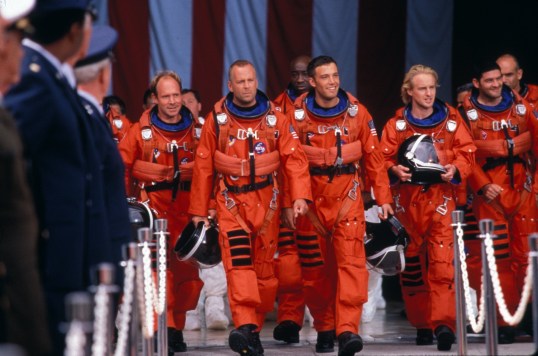
Film Review: After Hours (dir by Martin Scorsese)


Directed by Martin Scorsese, 1985’s After Hours opens in an office.  This isn’t the type of office that one might expect a Scorsese movie to open with.  It’s not a wild, hedonistic playground like the office in The Wolf of Wall Street.  Nor is it a place where an aging man with connections keeps his eye on the business for his friends back home, like Ace Rothstein’s office in Casino.  Instead, it’s a boring and anonymous office, one that is full of boring and anonymous people.  Scorsese’s camera moves around the office almost frantically, as if it’s as trapped as the people who work there.

Paul Hackett (Griffin Dunne) works in the office, at a job that bores him but presumably pays him enough to live in New York.  Paul is not a typical Scorsese protagonist.  He’s not a fast-talker or a fearsome fighter.  He’s not an artist consumed by his own passion or an amoral figure eager to tell his own story.  Instead, he’s just a guy who wears a tie to work and who spends his day doing data entry.  He’s a New Yorker but he doesn’t seem to really know the city.  (He certainly doesn’t know how much it costs to ride the subway.)  He stays in his protected world, even though it doesn’t seem satisfy him.  Paul Hackett is not Travis Bickle.  Instead, Paul is one of the guys who would get into Travis’s cab and, after spending the drive listening to Travis talk about how a storm needs to wash away all of New York’s sin, swear that he will never again take another taxi in New York.

One day, after work, Paul has a chance meeting with a seemingly shy woman named Marcy (Rosanna Arquette).  Marcy lives in SoHo, with an artist named Kiki (Linda Fiorentino) who sells plaster-of-Paris paperweights that are made to look like bagels.  Marcy gives Paul her number and eventually, Paul ends up traveling to SoHo.  He takes a taxi and, while the driver is not Travis Bickle, he’s still not amused when Paul’s last twenty dollar bill blows out the window of the cab.

Paul’s trip to SoHo doesn’t goes as he planned.  Kiki is not impressed with him.  Marcy tells him disturbing stories that may or may not be true while a search through the apartment (not cool, Paul!) leads Paul to suspect that Marcy might have disfiguring burn scars.  Paul decides to end the date but he then discovers that he doesn’t have enough change on him to take the subway home.  As Paul attempts to escape SoHo, he meets a collection of strange people and finds himself being hunted by a mob that is convinced that he’s a burglar.  Teri Garr plays a sinister waitress with a beehive hairdo and an apartment that is full of mousetraps.  Catherine O’Hara chases Paul in an ice cream truck.  Cheech and Chong play two burglars who randomly show up through the film.  John Heard plays a bartender who appears to be helpful but who also has his own connection to Marcy.  Even Martin Scorsese appears, holding a spotlight while a bunch of punks attempt to forcibly give Paul a mohawk.  The more that Paul attempts to escape SoHo, the more trapped he becomes.

Martin Scorsese directed After Hours at a time when he was still struggling to get his adaptation of The Last Temptation of Christ into production.  If Paul feels trapped by SoHo, Scorsese felt trapped by Hollywood.  After Hours is one of the most nightmarish comedies ever made. It’s easy to laugh at Paul desperately hiding in the shadows from Catherine O’Hara driving an ice cream truck but, at the same time, it’s impossible not to relate to Paul’s horror as he continually finds himself returning again and again to the same ominous locations.  In many scenes, he resembles a man being hunted by torch-wielding villagers in an old Universal horror film, running through the shadows while villager after villager takes to the streets.  Paul’s a stranger in a strange part of the city and he has absolutely no way to get home.  I think everyone’s had that dream at least once.

Paul is not written to be a particularly deep character.  He’s just a somewhat shallow office drone who wanted to get laid and now just wants to go home.  Fortunately, he’s played by Griffin Dunne, who is likable enough that the viewer is willing to stick with Paul even after Paul makes some very questionable decisions and does a few things that make him a bit less than sympathetic.  Dunne and John Heard keep the film grounded in reality, which allows Rosanne Arquette, Linda Fiorentino, Catherine O’Hara, and especially Teri Garr to totally play up the bizarre quirks of their character.  Teri Garr especially does a good job in this film, revealing a rather frightening side of the type of quirky eccentric that she usually played.

Scorsese’s sense of humor has been evident in almost all of his films but he still doesn’t get enough credit for his ability to direct comedy.  (One need only compare After Hours to one of Brian De Palma’s “comedies” to see just how adroitly Scorsese mixes laughs and horror.)  After Hours is one of Scorsese’s more underrated films and it’s one that everyone should see.  After Hours is a comedy of anxiety.  I laughed while I watched it, even while my heart was racing.

The Films of 2024: Horizon: An American Saga: Chapter One (dir by Kevin Costner)


Horizon: An American Saga: Chapter One is the rather unwieldy title of the first part of what Kevin Costner has said will be an epic four-part movie about the settling of the American frontier.

It’s very, very long.

It has a running time of three hours, during which time a lot of characters are introduced and a lot of plotlines are initiated but, because this is the only first chapter, none of them come to a close.  In fact, as the film ends, it’s still a mystery as to how some of the characters are even related.  I watched all three hours and I took my ADD meds this morning so you can be assured that I was actually paying attention.  That said, I still struggled to keep track of who everyone was or even where they were in proximity to each other.  Indeed, it was only towards the end of the film that I realized that several years were supposed to have passed over the course of the first chapter’s running time.

That’s not to say that the film is a disaster.  While it’s not quite the nation-defining epic that Costner obviously envisioned it as being, it’s also not quite the cinematic atrocity that several critics made it out to be.  It’s a throwback of sorts, to the epic westerns of old.  As such, the film features taciturn gunslingers, a woman with a past, dangerous outlaw families, fierce Indian warriors, and a wise Indian chief who has dreamed of the coming of the white man.  The film is full of actors — like Michael Rooker, Sienna Miller, Sam Worthington, Danny Huston, Will Patton, James Russo, Dale Dickey, and Kevin Costner himself — who feel as if they belong to a different era of filmmaking.  Just about everyone in the film is heading to the settlement of Horizon, which sits in Apache territory.  Despite the efforts of the Indians to kill every settler who shows up, they keep coming.  As one army officer explains it, the Indians have made the mistake of thinking that the settlers will come to believe the land is cursed while the settlers, all of whom are full of American optimism, instead chose to believe that the previous settlers were unlucky but that the next wave of settlers will make it work.  Costner has the right visual sensibility for a western.  The film reveals a director who is obviously in love with the Western landscape and the film is at its best when it simply frames the characters against the beauty of the frontier.  But when it comes to actually telling a compelling story, he struggles.  There are a lot of moving parts to the first chapter of Horizon and the problem is not that they don’t automatically connect but instead that Costner never gives us any reason to believe that they’ll ever connect.  There are no visual clues or bits of dialogue to assure the viewer that everything they’re watching is going to eventually pay off.  Costner asks his audience to have faith in him and remember that he directed Open Range and Dances With Wolves while forgetting about The Postman.

The first hour, which features a brutal raid on the settlement by a group of Indians, is the strongest.  It really drives home the brutality of what we now call the old west.  In the style of Michael Cimino’s The Deer Hunter, Costner closely observes the individual customs of the film’s settlers and carefully introduces several appealing characters who leave the viewer feeling as if they’ve met a very special and very unique community of people.  That makes it all the more devastating when the majority of those characters are subsequently wiped out with casual cruelty in a raid led by the Indian warrior Pionsenay (Owen Crow Shoe).  (Later — much later — a tracker played by Jeff Fahey will show similar brutality while wiping out a group of Apaches.)  The first hour establishes the frontier as being beautiful but also dangerous and it also drives home the mix of determination, desperation, and even madness that led so many to follow Horace Greeley’s advice and “Go west!”  Though the film was shot in early 2023, the brutality of the raid brought to mind the terrible images of the October 7th attacks on Israel.  The subsequent scenes in which Pionesenay and his followers ridiculed those in the tribe who wanted peace mirrored the current schism that’s driving apart the worldwide Left.  The U.S. Army, for their part, arrives a day late and can only offer up not-so subtle condescension.  The surviving settlers, however, remain determined to make a home for themselves.

The second hour focuses on Hayes (played by Costner), who rides into a mining town and gets involved with a family of outlaws who are looking for the woman who shot their father.  The second hour is a bit more of a traditional western than the first hour, though some of the violence is still shockingly brutal.  (Even being comedic relief won’t save you in this film.)  Abbey Lee gives a good performance as the woman with a past and a baby and Kevin Costner is  …. well, he’s Costner.  He could play this type of role in his sleep.

The third hour is a mess, introducing a wagon train and featuring a miscast Luke Wilson as the leader of the settlers and Jeff Fahey giving a strong performance as a ruthless tracker.  The third hour meandered as a whole new set of characters were introduced and I was left to wonder why the film needed new characters when the characters from the first two hours were perfectly adequate.  It was during the third hour that I started to really get impatient with the film and its leisurely approach to storytelling.

The film ends with a montage of what we can expect from the next few chapters of Horizon and I will say that the montage actually looked pretty cool.  That’s because the montage was almost totally made up of action scenes, with none of the padding that caused Chapter One to last an unwieldy three hours despite only having 90 minutes worth of story.  Still, one has to wonder if we’ll actually get to see the next three chapters.  The first chapter bombed at the box office and didn’t exactly excite critics.  Costner is producing and financing the films himself and I doubt he’ll give up on them.  The Horizon saga will be completed but will it made it to theaters or will it just end up on streaming?  Personally, I think the whole thing would work best as a miniseries but who knows?  (If Horizon was airing on Paramount, it would probably be a Yellowstone-style hit.)  All I really do know is that Chapter Two has yet to be released.  And that’s a shame because, for all of Chapter One‘s flaws, I’d still like to see how the story turns out.

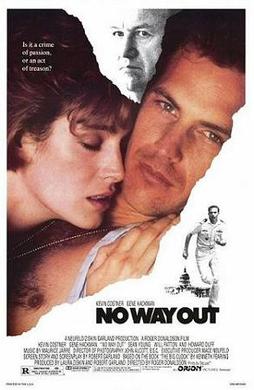
14 Days of Paranoia #7: No Way Out (dir by Roger Donaldson)


Trust no one in Washington would seem to be the message of this 1987 thriller.

Kevin Costner plays Lt. Commander Tom Farrell, a Naval Intelligence officer who is hailed as a hero after saving a shipmate who falls overboard.  In Washington, Tom is recruited by a friend from college, Scott Pritchard (Will Patton), to work for Secretary of Defense Brice (Gene Hackman).  Brice doesn’t trust the head of the CIA (played by future senator, Fred Dalton Thompson) and he wants Tom to serve as his mole within the service.  What Brice doesn’t know is that Tom is sleeping with Brice’s mistress, Susan Atwell (Sean Young).

Still, Brice does suspect that the woman with whom he is cheating is also cheating on him.  When he confronts her about it, their argument leads to him accidentally pushing Susan over an upstairs railing.  Pritchard, who is implied to be in love with Brice, takes charge of the cover-up and decides to push the story that Susan was killed by a possibly mythical Russian agent who is known only by the name “Yuri.”

Tom assists with the investigation of her death, both because he wants to know who killed Susan and also because he knows that there’s evidence in Susan’s apartment that could be manipulated to make him look guilty of the crime.  For instance, Susan took a picture of Tom shortly before her death.  The picture failed to develop but, through the use of what was undoubtedly cutting edge technology in 1987, Naval Intelligence is slowly unscrambling the picture.  For Tom, it’s a race against time to find the actual killer before the picture develops and he’s accused of both killing Susan and being Yuri.

Everyone has an agenda in No Way Out, from the ambitious Brice to the fanatical Scott Pritchard to the head of the CIA, who wants Brice to approve funding for a costly submarine.  Even the film’s nominal hero has an agenda, which has less to do with finding justice for Susan and everything to do with protecting himself and his future.  In fact, as is revealed in the film’s enjoyable if slightly implausible twist ending, some people in Washington have multiple agendas.  The film portrays Washington as being a place where, behind the stately facade, everyone is a liar and everyone is ultimately a pawn in someone else’s game.  If you have the right connections, you can even get away with murder.  Loyalty is rewarded until you’re no longer needed.

It’s an enjoyably twisty thriller, one that makes good use of the contrast between Kevin Costner’s All-American good looks and his somewhat shady screen presence.  The film introduces Costner as being a character who, at first glance, seems almost too good to be true and then spend the majority of its running time suggesting that is indeed the case.  Gene Hackman is well-cast as the weaselly cabinet secretary, as is Sean Young as the woman who links them all together.  In the end, though, the film is stolen by Will Patton, who plays Scott Pritchard as being someone who has unknowingly given his loyalty to a man who is incapable of returning it.  As played by Patton, Scott is an outsider who desperately wants to be an insider and who is willing to do just about anything to accomplish that goal.  He’s a version of Iago who never turned against Othello but instead devoted all of his devious tricks to trying to cover up the murder of Desdemona.

Even with an over-the-top final twist, No Way Out holds up well as a portrait of how the lust for power both drives and corrupts our political system.

14 Days of Paranoia:

  1. Fast Money (1996)
  2. Deep Throat II (1974)
  3. The Passover Plot (1976)
  4. The Believers (1987)
  5. Payback (1999)
  6. Lockdown 2025 (2021)

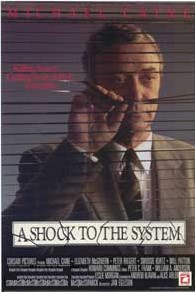
A Shock To The System (1990, directed by Jan Egleson)


Graham Marshall (Michael Caine) has spent years toiling away as an executive at an advertising firm and being nagged by his wife (Swoosie Kurtz), who claims that Graham doesn’t have enough of a killer instinct to get ahead.  When Graham is passed over for a promotion that he felt was promised to him, Graham starts to reconsider everything that he once believed.  While Graham is waiting for the train to take him home, he is approached by an obnoxious panhandler who always asks him for money.  That night, instead of ignoring the panhandler, Graham shoves him in front of the train.  When no one notices that Graham has murdered the panhandler, Graham decides to get revenge on everyone who he blames for the sorry state of his life.

With each murder, Graham rises higher in the company and he feels better about his life.  But each murder brings to Graham a new set of complications that he has to clean up.  Lt. Laker (Will Patton) thinks that Graham is responsible for all of the deaths that have recently occurred but he doesn’t have the evidence to charge him.  His murder spree brings him a chance of romantic redemption with Stella (Elizabeth McGovern) but soon, even she suspects that Graham might actually be a killer.  Luckily for him, Graham learns that he can get away with his crimes because the system is set up to protect men like him.

A Shock To The System is a pitch-black comedy that benefits from the casting of Michael Caine in the lead role.  Caine is one of the few actors who can make a resentful and bitter sociopath likable and he does that in A Shock To The System.  Graham starts out beaten down by the world and being passed over for younger executives like Bob Benham (Peter Reigert) but, by the end of the film, he’s become as ruthless a killer as Jack Carter.  Just as in Get Carter, A Shock To The System features Michael Caine making evil very compelling.

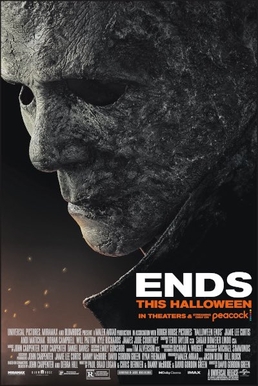
Horror Film Review: Halloween Ends (dir by David Gordon Green)


Halloween Ends?  Not likely.

It is true that, with this movie, David Gordon Green does close out his version of the Halloween trilogy and, for that, we should all be thankful.  For all the critical acclaim that the film received, none of Green’s Halloween films seem destined to stand the test of time.  I like almost all of David Gordon Green’s work except for his Halloween films and, unfortunately, I find his version of Halloween to be so self-important and annoying that it overshadows what I previously liked about his other movies.  (Don’t even get me started on the news that he will next be rebooting The Exorcist.)  Watching the Green Halloween trilogy, you find yourself wondering why Green made the films at all since he seems to consider the whole slasher genre to be beneath him.  Say what you will about Rob Zombie’s Halloween films, Zombie at least loves the horror genre.  Green, like so many Blumhouse filmmakers, only seems to make horror films so that he can remind us that he’s better than them.

But I doubt that this will be the final Halloween film.  It will be the last Halloween film produced under Blumhouse, as the rights to the story and the characters now revert back to Malek Akkad.  And, as long as there is money to be made off of the franchise, there will be new Halloween films.  Someone else will come along and reboot the franchise and hopefully wipe out the Green continuity just as ruthlessly as Green wiped out the previous franchise’s continuity.  In an age of franchises and prequels and cinematic universes, the Halloween franchise is proud to say, “Ha!  You mean you actually kept track of what happened in all the other movies!?  Sucks to be you, dumbass.”

But let’s talk about Halloween Ends.

As you may remember, Halloween Kills ended with Michael killing Laurie Strode’s daughter and Laurie (Jamie Lee Curtis) grabbing a shotgun and heading out to get  revenge.  Well …. ha ha, joke’s on you.  Laurie never got her revenge.  Michael vanished.  Four years later, Laurie has gone from being a badass survivalist to being a cheerful, cookie-baking grandma because she had to let go of the anger.  Laurie spent forty years preparing for Michael to return and then, when Michael does return and brutally murders her daughter, Laurie decides that she has to let go of her anger.  Laurie’s main concern is that the town of Haddonfield is now a traumatized and angry place.  Maybe she can spread positivity by writing a memoir about her life.  Sadly, this means that we also have to listen to passages from Laurie’s memoirs.  Laurie Strode is good at fighting psychotic killers but she sucks as a writer.

Unfortunately, whenever Laurie leaves the house that she shares with her granddaughter, Allyson (Andi Matichak), she runs the risk of being accosted by all of the angry people who all lost a relative or a friend to Michael Myers.  All of them view Laurie as being a reminder of the pain caused by Michael.  They actually do have a point and you have to wonder about Laurie’s claim that she’s staying in Haddonfield to help the town heal.  First off, I don’t know why Laurie would have so much loyalty to what appears to be a fairly generic suburb.  Secondly, the townspeople are so traumatized that is actually seems a bit a selfish for Laurie to remain in Haddonfield and to continually remind everyone of the worst night of their lives.  I mean, Laurie could move.  You know who can’t leave?  The wheelchair-bound woman who was paralyzed while Michael was killing everyone in town because he wanted to find Laurie.

Michael disappeared after killing Laurie’s daughter.  No one knows where Michael is.  Michael is a big and fearsome serial killer who nearly wiped out an entire town and he’s out there somewhere and apparently, no one is looking for him.  That’s what one has to assume because, according to the film, he’s spent the last four years living underneath a bridge.  He’s still wearing his mask.  He looks and acts exactly the same way as he did previously.  He’s still killing people.  He’s just doing it under a bridge.  How, in four yeas time, has it not occurred to anyone in law enforcement to not check under the bridge?  It’s the most obvious hiding spot in town but no one looked under the bridge.  And why, if Michael is obsessed with killing Laurie, has he spent four years under a bridge as opposed to going to Laurie’s house?

Michael is pretty much treated as a supporting character in Halloween Ends.  For that matter, so is Laurie.  The majority of the film centers around a new character named Corey (Rohan Campbell).  Corey was a college student with a bright future until a terrible babysitting accident led to the death of a boy named Jeremy.  Corey was blamed for the death, even though it really wasn’t his fault.  (The scenes with Corey and Jeremy open the film and are so well-handled that it leaves little doubt that Green was far more emotionally invested in Corey’s storyline than he was in any of the Michael/Laurie nonsense.)  Even though Corey was acquitted of manslaughter, he is now the town pariah.  Corey meets and falls in love with Allyson but, unfortunately, the town’s constant taunting and suspicion causes him to snap.  He becomes a disciple and then a rival of Michael’s.

Corey is the type of damaged character who has been at the center of many of David Gordon Green’s non-Halloween films.  One gets the feeling that Green wanted to make a movie about Corey but, since he’s abandoned indie films in order to spend his time screwing up venerable horror franchises, Green and co-writer Danny McBride instead jammed Corey’s story into a Halloween film.  While Corey has the potential to be an interesting character, he doesn’t belong here.  Making Corey into a killer means reducing Michael’s powers.  Michael goes from being a fearsome symbol of pure evil to being some guy in the sewers who gets beaten up and mugged by a nerdy guy who previously couldn’t even stand up to the members of the school band.  It not only goes against the spirit of the original Halloween films but also against everything that was previously established in the Green Halloween films.  I mean, Corey beats up Michael after Corey gets beaten up by a bunch of band kids.  Maybe if the posse in Halloween Kills had been made up of the high school marching band, Laurie’s daughter would still be alive.

It all gets to be a bit annoying.  There are so many little things that don’t make any sense.  My favorite is that the family of that hired Corey to babysit moves out of their house after the death of their son.  Corey continues to break into the now abandoned house, which has sat empty for four years.  And yet, the abandoned house is remarkably well taken care of.  For some reason, the family took all of their furniture but left behind a grand piano.  Why wouldn’t they take the piano with them?  In the drawing room, there’s a book shelf that is empty except for three books.  Why would the family leave those three books behind?  When Green rebooted the Halloween franchise, he ignored all of the sequels because, according to him, the sequels weren’t any good and didn’t make sense.  But Halloween Ends feels as rushed and nonsensical as any of the films that featured Danielle Harris as Laurie’s daughter.

The film ends with the community of Haddonfield coming together once again.  It’s a scene that I wish I could describe but to do so would mean spoiling the end of the movie.  Let’s just say that it’s incredibly dumb and it almost feels like a parody of the previous Green films.  One of the worst thing about the Green films is the insistence of presenting Haddonfield as being some sort of iconic location as opposed to just being a generic anytown USA.  The whole reason why the original Halloween films were so effective was because Haddonfield could have been anywhere.  Green tries to turn Haddonfield into another Twin Peaks and it’s another sign that he never really understood what made John Carpenter’s original film work in the first place.  Ironically, a lot of what happens during the final moments of Halloween Ends would make more sense if Michael was Laurie’s brother but, again, the Green films did away with all that.

Halloween Ends is not necessarily the worst film of 2022.  As a director, Green is still capable of coming up with an effective shot or two.  But, considering the hype that accompanied it, it is one of the most disappointing.  And it also has the most unintentionally funny ending of any film you’re likely to see in 2022.  Whenever I feel down, I just think about that solemn procession to the auto yard and it cheers me right up.

As I said at the start of this review, Halloween will never end as long as there is money to be made.  So, in another few years, we’ll get another reboot and, once again, we’ll discover with Laurie, Tommy Doyle, Linsdey, and Sheriff Brackett have been doing since the night Michael came home.  My idea for a reboot is that they should make Michael and Laurie into siblings.  That would be interesting.

The Party lasts past dawn in The Forever Purge Trailer!


Ah, another year, another Purge.

In the Purge universe, America is given a single night to commit all of the crimes it wants without any consequence. The Forever Purge – the fourth film in the series – seeks to answer a question that has yet to be asked in any of the films before it: What if the Purge lasted longer than a night? It’s a different angle for the series, hopefully a good one.

The Forever Purge stars Ana de la Reguera (Narcos), Will Patton (The Mothman Prophecies), Josh Lucas (Ford v. Ferrari), Tenoch Huerta (Days of Grace), and Leven Rambin (Percy Jackson: Sea of Monsters). The film is set to release around the 4th of July.

The North Carolina Film Critics Honor Minari!


The North Carolina Film Critics Association has announced their picks for the best of 2020 and, in something of a shock for anyone who has following the awards season up to this point, they did not give the best picture award to Nomadland.

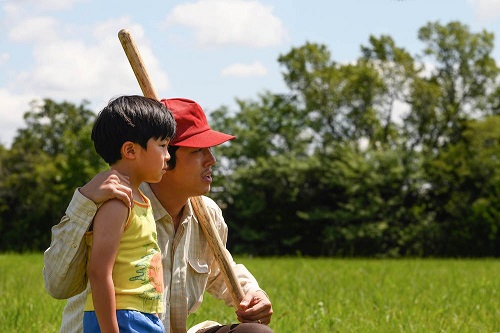
Instead, they honored Minari!

And, to be honest, I couldn’t be more thrilled.  Don’t get me wrong.  It’s not that I have anything against Nomadland or that I think Minari is the best picture of the year.  I haven’t seen either film (though I hope to correct that soon) so I really don’t have an opinion on what deserves what.  Instead, I’m just happy that the precursor love is getting spread around a little.  Nomadland winning every single precursor contest was getting boring.

It’s a bit like the 2010 awards season, when The Social Network just kept winning over and over again.  When one of the precursor groups gave their price to The Kids Are All Right instead, I was like, “Finally!  Something different!”  It didn’t matter what I personally didn’t care much for The Kids Are All Right.  What was important was that we had at least gotten some variety.

You can see North Carolina’s nominees by clicking here.  And you can find the winners below!

Best Narrative Film — Minari

Best Documentary Film — Dick Johnson is Dead

Best Animated Film — Soul

Best Foreign Language Film — Another Round

Best Director — Chloe Zhao for Nomadland

Best Cinematography — Joshua James Richards for Nomadland

Best Actor — Delroy Lindo in Da 5 Bloods

Best Actress — Frances McDormand in Nomadland

Best Supporting Actor — Sacha Baron Cohen in The Trial of the Chicago 7

Best Supporting Actress — Youn Yuh-jung in Minari

Best Original Screenplay — Lee Isaac Chung for Minari

Best Adapted Screenplay — Chloe Zhao for Nomadland

Best Special Effects — Tenet

Best Music — Soul

Ken Hanke Memorial Tar Heel Award — Will Patton (actor, Minari)

Best Restoration — The Lord of the Rings Trilogy (Warner Bros.)

Here Are The 2020 North Carolina Film Critics Nominations!


The regional film critics continue to chime in with their picks for the best of 2020.  Below, you’ll find the nomination of the North Carolina Film Critics.  The winners will be announced on January 3rd, 2021.  That sounds like a long wait but actually, it’s just means that the winners will be announced on Sunday.

Anyway, here’s the nominations.  You’ll notice that there’s no nominations for Small Axe, so I guess that moment has passed now that Amazon has made it clear that they’re still going for Emmys as opposed to Oscars for Steve McQueen’s five films.  That’s kind of a shame since the whole Small Axe thing was at least providing some suspense as far as these awards go.

BEST NARRATIVE FILM
Da 5 Bloods
Minari
Nomadland
Promising Young Woman
The Trial Of The Chicago 7

BEST DOCUMENTARY FILM
All In: The Fight for Democracy
Boys State
David Byrne’s American Utopia
Dick Johnson Is Dead
Time

BEST ANIMATED FILM
The Croods: A New Age
Onward
Over The Moon
Soul
Wolfwalkers

BEST FOREIGN LANGUAGE FILM
Another Round
Bacurau
Beanpole
La llorona
Night of Kings

BEST DIRECTOR
Emerald Fennel – Promising Young Woman
David Fincher – Mank
Regina King – One Night In Miami…
Spike Lee – Da 5 Bloods
Chloé Zhao – Nomadland

BEST CINEMATOGRAPHY
Hoyte Van Hoytema – Tenet
Erik Messerschmidt – Mank
Joshua James Richards – Nomadland
Newton Thomas Sigel – Da 5 Bloods
Dariusz Wolski – News of the World

BEST ACTOR
Riz Ahmed – Sound of Metal
Chadwick Boseman – Ma Rainey’s Black Bottom
Anthony Hopkins – The Father
Delroy Lindo – Da 5 Bloods
Steven Yeun – Minari

BEST ACTRESS
Jessie Buckley – I’m Thinking Of Ending Things
Viola Davis – Ma Rainey’s Black Bottom
Frances McDormand – Nomadland
Elisabeth Moss – The Invisible Man
Carey Mulligan – Promising Young Woman

BEST SUPPORTING ACTOR
Chadwick Boseman – Da 5 Bloods
Sacha Baron Cohen – The Trial Of The Chicago 7
Bill Murray – On the Rocks
Paul Raci – Sound of Metal
David Strathairn – Nomadland

BEST SUPPORTING ACTRESS
Maria Bakalova – Borat Subsequent Moviefilm
Toni Colette – I’m Thinking Of Ending Things
Olivia Colman – The Father
Amanda Seyfried – Mank
Youn Yuh-jung – Minari

BEST ORIGINAL SCREENPLAY
Da 5 Bloods – Danny Bilson, Paul De Meo, Kevin Willmott & Spike Lee
Mank – Jack Fincher
Minari – Lee Isaac Chung
Promising Young Woman – Emerald Fennell
The Trial Of The Chicago 7 – Aaron Sorkin

BEST ADAPTED SCREENPLAY
First Cow – Jon Raymond & Kelly Reichardt
I’m Thinking Of Ending Things – Charlie Kaufman
Ma Rainey’s Black Bottom – Ruben Santiago-Hudson
Nomadland – Chloé Zhao
One Night In Miami… – Kemp Powers

BEST SPECIAL EFFECTS
The Invisible Man
The Midnight Sky
Mulan
Tenet
Wonder Woman 1984

BEST MUSIC
Da 5 Bloods
Mank
Minari
Soul
Tenet

KEN HANKE MEMORIAL TAR HEEL AWARD
This award recognizes a film, artists, or performer with a special connection to North Carolina. In 2017, the Tar Heel Award was dedicated to longtime North Carolina film critic Ken Hanke.

The Dancin’ Bulldogs – Film
Will Patton (Minari) – Performer
Gary Wheeler – Producer/Industry Professional

BEST RESTORATION
To honor the special role that streaming has played in 2020 due to the global pandemic, the NCFCA added a category to this year’s awards: Best Restoration. This intends to acknowledge the cultural significance of the film in addition to the quality of the restoration.

Beau Travail (The Criterion Collection)
The Lord of the Rings Trilogy (Warner Bros.)
Mädchen in Uniform (Kino Lorber)
Native Son (Kino Lorber)
Roman Holiday (Paramount Home Entertainment)

Horror Film Review: The Fourth Kind (dir by Olatunde Osunsanmi)


“I’m actress Milla Jovovich, and I will be portraying Dr. Abigail Tyler in The Fourth Kind. This film is a dramatization of events that occurred October 1st through the 9th of 2000, in the Northern Alaskan town of Nome. To better explain the events of this story, the director has included actual archived footage throughout the film. This footage was acquired from Nome psychologist Dr. Abigail Tyler, who has personally documented over 65 hours of video and audio materials during the time of the incidents. To better protect their privacy, we have changed the names and professions of many of the people involved. Every dramatized scene in this movie is supported by either archived audio, video or as it was related by Dr. Tyler during extensive interviews with the director. In the end, what you believe is yours to decide. Please be advised, that some of what you’re about to see is extremely disturbing.”

And so began the 2009 film, The Fourth Kind!  Milla Jovovich plays Dr. Abbey Tyler, who is still emotionally devastated by the murder of her husband and who finds herself interviewing a lot of potential UFO abductees in Nome, Alaska.  You may remember that, when this film came out, there was a lot of online debate over whether or not it was based on a true story.  That’s because the film was advertised as containing actual “documentary footage” of Dr. Tyler talking to hypnotized alien abductees.  Often times, during the film, a split screen was used so you could watch the “original” Dr. Tyler interviewing a patient while, at the same time, Milla Jovovich and an actor “recreated” the scene for the film.

Of course, the really interesting question here isn’t whether or not the documentary footage was real.  Instead, to me, the real mystery of the film is why, if you had all of this amazing footage of real people freaking out under hypnosis, would you then make a movie starring Milla Jovovich, Will Patton, and Elias Koteas?  It seems like a better idea would be to just make a documentary and save a lot of money on paying the cast.

Anyway, as you probably already guesses, the documentary footage was faked as well and there is no Dr. Abigail Tyler.  Still, you have to admire the amount of effort that director Olatunde Osunsanmi put into trying to convince us that we were watching something based on a true story.  I mean, he went far beyond just using the whole shaky cam stuff that most found footage horror movies fall back on.  Wisely, Onsunsanmi made sure that none of the actors in the found footage were more attractive than the actors in the movie that was supposedly based upon it.  Anyone who has seen enough “based on a true story” movies knows that the real people never look as good as the people hired to play them.  I mean, honestly, this is a gimmick that Orson Welles would probably have appreciated.  That said, Welles probably would have gotten better performances out of the actors in his fake documentary.  When Milla Jovovovich is more convincing as a psychologist than the woman who were told actually is a psychologist, it’s a problem.

As for the film itself, it has a few effective jump scares.  There’s a lot of people yelling in strange voices and, when Abbey’s daughter vanishes, Milla Jovovich does a good enough job communicating the anguish that any mother would feel if her child was abducted by aliens.  Dependable actors like Will Patton and Elias Koteas show up and do what they can with underwritten roles.  The Fourth Kind isn’t a bad movie but its storyline and characters are never as interesting as its gimmick.  It’s the type of horror film that might make you jump while you’re watching but, a week later, all you’ll remember is Milla Jovovich introducing herself.


Trailer: Halloween


Halloween 2018

October 19, 2018. Keep that date in mind.

It’s the date for the latest entry to the Halloween franchise. It’s to be a sequel to the original film. It will also discard every other Halloween sequel ever made. So, for those who are so anti-remake/reboot this should alleviate any of those triggers.

David Gordon Green (who co-wrote this sequel with Danny McBride and Jeff Fradley) directs this sequel as a continuation of the events which happened with the original film. A follow-up that’s 40 years in the making, literally.

So, once again, remember October 19th and make sure to check this film out. I have a sneaking suspicion that it’ll be the true sequel to Carpenter’s classic.