Review: Saving Private Ryan (dir. by Steven Spielberg)


“Someday we might look back on this and decide that Saving Private Ryan was the one decent thing we were able to pull out of this whole godawful, shitty mess.” — Sergeant Horvath

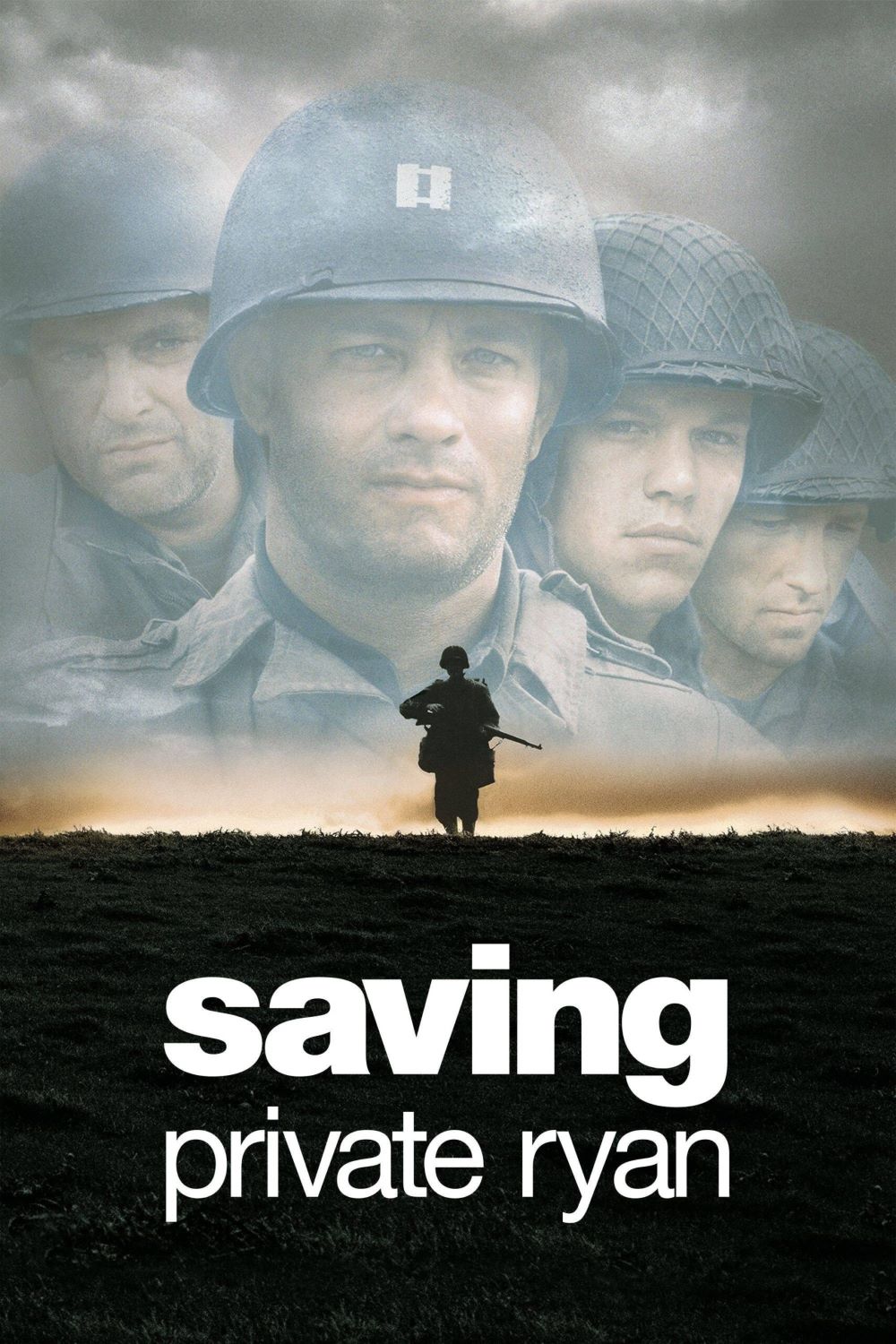
Saving Private Ryan stands as a landmark achievement in war cinema, intricately weaving immersive battle scenes, rich character dynamics, and profound moral themes into a nearly three-hour exploration of World War II’s human cost. One of its most remarkable features is the opening Omaha Beach landing sequence, a meticulously crafted, over 24-minute depiction of warfare’s brutal reality. Spielberg deploys a cinema verité style with handheld cameras capturing disorientation and chaos through the soldiers’ eyes. The sound design envelops the viewer in a sensory onslaught—gunfire, shouting, explosions—creating a visceral experience that immerses audiences directly in the terror and confusion of D-Day.

The filming process drew heavily on historical accuracy, with the production shot on the coast of County Wexford, Ireland, employing amputee actors and practical effects over computer graphics to simulate violent injuries and battlefield horrors. Muted tones evoke wartime photographs, and rapid, shaky editing conveys the disorganized, frantic environment soldiers endured. Consulting WWII veterans and historians, Spielberg created a sequence that reshaped cinematic portrayals of war, influencing how future films would approach the genre’s raw immediacy and emotional weight.

The film’s narrative follows a squad led by Captain Miller on a mission to locate and bring home Private James Ryan, whose three brothers have been killed in combat. The mission is steeped in the real-life tragedy of the five Sullivan brothers who died together aboard the USS Juneau in the Pacific, prompting military policies to prevent similar familial devastation. This historical context frames the story’s ethical heart: risking several men’s lives to save one, raising enduring questions about the value of individual sacrifice within the broader war.

In Saving Private Ryan, sacrifice is portrayed ambiguously—not as the sacrifice of a single hero but as the collective cost borne by the men tasked with rescuing one individual under perilous conditions. As the squad journeys through the war-torn French countryside, the deaths, injuries, and tensions they face underscore war’s randomness and the difficulty of weighing one life against many. The narrative refuses to romanticize or simplify, instead confronting the audience with the tragic truth that countless soldiers lose their lives without recognition or purpose, while some survive against staggering odds.

Duty and camaraderie thread throughout the film, portrayed through the soldiers’ evolving relationships and personal struggles. Each grapples with loyalty not only to their mission but to their fellow men and their own moral codes.

Integral to the film’s power is Tom Hanks’s layered performance as Captain John Miller. Hanks breathes life and emotional depth into Miller, portraying him as a man shaped by civilian life—revealed poignantly when he discloses his pre-war profession as a schoolteacher—now transformed by the relentless demands of war. He embodies an officer who is both composed and vulnerable, carrying the heavy burden of leadership with quiet dignity. Hanks’s portrayal reveals the internal struggles beneath Miller’s stoic exterior: moments of doubt, moral conflict, and fatigue subtly expressed through a trembling hand or a weary gaze. This humanity makes Miller relatable, as a man trying to maintain order and purpose amid chaos.

Hanks skillfully balances Miller’s authoritative presence with warmth and empathy, particularly evident in his paternal interactions with younger soldiers, reinforcing Miller’s role as both a leader and protector. His nuanced acting delivers the complexity of a man constantly negotiating duty and compassion. In scenes of high tension or moral quandaries, Hanks conveys the weight of command while allowing glimpses into Miller’s psychological strain, deepening the film’s emotional resonance.

Following Hanks’s Miller, a standout amongst the supporting cast is Tom Sizemore’s portrayal of Technical Sergeant Mike Horvath, Miller’s steady second-in-command. Sizemore embodies the pragmatic, battle-hardened soldier whose loyalty and experience provide emotional grounding for the squad. Sizemore portrays Horvath’s weariness and quiet commitment, adding layers of realism that deepen the exploration of how war reshapes individuals. The chemistry and shared history between Miller and Horvath are palpable, illustrating the bonds that sustain soldiers through hardship and lending emotional weight to the narrative.

The film wrestles with intense moral ambiguity throughout. The mission’s premise—to risk many lives to save one—compels both characters and viewers to confront complex questions about justice, value, and the cost of war. Scenes presenting difficult choices, such as the decision to spare or execute prisoners, dramatize these ethical dilemmas and highlight the emotional burdens borne by soldiers.

Technically, the film excels, with Janusz Kaminski’s dynamic cinematography capturing both the chaos of battle and intimate moments with evocative clarity. The immersive sound design reinforces the brutal reality, stripping warfare of glamor and confronting audiences with its daunting human costs.

Despite the overwhelming destruction and loss, Saving Private Ryan offers moments of humanity and hope. The rescue mission serves as a fragile symbol of compassion in the midst of devastation, while the film’s closing reflections on memory and legacy emphasize the lasting significance of sacrifice and survival.

Saving Private Ryan stands as a monumental achievement in the war genre, combining visceral combat realism, compelling characters, and moral complexity. Through Hanks’s deeply human Captain Miller and the nuanced supporting performances, especially Sizemore’s grounded Horvath, the film explores themes of sacrifice, duty, and brotherhood with unflinching honesty. Its enduring legacy lies in its unvarnished yet empathetic portrayal of war’s cost and the profound sacrifices made by those who lived it.

RIP, George Wendt: Guilty By Suspicion (1991, directed by Irwin Winkler)


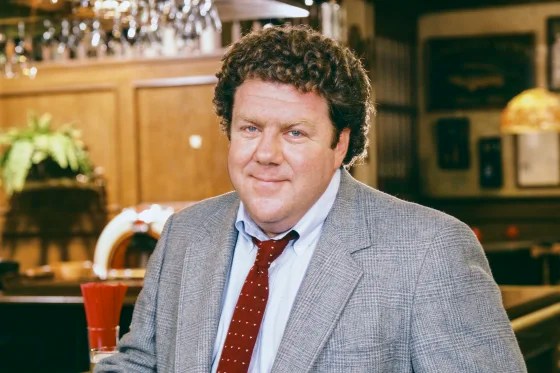
George Wendt passed away in his sleep earlier today.  He was 76 years old.

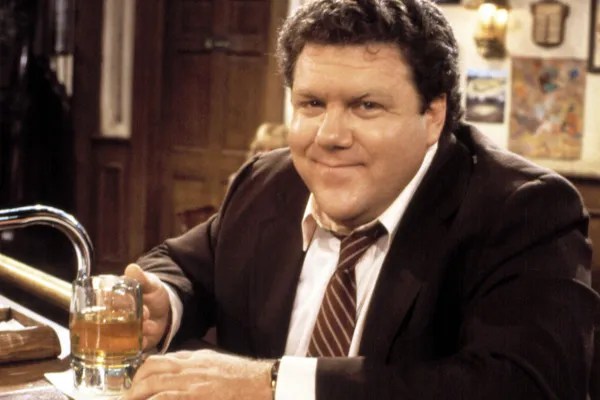
If you’re old enough to have watched Cheers when it originally aired or to have caught it in reruns, George Wendt will always be Norm Peterson, the beer-drinking accountant who spent all of his time at the show’s titular bar.  One of the show’s trademarks was that, whenever he entered the bar, everyone greeted him by shouting, “Norm!”  “How’s the world treating you?” a bartender would ask.  “It’s a dog eat world and I’m wearing milkbone underwear,” Norm once replied.

(One of my favorite joke from the series was when Norm went into a steakhouse and everyone inside was heard to yell, “Norm!” as the door closed behind him.)

If we’re going to be really honest, Norm was probably a high-functioning alcoholic and terrible husband.  (Wife Vera was often-mentioned but never seen.)  Wendt was so likable in the role and was so good at delivering those one-liners that it didn’t matter.  Watching the show, you never wondered why Norm was in the bar.  You were just glad he was.

George Wendt was also an accomplished stage actor.  (I saw him on stage when he was co-starring with Richard Thomas in 12 Angry Men.)  He appeared in several movies, usually playing the comedic sidekick or the hero’s best friend.  His film roles often didn’t ask him to do much other than be likable but one exception was his performance in 1991’s Guilty By Suspicion.

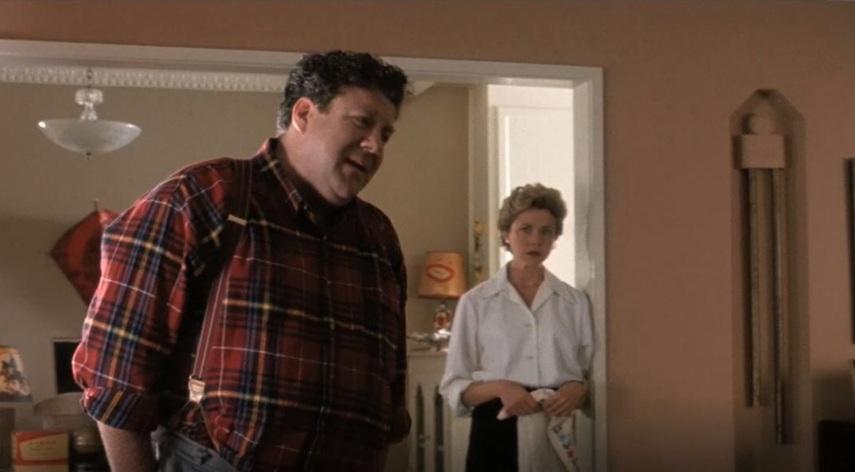
Guilty By Suspicion is a film about the McCarthy era, starring Robert De Niro as film director David Merrill, who is threatened with being blacklisted unless he names four of his colleagues as being communists.  George Wendt plays screenwriter Bunny Baxter, a childhood friend of David’s who attended a few communist rallies when he was younger, failed to mention it to the FBI, and who is now being investigated as a subversive.  The studio argues that David should name Baxter because his name is already out there.  When David refuses, he finds himself blacklisted and unable to make a living.  Bunny Baxter, meanwhile, is offered a similar deal.  Baxter can save his own career but only if he names David as a communist.  Unlike David, Baxter considers betraying his friend because it’s the only way that he can ever hope to work again.  “Your dead anyway,” Baxter says to David.

Guilty By Suspicion suffers from Irwin Winkler’s plodding direction but De Niro gives a good performance, as does Martin Scorsese who is cast as a director based on Joseph Losey.  The film is full of actors who would later become better-known, like Chris Cooper, Tom Sizemore, and Annette Bening.  Wendt, however, gives the film’s best performance as the screenwriter who is torn between protecting his career and maintaining his integrity.  The scene where he asks permission to name Merrill as a communist is powerful and it shows how good an actor George Wendt could be.  Bunny Baxter is asking his best friend to allow himself to be stabbed in the back.  Baxter is that desperate.  That he’s played by George Wendt, an actor who was everyone’s favorite likable barfly in the 80s, makes the scene all the more powerful.

George Wendt, RIP.  Thanks for the memories.

The Eric Roberts Collection: Hunting Season (dir by Eduardo Castrillo)


Yeah, I got nothing.

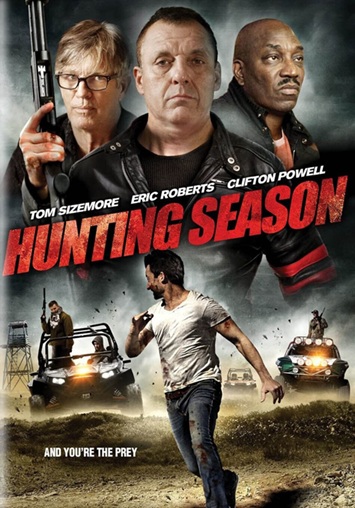
Seriously, 2016’s Hunting Season is so mind-numbingly dull and bad that I have no idea what to say about it.  Usually, when I see an indie film that is this bad, I keep it to myself because I generally don’t believe in kicking people when they’re down.  I’m far more comfortable trashing a bad film from a major studio than a mediocre one that was shot by some guy who put the entire budget on his credit card.  But a visit to the imdb revealed several comments from people who worked on the film and were never actually paid for their efforts so screw it.  This is one of the worst films that I have ever seen in my life.

Stock brokers are kidnapping people and hunting them for sport.  Tom Sizemore plays Nick, who I guess is supposed to be the head stockbroker.  If I sound confused, it’s because the soundtrack was so muddy that I often struggled to understand what people were saying.  Sizemore disappears from the film, which is a shame because his unhinged, seemingly improvised performance was one of the only interesting things about the film.  (At one point, Sizemore looked straight at the camera and extended his middle finger.  I’m not sure if that moment was scripted or not.)  Eric Roberts shows up for four scenes, playing the father-in-law of one of the stock brokers.  The character’s daughter apparently has some sort of psychic connection with her husband and she shouted all of her dialogue.  Clifton Powell shows up as a guy in a bar.  Miguel Nunez Jr. plays an FBI agent.

Along with not being able to hear the dialogue, I also struggled to understand just where everyone was in relation to everyone else.  The film was so haphazardly edited that it was impossible to really keep track of time or location or anything else that would have helped make the film interesting.  It’s a talky film but good luck understanding what anyone’s saying.  Most of the scenes have so many visible edits and so many close-ups that I got the feeling that everyone was on set at a different time.  It makes for a disjointed and dull story.  I couldn’t follow a bit of it.

Eric Roberts has appeared in nearly 800 films.  This one might be the worst.

Previous Eric Roberts Films That We Have Reviewed:

  1. Star 80 (1983)
  2. Runaway Train (1985)
  3. Best of the Best (1989)
  4. Blood Red (1989)
  5. The Ambulance (1990)
  6. The Lost Capone (1990)
  7. Best of the Best II (1993)
  8. Love, Cheat, & Steal (1993)
  9. Voyage (1993)
  10. Love Is A Gun (1994)
  11. Sensation (1994)
  12. Dark Angel (1996)
  13. Doctor Who (1996)
  14. Most Wanted (1997)
  15. Mercy Streets (2000)
  16. Raptor (2001)
  17. Rough Air: Danger on Flight 534 (2001)
  18. Strange Frequency (2001)
  19. Wolves of Wall Street (2002)
  20. Border Blues (2004)
  21. Mr. Brightside (2004)
  22. Six: The Mark Unleased (2004)
  23. We Belong Together (2005)
  24. Hey You (2006)
  25. Depth Charge (2008)
  26. Amazing Racer (2009)
  27. In The Blink of an Eye (2009)
  28. Bed & Breakfast (2010)
  29. Enemies Among Us (2010)
  30. The Expendables (2010) 
  31. Sharktopus (2010)
  32. Beyond The Trophy (2012)
  33. The Dead Want Women (2012)
  34. Deadline (2012)
  35. The Mark (2012)
  36. Miss Atomic Bomb (2012)
  37. Assault on Wall Street (2013)
  38. Bonnie And Clyde: Justified (2013)
  39. Lovelace (2013)
  40. The Mark: Redemption (2013)
  41. The Perfect Summer (2013)
  42. Self-Storage (2013)
  43. A Talking Cat!?! (2013)
  44. This Is Our Time (2013)
  45. Inherent Vice (2014)
  46. Road to the Open (2014)
  47. Rumors of War (2014)
  48. Amityville Death House (2015)
  49. Deadly Sanctuary (2015)
  50. A Fatal Obsession (2015)
  51. Las Vegas Story (2015)
  52. Stalked By My Doctor (2015)
  53. Enemy Within (2016)
  54. Joker’s Poltergeist (2016)
  55. Prayer Never Fails (2016)
  56. Stalked By My Doctor: The Return (2016)
  57. The Wrong Roommate (2016)
  58. Dark Image (2017)
  59. Black Wake (2018)
  60. Frank and Ava (2018)
  61. Stalked By My Doctor: Patient’s Revenge (2018)
  62. Clinton Island (2019)
  63. Monster Island (2019)
  64. The Reliant (2019)
  65. The Savant (2019)
  66. Seven Deadly Sins (2019)
  67. Stalked By My Doctor: A Sleepwalker’s Nightmare (2019)
  68. The Wrong Mommy (2019)
  69. Exodus of a Prodigal Son (2020)
  70. Free Lunch Express (2020)
  71. Her Deadly Groom (2020)
  72. Top Gunner (2020)
  73. Deadly Nightshade (2021)
  74. The Elevator (2021)
  75. Just What The Doctor Ordered (2021)
  76. Killer Advice (2021)
  77. Megaboa (2021)
  78. Night Night (2021)
  79. The Poltergeist Diaries (2021)
  80. The Rebels of PT-218 (2021)
  81. A Town Called Parable (2021)
  82. Bleach (2022)
  83. My Dinner With Eric (2022)
  84. 69 Parts (2022)
  85. D.C. Down (2023)
  86. Aftermath (2024)
  87. Bad Substitute (2024)
  88. Devil’s Knight (2024)
  89. The Wrong Life Coach (2024)
  90. When It Rains In L.A. (2025

Guilty Pleasure No. 80: Point Break (dir by Kathryn Bigelow)


Some films are so ludicrous and self-aware of their absurdity that you can’t help but love them and that’s certainly the case with 1991’s Point Break.

Consider what Point Break offers us:

First, you’ve got Keanu Reeves playing a former college football star who, after blowing out his knee, ended up joining the FBI.  Keanu, who looks like he’s barely out of high school in this film, plays a character with the wonderful name of Johnny Utah.  Keanu gives a relaxed performance.  You can tell that he’s having fun in this movie and Johnny Utah’s enthusiasm is infectious.  Personally, I prefer Johnny Utah to John Wick.

Secondly, you’ve got Patrick Swayze as Bodhi, the ruthless bank robber who is also a surfer.  Much like Reeves, Swayze could occasionally be a stiff actor but in this film, you can tell he’s having fun and again, it’s hard not have fun watching him as he spouts his surfer philosophy, jumps out of planes, and dreams of dying while mastering a 50-foot wave.  Swayze is so charismatic as Bodhi that you totally buy that Johnny Utah would like him despite all the times that Bodhi tries to kill him.

You’ve got Bodhi’s bank-robbing gang, who call themselves the Ex-Presidents.  Bodhi wears a Ronald Reagan mask.  Other members of the gang wear LBJ, Nixon, and Carter masks.  “I am not a crook!” Nixon says.  The wonderful thing about the Ex-Presidents is that they seem to truly enjoy robbing banks.  Of course, they also enjoy surfing.

Gary Busey plays a character who is not Gary Busy.  Instead, he’s Johnny’s partner.  Everyone in the FBI laughs at him when he says the bank robbers are surfers but guess who knows what he’s talking about!  Seriously, though, it’s always interesting to see Gary Busey in the years when he was still a somewhat serious actor.

John C. McGinley does the uptight boss thing.  Lori Petty is the waitress who teaches Johnny Utah how to surf.  The surf footage is beautifully shot.  A soaked Johnny give the camera a thumbs-up.  Director Kathryn Bigelow keeps the action moving quickly and, just as she did with Near Dark, uses the film’s genre trappings to explore the bond that holds together a group of outsiders.

It’s an over-the-top and cheerfully absurd film and it’s impossible not to love it.  I haven’t felt the need to watch the remake.  Why would I?  The original has everything I need.

Previous Guilty Pleasures

  1. Half-Baked
  2. Save The Last Dance
  3. Every Rose Has Its Thorns
  4. The Jeremy Kyle Show
  5. Invasion USA
  6. The Golden Child
  7. Final Destination 2
  8. Paparazzi
  9. The Principal
  10. The Substitute
  11. Terror In The Family
  12. Pandorum
  13. Lambada
  14. Fear
  15. Cocktail
  16. Keep Off The Grass
  17. Girls, Girls, Girls
  18. Class
  19. Tart
  20. King Kong vs. Godzilla
  21. Hawk the Slayer
  22. Battle Beyond the Stars
  23. Meridian
  24. Walk of Shame
  25. From Justin To Kelly
  26. Project Greenlight
  27. Sex Decoy: Love Stings
  28. Swimfan
  29. On the Line
  30. Wolfen
  31. Hail Caesar!
  32. It’s So Cold In The D
  33. In the Mix
  34. Healed By Grace
  35. Valley of the Dolls
  36. The Legend of Billie Jean
  37. Death Wish
  38. Shipping Wars
  39. Ghost Whisperer
  40. Parking Wars
  41. The Dead Are After Me
  42. Harper’s Island
  43. The Resurrection of Gavin Stone
  44. Paranormal State
  45. Utopia
  46. Bar Rescue
  47. The Powers of Matthew Star
  48. Spiker
  49. Heavenly Bodies
  50. Maid in Manhattan
  51. Rage and Honor
  52. Saved By The Bell 3. 21 “No Hope With Dope”
  53. Happy Gilmore
  54. Solarbabies
  55. The Dawn of Correction
  56. Once You Understand
  57. The Voyeurs 
  58. Robot Jox
  59. Teen Wolf
  60. The Running Man
  61. Double Dragon
  62. Backtrack
  63. Julie and Jack
  64. Karate Warrior
  65. Invaders From Mars
  66. Cloverfield
  67. Aerobicide 
  68. Blood Harvest
  69. Shocking Dark
  70. Face The Truth
  71. Submerged
  72. The Canyons
  73. Days of Thunder
  74. Van Helsing
  75. The Night Comes for Us
  76. Code of Silence
  77. Captain Ron
  78. Armageddon
  79. Kate’s Secret

The Unnominated #13: Heat (dir by Michael Mann)


Though the Academy of Motion Picture Arts and Sciences claim that the Oscars honor the best of the year, we all know that there are always worthy films and performances that end up getting overlooked.  Sometimes, it’s because the competition too fierce.  Sometimes, it’s because the film itself was too controversial.  Often, it’s just a case of a film’s quality not being fully recognized until years after its initial released.  This series of reviews takes a look at the films and performances that should have been nominated but were, for whatever reason, overlooked.  These are the Unnominated.

First released in 1995, Heat is one of the most influential and best-known films of the past 30 years.  It also received absolutely zero Oscar nominations.

Maybe we shouldn’t be too surprised that Academy — especially the Academy of the 1990s — didn’t shower the film with nominations.  For all of its many strengths, Heat is still a genre piece, an epic three-hour crime film from director Michael Mann.  It’s a film about obsessive cops and tightly-wound crooks and it’s based on a made-for-TV movie that Mann directed in the late 80s.  While the Academy had given a best picture nomination to The Fugitive just two years before, it still hadn’t fully come around to honoring genre films.

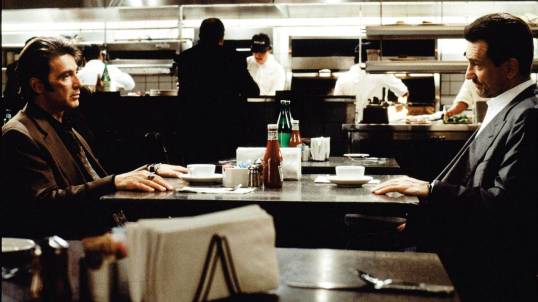
And yet one would think that the film could have at least picked up a nomination for its editing or maybe the sound design that helps to make the film’s signature 8-minute gun battle so unforgettable.  (Heat is a film that leaves you feeling as if you’re trapped in the middle of its gunfights, running for cover while the cops and the crooks fire on each other.)  The screenplay, featuring the scene where Al Pacino’s intense detective sits down for coffee with Robert De Niro’s career crook, also went unnominated.

Al Pacino was not nominated for playing Vincent Hanna and maybe we shouldn’t be too surprised at that.  Pacino yells a lot in this movie.  When people talk about Pacino having a reputation for bellowing his lines like a madman, they’re usually thinking about the scene where he confronts a weaselly executive (Hank Azaria) about the affair that he’s having with Charlene (Ashley Judd), the wife of criminal Chris Shiherlis (Val Kilmer).  And yet, I think that Pacino’s performance works in the context of the film and it’s often forgotten that Pacino has quite scenes in Heat as well.  Pacino’s intensity provides a contrast to Robert De Niro’s tightly controlled career criminal, Neil McCauley.  McCauley has done time in prison and he has no intention of ever going back.  But, as he admits during the famous diner scene, being a criminal is the only thing that he knows how to do and it’s also the only thing that he wants to do.  (“The action is the juice,” Tom Sizemore says in another scene.)  If any two actors deserved a joint Oscar nomination it was Pacino and De Niro.  In Heat, they’re the perfect team.  Pacino’s flamboyance and De Niro’s tightly-controlled emotions come together to form the heart of the picture.

No one from the film’s supporting cast was nominated either, despite there being a wealth of riches to choose from.  Ashley Judd and Val Kilmer come to mind as obvious contenders.  Kilmer is amazing in the shoot-out that occurs two hours into the film.  Ashley Judd has a killer scene where she helps her husband escape from the police.  Beyond Judd and Kilmer, I like the quiet menace of Tom Sizemore’s Michael Cheritto.  (Just check out the look he gives to an onlooker who is getting a little bit too curious.)  Kevin Gage’s sociopathic Waingro is one of the most loathsome characters to ever show up in a movie.  William Fichtner, Jon Voight, Danny Trejo, and Tom Noonan all make a definite impression and add to Michael Mann’s portrait of the Los Angeles underworld.  In an early role, Natalie Portman plays Hanna’s neglected stepdaughter and even Amy Brenneman has some good moments as Neil’s unsuspecting girlfriend, the one who Neil claims to be prepared to abandon if he sees “the heat coming.”

I have to mention the performance of Dennis Haysbert as Don Breedan, a man who has just been released from prison and who finds himself working as a cook in a diner.  (The owner of the diner is played by Bud Cort.)  Haysbert doesn’t have many scenes but he gives a poignant performance as a man struggling not to fall back into his old life of crime and what eventually happens to him still packs an emotional punch.  For much of the film’s running time, he’s on the fringes of the story.  It’s only by chance that he finds himself suddenly and briefly thrown into the middle of the action.

Heat is the ultimate Michael Mann film, a 3-hour crime epic that is full of amazing action sequences, powerful performances, and a moody atmosphere that leaves the viewer with no doubt that the film is actually about a lot more than just a bunch of crooks and the cops who try to stop them.  Hanna and McCauley both live by their own code and are equally obsessed with their work.  Their showdown is inevitable and, as directed by Michael Mann, it takes on almost mythological grandeur.  The film is a portrait of uncertainty and fear in Los Angeles but it’s also a portrait of two men destined to confront each other.  They’re both the best at what they do and, as a result, only one can remain alive at the end of the film.

I rewatched Heat yesterday and I was amazed at how well the film holds up.  It’s one of the best-paced three-hour films that I’ve ever seen and that epic gunfight is still powerful and frightening to watch.  Like Martin Scorsese’s Casino, it was a 1995 film that deserved more Oscar attention than it received.

Heat (1995, dir by Michael Mann, DP: Dante Spinotti)

Previous entries in The Unnominated:

  1. Auto Focus 
  2. Star 80
  3. Monty Python and The Holy Grail
  4. Johnny Got His Gun
  5. Saint Jack
  6. Office Space
  7. Play Misty For Me
  8. The Long Riders
  9. Mean Streets
  10. The Long Goodbye
  11. The General
  12. Tombstone


Scenes That I Love: A Conversation From Heat


Today’s scene that I love is a little scene from 1995’s Heat.

This isn’t a scene that regularly gets mentioned when it comes to discussing the many iconic scenes in this film but I picked it because it features good work from two actors who are no longer with us, Val Kilmer and Tom Sizemore.  Add to that, Danny Trejo’s pithy comment at the end — after all the discussion that’s happened before it — is simply perfect.

Icarus File No. 21: Reach Me (dir by John Herzfeld)


The 2011 film, Reach Me, opens with a rapper named E-Ruption (Nelly) appearing on a morning show and talking about how, while he was serving a prison sentence, he read a self-help book called Reach Me.  It asked him to consider whether or not his childhood self would be happy with his adult self.  The book was written by a mysterious man named Teddy Raymond.  No one knows who this Teddy Raymond is.  He’s never appeared in public.  People film themselves reading the book online and then upload to YouTube as a way of sharing Teddy’s wisdom.  I honestly can think of nothing more annoying and boring than watching someone else read a self-help book but whatever.  I live in Texas.  The movie takes place in California.

Tabloid editor Gerald (Sylvester Stallone) takes a break from action painting to order one of his reporters, Roger King (Kevin Connolly), to track down Teddy Raymond.  Roger wants to write the great American novel.  He doesn’t care about self-help.  He meets Teddy’s associates, Wilson (Terry Crews) and Kate (Lauren Cohan) and Wilson talks about how Teddy magically cured Kate’s stutter.  Roger then wanders around the beach, asking random people, “Teddy Raymond?  Are you Teddy Raymond?”  Oh look!  There’s a guy named Teddy (Tom Berenger) who reluctantly cures Roger of his smoking addiction by ordering Roger to yell at the ocean …. over and over and over again.

Collette (Kyra Segdwick) has just been released from prison.  Reading Teddy’s book has inspired her to try to become a fashion designer.  Collette’s daughter, Eve (Elizabeth Henstridge), is an aspiring actress who was earlier groped by a sleazy star named Keating (Cary Elwes).  Collette and Eve literally crash their car into a car being driven by Wolfie (Thomas Jane), a sociopathic undercover cop who enjoys killing people and who goes to confession after every shooting.  (At the start of the movie, he guns down Danny Trejo.)  The alcoholic priest, Father Paul (Danny Aiello), refuses to hear any more of his confessions.

Meanwhile, wannabe mob boss Frank (Tom Sizemore) is upset because another mob boss, Aldo (Kelsey Grammer), doesn’t treat him with any respect.  Frank sends two of his hitmen, Thumper (David O’Hara) and Dominic (Omari Hardwick), to kill a man who owes him money and to also shoot the man’s dog.  Thumper has been reading Teddy Raymond’s book and doesn’t want to shoot the dog.  Dominic realizes that his heart isn’t into the mob life so, taking the book’s message to heart, he calls Frank and says, “My heart’s not in it.”

(Don’t try that with any real mobsters.)

Eventually, all of the characters do come together.  They don’t exactly come together in a plausible manner but they do all end up at the same location so let’s give the film credit for that.  Let’s also give this film credit for leaving me seriously confused.  I have no idea whether this film was meant to a parody or a celebration of the self-help industry.  At first, I suspected that it meant to be a parody because all of Teddy Raymond’s advice was painfully shallow and the type of basic crap that anyone could come up with.  I actually found myself losing respect for the people who claimed that Teddy had changed their lives.  But at the movie progressed, I realized that I was supposed to take Teddy and his advice seriously.  This was a film that I guess was meant to have something to say but who knows what exactly that was.

That said — hey, everyone’s in this movie!  Director John Herzfeld was a former college roommate of Sylvester Stallone’s and, once Stallone agreed to appear, that apparently convinced a lot of other “name” actors to take the risk as well.  There’s a lot of talent in this film but little of it is used correctly.  Kelsey Grammer as an Italian mobster instead of the editor?  Sylvester Stallone as the editor instead of the Italian mobster?  Thomas Jane as a sociopath who has a girlfriend by the end of the movie, one who smiles and tells him, “Try not to shoot anyone?”  Kyra Sedgwick as an ex-con?  These are all good actors but just about everyone, with the exception of the much-missed Danny Aiello, is miscast.

It’s a true Icarus File.  It was a just a little more self-aware, this would have been a Guilty Pleasure.  But, in the end, self-help cannot help itself.

Previous Icarus Files:

  1. Cloud Atlas
  2. Maximum Overdrive
  3. Glass
  4. Captive State
  5. Mother!
  6. The Man Who Killed Don Quixote
  7. Last Days
  8. Plan 9 From Outer Space
  9. The Last Movie
  10. 88
  11. The Bonfire of the Vanities
  12. Birdemic
  13. Birdemic 2: The Resurrection 
  14. Last Exit To Brooklyn
  15. Glen or Glenda
  16. The Assassination of Trotsky
  17. Che!
  18. Brewster McCloud
  19. American Traitor: The Trial of Axis Sally
  20. Tough Guys Don’t Dance

Lisa Marie Reviews An Oscar Nominee: Born On The Fourth of July (dir by Oliver Stone)


In 1989, having already won an Oscar for recreating his Vietnam experiences in Platoon, director Oliver Stone returned to the war with Born On The Fourth Of July.

Based on the memoir of anti-war activist Ron Kovic, Born on the Fourth of July stars Tom Cruise as Kovic.  When we first meet Kovic, he’s growing up on Long Island in the 50s and 60s.  He’s a clean-cut kid from a nice family.  He’s on the school wrestling team and he’s got a lot of friends.  When he was just 15, he heard John F. Kennedy telling people to ask what they can do for their country and he was inspired.  He decided he wanted to join the Marines, despite the fact that his father (Raymond J. Barry) was still haunted by the combat that he saw in World War II.  (In one of the film’s better scenes, a young Kovic notices that the elderly veterans marching in the Independence Day parade still flinch whenever they hear a firecracker.)  He enlists in the Marines after listening to a patriotic speech from a recruiter (played by Tom Berenger).  Ron runs through the rain to attend his prom and has one dance with Donna (Kyra Sedgwick), on whom he’s always had a crush.  There’s nothing subtle about the way that Stone portrays Kovic’s childhood.  In fact, one might argue that it’s a bit too idealized.  But Stone knows what he’s doing.  The wholesomenss of Kovic’s childhood leaves neither him nor the viewer prepared for what’s going to happen in Vietnam.

Vietnam turns out not to be the grand and patriotic adventure that Kovic thought it would be.  After Sgt. Kovic accidentally shoots one of his own men in a firefight, he is ordered to keep quiet about the incident.  After he is wounded and paralyzed in another firefight, Kovic ends up in a Hellish VA hospital, surrounded by men who will never fully recover from their mental and physical wounds.  Kovic is eventually returns home in wheelchair.  The film then follows Kovic as he goes from defending the war in Vietnam to eventually turning against both the war and the government.  At one point, he ends up with a group of disabled vets in Mexico and there’s a memorable scene where he and another paraplegic (Willem Dafoe) attempt to fight despite having fallen out of their chairs.  Eventually, Kovic returns to America and turns his anger into activism.

There’s nothing subtle about Born On The Fourth Of July.  It’s a loud and angry film and Oliver Stone directs with a heavy-hand.  Like a lot of Stone’s films, it overwhelms the viewer on a first viewing and it’s only during subsequent viewings that one becomes aware of just how manipulative the film is.  Tom Cruise gives a good performance as Ron Kovic but his transformation into a long-haired, profane drunk still feels as if it happens a bit too abruptly.  A good deal of the film centers on Kovic’s guilt about accidentally killing one of his men but the scene where he goes to the soldier’s family and asks them for forgiveness didn’t quite work for me.  If anything, Kovic came across as being rather self-centered as he robs the man’s mother and father of the belief that their son had at least died heroically in combat as opposed to having been shot by his own sergeant.  Did Kovic’s need to absolve himself really give him the right to cause this family more pain?  Born on the Fourth Of July is an effective work of agitprop.  On the first viewing, you’ll want to join Kovic in denouncing the military and demanding peace.  On the second viewing, you’ll still sympathize with Kovic while also realizing that he really owes both his mother and father an apology for taking out his anger on them.  By the third viewing, you’ll be kind of like, “Wow, I feel bad for this guy but he’s still kind of a jerk.”  That said, when it comes to making an effective political film, Adam McKay could definitely take some lessons from Oliver Stone.  Born On The Fourth of July is at its best when it simply captures the feeling of living in turmoil and discovering that the world is not as simple a place as you once believed.  As idealized as the film’s presentation of Kovic’s childhood may be, anyone who has ever felt nostalgia for an earlier and simpler world will be able to relate.

Oliver Stone won his second Best Director Oscar for Born On The Fourth Of July.  The film itself lost Best Picture to far more genteel version of the past, Driving Miss Daisy.


The Eric Roberts Horror Collection: Black Wake (dir by Jeremiah Kipp)


In this film from 2018 (which is largely made up of “found footage”), authorities are confused by a series of mysterious, beachside deaths.  The dead seem to have little to no connection with each other, besides having died near the Atlantic Ocean.  Some think that the murders are the result of a cult.  However, Dr. Luiza Moreira (Nana Gouvea) is convinced that the death are being caused by some sort of parasite that is transferred from host to host.  Her boss (Eric Roberts) doesn’t buy it and he thinks that Dr. Moreira is becoming unhinged in her obsession with her theory.  But soon, the streets are full of zombiefied killers, all of whom seem to be determined to reach the ocean.

As for Dr. Moreira, her boss may actually have a point about her behavior.  Much of the film is made up footage of Dr. Moreira speaking straight to the camera, explaining her theory and also discussing how everyone that she works with is either too foolish or too in denial to understand that its right.  Soon, she almost seems to be taking a bit of joy in just how out-of-control the situation has become.  Meanwhile, she finds herself suffering from terrible headaches and occasional hallucinations.  Two government agents follow her and watch her every move, ominously talking about how she doesn’t realize what is really happening.  When she tries to go to her family to warn them about what is happening, she discovers that the situation is even more extreme than she originally thought.

Black Wake is a low-budget slice of Cthulhu-style horror, one that works because it embraces its low budget and basically tosses in every weird twist and situation that it can come up with.  It’s an enjoyably weird movie and, if nothing else, it captures the extent to which some people will go to pretend that there’s nothing strange happening around them.  My favorites were the dumbass frat guys who just had to pick up a hitchhiker, despite the fact that she was obviously homicidal and disturbed.  One of the frat guys points out that it might not be a good idea to pick up a stranger while there’s a wave of mass murders occurring at the beach, one of his friends rationalizes the decision by saying, “She’s a chick.”  Drunk frat boys so desperate to get laid that they’ll risk being murdered?  That’s probably the most realistic moment in the entire film.

Eric Roberts appears in three scenes, playing an unsympathetic bureaucrat.  (Is there any other type?)  He’s not the only actor making a cameo here.  Chuck Zito plays a sheriff.  Vincent Pastore plays a doctor who memorably says, “Fuck this!” when confronted with the walking dead.  And Tom Sizemore has two effective scenes as an unstable homicide detective.

Previous Eric Roberts Films That We Have Reviewed:

  1. Star 80 (1983)
  2. Blood Red (1989)
  3. The Ambulance (1990)
  4. The Lost Capone (1990)
  5. Love, Cheat, & Steal (1993)
  6. Love Is A Gun (1994)
  7. Sensation (1994)
  8. Dark Angel (1996)
  9. Doctor Who (1996)
  10. Most Wanted (1997)
  11. Mr. Brightside (2004)
  12. Six: The Mark Unleased (2004)
  13. Hey You (2006)
  14. In The Blink of an Eye (2009)
  15. Enemies Among Us (2010)
  16. The Expendables (2010) 
  17. Sharktopus (2010)
  18. The Dead Want Women (2012)
  19. Deadline (2012)
  20. Miss Atomic Bomb (2012)
  21. Lovelace (2013)
  22. Self-Storage (2013)
  23. This Is Our Time (2013)
  24. Inherent Vice (2014)
  25. Road to the Open (2014)
  26. Rumors of War (2014)
  27. Amityville Death House (2015)
  28. A Fatal Obsession (2015)
  29. Stalked By My Doctor (2015)
  30. Joker’s Poltergeist (2016)
  31. Prayer Never Fails (2016)
  32. Stalked By My Doctor: The Return (2016)
  33. The Wrong Roommate (2016)
  34. Dark Image (2017)
  35. Stalked By My Doctor: Patient’s Revenge (2018)
  36. Clinton Island (2019)
  37. Monster Island (2019)
  38. Seven Deadly Sins (2019)
  39. Stalked By My Doctor: A Sleepwalker’s Nightmare (2019)
  40. The Wrong Mommy (2019)
  41. Exodus of a Prodigal Son (2020)
  42. Free Lunch Express (2020)
  43. Her Deadly Groom (2020)
  44. Top Gunner (2020)
  45. Deadly Nightshade (2021)
  46. Just What The Doctor Ordered (2021)
  47. Killer Advice (2021)
  48. The Poltergeist Diaries (2021)
  49. A Town Called Parable (2021)
  50. My Dinner With Eric (2022)