Shattered Politics #36: The Godfather, Part II (dir by Francis Ford Coppola)


Godfather_part_ii

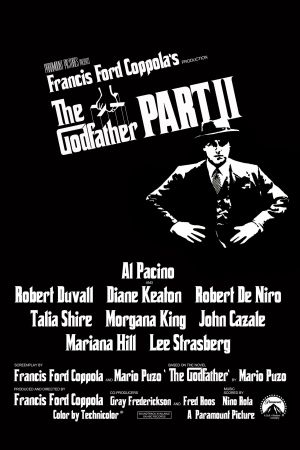
Believe it or not, The Trial of Billy Jack was not the only lengthy sequel to be released in 1974.  Francis Ford Coppola’s The Godfather Part II was released as well and it went on to become the first sequel to win an Oscar for best picture.  (It was also the first, and so far, only sequel to a best picture winner to also win best picture.)  Among the films that The Godfather, Part II beat: Chinatown, Coppola’s The Conversation, and The Towering Inferno.  1974 was a good year.

Whenever I think about The Godfather, Part II, I find myself wondering what the film would have been like if Richard Castellano hadn’t demanded too much money and had actually returned in the role of Clemenza, as was originally intended.  In the first Godfather, Clemenza and Tessio (Abe Vigoda) were Don Corleone’s two lieutenants.  Tessio was the one who betrayed Michael and was killed as a result.  Meanwhile, Clemenza was the one who taught Michael how to fire a gun and who got to say, “Leave the gun.  Take the cannoli.”

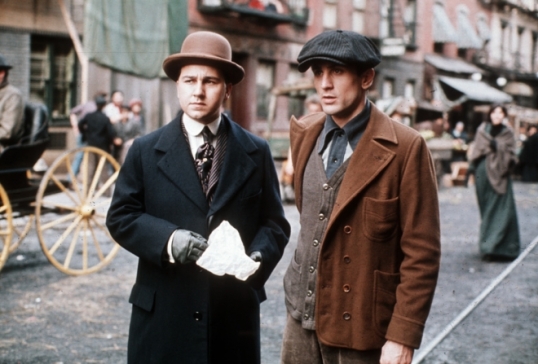
Though Castellano did not return to the role, Clemenza is present in The Godfather, Part II.  The Godfather, Part II tells two separate stories: during one half of the film, young Vito Corleone comes to America, grows up to be Robert De Niro and then eventually becomes the Godfather.  In the other half of the film, Vito’s successor, Michael (Al Pacino), tries to keep the family strong in the 1950s and ultimately either loses, alienates, or kills everyone that he loves.

During Vito’s half of the film, we learn how Vito first met Clemenza (played by Bruno Kirby) and Tessio (John Aprea).  However, during Michael’s half of the story, Clemenza is nowhere to be seen.  Instead, we’re told that Clemenza died off-screen and his successor is Frankie Pentangeli (Michael V. Gazzo).  All of the characters talk about Frankie as if he’s an old friend but, as a matter of fact, Frankie was nowhere to be seen during the first film.  Nor is he present in Vito’s flashbacks.  This is because originally, Frankie was going to be Clemenza.  But Richard Castellano demanded too much money and, as a result, he was written out of the script.

And really, it doesn’t matter.  Gazzo does fine as Frankie and it’s a great film.  But, once you know that Frankie was originally meant to be Clemenza, it’s impossible to watch The Godfather Part II without thinking about how perfectly it would have worked out.

If Clemenza had been around for Michael’s scenes, he would have provided a direct link between Vito’s story and Michael’s story.  When Clemenza (as opposed to Frankie) betrayed Michael and went into protective custody, it would have reminded us of how much things had changed for the Corleones (and, by extension, America itself).  When Tom Hagen (Robert Duvall) talked Clemenza (as opposed to Frankie) into committing suicide, it truly would have shown that the old, “honorable” Mafia no longer existed.  It’s also interesting to note that, before Tessio was taken away and killed, the last person he talked to was Tom Hagen.  If Castellano had returned, it once again would have fallen to Tom to let another one of his adopted father’s friends know that it was time to go.

Famously, the Godfather, Part II ends with a flashback to the day after Pearl Harbor.   We watch as a young and idealistic Michael tells his family that he’s joined the army.  With the exception of Michael and Tom Hagen, every character seen in the flashback has been killed over the course of the previous two films.  We see Sonny (James Caan), Carlo (Gianni Russo), Fredo (John Cazale), and even Tessio (Abe Vigoda).  Not present: Clemenza.  (Vito doesn’t appear in the flashback either but everyone’s talking about him so he might as well be there.  Poor Clemenza doesn’t even get mentioned.)

If only Richard Castellano had been willing to return.

Clemenza_and_Vito

Clemenza and Vito


But he didn’t and you know what?  You really only miss him if you know that he was originally meant to be in the film.  With or without Richard Castellano, The Godfather, Part II is a great film, probably one of the greatest of all time.  When it comes to reviewing The Godfather, Part II, the only real question is whether it’s better than the first Godfather.

Which Godfather you prefer really depends on what you’re looking for from a movie.  Even with that door getting closed in Kay’s face, the first Godfather was and is a crowd pleaser.  In the first Godfather, the Corleones may have been bad but everyone else was worse.  You couldn’t help but cheer them on.

The Godfather Part II is far different.  In the “modern” scenes, we discover that the playful and idealistic Michael of part one is gone.  Micheal is now cold and ruthless, a man who willingly orders a hit on his older brother and who has no trouble threatening Tom Hagen.  If Michael spent the first film surrounded by family, he spends the second film talking to professional killers, like Al Neri (Richard Bright) and Rocco Lampone (Tom Rosqui).  Whereas the first film ended with someone else closing the door on Kay, the second film features Michael doing it himself.  By the end of the film, Michael Corleone is alone in his compound, a tyrant isolated in his castle.

Michael’s story provides a sharp contrast to Vito’s story.  Vito’s half of the film is vibrant and colorful and fun in a way that Michael’s half is not and could never be.  But every time that you’re tempted to cheer a bit too easily for Vito, the film moves forward in time and it reminds you of what the future holds for the Corleones.

So, which of the first two Godfathers do I prefer?  I love them both.  If I need to be entertained, I’ll watch The Godfather.  If I want to watch a movie that will truly make me think and make me question all of my beliefs about morality, I’ll watch Part Two.

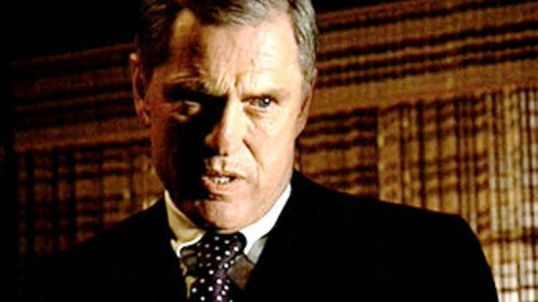
Finally, I can’t end this review without talking about G.D. Spradlin, the actor who plays the role of U.S. Sen. Pat Geary.  The Godfather Part II is full of great acting.  De Niro won an Oscar.  Pacino, Gazzo, Lee Strasberg, and Talia Shire were all nominated.  Diane Keaton, Robert Duvall, and John Cazale all deserved nominations.  Even Joe Spinell shows up and brilliantly delivers the line, “Yeah, we had lots of buffers.”  But, with each viewing of Godfather, Part II, I find myself more and more impressed with G.D. Spradlin.

Sen. Pat Geary doesn’t have a lot of time on-screen.  He attends a birthday party at the Corleone Family compound, where he praises Michael in public and then condescendingly insults him in private.  Later, he shows up in Cuba, where he watches a sex show with obvious interest.  And, when Michael is called before a Senate committee, Geary gives a speech defending the honor of all Italian-Americans.

G.D. Spradlin as Sen. Pat Geary

G.D. Spradlin as Sen. Pat Geary

But the scene that we all remember is the one where Tom Hagen meets Sen. Geary in a brothel.  As Geary talks about how he passed out earlier, the camera briefly catches the sight of a dead prostitute lying on the bed behind him.  What’s especially disturbing about this scene is that neither Hagen nor Geary seem to acknowledge her presence.  She’s been reduced to a prop in the Corleone Family’s scheme to blackmail Sen. Geary.  His voice shaken, Geary says that he doesn’t know what happened and we see the weakness and the cowardice behind his almost all-American facade.

It’s a disturbing scene that’s well-acted by both Duvall and Spradlin.  Of course, what is obvious (even if it’s never explicitly stated) is that Sen. Geary has been set up and that nameless prostitute was killed by the Corleones.  It’s a scene that makes us reconsider everything that we previously believed about the heroes of the Godfather.

For forcing us to reconsider and shaking us out of our complacency, The Godfather, Part II is a great film.

(Yes, it’s even better than The Trial of Billy Jack.)


In Memory of Robin Williams #3: Awakenings (dir by Penny Marshall)


Awakenings

The 1990 Best Picture nominee Awakenings is exactly the type of film that seems to have been designed to make me cry.

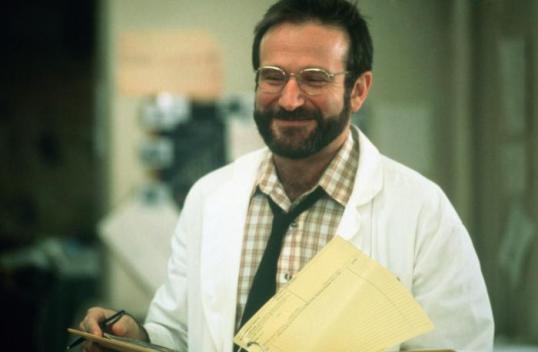
Taking place in 1969 and based (very loosely, I assume) on a true story, Awakenings features Robin Williams as Dr. Malcolm Sayer.  Dr. Sayer is a dedicated and caring physician but he also suffers from an almost crippling shyness.  He’s at his most comfortable when he’s dealing with a group of patients who have spent the last 40 years in a catatonic state, suffering from a tragic disease known as encephalitis lethargica.  (One thing that I learned from watching this film was that, from 1917 to 1928, there was an epidemic of this disease, with millions either dying or being left catatonic.)  While the rest of the medical establishment (led by John Heard, who always seems to be the embodiment of the establishment in films made in the 90s) assumes that the patients are destined to spend the rest of their lives in a vegetative state, Dr. Sayer is convinced that the patients can be awakened.  He soon discovers that, even in their catatonic state, the patients will react to certain stimulii.  One woman can catch a baseball.  Another appears to react well to music.  And finally, Leonard Lowe (Robert De Niro) — who fell ill with this disease when he was a child — tries to communicate with a Ouija board.

Over the objections of his supervisors, Dr. Sayer treats the patients with an experimental drug.  Leonard is the first one to get the drug and is also the first one to wake up.  While the rest of the patients wake up, Dr. Sayer tries to help Leonard adjust to the 1960s.  At first, everything seems to be going perfectly.  Leonard even manages to strike up a sweet romance with a woman named Paula (Penelope Ann Miller).  However, it soon becomes obvious that the awakening is only going to be a temporary one as Leonard and all the other patients start to descend back into their catatonic states…

It’s easy to criticize a film like Awakenings for being manipulative and sentimental.  And the fact of the matter is that the film is manipulative and it is sentimental and undoubtedly, it probably is a massive simplification of the true story.  (The character played by John Heard is such an obvious villain that he might as well have a mustache to twirl.)  And yes, you know even before it happens that there’s eventually going to be a montage of an amazed Leonard staring at a girl in a miniskirt while Time of the Season plays on the soundtrack.

But, no matter!  It’s a tremendously effective film and it earned the tears that I shed while watching it.  Both De Niro and Williams give excellent performances which add a good deal of depth to scenes that could otherwise come across as being overly sappy.  De Niro has the more showy role but it really but it’s the performance of Robin Williams that really carries the film.  As played by Williams, Dr. Sayer is a fragile soul who hides from the world behind his beard and his professional determination.  When he finally asks a nurse (Julie Kavner) out to dinner, it’s impossible not to cheer for him.

It’s also impossible not to cheer a little for Awakenings.

MCDAWAK EC015

44 Days of Paranoia #16: Wag the Dog (dir by Barry Levinson)


For today’s entry in the 44 Days of Paranoia, we’re taking a look at Barry Levinson’s 1997 political satire, Wag The Dog.

Wag the Dog opens with a White House in crisis.  With two weeks to go until the Presidential election, it’s been discovered that the incumbent President has had a brief dalliance with a girl scout.  Up until the scandal became public, the President was enjoying at 17 point lead in the polls.  Now, that lead is about to evaporate unless something can be done to keep the American public from thinking about the President’s personal life.

Significantly, the President himself never appears on-screen.  We never learn his position on the issues.  We never hear about anything he’s done during his first term.  We don’t even know what political party he belongs to.  (However, his opponent is played by Craig T. Nelson so I’m going to assume that the President is a Democrat.  Because, seriously, it’s hard for me to imagine Nelson being anything other than a Republican…)  The President remains a shadowy and insubstantial figure who, in the end, represents nothing.

Instead of getting to know the President, we instead spend the film with the aides who have to clean up after his mess.  One of those aides, Winifred Ames (Anne Heche), calls in a legendary (and rather sinister) political PR man, Conrad Bean (Robert De Niro).  Conrad announces that the only way to save the campaign is to distract the American public with a quick and totally fake war with Albania.  Why Albania?  According to Conrad, Albania has a sinister name and nobody knows anything about it.

To help create this fake war, Conrad recruits Hollywood film producer, Stanley Motts (a hilariously manic Dustin Hoffman).  Much as Conrad is a legend in politics, Stanley is a legend in Hollywood.  Stanley enthusiastically jumps into the project of creating a fake war of Albania, manufacturing everything from fake war footage to patriotic songs to anything else necessary to rally the American public.  Denis Leary shows up as a mysterious figure known as the Fad King and schemes how to make war with Albania the latest trend.  Willie Nelson sings a song to stir the spirit of every patriotic American.  A very young Kirsten Dunst is recruited to play a terrified orphan in staged Albanian atrocity footage.  A shell-shocked vet (Woody Harrelson) is cast as the Albanian War’s first hero.  Stanley greets every problem with an enthusiastic exclamation of, “This is nothing!”

Along the way, a rather odd friendship develops between the secretive Conrad and the overly verbose Stanley.  However, when Stanley, who often laments that he’s never won an Oscar, starts to complain about the fact that he’s never going to get any recognition for his “greatest production,” Conrad finds himself forced to reconsider their relationship.

Wag the Dog was first released in 1997 and, thanks to David Mamet’s darkly comedic script and Barry Levinson’s brisk direction, the film feels incredibly prophetic.  Indeed, all the film needs is for someone to mention making the war a trending topic and it would be impossible to tell that it was made 16 years ago.  Wag the Dog accomplishes the best thing that any political satire can hope to accomplish: it makes you question everything.  Whenever one watches a news report triumphantly bragging about the latest done strike, it’s hard not to feel that Stanley Motts would approve.

Other entries in the 44 Days Of Paranoia:

  1. Clonus
  2. Executive Action
  3. Winter Kills
  4. Interview With The Assassin
  5. The Trial of Lee Harvey Oswald
  6. JFK
  7. Beyond The Doors
  8. Three Days of the Condor
  9. They Saved Hitler’s Brain
  10. The Intruder
  11. Police, Adjective
  12. Burn After Reading
  13. Quiz Show
  14. Flying Blind
  15. God Told Me To

Trailer #2: American Hustle


PCAS

This trailer has been out for nearly a month now so I’m a little late in sharing it.  However, after having watched this trailer play before every single movie that I’ve seen since the month of October, I have to say that there is no film that I am more looking forward to seeing than American Hustle.

(You can check out the first trailer for American Hustle here.)

Film Review: Casino (dir by Martin Scorsese)


(Minor spoilers below)

Casino, Martin Scorsese’s epic, Las Vegas-set film from 1995, is one of my favorite films of all time.  It seems to show up on cable every other week and, whenever I see that it’s playing, I always make it a point to catch at least a few minutes.

Casino opens with veteran Las Vegas bookie Ace Rothstein (played by Robert De Niro) getting into a car.  He starts the engine and the car explodes.  The rest of the movie is an extended flashback as both Ace and his friend and eventual rival Nicky (Joe Pesci) explain how Ace went from being the most powerful man in Vegas to getting blown up in his car.

We are shown how Ace was originally sent to Vegas by a group of mobsters who are headquartered in the far less flamboyant town of Kansas City.  Ace keeps an eye on the city for the bosses and, as long as the money keep coming in, they leave Ace alone to do whatever he wants.  When Ace isn’t bribing government officials (including one particularly sleazy state senator who was reportedly based on future U.S. Sen. Harry Reid) and breaking the fingers of the unlucky gamblers who have been caught trying to cheat the casino, he’s busy falling in love with the beautiful prostitute Ginger (Sharon Stone, who was nominated for Best Actress for her work in this film).  Though Ginger warns Ace that she doesn’t love him and is still hung up on her manipulative pimp Lester Diamond (James Woods, who is hilariously sleazy), Ginger and Ace still get married.

Everything’s perfect except for the fact that Ace’s old friend Nicky (Joe Pesci) has also moved to Vegas.  As opposed to the calm and low-key Ace, Nicky has a violent temper and soon, he starts drawing unwanted attention to both himself and Ace.  When Ace attempts to control Nicky, Nicky responds by turning on his friend and soon, the two of them are fighting an undeclared war for control of the city.  Meanwhile, the bosses in Kansas City are starting to notice that less and less money is making its way back to them from Las Vegas…

There are so many things that I love about Casino that I don’t even know where to begin.

First off, I love the film’s glamour.  I love the way that the film celebrates the glitz of Las Vegas, presenting it as an oasis of exuberant life sitting in the middle of a barren desert that, we’re told, is full of dead people.  I love seeing the tacky yet stylish casinos.  I love seeing the inside of Ace’s mansion.  And Ginger’s clothes are just to die for!

I love that Scorsese’s signature visual style perfectly keeps up with and comments on the natural flamboyance of Las Vegas.  Consider how the film starts, with the shadowy form of Ace Rothstein being tossed through the air and then descending back down to Earth.  Consider the image of Ace standing in the middle of the desert and being submerged within a thick cloud of dust as Nicky’s car speeds away from him.  Consider how Scorsese’s camera glides through the casino, letting us see both the people who cheat and the people who are watching them cheat.  Consider Nicky standing outside of his jewelry stare and freezing the movement of the camera with his reptilian glare.  Consider the scene of cocaine being snorted up a straw, seemingly filmed from inside the straw.  Casino is a film full of the type of images that all directors promise but few ever actually deliver.

I love that Casino is built around a brilliant lead performance from Robert De Niro.  De Niro gives a performance that mixes both tragedy and comedy.  My favorite De Niro moment comes about halfway through the film, when Ace finds himself hosting a wonderfully tacky cable access show called Aces High. Ace interviews “celebrities” like Frankie Avalon, introduces the Ace Rothstein Dancers, and even finds the time to do some juggling.  De Niro makes Ace into an endearing and awkward character in these scenes, a permanent outsider who has finally managed to become something of a star.

It’s easy to compare Casino to Scorsese’s other classic mix of gangster film and social satire, 1990’s Goodfellas.  Both films feature De Niro, Pesci, and Frank Vincent.  (In a nice piece of irony, Casino features Vincent getting a little revenge after being attacked twice by Joe Pesci in two different Scorsese films.)  Both films are based on nonfiction books by Nicholas Pileggi.  Both films feature nonstop music playing on the soundtrack.  Both films feature multiple narrators who explain to us how the day-to-day operations of the  Mafia are conducted.  When Scorsese shows us Ace and Ginger’s wedding day, it feels almost like a scene-for-scene recreation of Henry Hill’s wedding in Goodfellas.

At the same time, there are a few key differences between Goodfellas and Casino.  Whereas Goodfellas was all about being a low-level cog in the Mafia, Casino is about management.  Casino is about the guys who the Goodfellas made  rich.  Goodfellas was about the drudgery of everyday life whereas Casino is about the glitz and the glamour promised by the fantasy world of Las Vegas.  Whereas Goodfellas was almost obsessively anti-romantic, Casino is a gangster film with heart.  No matter what else you might say about him as a character, Ace’s love for both Ginger and Las Vegas is real.  On a similar note, when Nicky turns against Ace, it’s because his feelings have been hurt.  In the end, Ace and Nicky come across like children who have, temporarily, been given the keys to the world’s biggest playground.

Casino is a glossy, flamboyant film that literally opens with a bang and ends on a note of melancholy and loss.  Not only is Ace reduced to being an anonymous old man working out of a nondescript office but our last two views of Vegas are of the old casinos being dynamited and an army of overweight tourists emerging from the airport like the unstoppable zombies from Dawn of the Dead.  This, then, is Scorsese’s view of the apocalypse. The world isn’t destroyed by a cataclysm but instead by an invasion of terminal middle American blandness.

What If Lisa Marie Determined The Oscar Nominees…


With the Oscar nominations due to be announced this week, now seems like a good time to indulge in something I like to call “If Lisa Marie Had All The Power.”  Listed below are my personal Oscar nominations.  Please note that these are not the films that I necessarily think will be nominated.  The fact of the matter is that the many of them will not.  Instead, these are the films that would be nominated if I was solely responsible for deciding the nominees this year.  Winners are listed in bold.

For those who are interested, you can check out my picks for 2010 by clicking on this sentence.

Meanwhile, my picks for last year can be seen by clicking on this sentence.

Best Picture

Best Picture

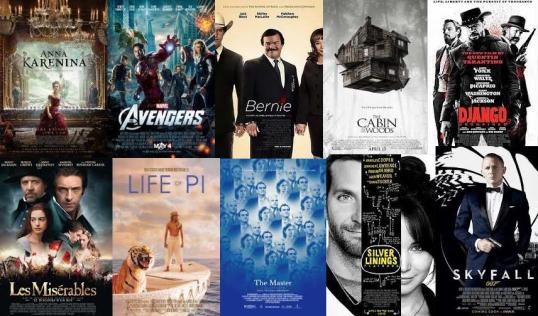
Anna Karenina

The Avengers

Bernie

The Cabin In The Woods

Django Unchained

Les Miserables

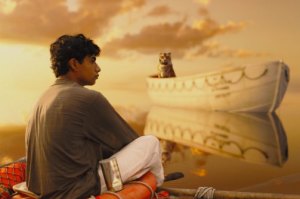
Life of Pi

The Master

Silver Linings Playbook

Skyfall

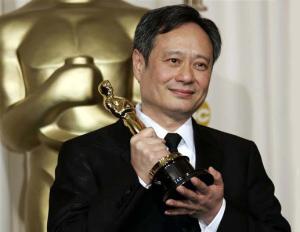
Ang Lee

Best Director

Drew Goddard for The Cabin In The Woods

Ang Lee for Life of Pi

Richard Linklater for Bernie

Quinton Tarantino for Django Unchained

Joe Wright for Anna Karenina

master-trailer-joaquin-phoenix

Best Actor

Jack Black in Bernie

Bradley Cooper in Silver Linings Playbook

Daniel Day-Lewis in Lincoln

Matthew McConaughey in Killer Joe.

Joaquin Phoenix in The Master

michelle-williams-take-this-waltz-trailer

Best Actress

Marion Cotillard in Rust and Bone

Greta Gerwig in Damsels in Distress

Kiera Knightley in Anna Karenina

Jennifer Lawrence in Silver Linings Playbook

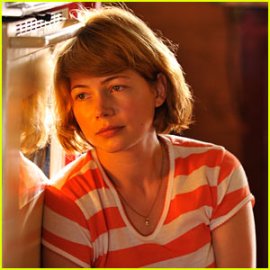
Michelle Williams in Take This Waltz

django-jackson

Best Supporting Actor

Robert De Niro in Silver Linings Playbook

Philip Seymour Hoffman in The Master

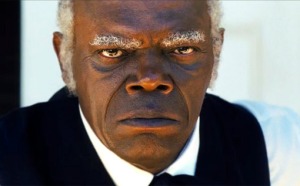
Samuel L. Jackson in Django Unchained

Sam Rockwell in Seven Psychopaths

Christoph Waltz in Django Unchained

Zoe-Kazan-in-Ruby-Sparks-e1348740167495

Best Supporting Actress

Rebecca De Mornay in Mother’s Day

Dame Judi Dench in Skyfall

Anne Hathaway in Les Miserables

Zoe Kazan in Ruby Sparks

Sarah Silverman in Take This Waltz

cabininthewoods_4

Best Original Screenplay

The Cabin In The Woods

Django Unchained

The Master

Ruby Sparks

Take This Waltz

Bernie Bearing Gifts

Best Adapted Screenplay

Anna Karenina

Argo

Bernie

Life of Pi

Silver Linings Playbook

"BRAVE"

Best Feature-Length Animated Film

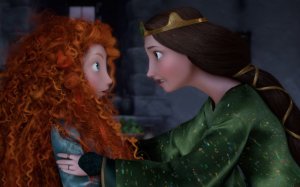
Brave

Frankenweenie

Paranorman

Pirates!  Band of Misfits

Wreck-It Ralph

rustboen21

Best Foreign Language Film

Barbara

Headhunters

The Raid: Redemption

A Royal Affair

Rust and Bone

Ai Weiwei never sorry film

Best Documentary Feature

Ai Wei Wei: Never Sorry

The Central Park Five

First Position

The Queen of Versailles

2016: Obama’s America

brave_movie--300x300

Best Original Score

Beasts of the Southern Wild

Brave

The Dark Knight Rises

For Greater Glory

The Master

the-raid-redemption-trailer_450x254

Best Original Song

“For You” from Act of Valor

“Yo No Se” from Casa De Mi Padre

“The Sambola! International Dance Craze” from Damsels in Distress

“Ancora Qui” from Django Unchained

“Abraham’s Daughter” from The Hunger Games

“The Baddest Man Alive” from The Man With The Iron Fists

“Razor’s Out” from The Raid: Redemption

“Big Machine” from Safety Not Guaranteed

“Skyfall” from Skyfall

“Anything Made Out of Paper” from West of Memphis

Les Miserables 

Best Sound Editing

Chronicle

The Dark Knight Rises

End of Watch

Les Miserables

Skyfall

Les Miserables2

Best Sound Mixing

Chronicle

End of Watch

Killing Them Softly

Les Miserables

Skyfall

Anna Karenina

Best Art Direction

Anna Karenina

The Avengers

The Cabin In The Woods

Cosmopolis

Les Miserables

Skyfall

Best Cinematography

The Hobbit

Lawless

Life of Pi

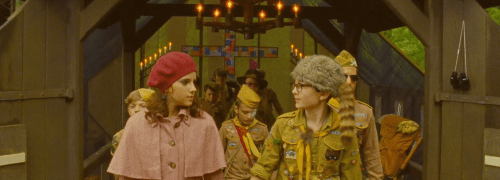
Moonrise Kingdom

Skyfall

looper

Best Makeup

The Hobbit

The Hunger Games

Les Miserables

Lincoln

Looper

wesandersonmoonrisekingdom

Best Costume Design

Anna Karenina

Django Unchained

The Hunger Games

Lincoln

Moonrise Kingdom

django-unchained-2

Best Film Editing

Anna Karenina

The Cabin In The Woods

Django Unchained

The Master

Silent House

Life of Pi

Best Visual Effects

The Avengers

The Dark Knight Rises

Life of Pi

Looper

Men In Black 3

List of Films By Number of Nominations

8 Nominations — Django Unchained

7 Nominations — Anna Karenina

6 Nominations — Les Miserables, Life of Pi, The Master, Skyfall

5 Nominations — The Cabin In The Woods, Silver Linings Playbook

4 Nominations — Bernie

3 Nominations — The Avengers, The Dark Knight Rises, The Hobbit, The Hunger Games, Lincoln, Take This Waltz

2 Nominations — Brave, Chronicle, Damsels in Distress, End of Watch, Moonrise Kingdom, The Raid: Redemption, Ruby Sparks, Rust and Bone

1 Nomination —Act of Valor, Ai Wei Wei: Never Sorry, Argo, Barbara,  Beasts of the Southern Wild, Casa De Mi Padre, The Central Park Five, Cosmopolis, First Position, For Greater Glory, Frankenweenie, Headhunters, Killer Joe, Killing Them Softly, Lawless, Looper, The Man With The Iron Fists, Men In Black 3, Mother’s Day, The Pirates! Band of Misfits , The Queen of Versailles, A Royal Affair, Safety Not Guaranteed, Seven Psychopaths, Silent House, 2016: Obama’s America, West of Memphis, Wreck-It Ralph

List of Films By Oscars Won

2 Oscars — Anna Karenina, Brave, Django Unchained, Les Miserables, Life of Pi

1 Oscar — Ai Wei Wei: Never Sorry, Bernie, The Cabin In the Woods, Looper, The Master, Moonrise Kingdom, The Raid: Redemption, Ruby Sparks, Rust and Bone, Skyfall, Take This Waltz

By the way, here are the Satellite Award Nominations…


Moonrise

In even more Oscar season news, the International Press Association announced their nominations for the Satellite Awards yesterday.  Les Miserables led with 10 nominations.

If you’re like most people who don’t obsess over film awards then chances are that you’ve never heard of the International Press Association.  And that’s okay.  The main thing to know is that it’s Oscar season and that means that everyone’s giving out an award.  The Satellites are a lot like the Golden Globes, just with less credibility.  As far as serving as a precursor is concerned, a Satellite win can help a film maintain momentum but a loss doesn’t really hurt.

That said, for the past few years, I’ve always ended up agreeing more with the Satellite Nominations than with either the Oscars or the Golden Globes.  For instance, back in 2010, the Satellites nominated Noomi Rapace for her performance in the original (and the best) version of The Girl With The Dragon Tattoo.

BEST PICTURE
“Argo”
“Beasts Of The Southern Wild”
“Life Of Pi”
“Lincoln”
“Les Misérables”
“Moonrise Kingdom”
“The Sessions”
“Silver Linings Playbook”
“Skyfall”
“Zero Dark Thirty”

BEST DIRECTOR
Ben Affleck, “Argo”
Steven Spielberg, “Lincoln”
Kim Ki-duk, “Pieta“
Ben Lewin, “The Sessions”
David O. Russell, “Silver Linings Playbook”
Kathryn Bigelow, “Zero Dark Thirty”

BEST ACTRESS
Laura Birn, “Purge”
Jessica Chastain, “Zero Dark Thirty”
Emilie Dequenne, “Our Children”
Keira Knightley, “Anna Karenina”
Jennifer Lawrence, “Silver Linings Playbook”
Laura Linney, “Hyde Park On Hudson”
Emmanuelle Riva, “Amour”

BEST ACTOR
Bradley Cooper, “Silver Linings Playbook”
Daniel Day-Lewis, “Lincoln”
John Hawkes, “The Sessions”
Hugh Jackman, “Les Misérables”
Joaquin Phoenix, “The Master”
Omar Sy, “The Intouchables”
Denzel Washington, “Flight”

BEST SUPPORTING ACTRESS
Amy Adams, “The Master”
Samantha Barks, “Les Miserables“
Judi Dench, “Skyfall”
Helene Florent, “Café De Flore”
Anne Hathaway, “Les Misérables”
Helen Hunt, “The Sessions”

BEST SUPPORTING ACTOR
Javier Bardem, “Skyfall”
Robert De Niro, “Silver Linings Playbook”
John Goodman, “Flight”
Philip Seymour Hoffman, “The Master”
Tommy Lee Jones, “Lincoln”
Eddie Redmayne, “Les Misérables”

BEST ORIGINAL SCREENPLAY
John Gatins, “Flight”
Eric Toledano and Olivier Nakache, “The Intouchables”
Paul Thomas Anderson, “The Master”
Roman Coppola and Wes Anderson, “Moonrise Kingdom”
Kim Ki-duk, “Pieta”
Mark Boal, “Zero Dark Thirty”

BEST ADAPTED SCREENPLAY
Tom Stoppard, “Anna Karenina”
Chris Terrio, “Argo”
David Magee, “Life Of Pi”
Tony Kushner, “Lincoln”
Ben Lewin, “The Sessions”
David O. Russell, “Silver Linings Playbook”

BEST FOREIGN LANGUAGE FILM
“Amour” (Austria)
“Beyond The Hills” (Romania)
“Caesar Must Die” (Italy)
“The Intouchables” (France)
“Kon-Tiki” (Norway)
“Our Children” (Belgium)
“Pieta” (South Korea)
“A Royal Affair” (Denmark)
“War Witch” (Canada)

BEST ANIMATED OR MIXED-MEDIA FILM
“Brave”
“Frankenweenie”
“Ice Age 4: Continental Drift”
“Madagascar 3: Europe’s Most Wanted”
“Paranorman”
“Rise Of The Guardians”
“Wreck-It Ralph”

BEST DOCUMENTARY FEATURE
“Ai Weiwei: Never Sorry”
“The Central Park Five”
“Chasing Ice”
“The Gatekeepers”
“Marina Abramovic: The Artist Is Present”
“The Pruitt-Igoe Myth”
“Searching For Sugar Man”
“West Of Memphis”

BEST CINEMATOGRAPHY
Seamus McGarvey, “Anna Karenina”
Ben Richardson, “Beasts Of The Southern Wild”
Claudio Miranda, “Life Of Pi”
Janusz Kaminski, “Lincoln”
Mihai Malaimare, Jr., “The Master”
Roger Deakins, “Skyfall”

BEST PRODUCTION DESIGN
Sarah Greenwood, Niall Moroney, Thomas Brown, Nick Gottschalk and Tom Still, “Anna Karenina”
Nathan Crowley, Kevin Kavanaugh, James Hambidge and Naaman Marshall, “The Dark Knight Rises”
Rick Carter, Curt Beech, David Crank and Leslie McDonald, “Lincoln”
David Crank and Jack Fisk, “The Master”
Eve Stewart and Anna Lynch-Robinson, “Les Misérables”
Niels Sejer, “A Royal Affair”

BEST COSTUME DESIGN
Jacqueline Durran, “Anna Karenina”
Kym Barrett and Pierre-Yves Gayraud, “Cloud Atlas”
Christian Gasc and Valerie Ranchoux, “Farewell, My Queen”
Paco Delgado, “Les Misérables”
Manon Rasmussen, “A Royal Affair”
Colleen Atwood, “Snow White And The Huntsman”

BEST FILM EDITING
Alexander Berner, “Cloud Atlas”
Jeremiah O’Driscoll, “Flight”
Chris Dickens, “Les Misérables”
Lisa Bromwell, “The Sessions”
Jay Cassidy, “Silver Linings Playbook”
Dylan Tichenor, “Zero Dark Thirty”

BEST ORIGINAL SCORE
Dario Marianelli, “Anna Karenina”
Alexandre Desplat, “Argo”
Dan Romer and Benh Zeitlin, “Beasts Of The Southern Wild”
John Williams, “Lincoln”
Jonny Greenwood, “The Master”
Thomas Newman, “Skyfall”

BEST ORIGINAL SONG
“Learn Me Right,” “Brave”
“Fire In The Blood/Snake Song” “Lawless”
“Love Always Comes As A Surprise,” “Madagascar 3: Europe’s Most Wanted”
“Suddenly,” “Les Misérables”
“Still Alive,” “Paul Williams: Still Alive”
“Skyfall,” “Skyfall”

BEST SOUND (EDITING AND MIXING)
“Flight”
“Les Misérables”
“Snow White And The Huntsman”
“Kon-Tiki”
“Life Of Pi”
“Prometheus”

BEST VISUAL EFFECTS
“Cloud Atlas”
“The Dark Knight Rises”
“Flight”
“Life Of Pi”
“Prometheus”
“Skyfall”

What could have been: The Godfather


I don’t know about you but I love to play the game of “What if.”  You know how it works.  What if so-and-so had directed such-and-such movie?  Would we still love that movie as much?  Would so-and-so be a star today?  Or would the movie have failed because the director was right to reject so-and-so during preproduction?

I guess that’s why I love the picture below.  Taken from one of Francis Ford Coppola’s notebooks, it’s a page where he jotted down a few possibilities to play the roles of Don Vito, Michael, Sonny, and Tom Hagen in The Godfather.  It’s a fascinating collection of names, some of which are very familiar and some of which most definitely are not.  As I look at this list, it’s hard not wonder what if someone like Scott Marlowe had played Michael Corleone?  Would he had then become known as one of the great actors of his generation and would Al Pacino then be fated to just be an unknown name sitting on a famous list?

(This page, just in case you happen to be in the neighborhood , is displayed at the Coppola Winery in California.)

The production of the Godfather — from the casting to the final edit — is something of an obsession of mine.  It’s amazing the amount of names — obscure, famous, and infamous — that were mentioned in connection with this film.  Below is a list of everyone that I’ve seen mentioned as either a potential director or a potential cast member of The Godfather.  Consider this my contribution to the game of What If….?

Director: Aram Avankian, Peter Bogdonavich, Richard Brooks, Costa-Gravas, Sidney J. Furie, Norman Jewison, Elia Kazan, Steve Kestin, Sergio Leone, Arthur Penn, Otto Preminger, Franklin J. Schaffner, Peter Yates, Fred Zinnemann

Don Vito Corleone (played by Marlon Brando): Melvin Belli, Ernest Borgnine, Joseph Callelia, Lee. J. Cobb, Richard Conte, Frank De Kova, Burt Lancaster, John Marley, Laurence Olivier, Carlo Ponti, Anthony Quinn, Edward G. Robinson, George C. Scott, Frank Sinatra, Rod Steiger, Danny Thomas, Raf Vallone,  Orson Welles

Michael Corleone (played by Al Pacino): John Aprea, Warren Beatty, Robert Blake, Charles Bronson*, James Caan, David Carradine, Robert De Niro, Alain Delon, Peter Fonda, Art Genovese, Dustin Hoffman, Christopher Jones, Tommy Lee Jones, Tony Lo Bianco, Michael Margotta, Scott Marlowe, Sal Mineo, Jack Nicholson, Ryan O’Neal, Michael Parks, Robert Redford, Burt Reynolds, Richard Romanus, Gianni Russo, Martin Sheen, Rod Steiger**, Dean Stockwell

Sonny Corleone (played by James Caan): Lou Antonio, Paul Banteo, Robert Blake, John Brascia, Carmine Caridi, Robert De Niro, Peter Falk, Harry Guardino, Ben Gazzara, Don Gordon, Al Letteiri, Tony LoBianco, Scott Marlowe, Tony Musante, Anthony Perkins, Burt Reynolds***, Adam Roarke, Gianni Russo, John Saxon, Johnny Sette, Rudy Solari, Robert Viharo, Anthony Zerbe

Tom Hagen (played by Robert Duvall): James Caan, John Cassavettes, Bruce Dern, Peter Donat, Keir Dullea, Peter Falk, Steve McQueen, Richard Mulligan, Paul Newman, Jack Nicholson, Ben Piazza, Barry Primus, Martin Sheen, Dean Stockwell, Roy Thinnes, Rudy Vallee****, Robert Vaughn, Jerry Van Dyke, Anthony Zerbe

Kay Adams (played by Diane Keaton): Anne Archer, Karen Black, Susan Blakeley, Genevieve Bujold, Jill Clayburgh, Blythe Danner, Mia Farrow, Veronica Hamel, Ali MacGraw, Jennifer O’Neill, Michelle Phillips, Jennifer Salt, Cybill Shepherd, Trish Van Devere

Fredo Corleone (played by John Cazale): Robert Blake, Richard Dreyfuss, Sal Mineo, Austin Pendleton

Connie Corleone (played by Talia Shire): Julie Gregg, Penny Marshall, Maria Tucci, Brenda Vaccaro, Kathleen Widdoes

Johnny Fontane (played by Al Martino): Frankie Avalon, Vic Damone*****, Eddie Fisher, Buddy Greco, Bobby Vinton, Frank Sinatra, Jr.

Carlo Rizzi (played by Gianni Russo): Robert De Niro, Alex Karras, John Ryan******, Sylvester Stallone

Virgil “The Turk” Sollozzo (played by Al Letteiri): Franco Nero

Lucas Brasi (played by Lenny Montana): Timothy Carey, Richard Castellano

Moe Greene (played by Alex Rocco): William Devane

Mama Corleone (played by Morgana King): Anne Bancroft, Alida Valli

Appollonia (played by Simonetta Steffanelli): Olivia Hussey

Paulie Gatto (played by John Martino): Robert De Niro*******, Sylvester Stallone

—-

* Charles Bronson, who was in his mid-40s, was suggested for the role of Michael by the then-chairman of Paramount Pictures, Charlie Bluhdorn.

** By all accounts, Rod Steiger – who was then close to 50 – lobbied very hard to be given the role of Michael Corleone.

*** Some sources claim that Burt Reynolds was cast as Sonny but Brando refused to work with him.  However, for a lot of reasons, I think this is just an cinematic urban legend.

**** Despite being in his 60s at the time, singer Rudy Vallee lobbied for the role of the 35 year-old Tom Hagen.  Supposedly, another singer — Elvis Presley — lobbied for the role as well but that just seems so out there that I couldn’t bring myself to include it with the “official” list.

***** Vic Damone was originally cast as Johnny Fontane but dropped out once shooting began and announced that the project was bad for Italian Americans.  He was replaced by Al Martino.

****** John P. Ryan was originally cast as Carlo Rizzi but was fired and replaced with Gianni Russo.  Ryan went on to play the distraught father in Larry Cohen’s It’s Alive.  Russo went on to co-star in Laserblast.

******* Robert De Niro was originally cast in this role but dropped out to replace Al Pacino in The Gang That Couldn’t Shoot Straight.  Pacino, incidentally, had to drop out of that film because he was given the role of Michael in The Godfather.

A Quickie With Lisa Marie: Frankenstein (dir. by J. Searle Dawley)


There’s literally been hundreds of film adaptations of Mary Shelley’s novel Frankenstein, or the Modern Prometheus.  Everyone from James Whale to Terrence Fisher to Paul Morrissey to Kenneth Branagh to Marcus Nispel has taken a shot at interpreting the legend and the monster’s been played by everyone from Boris Karloff to Christopher Lee to Robert De Niro to Srdjan Zelenovic (who was pretty freaking hot and yummy for a creature stitched together out of random corpses in Flesh for Frankenstein).

However, the very first cinematic version of Frankenstein came out in 1910.  Produced by Thomas Edison’s film company, this 10-minute, silent film starred an actor named Charles Ogle as the monster.  Frankenstein, himself, was played by Augustus Phillips while his fiancée was played by Mary Fuller.  The film was directed by a fellow known as J. Searle Dawley.  Dawley reportedly directed over a hundred silent films and most of them are lost to history.

For about 6 decades, it was assumed that Dawley’s Frankenstein was lost as well.  However, in the mid-70s, it turned out that one remaining print of the film still existed and was apparently sitting up in someone’s attic in Wisconsin.  It also turned out that the film was still in viewable condition.

And now, thanks to a combination of YouTube and the fact that every movie made before 1922 is now in the public domain, I’ve had the opportunity to see this movie for free and even better, here’s your chance to see it for free.  Understand that when I say better, I’m speaking from the point of view of someone who is fascinated by history in general and cinematic history in specific.  In many ways, this film epitomizes everything that makes it difficult for modern audiences to appreciate the excitement once generated by silent film.  The acting is overly theatrical and watching the film makes you appreciate the eventual development of the dolly shot and the zoom lens even more.  Add to that, the music that was selected to accompany this video is way too obvious and heavy-handed.  I would suggest, before watching, that you mute the video and put your own preferred music on instead.

Still, the film does have a lot of historic interest.  I don’t think you can truly judge and appreciate the films of today unless you know something about the films of the past.  Watching a movie like the 1910 Frankenstein not only makes you realize how far films have come as an art form but also how much of the medium’s inherent earnestness has been lost with each advance in technology. 

Anyway, with all that said, here is the 1910 version of Frankenstein

Scenes I Love: Taxi Driver


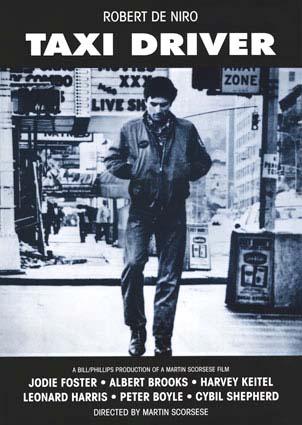
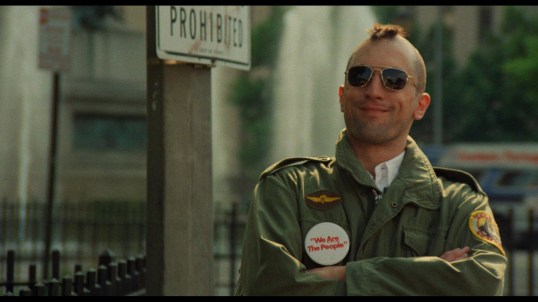
Everyone always talks about the “You talkin’ to me” scene or the final shoot out at the end but, for me personally, the scene that I always look forward to whenever I see Taxi Driver is the scene where demented cabbie Travis Bickle (Robert De Niro) buys an arsenal from the friendly and sleazy Andy (Steven Prince).  I’ve always felt that Taxi Driver was meant to be more a comedy than anything else and this scene manages to be funny and disturbing at the same time.

Apparently, Prince was a former heroin addict-turned-personal assistant to director Martin Scorsese.  His appearance here is proof of how the right actor in the right part in the right scene can totally dominate even with only 3 minutes of screen time.