When I think of Tuesday Weld, I first think of her character in Sergio Leone’s ONCE UPON A TIME IN AMERICA (1984). It’s not an easy character to play and she nails it. James Woods references Tuesday in his 2024 album Hear the Thunder Crack on the song “Cafe Central,” specifically pointing out how difficult her character was to play.
Weld hasn’t appeared on screen since 2001, but she worked for 45 years prior to her retirement. To celebrate her birthday, here’s a scene from the Leone masterpiece.
We’re only a few hours away from America’s 250th birthday! And what would an American birthday party be without some American celebrities of the present and the past?
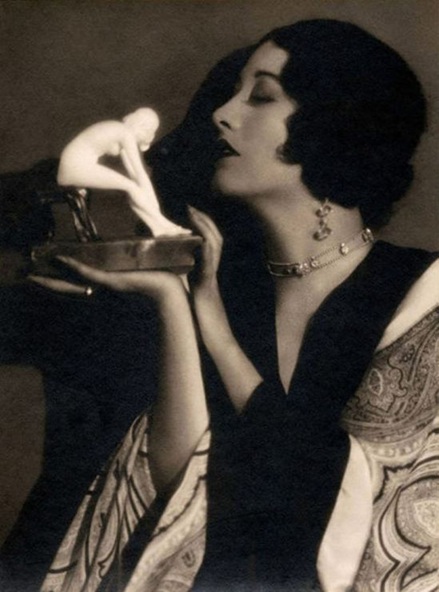
Joan Crawford by Ruth Harriet Louise
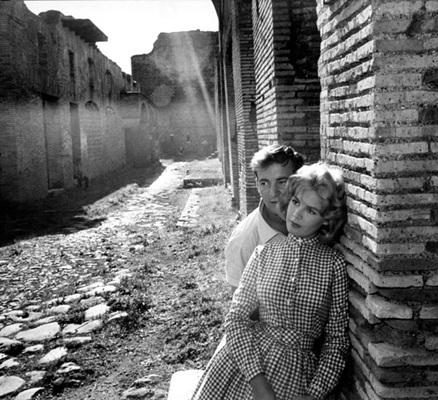
Bobby Darin and Sandra Dee by Leo Fuchs
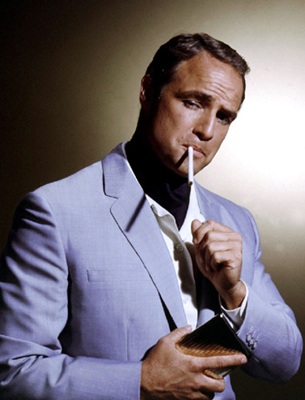
Marlon Brando by Leo Fuchs
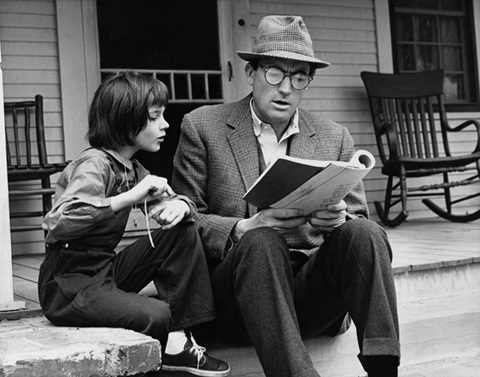
Mary Badham and Gregory Peck by Leo Fuchs
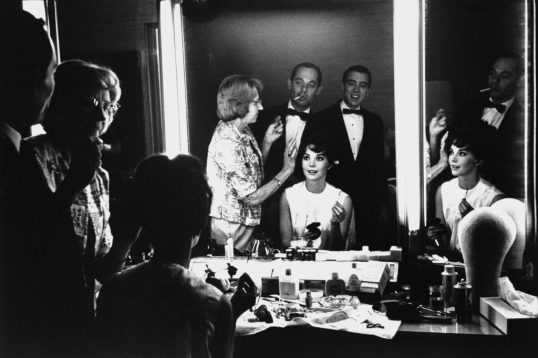
Natalie Wood by Alan Grant
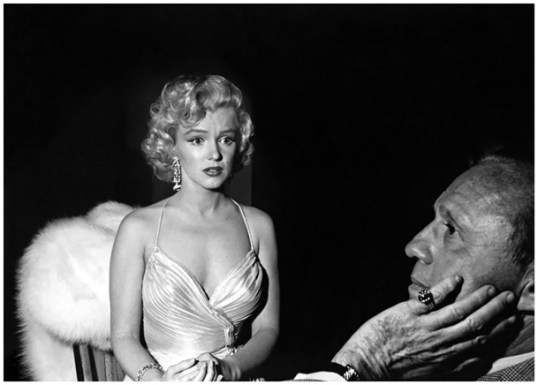
Marilyn Monroe and Jack Benny by Phil Stern
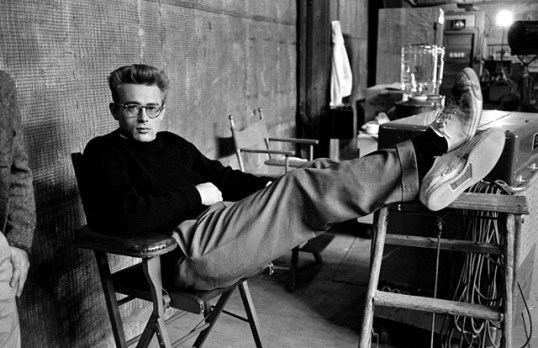
James Dean by Phil Stern
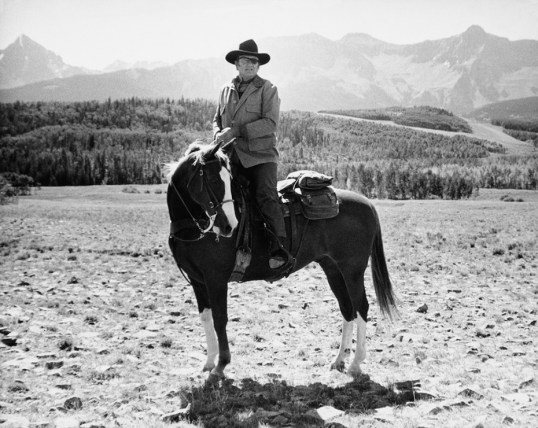
John Wayne by Phil Stern
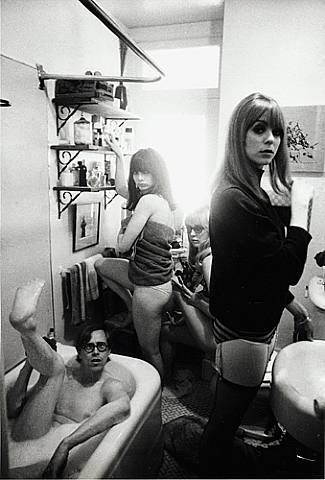
Bruce Conner, Toni Basil, and Teri Garr by Dennis Hopper
In 1977’s Looking for Mr. Goodbar, Diane Keaton plays Theresa Dunn.
A neurotic and single woman who has never emotionally recovered from her childhood struggle with scoliosis, Theresa is trying to find herself in the wild and promiscuous world of the 1970s. After losing her virginity to a condescending college professor (Alan Feinstein), Diane goes on to have relationships with a needy social worker (William Atherton) and an hyperactive petty criminal (Richard Gere). During the day, she teaches deaf children and she’s good at her job. She even manages to win over the distrustful brother (Levar Burton) of one of her students. At night, she hits the bars. She buys drugs from the neighborhood dealer (Julius Harris). She tries to read the book that she always carries with her. (Some nights, it’s The Godfather and other nights, it’s something else.) She picks up strange men and takes them to her roach-infested apartment. One of those men, Gary (Tom Berenger), turns out to both be a bit insecure about his masculinity and also totally insane….
Looking for Mr. Goodbar is an adaptation of a novel that was inspired by the real-life murder of a New York school teacher named Roseann Quinn. The book was best seller and, just as he had with a previous best-selling true crime novel, director Richard Brooks bought the rights and both wrote and directed the film. Diane Keaton, who at that point was best-known for playing Kay Adams in The Godfather and for appearing in Woody Allen’s comedies, took on the demanding role of Theresa and, whatever one may think of the film itself, it can’t be denied that Keaton gives a brave performance as the self-destructive Theresa. In fact, I would say it’s one of Keaton’s best performances, outside of her work with Woody Allen and The Godfather Part II. If she had been played by a lesser actress, Roseann could have been unbearable. As played by Diane Keaton, though, she’s everyone’s best friend who just need some time to find herself. The viewer worries about her and wants to protect her as soon as they see her, making her ultimate fate all the more tragic.
As for film itself, I’ve watched Looking For Mr. Goodbar a few times and I’m always a little bit surprised by how bad the movie actually is. The film actually gets off to a strong start. The scenes between Theresa and the professor make for a sensitive portrait of a repressed young woman finally getting in touch with her sexuality and, in the process, discovering that she deserves better than the man she’s with. But once Theresa moves into her apartment and starts hitting the bars at night, the film takes on a hectoring and moralistic tone that leaves the viewer feeling as if the film is blaming Theresa for the tragedy that’s waiting for her at the end of the story. Diane Keaton and Tuesday Weld (who plays her sister) both give excellent performances but everyone else in the film either does too much or too little. This is especially true of Richard Gere, who is very hyperactive but still strangely insubstantial in his role. (Whenever Richard Gere appears on screen, one gets the feeling that they could just walk right through him.) A scene where Gere jumps around the apartment is meant to be disturbing but it’s more likely to inspire laughter than chills.
It’s an overly long film and the moments in which Theresa has dark, sexually-charged fantasies are never quite as powerful as the film obviously meant for them to be. (Brian Dennehy makes his film debut as a doctor who kisses Theresa’s breast during one of her fantasies.) As opposed to the empathy that he brought to In Cold Blood, one gets the feeling that director Richard Brooks didn’t like anyone in this movie and that he was more interested in Theresa as a cautionary tale than as a human being. With this film, Brooks seemed to be standing athwart the Sexual Revolution and shouting, “Stop!” That said, the film’s final moments are genuinely disturbing and difficult to watch. It’s the one moment where Brooks’s lack of subtlety pays off. Those last minutes are about as horrific as anything you could expect to see.
As for Roseann Quinn, her killer was eventually arrested. John Wayne Wilson hung himself in prison, 5 months after murdering her.
Seeing as how I raved about this film and James Caan’s performance earlier this week, it only seems appropriate that today’s scene that I love should come from 1981’s Thief. Here is the famous diner scene, featuring Caan and Tuesday Weld. Caan later said that he considered this to be the best acting he had ever done.
1981’s Thief tells the story of Frank (James Caan).
Frank is a professional diamond thief, one of the best in the business. He’s so cool that he even has his own Tangerine Dream soundtrack. After doing a stint in prison, Frank lives his life very carefully and with discipline. He’s determined not to return to prison. His mentor (played by Willie Nelson) is still behind bars and will probably die there. In fact, Frank has even found himself thinking about abandoning his criminal lifestyle. He’s got two front businesses, both of which are doing well. (Frank’s used car lot looks like some sort of alien world.) He’s fallen in love with a cashier named Jessie (Tuesday Weld) and it’s starting to seem like now would be a good time to settle down and become a family man. The only problem is that Frank is working for Leo (Robert Prosky) and Leo has absolutely no intention of allowing Frank to walk away. As Leo puts it, Frank belongs to him. That’s not a smart thing to say to someone like Frank.
Frank’s an interesting character. He’s the film’s hero, not because he’s a good guy but because he’s a smidgen better than most of the other bad guys. He’s a professional, one who goes out of his way avoid unnecessary complications. When we see him on the job, it’s impossible not to admire just how good he is at stealing stuff. When he uses a blowtorch to break into a store or a safe, the screen is full of sparks and, for a few minutes, Frank looks like some sort of cosmic super hero brought to life. We admire Frank but we discover early on that he’s willing to get violent. He’s willing to pull a gun and threaten his way out of a situation. Frank is loyal. He visits his mentor in prison. He takes care of his partner-in-crime, Barry (Jim Belushi, making his film debut). He truly loves Jessie. But, at heart, he’s a criminal who doesn’t hesitate to pull the trigger when he has to. The question the film asks is whether one can just go straight, after years of breaking the law and living in the shadows. Can Frank abandon the lifestyle, even for love? Or is he destined to always be a thief?
Thief was Michael Mann’s feature film debut. (The Jericho Mile was Mann’s directorial debut but it was made for television.) Thief is full of the usual Mann themes and also Mann’s signature style, showing that Mann knew exactly what type of films he wanted to make from the start of his career. The nights are full of shadows. The days are deceptively calm. The neon of Frank’s car lot glows like another dimension. The final bloody shoot out takes place at night, in the type of suburban neighborhood in which most people would probably love to live. And holding the film together is James Caan, giving a coolly centered performance as a man who has learned to hold back his emotions and who won’t be controlled by anyone. Halfway through the film, Caan delivers a seven-minute monologue about life in prison and it’s an amazing moment, one in which Caan shows just how good of an actor he truly was. Thief is an effective and stylish neo-noir, one that sticks with you as the end credits roll.
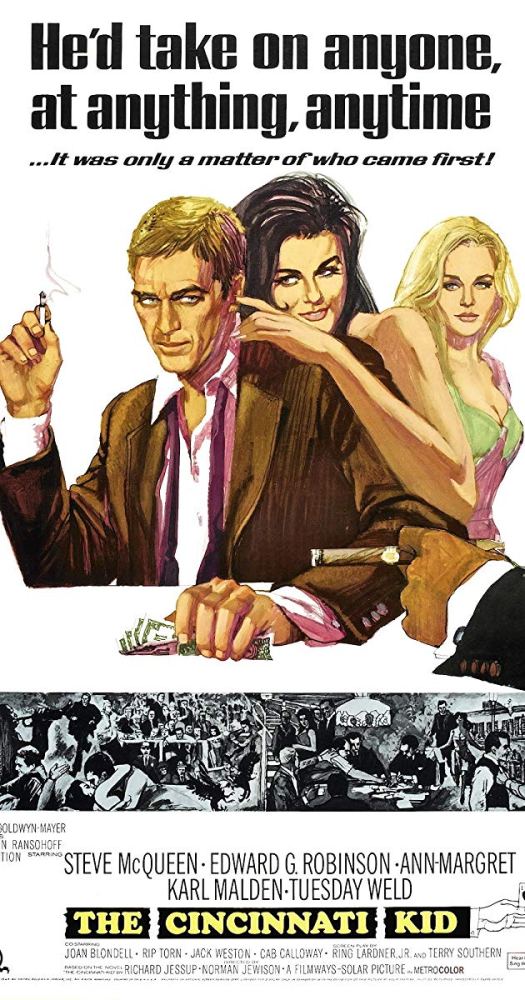
There are movies about the high-stakes world of poker, and then there’s THE CINCINNATI KID. This gripping look at backroom gambling has long been a favorite of mine because of the high-powered all-star cast led by two acting icons from two separate generations – “The Epitome of Cool” Steve McQueen and “Original Gangster” Edward G. Robinson . The film was a breakthrough for director Norman Jewison, who went after this from lightweight fluff like 40 POUNDS OF TROUBLE and SEND ME NO FLOWERS to weightier material like IN THE HEAT OF THE NIGHT and THE THOMAS CROWN AFFAIR.
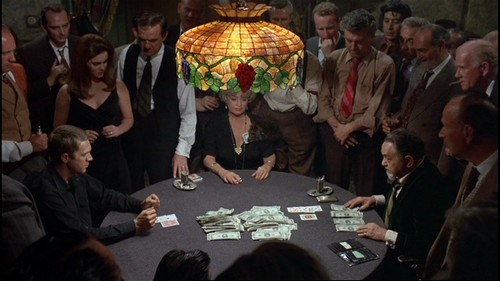
The film revolves around a poker showdown between up and coming young stud Eric Stoner, known as The Kid, and veteran Lancey Howard, venerated in card playing circles as The Man. This theme of young tyro vs old pro wasn’t exactly groundbreaking, having been hashed and rehashed in countless Westerns over the…
The 1950’s were a time of change in movies. Television was providing stiff competition, and studios were willing to do anything to fend it off. The bigger budgeted movies tried 3D, Cinerama, wide-screen, and other optical tricks, while smaller films chose to cover unusual subject matter. The following five films represent a cross-section of nifty 50’s cinema:
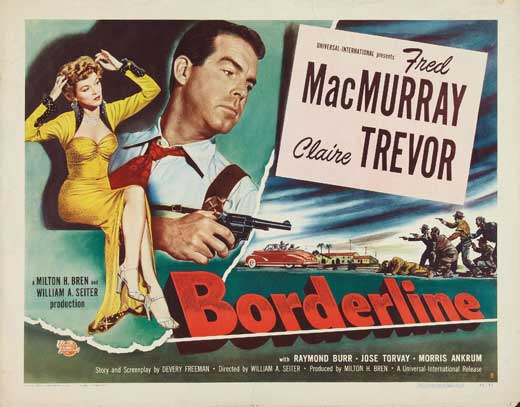
BORDERLINE (Universal-International 1950; D: William A. Seiter)
BORDERLINE is a strange film, straddling the borderline (sorry) between romantic comedy and crime drama, resulting in a rather mediocre movie. Claire Trevor plays an LAPD cop assigned to Customs who’s sent to Mexico to get the goods on drug smuggler Pete Ritchey (Raymond Burr , being his usual malevolent self). She’s tripped up by Ritchey’s rival Johnny Macklin (Fred MacMurray , channeling his inner Walter Neff), and taken along as he tries to get the dope over the border. What she doesn’t know is he’s also…
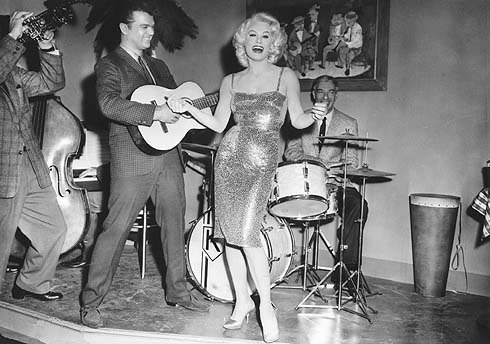
Let’s get it out of the way right now- SEX KITTENS GO TO COLLEGE is bad. Real bad. Like mind-numbingly bad. Despite the presence of sex kittens Mamie Van Doren and Tuesday Weld, this movie is a smelly litter box in desperate need of cleaning. It’s an Albert Zugsmith extravaganza, so you know right off the bat it’s gonna be a stinker. Zugsmith had once been a producer at Universal, overseeing prestige films like WRITTEN ON THE WIND and TOUCH OF EVIL. But when he went into independent productions, Zugsmith chose to go the low-budget exploitation route and even though he managed to attract some well-known names, his little epics usually stunk to high heaven.
The movie revolves around the talents of Mamie Van Doren, a beautiful creature whose best assets weren’t her acting. She plays Dr. Mathilda West, a genius hired to take over the science department at Collins College. Thinko, a supercomputer/robot type thing…
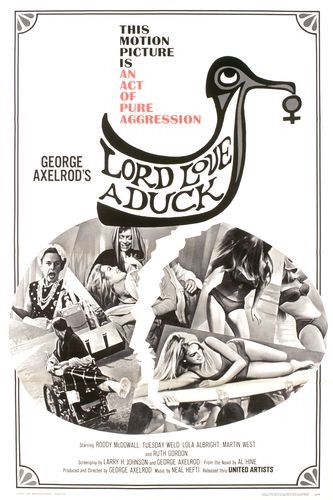
For my third Back to School review, I watched the 1966 satire, Lord Love A Duck!
Hey hey hey!
I have to admit that, because I’m writing this review in a hurry and because the D and the F key are located right next to each other, I keep accidentally calling this film Lord Love A Fuck. Somehow, that seems appropriate because Lord Love A Duck is a very odd and subversive little movie that deals with people who are largely motivated by lust and I’m pretty sure that, at one point, Roddy McDowall is seen saying, “Fuck off!” but, of course, we don’t actually hear him say it. But seriously, Lord Love A Duck is a weird movie.
Hey hey hey!
Roddy McDowall plays Alan Musgrave, a student at a “progressive” high school in California. Roddy was about 37 years old when he played a high school senior and he doesn’t look like a teenager at all but somehow, it’s appropriate. After all, Alan is no ordinary teenager! He’s smarter than everyone else. He’s wittier than everyone else. He’s more clever than everyone else. He’s also totally obsessive and willing to do just about anything to get what he wants. And you can be sure of one thing: whenever Alan does something borderline insane, you’ll hear a group of singers harmonizing, “Hey hey hey!” in the background.
Hey hey hey!
See, it’s happening already. It doesn’t matter what Alan’s doing. He could be kicking a skateboard in the way of a romantic rival. He could be interrupting the graduation ceremony with a tractor. He could be going to prison for life. No matter what it is, it will always be accompanied by:
Hey hey hey!
Anyway, Alan is in love with the innocent, sweet, and constantly flirtatious Barbara Anne Greene (Tuesday Weld). In fact, almost everyone in the film is in love with (or, at the very least, turned on by) Barbara. The only person who doesn’t seem to be in love with Barbara is her mother (Lola Albright), a former-beauty-turned-cocktail-waitress whose world-weary cynicism seems to offer a depressing hint of what’s in store for Barbara once she gets older.
Hey hey hey!
But everyone else loves Barbara. Especially Alan! In fact, Alan is so in love with her that he swears that he’s going to make sure that she gets everything that she wants. When she needs 12 cashmere sweaters so that she can join an exclusive girl’s club, Alan helps her to convince her father (Max Showalter) to pay for them. When Barbara needs a job after dropping out of school, Alan helps her get one as a secretary for the high school’s progressive principal (Harvey Korman). When Barbara decides she wants to marry the boring but respectable Christian youth leader, Bob (Martin West), Alan keeps Bob’s mother (Ruth Gordon) so drunk that she doesn’t get a chance to reprimand her son for falling in love with a girl from a divorced family. (As Bob’s mother explains it, she doesn’t believe in divorce. “We don’t leave our husbands. We bury them.”) Eventually, a movie producer decides that he wants Barbara to star in his beach films but Bob says no. No wife of his is going to be a movie star! So, of course, Alan decides to murder Bob so that Barbara can again have what she wants…
Hey hey hey!
Lord Love A Duck is a manic comedy that satirizes everything that mainstream audiences in 1966 would have held sacred. Teenagers, conservatives, liberals, love, hate, murder, justice, marriage, divorce, morality, sex, religion, television, movies — it’s all thoroughly ridiculed in this film. (It’s not surprising that the film’s director also wrote the script for The Manchurian Candidate, a satire disguised as a thriller.) To be honest, it’s probably a little bit too manic for its own good. At times, the film run the risk of becoming exhausting. But then there’s even more times when the film is absolutely brilliant.
Hey hey hey!
Speaking of absolutely brilliant, Lord Love A Duck makes brilliant use of Roddy McDowall’s eccentric screen presence but, even better, it features one of Tuesday Weld’s best performances. Weld was a talented actress whose performances often revealed that a fragile soul is often the price that is payed for great beauty. (There’s no greater insecurity than wondering whether people are responding to who you are or to how you look. Would you still care if I was ugly is not a question we’re supposed to ask but it’s one that we’ve all wondered.) It would have been far too easy to make Barbara either totally innocent or totally manipulative. Wisely, the film does neither. Barbara may occasionally be manipulative but she always means well. It’s not her fault that everyone around her is either idiotic or insane.
Hey hey hey!
Though Lord Love A Duck is obviously a time capsule of the culture of mid-60s, it’s also a film that remains relevant even today. Culturally, we’re still obsessed with fame, youth, and beauty. In many ways, the satire of Lord Love A Duck still feels more extreme that anything that any contemporary filmmaker would dare to attempt. I can only imagine what audiences in 1966 thought as they watched this subversive teen film.
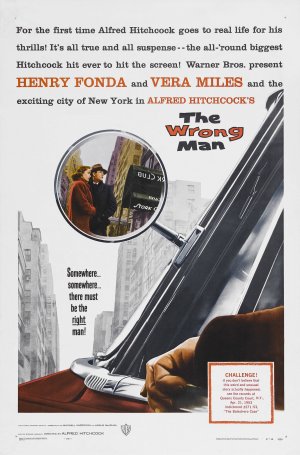
Since today is Alfred Hitchcock’s birthday, I figured why not take a few minutes to recommend one of his films that you may not have seen. First released in 1956 but still painfully relevant today, The Wrong Man is one of Hitchcock’s best but it’s also one of his most underrated.
The Wrong Man deals with a common Hitchcock theme — i.e., an innocent man has been accused of a crime and, despite all of his efforts, cannot seem to convince anyone of his innocence. The difference between The Wrong Man and something like Saboteur or Frenzy is that The Wrong Man is based on a true story.
Manny Ballestro (Henry Fonda) is a struggling musician. He makes $85 a week, playing in a small jazz club. But even though he may not be rich, he’s happy. He loves his job. He loves making music. Even more importantly, he loves his wife, Rose (Vera Miles). But Rose needs to have her wisdom teeth removed and it’s going to cost $300. (As a sign of how much things have changed, I would have been relieved if it had only cost me $300 to get my wisdom teeth taken out.) Desperate for money, Manny tries to borrow money on his wife’s life insurance plan. What Manny doesn’t know is that the insurance office has been held up twice by a man who bears a vague resemblance to him. A clerk calls the police and Manny soon finds himself being taken down to the police station.
Two detectives say that they need Manny’s help but they don’t tell him why. But Manny knows he’s innocent of any crime and he believes that the police are on his side and he agrees to help. When they tell him to walk into a liquor store, he does so. When they take him to a deli, he goes in there as well. When they demand to know why he was trying to borrow money on his wife’s life insurance, he tells them. When they ask him about his financial difficulties, he tells them about that as well. Why shouldn’t he? He’s innocent and the police are just doing their job, right? And when the cops finally ask him to copy down a few words that were used in the note that the robber slipped the clerk at the insurance company, Manny does so. And when they then ask him to take part in a line-up, he does that as well…
And when Manny is arrested and charged with a crime … well, that’s when he finally understands that the system is not on his side. His wife manages to hire a reputable attorney, Frank O’Connor (Anthony Quayle), to defend him but it quickly becomes obvious that the world has already decided that Manny is guilty. When Manny and his wife try to track down some people who could provide Manny with an alibi, they discover that two of them are dead and one of them cannot be found. For once, in a Hitchcock film, it’s not a case of conspiracy. Instead, it’s just bad luck.
And, through it all, Rose continues to blame herself. In fact, she is so wracked with guilt that she has a nervous breakdown.
It all leads to an amazingly disheartening courtroom scene. As quickly becomes obvious, the judge has little interest in what’s happening in his court. Even worse, the jury is unconcerned with the evidence. Most of them are just annoyed at the inconvenience and punishing Manny seems like the perfect way to release their own frustrations…
It’s a bleak picture of the American justice system. Watching The Wrong Man today, it’s tempting to say that the film is just a reflection of society in the 1950s and that things have changed today. But really, have they? True, the police may now be required to read someone their rights when they’re arrested. A suspect can now ask for a lawyer. We’ve got laws against entrapment and all the rest. But that doesn’t matter. We still live in a society where people are still widely presumed to be guilty, even after they’ve been found innocent in a court of law. We still live in a society where the wrong man can have his life ruined because of one mistake.
The Wrong Man doesn’t get as much attention as some of Hitchcock’s other films. In many ways, it’s an atypical example of his work. Hitchcock was notorious for his dark sense of humor and his habit of waving away most plot points as just being mere “macguffins.” With the exception of two scenes, both of which are meant to depict Manny’s mental state, The Wrong Man is filmed in a documentary style, one that occasionally seems more like Sidney Lumet than Alfred Hitchcock. There’s next to no humor, nor are there any big or flamboyant twists. In short, The Wrong Man finds the director of Psycho, Vertigo, and Rear Window at his most sincere. It takes some getting used to.
But, once you do get used to it, The Wrong Man emerges as a powerful and bleak portrait of two innocent people at the mercy of a soulless system. It’s a must see so be sure to see it!