Here Are The Online Film Critics Society Nominations!


The winners will be announced on December 28th.

It’s interesting to note that The Post is almost totally shut out here.  One thing I’ve noticed that critics who work for newspapers love The Post.  They see it as proof of their importance.  Online critics are far less impressed with The Post.  They tend to view it as a lament for a dead medium, a somewhat stodgy celebration of the past.  Whenever I finally get a chance to see The Post, I’ll let you know who’s right.

Best Picture
Call Me By Your Name
Dunkirk
The Florida Project
Get Out
A Ghost Story
Lady Bird
mother!
Phantom Thread
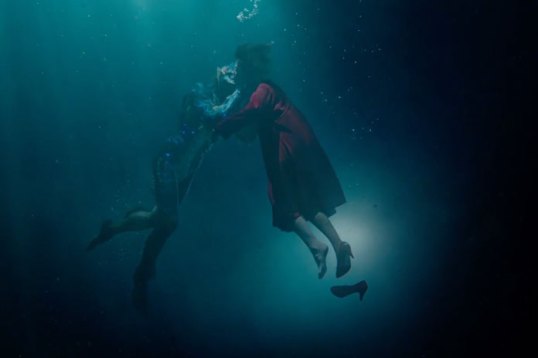
The Shape of Water
Three Billboards Outside Ebbing, Missouri

Best Director
Paul Thomas Anderson – Phantom Thread
Greta Gerwig – Lady Bird
Christopher Nolan – Dunkirk
Jordan Peele – Get Out
Guillermo del Toro – The Shape of Water

Best Actor
Timothée Chalamet – Call Me By Your Name
James Franco – The Disaster Artist
Daniel Kaluuya – Get Out
Gary Oldman – Darkest Hour
Robert Pattinson – Good Time

Best Actress
Sally Hawkins – The Shape of Water
Cynthia Nixon – A Quiet Passion
Frances McDormand – Three Billboards Outside Ebbing, Missouri
Margot Robbie – I, Tonya
Saoirse Ronan – Lady Bird

Best Supporting Actor
Armie Hammer – Call Me By Your Name
Richard Jenkins – The Shape of Water
Sam Rockwell – Three Billboards Outside Ebbing, Missouri
Patrick Stewart – Logan
Michael Stuhlbarg – Call Me By Your Name

Best Supporting Actress
Mary J. Blige – Mudbound
Tiffany Haddish – Girls Trip
Holly Hunter – The Big Sick
Allison Janney – I, Tonya
Laurie Metcalf – Lady Bird

Best Ensemble
Get Out
Mudbound
Lady Bird
The Post
The Shape of Water
Three Billboards Outside Ebbing, Missouri

Breakout Star
Timothée Chalamet – Call Me By Your Name
Tiffany Haddish – Girls Trip
Daniel Kaluuya – Get Out
Dafne Keen – Logan
Brooklynn Prince – The Florida Project

Best Original Screenplay
Jordan Peele – Get Out
Greta Gerwig – Lady Bird
Paul Thomas Anderson – Phantom Thread
Guillermo del Toro and Vanessa Taylor – The Shape of Water
Martin McDonagh – Three Billboards

Best Adapted Screenplay
Sofia Coppola – The Beguiled
James Ivory – Call Me By Your Name
Scott Nestadter and Micheal Weber – The Disaster Artist
James Gray – Lost City of Z
Aaron Sorkin – Molly’s Game

Best Editing
Paul Machliss and Jonathan Amos – Baby Driver
Lee Smith – Dunkirk
Ben Safdie and Ronald Bronstein – Good Time
Tatiana S Riegel – I, Tonya
Sidney Wolinsky – The Shape of Water

Best Cinematography
Roger Deakins – Blade Runner 2049
Hoyte van Hoytema – Dunkirk
Darius Khondji – Lost City of Z
Rachel Morrison – Mudbound
Dan Laustsen – The Shape of Water

Best Animated Feature
Coco
The Breadwinner
In This Corner Of The World
The LEGO Batman Movie
Loving Vincent

Best Foreign Film
BPM (Beats Per Minute)
First They Killed My Father
Nocturama
Raw
The Square
Thelma

Best Documentary
Dawson City: Frozen Time
Ex Libris: The New York Public Library
Faces Places
Jane
The Work

Memorial Award
Jonathan Demme
John Hurt
Bill Paxton
George A. Romero
Harry Dean Stanton

Lifetime Achievement Award
Willem Dafoe
Daniel Day-Lewis
Roger Deakins
Christopher Plummer
Agnes Varda

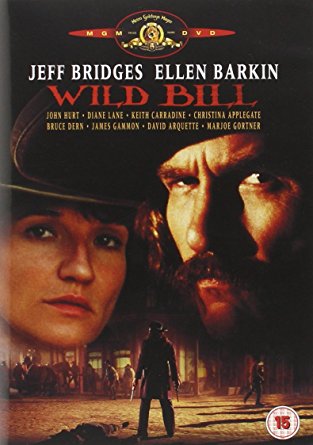
A Movie A Day #219: Wild Bill (1995, directed by Walter Hill)


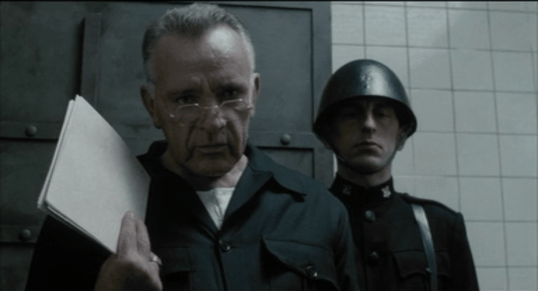
The year is 1876 and the legendary Wild Bill Hickok (Jeff Bridges) sits in a saloon in Deadwood and thinks about his life (most of which is seen in high-resolution, black-and-white flashbacks).  Hickok was a renowned lawman and a sure shot, a man whose exploits made him famous across the west.  Thanks to his friend, Buffalo Bill Cody (Keith Carradine), he even appeared on the New York stage and reenacted some of his greatest gun battles.  Now, Hickok is aging.  He is 39 years old, an old man by the standards of his profession.  Though men like Charlie Prince (John Hurt) and California Joe (James Gammon) continue to spread his legend, Hickok is going blind and spends most of his time in a haze of opium and regret.
Hickok only has one true friend in Deadwood, Calamity Jane (Ellen Barkin).  He also has one true enemy, an aspiring gunslinger named Jack McCall (David Arquette).  McCall approaches Hickok and announces that he is going to kill him because of the way that Hickok treated his mother (played, in flashback, by Diane Lane).  Hickok does not do much to dissuade him.

Based on both a book and a play, Wild Bill is a talky and idiosyncratic Western from Walter Hill.  Hill is less interested in Hickok as a gunfighter than Hickok as an early celebrity.  There are gunfights but they only happen because, much like John Wayne in The Shootist, Hickok has become so famous that he cannot go anywhere without someone taking a shot at him.  Almost the entire final half of Wild Bill is set in that saloon, with Hickok and a gallery of character actors talking about the past and wondering about the future.

At times, Wild Bill gets bogged down with all the dialogue and philosophizing.  (To quote The Good, The Bad, and the Ugly: “When you have to shoot, shoot.  Don’t talk.”)  Luckily, the film is saved by an intriguing cast, led by Jeff Bridges.  In many ways, his performance was Wild Bill feels like an audition for his later performance in True Grit.  David Arquette is intensely weird as the jumpy Jack McCall and Ellen Barkin brings the film’s only underwritten role, Calamity Jane, to life.  Smaller roles are played by everyone from Bruce Dern to James Remar to Marjoe Gortner.

United Artist made the mistake of trying to sell Wild Bill as being a straight western, which led to confused audiences and a resounding flop at the box office.  Ironically, years after the release of Wild Bill, Walter Hill won an Emmy for directing the first episode of HBO’s Deadwood, an episode the featured Wild Bill cast member Keith Carradine in the role of Hickok.

Lisa’s Too Early Oscar Predictions For April


Check out my previous predictions for March, February, and January!

Best Picture

Battles of the Sexes

Call Me By Your Name

Darkest Hour

Downsizing

Dunkirk

The Glass Castle

The Leisure Seeker

Logan

Mudbound

Wonderstruck


Best Director

James Mangold for Logan

Luca Guadagnino for Call Me By Your Name

Alexander Payne for Downsizing

Dee Rees for Mudbound

Joe Wright for Darkest Hour


Best Actor

Chadwick Boseman in Marshall

Tom Cruise in American Made

Gary Oldman in Darkest Hour

Miles Teller in Thank You For Your Service

Donald Sutherland in The Leisure Seeker


Best Actress

Judi Dench in Victoria and Abdul

Brie Larson in The Glass Castle

Helen Mirren in The Leisure Seeker

Carey Mulligan in Mudbound

Emma Stone in Battle of the Sexes


Best Supporting Actor

James Franco in The Masterpiece

Armie Hammer in Call Me By Your Name

Woody Harrelson in The Glass Castle

John Hurt in Darkest Hour

Patrick Stewart in Logan


Best Supporting Actress

Holly Hunter in The Big Sick

Melissa Leo in Novitiate

Julianne Moore in Wonderstruck

Kristin Scott Thomas in Darkest Hour

Naomi Watts in The Glass Castle

Lisa’s Too Early Oscar Predictions For March


2013 oscars

It’s that time of month!  Here are my Oscar predictions from March.  As you can tell by comparing this month’s predictions to my predictions for January and February, I’ve learned a bit more about the films that will be coming out over the next few months and I’ve changed my mind on quite a few of the early contenders.

That said, at this time last year, no one had even heard of Moonlight.  At this point, almost all of these predictions are the result of wishful thinking, random guesses, and gut instinct.

Best Picture

Battles of the Sexes

Call Me By Your Name

Darkest Hour

Downsizing

Dunkirk

The Glass Castle

The Leisure Seeker

Logan

Mudbound

Wonderstruck

I went back and forth on whether or not to include Logan in my predictions.  On the one hand, I think it could be nominated.  On the other hand, regardless of how acclaimed it may be, it is also a comic book movie that came out in March.  In the end, since these predictions are mostly just for fun at this point, I decided to imagine a situation where — like Mad Max: Fury Road two years ago — the film’s box office carries it through the summer and it gets some needed support from the precursors in December.

(For the record, if I had decided not to include Logan, I would have replaced it with Blade Runner 2049.)


Best Director

James Mangold for Logan

Luca Guadagnino for Call Me By Your Name

Alexander Payne for Downsizing

Dee Rees for Mudbound

Joe Wright for Darkest Hour

If Logan were to get a best picture nomination, I imagine that James Mangold would get a nomination along with it.


Best Actor

Chadwick Boseman in Marshall

Tom Cruise in American Made

Gary Oldman in Darkest Hour

Miles Teller in Thank You For Your Service

Donald Sutherland in The Leisure Seeker

The two additions here are Teller and Sutherland.  Teller seems destined to be nominated some day, assuming that he spends more time making films like Whiplash and less time on stuff like Fantastic Four.  Despite a long and distinguished career, Sutherland has never been nominated.  In The Leisure Seeker, he plays a man suffering from Alzheimer’s.  It sounds like a role for which he could not only be nominated but for which he could also win.


Best Actress

Judi Dench in Victoria and Abdul

Brie Larson in The Glass Castle

Helen Mirren in The Leisure Seeker

Carey Mulligan in Mudbound

Emma Stone in Battle of the Sexes

The two new contenders here are Mirren and Larson.  Mirren always has to be considered to be a contender and Larson’s upcoming film, The Glass Castle, sounds like pure Oscar bait.


Best Supporting Actor

James Franco in The Masterpiece

Armie Hammer in Call Me By Your Name

Woody Harrelson in The Glass Castle

John Hurt in Darkest Hour

Patrick Stewart in Logan

Yes, I’m still predicting that James Franco will be nominated for playing Tommy Wiseau.  It may be wishful thinking on my part but so be it.  Every year, Armie Hammer seems to be on the verge of being nominated for something.  Harrelson is included as a part of The Glass Castle package.  Stewart is overdue for a nomination.  As for John Hurt, he was nominated but never won an Oscar during his lifetime.  Darkest Hour could provide the Academy with a chance to honor the man’s distinguished career, in much the same way that The Dark Knight allowed them to honor Heath Ledger.


Best Supporting Actress

Holly Hunter in The Big Sick

Melissa Leo in Novitiate

Julianne Moore in Wonderstruck

Kristin Scott Thomas in Darkest Hour

Naomi Watts in The Glass Castle

I don’t know much about Moore’s role in Wonderstruck but the film is directed by Todd Haynes, a filmmaker who previously directed Moore in her finest performance in Safe.

Oscar1

A Movie A Day #28: Scandal (1989, directed by Michael Caton-Jones)


scandal-posterLondon.  1961.  Doctor Stephen Ward (played by John Hurt) is an artist and an osteopath.  He counts among his patients some of the most distinguished men and women in British society, including the Minister of War, John Profumo (Ian McKellen).  After meeting two young dancers, Christine Keeler (Joanne Whalley) and Mandy Rice-Davies (Bridget Fonda), Stephen becomes their mentor, the Henry Higgins to their Eliza Doolittle.
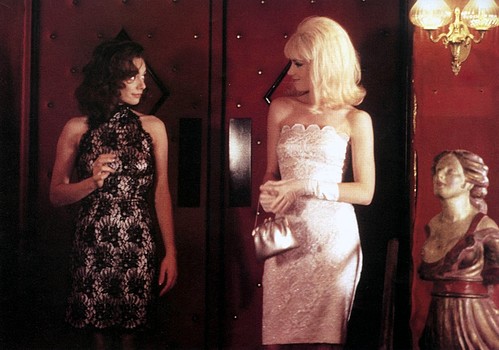
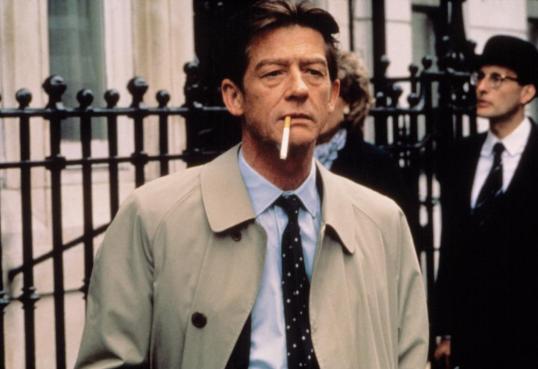
Under Stephen’s watchful eye, both Christine and Mandy are soon having affairs with some  of the most powerful members of Harold Macmillan’s Conservative government.  Christine becomes the mistress of both Profumo and KGB agent, Yevgeny Ivanov (Jeroen Krabbe), along with maintaining off-and-on relationships with drug dealer Johnny Edgecombe (played by singer Roland Gift) and musician Lucky Gordon (Leon Herbert).

When a disagreement leads to Johnny slashing Lucky’s face and then getting arrested for firing a gun at Stephen’s flat, the public learns the details of Christine’s affair with Profumo.  With the scandal rocking the British government, Stephen is a convenient scapegoat and soon finds himself on trial, charged with making a living off of “immoral earnings.”

Based on the real life scandal that led to the eventual fall of Harold Macmillan’s government, Scandal is remarkably faithful to the facts of the Profumo Affair, even if it did leave out some of the more interesting allegations.  (For instance, no mention is made of an alleged encounter between Mandy Rice-Davies and President Kennedy.)  Though it may seem tame by today’s standards, when Scandal was first released in 1989, it was considered to be something of a scandal itself and it initially got an X rating when it was released in the United States.  (The scandal over Scandal is one of the things that led to the MPAA adopting the NC-17 rating to distinguish between films for adults and “adult” films.  Of course, it didn’t work as a potential NC-17 still carries the same stigma as the X rating did.)

scandal

Scandal holds up well as both a recreation of London on the verge of the sexual revolution and a look at contrast between private and public mores.  Both Joanne Whalley and Bridget Fonda are excellent in the roles of Christine and Mandy.  Fonda gets to deliver the most famous line of the whole Profumo Affair when Mandy is told that Lord Astor has denied having had an affair with her.  “He would, wouldn’t he?” she says.  After I watched Scandal last night, I did some checking and I discovered that Bridget Fonda has not made a film since 2002.  She is missed.

Not surprisingly, Scandal‘s best performance comes from John Hurt, who plays Stephen Ward as a naive and well-meaning social butterfly who ultimately gets in over his head and pays a steep price for trusting that his friends would remain his friends.  Scandal is just one of many movies that proves what a great talent was lost when the world lost John Hurt.

RIP.

SCANDAL, John Hurt, 1989

Scenes I Love: Alien


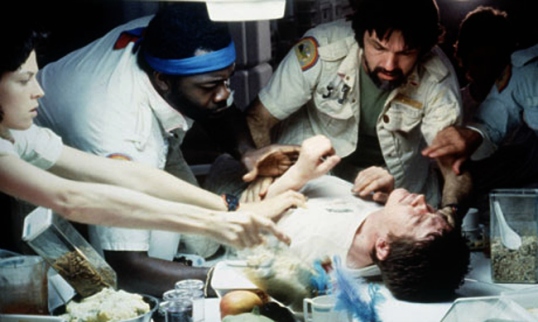
alien-chestburster

We found out tonight that the great Sir John Hurt passed away at the age of 77.

For some their memory of him was in the role of the Elephant Man. For the younger set it might be as Hellboy’s adopted father Professor Broom. Some might even remember him as Chancellor Sutler from V for Vendetta. They were all great roles, but my very first memory of him is from a film that helped shaped my love for horror and sci-fi. It was a film that was influenced the impressionable mind of a pre-teen.

This film is and will always be Ridley Scott’s haunted house in space sci-fi horror film, Alien.

Sir John Hurt as the doomed crew-member Kane would make such an impact in my impressionable mind as a child not when he first appears on-screen, but when the titular creature makes it’s first appearance in what I can only describe as an explosive birthing scene.

Rest In Peace good sir.

Insomnia File No. 8: From the Hip (dir by Bob Clark)


What’s an Insomnia File? You know how some times you just can’t get any sleep and, at about three in the morning, you’ll find yourself watching whatever you can find on cable? This feature is all about those insomnia-inspired discoveries!

From_the_Hip_(film)

Last night, if you discovered that you couldn’t get any sleep around two in the morning, you could have turned to Showtime and watched the 1987 film, From The Hip.

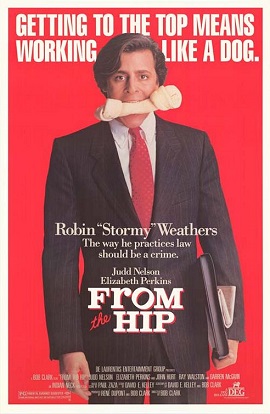
In From the Hip, Judd Nelson plays a character named Robin Weathers.  Of course, his nickname is Stormy.  Robin has just graduated from law school and is working at a prestigious law firm.  He’s ambitious, he’s outspoken, and he’s totally frustrated.  As his co-workers (played, quite well, by David Alan Grier and Dan Monahan) continually remind him, nobody gets to try a case during their first year out of law school.  They advise him to be patient and to wait his turn.

However, a man who is capable of being patient would not be nicknamed Stormy.  It just wouldn’t make any sense.  So, Stormy Weathers schemes his way into the courtroom.  One morning, he intentionally withholds information from the senior partners, going out of his way to keep them from realizing that a trial is scheduled to begin that afternoon.  When senior partner Craig Duncan (Darren McGavin) discovers what Stormy has done, he fires him and makes sure that he never get hired at another law firm … oh wait.  No, he doesn’t because that would make too much sense.  Instead, he allows Stormy to try the case because, at this point, Stormy is the only one who knows anything about it.

The case is a simple assault case that involves two bankers and should be resolved easily but Stormy manages to drag it out for several days and his flamboyant style catches the attention of the media.  The other partners in the law firm — who are all old and boring — want to fire Stormy but Stormy’s client says that, if Stormy is fired, he’ll take his business and his money elsewhere.  Stormy becomes a minor celebrity but — in a rather clever little twist — it turns out that he and the prosecuting attorney are old friends from law school and they conspired to make each other look good.

Anyway, Stormy is now so famous that he gets assigned to defend a college professor, named Benoit (John Hurt), who has been accused of murder.  When it quickly becomes obvious that Benoit is not only guilty but will probably murder again, Stormy is forced to choose between ambition and morality…

When my friend Evelyn and I first started to watch From the Hip last night, I really thought I was going to hate it.  The hot pink neon credits screamed, “Bad 80s movie!” and, because I happen to know quite a few lawyers, I tend to be a 100 times more critical of movies about lawyers than I am when it comes to movies about, say, homicidal fishermen.

And, honestly, From The Hip is a heavily flawed film.  Judd Nelson is miscast and the scenes with his politically conscious girlfriend (Elizabeth Perkins) are painfully shallow and reek of limousine liberalism.  But, if you can get through the weak opening, the film itself is watchable and enjoyable in a dumb sort of way.  John Hurt does a great job as a sociopath and, miscast as he may be, it’s still fun to watch Nelson go insane in court.

From The Hip is not a great film but, in its way, it’s an enjoyable little time capsule.  Believe it or not, there was a time when Judd Nelson starred in a movies that were actually released in theaters.

Previous Insomnia Files:

  1. Story of Mankind
  2. Stag
  3. Love Is A Gun
  4. Nina Takes A Lover
  5. Black Ice
  6. Frogs For Snakes
  7. Fair Game


For Your Consideration #7: Snowpiercer (dir by Bong Joon-ho)


It is perhaps a sign of the times that 2014 saw the release of several dystopian films.  Whether it was the Purge: Anarchy, Mockingjay, The Maze RunnerEdge of TomorrowDawn of the Planet of the Apes, or even Interstellar, all of these films shared a similarly bleak view of the future.  Filmmakers everywhere seemed to agree that humanity is basically doomed.

Unfortunately, with so many different and competing views of our sucky future, I fear that a lot of people may have missed one of the best of them.  When taken along with all of the usual Academy biases, I fear that means that Snowpiercer is pretty much out of the running for a best picture nomination.  It’s true that Snowpiercer did win best picture from the Boston Online Critics and there’s always an outside chance that Tilda Swinton could pick up a best supporting actress nomination.  But, for the most part, Snowpiercer has been overlooked.

And that’s a shame because Snowpiercer is one of the best of the year.

The premise of Snowpiercer is, in its way, brilliant.  After environmental scientists go a bit too far in their effort to battle global warming, the world suffers a second ice age.  (I have to admit that I enjoyed this development, just because heroic environmentalists are such a cliché.)  With the entire world frozen, what is left of humanity ends up on a massive train known as the Snowpiercer.  For the next twenty years, the Snowpiercer rushes up and down a track that spans the entire planet.

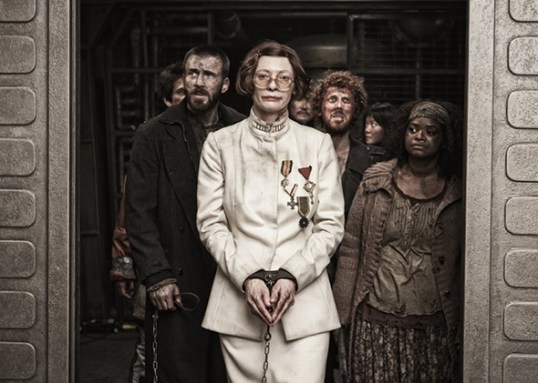
A new society forms on the Snowpiercer and, not surprisingly, it’s a lot like the old society.  The rich live up at the front of the train.  The poor live in the tail section.  All laws are set by the rarely seen Wilford (Ed Harris).  Wilford’s will is enforced by faceless soldiers and his blandly monstrous second-in-command, Mason (Tilda Swinton).

Twenty years later, the people in the tail section attempt their latest revolt.  This time, they’re being led by the charismatic Curtis (Chris Evans, proving that he’s capable of playing a lot more than just Capt. America).  Taking Mason hostage, Curtis leads his people through each car, slowly making their way to the front.  Along the way, they meet a lot a violent resistance and Curtis discovers that his rebellion was not quite as virtuous as he originally assumed…

Snowpiercer was one of the most imaginative science fiction films that I saw in 2014, a triumph of acting, direction, and design.  Each car has its own unique personality and look.  Perhaps the film’s best scene is when Curtis finds himself in the car that serves as the train’s school.  He and his grimy rebels listen as a perky and friendly teacher (Alison Pill) indoctrinates her students about the benevolence of Wilford.  It’s a surrealistic and tense scene, one that ends with burst of sudden and unexpected violence.

Perhaps what I most appreciated about Snowpiercer was that, despite all appearance to the contrary, it was ultimately a humanistic and optimistic film.  This is the rare action film where violence is not designed to look fun.  Though many character may not survive, the film never celebrates or cheapens their death.  Even the film’s most unsympathetic characters are still allowed moments of humanity.  This is a film that not only ends on a hint of hope but which earns that hope as well.

Snowpiercer is one of the best films of the year and it’s one that definitely deserves more consideration than it’s been given.

140624_MOV_Snow.jpg.CROP.promo-mediumlarge


Film Review: Nineteen Eighty-Four (dir by Michael Radford)


Nineteen-Eighty-Four

Yesterday, as I was flipping through the channels, I came across a documentary that was being shown on This TV.  The documentary was called Nineteen Eighty-Four and it told the story of a low-level British bureaucrat named Winston Smith (who bore a strong resemblance to a youngish John Hurt)  who, after having a secret affair with a free-spirited woman, was charged with committing “thought crimes” against the state.  As a result, he was tortured by a man named O’Brien (who looked a lot like Richard Burton) until Winston finally came to love the government above all else…

What’s that?

Okay, you caught me.

This movie was not a documentary.  Instead, it was an adaptation of George Orwell’s famous novel about a dystopian future Britain (quite cleverly renamed Airstrip One in both the book and the film) where the citizens spend their time giving thanks to Big Brother, a leader who may or may not actually be a fictional creation of the ruling party.  It’s a world where everyone knows that “Big Brother is watching you” and every day is scheduled around the “two-minute hates” that are directed towards Big Brother’s enemy, Emmanuel Goldstein (who, much like Big Brother, may or may not actually exist).  It’s a world dominated by three separate superstates that are in a state of perpetual war, though we’re also given reason to suspect that the war is just as fictional as Big Brother and Goldstein might be.  It’s a world where order is kept by the Thought Police and history is regularly changed for the benefit of the ruling party.  It’s a world where people can become unpersons and cease to exist and where all good citizens understand that one plus one equals three if the government says that it does.

So, no, it’s not a documentary.

It just feels like one.

Richard Burton 1984

As I watched Nineteen Eight-Four, it was impossible for me not to compare Orwell’s vision of the future (which is faithfully visualized in the film) with our present world.  Even though the book was written in 1948 and this film was shot and released in 1984, it was hard not to feel as if Nineteen Eighty-Four could have just as easily been made yesterday.  Beyond the obvious NSA-as-Big-Brother comparisons that everyone makes, it was hard not to compare the brainwashed citizens waiting to hear from Big Brother with the people today who slavishly repeat whatever talking points they hear on MSNBC or Fox News.  How different, I wondered, was Big Brother railing against Goldstein from our President continually telling us that we’re at war with the “forces of cynicism” and that anyone who disagrees with him is not just expressing an opinion but instead is being unpatriotic?  When O’Brien explained how the Party stayed in power by keeping the people perpetually angry at unseen enemies, he might as well have been talking about our own elected officials.  And, when the Thought Police finally arrested Winston and Julia, it brought to mind the images of the militarized police force of Ferguson, Missouri.

And that, I think, is why Nineteen Eighty-Four remains so powerful as both a book and a film.  We live in a world where we are told more and more often that, regardless of what it does, the government is in charge and must be obeyed.  We live in a world where we are currently told that good citizens must obey the law simply because it is the law.  We’re told not to question why a police force needs to resemble an invading army.  We’re told not to question why a member of the police force might happen to shoot an unarmed black teenager multiple times.  We’re told not to question the official history.  Instead, we’re just supposed to live in a state of blind obedience and accept, on faith alone, that those in charge are always right.  We’re supposed to “respect authority” and not think about the specifics.

Thought Police or the Ferguson PD?

Thought Police or the Ferguson PD?

In short, we’re living in the world of Nineteen Eight-Four whether we realize it or not.

As for the film itself, it’s a powerful and surprisingly faithful adaptation of Orwell’s novel.  John Hurt is perfectly cast as Winston Smith and Suzanna Hamilton is sympathetic as Julia.  The two of them have a very real chemistry in this film and it makes the inevitable final scenes all the more disturbing and tragic.  This was also Richard Burton’s final film.  After years of alcoholism, Burton died shortly after filming ended and he looks ill throughout Nineteen Eighty-Four.  But his obvious ill-health actually works to the role’s advantage.  As played by Burton, O’Brien becomes the perfect embodiment of the morally corrupt ruling Party.  The scenes where O’Brien tortures Hurt as difficult to watch, as they should be.  But both Hurt and Burton give such committed performances that you can’t look away even when you want to.  Finally, Nineteen Eighty-Four was an early job for the great cinematographer Roger Deakins and the film has a memorably bleak look to it.  The drabness of Air Strip One perfectly mirrors the empty life of its citizens and it serves as a perfect contrast to the lushness of Winston’s fantasies.

Nineteen Eighty-Four is not an easy film to watch but it’s one that everyone should track down and see.  Watch it and ask yourself how different 1984 is from 2014.

1984-john-hurt

Trash Film Guru Vs. The Summer Blockbusters : “Hercules”


hercules-rock-poster1

It’s been a weird week at the movies for yours truly, my friends : first off, I went to the theater three times this week, which almost never happens anymore (what do you think I am, rich?), and secondly, while I enjoyed The Purge : Anarchy about as much as I expected to (which is to say quite a bit), the other two flicks I saw both took me by surprise for different reasons : I was far less impressed with Richard Linklater’s much-celebrated Boyhood than I expected to be, and I ended up liking Brett Ratner’s new take on Hercules waaaaaayyyy more than I figured I was going to.

Though not because of anything Ratner himself did. But we’ll get to all that in a minute.

Full disclosure : I only went to see Hercules because my dad wanted to check it out. He’s a sucker for this kind of thing (he absolutely loves the old Kevin Sorbo TV series), and my mom wouldn’t touch a movie like this with a ten-foot pole, so when he mentioned he was hoping to check it out, I said I’d go with him. We’ve all gotta spend time with our parents while they’re still with us, right? But it’s fair to say, given Ratner’s involvement with this thing, that I wasn’t expecting much.

And ya know? He doesn’t deliver much — the direction here isn’t actively bad by any means, but it’s pretty straightforward stuff : the numerous “big battle” scenes are handled competently, and the actors by and large turn in decent enough performances, but there’s no real unique authorial stamp on any of the proceedings, and frankly, a  lot of the CGI is several rungs below what we’ve come to expect from these mega-budget summer popcorn flicks. All in all, technically speaking, it’s a fairly mixed bag.

Why, then, did I find myself pleasantly surprised by this latest (and third so far this year alone, by my count) take on Greek mythology’s most famous demi-god warrior? Simply put, the script offers a neat revisionist take on the hero, and is smart, intelligent, engaging, and surprising — it’s entirely unlike any iteration of the character we’ve seen before, and for my part, I really dug it.

hercules-dwayne-johnson1

Before I give all of the (or even any) credit to screenwriters Ryan Condal and Evan Spiliotopoulos for this film’s suceess, though, let me state for the record that Dwayne “The Rock” Johnson is perfectly likable in the title role, and while he may be a pretty conservative casting choice, that’s okay — he’s more or less pitch-perfect and his supporting actors (including Ian McShane, Rufus Sewell, and Ingrid Bolso Berdal as members of his mostly-merry mercenary band and John Hurt and Joseph Fiennes as the film’s principal villains) do their jobs well, too. So kudos to everyone for putting in an honest day’s labor all the way through here. But let’s get back to the novel new twist on the whole legend/premise here, shall we?

This Hercules is radically different to his predecessors not just because he can actually talk (something Arnold Schwarzenegger, Lou Ferrigno, and Steve Reeves really weren’t so great at when they tackled the role), but because he a) may not actually be the son of Zeus; b) is leader of a group of freelance soldiers-for-hire; and c) was driven from his home after having name dragged through the mud for supposedly killing his own family. Told’ja this was a new set-up, didn’t I?

There are also some intriguing moral complexities woven into the story that I won’t give away here — hey, I want to keep things at least nominally “spoiler-free” when and where I can — and the interpersonal relationships between Hercules and his fellow travelers — as well as those they lend/sell their services to along the way — have considerably more depth than any reasonable human being would expect from action movie fare such as this. I was both mightily impressed by this intriguing series of twists, and frankly taken more than just a little aback by them. It wasn’t until the end credits rolled that my “aha!” moment came and I realized I shouldn’t have been shocked at all, if only I’d done a little bit of homework beforehand.

images

As it turns out, Ratner’s film is an adaptation of a comics series (well, two comics series, actually) penned by the late, great Steve Moore. I don’t know much about the publisher of these books, an outfit called Radical Comics , but I do know plenty about Steve Moore, and you should, too. Moore, who passed away from natural causes at his home earlier this year, is probably best known to comics fans as Alan Moore’s best friend (no relation despite sharing the same last name), and was a genuinely remarkable talent and, by all accounts, a genuinely remarkable human being. His comics work was sporadic, but he was at the forefront of the “British Invasion” of the early 1980s with works such as the criminally-underappreciated Laser Eraser And Pressbutton, and outside the field of comics he was a regular contributor to Fortean Times magazine as well as being a part-time musician and experienced occultist. He lived his entire life in the house he was born in and apparently carried on a decades-long erotic/romantic relationship with a moon goddess entity known as Cybele. All in all, then, a thoroughly interesting guy, as well as being an insanely talented creative force.

I wish I’d known about his Herclues comics when they came out — I don’t know if they just didn’t get very good US distribution or what (the cover of the first issue is pictured above), but I honestly don’t recall ever seeing a single copy of any of them out on the shelves at my local comic shop, and I’m there every week. A quick search on Amazon shows that two trade paperback collections of the series are available, but one is out of print and commanding rather high prices. Oh well, think I’ll probably order it up anyway.

Here’s the kicker, though — as much as I enjoyed this flick, now I feel kinda bad for  having shelled out any cash on it. Why, you ask? Because Steve Moore’s surviving family isn’t getting a dime off it. A quick Google search shows that Alan Moore has been absolutely up in arms about how his recently-deceased friend (and, in many respects, mentor) has been screwed over by the producers of the film, and he’s called for a boycott of it. I know, I know — Moore’s got a reputation for being a curmudgeon and for telling people not to buy, well, anything, but the damn thing is, more often than not, he’s absolutely right. The cinematic adaptation of The League Of Extraordinary Gentlemen was, in fact, every bit as horrendous as he claimed it was going to be, the Before Watchmen comics were by and large positively awful, and the V For Vendetta movie was an atrocious dumbing-down of his far superior original work. Yeah, he was none too pleased about the Watchmen film, either, but I won’t use that as an example of him being correct because by and large I kinda liked that one. Still, his criticisms are spot-on more often than not.

HERCULES

So here’s what I’m thinking knowing what I know now : Ratner’s Hercules is, in fact, a far superior effort than I felt sure it would be going in, yes — but it’s probably nowhere near as good as the comics it was based on, and the fact that Steve Moore got swindled — even (and especially) after death — from seeing so much as a penny from a big-budget adaptation of his work is positively unconscionable. Again, I haven’t read any of these comics yet, but it’s a safe bet that anything good that survived the translation from the printed page to the screen is only there because Steve Moore put it there in the first place. In short, he’s the main reason this movie is actually pretty damn good, and that makes perfect sense when you think about it because you know full well Ratner isn’t capable of delivering the goods on his own. We all remember Red Dragon, don’t we?

Okay, fair enough — I’ve tried my best to put that out of my mind, too.

So in the end I guess I’m left with something of an ethical conundrum here — I liked Herclues. I really did. But mostly for its unique and original story. And now that I know the story behind that story (whoops, I’m being repetitious here, sorry), I sorta wish I’d never seen the thing. Okay, on that note. I’m off to Amazon to order up these books.