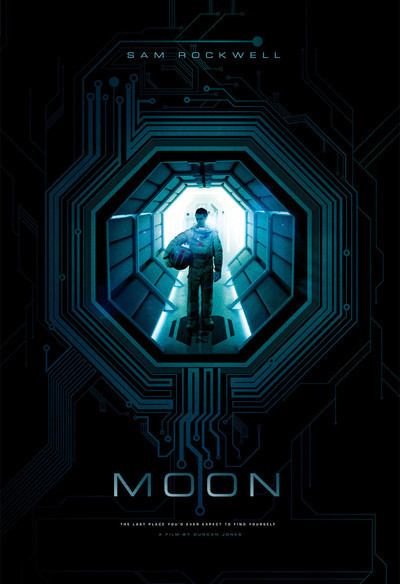
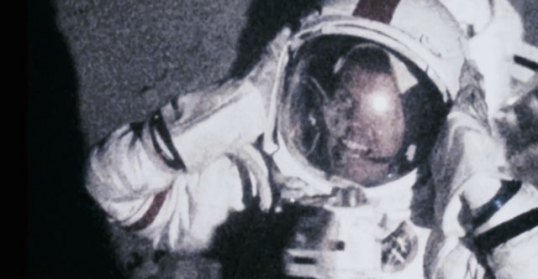
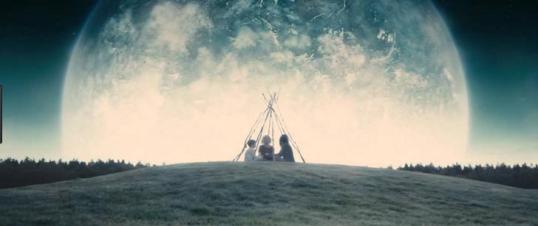
4 Shots From 4 Films is just what it says it is, 4 shots from 4 of our favorite films. As opposed to the reviews and recaps that we usually post, 4 Shots From 4 Films lets the visuals do the talking.
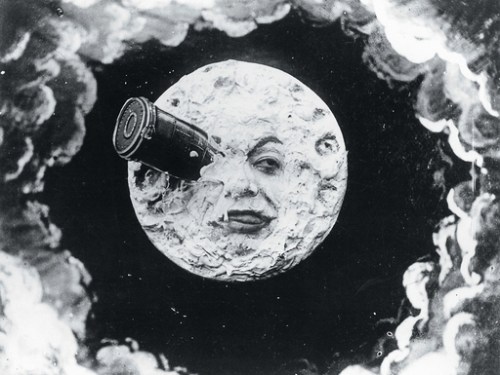
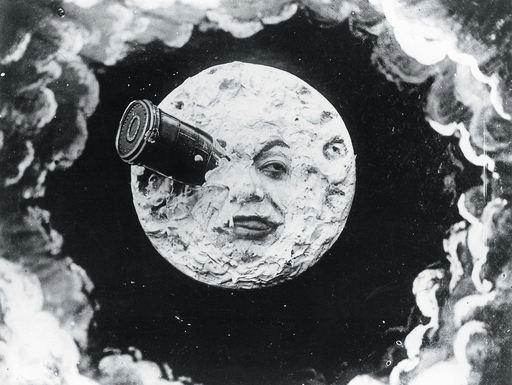
Today, we pay tribute to the moon! It’s time for….
4 Shots From 4 Films is just what it says it is, 4 shots from 4 of our favorite films. As opposed to the reviews and recaps that we usually post, 4 Shots From 4 Films lets the visuals do the talking.
Today, we pay tribute to the moon! It’s time for….
As some of our regular readers undoubtedly know, I am involved in a few weekly live tweets on twitter. I host #FridayNightFlix every Friday, I co-host #ScarySocial on Saturday, and I am one of the five hosts of #MondayActionMovie! Every week, we get together. We watch a movie. We tweet our way through it.
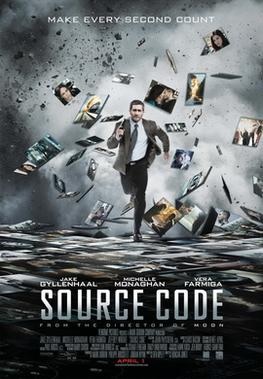
Tonight, at 10 pm et, I will be hosting #FridayNightFlix! The movie? 2011’s Source Code!
Can Jake Gyllenhaal prevent a bombing on a train? That sound like a simple premise but, in Source Code, things get much more complicated. This twisty sci-fi thriller from Duncan Jones was one of my favorite films of 2011 and I look forward to watching it with the Friday Night Flix crew!
If you want to join us this Friday, just hop onto twitter, start the movie at 10 pm et, and use the #FridayNightFlix hashtag! I’ll be there tweeting and I imagine some other members of the TSL Crew will be there as well. It’s a friendly group and welcoming of newcomers so don’t be shy.
Happy Horrorthon! My midterms are done; so, I have this brief window to be analytical that doesn’t involve Petroleum, Carbon, A piston, or some sort of torque. This film is the kind of horror film that I like that dares to be political. Duncan explores the hidden cost and ineffectiveness of best intentions. You have an intractable problem, but is the solution actually helping and are the people advocating it trustworthy? Moon presents the problem: Global Warming. The solution that is marketed and sold to the world is fusion by strip mining the Moon and sending the fuel back to earth. There are scenes where we see scars on the moon from the strip mining. Are we creating a new problem? Is the solution a net wash? Is the solution financing an evil regime? Why is environmentalism immune to cynicism? The exploitation of an unlimited labor? Have corporations done anything ever to warrant even our limited trust? These are the questions that Duncan forces us to confront with horror.
I know that this sounds ham-fisted, but the political statements are brilliantly subtle. This is not a right-wing political film either; on the contrary, it’s about presenting the moral imperative of considering unintended consequences as we push to solve real problems.
My eyes rolled so hard at the opening though when a corporate ad from Lunar, the mining company, pushed their “Green Energy” solution that I almost turned it off because the last thing I needed post-midterms was someone scolding me for 97 minutes. However, the opening was visually stunning; so, I hung with the film. Also, it starred Sam Rockwell and he’s awesome. This was the directorial debut of Duncan Jones who is immediately identified as David Bowie’s son, but you don’t need to confirm that with Wiki because he looks just like his Dad.
We are in a future where fossil fuels are thing of the past and fusion via strip mining the moon is providing the world with a New Eden; at least, that’s what the totally trustworthy corporation is telling us in it’s slick ad.
(Now, if you want to really end ALL fossil fuels, the solution is to perfect Tesla Coils and wirelessly transmit electricity this would obviate the need for batteries and would power the world constantly. Horrorthon is not just for great commentary; it’s for learning! )
The film is a one-man/two man show….huh…just wait. Sam Bell is a moon worker on a three year contact, maintaining the moon harvesters as they strip mine this essential rock that keeps our axis stable. In this future, the job of astronaut is less Neil Armstrong and more horrible non-union factory job. Sam is dirty, breaking down, beginning to hallucinate, and bored to tears. The live-link to planet earth has not functioned since his arrival and he’s surrounded by nearly completed hobbies like whittling towns from his memories. We are forced to see the horror of a human being in profound loneliness and hopelessness for our needs.
The next plot point has Sam checkinng on a malfunctioning harvester; however, he has a vision of his daughter and he crashes. We see him pass out as he’s being buried alive. Sam wakes to his only companion- a robot with Kevin Spacey’s voice. Important note is that this film was from 2009. Sam’s suspicious that there might be something outside of the ship and the robot appears to be able to talk live with the evil corporate leaders from earth. Sam is determined to investigate outside the ship. After a brief sabotage, Sam is able to investigate the moon harvester. He discovers a busted up copy of himself.
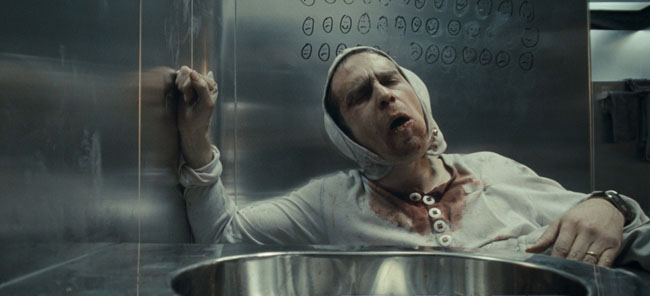
He’s confronted with Lunar’s answer to the high cost of unions, labor complaints, and pay: you don’t negotiate with employees, you grow them. If things go really wrong like two clones meet, you send in goons to kill them, and wake up new disposable people. What’s is so painful is that the corporation gave the clone’s a 3 year lifespan; so, we watch Sam Bell Prime disintegrate slowly in scene after scene, including one where he spits out a molar… yeeeeech. While we see the human toll, we also see the moon missing huge chunks of itself as result of the mining. So, we are committing this horrible evil, but is this clean energy just creating a new and unintended problem? We are so desperate to not think things through that we greenlight an idea to destroy our own moon and credulously accept corporate talking points.
This film was thoughtful and painful. Duncan Jones forces us to think take some time and… THINK. What are we doing? Maybe doing something just to do something isn’t the answer? We are confronted what we don’t want to consider: how did this sausage end up in this package? I’m not seeing any pollution; therefore, it’s not happening. Our society is less owl and more ostrich every day.
With this year’s Sundance Film Festival getting underway in Colorado, I’m going to be spending the next few days looking at some films that caused a stir at previous Sundance Film Festivals. Today, I’m taking a look at the 2009’s Moon.
It’s time for all good people to praise Sam Rockwell.
As far as I’m concerned, Sam Rockwell is one of the patron saints of character acting. Is there anything that he can’t do? He can do comedy. He can do drama. He can play the cool, older guy, like he did in The Way, Way Back. He can play the nerdy, weirdo as he’s done in too many movies for me to list. He can play a mentor and he can play a student. He can make you laugh and he can make you cry. He’s one of those actors who can seamlessly transition from small indie films to huge blockbusters without missing a beat. Rockwell won an Oscar for his performance in Three Billboards Outside Ebbing, Missouri and he might just win another one for playing President George W. Bush in Vice. He can even dance, as anyone who has seen him in Iron Man 2 can tell you. Rockwell’s been acting since he was a teenager and he’s definitely earned the right to be known as one of our greatest actors.
For that reason, it can sometimes be a little bit difficult to decide just which performance is Rockwell’s best. He’s appeared in so many different movies and he’s played so many different characters. Even when the movie’s bad, Rockwell is usually great. However, if I had to sit down and pick one Rockwell performance as being the epitome of everything that makes him a great actor, I’d probably go with his performance in Duncan Jones’s contemplative sci-fi film, Moon.
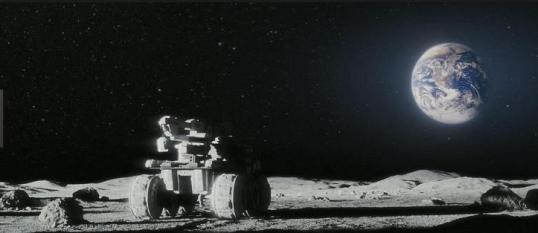
In Moon, Rockwell plays a man named Sam. Sam has spent three years living on the dark side of the moon. He works for shadowy Lunar Industries. His job is to mine the moon for helium-3, an alternative energy source that is now all the rage on Earth. It’s a lonely job for Sam. He gets up every day. He rides his lunar rover across the stage. He returns to the sterile facility, where he lives. Sometimes, if he’s lucky, he gets recorded messages from his wife and daughter. His only companion is a robot named GERTY. Though Sam trusts GERTY, we know better, if just because GERTY speaks with the voice of Kevin Spacey.
From the minute we meet Sam, we can see how living on the Moon has affected him. He’s quiet and a bit meek. After three years of isolation, Sam accepts whatever he has to accept to survive. He doesn’t complain about rarely getting to talk to his family. He doesn’t question why he has to work alone. Whatever fight Sam once had in him is gone. Now, Sam just wants to finish out his time and go home.
And then, one day, Sam is driving the lunar rover when he has a sudden hallucination and then passes out. He ends up crashing into a crater….
Suddenly, Sam wakes up at the facility. However, it doesn’t take long to notice that this Sam seems different from the Sam who we met at the start of the movie. The Sam who wakes up in the facility is younger and angrier than the Sam who we first met. This new Sam is less willing to accept everything that GERTY tells him. Even more strangely, this new Sam is convinced that he’s just arrived on the moon….
And then the new Sam meets the old Sam….
In Moon, Sam Rockwell gives two empathetic and memorable performances as the same person. Old Sam is beaten down by life. New Sam is angry and just a little bit arrogant. And yet, what makes the performance so brilliant is that you can easily see how the New Sam could eventually transform into the Old Sam. Thanks to both Rockwell’s performance and the film’s stark imagery, it’s easy to see how the isolation could eventually rob Sam of his passion, his will to fight, and his intellectual curiosity. When the Old Sam meets the New Sam, he’s reminded that there used to be more to his life than just the drudgery of his daily routine. And when the New Sam meets the Old Sam, he’s confronted with what a future of isolation means to him.
Of course, the new Sam and the Old Sam weren’t meant to meet. And now that they have met, Lunar Industries is on their way to clean up the mess….
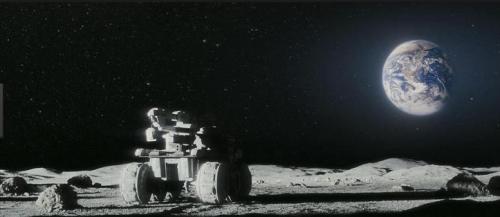
Released in the same year as James Cameron’s bombastic Avatar, Moon is a low-key and thoughtful science fiction film, a meditation on isolation and identity. Duncan Jones directs the film in a stark and low-key style, allowing the film’s story to play out at its own pace. As visualized by Jones, the lunar landscape is impressive the first time you see it and increasingly bleak with each subsequent look. Far more than Ridley Scott did in The Martian, Jones captures what it actually is to be totally alone. (That no critics compared The Martian and Moon, despite their obvious similarities, is astounding to me.)
Featuring Sam Rockwell at his absolute best, Moon is a sci-fi film that remains haunting and powerful, even after films with bigger budgets and flashier special effects have faded into obscurity.
4 Shots From 4 Films is just what it says it is, 4 shots from 4 of our favorite films. As opposed to the reviews and recaps that we usually post, 4 Shots From 4 Films lets the visuals do the talking.
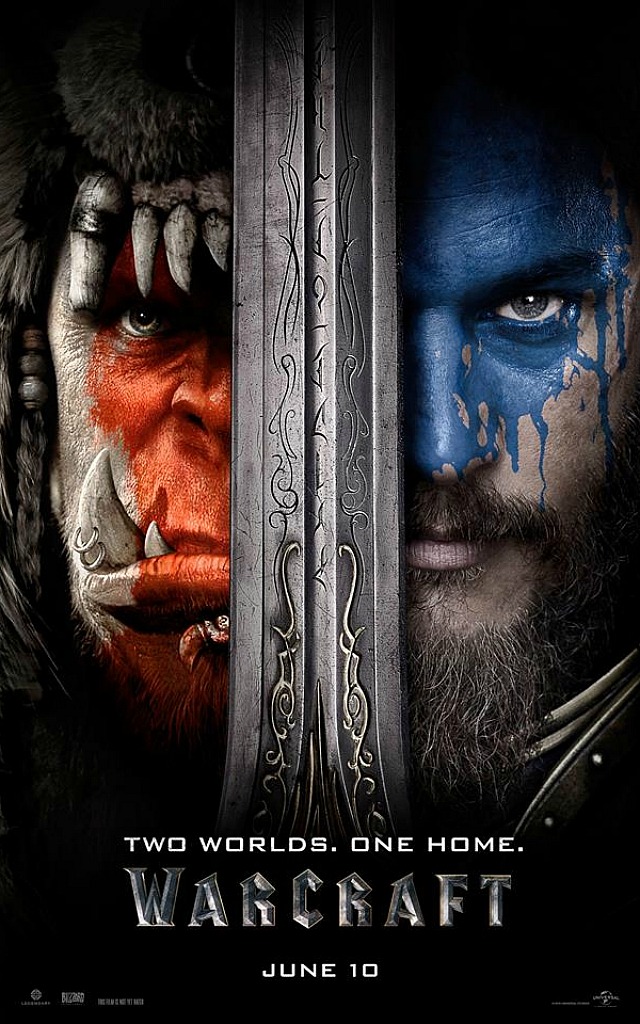
Last night, my cousin and I watched Warcraft, which is a film that has been called “the worst of 2016” by several critics.
Personally, I don’t think it’s the worst film of 2016. It didn’t make me physically ill, like Hardcore Henry did. My cousin — who, unlike me, has actually played all of the Warcraft games and therefore came into the film already knowing who and what everything was — says that he enjoyed it. On the basis of both Moon and The Source Code, I think Duncan Jones is a genius who will eventually emerge as one of the most important directors working right now. Dominic Cooper is in Warcraft and so is Ben Foster. They’re both fairly unrecognizable (thought not as unrecognizable as Clancy Brown!) but they’re also two excellent actors and I’m always happy to see them listed in the credits. Visually, the film was well-designed though it was impossible for me not to think about the Make Love, Not Warcraft episode of South Park.
But I have to say that no film has ever left as totally confused as Warcraft. I got that the film was about a war between Orcs and humans. And I appreciated the fact that the film attempted to give all of the Orcs their own individual personalities and culture. If I wanted to, I could probably spend a few 100 words talking about how the war in Warcraft can serve as a metaphor for every war currently being fought in the real world.
But seriously, I spent nearly the entire film trying to keep straight who was who. The cast was huge and the dialogue was full of people and creatures talking about magic and honor and history and tradition and sacrifice and why so-and-so had to do this to such-and-such because of something that happened to someone else centuries ago and it made my head hurt trying to keep up with it all. I eventually gave up. My cousin was enjoying the film and, in the end, that’s all that mattered.
Plus, there was a cute little orc baby! I liked him and his story reminded me of the story of Moses floating away in that basket.
Anyway, Warcraft was slaughtered by critics and, because it cost a ton of money to make, it didn’t make any money back. So, the film probably won’t get the sequel that the ending was obviously designed to set up. However, I get the feeling that, next year, Warcraft will be a popular film to live tweet whenever it shows up on SyFy.
It may have been the most incoherent film of 2016 but it wasn’t necessarily the worst.
Warcraftwas a game on the PC that I played for hours on end. It was the closest thing gamers had to a video game version of the Warhammer Fantasy property. the title had two popular sequels and gave birth to the biggest, most popular and most addictive MMORPG in history. I mean, World of Warcraft, led to couples getting divorces, players getting into real fights outside the game and even getting together in holy matrimony for reals.
So, Hollywood seeing a cash cow when it sees one had been trying to get a live-action film based on the Warcraft property for years. So many different directors had been attached to make it (from Uwe Boll right up to Sam Raimi) but in the end Duncan Jones got the job to bring Azeroth (and Draenor) to life on the big-screen.
With the film still months away, Universal and Legendary Pictures look to start the hype train going by releasing the first official trailer for Warcraft with much fanfare.
After two weeks of speculation, Catching Fire (the sequel to The Hunger Games) has a director and the winner is…
Francis Lawrence!
Francis Lawrence is known for directing music videos, Constantine, I Am Legend, and Water For Elephants.
I’ve never seen Constantine, I thought I am Legend was boring, and I enjoyed Water For Elephants but it’s hard not to feel that, after considering names like David Cronenberg, Alfonso Cuaron, Bennett Miller, and Duncan Jones, Lionsgate selected the most generic candidate in the mix.
I’m sure that there will be a lot of people complaining about the selection but, to be honest, it’s not like Gary Ross was all that inspiring a director before Hunger Games. In the end Catching Fire’s success is going to be more about Jennifer (as opposed to Francis) Lawrence.
Okay, I’ll admit it right now: I’m way too late in reviewing this film. Seriously, if you were planning on seeing The Source Code, then you’ve probably already seen it by this point. You already have your own opinion about the film. Why do you need hear mine? You’re probably saying, “Girl, move on.”
And to that I say: “I do what I want!”
Anyway…
The Source Code is a surprisingly smart and occasionally even moving little sci-fi thriller. Jake Gyllenhaal plays Colt Stevens, an army helicopter pilot who, as the film begins, awakens to find himself on a commuter train with no idea who he is or how he got there. The woman sitting across from him (played by Michelle Monaghan) seems to know he is. The confused Gyllenhaal wanders around the train trying to figure out who he is. He goes into the train’s restroom, looks in the mirror, and sees a stranger staring back at him. And then the entire train blows up.
Suddenly, Gyllenhaal wakes up again. He’s apparently trapped in a dark chamber with his only link to the outside world being a computer screen. An army officer (Vera Farminga) appears on the screen and explains to him that he was sent into the past in order to find out who bombed the train. And he will continually be sent back into the past to relive the few minutes before the bomb goes off. He’s told that the past cannot be changed, the people on the train cannot be saved, and his only mission is to discover who planted the bomb.
It’s a clever little plot (one that would do Philip K. Dick proud) that has a lot more twists and turns than is obvious from a simple recap. Along with a smart script, the film has a cast who bring a lot of conviction and nuance to their roles. Jake Gyllenhaal, in particular, redeems himself after his unfortunate work in Love and Other Drugs. However, the film’s real hero is director Duncan Jones who gives The Source Code both a heart and a brain. His work here confirms that talent that was evident in Moon and I’m looking forward to what he gives us next.