Horror Film Review: Thirteen Ghosts (dir. by Steve Beck)


“Did I say there’s a petting zoo downstairs? No! There are ghosts downstairs, Arthur!” — Dennis Rafkin

In Thirteen Ghosts, getting a spectacular house for free turns out to be considerably worse than struggling to afford one. That cruel little reversal gives Steve Beck’s 2001 horror film a promising starting point: a family’s apparent good fortune becomes another nightmare they have to survive. As a remake of William Castle’s 1960 film 13 Ghosts, though, it isn’t interested in preserving much of its predecessor’s low-budget charm. Beck trades playful spook-show entertainment for grotesque creatures and brutal violence. The result has an unmistakable identity, but its impressive visual imagination often outpaces its ability to tell a compelling story.

Tony Shalhoub plays Arthur Kriticos, a widowed father trying to provide some stability for his children. When his wealthy uncle Cyrus, played by F. Murray Abraham, leaves him an extraordinary house, it looks like the kind of opportunity he can’t afford to question. Arthur arrives with his family and their nanny, only to discover that their new home contains trapped spirits and some deeply suspicious machinery. Naturally, the house isn’t simply haunted. Its design has a purpose, and the people walking through it have become part of something they don’t understand.

There’s a nasty streak running through that setup, and the remake embraces it. Castle’s original has the scrappy appeal of an old carnival attraction, where the modest effects and ghost-viewing gimmick contribute to the fun. Beck’s version wants to hit harder. The ghosts look tortured, their attacks feel vicious, and the atmosphere offers little of the earlier film’s playful reassurance. That approach separates the remake from the original rather than leaving it feeling like a glossy imitation. Still, the difference is enormous. It keeps the basic inheritance premise while taking the experience about as far from Castle’s charmingly cheap thrills as possible.

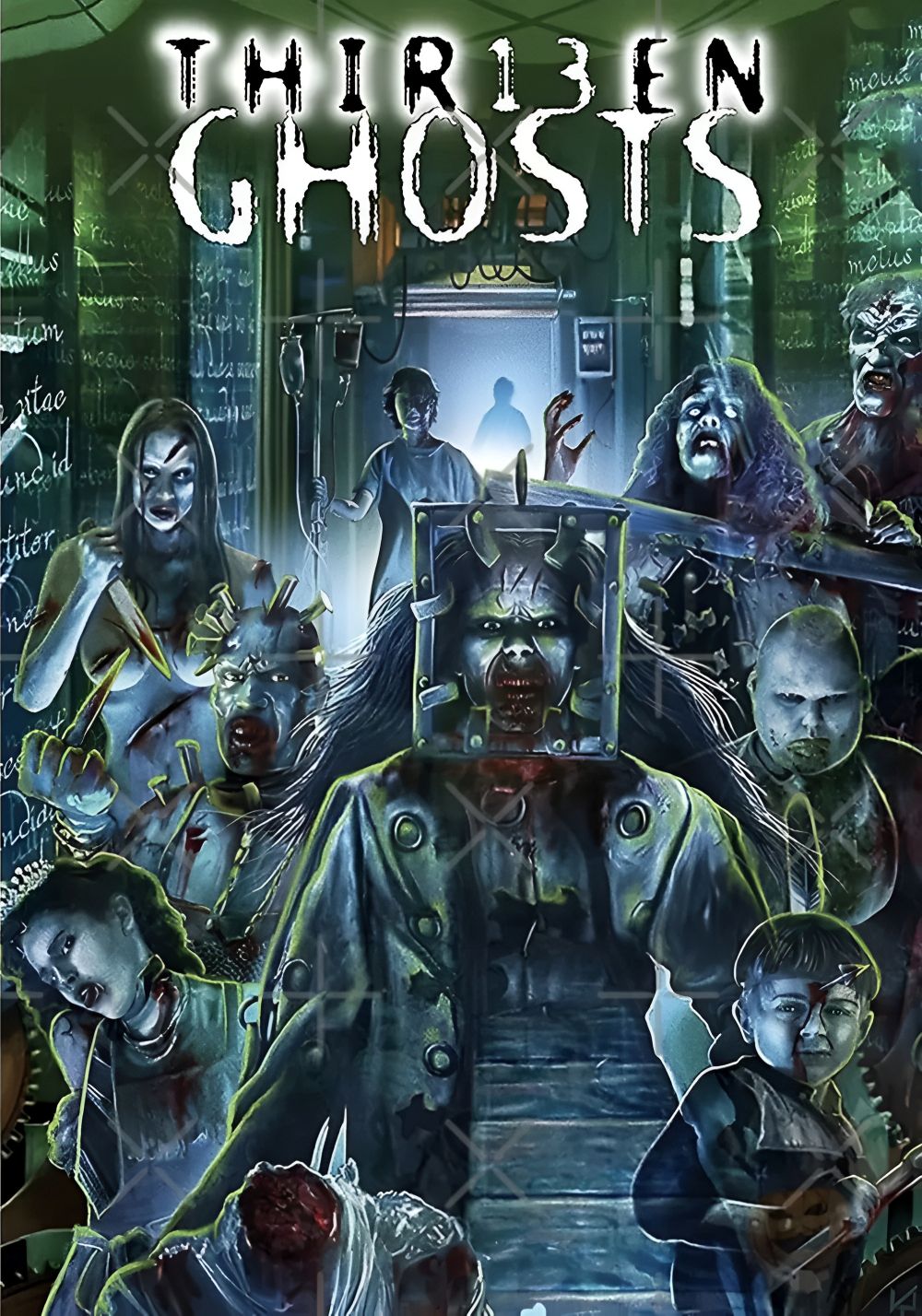
The strongest part of that transformation is the house itself. Its glass walls, strange inscriptions, and mechanical components make it feel more like an elaborate trap than somewhere anyone could live. The transparency is especially effective. Haunted-house movies usually make darkness and concealment threatening, but here the characters can look through walls without knowing what they’re seeing or how to reach safety. Everything appears exposed, yet very little feels understandable. Even during stretches when the plot becomes clumsy, the setting holds your attention. There’s almost always an unsettling detail somewhere in the frame.

The special glasses that reveal the ghosts make good use of that environment. Without them, a seemingly empty room can contain something capable of killing you. With them, the house becomes even less inviting. It’s a clever connection to the original’s viewing gimmick, repurposed to suit the remake’s harsher personality. The bathroom encounter with the Angry Princess is particularly effective because it builds danger around a character’s limited awareness. For a moment, the film doesn’t need complicated explanations or frantic action. The simple possibility of sharing a confined space with an unseen threat does the work.

The creatures are equally important to the movie’s appeal. Their makeup, clothing, and physical behavior suggest distinct personalities and horrible histories. They aren’t interchangeable figures waiting to jump into the camera. Several look interesting enough to support much longer sequences, which makes their treatment frustrating. The movie introduces these elaborate designs and then rushes toward the next confrontation. You want to understand what separates one spirit from another, but the screenplay too often treats them as obstacles in a supernatural obstacle course. The imagination behind their appearances is stronger than the storytelling that puts them to use.

That hurry extends to the scares. Beck frequently pushes the action with rapid editing, loud sound effects, and sudden bursts of violence. There’s some fun in that aggressive approach, especially if you enjoy horror that refuses to be restrained. But the constant pressure eventually flattens the suspense. When nearly every encounter arrives at full volume, there’s little room for dread to build. An ugly figure lingering behind glass can be more disturbing than another noisy attack. The movie creates plenty of striking images, then seems nervous about letting the audience sit with them.

The actors help keep the chaos watchable. Shalhoub gives Arthur a weary sincerity that makes his concern for his children believable. Matthew Lillard brings an anxious, twitchy energy that fits the increasingly frantic situation, while Shannon Elizabeth and Rah Digga add life to the ensemble. Unfortunately, the family’s emotional circumstances get less attention than the machinery surrounding them. Arthur’s desire to turn an inheritance into security should make the house’s betrayal sting. Instead, the film keeps interrupting that thread to explain another supernatural complication or send everyone running. The characters remain likable enough, but they rarely become as interesting as their surroundings.

By the time the house has revealed its true colors, Thirteen Ghosts has made a better case for its production design than its storytelling. There’s real pleasure in its elaborate nastiness, and Beck deserves credit for giving the remake a personality separate from Castle’s original. This isn’t the same haunted-house ride with a fresh coat of paint; it’s a colder, bloodier attraction built on the old foundation. Whether that trade works depends on how much creature design and frantic violence you need to stay entertained. For me, there’s enough to enjoy, but not enough to stop wishing the movie would slow down and let its best ideas haunt us.
Review: Dante’s Peak (dir. by Roger Donaldson)


“Not extinct, just dormant… as in sleeping. And your volcano might just be waking up.” — Harry Dalton

Dante’s Peak takes a simple but reliable disaster-movie setup—a quiet town sitting beneath a volcano that is very much not as dormant as everyone hopes—and turns it into a tense, highly watchable piece of 1990s spectacle. Directed by Roger Donaldson, the 1997 film is hardly subtle, and its character work can be pretty thin, but it remains an unusually watchable entry in the genre because it takes its central threat seriously. The movie spends enough time establishing the town and its people that, once the mountain finally blows, the destruction has some weight behind it. It is a familiar formula, but Dante’s Peak executes it with enough sincerity and old-school craftsmanship to stay entertaining.

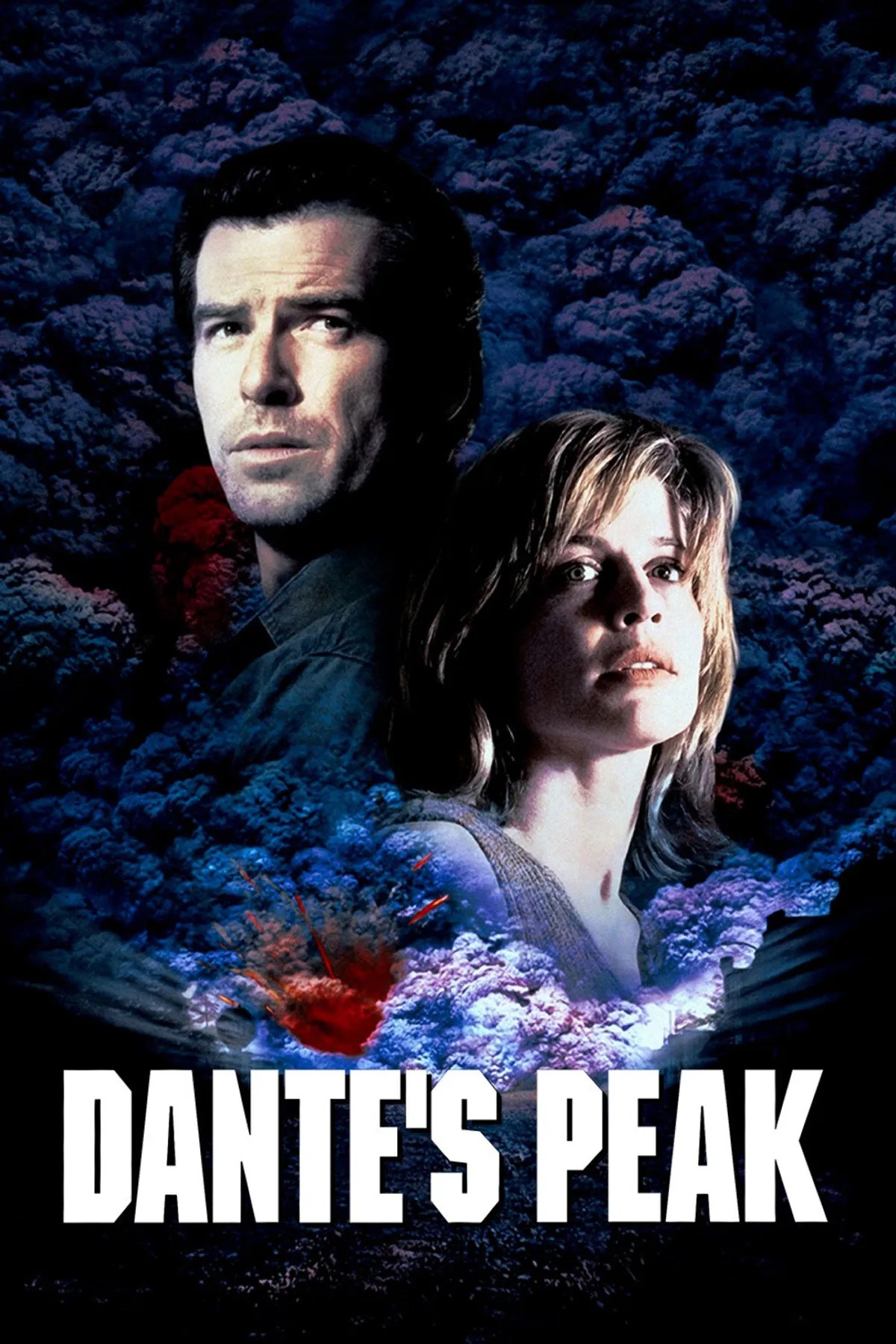
Pierce Brosnan stars as Harry Dalton, a volcanologist for the U.S. Geological Survey who is still carrying the emotional scars of a prior eruption that killed his fiancée. Harry is sent to the picturesque Pacific Northwest town of Dante’s Peak after unusual seismic and chemical activity suggests that its supposedly dormant volcano may be waking up. His assignment initially sounds routine: inspect the mountain, collect some samples, talk to local officials, and determine whether there is any reason for concern. Naturally, there is. The water supply starts showing signs of dangerous acidity, tremors grow more frequent, steam vents become harder to ignore, and the mountain begins sending increasingly blunt warnings that it is ready to erupt.

The central tension is not whether the volcano will blow. The title alone pretty much gives that away. Instead, the first half works because of the fight over how seriously the warning signs should be taken. Dante’s Peak has just received national attention as one of the best small towns in America, and Mayor Rachel Wando, played by Linda Hamilton, is understandably hesitant to cause mass panic and wreck the town’s economy over an uncertain prediction. Harry believes the danger is real, but he also knows from painful experience that hesitation can get people killed. That conflict gives the movie a decent human foundation before the large-scale effects take over.

Brosnan is a good fit for Harry Dalton. This was the same period when he was newly established as James Bond, and Dante’s Peak makes smart use of his natural screen presence without turning Harry into an outright action hero. He is calm, capable, handsome, and articulate, but he is also clearly rattled by the possibility of repeating a tragedy he could not prevent. The role is not especially demanding on paper, yet Brosnan gives Harry enough fatigue and frustration that he comes across as a real professional rather than just a disaster-movie scientist whose only job is to shout warnings at dismissive bureaucrats.

Hamilton is arguably even more important to the movie’s success. Rachel could have been written as a generic authority figure who slows down the plot by refusing to believe the expert, but Hamilton makes her more sympathetic than that. She is not ignoring Harry because she is foolish or selfish. She has a town to protect, businesses that depend on tourism, residents who do not want to abandon their homes, and two children who become central to the film’s increasingly dangerous rescue mission. Hamilton had already cemented her action credentials in Terminator 2: Judgment Day, but here she plays a more grounded version of strength. Rachel is practical, stubborn, and brave without ever feeling like she has wandered in from another franchise with a shotgun and a leather jacket.

The supporting cast is more uneven. Charles Hallahan gets the familiar disaster-movie role of Paul Dreyfus, the superior whose skepticism creates a frustrating delay in the evacuation. Elizabeth Hoffman is memorable as Rachel’s grandmother, Ruth, even though the movie leans hard into the “stubborn elderly relative refuses to leave” setup. Rachel’s children, Lauren and Graham, mostly function as a way to push the adults back into danger after the eruption begins, and their choices can be maddening. Still, the cast sells the stakes well enough that the film avoids feeling completely mechanical.

Where Dante’s Peak really delivers is in its escalation. The first clear sign that things have gone wrong is genuinely creepy: the town’s supposedly pristine water supply turns corrosive. That detail is one of the movie’s best touches because it makes the volcano feel dangerous before it becomes visually spectacular. Then the film starts layering hazards on top of each other. There are earthquakes, falling volcanic debris, ash clouds, mudslides, a collapsing bridge, boiling water, and eventually a full eruption. It is an impressively varied disaster package. Rather than relying on one big explosion and calling it a day, the movie treats the volcano as a chain reaction that attacks the town from every direction.

The standout sequence is the drive across the lake after volcanic material has made the water acidic. It is ridiculous in the specific, memorable way that disaster cinema often is: a family in a damaged vehicle tries to outrun a lake that is essentially eating the vehicle out from under them. The science of the scene has been criticized plenty over the years, and fairly so, but it works as suspense filmmaking. Donaldson understands how to stage the moment visually, showing the immediate effects on the vehicle while keeping the characters trapped in a situation that gets worse by the second. It is the kind of scene people remember long after forgetting much of the dialogue.

Visually, the movie has aged better than some of its late-1990s peers because it balances computer-generated imagery with practical destruction, physical sets, and real locations. The effects do not always look flawless now, especially in wider shots of the erupting mountain, but the overall physicality helps. Buildings shake, roads split open, ash hangs in the air, and characters actually look buried in the mess rather than pasted in front of it. The town itself is also nicely chosen. Dante’s Peak looks like the sort of clean, friendly, postcard-perfect place that a disaster movie needs to destroy. The contrast between its calm opening scenes and its ash-covered final act is one of the film’s strongest visual ideas.

Roger Donaldson directs efficiently, even if he never quite gives the film a distinctive personality. He keeps the geography clear during most of the action, which matters a lot in a movie built around people trying to flee shifting dangers. You usually understand where Harry and Rachel are, what obstacle is in front of them, and why they cannot simply drive away. The pacing is a little slow in the middle, particularly when the scientific warnings begin repeating themselves, but that patience pays off once the final act kicks in. The movie takes a while to get to the eruption, then makes sure the eruption earns its screen time.

The screenplay by Leslie Bohem is where Dante’s Peak shows its limitations. The dialogue is often blunt, the romance between Harry and Rachel is predictable, and several characters exist mainly to make unwise decisions at the exact moment the plot needs more danger. The film also has a habit of making Harry right about nearly everything, which can flatten the debate around whether to evacuate. Still, there is something likable about how earnestly it embraces its own premise. It never winks at the audience or tries to become ironic. It wants viewers to care about the town, fear the mountain, and cheer when people narrowly escape certain death.

That sincerity is probably why Dante’s Peak has endured better than its mixed critical reputation might suggest. It is not a great disaster movie in the way that The Poseidon Adventure or The Towering Inferno can be called great, and it does not have the full-throttle spectacle of Twister. But it is dependable comfort-viewing for anyone who enjoys this particular brand of high-stakes Hollywood nonsense. The movie’s science is questionable in spots, its family drama can get corny, and its plot follows the disaster handbook almost page for page. Yet Brosnan and Hamilton give it enough credibility, Donaldson keeps it moving, and the volcanic destruction is still satisfying.

In the end, Dante’s Peak is a solid, unpretentious disaster thriller that understands the appeal of watching ordinary people try to outrun an extraordinary catastrophe. It may not reinvent the genre, but it delivers the basics with conviction: a looming natural threat, decent leads, escalating tension, and a finale full of lava, ash, and desperate escapes. Sometimes that is more than enough.