Rogue One Wakes Up the Internet with Its First Trailer


Rogue One

The world has been dying to see the first teaser trailer for the next Star Wars. The most recent one came out at the end of last year and already people wondering why this next one hasn’t already come out.

Well, it will come out this December when the public is flush with money to spend on the holidays (though we all know it’s probably to buy Rogue One: A Star Wars Story tickets as holiday gifts for themselves).

This teaser trailer shows us stuff that happened between Episode 3 and Episode 4. It also focuses on a new hero character which has raised the ire of the most vocal minority (very tiny) of the Star Wars fandom. We’re introduced to Jyn Erso played by English-actress Felicity Jones who we learn is not just a criminal of sorts, but one ready with a smartass quip.

Star Wars has another woman in the lead role! First it was Rey in Star Wars: The Force Awakens. Then just the last couple weeks, one of the few redeeming things about Batman v. Superman was the appearance of Wonder Woman. We can’t forget how last year’s Mad Max: Fury Road was being called Mad Max Furiosa Road.

The MRA mouthbreaters and Mary Sue labelers have had it up to their neckbeards of having their beloved franchises being invaded by the opposite sex. They’re already calling for boycotts and petitions to get Rogue One from being released as is. They want their fictional heroes to return to the good ol’ days of privileged, white men who rescued and kissed damsels (even if they to be their sister) in distress.

Their shouts and cries of impotent rage has been drowned out by the massive majority of even more vocal supporters of another female heroine in a fictional universe which dares to posit that dangerous question: can women be heroes? It looks like after Rey and now, with this upcoming film’s Jyn Erso the answer may be a collective and very loud “Yes, Yes, Yes.”

Rogue One: A Star Wars Story is set for a December 16, 2016 release date or be on hold indefinitely if the MRA neckbeard mouthbreaters get their court injuction to delay its release.

Playing Catch-Up With 6 Quickie Reviews: The Big Game, The Connection, Graduation Day, McFarland USA, Taken 3, and War Room


Here are 6 more reviews of 6 other films that I watched this year.  Why six?  Because Lisa doesn’t do odd numbers, that’s why.

The Big Game (dir by Jalmari Helander)

In The Big Game, Samuel L. Jackson plays the President of the United States and you would think that fact alone would make this film an instant classic.  Unfortunately, this film never really takes advantage of the inherent coolness of Samuel L. Jackson playing the leader of the free world.  When Air Force One is sabotaged and crashes in the wilderness of Finland, President Jackson has to rely on a young hunter (Onni Tommila) from a group of CIA agents disguised as terrorists.  Tommila does a pretty good job and the scenery looks great but at no point does Samuel L. Jackson says, “Check out this executive action, motherfucker,” and that’s a huge missed opportunity.  As for the rest of the film, it takes itself a bit too seriously and if you can’t figure out the big twist from the minute the movie starts, you obviously haven’t seen enough movies.

The Connection (dir by Cedric Jiminez)

Taking place over the 1970s, the French crime thriller tells the largely true story of the efforts of a French judge (played by Jean Dujardin) to take down a ruthless gangster (Gilles Lellouche) who is the head of one of the biggest drug cartels in the world.  The Connection run for a bit too long but, ultimately, it’s a stylish thriller that does a very good job of creating a world where literally no one can be trusted.  Dujardin, best known here in the States for his Oscar-winning role in The Artist, does a great job playing an honest man who is nearly driven to the point of insanity by the corruption all around him.

Graduation Day (dir by Chris Stokes)

Hey, it’s another found footage horror film!  Bleh!  Now, I should admit that this horror film — which is NOT a remake of that classic 1980s slasher — does have a fairly clever twist towards the end, that goes a long way towards explaining a lot of the inconsistencies that, up until that point, had pretty much dominated the film.  But, even with that in mind and admitting that Unfriended and Devil’s Due worked wonders with the concept, it’s still hard to feel any enthusiasm about yet another found footage horror film.

McFarland USA (dir by Niki Caro)

McFarland USA is an extremely predictable but likable movie.  Kevin Costner plays a former football coach who, while teaching at a mostly Latino high school, organizes a cross country team that goes on to win the state championship.  It’s based on a true story and, at the end of the film, all of the real people appear alongside the actors who played them.  There’s nothing about this film that will surprise you but it’s still fairly well-done.  Even Kevin Costner, who usually gets on my last nerve, gives a good performance.

Taken 3 (dir by Olivier Megaton)

Bryan Mills (Liam Neeson) is back and he’s killing even more people!  Fortunately, they’re all bad people but you really do have to wonder what type of dreams Bryan has whenever he goes to sleep.  In Taken 3, Bryan’s wife (Famke Janssen) has been murdered and Bryan has been framed.  He has to solve the case and kill the bad guys while staying one step ahead of the police (represented by a bored-looking Forest Whitaker).  Neeson does all of his usual Taken stuff — the intense phone conversation, the steely glare, and all the rest — but at this point, it has literally been parodied to death.  If you’re into watching Liam Neeson kill ugly people, Taken 3 will provide you with adequate entertainment but, for the most part, it’s but a shadow of the first Taken.

War Room (dir by Alex Kendrick)

I saw the War Room in Oklahoma.  It was being shown as part of a double feature with The Martian, of all things!  Anyway, this film is about an upper middle class family that hits rock bottom but they’re saved by the power of prayer!  Lots and lots of prayer!  Seriously, this film almost qualifies as “prayer porn.”  Anyway, the film was badly acted, badly written, incredibly heavy-handed, and ran on way too long but, on the plus side, it did eventually end.

Here Are The NAACP Imagine Award Nominations!


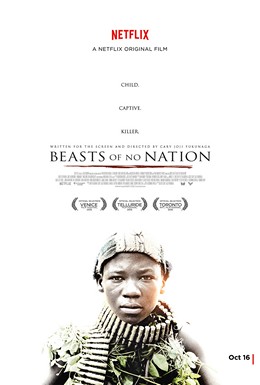
Beasts_of_No_Nation_poster

Awards season continues!  The 2015 NAACP Image Award nominations were announced earlier today and here they are!

Outstanding Motion Picture

“Beasts of No Nation” (Netflix)
• “Concussion” (Sony Pictures Entertainment)
“Creed” (Warner Bros. Pictures/Metro-Goldwyn-Mayer Pictures)
• “Dope” (Open Road Films)
“Straight Outta Compton” (Universal Pictures)

Outstanding Actor in a Motion Picture

* Abraham Attah – “Beasts of No Nation” (Netflix)
* Chiwetel Ejiofor – “Secret in Their Eyes” (STX Entertainment)
* Michael B. Jordan – “Creed” (Warner Bros. Pictures/Metro-Goldwyn-Mayer Pictures)
* Michael Ealy – “The Perfect Guy” (Screen Gems)
* Will Smith – “Concussion” (Sony Pictures Entertainment)

Outstanding Actress in a Motion Picture

• Lauren ‘Keke’ Palmer – “Brotherly Love” (Flavor Unit)
• Sanaa Lathan – “The Perfect Guy” (Screen Gems)
• Teyonah Parris – “Chi-Raq” (Amazon Studios and Roadside Attractions)
• Viola Davis – “Lila and Eve” (Samuel Goldwyn Films)
• Zoe Saldana – “Infinitely Polar Bear” (Sony Pictures Classics)

Outstanding Supporting Actor in a Motion Picture

• Chiwetel Ejiofor – “The Martian” (20th Century Fox)
• Corey Hawkins – “Straight Outta Compton” (Universal Pictures)
• Forest Whitaker – “Southpaw” (The Weinstein Company)
• Idris Elba – “Beasts of No Nation” (Netflix)
• O’Shea Jackson, Jr. – “Straight Outta Compton” (Universal Pictures)

Outstanding Supporting Actress in a Motion Picture

* Angela Bassett – “Chi-Raq” (Amazon Studios and Roadside Attractions)
* Gugu Mbatha-Raw – “Concussion” (Sony Pictures Entertainment)
* Jennifer Hudson – “Chi-Raq” (Amazon Studios and Roadside Attractions)
* Phylicia Rashad – “Creed” (Warner Bros. Pictures/Metro-Goldwyn-Mayer Pictures)
* Tessa Thompson – “Creed” (Warner Bros. Pictures/Metro-Goldwyn-Mayer Pictures)

Outstanding Independent Motion Picture

• “Beasts of No Nation” (Netflix)
• “Brotherly Love” (Flavor Unit)
• “Chi-Raq” (Amazon Studios and Roadside Attractions)
• “Infinitely Polar Bear” (Sony Pictures Classics)
• “Secret in Their Eyes” (STX Entertainment)

Outstanding Documentary – (Film)

* “Amy” (A24)
* “Dreamcatcher” (Rise Films, Green Acres Films & Vixen Films in association with Impact Partners and Artemis Rising Foundation)
* “In My Fathers House” (Break Thru Films)
* “The Black Panthers: Vanguard of the Revolution” (PBS Distribution/Firelight Films)
* “What Happened, Miss Simone?” (A Radical Media Production in Association with Moxie Firecracker for Netflix)

Outstanding Writing in a Motion Picture (Film)

* Andrea Berloff, Jonathan Herman – “Straight Outta Compton” (Universal Pictures)
* Christopher Cleveland & Bettina Gilois, Grant Thompson – “McFarland USA” (Walt Disney Pictures)
* Pete Docter, Meg LeFauve, Josh Cooley – “Inside Out” (Disney/Pixar)
* Rick Famuyiwa – “Dope” (Open Road Films)
* Ryan Coogler, Aaron Covington – “Creed” (Warner Bros. Pictures/Metro-Goldwyn- Mayer Pictures)

Outstanding Directing in a Motion Picture – (Film)

• Alfonso Gomez-Rejon – “Me and Earl and the Dying Girl” (Fox Searchlight Pictures / Rhode Island Ave)
• Charles Stone, III – “Lila and Eve” (Samuel Goldwyn Films)
• F. Gary Gray – “Straight Outta Compton” (Universal Pictures)
• Rick Famuyiwa – “Dope” (Open Road Films)
• Ryan Coogler – “Creed” (Warner Bros. Pictures/Metro-Goldwyn-Mayer Pictures)

Film Review: Southpaw (dir by Antoine Fuqua)


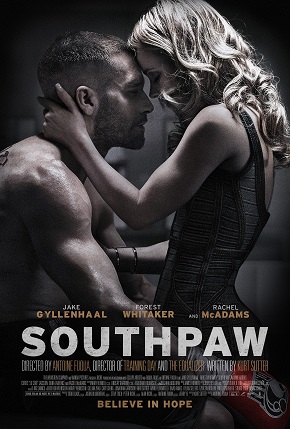
Southpaw_poster

Southpaw features Jake Gyllenhaal as a boxer who loses his wife, his daughter, his career, his self-respect, his car, his house, his manager, his friends, and nearly his life.  But then, about 70 minutes into the film, he gets a chance to get it all back.  Well, almost all of it.  His wife is dead so he can’t get her back but there are hints that he might get together with a helpful social worker after the end credits role.

There was really only one reason why I was interested in seeing Southpaw and that’s because it starred Jake Gyllenhaal.  Last year, Gyllenhaal gave the performance of his career in Nighcrawler.  Gyllenhaal was so brilliant that you just knew the Academy was going to prove itself clueless by not nominating him.  And that’s exactly what happened.  Gyllenhaal was snubbed and, as a result, the Academy now owes him a nomination.  When the trailer for Southpaw first appeared and we saw Gyllenhaal as muscular and bloody, a lot of us assumed that Southpaw would be the film that would get him that nomination.

And Jake Gyllenhaal does do a pretty good job in Southpaw.  He’s one of the main reasons for seeing the film.  It’s interesting to compare Gyllenhaal’s hyperactive performance and sickly appearance in Nightcrawler with his work as boxer Billy Hope in Southpaw.  Billy is a professional brawler and you believe it when you look at him.  Not only is he huge and muscular but he’s got a face that has obviously been punched more than a few times.  When he speaks, he isn’t the hyper articulate con man of Nightcrawler and Love and Other Drugs.  Instead, he stares at the ground as he mumbles and struggles to put together the simplest of thoughts.  It’s a good performance but, at the same time, it lacks the element of surprise that Gyllenhaal has brought to his best roles in the past.  You watched both Donnie Darko and Nightcrawler and you knew that only Gyllenhaal could have brought those roles to life.  Billy Hope, however, is a far less interesting character and you could imagine any number of actors playing the role.  (Reportedly, Southpaw was actually written with Eminem in mind and you really can see him playing the role.)

And really, the entire film is a lot like Billy Hope.  It does its job but there’s nothing all that interesting about it.  Southpaw‘s biggest surprise comes about 20 minutes into the film when Billy’s loving wife, Maureen (Rachel McAdams), is shot and killed and you already knew that was going to happen from the film’s trailer.  After Maureen’s death, Billy starts using alcohol and drugs and, as a result, he loses custody of his daughter, Leila (12 year-old Oona Laurence, giving a great performance).  Because this is a sports film, Billy has to hit rock bottom before, with the help of a grizzled and haunted trainer (Forest Whitaker), he can get a chance to win back both the championship and his daughter.  Director Antoine Fuqua obviously know how to tell these type of testosterone-drenched stories but there’s not a single moment in Southpaw that you won’t see coming from miles away.

And don’t get me wrong.  Unlike some other films that I was less than overwhelmed by, I can actually understand why some people in the theater applauded at the end of Southpaw.  It’s an effective film, even if it does run on for a little bit too long.  It tells a heartfelt story.  It’s a crowd pleaser and I’m sure that a lot of people will enjoy it.  But, for me, it was just too predictable.  I like it when movies catch me off guard and that’s something that Southpaw never came close to doing.

A quick sidenote: Southpaw features the final score composed by the late James Horner and the film is dedicated to his memory.  If you see the movie, be sure to stick around for the dedication so that you can put your hands together for a cinematic and musical legend.

Embracing the Melodrama Part II #104: Phone Booth (dir by Joel Schumacher)


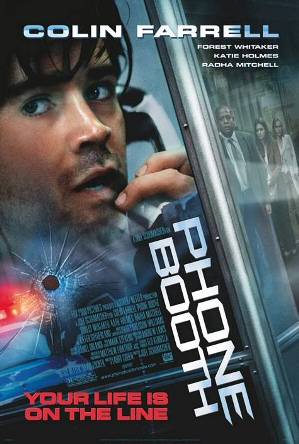
Phone_Booth_movie (1)

First released in 2003, Phone Booth is a good film.

Now, I know that you’re probably thinking, “Okay, that’s good, Lisa.  There were a lot of good films released in 2003.  I can’t think of any off the top of my head but let me go look on Wikipedia and I’m sure I can come back with a few dozen good films and…”

Well, before you go over to Wikipedia and do a search on 2003 in film (and I even included a direct link to make it easy for you because I like to be helpful), allow me to point something else out about Phone Booth.

Phone Booth is not only a good film but it’s a good film that was directed by Joel Schumacher!

That’s right!  There are several online film critics who will tell you that Joel Schumacher is one of the worst directors of all time and, to be honest, there’s actually a pretty good argument that can be made in support of that.  However, Schumacher did direct both The Lost Boys and Phone Booth.  So, he’s directed at least two good films and that’s two more than Uwe Boll.

In Phone Booth, Colin Farrell plays Stu, a slick publicist who has both a wife named Kelly (Radha Mitchell) and a girlfriend named Pam (Katie Holmes).  When Stu steps into the last remaining phone booth in New York City in order to call his girlfriend, he’s shocked when a pizza deliveryman shows up and attempts to give him a pizza.  No sooner has he gotten rid of the pizzaman (and, seriously, who turns down free pizza?), the phone rings.  Stu answers and is told by an unseen sniper (voice by Kiefer Sutherland) that, if he leaves the phone booth, he will be shot.  The sniper goes on to order Stu to tell the truth to both Kelly and Pam or to risk being shot as a consequence.

While all of this is going on, a group of prostitutes demand that Stu get out of the booth and let them use the phone.  When Stu refuses, their pimp approaches the booth and is promptly gunned down by the sniper.  Soon, under the assumption that Stu has a weapon, the police — led by Forest Whitaker — have surrounded the booth and are demanding that Stu step out.  The sniper, however, reminds Stu that he’ll be shot if he leaves the booth.

As a crowd of onlookers (including Pam and Kelly), police, and reporters surround the booth, Stu finds himself literally with no escape…

Telling the story in real time and keeping the film largely focused on Stu’s increasing desperation, Schumacher actually does a pretty good job with Phone Booth.  Colin Farrell gives a great performance, making Stu into a character who you like despite yourself.  While Kiefer Sutherland never appears onscreen, his sexy growl of a voice works wonders and he even manages to sell the point where his character starts to maniacally laugh.  Reportedly, screenwriter Larry Cohen came up with the idea for Phone Booth way back in the 1960s.  It took nearly 40 years for the film to be made but Schumacher, Farrell, and Sutherland made it more than worth the wait.

Trailer: Taken 3 (Official)


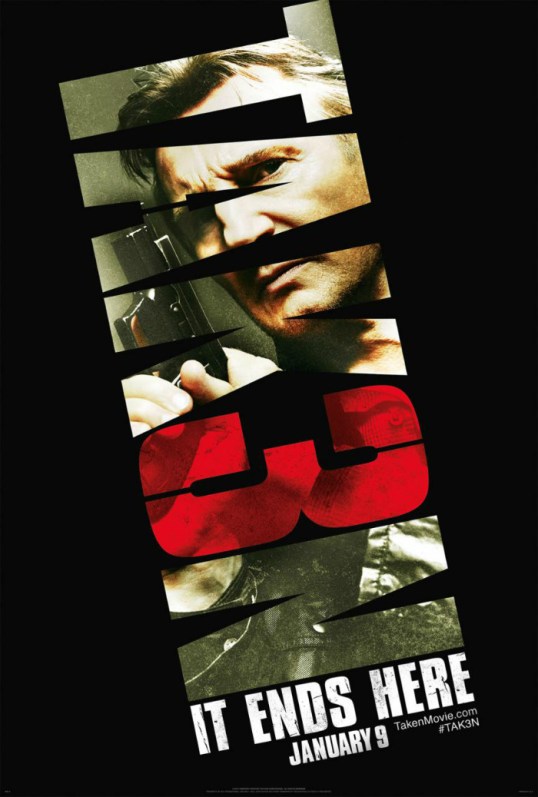
taken-3-poster

Why are bad guys still messing with Liam Neeson…I mean Bryan Mills. He literally took on an Albanian gang in Paris (of all places) who were kidnapping young, female tourists to sell to Parisian sex-slave auctioneer who only did business with a very exclusive clientele. Then the hometown relatives of said Albanian gangsters tried to take him out. That didn’t work out so well.

Now, this coming January just when Bryan thought his life as a retired government worker with a unique set of skills can finally enjoy retirement with his lovely daughter and rekindle his relationship with his ex-wife people are out to be quite the killjoy once again.

Taken 3 will see Liam Neeson back as Bryan Mills, Maggie Grace as his daughter Kimmy and joined by Forest Whitaker as an LAPD inspector tasked with taking him down for a murder he didn’t commit. Once again this sequel will be helmed by that French director with the awesome name: Olivier Megaton.

Some people say Taken 3 (will not call it Tak3n) is just a rehash of The Fugitive, but I disagree. Richard Kimble never broke people’s throats and shot many people in their heads to find those responsible. The throat breaking alone puts Bryan Mills heads above Richard Kimble.

Taken 3 is set for January 9, 2015 release date.

Back to School #27: Fast Times At Ridgemont High (dir by Amy Heckerling)


Mike Damone

Mike Damone

Mike Damone, you little prick.

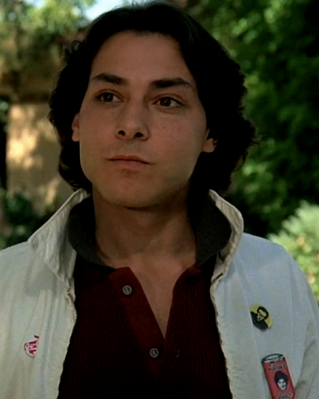
I’ve watched the 1982 high school dramedy Fast Times At Ridgemont High a handful of times.  I’ve reached the point where, every time I watch it, I know exactly what’s going to happen.  I know when stoner Jeff Spicoli (Sean Penn) is going to order pizza.  I know that Charles Jefferson (Forest Whitaker) is going to go crazy during the big game against Lincoln High.  I know that when Stacy (Jennifer Jason Leigh) kisses the sweet but shy Mark Ratner (Brian Backer), he’s going to end up panicking and scrambling for an excuse to go home.  I know that Brad (Judge Reinhold) is going to get caught masturbating.  I even know when Anthony Edwards, Nicolas Cage, and Eric Stoltz are all going to appear in early performances.
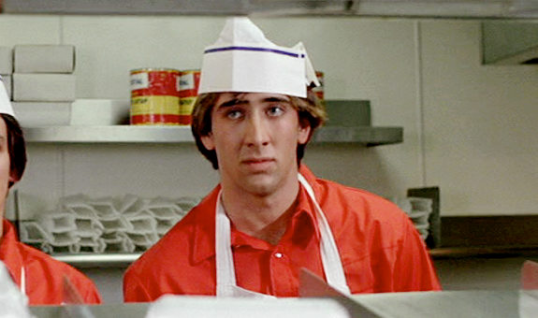
Nicolas Cage, 30 years before he would agree to star in a remake of Left Behind.

Nicolas Cage, 30 years before he would agree to star in a remake of Left Behind.

In other words, I know exactly what’s going to happen.

But, Mike Damone (played, very well, by Robert Romanus, who is only an actor and shouldn’t be held responsible for the actions of a fictional character) — every time, I find myself hoping you’ll do the right thing and every time, you let me down.

Oh sure.  I know that you tried to raise the money to help pay for Stacy’s abortion.  I saw the scene of you on the phone in your bedroom, begging people to finally pay for the tickets that you’d sold them.  I know that you tried but when you couldn’t get the money, where were you?  When Stacy had to ask her older brother, Brad, for a ride to the clinic, where were you?  After Stacy left the clinic, she found Brad waiting for her.  Brad agreed not to ask Stacy who had gotten her pregnant.  He agreed not to tell their parents.  Brad was there for his sister.  Where were you, Mike Damone?

What really upsets me is that, up until you abandoned Stacy, you were one of the more likable characters in Fast Times At Ridgemont High.  I mean, sure — you didn’t get to deliver any classic lines like Spicoli did.  And you weren’t adorably shy like Mark.  But, Mike Damone — I believed in you!  We all believed in you!  (Imagine me doing my best Tyra Banks imitation here.)  You were a cocky guy who spent all of your time selling concert tickets at the mall but you know what?  We all assumed that, underneath all of the attitude, there secretly lurked a good guy.  I mean, we could tell that you sincerely cared about your friend Mark and, because we’re all fools apparently, we even thought that maybe Stacy could bring out the real you.  When Stacy sat there writing “Mrs. Stacy Damone” on her test paper in history class, we understood.  Because, after all, we’ve all had a Mike Damone in our life.
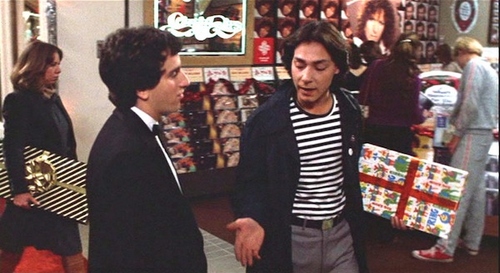
Rat and Mike

Rat and Mike

But then, what happened?  Well, first, you had sex with Stacy despite the fact that you knew Mark liked her.  Of course, for all your bluster and talk, it turned out that sex with Mike Damone amounted to 2 minutes of squirming followed by that classic line, “I think I came.”  And then you left, saying those words that every girl dreams of hearing from someone she’s just been with: “I’ll see you around.”  (Or maybe you said, “I’ll give you a call,” or “I’ve got to go now.”  Either way, it was a pretty shitty thing to say, Damone.)
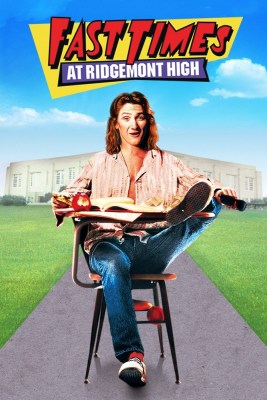
fast-times-at-ridgemont-high.19729

As you may have guessed, Fast Times At Ridgemont High is not your typical teen comedy.  In fact, over three decades since it was first released, it remains one of the best and most perceptive films about teenagers ever made.  Over on the A.V. Club, Keith Phipps refers to Fast Times as being “a Trojan horse of a teen comedy that balanced lowbrow gags with subtle humor, genuine insight .. and pathos,” and that’s such a perfect description that I’m not at all ashamed to repeat it word-for-word here.

Don’t get me wrong.  Though Fast Times At Ridgemont High has a lot more drama than you would expect from a film with the words “Fast Times” in the title, it’s also an undeniably funny film.  It’s just that, unlike so many other teen comedies, the comedy comes from a very real place.  This is one of those rare films where the characters are funnier than the situations that they find themselves in.  You laugh because you relate to the characters.  (Admitedly, you might also laugh at what some of them are wearing.  Mike Damone’s keyboard print scarf comes to mind…)
Hey I Know That Guy

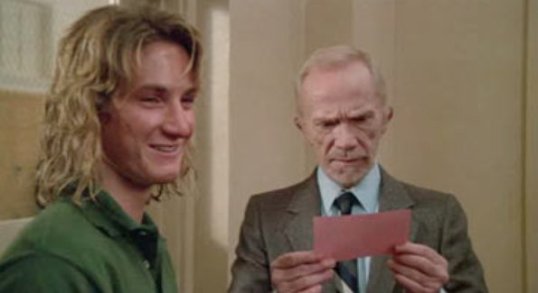
Spicoli and Hand

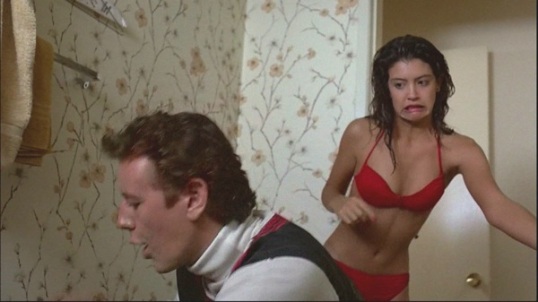
Like many classic teen films — American Graffiti, Fame and Dazed and Confused, to cite just three obvious examples — Fast Times At Ridgemont High is an ensemble piece that follows several different students as they survive a year at Ridgemont High.  Sean Penn’s Jeff Spicoli is the character that everyone always mentions as a favorite and indeed, he does get the best lines and his battles with Mr. Hand (Ray Waltson) are definitely a highlight of the film.  People also always mention Linda (Pheobe Cates), who has a boyfriend in college and who walks in on Brad while he’s fantasizing about her.  And yes, Linda is a memorable character and not just because she bares her breasts during Brad’s fantasy.  She’s also Stacy’s best friend and I think we’ve all had a friend like Linda, someone who we looked up to and assumed had all the answers.  For that matter, Brad is also an interesting character and there’s something undeniably fascinating about watching as he goes from being a carefree, popular teen to being a guy working behind the counter at 7-11.

(If only Brad had not gotten Arnold that job at All-American Burger…)
Agck!

Agck!

However, for me, the film will always be about Stacy, if just because she’s the character to which I relate.  I know when I was 15, I felt a lot like Stacy and, every time I watch Fast Times, I feel like some of Stacy’s experiences could have been taken straight out of my diary.  I had the same combination of confidence and insecurity and the same questions about why boys could talk like men but never act like them.  Stacy, of course, is played by Jennifer Jason Leigh who gives a remarkably brave and vulnerable performance in this film.  Off the top of my head, I can’t tell you who won the Oscar for best supporting actress of 1982 but it doesn’t matter.  Jennifer Jason Leigh should have won it.
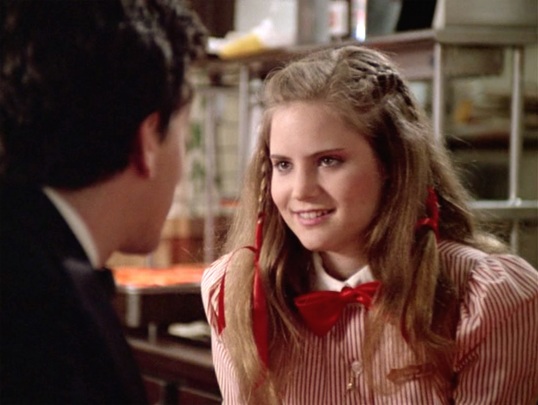
Jennifer Jason Leigh in Fast Times At Ridgemont High

Jennifer Jason Leigh in Fast Times At Ridgemont High

Fast Times is often referred to as being a Cameron Crowe film, largely because Crowe famously went undercover at an actual high school while writing the book that served as the basis for his script.  And yes, Fast Times is filled with scenes and characters that feel undeniably Cameron Crowe-like.  However, Fast Times was directed by Amy Heckerling and thank God for that.  Heckerling brings a sensitive touch to material that a male director would be tempted to play solely for exploitation.  Cameron Crowe may have written the script but it’s definitely an Amy Heckerling film.

And, sorry, Mike Damone — you’re still a little prick.
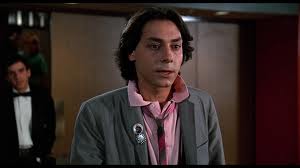
Mike Damone, a.k.a. Little Prick

Mike Damone, a.k.a. Little Prick

Film Review: Diary of a Hitman (dir by Roy London)


Diary of a Hitman

I’ve been on a mission to see as many obscure and forgotten films as possible, which is why, last night — via Movieplex OnDemand —  I ended up watching a 1991 film called Diary of a Hitman.

In Diary of a Hitman, Forest Whitaker plays Dekker, a professional killer.  Despite the film’s title, Dekker does not keep a diary.  What he does do is talk.  A lot.  The film is framed by scenes of him telling his story to somebody on the phone.  (I was never quite sure who he was supposed to be talking to.)  Over the course of the film, he talks to a psychiatrist.  He talks to his agent (Seymour Cassel).  He talks to a dominatrix.  He talks to a corrupt police officer (James Belushi).  He talks to a born-again Christian (Lewis Smith) who hires Dekker to kill his wife and a baby that he may or may not be the father of.  Eventually, he ends up talking to Jain (Sherilyn Fenn), the woman that he’s been hired to kill.  He even has a very brief conversation with Jain’s sister, Kiki (who is played, in a shrill cameo appearance, by Sharon Stone).

With all of the constant talking, it’s not surprising to discover that Diary of a Hitman was based on a stage play.  That’s especially obvious during the film’s second act, which almost entirely takes place inside of Jain’s apartment and basically consists of Fenn and Whitaker delivering dramatic monologues about life and death.  Director Roy London was an acting teacher (among his students were Sharon Stone and Sherilyn Fenn) and it’s perhaps not surprising that he never found a way to make such obviously stage-bound material feel cinematic.  Instead, London directed the film as if he was filming an acting exercise.  Just consider the scene where Kiki drops by the apartment unannounced.  While watching this scene, I kept having flashbacks to high school theater.  I could literally hear one of my old teachers saying, “Okay, for this scene, your motivation is to get her to leave the apartment and your motivation is to stay in the apartment no matter what.  And…go!”

That said, Diary of a Hitman is not a total waste of time.  Playing the agoraphobic Jain, Sherilyn Fenn (who can be seen playing a far more villainous character in this year’s Raze) gives a sympathetic performance, even managing to redeem a potentially distasteful scene where she attempts to seduce Decker.  (I’ve included that scene at the bottom of the review, mostly because — along with Sharon Stone’s cameo — it’s the only scene from Diary Of A Hitman that’s currently available on YouTube.)

And then there’s Forest Whitaker.  It’s hard to say whether Whitaker gives a good performance here or not, largely because the character of Decker makes little sense to begin with and he’s required to have a massive change of heart that seems to come out of nowhere.  (Whitaker has made a credible killer in several other films, just not this one.)  However, what Whitaker lacks in credibility, he makes up for in eccentricity.  In the role of Decker, Forest Whitaker gives one of the oddest performances that I’ve ever seen.  Delivering the majority of his dialogue in an occasionally incomprehensible rasp and flashing a wide smile at the most inappropriate of moments, Forest Whitaker is a force of misdirected nature in this film.  Again, it’s hard to say whether Whitaker actually gives a good performance here but he does make Diary of a Hitman worth seeing.

44 Days of Paranoia #35: A Dark Truth (dir by Damian Lee)


For the latest entry in the 44 Days of Paranoia, we take a look at one of the more obscure films of 2013.  A Dark Truth was briefly released last January and it didn’t get much attention.  Having recently watched the film, I can understand why.

A Dark Truth (subtle name, no?) opens with a lengthy and disturbing scene of men, women, and children being chased through the jungle by machine gun-wielding soldiers.  As we eventually learn, the people fleeing are the citizens of a village in Ecuador and the soldiers are there on a mission to kill every single one of them.  It’s such a disturbing and well-shot sequence that I watched it with a sinking feeling because I knew that there was no way the rest of the film would be able to live up to it.

And it turns out I was right.  Director Damian Lee seemed to realize this as well because he revisits the footage every time his film starts to drag.  Unfortunately, the more we see these violent images, the less powerful they become.  By the end of the film, that whole opening sequence has lost whatever power it had simply because we’ve seen it one too many times.

It turns out that the soldiers were working for a — wait for it! — Big Evil Corporation.  It seems that this Canadian water purification company accidentally poisoned the village’s water and this led to several villagers getting sick.  An executive, who is so villainous that he’s played by Kim Coates, ordered that all the villagers be executed.  Among the few that escaped was a veteran political activist (Forest Whitaker) and his wife (Eva Longoria).

Meanwhile, in Canada, corporate executive Deborah Kara Unger finds out what the company did in Ecuador.  Wracked with guilt, she hires former CIA Agent-turned-talk radio host Andy Garcia to go down to Ecuador and rescue Whitaker.

A Dark Truth, which obviously aspires to be something more than just a conventional action thriller, is a film that starts with an exciting bang but then ends with a whimper that, even if you have managed to stay awake while watching it, you’ll barely hear.  This is one of the slowest films ever made (it certainly feels longer than 105 minutes) and the excessively stylized direction can’t make up for the fact that the film’s plot and dialogue are both painfully predictable.  About the only thing that The Dark Truth has going for it is that, while Longoria is painfully miscast, the film does feature good performances from Garcia, Whitaker, and Coates.  Best of all is Kevin Durand, who plays a hired assassin here.  Durand doesn’t get to say much  but he’s such an intimidating physical presence that he doesn’t need to say much.

Seriously, somebody needs to give Kevin Durand his own action franchise.

Other Entries In The 44 Days of Paranoia 

  1. Clonus
  2. Executive Action
  3. Winter Kills
  4. Interview With The Assassin
  5. The Trial of Lee Harvey Oswald
  6. JFK
  7. Beyond The Doors
  8. Three Days of the Condor
  9. They Saved Hitler’s Brain
  10. The Intruder
  11. Police, Adjective
  12. Burn After Reading
  13. Quiz Show
  14. Flying Blind
  15. God Told Me To
  16. Wag the Dog
  17. Cheaters
  18. Scream and Scream Again
  19. Capricorn One
  20. Seven Days In May
  21. Broken City
  22. Suddenly
  23. Pickup on South Street
  24. The Informer
  25. Chinatown
  26. Compliance
  27. The Lives of Others
  28. The Departed
  29. A Face In The Crowd
  30. Nixon
  31. The Hunger Games: Catching Fire
  32. The Purge
  33. The Stepford Wives
  34. Saboteur

Film Review: Lee Daniels’ The Butler (dir by Lee Daniels)


Dare I admit it?

When I saw Lee Daniels’ The Butler, I was not impressed.

Yes, the audience applauded as the end credits rolled.  And yes, I know that almost all of the mainstream critics have given it a good review.  I know that Sasha Stone has been hyping it as a surefire Oscar contender.  I know that, up until 12 Years A Slave introduced us all to an actress named Lupita Nyong’o, Oprah Winfrey was considered to be the front-runner for the Best Supporting Actress Oscar.

But it doesn’t matter.  The Butler did little for me.

I also realize that the film ended with a title card that announced that what I had just watched was dedicated to the American civil rights movement.  In many ways, that title card felt like emotional blackmail, implying that if you criticized The Butler than that meant you were also criticizing the brave, real life men and women who risked their lives to fight for equal rights.

However, when you put emotions and good intentions to the side, the fact of the matter is that Lee Daniels’ The Butler is not that good of a movie.  One need only compare The Butler to some of the other films that were released this year that dealt with the African-American experience — films like 12 Years A Slave and Fruitvale Station — to see just how safe and uninspiring The Butler truly is.

The Butler tells the story of Cecil Gaines (Forrest Whitaker), the son sharecroppers (played by David Banner and Mariah Carey) in the deep south.  After Cecil’s father is murdered by plantation owner Thomas Westfall (Alex Pettyfer), Cecil is raised and educated by the wealthy Annabeth Westdall (Vanessa Redgrave).  Eventually, the teenaged Cecil leaves the plantation and ends up working in a hotel where he’s educated in how to be a master servant by the elderly Maynard (Clarence Williams III, who brings a quiet dignity to his role).  Cecil eventually gets promoted to a hotel in Washington, D.C.  It’s there that he meets and marries Gloria (Oprah Winfrey).

In 1957, Cecil is hired to work at the White House.  Along with befriending two others butlers (played by Cuba Gooding, Jr. and Lenny Kravitz), Cecil also gets the chance to observe history play out first hand.  Starting with Dwight Eisenhower (played by Robin Williams) and ending with Ronald Reagan (Alan Rickman, giving a performance that is incredibly bad), Cecil watches as President after President deals with the civil rights movement.  Some presidents, like John F. Kennedy (James Marsden) are portrayed as being heroes while others, like Richard Nixon (John Cusack), are portrayed as being villains but all of them have the watchful eye of Cecil Gaines in common.

Meanwhile, at home, Gloria has a brief affair with Howard (played by Terrence Howard and really, you have to wonder what Cecil was thinking leaving his wife alone with anyone played by Terrence Howard) and Cecil’s oldest son, Louis (David Oyelowo), gets involved with the civil rights movement and grow increasingly estranged from his father.

The Butler actually starts out pretty well.  There’s a lengthy sequence where Louis and a group of students are trained on how to conduct a sit-in that’s extremely compelling to watch.  However, then John Cusack shows up wearing a big fake nose and the entire film starts to fall apart.

From a cinematic point of view, the film fails because it ultimately seems to be more dedicated to trotting out a parade of celebrity cameos to actually telling a compelling story.  As is his usual style, Lee Daniels directs with a heavy hand and, as a result, the film is full of emotionally-charged scenes that fail to resonate for longer than a handful of minutes.

My main issue with The Butler is that the film literally contains no surprises.  Nothing out of the ordinary happens and, at no point, is the audience actually challenged to consider the way they view history or race relations.  Whereas films like Fruitvale Station and 12 Years A Slave truly challenge our assumptions, The Butler encourages us to pat ourselves on the back for being so enlightened.  Every single frame of The Butler is specifically designed to fool us into thinking that we’re watching an important and challenging movie.

Because of a silly copyright lawsuit, the official title of The Butler is Lee Daniels’ The Butler.  However, that title is very appropriate because The Butler is definitely a Lee Daniels film.  Even if you didn’t know it beforehand, it would be easy to guess that the  same man who directed Precious and The Paperboy also directed The Butler.  As a director, Daniels specializes in making simplistic points in the most bombastic way possible.  The results are films, like The Butler, that are more concerned with manipulating an audience than challenging an audience.  When audiences applaud at the end of The Butler, they aren’t so much applauding the film as much as they are applauding themselves for having seen it.