4 Shots From 4 Films: Special Tobe Hooper Edition


4 Shots From 4 Films is just what it says it is, 4 shots from 4 of our favorite films. As opposed to the reviews and recaps that we usually post, 4 Shots From 4 Films is all about letting the visuals do the talking.

This October, I am going to be using our 4 Shots From 4 Films feature to pay tribute to some of my favorite horror directors, in alphabetical order!  That’s right, we’re going from Argento to Zombie in one month!

Today’s director: the master of Texas horror!

4 Shots From 4 Films

The Texas Chainsaw Massacre (1974, dir by Tobe Hooper)

Eaten Alive (1977, dir by Tobe Hooper)

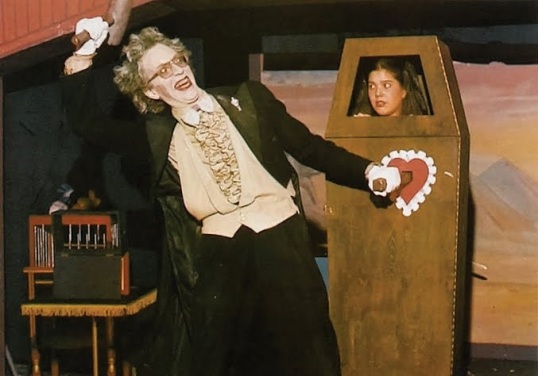
The Funhouse (1981, dir by Tobe Hooper)

The Texas Chainsaw Massacre 2 (dir by Tobe Hooper)

Horror on the Lens: The House on Haunted Hill (dir by William Castle)


The original  The House on Haunted Hill is a classic and one that we make it a point to share every Halloween.

Be sure to check out Gary’s review by clicking here!

Enjoy Vincent Price at his best!

Horror Film Review: I Know What You Did Last Summer (dir by Jim Gillipsie)


So, I recently read that it’s been 20 years since I Know What You Did Last Summer was first released into theaters.  This, of course, is the endlessly parodied film that not only launched the careers of Jennifer Love Hewitt, Ryan Phillippe, and Freddie Prinze, Jr. but which also served as inspiration for a countless number of YA horror stories.

Myself, I was too young to see the movie when it was first released but I do remember, a few years later, sneaking downstairs and watching it on HBO at two in the morning.  I’ve watched it several times since then.  For some reason, it’s one of those films that I always end up watching whenever I see it’s on TV.  I’m not sure why because I don’t think it’s a particularly good film.  As a horror fan, I think it’s a shame that this rather formulaic film has proven to be so influential while so many genuinely challenging horror films have been overlooked by critics and ignored by audiences.

The last time that I watched I Know What You Did Last Summer, I spent almost the entire movie yelling at Sarah Michelle Gellar.  “WHY DO YOU KEEP RUNNING UP THOSE STAIRS!?  HOW ARE YOU GOING TO ESCAPE FROM THE SECOND FLOOR!?”  Usually, I defend the stupidity of characters in certain horror films by pointing out that they’re usually in an extreme situation and it’s not easy to think rationally when you’ve got someone with an axe chasing you.  But the characters in I Know What You Did Last Summer really do test my patience.

Another thought that I had while watching I Know What You Did Last Summer was, “When did Johnny Galecki learn to act because it was definitely long after he appeared in this movie.”  Seriously, Galecki has developed into being a fairly good actor but he’s absolutely awful in I Know What You Did Last Summer.  He plays an early victim and, as much as I hate to see anyone die, it at least saved me from having to listen to another awkward line reading.

So, why do I keep watching this stupid movie?

Some of it’s because I do genuinely like the four main stars.  Like me, Jennifer Love Hewitt is a Texas girl and I imagine we both share the same struggle.  Sarah Michelle Gellar will always be Buffy to me.  Ryan Philippe’s nice to look at.  Even the reliably stiff Freddie Prinze, Jr. is rather likable in I Know What You Did Last Summer.  It’s fun to watch these four work together to try to find out who is stalking them and how it relates to the man that they accidentally killed last summer.  Of course, they’d probably be able to figure things out a lot quicker if they weren’t all so stupid but it can’t always be the members of the honor society who end up driving drunk and accidentally killing someone.

I also like the look of the film.  The film takes place in one of those North Carolina fishing villages and director Jim Gillipsie does a good job of making everything look dark, somber, and menacing.  That big hook that the killer carries with him always freaks me out.  I literally have to shut my eyes when he kills Bridgette Wilson.

And, of course, there’s this:

The “WHAT ARE YOU WAITING FOR!?” scene is without a doubt one of the greatest instances of overacting in the history of horror cinema.  I have literally gone hoarse imitating Jennifer Love Hewitt’s delivery of that line.  However, when it comes to why this scene is a must see, it’s not just the fact that Jennifer Love Hewitt screams the line out of nowhere.  There’s also the fact that she’s literally shouting it at no one, unless she’s attempting to address God or something.  (And judging from the overhead shot at the end of the scene, it would appear that God was listening.)  Plus, there’s that cast on Ryan Philippe and the hat on Sarah Michelle Gellar…

I Know What You Did Last Summer is a deeply stupid movie but it’s still one that I always seem to end up watching, if just so I can yell at everyone for not being smart enough to outwit a killer who doesn’t seem to be particularly bright himself.  It’s one of those films that I’ll leave on the TV if I come across it but, at the same time, it’s not a film that I ever feel the need to really pay much attention to.  It’s the cinematic equivalent of junk food, fun to eat but don’t try to shout “WHAT ARE YOU WAITING FOR!?” if your mouth’s full.

Here Are The 2017 IFP Gotham Award Nominees!


Hi, everyone!

Well, today is officially the start of Oscar season.  This morning, the Independent Filmmakers Project announced this year’s nominees for the Gotham Awards!  While the Gotham Awards may not be as well-known as some of the other precursors, their importance has grown over the past few years.  Though most of the major studio contenders are typically not eligible, a Gotham nomination can provide a definite boost for an independent film.

This year, Get Out received the most nominations.  Get Out has been mentioned as an outside possibility for an Oscar nomination.  It’s generally considered to be the best reviewed film of the year but horror is a genre that has traditionally struggled with the Academy.  For Get Out to receive a nomination, it’s going to need some help from the precursors (much as how Mad Max: Fury Road was legitimized by the critic groups in 2015).  With the announcement of the Gotham nominations, Get Out is off to a good start.

I’m also happy to see that James Franco received a nomination for playing Tommy Wiseau in The Disaster Artist.

Here are the nominees:

Best Feature

Call Me by Your Name
Luca Guadagnino, director; Peter Spears, Luca Guadagnino, Emilie Georges, Rodrigo Teixeira, Marco Morabito, James Ivory, Howard Rosenman, producers (Sony Pictures Classics)

The Florida Project
Sean Baker, director; Sean Baker, Chris Bergoch, Kevin Chinoy, Andrew Duncan, Alex Saks, Francesca Silvestri, Shih-Ching Tsou, producers (A24)

Get Out
Jordan Peele, director; Sean McKittrick, Jason Blum, Edward H. Hamm, Jr., Jordan Peele, producers (Universal Pictures)

Good Time

Josh and Benny Safdie, directors; Paris Kasidokostas-Latsis, Terry Dougas, Sebastian Bear-McClard, Oscar Boyson, producers (A24)

I, Tonya
Craig Gillespie, director; Bryan Unkeless, Steven Rogers, Margot Robbie, Tom Ackerley, producers (NEON)

Best Documentary

Ex Libris – The New York Public Library
Frederick Wiseman, director and producer (Zipporah Films)

Rat Film
Theo Anthony, director; Riel Roch-Decter, Sebastian Pardo, producers (MEMORY and Cinema Guild)

Strong Island
Yance Ford, director; Yance Ford, Joslyn Barnes, producers (Netflix)

The Work 
Sabaah Folayan, Damon Davis, directors; Sabaah Folayan, Damon Davis, Jennifer MacArthur, Flannery Miller, producers (Magnolia Pictures)

Whose Streets?

Jairus McLeary, director;  Alice Henty, Eon McLeary, Jairus McLeary, Miles McLeary, producers (The Orchard and First Look Media)

Bingham Ray Breakthrough Director Award

Maggie Betts for Novitiate (Sony Pictures Classics)
Greta Gerwig for Lady Bird (A24)
Kogonada for Columbus (Superlative Films/Depth of Field)
Jordan Peele for Get Out (Universal Pictures)
Joshua Z Weinstein for Menashe (A24)

Best Screenplay

The Big Sick, Emily V. Gordon and Kumail Nanjiani (Amazon Studios)
Brad’s Status, Mike White (Amazon Studios)
Call Me by Your Name, James Ivory (Sony Pictures Classics)
Columbus, Kogonada (Superlative Films/Depth of Field)
Get Out, Jordan Peele (Universal Pictures)
Lady Bird, Greta Gerwig (A24)


*
Best Actor*

Willem Dafoe in The Florida Project (A24)
James Franco in The Disaster Artist (A24)
Daniel Kaluuya in Get Out (Universal Pictures)
Robert Pattinson in Good Time (A24)
Adam Sandler in The Meyerowitz Stories (New and Selected) (Netflix)
Harry Dean Stanton in Lucky (Magnolia Pictures)

Best Actress

Melanie Lynskey in I Don’t Feel at Home in This World Anymore (Netflix)
Haley Lu Richardson in Columbus (Superlative Films/Depth of Field)
Margot Robbie in I, Tonya (NEON)
Saoirse Ronan in Lady Bird (A24)
Lois Smith in Marjorie Prime (FilmRise)

Breakthrough Actor

Mary J. Blige in Mudbound (Netflix)
Timothée Chalamet in Call Me by Your Name (Sony Pictures Classics)
Harris Dickinson in Beach Rats (NEON)
Kelvin Harrison, Jr. in It Comes at Night (A24)
Brooklynn Prince in The Florida Project (A24)

* The 2017 Best Actor/Best Actress nominating committee also voted to award a special Gotham Jury Award for ensemble performance to Mudbound, The award will go to actors Carey Mulligan, Garrett Hedlund, Jason Clarke, Jason Mitchell, Mary J. Blige, Rob Morgan, and Jonathan Banks.


Horror Scenes That I Love: Life and Death in Dawn of the Dead


Today’s horror scene that I love is from George Romero’s 1978 zombie masterpiece, Dawn of the Dead.

The first time I saw this film, I was so upset when Roger died.  Not only was Roger my favorite character but I also knew that if Roger — who was so funny and so charismatic and so competent — couldn’t survive then that meant that no one was going to survive.

4 Shots From 4 Films: Special Alfred Hitchcock Edition


4 Shots From 4 Films is just what it says it is, 4 shots from 4 of our favorite films. As opposed to the reviews and recaps that we usually post, 4 Shots From 4 Films is all about letting the visuals do the talking.

This October, I am going to be using our 4 Shots From 4 Films feature to pay tribute to some of my favorite horror directors, in alphabetical order!  That’s right, we’re going from Argento to Zombie in one month!

Today’s director: the master of suspense, Alfred Hitchcock!

4 Shots From 4 Films

The Lodger (1926, dir by Alfred Hitchcock)

Psycho (1960, dir by Alfred Hitchcock)

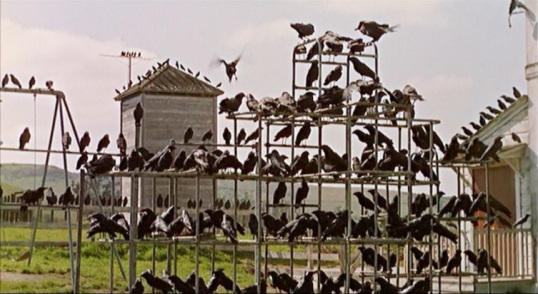
The Birds (1963, dir by Alfred Hitchcock)

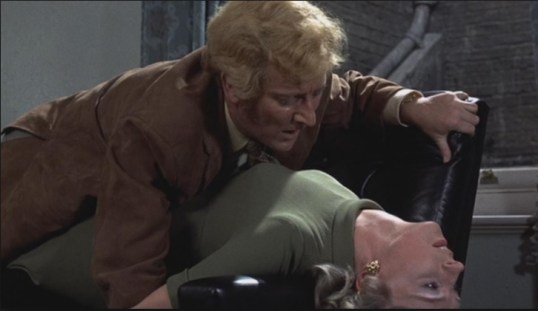
Frenzy (1972, dir by Alfred Hitchcock)

Horror on the Lens: The Night Strangler (dir by Dan Curtis)


For today’s horror on the lens, we have 1973’s The Night Strangler.

This is the sequel to The Night Stalker and it features journalist Carl Kolchak (Darren McGavin) in Seattle.  (After all the stuff that happened during the previous movie, Kolchak was kicked out of Las Vegas.)  When Kolchak investigates yet another series of murders, he discovers that paranormal murders don’t just occur in Las Vegas and aren’t just committed by vampires.

I actually prefer this movie to The Night Stalker.  The Night Strangler features a truly creepy villain, as well as a trip down to an “underground city.”  It’s full of ominous atmosphere and, as always, Darren McGavin is a lot of fun to watch in the role in Kolchak.

Enjoy!

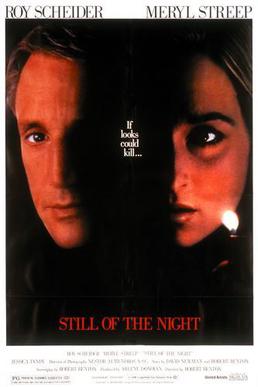
A Suspenseful Insomnia File #30: Still Of The Night (dir by Robert Benton)


What’s an Insomnia File? You know how some times you just can’t get any sleep and, at about three in the morning, you’ll find yourself watching whatever you can find on cable? This feature is all about those insomnia-inspired discoveries!

If last night, at 1:30 in the morning, you were having trouble getting to sleep, you could have turned on the TV, changed the channel to your local This TV station, and watched 1982’s Still Of The Night.

Still of the Night actually tells two stories.  The first story  deals with Dr. Sam Rice (Roy Scheider), a psychiatrist who is living a perfectly nice, mild-mannered, upper class existence in Manhattan.  His patients are rich and powerful and his sessions with them provide him with a view of the secrets of high society.

One of Sam’s main patients is George Bynum (Josef Sommer), who owns an auction house and who is a compulsive cheater.  George tells Sam that he’s haunted by strange nightmares and that he is also worried about a friend of his.  George says that this friend has murdered in the past and George fears that it’s going to happen again.  When George is murdered, Sam wonders if the murder was committed by that friend.  He also wonders if that friend could possibly have been one of George’s mistresses, the icy Brooke Reynolds (Meryl Streep).

The second story that Still of the Night tells is about our endless fascination with the films of Alfred Hitchcock.  Still of the Night is such an obvious homage to Hitchcock that it actually starts to get a little bit silly at times.  Almost every scene in the film feels like it was lifted from a previous Hitchcock film.  At one point, there’s even a bird attack!  (Add to that, Scheider’s mother is played by Jessica Tandy, who previously played Rod Taylor’s mother in The Birds.)  Meryl Streep is specifically costumed and made up to remind viewers of previous Hitchcock heroines, like Grace Kelly, Kim Novak, Eva Marie Saint, and Tippi Hedren.

Unfortunately, considering the talent involved, Still of the Night never really works as well as it should.  Both Scheider and Streep seem to be miscast in the lead roles.  If Still of the Night had been made in the 50s, one could easily imagine James Stewart and Grace Kelly playing Sam and Brooke and managing to make it all work through screen presence along.  However, Scheider and Streep both act up a storm in the lead roles, attacking their parts with the type of Actor Studios-gusto that seems totally out-of-place in an homage to Hitchcock.  Scheider is too aggressive an actor to play such a mild character.  As for Streep, she’s miscast as a noir-style femme fatale.  Streep’s acting technique is always too obviously calculated for her to be believable as an enigma.

That said, there were still some effective moments in Still of the Night.  The majority of the dream sequences were surprisingly well-done and effectively visualized.  I actually gasped with shock while watching one of the dreams, that’s how much I was drawn into those scenes.

According to Wikipedia, Meryl Streep has described Still of the Night as being her worst film.  I think she’s being way too hard on the movie.  It’s nothing special but it is an adequate way to kill some time.  Certainly, I’d rather watch Still of the Night than sit through Florence Foster Jenkins.

Previous Insomnia Files:

  1. Story of Mankind
  2. Stag
  3. Love Is A Gun
  4. Nina Takes A Lover
  5. Black Ice
  6. Frogs For Snakes
  7. Fair Game
  8. From The Hip
  9. Born Killers
  10. Eye For An Eye
  11. Summer Catch
  12. Beyond the Law
  13. Spring Broke
  14. Promise
  15. George Wallace
  16. Kill The Messenger
  17. The Suburbans
  18. Only The Strong
  19. Great Expectations
  20. Casual Sex?
  21. Truth
  22. Insomina
  23. Death Do Us Part
  24. A Star is Born
  25. The Winning Season
  26. Rabbit Run
  27. Remember My Name
  28. The Arrangement
  29. Day of the Animals

The TSL’s Horror Grindhouse: The Terminal Man (dir by Mike Hodges)


Check out the poster for 1974’s The Terminal Man.

Look at it carefully.  Examine it.  Try to ignore the fact that it’s weird that George Segal was once a film star.  Yes, on the poster, Segal has been drawn to have a somewhat strange look on his face.  Ignore that.  Instead, concentrate on the words in the top left corner of the poster.

“ADULT ENTERTAINMENT!” it reads.

That’s actually quite an accurate description.  The Terminal Man is definitely a film for adults.  No, it’s not pornographic or anything like that.  Instead, it’s a movie about “grown up” concerns.  It’s a mature film.  In some ways, that’s a good thing.  In some ways, that’s a bad thing.

Taking place in the near future (and based on a novel by Michael Crichton), The Terminal Man tells the story of Harry Benson (played, of course, by George Segal).  Harry is an extremely intelligent computer programmer and he’s losing his mind.  It might be because he was in a serious car accident.  It may have even started before that.  Harry has black outs and when he wakes up, he discovers that he’s done violent things.  Even when he’s not blacked out, Harry worries that computers are going to rise up against humans and take over the world.

However, a group of scientists think that they have a way to “fix” Harry.  It’ll require a lot of brain surgery, of course.  (And, this being a film from 1973, the film goes into excruciating details as it explains what’s going to be done to Harry.)  The plan is to implant an electrode in Harry’s brain.  Whenever Harry starts to have a seizure, the electrode will shock him out of it.  The theory is that, much like Alex in A Clockwork Orange 0r Gerard Malanga in Vinyl, Harry will be rendered incapable of violence.

Of course, some people are more enthusiastic about this plan than others.  Harry’s psychiatrist (Joan Hackett) fears that implanting an electrode in Harry’s brain will just make him even more paranoid about the rise of the computers.  Other scientists worry about the ethics of using technology to modify someone’s behavior.  Whatever happens, will it be worth the price of Harry’s free will?

But, regardless of the risks, Harry goes through with the operation.

Does it work?  Well, if it worked, it would be a pretty boring movie so, of course, it doesn’t work.  (Allowing Harry’s operation to work would have been like allowing King Kong to enjoy his trip to New York.)  Harry’s brain becomes addicted to the electrical shocks and, as he starts to have more and more seizures, Harry becomes even more dangerous than he was before…

The Terminal Man is a thought-provoking but rather somber film.  On the one hand, it’s a rather slow movie.  The movie does eventually get exciting after Harry comes out of surgery but it literally takes forever to get there.  The movie seems to be really determined to convince the audience that the story it’s telling is scientifically plausible.  On the other hand, The Terminal Man does deal with very real and very important issues.  Considering how threatened society is by people who cannot be controlled, issues of behavior modification and free thought will always be relevant.

Though the film may be slow, I actually really liked The Terminal Man.  Judging from some of the other reviews that I’ve read, I may be alone in that.  It appears to be a seriously underrated film.  As directed by Mike Hodges, the film is visually stunning, emphasizing the sterility of the white-walled hospital, the gray blandness of the doctors, and the colorful vibrancy of life outside of science.  Though he initially seems miscast, George Segal gives a good and menacing performance as Harry.

The Terminal Man requires some patience but it’s worth it.

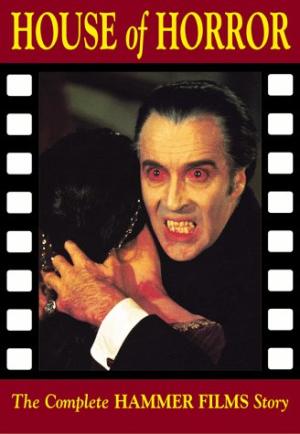
Horror Book Review: House of Horror, edited by Jack Hunter


If you love horror films, you have to love Hammer Films, the British studio that was responsible for some of the best horror films of the 50s, 60s, and 70s.  It was Hammer who brought Dracula, Frankenstein, and the Mummy back to life and who introduced a splash of color to the formerly black and white world of horror.  It was Hammer that first brought horror together with pop art.  And, of course, it was Hammer that made stars out of actors like Christopher Lee and Peter Cushing.

House of Horror was originally published in 1973, as a tribute to Hammer in its waning days.  The copy that I own is a revised edition, one that was published in 2000.  I found it at Recycled Books in Denton, Texas.  (That was quite a shopping trip, by the way.  Not only did I buy House of Horror but I also bought A Taste of Blood: The Films of Herschell Gordon Lewis.)

Anyway, if you’re a fan of Hammer Films, then this is one of those books that you simply have to own.  Not only does it contain interviews with the big four of Hammer (Peter Cushing, Christopher Lee, Terence Fisher, and Michael Carreras) but it also provides a in-depth analysis of Hammer’s Dracula series, its Frankenstein series, and its lesser known science fiction productions.

At the end of the book, there are biographies of some of the members of Hammer’s stock company.  There’s also not only a full list of every film that Hammer ever produced but even a list of Hammer project that never reached the filming stage.  If, as I am, you’re obsessed with film trivia, this book is a must have.