October Hacks: Psycho (dir by Gus Van Sant)


Gus, what were you thinking!?

1998’s Psycho tells the story of real estate secretary Marion Crane (Anne Heche). Marion is in love with Sam Loomis (Viggo Mortensen), but Sam feels that they can’t get married because he doesn’t have much money and he has to send a monthly alimony payment to his ex-wife. Sam says he doesn’t want Marion to have to spend her married life “licking the stamps.” “I’ll lick the stamps,” Marion replies in a tone that suggests she has no intention of ever licking a stamp.

Marion steals some money from work and goes on the run. While she drives around the Southwest with a blank expression on her face, she thinks about how everyone will react to the theft. She imagines what people are saying about her. She has a scary experience with a highway patrolman (James Remar). She imagines her sister (Julianne Moore) looking for her. Eventually, when it starts to rain, she pulls into an isolated motel for the night and she meets a nervous man named Norman Bates (Vince Vaughn).

Fresh from the success of Good Will Hunting, director Gus Van Sant decided that it was time to pursue a dream project. He remade Alfred Hitchcock’s Psycho. That in itself was a pretty dumb idea. The first film is one of the few films that almost everyone seems to agree is perfectly made. There was no great need to remake it and, after several sequels, there was probably not great demand for it either. Van Sant also decided that he would remake the film by using the exact same script (with just a few minor updates to reflect changing times) and that he would recreate Hitchcock’s film shot-for-shot.

Now, I know what you may be thinking. If Van Sant used the same script and the exact same shot list from the first film, why did he even bother to remake the movie in the first place? My personal theory is that remaking Psycho was probably something that Van Sant first thought of doing while he was a film student. It’s probably something that he came up with and he carried with him for years. Because no one ever thought it would actually happen, his friends humored him and didn’t tell him what a pointless idea it was. Then Van Sant became a success and, once you’re a success, no one’s going to tell you no. Making an Oscar-friendly box office hit like Good Will Hunting temporarily gave Van Sant the opportunity to do whatever he wanted and what he wanted to do was remake Psycho without changing the script or any of the shots.

Despite all of that, there are a few differences. This version of Psycho is shot in color and is full of tacky wallpaper and garish colors. Marion wears some of the ugliest outfits that I’ve ever seen. Of course, the cast is entirely new. The instantly relatable Janet Leigh is replaced by the dull and androgynous Anne Heche. Viggo Mortensen is equally dull as Sam. Julianne Moore is much more take-charge as Lila but, physically, is in no way believable as being related to Anne Heche. (Vera Miles and Janet Leigh, on the other hand, very much seemed like sisters even if they didn’t share any scenes together.) Martin Balsam’s wiseguy private eye is replaced by William H. Macy’s nerdy detective. The biggest change is that Anthony Perkins has been replaced by a totally miscast Vince Vaughn. Norman Bates is someone who has spent the last ten years of his life isolated from the world, living like a hermit. Vince Vaughn, an actor who I usually like, comes across like he can’t wait to get down to the local bar and order everyone a beer.

You don’t hear much about Gus Van Sant’s Psycho anymore. Everyone pretends like it doesn’t exist and that’s probably for the best. If anything, it’s a reminder that almost every director has at least one bad idea that he’s waiting to spring on the world once he becomes successful enough. For Gus Van Sant, the idea was Psycho.

Horror Film Review: Psycho (dir by Alfred Hitchcock)


Just the thought of reviewing Psycho is intimidating.

In the past, I’ve reviewed all of the sequels. I even reviewed a few episodes of Bates Motel. But I’ve avoided reviewing the original 1960 film because I wasn’t sure that there was much left for me to really say about it. It’s one of those films that has been endlessly analyzed. It’s also one of those films that is so famous and which has been imitated so many times that even people who haven’t seen Psycho know what the film is about. Everyone knows about the shower scene. Everyone knows about the twists that took audiences and critics by surprise in 1960. No one is shocked by the revelation about the true nature of Norman Bates and his mother anymore. In fact, most people are more likely to be surprised by Simon Oakland’s hammy performance as the psychiatrist than they are by the ending.

And indeed, probably the best thing that we can say about Psycho is that it still works even when the big twists are no longer a surprise. Janet Leigh’s performance as Marion Crane still holds up as one of the best recorded on film. Even before she arrives at the Bates Motel, we’re scared for her. She spends the first half of the film fleeing Phoenix with an envelope full of stolen cash. Everyone she meets on her journey, from the suspicious highway patrolman (Mort Mills) to the too-eager car salesman (John Anderson), comes across as being a threat. Of course, the bigger threats are the voices in her head as she imagines how people are going to react to her actions. When we hear the patrolman interrogating the salesman, are we hearing an actual interrogation or are we just hearing what Marion fears is happening? We don’t really know and neither does Marion. As played by Janet Leigh, Marion is both a femme fatale (that black bra after she steals the money!) and a relatable and frustrated single woman wondering if she’s waited too long to live her own life (that hotel room with John Gavin’s Sam Loomis!). She’s not a master criminal. She’s someone who did something impulsive and fears she’ll be punished for it.

Ironically, Marion’s murder in the shower has nothing to do with the money. When Norman is cleaning up the motel room afterwards, he picks up the newspaper in which Marion hid the money and tosses it into the trunk of her car. Everyone who comes after Marion assumes that Norman knew about the money, but Norman has no idea what they’re talking about. The money itself seems like such a petty thing. The money was stolen from an oilman (Frank Albertson, who also played Sam Wainwright in It’s a Wonderful Life) who confesses that he has a lot more hidden away. Sam’s claim that he can’t marry Marion because he doesn’t have the financial resources feels more like an excuse than a reason. When private detective Milton Arbogast (Martin Balsam) disappears, the sheriff (John McIntire) initially assumes that he stole the money for himself. Marion’s sister Lila (Vera Miles) assumes that Norman stole the money because his motel was struggling. Norman doesn’t care about the money. He sends the money (and Marion’s car) to the bottom of a nearby swamp and he does so in such a casual manner that there’s little doubt it’s not the first time. All Norman cares about is protecting his mother. And all his mother cares about is protecting Norman….

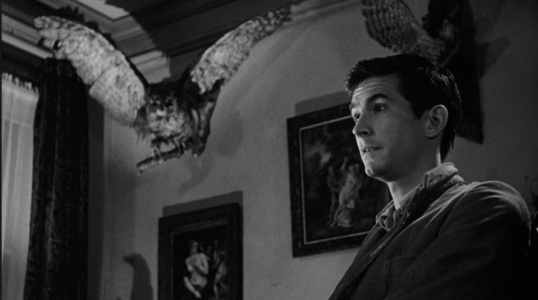
Everyone knows about the shower scene but what makes Psycho truly memorable are the little moments. I love Pat Hitchcock’s performance as Marion’s co-worker. “He was flirting with you. I guess he must have noticed my wedding ring,” is one of the best lines ever written and/or delivered. I love the taciturn sheriff and his oddly cheerful wife (Lurene Tuttle), the one who whispers “in bed.” I love the wonderfully passive-aggressive scenes between Arbogast and Norman. Martin Balsam and Anthony Perkins were two veterans of the New York stage and one can tell that they enjoyed bouncing lines off of each other. I even love John Gavin’s somewhat stiff performance as Sam Loomis. People tend to criticize Gavin but his stolid screen presence provides a nice contrast to Perkins’s nervous Norman. Psycho is a film that creates its own little world and Sheriff Chambers and Sam and Lila and Arbogast all come across as if they have (or, at least, had) lives outside of what we see in the film. Of course, Janet Leigh and later Anthony Perkins both dominate the film and indeed, Anthony Perkins, who had been a romantic lead up until Psycho, never escaped the shadow of Norman Bates. (Perkins was the first and really the only choice for the role, though Hitchcock was willing to offer it to Dean Stockwell if, for some reason, Perkins refused to play Norman.)

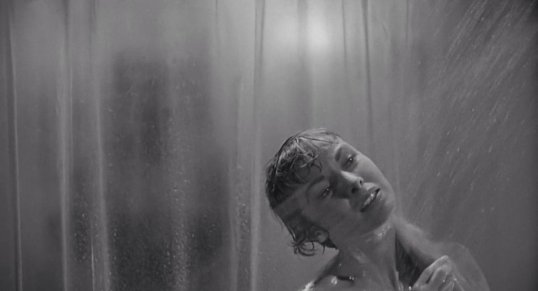
Oh, but the shower. You can’t talk about Psycho without talking about the shower, can you? It’s still a frightening scene, even when you know it’s coming. For Marion, the shower is more than just a shower and as someone who loves to take long showers, I always feel like I know exactly how she’s feeling. She’s decided to return to Phoenix and face the consequences. She’s washing away her guilt and her fear and, being in a motel room with a locked door, she has every reason to believe that she’s safe. But she’s not. We already know that she’s not because we’ve already seen Norman peeping in on her. (As disturbing as Norman’s peeping is, it’s not that much different from what the film’s audience was doing to Janet Leigh during the film’s opening scenes.) Marion discovers the danger too late. I find the scenes of Norman cleaning up the room to be even more unsettling, if just because he’s so professional about it. He knows exactly what to do, which lets us know that this isn’t the first time someone has died in that room. Marion, who we’ve just spent nearly an hour getting to know, is wrapped up in plastic and dumped in the back of her car and the audience is reminded that, when one’s physical life is over, it’s over.

66 years after it was first released, Psycho is still one of the greats.


Horror Song of the Day: Main Theme From Psycho by Bernard Herrmann


Today’s horror song of the day really needs no introduction.

From 1960, here is the main theme from Alfred Hitchcok’s Psycho, composed by Bernard Herrmann.

12 Shots From 12 Films: Special Alfred Hitchcock Edition


4 Or More Shots From 4 Or More Films is just what it says it is, 4 shots from 4 of our favorite films. As opposed to the reviews and recaps that we usually post, 4 Shots From 4 Films lets the visuals do the talking!

127 years ago, the master of suspense was born in England.  Today, we honor the career and legacy of the great Alfred Hitchock with….

12 Shots From 12 Alfred Hitchcock Films

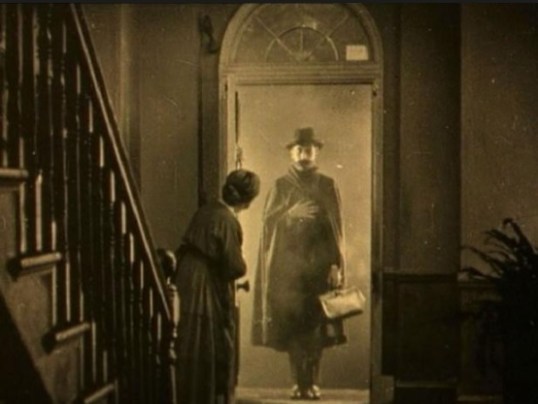
The Lodger (1926, dir by Alfred Hitchcock)

Rebecca (1940, dir by Alfred Hitchcock, DP: George Barnes)

Shadow of a Doubt (1943, directed by Alfred Hitchcock, DP: Joseph A. Valentine)

Notorious (1946, dir by Alfred Hitchcock, DP: Ted Tetzlaff)

Spellbound (1945, dir by Alfred Hitchcock, dir by George Barnes))

Rear Window (1954, dir by Alfred Hitchcock, DP: Robert Burks)

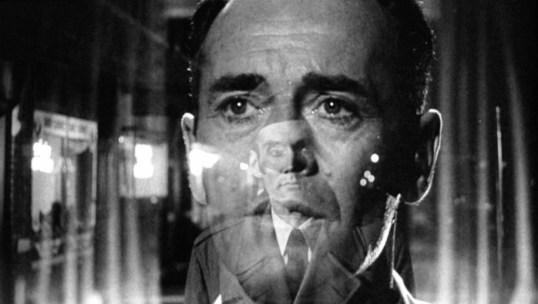
The Wrong Man (1956, Dir. by Alfred Hitchcock, DP: Robert Burks)

Vertigo (1958, dir by Alfred Hitchcock, DP: Robert Burks)

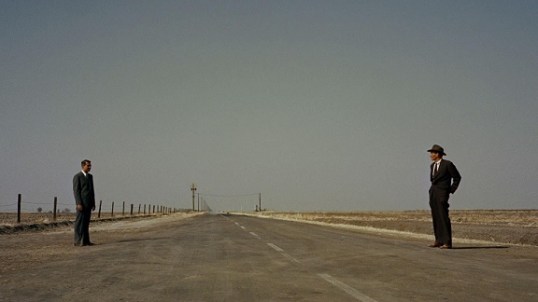
North by Northwest (1959, dir by Alfred Hitchcock, DP: Robert Burks)

Psycho (1960, dir by Alfred Hitchcock, DP: John L. Russell)

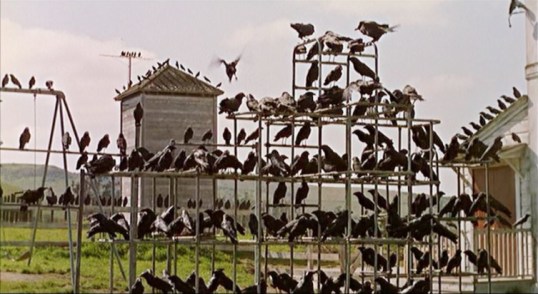
The Birds (1963, dir by Alfred Hitchcock, DP: Robert Burks)

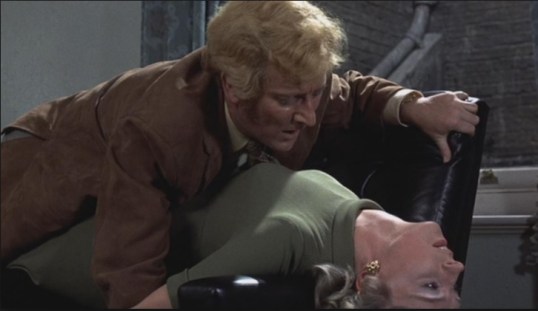
Frenzy (1972, dir by Alfred Hitchcock, DP: Gil Taylor))

Scene That I Love: Janet Leigh and Pat Hitchcock in Psycho


Yesterday was Janet Leigh’s birthday and today is Pat Hitchcock’s birthday so it seems appropriate that today’s scene that I love should feature both of them.  From 1960’s Psycho, this scene features Leigh and Hitchcock as office co-workers who meet the very wealthy Mr. Lowry (played by Frank Albertson).

“He was flirting with you.  He must have seen my wedding ring,” remains one of the greatest lines ever written.

Scenes I Love: Norman Bates Talks About His Mother In Psycho


Norman Bates, now there’s someone who probably made a big deal out of every Mother’s Day.  Today’s scene that I love comes from 1960’s Psycho and features Hitchcock, Janet Leigh, and Anthony Perkins at their absolute best.

4 Shots From 4 Horror Films: The 1960s Part One


This October, I’m going to be doing something a little bit different with my contribution to 4 Shots From 4 Films.  I’m going to be taking a little chronological tour of the history of horror cinema, moving from decade to decade.

Today, we start the 1960s!

4 Shots From 4 Horror Films

Psycho (1960, dir by Alfred Hitchcock)

Psycho (1960, dir by Alfred Hitchcock)

THe Pit and the Pendulum (1961, dir by Roger Corman)

The Pit and the Pendulum (1961, dir by Roger Corman)

The Awful Dr. Orlof (1962, dir by Jesus Franco)

The Awful Dr. Orlof (1962, dir by Jesus Franco)

Black Sabbath (1963, dir by Mario Bava)

Black Sabbath (1963, dir by Mario Bava)

Scene That I Love: Janet Leigh and Pat Hitchcock in Psycho


Yesterday was Janet Leigh’s birthday and today is Pat Hitchcock’s birthday so it seems appropriate that today’s scene that I love should feature both of them.  From 1960’s Psycho, this scene features Leigh and Hitchcock as office co-workers who meet the very wealthy Mr. Lowry (played by Frank Albertson).

“He was flirting with you.  He must have seen my wedding ring,” remains one of the greatest lines ever written.

4 Shots From 4 Films: Celebrating Double Exposure


4 Or More Shots From 4 Or More Films is just what it says it is, 4 shots from 4 of our favorite films. As opposed to the reviews and recaps that we usually post, 4 Shots From 4 Films lets the visuals do the talking!

Today, I want to celebrate one of my favorite photography techniques, the double exposure!

4 Shots From 4 Films: Celebrating Double Exposure

The Wrong Man (1956, Dir. by Alfred Hitchcock)

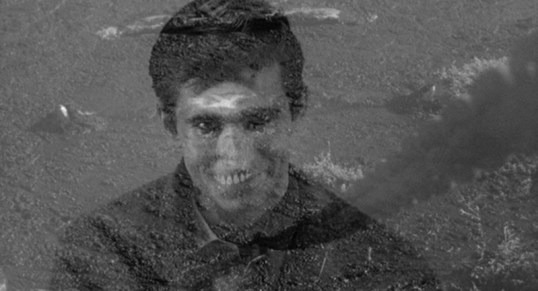
Psycho (1960, Dir. by Alfred Hitchcock)

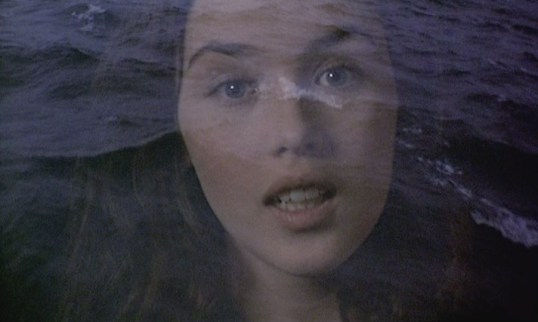
The Story of Adele H. (1975, Dir. by Francois Truffaut)

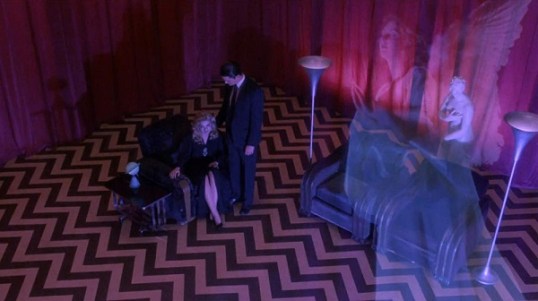
Twin Peaks: Fire Walk With Me (1992, Dir. by David Lynch)

Scenes I Love: Norman Bates Talks About His Mother In Psycho


Norman Bates, now there’s someone who probably made a big deal out of every Mother’s Day.  Today’s scene that I love comes from 1960’s Psycho and features Hitchcock, Janet Leigh, and Anthony Perkins at their absolute best,