The Hawaii Film Critics Society announced their picks for the best of 2020 yesterday and they did not pick Nomadland. Instead, they named The Trial of the Chicago 7 as the best picture of the year and they named Spike Lee as a best director for Da 5 Bloods. (It’s interesting that, after years of struggling to get awards recognition, Lee is feeling getting recognized for films that are nowhere close to being as effective or as revolutionary as his best work.) Nomadland, however, did not go home empty-handed. Frances McDormand won Best Actress and Chloe Zhao did pick up an award for her screenplay. (Zhao won adapted screenplay. Sorkin won original screenplay. I dread that the same thing is going to happen on Oscar night and we’re going to have to sit through an Aaron Sorkin filibuster about protest, politics, and why women need to learn more about sports.)
(“Let me fix you,” Aaron Sorkin says as he pulls out a DVD boxset of Sports Night.)
The best thing about the Hawaii Film Critics Society is that they also gave out awards for Best Comic Book movie so congratulations, Bloodshot! (To be honest, Bloodshot probably deserved the award because it’s not like there’s a lot of competition this year and, seriously, have you tried to sit through Birds of Preymore than once?) Possessorwon the award for Best Overlooked Film of the year. (I agree, by the way.) And, of course, Wonder Woman 1984 won worst film of the year, despite all of those early reviews that declared it to be “the film that we need right now.” Then again, with the way things are going, maybe we deserve a bad movie? Who knows?
All I do know is that I wish I lived in Hawaii and now learning that they have their own Film Critics Society, I’m probably even more likely to look into moving. Seriously, Hawaii is beautiful and the film critics are apparently quirky.
Here are the winners!
BEST PICTURE
The Trial of the Chicago 7
BEST DIRECTOR
Spike Lee – Da 5 Bloods
BEST ACTOR
Delroy Lindo – Da 5 Bloods
BEST ACTRESS
Frances McDormand – Nomadland
BEST SUPPORTING ACTOR
Paul Raci – Sound of Metal
BEST SUPPORTING ACTRESS
Olivia Cooke – Sound of Metal
BEST ORIGINAL SCREENPLAY
Aaron Sorkin – The Trial of the Chicago 7
BEST ADAPTED SCREENPLAY
Chloe Zhao – Nomadland
BEST ART DIRECTION
Chris Craine and Dan Webster – Mank
BEST COSTUME DESIGN
Ann Roth – Ma Rainey’s Black Bottom
BEST CINEMATOGRAPHY
Hoyte Van Hoytema – Tenet
BEST EDITING
Alan Baumgarten – The Trial of the Chicago 7
BEST ANIMATED FILM
Lupin III: The First
BEST DOCUMENTARY
Beastie Boys Story
BEST MAKE-UP
Mank
BEST SOUND
Sound of Metal
BEST ORIGINAL SCORE
Trent Reznor and Atticus Ross – Mank
BEST SONG
“Speak Now” – One Night in Miami…
BEST VISUAL EFFECTS
Tenet
BEST STUNT WORK
Tenet
BEST NEW FILMMAKER
Regina King – One Night in Miami…
BEST FIRST FILM
Florian Zeller – The Father
BEST OVERLOOKED FILM
Possessor – Brandon Cronenberg
BEST VOCAL/MOTION CAPTURE PERFORMANCE
Jamie Foxx – Soul
BEST HORROR FILM
Relic – Natalie Erika James
BEST COMIC BOOK MOVIE
Bloodshot – Dave Wilson
BEST SCI-FI FILM
Tenet – Christopher Nolan
BEST FOREIGN LANGUAGE FILM
The Life Ahead – Edoardo Ponti (Italy)
BEST HAWAIIAN FILM
Waikiki – Christopher Kahunahana (Oahu)
This is a film that I think a lot of people expected to be an Oscar contender because it was directed by industry favorite Ron Howard, it was based on a genuinely moving best seller, and the cast included Amy Adams and Glenn Close, two actresses who are more than overdue for their first Academy Award. I don’t think anyone expected it to win much, largely because Ron Howard isn’t exactly the most groundbreaking director working in Hollywood, but it was still expected to be contender.
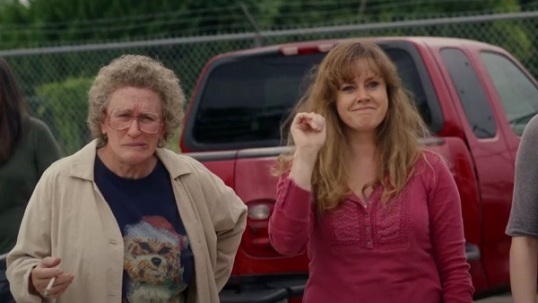
Even before it was released, there were a few signs that Hillbilly Elegy might not be the award-winning film that some were expecting. The first images from the film featured Glenn Close and Amy Adams looking like characters from some sort of ill-conceived SNL sketch. Then the trailer came out and it was so obviously Oscar bait-y and heavy handed that it was hard not to suspect that the film was trying just a bit too hard. By the time the film itself finally premiered in November, I think a lot of people were specifically waiting for their chance to skewer it.
Make no mistake about it, Hillbilly Elegy deserves a certain amount of skewering. Its a bit of a tonal mess and, far too often, it feels as if Ron Howard is inviting us to gawk at the film’s characters as opposed to showing them any sort of real empathy. Those critics who have claimed that the film occasionally feels like “poverty porn” have a point.
And yet, despite all of those legitimate complaints, I would argue that the film is partially redeemed by the performance of Glenn Close. Close plays Meemaw, who always seems to be carrying a lit cigarette and who has no hesitation about threating to beat the Hell out of her children and her grandchildren. Meemaw lives in a cluttered house that probably reeks of smoke. The TV is almost always on. Meemaw is a fan of Arnold Schwarzenegger. If you’ve ever wanted to hear Glenn Close say, “Hasta la vista, baby,” this is the film for you. Meemaw is a somewhat frightening character (during one flashback, she sets her drunk husband on fire) but she’s also the most caring character in the film. When it becomes obvious that her drug addict daughter, Bev (Amy Adams), is incapable of taking care of J.D. (played by Owen Aszatlos as a teen and Gabriel Basso as an adult), Meemaw essentially kidnaps J.D. and take him home with her. Close’s performance is undeniably theatrical but it works. She communicates that underneath all the bluster and the profanity and the anger and the cigarette smoke, Meemaw truly does love her family. Glenn Close transcends the film’s flaws and brings some real heart to the story.
Hillbilly Elegy opens with J.D. as a student at Yale Law School, hoping to get accepted for a prestigious summer internship. Meanwhile, all the other Ivy Leaguers treat J.D. like some sort of alien on display because he’s originally from Kentucky, he served in the army, and he went to a state school. Though ambitious and intelligent, J.D. still feels likes an outsider. When he goes to a banquet and discovers that he’ll be required to use different forks throughout the meal, he calls his girlfriend (Frieda Pinto) and gets a quick lesson on which fork to use when.
Unfortunately, before the meal even starts, J.D. gets a call from his sister, Lindsay (Haley Bennett), telling him that Bev has overdosed on heroin and is at the hospital. J.D. has to drive all the way to Ohio so that he can try to get his mother into a drug rehab. Because Bev doesn’t have medical insurance and would rather just stay with her good-for-nothing boyfriend, that turns out to be a bit more difficult than J.D. was anticipating. The film becomes a race against time to see if J.D. can get his mom taken care of and still make it back to Connecticut so that he can interview for a prestigious internship. Along the way, there are frequent flashbacks to Meemaw telling the young J.D. that he can be something better than just a hillbilly. All he has to do is try and not give up.
By structuring his film as a series of flashbacks, Ron Howard ensures that there’s really not any suspense about whether or not J.D. is going to be able to escape from Appalachia. Since we’ve already seen that the adult J.D. is going to be end up going to Yale, it’s hard to get worried when we see the teen J.D. smoking weed and hanging out with a bunch of losers. We know that J.D. is going to get over his adolescent rebellion and get his life straightened out. The film tries to create some tension about whether or not J.D. is going to be able to make his internship interview but, again, J.D. is going to Yale and living with Frieda Pinto. From the minute we see J.D., we know that he’s going to be just fine regardless of whether he gets that internship or not. In fact, his constant worrying about missing his interview starts to feel a bit icky. While Bev is dealing with her heroin addiction, Ron Howard is focusing on J.D. driving back to Connecticut as if the audience is supposed to be saying, “Oh my God, has he at least reached New Jersey yet!?” This is the type of storytelling choice that could only have been made by a very wealthy and very comfortable director. It reminded me a bit of The Post and Steve Spielberg’s conviction that, when it came to the decision to publish the Pentagon Papers, audiences would naturally be more interested in the owner of the newspaper than the people who actually did the work breaking the story. Here, Howard seems to be saying, “Yes, Bev might overdose and die having never reconciled with her son but the real tragedy is that J.D. might have to settle for his second choice as far as prestigious summer internships are concerned.”
Along with the story’s structural issues, the film also suffers because the usually wonderful Amy Adams is miscast as Bev. Adams acts up a storm as Bev but the performance itself a bit too obvious and on-the-surface. While Glenn Close disappears into the role of Meemaw, you never forget that you’re watching Amy Adams playing a character who is a bit more troubled than the usual Amy Adams role. You don’t think to yourself, “Oh my God, Bev is losing it.” Instead, you think, “Amy Adams sure is yelling a lot in this movie.” Somehow, Hillbilly Elegy makes Amy Adams feel inauthentic, which is something that, before I watched this film, I wouldn’t have believed to be be possible.
Aside from Glenn Close’s performance, Hillbilly Elegy doesn’t quite work and that’s a shame because I do think that a good film could have been made from Vance’s book. Unfortunately, Ron Howard doesn’t bring any sort of grittiness to the film’s depiction of what it’s like to be poor and forgotten in America. Instead, the film feels just a bit too slick. It attempts to be both a film about poverty and a crowd pleaser. When the movie should be showing empathy for its characters, it puts them on display. When it should be challenging the audience, it pats us on the back as if we should feel proud of ourselves merely because we spent two hours watching J.D. and his family. The film just doesn’t work. No wonder Meemaw prefers watching The Terminator.
As I watched David Fincher’s latest film, Mank, my main feeling was one of wanting to like the film more than I actually did.
I mean, really, the film sounds like it was specifically made to appeal to me. It’s a film about the Golden Age of Hollywood, which is an era that has always fascinated me as both a film lover and history nerd. Even more specifically, it’s a film about the writing of Citizen Kane, which is one of my favorite movies. (On one of our first dates, Jeff and I snuck into a showing of Citizen Kane at the Magnolia. The crime was fun and finally getting to see the movie on the big screen was even better.) It’s a film that features a host of historical figures, everyone from Louis B. Mayer to Irving Thalberg to Orson Welles to William Randolph Hearst to Marion Davies to the title character himself, the self-destructive screenwriter Herman J. Mankiewicz.
Those historical figures are played by a truly impressive collection of actors, almost all of whom give memorable performances. Gary Oldman plays Mankiewicz, lurching about Hollywood in a drunken haze and calling out the system while, somewhat hypocritically, also attempting to profit from it. Charles Dance is compellingly arrogant as William Randolph Hearst. Tom Burke captures Orson Welles’s trademark voice and charisma, making an impression despite having surprisingly little screen time. Ferdinand Kingsley plays Irving Thalberg and steals nearly every scene in which he appears. Arliss Howard is a marvel as the manipulate Mayer while Amanda Seyfried gives the best performance of her career so far as Marion Davies. The film portrays Davies as being intelligent, witty, and perhaps the only truly honest person in Hollywood. If it can be argued that Citizen Kane robbed Davies of her dignity, it can also be argued that Mank makes a sincere attempt to give it back to her. With the exception of a distracting cameo from Bill Nye (yes, the science guy), Mank is perfectly cast.
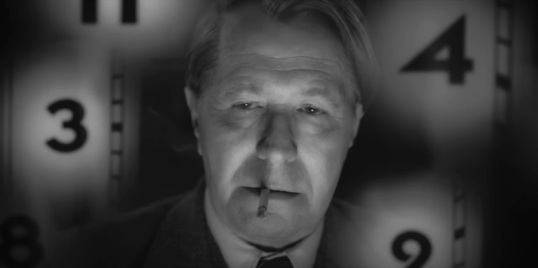
And yet, despite all of that, the film never really engaged me on either an emotional or an intellectual level. The black-and-white cinematography is gorgeous but the film plods from one incident to another, skipping back and forth in time and trying to convince us that Herman J. Mankiewicz was a more fascinating figure than he comes across as being. For the most part, Mankiewicz comes across as being a bit of a bore and the film makes the classic mistake of assuming that we’ll naturally like him just because he’s the main character. Gary Oldman is as charismatic as ever but the film doesn’t give him much of character to play. Mankiewicz stumbles from scene to scene, searching for a drink and always complaining about one thing or another. A little bit of Herman J. Mankiewicz goes a long way and, once it becomes apparent that he’s going to spend the entire film perpetually annoyed, Mankiewicz becomes a rather uninteresting character. Long before this film even reached the halfway mark, I was on the side of everyone who wanted Mankiewicz to stop talking and just finish writing the damn script.
If you’re one of the ten or so people who is still outraged over the failure of Upton Sinclair’s 1934 gubernatorial campaign, you’ll probably enjoy this film. For those of you haven’t read Greg Mitchell’s The Campaign of the Century: Upton Sinclair’s Race for Governor of California and the Birth of Media Politics, Upton Sinclair was a writer and longtime socialist activist who won the 1934 Democratic nomination to run for governor of California. Despite garnering a lot of national attention with his End Poverty In California (EPIC) platform, Sincliar was overwhelmingly defeated by Republican Frank Merriam. Mank argues that Sinclair’s defeat was largely due to dirty tricks and negative campaigning, most of it masterminded by Mayer and Hearst. Mankiewicz is a Sinclair supporter who is angered by the underhanded efforts of Mayer and Hearst. The script for Citizen Kane is, at least partially, Mankiewicz’s revenge on Hearst and Mayer for working against Sinclair and it’s something that Mankiewicz feels so strongly about that he’s willing to demand that Orson Welles give him credit for his work on the screenplay. It’s a legitimate theory, but the film’s exploration of it feels rather shallow and intellectually lazy. Just as it did with the character of Mankiewicz, the film makes the mistake of assuming the audiences will automatically find the candidacy of Upton Sinclair to be as inspiring as the film does. The film continually insists that we should care but, when it finally has a chance to show us why Upton Sinclair’s campaign was important, all it can provide is Bill Nye The Science Guy, standing on a platform and complaining about religious hypocrisy. It’s the cinematic equivalent of a casual acquaintance demanding to know why his twitter feed didn’t convince you to vote for Bernie Sanders.
From a historical point of view, the film does itself no favors by creating a fictional friend of Mankiewicz’s, one who is so consumed with guilt over his part in defeating Upton Sinclair that he ends up committing suicide. It feels rather cheap and predictable, an easy way to give Mankiewicz some sort of motivation beyond being infatuated with Marion Davies. Historically, the truth of the matter is that Frank Merriam turned to the left as soon as he was elected and Upton Sinclair went on to win the Pulitzer Prize for writing a series of now-unreadable books about an international do-gooder named Lanny Budd. Meanwhile, director Felix E. Feist (who was responsible for shooting many of the anti-Sinclair newsreels that MGM released into cinemas) went on to have a very long career and never indicated that he felt any guilty for playing a part in Sinclair’s defeat.
Like many of David Fincher’s film, Mank works best as an exercise in style. The black-and-white cinematography is to die for. Some of the shots — especially early in the film — are breathtaking. Mankiewicz may spend the majority of the film railing against the excesses of Hollywood but, visually, Fincher can’t get enough of them. Indeed, much as with The Social Network, Fincher seems to be spend the majority of the film at odds with the the film’s overwritten and rather pompous script. (Of course, Mank was written by Fincher’s late father while The Social Network was written by Aaron Sorkin. While there’s a lot to criticize about Jack Fincher’s script, one can still be thankful that he wrote the script instead of Sorkin. One can only imagine how Marion Davies would have been portrayed if Aaron Sorkin had been involved.) Mank is narratively deficient but visually stunning. The film’s script rather snarkily dismisses Orson Welles as being a mere “showman” but, as film, Mank proves that sometimes a showman is exactly what’s needed.
The Gotham Awards were handed out last night, honoring the best in independent film. In the past, the Gothams have been awarded at the starts of awards season but this year, they’re happening right in the middle. It’s a weird awards season but apparently, Nomadland either winning or being a serious contender is the one thing that you can depend upon. Admittedly, it’s debatable how much of influence the Gothams really have on the Oscars. Many films that Oscar-eligible are not considered to be Gotham-eligible. For instance, the big-budgeted, studio-backed blockbusters that are often mentioned as possible Oscar nominees are not Gotham eligible. There’s a kind of nice justice to that, I think.
That said, every victory helps. Nomadland has kind of been an obvious Oscar contender for several months now but it never hurts to notch another victory on the wall.
Here’s are the nominees and the winners, with the winners in bold:
Best Feature
The Assistant
First Cow
Never Rarely Sometimes Always Nomadland
Relic
Best Documentary
76 Days
City Hall
Our Time Machine A Thousand Cuts (TIE) Time (TIE)
Best International Feature
Bacurau
Beanpole
Cuties (Mignonnes) Identifying Features
Martin Eden
Wolfwalkers
Bingham Ray Breakthrough Director Award
Radha Blank – The Forty-Year-Old Version
Channing Godfrey Peoples – Miss Juneteenth
Alex Thompson – Saint Frances
Carlo Mirabella-Davis – Swallow Andrew Patterson – The Vast of Night
Best Screenplay
Bad Education – Mike Makowsky
First Cow – Jon Raymond, Kelly Reichardt The Forty-Year-Old Version – Radha Blank (TIE) Fourteen – Dan Sallitt (TIE)
The Vast of Night – James Montague, Craig Sanger
Best Actor Riz Ahmed – Sound of Metal
Chadwick Boseman – Ma Rainey’s Black Bottom
Jude Law – The Nest
John Magaro – First Cow
Jesse Plemons – I’m Thinking of Ending Things
Best Actress Nicole Beharie – Miss Juneteenth
Jessie Buckley – I’m Thinking of Ending Things
Yuh-Jung Youn – Minari
Carrie Coon – The Nest
Frances McDormand – Nomadland
Breakthrough Actor
Jasmine Batchelor – The Surrogate Kingsley Ben-Adir – One Night in Miami…
Sidney Flanigan – Never Rarely Sometimes Always
Orion Lee – First Cow
Kelly O’Sullivan – Saint Frances
Breakthrough Series – Long Format (over 40 minutes)
The Great
Immigration Nation
P-Valley
Unorthodox Watchmen
Breakthrough Series – Short Format (under 40 minutes)
Betty
Dave I May Destroy You
Taste the Nation
Work in Progress
Keeping in mind that I haven’t seen all of the nominees yet, I guess my favorite winner is Andrew Patterson as Breakthrough Director for The Vast of Night. The Vast of Night was one of my favorite films last year and I’m very much looking forward to seeing what Patterson does in the future.
Along with these awards, the Gothams also paid special tribute to: Steve McQueen, Ryan Murphy, actors Viola Davis, Chadwick Boseman and the ensemble cast of The Trial Of The Chicago 7. A tip of the hat to Next Best Picture for that information. I did consider watching the Gothams last night but …. well, The Bachelor was on and then after that, I was really tired. To be honest, I would probably have watched if the awards had been presented by people dressed up like Batman. Y’know, Gothams. Gotham City. All of that. Anyway….
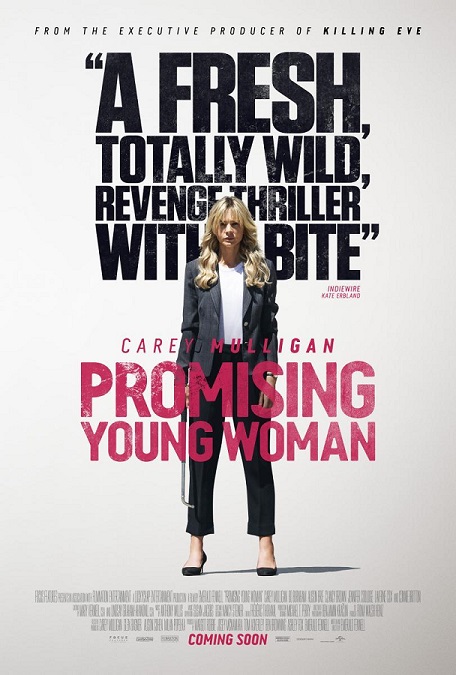
The Nashville critics were not the only ones to honor Promising Young Woman and Carey Mulligan yesterday! The San Diego critics did so as well.
Here are all of the winners from San Diego:
Best Picture
BLACK BEAR
FIRST COW
NOMADLAND
ONE NIGHT IN MIAMI
SOUND OF METAL (RUNNER UP) PROMISING YOUNG WOMAN (WINNER)
Best Director
Darius Marder – SOUND OF METAL
Kelly Reichardt – FIRST COW
Aaron Sorkin – THE TRIAL OF THE CHICAGO 7 (RUNNER UP)
Florian Zeller – THE FATHER Chloe Zhao – NOMADLAND (WINNER)
Best Actor Riz Ahmed – SOUND OF METAL (WINNER)
Chadwick Boseman – MA RAINEY’S BLACK BOTTOM
Brian Dennehy – DRIVEWAYS
Anthony Hopkins – THE FATHER (RUNNER UP)
Steven Yeun – MINARI
Best Actress
Viola Davis – MA RAINEY’S BLACK BOTTOM
Vanessa Kirby – PIECES OF A WOMAN
Frances McDormand – NOMADLAND (RUNNER UP) Carey Mulligan – PROMISING YOUNG WOMAN (WINNER)
Aubrey Plaza – BLACK BEAR
Best Supporting Actor
Sacha Baron Cohen – THE TRIAL OF THE CHICAGO 7
Frank Langella – THE TRIAL OF THE CHICAGO 7
Peter Macdissi – UNCLE FRANK (RUNNER UP)
Bill Murray – ON THE ROCKS Paul Raci – SOUND OF METAL (WINNER)
Best Supporting Actress
Maria Bakalova – BORAT SUBSEQUENT MOVIEFILM
Ellen Burstyn – PIECES OF A WOMAN
Olivia Cooke – SOUND OF METAL
Amanda Seyfried – MANK (RUNNER UP) Yuh-jung Youn – MINARI (WINNER)
Best Comedic Performance
Maria Bakalova – BORAT SUBSEQUENT MOVIEFILM (RUNNER UP)
Sacha Baron Cohen – BORAT SUBSEQUENT MOVIEFILM Radha Blank – THE FORTY-YEAR-OLD VERSION (WINNER)
Bill Murray – ON THE ROCKS (RUNNER UP)
Andy Samberg – PALM SPRINGS
Best Original Screenplay Lee Isaac Chung – MINARI (WINNER)
Sofia Coppola – ON THE ROCKS
Emerald Fennell – PROMISING YOUNG WOMAN (RUNNER UP)
Darius Marder, Abraham Marder & Derek Cianfrance – SOUND OF METAL (RUNNER UP)
Aaron Sorkin – THE TRIAL OF THE CHICAGO 7 (RUNNER UP)
Best Adapted Screenplay Christopher Hampton & Florian Zeller – THE FATHER (WINNER)
Charlie Kaufman – I’M THINKING OF ENDING THINGS (RUNNER UP)
Kelly Reichardt & Jonathan Raymond – FIRST COW
Ruben Santiago-Hudson – MA RAINEY’S BLACK BOTTOM
Chloé Zhao – NOMADLAND
Best Documentary
ATHLETE A
MY OCTOPUS TEACHER
REWIND
THE SOCIAL DILEMMA (RUNNER UP) TIME (WINNER)
Best Animated Film
ONWARD
OVER THE MOON (RUNNER UP)
SOUL
TROLLS: WORLD TOUR WOLFWALKERS (WINNER)
Best International Film
ANOTHER ROUND THE LIFE AHEAD (WINNER)
MARTIN EDEN
THE PLATFORM (RUNNER UP)
SPUTNIK
Best Editing
Alan Baumgarten – THE TRIAL OF THE CHICAGO 7 (RUNNER UP) Andy Canny – THE INVISIBLE MAN (WINNER)
Andrew Dickler & Matthew Friedman – PALM SPRINGS
Jennifer Lame – TENET
Matthew L. Weiss – BLACK BEAR
Best Cinematography
Christopher Blauvelt – FIRST COW
Erik Messerschmidt – MANK (RUNNER UP) Joshua James Richards – NOMADLAND (WINNER)
Hoyte Van Hoytema – TENET
Dariusz Wolski – NEWS OF THE WORLD
Best Production Design Donald Graham Burt – MANK (WINNER)
Nathan Crowley – TENET
Molly Hughes – I’M THINKING OF ENDING THINGS (RUNNER UP)
Kave Quinn – EMMA.
Shane Valentino – THE TRIAL OF THE CHICAGO 7 (RUNNER UP)
Best Visual Effects
BIRDS OF PREY
GREYHOUND
THE INVISIBLE MAN (RUNNER UP)
THE MIDNIGHT SKY
SPUTNIK TENET (WINNER)
Best Costumes
Erin Benach – BIRDS OF PREY (RUNNER UP) Alexandra Byrne – EMMA. (WINNER)
April Napier – FIRST COW
Ann Roth – MA RAINEY’S BLACK BOTTOM
Trish Summerville – MANK
Best Use of Music
DA 5 BLOODS
DAVID BYRNE’S AMERICAN UTOPIA (RUNNER UP) HAMILTON (WINNER)
MA RAINEY’S BLACK BOTTOM (RUNNER UP)
SOUND OF METAL
Best Ensemble
DA 5 BLOODS ONE NIGHT IN MIAMI (WINNER)
PALM SPRINGS
THE TRIAL OF THE CHICAGO 7 (RUNNER UP)
UNCLE FRANK
Breakthrough Artist
Riz Ahmed – SOUND OF METAL (RUNNER UP)
Maria Bakalova – BORAT SUBSEQUENT MOVIEFILM Radha Blank – THE FORTY-YEAR-OLD VERSION (WINNER)
Sidney Flanigan – NEVER RARELY SOMETIMES ALWAYS
Vanessa Kirby – PIECES OF A WOMAN
Yesterday, the Music City Film Critics (that’s Nashville) announced their picks for the best of 2020! They honored Promising Young Woman as Best Picture and Carey Mulligan for Best Actress. Otherwise, the awards pretty much went to the usual suspects. Chloe Zhao for Best Director. Sacha Baron Cohen for Best Supporting Actor and Chadwick Boseman for Best Actor. (I’m not looking forward to having to sit through any Oscar speeches from Sacha Baron Cohen so let’s hope the Academy is more impressed by either Boseman, Paul Raci, or Bill Murray.) Aaron Sorkin picked up an award for his screenplay. Same old, same old. But at least the great Carey Mulligan got some recognition.
Here are the winners!
BEST FILM
Da 5 Bloods
First Cow
I’m Thinking of Ending Things
Ma Rainey’s Black Bottom
Mank
Nomadland Promising Young Woman
Sound of Metal
The Father
The Trial of the Chicago 7
BEST DIRECTOR
Aaron Sorkin – The Trial of the Chicago 7 Chloé Zhao – Nomadland
David Fincher – Mank
Emerald Fennell – Promising Young Woman
Florian Zeller – The Father
Spike Lee – Da 5 Bloods
BEST ACTOR
Anthony Hopkins – The Father Chadwick Boseman – Ma Rainey’s Black Bottom
Delroy Lindo – Da 5 Bloods
Gary Oldman – Mank
Riz Ahmed – Sound of Metal
BEST ACTRESS Carey Mulligan – Promising Young Woman
Elisabeth Moss – The Invisible Man
Frances McDormand – Nomadland
Vanessa Kirby – Pieces of a Woman
Viola Davis – Ma Rainey’s Black Bottom
BEST SUPPORTING ACTOR
Bill Burr – The King of Staten Island
Bill Murray – On the Rocks
Leslie Odom, Jr. – One Night in Miami…
Paul Raci – Sound of Metal Sacha Baron Cohen – The Trial of the Chicago 7
BEST SUPPORTING ACTRESS (TIE)
Amanda Seyfried – Mank
Glenn Close – Hillbilly Elegy Maria Bakalova – Borat Subsequent Moviefilm (TIE)
Olivia Colman – The Father Yuh-Jung Youn – Minari (TIE)
BEST ACTING ENSEMBLE
Da 5 Bloods
I’m Thinking of Ending Things Ma Rainey’s Black Bottom
One Night in Miami…
The Trial of the Chicago 7
BEST ANIMATED FEATURE
Onward (dir. Dan Scanlon)
Over the Moon (dir. Glen Keane)
Scoob! (dir. Tony Cervone) Soul (dir. Pete Docter)
Wolfwalkers (dir. Tomm Moore & Ross Stewart)
BEST FOREIGN LANGUAGE FILM Another Round (dir. Thomas Vinterberg)
Bacurau (dir. Kleber Mendonça Filho & Juliano Dornelles)
Collective (dir. Alexander Nanau)
I’m No Longer Here (dir. Fernando Frías)
The Platform (dir. Galder Gaztelu-Urrutia)
BEST DOCUMENTARY
Collective (dir. Alexander Nanau)
Dick Johnson is Dead (dir. Kirsten Johnson) The Social Dilemma (dir. Jeff Orlowski)
Time (dir. Garrett Bradley)
You Cannot Kill David Arquette (dir. David Darg & Price James)
BEST SCREENPLAY
I’m Thinking of Ending Things (Charlie Kaufman)
Mank (Jack Fincher)
Minari (Lee Isaac Chung)
Promising Young Woman (Emerald Fennell) The Trial of the Chicago 7 (Aaron Sorkin)
BEST SONG
The Trial of the Chicago 7 – “Hear My Voice”
Eurovision Song Contest – “Husavik (My Hometown)”
Trolls: World Tour – “Just Sing”
Over the Moon – “Rocket to the Moon” One Night in Miami… – “Speak Now”
Tenet – “The Plan”
BEST CINEMATOGRAPHY
Da 5 Bloods (Newton Thomas Sigel)
Mank (Erik Messerschmidt)
News of the World (Dariusz Wolski) Nomadland (Joshua James Richards)
Tenet (Hoyte van Hoytema)
BEST EDITING
Nomadland (Chloé Zhao)
Mank (Kirk Baxter)
Tenet (Jennifer Lame)
The Father (Yorgos Lamprinos) The Invisible Man (Andy Canny) (TIE) The Trial of the Chicago 7 (Alan Baumgarten) (TIE)
BEST PRODUCTION DESIGN Mank (Donald Graham Burt)
Emma. (Kave Quinn)
Ma Rainey’s Black Bottom (Mark Ricker)
Da 5 Bloods (Wynn Thomas)
The Personal History of David Copperfield (Christina Casali)
The Jim Ridley Award Awarded to Nashville musician William Tyler for his score for First Cow
You have to feel a little bit bad for The Social Dilemma, a well-intentioned documentary that makes several good points but which runs into one huge problem. The documentary takes a look at social media and, more specifically, how society’s addiction to social media has led to a world where people are more divided, more angry, more anxious, and more volatile. Featuring interviews with the people worked for the companies and who created the social media sites that currently dominate our culture, The Social Dilemma shows how the algorithms that were initially designed to keep people clicking have now led to a world where everyone is living in their own separate reality. The film makes the case that this is not a good thing and that the heads of Twitter and Facebook are potentially more powerful than any world leader. Considering that the film was released months before the social media-directed riot at the capitol and Big Tech’s subsequent decision to ban President Trump (while, of course, continuing to allow both Chinese propaganda and the Ayatollah’s calls for the destruction of Israel), it’s hard not to feel that The Social Dilemma‘s case has been proven. It’s a prophetic film.
The problem, however, is that most people already know that social media is addictive and that it’s potentially harmful and that Google has way too much data on file about its users. Everyone already knows this. It’s just that most people don’t care. That’s the nature of addiction. Even though you know it’s probably going to kill you, you also know that there’s a good chance that you’re next fix might be the best feeling you’ve ever experienced.
I know that it’s not a coincidence that YouTube is always trying to get me to watch videos about kittens. I also know that it’s not a coincidence that, for several months last year, every internet ad that I saw was for lingerie. And yes, I guess it’s a little bit creepy that both YouTube and Facebook managed to figure out my political leanings, despite the fact that I hardly ever post anything political online. I would be outraged if I wasn’t so busy clicking on stuff. What’s that YouTube? There’s a video of two kittens at a meeting of libertarian Catholics and it ends with a La Perla ad? I’ll be right over. Just let me finish writing this review….
The Social Dilemma is full of interviews with people who once worked for companies and services like Google, Facebook, Twitter, and Instagram. Most of them wear the shell-shocked expressions of people who are still grappling with feelings of “My God, what have I done?” They discuss not only how the algorithms behind social media work but also how those algorithms eventually turned out to be more powerful and more destructive than any of their creators imagined. One former Facebook engineer discusses how “likes’ were originally viewed as being a way to encourage people to be positive but, instead, they quickly turned Facebook into a competition. One particularly sobering segment discusses how the social media boom also brought with it a surge of teenage girls going to the emergency room as a result harming themselves as their self-worth became linked to getting likes, retweets, hearts, shares, and all the rest. It’s a sobering film, though its impact is lessened by the decision to include some dramatizations involving a fictional family. The message of the film come through well enough via interviews without the film including scenes of Vincent Kartheiser literally playing a character named Artificial Intelligence. (That said, it’s always good to see Vincent Kartheiser in a film. He’s an actor who deserves to work more.)
To the film’s benefit, it acknowledges that giving up social media is not a realistic solution for most people. At this point, asking people to totally give up social media is the equivalent of asking someone to voluntarily cut themselves off from the world. (As one interviewee points out, social media manages to be both a utopia and a dystopia at the same time.) The documentary makes the argument that the Big Tech monopoly needs to be better regulated and perhaps broken up. (The film’s right but, considering how many former Silicon Valley executives and Big Tech lobbyists are going to be involved with the Biden administration, none of that’s not going to happen any time soon.) The film ends with a series of suggestions about how to use social media without allowing it to control or destroy your life. Most of them are common sense stuff — seek out opposing view points, don’t click on clickbait, don’t blindly retweet or share, do not give devices to children, turn off notifications, etc., etc. — and I’m happy to say that I do most of them.
That said, social media is addictive. I’ve tried to take breaks from twitter but it’s rare that I can ever go more than a day without checking. Seeing those mentions, seeing those likes, seeing those retweets; even after all these years, it’s still a rush. When I first started watching The Social Dilemma, I hopped on twitter just to let people know that I was watching the movie. When the movie ended, I checked to see if anyone had commented on the fact that I was watching it. That’s the world that we all live in right now.
And, as one interviewee says during The Social Dilemma, it could very well be the end of the world. What’s sad, though, is that most people are too busy looking at their phones and devices to even enjoy the ride.
The St. Louis Film Critics Association yesterday announced their nominees for the best of 2020. The winners will be announced this Sunday, the 17th.
The great thing about St. Louis is that they give out a lot of awards. They honor the Best Horror Film and the Best Comedy and all the rest. As a result, their awards are always marginally more interesting than what you get from some of the other regional groups.
Here are the nominations!
BEST FILM
First Cow
I’m Thinking of Ending Things
Nomadland
Promising Young Woman
The Trial of the Chicago 7
BEST DIRECTOR
Emerald Fennell – Promising Young Woman
Lee Isaac Chung – Minari
Spike Lee – Da 5 Bloods
Aaron Sorkin – The Trial of the Chicago 7
Chloe Zhao – Nomadland
BEST ACTRESS
Jessie Buckley – I’m Thinking of Ending Things
Viola Davis – Ma Rainey’s Black Bottom
Vanessa Kirby – Pieces of a Woman
Frances McDormand – Nomadland
Carey Mulligan – Promising Young Woman
BEST SUPPORTING ACTRESS
Maria Bakalova – Borat Subsequent Moviefilm
Ellen Burstyn – Pieces of a Woman
Olivia Colman – The Father
Amanda Seyfried – Mank
Yuh-jung Youn – Minari
BEST ACTOR
Riz Ahmed – Sound of Metal
Chadwick Boseman – Ma Rainey’s Black Bottom
Delroy Lindo – Da 5 Bloods
Anthony Hopkins – The Father
Gary Oldman – Mank
BEST SUPPORTING ACTOR
Bo Burnham – Promising Young Woman
Sacha Baron Cohen – The Trial of the Chicago 7
Bill Murray – On The Rocks
Leslie Odom Jr. – One Night in Miami
Paul Raci – Sound of Metal
BEST ORIGINAL SCREENPLAY
Lee Isaac Chung – Minari
Emerald Fennell – Promising Young Woman
Jack Fincher – Mank
Andy Siara – Palm Springs
Aaron Sorkin – The Trial of the Chicago 7
BEST ADAPTED SCREENPLAY
Charlie Kaufman – I’m Thinking of Ending Things
Kemp Powers – One Night in Miami
Jon Raymond & Kelly Reichardt – First Cow
Ruben Santiago-Hudson – Ma Rainey’s Black Bottom
Chloe Zhao – Nomadland
BEST CINEMATOGRAPHY
Benjamin Kracunc – Promising Young Woman
Erik Messerschmidt – Mank
Joshua James Richards – Nomadland
Newton Thomas Sigel – Da 5 Bloods
Dariusz Wolski – News of the World
BEST EDITING
Jonah Moran – Hamilton
Robert Frasen – I’m Thinking of Ending Things
Kirk Baxter – Mank
Chloe Zhao – Nomadland
Alan Baumgarten – The Trial of the Chicago 7
BEST PRODUCTION DESIGN
Kave Quinn – Emma.
Mark Ricker – Ma Rainey’s Black Bottom
Donald Graham Burt – Mank
Cristina Casali – The Personal History of David Copperfield
Michael Perry – Promising Young Woman
BEST SCORE
Ludovico Einaudi – “Nomadland”
Ludwig Goransson – “Tenet”
James Newton Howard – “News of the World”
Trent Reznor, Atticus Ross & Jon Baptiste – “Soul”
Trent Reznor & Atticus Ross – “Mank”
BEST SOUNDTRACK
Birds of Prey
Da 5 Bloods
Hamilton
Lovers Rock
Promising Young Woman
BEST VISUAL EFFECTS
Birds of Prey
The Invisible Man
Mank
The Midnight Sky
Tenet
BEST ANIMATED FILM
Onward
Over The Moon
Soul
The Wolf House
Wolfwalkers
BEST HORROR FILM
Alone
The Invisible Man
La Llorona
Possessor: Uncut
The Vast of Night
BEST COMEDY FILM
Borat Subsequent Moviefilm
Emma.
The King of Staten Island
On The Rocks
Palm Springs
BEST ACTION FILM
Birds of Prey
The Gentlemen
Greyhound
The Old Guard
Tenet
BEST DOCUMENTARY
City Hall
Collective
Dick Johnson Is Dead
My Octopus Teacher
The Social Dilemma
BEST FOREIGN FILM
Another Round
Bacurau
Beanpole
Collective
Vitalina Varela
WORST FILM
Artemis Fowl
The Doorman
Downhill
Hillbilly Elegy
Wonder Woman 1984
BEST SCENE
HR scene in The Assistant
Rudy Guiliani in Borat Subsequent Moviefilm
Dinner with parents in I’m Thinking of Ending Things
Sisters dine in The Invisible Man
Questionnaire in Never Rarely Sometimes Always
There’s no good way to open this post, so there’s one of my dogs. That’s Cub. We got him in November of 2019 when he was just under 3 months. He was my first puppy and the first male dog I have ever had. That picture is of him about a year later. I didn’t put him that way. I just looked over at the chair and he was sitting like a person, complete with using the armrest. He didn’t even get up to move when I started taking pictures. He sat there as if he were posing for me.
Anyways, I apologize for the lists being even later this year than last. I don’t even have the high number of movies as an excuse this time around as I fell short of 2019’s number of films, which is 1,266. I only saw 919 of them last year. Things just kept coming up that cut into the time it takes to comb through the movies and compile the lists.
The rules are the same as in previous years with one exception. I am going to start linking to reviews of these movies if I can find any that have been written by one of our contributors here on Through the Shattered Lens.
Here are the normal rules:
There is no particular order to the films in these lists. They either made it, or they didn’t.
These lists do not necessarily have films that came out in 2020. These are films that I saw for the first time in 2020. In fact, none of these films are from 2020.
The gems list are films that don’t make the best list, but I want to put a spotlight on them.
If you disagree with any of my choices. Good! I want people to form their own opinions and think for themselves. But if you care to share those opinions, then be nice about it.
I was kind of hoping that, when they met and voted earlier today, the National Society Of Film Critics would add some new films and performances to the Oscar discussion but instead, they went for the usual suspects. Nomadland took Best Picture, though First Cow was a close runner-up. Chloe Zhao, Frances McDormand, and Maria Bakalova won again. I mean, if we’re going to be honest …. it was all pretty predicable. Remember how, in past years, it sometimes took nearly an entire day for the NSFC to announce all their winners because the voting was so close? That didn’t happen this year. It was all pretty much cut-and-dried. I followed along on twitter because I’m addicted to this stuff but as soon as they announced Frances McDormand was their pick for Best Actress, I knew how the day was going to go.
(And don’t get me wrong! Frances McDormand is great! I haven’t seen Nomadland yet but I greatly admired The Rider, Chloe Zhao’s previous film. Please do not think that I’m saying that any of these awards are undeserved because I most certainly am not. Instead, I’m just saying that — from the perspective of a lifelong Oscar watcher — it’s more fun when things aren’t predictable.)
Oh well, it happens. Sometimes, you have an Oscar race where every precursor is unpredictable and it seem like anyone could win. And then we have years like this one, where the same film keeps winning over and over again. Some people would say that we should probably just be happy that people can all agree on something for once. Hopefully, they won’t say that to me, though. If we’re all going to agree on something, let’s agree to treat one another with respect and not always jump to the worst conclusion about the other side. Agreeing on films, though, is nothing to celebrates. Films are meant to be argued about.
Anyway, here are the winners from the National Society Of Film Critics!
Best Picture
Winner: NOMADLAND (52 points)
Runners-up: FIRST COW (50 points) & NEVER RARELY SOMETIMES ALWAYS (41 points)
Best Director
Winner: Chloé Zhao, NOMADLAND (58 points)
Runners-up: Steve McQueen, SMALL AXE (41 points) & Kelly Reichardt, FIRST COW (30 points)
Best Foreign-Language Film
Winner: COLLECTIVE (38 points)
Runners-up: BACURAU and BEANPOLE (36 points) & VITALINA VARELA (32 points)
Best Actress
Winner: Frances McDormand, NOMADLAND (46 points)
Runners-up: Viola Davis, MA RAINEY’S BLACK BOTTOM (33 points) & Sidney Flanigan, NEVER RARELY SOMETIMES ALWAYS (29 points)
Best Actor
Winner: Delroy Lindo, DA 5 BLOODS (52 points)
Runners-up: Chadwick Boseman, MA RAINEY’S BLACK BOTTOM (47 points) & Riz Ahmed, SOUND OF METAL (32 points)
Best Supporting Actor
Winner: Paul Raci, SOUND OF METAL (53 points)
Runners-up: Glynn Turman, MA RAINEY’S BLACK BOTTOM (36 points) & Chadwick Boseman, DA 5 BLOODS (35 points)
Best Screenplay
Winner: Eliza Hittman, NEVER RARELY SOMETIMES ALWAYS (38 points)
Runners-up: Jon Raymond and Kelly Reichardt, FIRST COW (35 points) Charlie Kaufman, I’M THINKING OF ENDING THINGS (29 points)
Best Cinematography
Winner: Joshua James Richards, NOMADLAND (47 points)
Runners-up: Shabier Kirchner, LOVERS ROCK (41 points) & Leonardo Simões, VITALINA VARELA (34 points)






 Through the Shattered Lens