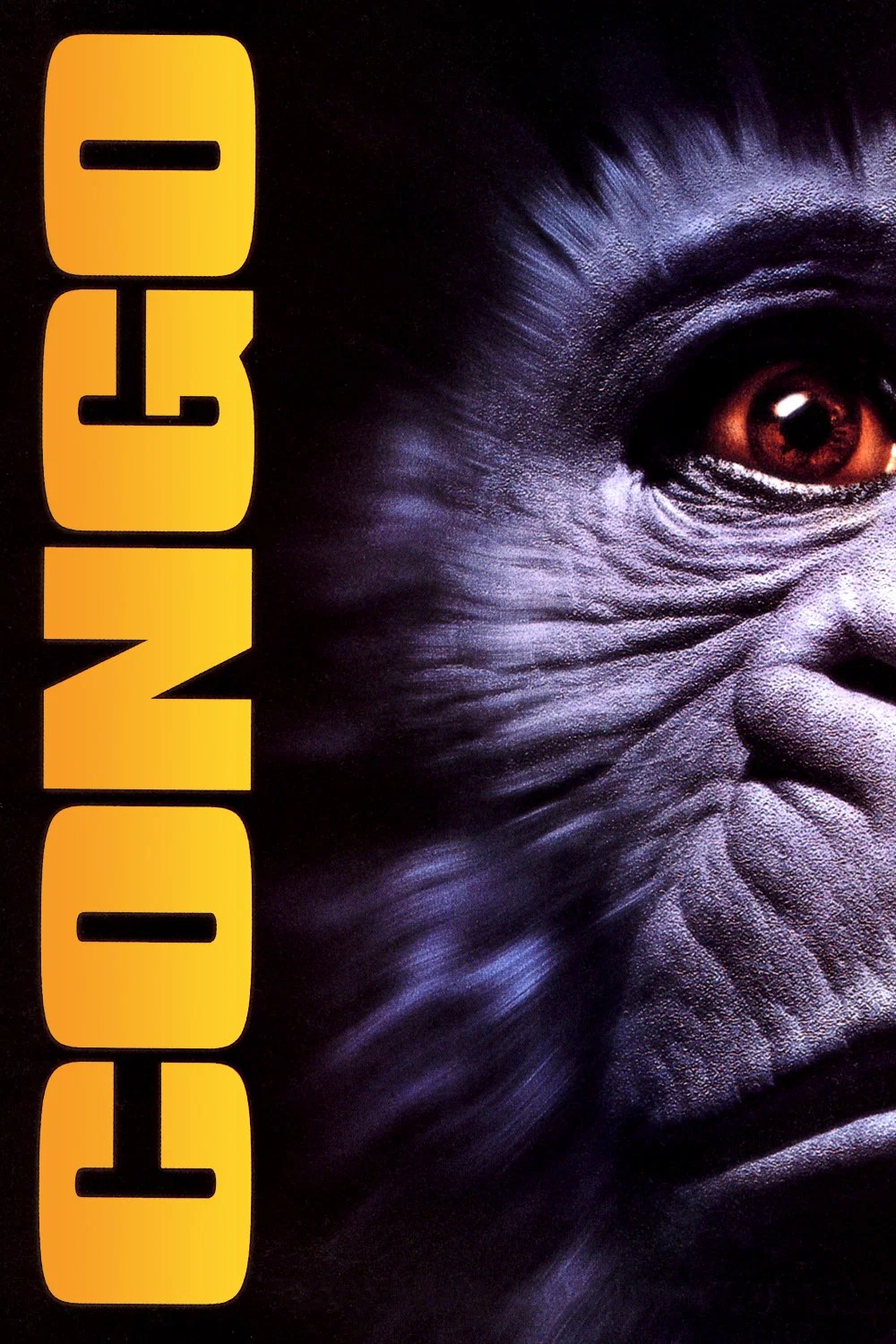
Guilty Pleasure No. 129: Congo (dir. by Frank Marshall)


Congo is the kind of movie that makes perfect sense as a guilty pleasure because it is always hovering just above the level of complete nonsense, yet it has enough energy and conviction to remain enormously watchable. Directed by Frank Marshall, the 1995 film turns Michael Crichton’s jungle-thriller premise into a sprawling mixture of monster movie, treasure hunt, corporate conspiracy, technological anxiety, and old-fashioned adventure serial. It is loud, messy, often ridiculous, and loaded with moments that should not work at all. But that is the pleasure of Congo: it commits so completely to its bizarre material that the movie becomes difficult to dislike.

The setup is wonderfully overstuffed. A corporate expedition disappears while searching for a legendary diamond mine in the Congo, apparently after encountering some mysterious, deadly force. At the same time, primatologist Peter Elliot is preparing to return Amy, a gorilla he has raised and taught sign language, to the wild. Amy has recurring dreams—or perhaps memories—of a strange jungle city, and she communicates through a glove that translates her signs into a robotic voice. Before long, Peter, Amy, corporate representative Karen Ross, Romanian explorer Herkermer Homolka, and a mercenary guide named Captain Munro Kelly are all headed toward the same lost city, where diamonds, ancient ruins, and murderous white gorillas await.

That synopsis alone explains why Congo has developed such a devoted guilty-pleasure reputation. It is a movie where satellites, laser weapons, genetically engineered guard apes, corporate greed, sign-language research, volcanoes, and ancient African mythology all exist in the same story without anyone pausing to question the sheer overload of it. The movie treats every development with sincere urgency, even when the audience is watching Amy the gorilla say “Amy good gorilla” through a computerized voice device. It is impossible not to admire the confidence. Congo never winks at the audience, never admits that its premise is wild, and never cuts itself down to a more manageable size. It simply keeps adding more adventure-movie ingredients until the whole thing becomes strangely hypnotic.

Laura Linney’s Karen Ross and Dylan Walsh’s Peter Elliot are meant to anchor all of that craziness, but they are also among the film’s blandest elements. Linney is a talented actress, and she brings a professional focus to Karen’s corporate mission, but the character is written in such functional terms that she rarely feels like more than the person carrying the plot’s technological and business-related exposition. Karen is competent, determined, and occasionally vulnerable, but she never develops a particularly distinctive personality. Linney plays her with a seriousness that fits the film’s overall tone, yet that seriousness can make her feel oddly distant. She is there to make sure the satellite plot, the diamond plot, and the rescue plot keep moving, rather than to provide much spark on her own.

Walsh has an even tougher assignment as Peter. He is essentially the emotional center of Amy’s story, and the film needs the audience to believe in his paternal, almost codependent relationship with her. But Peter is such a mild, generic protagonist that he often gets swallowed by the movie’s more eccentric ideas. Walsh is not bad, exactly; he is simply too subdued for a film filled with volcanic eruptions, killer gorillas, and Tim Curry speaking every line as though he is announcing the end of civilization. His performance has a sincere gentleness that helps the scenes with Amy, but it also makes him feel like he wandered in from a quieter, more conventional family adventure. When the movie becomes bigger and stranger, Peter’s personality does not expand with it.

That blandness becomes especially noticeable because Ernie Hudson and Tim Curry are having such an obviously fantastic time in their roles. Hudson plays Captain Munro Kelly with the relaxed confidence of someone who knows he is the coolest person in the room. Munro is a professional guide, a fighter, a pilot, and a survivor, but Hudson does not turn him into a grim action-movie cliché. He gives the character humor, charisma, and a reassuring calm under pressure. Whenever the group faces another disaster—whether it is hostile terrain, dangerous animals, mercenaries, or the increasingly unhinged situation inside the lost city—Hudson makes Munro feel like the one person who might actually know what he is doing.

Hudson’s performance also gives Congo a sense of fun that the central characters sometimes lack. He has an easy screen presence, and he seems to understand that the film works best when it leans into the pleasures of a grand, pulpy adventure. Munro is not a particularly deep character, but Hudson makes him memorable through timing, attitude, and sheer likability. The movie becomes livelier whenever he takes charge, whether he is negotiating with people in the field or calmly reacting to another completely absurd revelation. If Karen and Peter are the story’s functional leads, Munro is the character who gives the audience someone to enjoy following.

Then there is Tim Curry as Herkermer Homolka, who delivers what can only be described as a masterclass in hammy, scenery-chewing entertainment. Curry does not merely play Homolka; he devours the role with a kind of operatic enthusiasm. Every line is delivered in his grand Romanian accent with the force of a proclamation, and every gesture suggests that Homolka believes he is the hero of the greatest expedition in history. Curry appears to be enjoying himself so much that it becomes infectious. He is not interested in realism, restraint, or subtle characterization. He is there to make every scene larger, louder, and more theatrical.

Homolka is already a ridiculous figure on the page: a pompous explorer with a famous family name, an exaggerated ego, and a dramatic flair that makes him seem less like a real adventurer than a flamboyant villain from a lost serial. Curry recognizes that the only correct way to play him is at maximum volume. His performance turns every bit of dialogue into an event. He gives the impression that he has spent years preparing speeches for this exact jungle expedition, waiting for the chance to announce his discoveries to the world. Even when Homolka is making selfish or foolish decisions, Curry makes him too entertaining to hate.

The contrast between Curry and the more restrained leads is one of the reasons Congo feels so odd. Linney and Walsh approach the material with a level of seriousness that suggests they are trying to preserve some emotional credibility. Hudson and Curry, by contrast, seem to recognize that credibility is not really the point. Hudson brings a cool, knowing charm, while Curry turns the movie into a one-man theatrical spectacle whenever he appears. Neither approach is necessarily wrong, but the difference creates a tonal imbalance. The film’s heroes feel flat because its supporting players are so much more alive.

The killer gorillas, of course, are another major source of the film’s guilty-pleasure appeal. These are not normal gorillas defending their territory. They are pale, vicious creatures bred to protect the diamond city of Zinj, and they attack with the exaggerated menace of monsters in a haunted-house ride. The effects have not aged gracefully. The suits and animatronics are visible, the movements can be stiff, and the creatures are often more amusing than frightening. Yet they remain memorable because the movie gives them a distinct, nightmarish look: white fur, glowing eyes, sharp teeth, and sudden appearances from dark corridors or jungle fog.

Frank Marshall directs the action with enough pace and polish to keep Congo from collapsing under the weight of its own silliness. The jungle setting, the ruined city, the expedition equipment, the satellite imagery, and the volcanic finale all give the movie a bigger sense of scale than its reputation might suggest. It feels like a genuine studio blockbuster from a time when Hollywood would spend serious money on an unapologetically strange idea. The film is not elegant, and it is certainly not believable, but it is never boring for long.

As a conventional adventure movie, Congo is uneven. Its African setting is often treated as a vague, dangerous backdrop, and its plot is overloaded with enough corporate jargon and techno-babble to distract from the more entertaining monster-movie material. But as a guilty pleasure, it is hard to beat. The movie is too bizarre to be generic and too sincere to feel cynical. Laura Linney and Dylan Walsh may be stuck playing bland characters at the center of the chaos, but Ernie Hudson and especially Tim Curry make the journey worth taking. Curry’s performance alone is a treasure: a joyous, magnificent display of overacting that turns Congo from a merely strange blockbuster into something genuinely unforgettable.

Previous Guilty Pleasures

  1. Half-Baked
  2. Save The Last Dance
  3. Every Rose Has Its Thorns
  4. The Jeremy Kyle Show
  5. Invasion USA
  6. The Golden Child
  7. Final Destination 2
  8. Paparazzi
  9. The Principal
  10. The Substitute
  11. Terror In The Family
  12. Pandorum
  13. Lambada
  14. Fear
  15. Cocktail
  16. Keep Off The Grass
  17. Girls, Girls, Girls
  18. Class
  19. Tart
  20. King Kong vs. Godzilla
  21. Hawk the Slayer
  22. Battle Beyond the Stars
  23. Meridian
  24. Walk of Shame
  25. From Justin To Kelly
  26. Project Greenlight
  27. Sex Decoy: Love Stings
  28. Swimfan
  29. On the Line
  30. Wolfen
  31. Hail Caesar!
  32. It’s So Cold In The D
  33. In the Mix
  34. Healed By Grace
  35. Valley of the Dolls
  36. The Legend of Billie Jean
  37. Death Wish
  38. Shipping Wars
  39. Ghost Whisperer
  40. Parking Wars
  41. The Dead Are After Me
  42. Harper’s Island
  43. The Resurrection of Gavin Stone
  44. Paranormal State
  45. Utopia
  46. Bar Rescue
  47. The Powers of Matthew Star
  48. Spiker
  49. Heavenly Bodies
  50. Maid in Manhattan
  51. Rage and Honor
  52. Saved By The Bell 3. 21 “No Hope With Dope”
  53. Happy Gilmore
  54. Solarbabies
  55. The Dawn of Correction
  56. Once You Understand
  57. The Voyeurs 
  58. Robot Jox
  59. Teen Wolf
  60. The Running Man
  61. Double Dragon
  62. Backtrack
  63. Julie and Jack
  64. Karate Warrior
  65. Invaders From Mars
  66. Cloverfield
  67. Aerobicide 
  68. Blood Harvest
  69. Shocking Dark
  70. Face The Truth
  71. Submerged
  72. The Canyons
  73. Days of Thunder
  74. Van Helsing
  75. The Night Comes for Us
  76. Code of Silence
  77. Captain Ron
  78. Armageddon
  79. Kate’s Secret
  80. Point Break
  81. The Replacements
  82. The Shadow
  83. Meteor
  84. Last Action Hero
  85. Attack of the Killer Tomatoes
  86. The Horror at 37,000 Feet
  87. The ‘Burbs
  88. Lifeforce
  89. Highschool of the Dead
  90. Ice Station Zebra
  91. No One Lives
  92. Brewster’s Millions
  93. Porky’s
  94. Revenge of the Nerds
  95. The Delta Force
  96. The Hidden
  97. Roller Boogie
  98. Raw Deal
  99. Death Merchant Series
  100. Ski Patrol
  101. The Executioner Series
  102. The Destroyer Series
  103. Private Teacher
  104. The Parker Series
  105. Ramba
  106. The Troubles of Janice
  107. Ironwood
  108. Interspecies Reviewers
  109. SST — Death Flight
  110. Undercover Brother
  111. Out for Justice
  112. Food Wars!
  113. Cherry
  114. Death Race
  115. The Beast Within
  116. Girl Series
  117. Gone in 60 Seconds
  118. Swordfish
  119. Marked For Death
  120. The Internship
  121. The Angry Red Planet
  122. 2012
  123. Old School
  124. No Escape
  125. In Death Series
  126. Alligator
  127. Little Annie Fanny
  128. Wicked Wanda

Retro Television Review: Baywatch 1.13 “Home Cort”


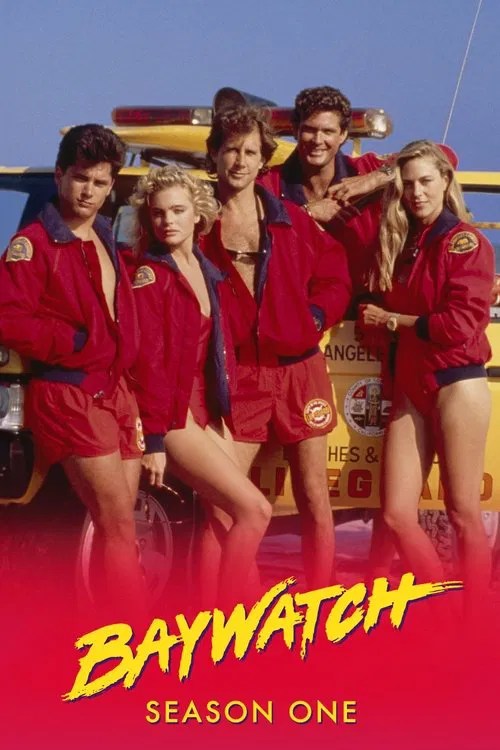
Welcome to Retro Television Reviews, a feature where we review some of our favorite and least favorite shows of the past!  On Saturdays, I will be reviewing Baywatch, which ran on NBC and then in syndication from 1989 to 2001.  The entire show can be viewed on Tubi.

This week, we meet John D. Cort.

Episode 1.13 “Home Cort”

(Dir by Paul Schneider, originally aired on January 12th, 1990)

There’s a new lifeguard on the beach!

His name is John D. Cort (John Allen Nelson) and he’s a former Navy SEAL with a dark and mysterious past.  He drives a motorcycle.  He wears a cowboy hat.  He has a quick smile.  He’s dangerous and he’s now a member of the cast.  I’m going to guess that he was added to bring some mystery to the show.  Originally, Eddie Kramer was supposed to be the dangerous lifeguard with the mysterious past but Billy Warlock was just too earnest and young to really pull that off.  John D. Cort, on the other hand, is at least 40.

Now, I said that Cort was the “new lifeguard on the beach.”  That’s not quite true.  It turns out that he’s actually an old lifeguard who was a friend of Mitch’s and Craig’s.  In fact, it’s insinuated that their friendship is legendary amongst the lifeguards.  Of course, no one’s ever mentioned Cort before but whatever.  Baywatch was never exactly known for its continuity.

Cort says that he’s returned to the beach so that he can work as a lifeguard for ten days and keep his eligibility.  Actually, he’s been hired to retrieve a mysterious package that’s at the bottom of the ocean.  He recruits his old friend, Sam (Bruce Fairbairn), to take him out into the ocean so that he can retrieve the package.  However, an explosion costs Sam his life and forces Cort to deal with the fact that someone wants him dead.  Who wants Cort dead?  Some guy named Jack Burton (Drew Snyder).  Why does he want Cort dead?  Who cares?  I got bored with the whole thing so I missed his motive.  I could go back and find out but, as far as I’m concerned, if the answer was worth knowing, I wouldn’t have gotten bored the first time around.  The story is really just an excuse to introduce Cort.  At the end of the episode, he inherits Sam’s surf shop and makes peace with being a regular member of the cast for at least the rest of the season.

As for the B-plot, Shauni and and Jill go into business selling sandwiches on the beach!  They take a lot of business away from crooked sandwich hustler Buddy Semple (played by George Clooney’s future production partner, Grant Heslov).  Buddy reacts by hiring two women in bikinis to hand out his sandwiches.  That’s the entire plot.

Oh, this episode.  I’ll be so happy when the first season of Baywatch is over with and the show fully and cheerfully embraces the stupidity of its concept.  Until then …. welcome to the beach, John Cort!

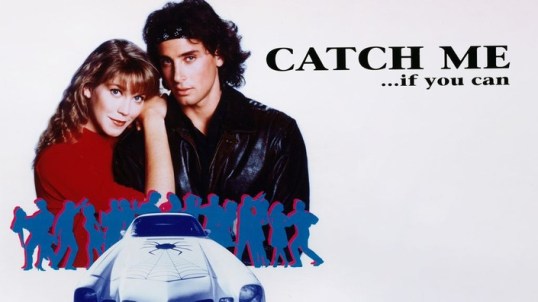
I Watched Catch Me If You Can (1989, Dir. by Stephen Sommers)


I hated Grind so much that I decided to watch another movie to get it out of my head.  I’m glad I did because, for my second movie, I picked a good one.

Catch Me If You Can takes place in Minnesota.  The school board is planning on closing down Cathedral High School unless the school can raise $200,000.  Class president Melissa (Loryn Locklin) takes charge of the fundraising drive but, even though she pours her heart into all of the car washes and bake sales, she’s only been able to raise $19,000.  Dylan Malone (Matt Lattanzi, who was married to Olivia Newton-John) is the school bad boy, who is always late to class because he’s busy racing other cars on the country roads near the school.  The principal (Geoffrey Lewis) gives Dylan an option.  He can either help Melissa or he can go to detention.  Dylan’s idea of helping is to take the money that Melissa has raised and bet on the illegal races that he’s entering.  At first, it works.  But when the Fat Man (M. Emmet Walsh) challenges Dylan to race his best man and then tells his racer to cheat, Dylan and Melissa lose all the money.  The Fat Man has a proposition.  The Fat Man dares Dylan to enter an impossible, timed race.  If Dylan wins, he’ll make the double the money that he lost and he and Melissa will be able to save the school. Dylan agrees.  Luckily, it turns out that the school’s principal is also the legendary Fast Freddie, the only person to ever win the Fat Man’s race.

It may not be anyone’s idea of great art but Catch Me If You Can is still a delightful and fun 80s teen movie, complete with a nerdy sidekick who turns out to be secretly cool, a bad boy with a heart of gold and a mullet, and a big football game at the end.  The plot doesn’t even make sense but the cast gave it their all and, as someone who took part in way too many car wash fund raisers in high school, I knew exactly what Melissa was going through!  I’ll admit that, towards the end of the film when everyone was counting down how many seconds Dylan had to make it to the finish line, I got a little caught up in the moment and I may have even cheered a little.  Catch Me If You Can is a wonderful slice of 80s goodness.

Dangerous Curves (1988, directed by David Lewis)


Last night, I watched Dangerous Curves.

This was a dumb, dumb film from the late 80s.  Tate Donovan and Grant Heslov star as two college students who lose a Porsche in San Diego and then have to get it back.  Fortunately, the Porsche is the grand prize in a beauty contest so Donovan and Heslov just have to hope that their friend Michelle (Danielle van Zernick) wins.  This should have been fun because it featured a hot car and several hot girls in bikinis but it also featured Tate Donovan and Grant Heslov as our “heroes.”  Donovan plays the uptight college student and comes across like one of the flunkies who helped Ted Kennedy cover-up Chappaquiddick.  Grant Heslov plays the carefree college student who constantly ruins everyone else’s life.  Neither one has the screen presence necessary to make us overlook how stupid their characters are.  On the basis of Dangerous Curves, it’s easy to see why Heslov went into producing and Tate Donovan went into doing character roles in films produced by Grant Heslov.

On the plus side, Robert Stack and Leslie Nielsen are funny in small roles.  And the car is hot and the film features as many bikinis as a typical episode of Miami Vice.  Watching the movie might remind you of the fun you had playing Grand Theft Auto: Vice City back in the day.

There’s nothing wrong with that.

Back to School Part II #17: The Boys Next Door (dir by Penelope Spheeris)


Boys-next-door

Three years after starring in Grease 2, Maxwell Caulfield starred in another (albeit far different) film about teenage delinquents, 1985’s The Boys Next Door.  Directed by Penelope Spheeris (who also did Suburbia, another film about wayward youth), The Boys Next Door is a frequently harrowing film about a road trip gone very wrong.

The film opens with a series of black-and-white photographs of real-life serial killers, so you know what you’re about to get yourself into before the main action even begins.  Caulfield plays Roy, a not-very-smart teenager who lives in an industrial town in the southwest.  With his generally bad attitude and violent temper, Roy is one of the least popular kids at the local high school.  In fact, his only friend appears to be Bo (Charlie Sheen).  Bo is just as stupid as Roy but he’s not as violent.  Bo’s problem is that he’s a follower, the type who is incapable of making his own decisions.  If Roy says, “Let’s beat the Hell out of someone,” Bo is going to agree because … well, why not?

When Roy and Bo graduate from high school, they don’t have much more to look forward to than a life of working in a factory.  After an angry Roy violently lashes out at a graduation party, he decides that he and Bo should get out of town.  Fortunately, Bo has received $200 as a graduation gift.  Roy and Bo decide to use that money to take a trip to Los Angeles.

On the way to L.A., it quickly becomes obvious that Roy is more than just an angry kid.  When he and Bo rob a gas station, Roy savagely beats the attendant.  When they get to Los Angeles, all Roy can talk about is how much he hates the city and everyone who lives in it.  Roy is especially vocal about how much he hates anyone who he perceives as being gay…

Of course, even as Roy is loudly expressing every homophobic thought that pops into his tiny mind, it’s hard not to notice that he seems to be rather obsessed with Bo.  In fact, he is so obsessed with Bo that he basically kills anyone who shows the least bit of interest in Bo.  Paranoid that Bo is going to abandon him, Roy is willing to do anything to keep that from happening.

The Boys Next Door is one of those films that really took me by surprise.  It may start and look like your typical low-budget thriller but The Boys Next Door ultimately reveals itself to be a disturbingly plausible portrait of a sociopath.  The film suggests that, as individuals, both Roy and Bo are somewhat laughable but, as a team, they’re deadly.  It’s no wonder that Roy is so insistent that Bo always stay with him because, without Bo around, Roy wouldn’t have any motivation to do anything.  Everything that Roy does — from theft to murder — is largely to impress Bo.  Unfortunately, Bo is too stupid to understand what’s going on in his friend’s head.

Especially when compared to some of the other performances that they are known for, both Sheen and Caulfield do surprisingly good work as the two murderers.  Penelope Spheeris wisely directs the film as if it were a documentary and the end result is a harrowing film that deserves to be far better known.

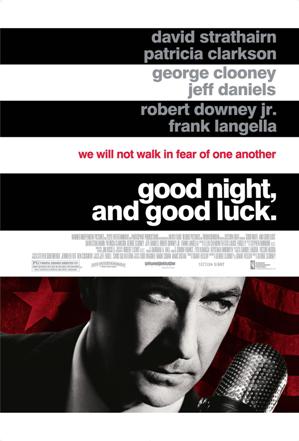
Shattered Politics #76: Good Night, and Good Luck (dir by George Clooney)


Goodnight_posterOne of my favorite episodes of South Park is called Smug Alert!  As you may remember, this is the episode where the citizens of South Park all buy hybrid cars and end up getting so self-satisfied that a dangerous cloud of smug forms over the town.  At the same time, another smug storm is racing across the United States.  This smug storm was created by the speech that George Clooney gave when he won the Oscar for Syriana.  When those two clouds of smug meet, it’s the perfect storm.  It also ends up destroying San Francisco.

The same year that Clooney was named Best Supporting Actor for Syriana, he was also nominated for directing the 2005 best picture nominee, Good Night, and Good Luck.  In his speech, Clooney specifically said that he felt he was winning supporting actor to make up for not winning director and proceeded to give the speech that he would have given if he had won director.

And looking back, I think that we do have to admit that it was a very smug speech.

Fortunately, Good Night, and Good Luck has aged better than Clooney’s speech.

I do have to admit that, when I recently rewatched Good Night and Good Luck, I was a little concerned.  I always manage to forget that the film starts on a really bad note.  The year is 1958 and news anchorman Edward R. Murrow (played by David Strathairn) is receiving an award.  As Murrow stands behind the podium, he proceeds to give a long and self-righteous speech about how television should be used not to entertain but to educate as well.  And, quite frankly, he comes across like such a pompous blowhard that I was dreading the idea of having to spend the next 90 or so minutes with him.

But then, fortunately, the film entered into flashback mode and, until the final few minutes of the film, we didn’t have to listen to anymore of Murrow’s speech.  The majority of Good Night and Good Luck takes place in 1953.  U.S. Sen. Joseph McCarthy (who appears in archival footage throughout the film) has declared that he has the names of communists who hold important positions in both the government and the media.  Murrow and his producer, Fred Friendly (George Clooney) defy the corporate overlords of CBS and bravely investigate and challenge McCarthy’s claims.  McCarthy and his henchmen respond by trying to smear both Murrow and one of his reporters (Robert Downey, Jr.) as a communists.  As always seems to happen in films about McCarthyism, another supporting character reacts to the change of communism by committing suicide.  And, in this particular vision of the fight against Joseph McCarthy, Edward R. Murrow and the media save America.

Of course, if you actually make the effort to learn history, you’ll discover that it wasn’t just Edward R. Murrow who stood up to McCarthy.  In fact, you’ll discover that Murrow stood up to McCarthy after several other prominent people — on both sides of the political divide — had already done so.  If anything, the real-life Murrow seems to have more in common with pompous scold seen at the beginning and end of the film, as opposed to the one that we see standing up to McCarthy.

One can very legitimately debate whether or not Murrow deserves all of the credit that he’s given in this film.  Still, the film does make a larger and very important point.  We, as Americans, have to always be on guard against witch hunts and against demagogues and the forces of fear and paranoia that are always trying to shape our politics.  And, whether or not Murrow was a hero or just a bystander, one cannot deny that the larger message of Goodnight, and Good Luck remains as relevant today as when the film was originally released.

Judging from some of his other films — The Monuments Men and the Ides of March — I don’t particularly feel that George Clooney is that good of a director.  But he does do a good job with Good Night and Good Luck.  (In fact, he does such a good job that you can’t help but feel that it’s the exception to the rule as far as Clooney the director is concerned.)  Filmed in wonderful black-and-white and full of good performances, Good Night, and Good Luck remains surprisingly watchable.

Just avoid any George Clooney Oscar speeches while watching it.  San Francisco has never recovered.

Trailer: The Monuments Men (Official)


The Monuments Men

The race for Awards Season film releases has begun to heat up with trailers for American Hustle and The Butler already showing some major front-runners for the major awards at the end of the year.

We now have another trailer release for a film that looks to join in on all the end of the year awards scramble. It’s the latest film from George Clooney (doing a trifect as writer, director and actor) which sports an impressive ensemble cast that includes Matt Damon, Cate Blanchett, John Goodman, Bill Murray, Jean Dujardin and Bob Balaban.

The Monuments Men is based on the true story of archivers, museum directors, art restorers turned soldiers tasked with saving the cultural and fine arts treasures stolen by Hitler’s Nazi forces during World War II. As the war begins to turn again the Nazi’s this group of unconventional soldiers must prevent these treasures from being destroyed as part of Hitler’s “scorched earth” policy when it comes to the cultures he has deemed unworthy.

The film itself is adapted from the book The Monuments Men: Allied Heroes, Nazi Thieves and the Greatest Treasure Hunt in History by Robert M. Edsel. There’s a camp out there who doesn’t look at Clooney’s work as anything but OScar-bait whenever they come around every other year, but there’s no denying that the man can direct and act. The question now is whether The Monuments Men will finally give Clooney that final push into getting his first Best Director Oscar.

The Monuments Men is set for a December 18, 2013 release date.