Film Review: Into the Wild (dir by Sean Penn)


He went looking for America but couldn’t find it.

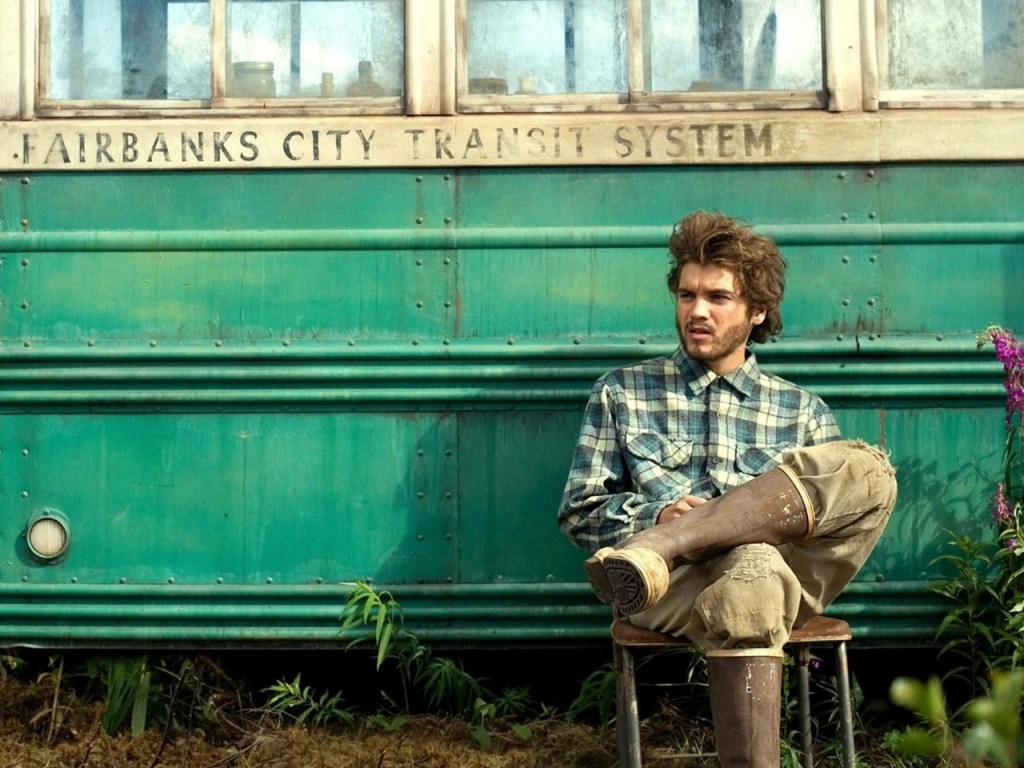
That’s not actually the tag line that was used to advertise 2007’s Into The Wild but perhaps it should have been.  Based on the true story of Chris McCandless, a college graduate who gave away all of his money and then roamed the country for two years before starving to death in an abandoned bus in Alaska, Into The Wild seems to be Sean Penn’s attempt to make a modern-day Easy Rider.  Just as Dennis Hopper and Peter Fonda crossed the country and met several different people over the course of that seminal road film, Into The Wild follows Emile Hirsch’s Chris McCandless as he takes on the identity of Alexander Supertramp and hikes across the continent.  Along the way, he meets and befriends hippies (Catherine Keener and Brian H. Dierker), blue collar workers (Vince Vaughn), wayward teenagers (Kristen Stewart), and, most poignantly, a retired man (Hal Holbrook) who sincerely tries to help Chris make peace with his wanderlust.

You would think that this would be the type of film that would bring out Sean Penn’s worst directorial instincts but Penn actually directs with a very real sensitivity and a willingness to see the good in just about everyone that Chris meets.  It is true that, especially at the start of the film, Chris can sometimes be a bit difficult to take.  He’s so self-righteous and sure of himself.  He mistakes his college diploma for being a badge of experience and occasionally, he can come across as being incredibly condescending.  But, as the film progresses, Chris starts to realize that he doesn’t know everything and that he can’t do everything by himself.  Sometimes, he does need help, even if he doesn’t want to admit it.  The film’s most moving moments feature Chris and Hal Holbrook’s Ron Franz.  Ron has the years of experience that Chris lacks and Ron also becomes one of the few people to whom Chris is willing to truly listen.  And yet, when Ron offers to adopt Chris and give him a permanent home, Chris’s response is to promise to talk to him about it when Chris returns from Alaska.  As Chris leaves, it’s obvious that Ron knows that he’s never going to see Chris again.  Dying in Alaska, Chris finally makes some sort of inner peace with the parents (William Hurt and Marcia Gay Harden) and the sister (Jena Malone) that he earlier abandoned.  It’s an amazingly touching scene.  Penn, whose other directorial efforts have been a bit didactic, seems to be willing to grant a certain grace to everyone in the film, even those whose politics or cultural attitudes he might not necessarily share.  Penn not only captures the visual beauty of the America wilderness but also the beauty of the people, a beauty that too many other directors chose to downplay.

It’s a strong film and certainly the best of Penn’s directorial efforts.  Emile Hirsch is not always likable as Chris but, then again, the heart of the film is found in the people that Hirsch meets and Penn gets excellent performances from his entire supporting cast.  Hal Holbrook received a much deserved Oscar nomination.  I also liked Vince Vaughn’s performance as guy who teaches Chris about hard work before getting arrested for stealing cable and also Jena Malone as Chris’s sister, the one person who understands him, even if she’s not invited to travel with him.

Into The Wild is a poignant portrayal of  both wanderlust and the often-neglected corners of America.  Did Chris find a little of something that he was looking for before he died in that bus?  One can only hope.


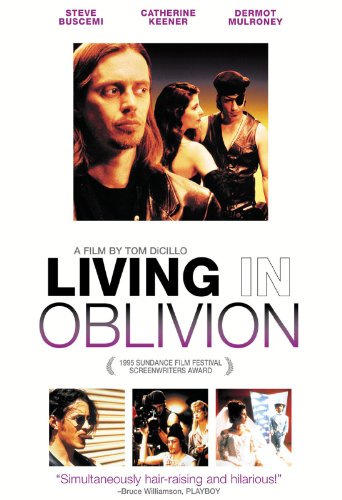
Ghosts of Sundance Past: Living in Oblivion (dir by Tom DiCillo)


As we all know, this year’s Sundance Film Festival started yesterday.

To me, Sundance has always signified the official start of a new cinematic year.  Not only is it the first of the major festivals but it’s also when we first learn about some of the films that we’ll be looking forward to seeing all year.  It seems like every year, there’s at least one successful (or nearly successful) Oscar campaign that gets it start at Sundance.  For instance, it is probable that Past Lives will receive an Oscar nomination for Best Picture on Tuesday and its campaign started with how it was received at the 2023 Sundance Film Festival.

My plan for this year is to spend the last few days of January looking at some of the films that have won awards or otherwise created a splash at previous Sundance Film Festivals.

Like 1995’s Living in Oblivion for example….

Living in Oblivion centers around the filming of an independent movie called, appropriately enough, Living in Oblivion.  The film is being directed by Nick Reve (a youngish and, I’ll just say it, hot Steve Buscemi), a filmmaker whose indie cred does not protect him from the difficulties of shooting a movie with next to no budget.  His cinematographer is Wolf (Dermot Mulroney), who is talented but pretentious and who is dating the first assistant director, Wanda (Danielle von Zerneck).  The film stars Nicole (Catherine Keener), a struggling actress who is best known for appearing in a shower scene in a Richard Gere movie.  Also appearing in the movie is Chad Palomino (James LeGros), an up-and-coming star who is appearing in Nick’s film to build up his critical reputation.  (He also assumes that Nick is friends with Quentin Tarantino.)

We don’t really learn much about the plot of the film-within-a-film.  It appears that Nicole is playing Ellen, a woman who is trying to come to terms with her abusive childhood and her romantic feelings towards her friend, Damien (played by Chad Polomino).  The scenes of the film that we see alternate between being insightful, melodramatic, and pretentious.  We see Ellen confronting her mother about her abusive childhood but we also see a dream sequence in which Ellen, who is dressed as a bride, attempts to grab an apple from Tito, a person with dwarfism (played, in his film debut, by Peter Dinklage).

To talk too much about the film’s narrative structure would be to spoil one of Living In Oblivion‘s most clever twists.  What I can safely say is that, much as with Truffaut’s Day For Night, Living In Oblivion is more concerned with the production than the film that’s being shot.  Nick struggles to keep his cool.  Nicole struggles with her fear that she’ll always just be known as the “shower girl” and with the difficulty of keeping her performance fresh through multiple retakes.  Wolf makes a point of wearing an eyepatch after claiming Wanda injured his eye and turns sullen when Nick says he doesn’t want to shoot a scene with a hand-held.  A smoke machine first produces too little smoke and then too much.  When Chad does show up on set, he is passive-aggressively tries to change the blocking of one of the film’s most important scenes.  As for the dream sequence, it’s threatened when Tito denounces the scene and his role in it as being an indie film cliche.  Throughout, director Tom DiCillo contrasts the studied structure of a finished film with the chaotic reality that goes into shooting.

Living In Oblivion is an affectionate satire, one that pokes fun at the indie film scene while also celebrating all of the hard work and different personalities that are involved in making a movie.  Steve Buscemi and Catherine Keener give heartfelt performances as two people who understand that every movie could be their last while Dermot Mulroney scores some of the biggest laughs as the self-important Wolf.  James LeGros is hilariously shallow and vain as a character who is rumored to be based on one of the biggest movie stars of the past 30 years.  (“I want an eyepatch!” Chad declares while looking at Wolf.)  Living In Oblivion is a movie that celebrates the beautiful madness of trying to shoot an important film for next to no money in a grubby warehouse.  Throughout the film, the film’s crew is forced to compromise but, at the same time, there are also the small and unexpected moments that make it all worth it.

Living In Oblivion‘s witty script deservedly won the Waldo Salt Screenwriting Award at the 1995 Sundance Film Festival.  Living in Oblivion is a celebration of both cinema and independence.

Guilty Pleasure No. 62: Backtrack (dir by Dennis Hopper)


Sometimes, you see a film that is just so weird and incoherent that you can’t help but love it.

Of course, it also helps if the film has a once-in-a-lifetime cast of actors who you would never expect to see acting opposite each other.

For me, that’s certainly the case with 1990’s Backtrack.  Directed by Dennis Hopper, Backtrack is a film about an artist (Jodie Foster, channeling Jenny Holzer) who witnesses a mob murder committed by Joe Pesci, Dean Stockwell, Tony Sirico, and John Turturro.  An FBI agent played by Fred Ward suggests that the artist should go into the witness protection program but she doesn’t want to give up her life as a New York sophisticate who creates challenging LED displays and who can eat Sno Balls whenever she gets the craving for one.  (Yes, this is a plot point.)  Turturro and Sirico break into the artist’s apartment and kill her boyfriend, who is played by a wide-eyed Charlie Sheen.  The artist puts on a blonde wig and goes on the run, eventually getting a job in advertising.

Realizing that his men can’t get the job done, mob boss Vincent Price decides to hire a legendary hitman played by Dennis Hopper (who also directed this film) to track down the artist.  However, the hitman becomes fascinating with the artist’s work, finds pictures of her posing in black lingerie, and immediately falls in love with her.  Not only does he wants to save her life but he wants her to wear the same lingerie exclusively for him.  (Yes, this is a pretty big plot point.)  At first, the artist refuses and views the hitman as being some sort of pathetic perv.  But then she discovers that he’s covered her bed with Sno Balls….

Meanwhile, a young Catherine Keener shows up as the girlfriend of a trucker who briefly considers giving the artist a ride to Canada.

And then Bob Dylan shows up, handling a chainsaw.

And there’s Helena Kallianiotes, the outspoken hitch-hiker from Five Easy Pieces, yelling at Joe Pesci!

And there’s Dennis Hopper’s The Last Movie co-star, Julie Adams!  And there’s Toni Basil!  And there’s director Alex Cox!

Dennis Hopper not only starred in Backtrack but he also directed and it’s obvious that he placed a call into just about everyone he knew.  In fact, one could argue that the only thing more shocking than Vincent Price showing up as a mob boss is that Peter Fonda, Karen Black, Elliott Gould, Robert Walker Jr., and Kris Kristofferson are nowhere to be found in the film.  Hopper’s first cut of Backtrack was reportedly 3 hours long but the studio cut it down to 90 minutes, renamed it Catchfire, and Hopper insisted on being credited as Alan Smithee.  Later, Hopper released a two-hour version with the Backtrack title and his directorial credit restored.

Regardless of which version you see, Backtrack is an odd film.  It’s hardly the first film to be made about a hit man falling for his target.  What distinguishes this film is just how bizarre a performance Dennis Hopper gives in the role of the hitman.  It’s as if Hopper gave into every method instinct that he had and the end result was a mix of Blue Velvet‘s Frank Booth and the crazed photojournalist from Apocalypse Now.  Jodie Foster’s cool intelligence makes her the ideal choice for a conceptual artist but it also makes it hard to believe that she would fall for a jittery hitman and, in her romantic scenes with Hopper, Foster often seems to be struggling to resist the temptation to roll her eyes.  Somehow, their total lack of romantic chemistry becomes rather fascinating to work.  They are two talented performers but each appears to be acting in a different movie.  What’s interesting is that I think a movie just about Hopper’s spacey hitman would be interesting (and, if you’ve ever seen The American Friend, it’s hard not to feel that such a movie already exists) but I think a movie about just about Foster’s artist and her life in New York would be just as fascinating.  Taken as individuals, the artist and the hitman are both compelling characters.  Taken as a couple, they don’t belong anywhere near each other.

But let’s be honest.  This is a film that most people will watch for the parade of character actors delivering quirky dialogue.  Even if one takes Hopper and Foster out of this mix, this is an amazingly talented cast.  One need only consider that John Turturro did Do The Right Thing before appearing in this film while Joe Pesci and Tony Sirico did Goodfellas immediately afterwards.  This film features a once-in-a-lifetime cast, made up of actors who were apparently told to do whatever they felt like doing.  Turturro plays up the comedy.  Sirico plays his role with cool menace.  Stockwell barely speaks above a whisper.  Fred Ward plays the one sane man in a world of lunatics. Vincent Price delivers his line as if he’s appearing in one of Roger Corman’s Poe films and somehow, it makes sense that, in the world of Backfire, an Italian gangster would have a snarky, mid-Atlantic accent.

It’s an odd little film, an example of 80s filmmaking with a 70s sensibility.  While it’s not touched with the lunatic genius that distinguished Hopper’s The Last Movie, Backtrack is still something that should be experienced at least once.

Previous Guilty Pleasures

  1. Half-Baked
  2. Save The Last Dance
  3. Every Rose Has Its Thorns
  4. The Jeremy Kyle Show
  5. Invasion USA
  6. The Golden Child
  7. Final Destination 2
  8. Paparazzi
  9. The Principal
  10. The Substitute
  11. Terror In The Family
  12. Pandorum
  13. Lambada
  14. Fear
  15. Cocktail
  16. Keep Off The Grass
  17. Girls, Girls, Girls
  18. Class
  19. Tart
  20. King Kong vs. Godzilla
  21. Hawk the Slayer
  22. Battle Beyond the Stars
  23. Meridian
  24. Walk of Shame
  25. From Justin To Kelly
  26. Project Greenlight
  27. Sex Decoy: Love Stings
  28. Swimfan
  29. On the Line
  30. Wolfen
  31. Hail Caesar!
  32. It’s So Cold In The D
  33. In the Mix
  34. Healed By Grace
  35. Valley of the Dolls
  36. The Legend of Billie Jean
  37. Death Wish
  38. Shipping Wars
  39. Ghost Whisperer
  40. Parking Wars
  41. The Dead Are After Me
  42. Harper’s Island
  43. The Resurrection of Gavin Stone
  44. Paranormal State
  45. Utopia
  46. Bar Rescue
  47. The Powers of Matthew Star
  48. Spiker
  49. Heavenly Bodies
  50. Maid in Manhattan
  51. Rage and Honor
  52. Saved By The Bell 3. 21 “No Hope With Dope”
  53. Happy Gilmore
  54. Solarbabies
  55. The Dawn of Correction
  56. Once You Understand
  57. The Voyeurs 
  58. Robot Jox
  59. Teen Wolf
  60. The Running Man
  61. Double Dragon

What If Lisa Picked The Oscar Nominees: 2017 Edition


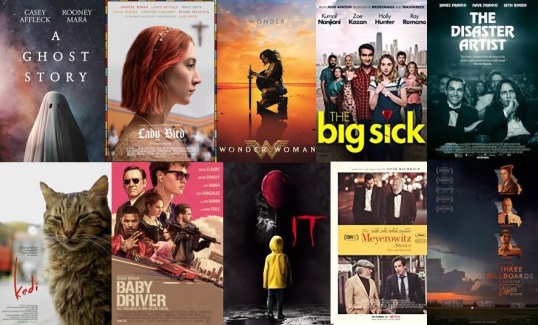
With the Oscar nominations due to be announced tomorrow, now is the time that the Shattered Lens indulges in a little something called, “What if Lisa had all the power.” Listed below are my personal Oscar nominations. Please note that these are not the films that I necessarily think will be nominated. The fact of the matter is that the many of them will not. Instead, these are the films that would be nominated if I was solely responsible for deciding the nominees this year. Winners are starred and listed in bold.

(You’ll also note that I’ve added four categories, all of which I believe the Academy should adopt — Best Voice-Over Performance, Best Casting, Best Stunt Work, and Best Overall Use Of Music In A Film.)

(Click on the links to see my nominations for 201620152014201320122011, and 2010!)

Best Picture

Baby Driver

The Big Sick

The Disaster Artist

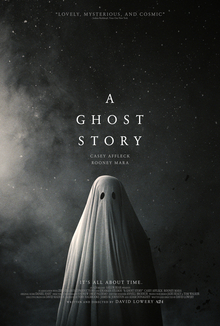
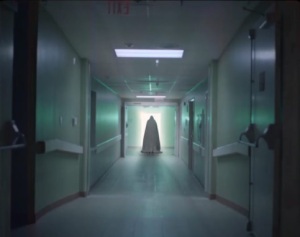
*A Ghost Story*

It

Kedi

Lady Bird

The Meyerowitz Stories

Three Billboards Outside Ebbing, Missouri

Wonder Woman

Best Director

Greta Gerwig for Lady Bird

Patty Jenkins for Wonder Woman

*David Lowery for A Ghost Story*

Martin McDonagh for Three Billboard Outside Ebbing, Missouri

Andy Muschietti for It

Edgar Wright for Baby Driver

Best Actor

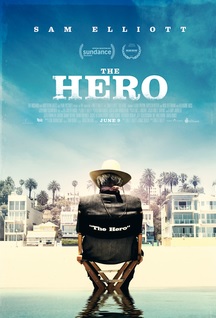
*Sam Elliott in The Hero*

James Franco in The Disaster Artist

Jake Gyllenhaal in Stronger

Daniel Kaluuya in Get Out

James McAvoy in Split

Robert Pattinson in Good Time

Best Actress

Gal Gadot in Wonder Woman

Sally Hawkins in Maudie

Frances McDormand in Three Billboards Outside Ebbing, Missouri

Cynthia Nixon in A Quiet Passion

Aubrey Plaza in Ingrid Goes West

*Saoirse Ronan in Lady Bird*

Best Supporting Actor

Woody Harrelson in Three Billboards Outside Ebbing, Missouri

Sam Rockwell in Three Billboards Outside Ebbing, Missouri

Adam Sandler in The Meyerowitz Stories

Bill Skarsgard in It

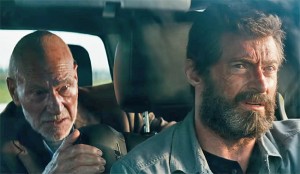
*Patrick Stewart in Logan*

Jason Sudekis in Colossal

Best Supporting Actress

Holly Hunter in The Big Sick

Catherine Keener in Get Out

Sophia Lillis in It

*Laurie Metcalf in Lady Bird*

Carey Mulligan in Mudbound

Ella Rumpf in Raw

Best Voice-Over or Stop Motion Performance

Will Arnett in The LEGO Batman Movie

Gael Garcia Bernal in Coco

Bradley Cooper in Guardians of the Galaxy, Volume 2

Doug Jones in The Shape of Water

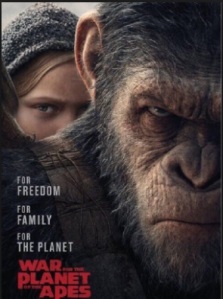
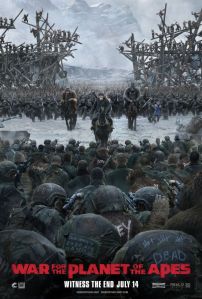
*Andy Serkis in War for the Planet of the Apes*

Dan Stevens in Beauty and the Beast

Best Original Screenplay

The Big Sick

Get Out

A Ghost Story

*Lady Bird*

The Meyerowitz Stories

Three Billboards Outside Ebbing, Missouri

Best Adapted Screenplay

Before I Fall

*The Disaster Artist*

It

Logan

Their Finest

Wonder Woman

Best Animated Film

Cars 3

Coco

*The Lego Batman Movie*

Leap!

Best Documentary Feature

Karl Marx City

*Kedi*

Risk

Step

Strong Island

32 Pills: My Sister’s Suicide

Best Foreign Language Film

First They Killed My Father

Frantz

*Kedi*

Raw

Best Casting

The Big Sick

Detroit

Dunkirk

Get Out

Lady Bird

*The Meyerowitz Stories*

Best Cinematography

Blade Runner 2049

Dunkirk

*A Ghost Story*

It

Lost City of Z

Three Billboards Outside Ebbing, Missouri

Best Costume Design

Beauty and the Beast

The Beguiled

Free Fire

Thor: Ragnarok

Victoria & Abdul

*Wonder Woman*

Best Editing

*Baby Driver*

Before I Fall

Dunkirk

A Ghost Story

It

Wonder Woman

Best Makeup and Hairstyling

The Disaster Artist

Guardians of the Galaxy Volume 2

Lady MacBeth

Logan Lucky

My Cousin Rachel

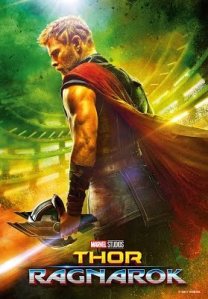
*Thor: Ragnarok*

Best Original Score

Blade Runner 2049

A Ghost Story

*Good Time*

Dunkirk

The Shape of Water

Wind River

Best Original Song

“Buddy’s Business” from Brawl In Cell Block 99

“Evermore” from Beauty and the Beast

“Friends are Family” from The Lego Batman Movie

“How Does A Moment Last Forever” from Beauty and the Beast

“Myron/Byron” from The Meyerowitz Stories

*”The Pure and the Damned” from Good Time*

Best Overall Use Of Music

Atomic Blonde

*Baby Driver*

The Disaster Artist

Guardians of the Galaxy Volume 2

Thor: Ragnarok

T2: Trainspotting

Best Production Design

*Beauty and the Beast*

The Beguiled

Blade Runner 2049

It Comes At Night

Logan

Thor: Ragnarok

Best Sound Editing

Baby Driver

*Dunkirk*

Kong: Skull Island

Spider-Man: Homecoming

War For The Planet of the Apes

Wonder Woman

Best Sound Mixing

Baby Driver

*Dunkirk*

Kong: Skull Island

Spider-Man: Homecoming

War For The Planet of the Apes

Wonder Woman

Best Stuntwork

Baby Driver

Dunkirk

Logan

Spider-Man: Homecoming

Thor: Ragnarok 

*Wonder Woman*

Best Visual Effects

Blade Runner 2049

Guardians of the Galaxy Vol. 2

Spider-Man: Homecoming

Thor: Ragnarok

Valerian and the City of a Thousand Planets

*War For The Planet of the Apes*

Films Listed By Number of Nominations

9 Nominations — Wonder Woman

7 Nominations — Baby Driver, Dunkirk, It, Three Billboards Outside Ebbing Missouri

6 Nominations — A Ghost Story, Lady Bird, Thor: Ragnarok

5 Nominations — Beauty and the Beast, The Disaster Artist, The Meyerowitz Stories

4 Nominations — The Big Sick, Blade Runner 2049, Get Out, Guardians of the Galaxy Vol. 2, Logan, Spider-Man: Homecoming, War For The Planet Of The Apes

3 Nominations — Good Time, Kedi, The LEGO Batman Movie

2 Nominations — Before I Fall, The Beguiled, Coco, Kong: Skull Island, Raw, Shape of Water

1 Nominations — Atomic Blonde, Brawl in Cell Block 99, Cars 3, Colossal, Detroit, First They Killed My Father, Frantz, Free Fire, The Hero, Ingrid Goes West, It Comes At Night, Karl Marx City, Lady MacBeth, Leap!, Logan Lucky, Lost City of Z, Maudie, Mudbound, My Cousin Rachel, A Quiet Passion, Risk, Split, Step, Strong Island, Stronger, T2: Trainspotting, Their Finest, 32 Pills: My Sister’s Suicide, Valerian and the City of a Thousand Planets, Victoria & Abdul, Wind River

Films Listed By Number of Wins

3 Oscars — A Ghost Story, Lady Bird

2 Oscars — Baby Driver, Dunkirk, Good Time, Kedi, War For the Planet of the Apes, Wonder Woman

1 Oscar — Beauty and the Beast, The Disaster Artist, The Hero, The LEGO Batman Movie, Logan, The Meyerowitz Stories, Thor: Ragnarok

Will the Academy be smart enough to agree with me?  Probably not.  We’ll see what happens tomorrow!


Blade Runner 2049 wins in New Mexico!


Yesterday, the New Mexico Film Critics Association named their picks for the best of 2017!  They also became the first group to pick Blade Runner 2049 as the best film of 2017.

Here are their winners:

Best Picture
Winner: “Blade Runner 2049”
Runner Up: “Lady Bird:

Best Director
Winner: Greta Gerwig, “Lady Bird”
Runner Up: Denis Villeneuve, “Blade Runner 2049”

Glenn Strange Honorary Awards

  • Glenn Close
  • Olivia De Haviland
  • John Carpenter
  • David Lynch

Best Actor
Winner: Sam Elliot, “The Hero”
Runner Up: James Franco, “The Disaster Artist”

Best Actress
Winner: Jennifer Lawrence, “mother!”
Runner Up: Jessica Rothe, “Happy Death Day”

Best Supporting Actress
Winner: Catherine Kenner, “Get Out”
Runner Up: Maryana Spivak, “Loveless”

Best Supporting Actor
Winner: Harrison Ford, “Blade Runner 2049”
Runner Up: Ewen Bremner, “Trainspotting II”

Best Ensemble
Winner: “Raw”
Runner Up: “The Killing of a Sacred Deer”

Best Original Screenplay
Winner: “November”
Runner Up: “Lady Bird”

Best Adapted Screenplay
Winner: “The Disaster Artist”
Runner Up: “Call Me By Your Name”

Best Animated Film
Winner: “Loving Vincent”
Runner Up: “The Breadwinner”

Best Foreign Language Film
Winner: “November” (Estonia)
Runner Up: “BPM” (France)

Best Editing
Winner: “November”
Runner Up: “Blade Runner 2049”

Best Cinematography
Winner: “Blade Runner 2049”
Runner Up: “Song of Granite”

Best Music/Score
Winner: “The Shape of Water”
Runner Up: “mother!”

Best Production Design
Winner: “Blade Runner 2049”
Runner Up: “The Shape of Water”

Best Documentary
Winner: “City of Ghosts”
Runner Up: “Faces Places”

Best Young Actor/Actress
Winner: Garance Mirillier, “Raw”
Runner Up: Sophia Lillis, “It”

Best Original Song
Winner: “The Misery of Love” from “Call Me By Your Name”
Runner Up: “Prayers for this World” from “Cries from Syria”

Lisa Reviews An Oscar Nominee: Capote (dir by Bennett Miller)


capote_poster

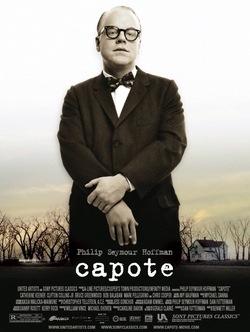
The first time I ever saw the 2005’s Capote, I thought it was a great film.

I guess that shouldn’t be a surprise.  I love movies about writers and I love biopics and, as the title indicates, Capote was both.  I’m also fascinated by true crime and Capote told the story of how Truman Capote came to write the first true crime book, In Cold Blood.  Add to that, I was (and am) a Philip Seymour Hoffman fan and Capote provided Hoffman with not only a rare starring role but it also won him an overdue Academy Award.  Finally, to top it all off, Capote also dealt with Truman’s friendship with Harper Lee (Catherine Keener), the author of To Kill A Mockingbird.  Seriously, a film that dealt with the writing of both In Cold Blood and To Kill A Mockingbird!?  How couldn’t I love that?  While everyone else was outraged that Crash beat Brokeback Mountain, I was upset that it beat Capote.

Needless to say, I was really looking forward to rewatching Capote for this review.  But when I actually did sit down and watched it, I was shocked to discover that Capote wasn’t actually the masterpiece that I remembered it being.

Oh, don’t get me wrong.  It’s still a good film.  At times, it’s even a great film.  I still think it would have been a more worthy Best Picture winner than Crash.  But still, there seemed to be something missing.  Much as with director Bennett Miller’s most recent film, Foxcatcher, there’s a coldness at the heart of Capote.  One can’t deny its success on a technical level but, at the same time, it keeps the audience at a distance.  In the end, we remains detached observers, admiring the skill of the film without ever getting emotionally invested in it.

Interestingly, the film suggests that the exact opposite happened to Truman Capote while he wrote In Cold Blood.  The film suggests that Capote got so invested in one of the killers at the center of In Cold Blood that the process of writing the book nearly destroyed him.  When we first see Capote, he’s at some social event in New York and he’s amusing his rich friends with charmingly risqué anecdotes about his other rich and famous friends.  As played by Hoffman, Capote is someone who is almost always performing.  It only with his friend Harper Lee and his partner Jack Dunphy (Bruce Greenwood) that he ever lets down his guard long enough to reveal who he actually is, a gay man from the deep South who was fortunate enough to escape.

That’s one reason why Capote grows close to Perry Smith (Clifton Collin, Jr.).  The subjects of In Cold Blood, Smith and Dick Hickcock (Mark Pellegrino) killed the Clutter family in Holcomb, Kansas.  Capote, who followed the case from their arrest to their eventual execution, becomes obsessed with Smith precisely because he sees Smith, with his dysfunctional background and his overly sensitive nature, as being who Capote could have been if things had gone just a little bit differently in his life.  Miller further makes this point by skillfully juxtaposing scenes of Truman dropping names and telling jokes at New York parties with the grim reality of life and death in Kansas.

Truman finds himself serving as a mentor to Perry.  (Hickcock is neglected by both Capote and the film.)  Of course, Truman’s also a writer and he knows that he needs an ending for his story.  As his editor (played by Bob Balaban, who seems to be destined to play everyone’s editor at some point or another) points out, Smith and Hickcock have to be executed if the book is ever to be completed.  Truman also has to get Perry to finally talk about what happened in the Clutter family farm.  As much as Capote seems to care about Perry, he’s ruthless when it comes to getting material for his book.  The film suggests that Truman Capote got his greatest success at the cost of his soul.

It’s a rather dark movie, which might explain why I was initially so impressed with it.  (I went through a period of time where I thought any movie with a sad ending was a masterpiece.)  Rewatching it, I saw that the film’s triumph was mostly one of casting.  Miller gets some seriously brilliant performances from the cast of Capote.  Yes, Hoffman is great in Capote but so is the entire cast.  Keener and Greenwood are well-cast as the only two people who have the guts to call Truman on his bullshit.  Chris Cooper gives a very Chris Cooperish performance as Alvin Dewey, the no-nonsense lawman who views Capote with a mix of amusement and distrust.  Clifton Collins, Jr. and Mark Pellegrino are both excellent as Smith and Hickcock.  In fact, Pellegrino makes such an impression that you regret the both Capote and the film didn’t spend more time with his character.

As previously stated, Hoffman won Best Actor but Capote lost best picture to Crash.  How Crash beat not just Brokeback Mountain but Capote as well is a mystery that Oscar historians are still trying to unravel.

Lisa Reviews An Oscar Nominee: Captain Phillips (dir by Paul Greengrass)


tom-hanks-barkhad-abdi-captain-phillips

Here’s an interesting and often overlooked fact:

It has been 17 years since Tom Hanks was last nominated for Best Actor.

When I discovered this fact, I was shocked because Tom Hanks is one of those actors who has a reputation for always getting nominated.  We tend to think of him as almost being a male Meryl Streep, an actor who will be nominated simply for showing up.  But, actually, the Academy last nominated Tom Hanks, for his performance in Cast Away, in the year 2000.

Hanks has given plenty of strong performances since then and he’s continued to appear in acclaimed and Oscar-nominated films.  And you would think, considering his apparent popularity in Hollywood, Tom Hanks would have been nominated for everything from Charlie Wilson’s War to Bridge of Spies.  But no.

Personally, I think Hanks should have been nominated this year for Sully.  But you know what Hanks performance truly deserved some Oscar recognition?

Captain Phillips.

Playing the title role in this 2013 Best Picture nominee, Hanks gave perhaps the best performance of his career.  That he was snubbed by the Academy is not only shocking but it’s actually a bit unforgivable.  Perhaps Hanks was so good that the Academy took him for granted.  Perhaps they thought that since both Hanks and Richard Phillips are decent, down-to-Earth guys, that Hanks was just playing himself.  For whatever reason, Tom Hanks deserved, at the very least, a nomination.

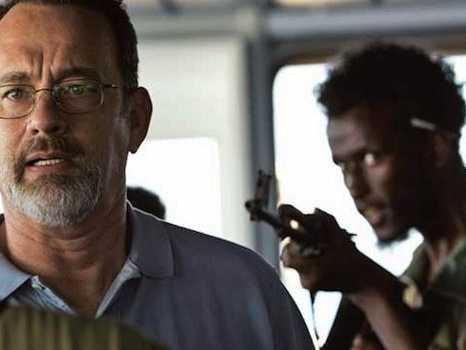
Captain Phillips was based on a true story.  This is another docudrama from director Paul Greengrass, filmed in his signature (and potentially nausea-inducing) handheld style.  (Actually, if any aspiring director wants to understand how to effectively use the handheld style, Greengrass is the filmmaker to study.)  In 2009, a four Somali pirates hijacked the Maersk Alabama and took its captain, Richard Phillips, hostage.  Captain Phillips was eventually rescued by a group of Navy SEALS.  Three of the pirates were killed while their leader, Muse (Barkhad Abdi), was captured and is currently serving a 33 year sentence in a federal penitentiary.

This was a huge news story in 2009 with the rescue being described as being the first major foreign policy victory for the new presidential administration.  When Phillips was rescued, people took to the streets and the “USA!  USA!” chant was heard.  “That’s right,” the media and the government and the chanters seemed to be exclaiming in unison, “America’s back!  We were abused and it’s never going to happen again!”

A lot of that jubilation was because, at the time, the term “Somali pirates” conjured up visions of cinematic villains who would be more at home in Mad Max: Fury Road than in the real world.  The reality of the situation, of course, was that the “pirates,” whose deaths were celebrated as some sort of political victory for the government, were actually poverty-stricken Somali teenagers, the majority of which worked for warlords who remained (and still remain) safely hidden away.

One of the more interesting things about Captain Phillips is that it devotes almost as much time to the Somali pirates as it does to Phillips and his crew.  Rather than presenting them as a nameless and personalityless threat, the film allows Muse and his men to emerge as individuals.  Much as Phillips spends the movie trying to keep both himself and his crew safe, Muse spends much of the movie trying to keep an increasingly out-of-control situation stable.  Both Phillips and Muse are in over their heads.  Barkhad Abdi gives a smart and intimidating performance as Muse.  The film never makes the mistake of excusing the actions of Muse or the other pirates but, at the same time, it does provide a more nuanced view of them than one would normally expect.

But really, this film totally belongs to Tom Hanks.  Captain Phillips works because of Tom Hanks.  It earned its best picture nomination on the strength of Hanks’s performance.  As an actor, Hanks could have easily coasted on the good will that the audience would have already had for him but instead, he fully commits himself to playing not Tom Hanks but instead Captain Richard Phillips.  The film’s final scene — in which Phillips goes into a state of shock and can’t stop talking — is a masterclass in great acting.  How the Academy ignored it, I will never understand.

Captain Phillips was nominated for best picture of 2013.  However, it lost to 12 Years a Slave.


For Your Consideration #5: Begin Again (dir by John Carney)


Begin_Again_film_poster_2014

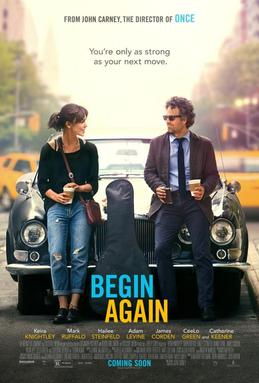
Continuing my look at ten films that deserve just as much awards consideration as Birdman, Selma, and The Theory of Everything, we now turn our attention to Begin Again.  Begin Again came out this summer and did pretty well both with audiences and critics.  While everyone seems to agree that Begin Again will probably get at least a nomination for Best Original Song, I think that it’s actually worthy of even more consideration.

Begin Again is the latest film from John Carney, who previously directed one of my favorite films of all time, Once.  Admittedly, Begin Again is nowhere near as good as Once but it’s still a charming film when taken on its own terms.

Mark Ruffalo plays Dan Mulligan, a record label executive who, at the start of the film, has definitely seen better days.  His marriage is collapsing, he’s struggling to connect with his daughter (Hailee Steinfeld),  and he’s just recently been fired from the company that he helped to found.  After a day of binge drinking, Dan finds himself in a bar where he hears Gretta James (Keira Knightley) sing a song.

Dan is immediately taken with Gretta’s music but she has issues of her own.  She had just broken up with her boyfriend and songwriting partner, Dave (Adam Levine, in his film acting debut). Though initially reluctant, Gretta eventually allows Dan to attempt to sign her to his former label.  However, Dan’s former partner (played by Mos Def) refuses to sign her which leads to Dan and Gretta independently producing an album together, with the gimmick that the album will be recorded at various public locations across New York.

There’s really not that much plot to Begin Again but that’s actually a huge part of the film’s appeal.  The film rejects melodrama and easy sentimentality and instead, it focuses on the characters.  (That said, Begin Again is definitely a sentimental movie but it’s sentimental in the best possible way.)  The movie is about how two different people come together and, for their own individual reasons, create something special.  Ruffalo and Knightley have a lot of chemistry, Levine is hilariously dorky, and Mos Def is entertaining as the epitome of everything that’s wrong with the music industry.  Best of all, Begin Again — much like Once before it — perfectly captures the thrill of artistic collaboration.  The scenes of Knightley and Ruffalo recording their album are exuberant celebrations of everything that’s wonderful about performance and expression.

And, of course, the music is great!

http://www.youtube.com/watch?v=UC_DPae1y40


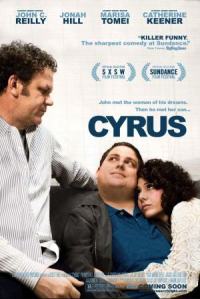
Film Review: Cyrus (dir. by Mark and Jay Duplass)


Last Tuesday night, as we watched the end credits of Cyrus rolling across the screen at the Plano Angelika, a very dear and close friend of mine leaned over and whispered in my ear, “That was a really odd fucking movie.” 

(Actually, it was two weeks ago.  Sorry, I started this review a while ago and only recently returned to finish it.)

And he’s right.  Though the film is worth seeing (though I’d honestly suggest waiting until it comes out on DVD unless you’re just the world’s biggest John C. Reilly or Jonah Hill fan), Cyrus really is an odd fucking movie.

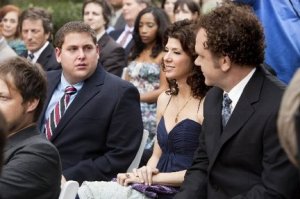
Cyrus is the latest film from Jay and Mark Duplass, the two brothers responsible for 2008’s Baghead, one of the unacknowledged great films of the last decade.  In Cyrus , John C. Reilly plays a character named — appropriately enough — John.  John is a likable loser, a less musical version of the character Reilly played in Chicago.  When the movie opens, John is depressed over the fact that his ex-wife, Jamie (Catherine Keener), is getting married again.  At Jamie’s suggestion, he goes to a party where he proceeds to have too much to drink, flirts awkwardly with every woman he sees, and somehow manages to charm Molly (Marisa Tomei).  Molly is soon sleeping over at John’s house but every morning, John wakes up to discover that she’s either already left or is in the process of sneaking out.  John asks her if she’s married.  Molly replies that she’s not but is still vague about why she never stays the entire night.  Finally, one morning, John follows Molly after she leaves.  He sits out in front of her house and, after she’s left for work, John proceeds to creep around outside the house. 

And, of course, its while he’s doing all of this creepy stalker stuff that he first meets Cyrus (played, of course, by Jonah Hill).  Cyrus is Molly’s 22 year-old son and from the minute he first appears, its obvious that there’s something off about him.  He’s far too friendly and speaks in the oddly stilted cadence of someone who is obviously making an effort to act “normal.”  He  spends all of his time composing New Agey synthesizer music in an elaborate home recording studio.   Of course, the main sign that there’s something odd about Cyrus is that he’s played by Jonah Hill.

However, the main thing that distinguishes Cyrus is just how close he is to his mother.  From the first moment that we see him and Molly interact (he’s playing his music and Molly enters the house and immediately starts dancing to it), its obvious that Cyrus is Oedipus, Norman Bates, and Yanni all wrapped up into one package.  And, obviously, he views John as being competition…

Cyrus is an uneven film, one that starts out strong but — once the title character is actually introduced — suddenly seems to get hit by an identity crisis.  Is it a realistic portrait of sad, lonely people trying to find love in uncertain times or is it an Apatowish mix of stoner sentiment and over-the-top comedy?  Is Cyrus meant to be the emotionally wounded, painfully insecure outsider that he appears to be the movie’s more contemplative moments or is he just a sociopathic comedic device that Reilly has to overcome in order to pursue his relationship with Tomei?  That’s the question that is at the heart of Cyrus and discovering the answer is the film’s entire excuse for existing.  Unfortunately, the Duplass Brothers don’t seem to know the answer themselves and as a result, the entire film feels directionless and we’re left with too many unanswered questions.

For instance, where is Cyrus’s father?  It’s mentioned by both Cyrus and Molly that the father is no longer in their lives but why?  Though its never explicitly stated, its obvious that both Cyrus and Molly have suffered abuse in the past, probably at his hands.  However, the issue itself is never directly confronted and its hard to believe that John wouldn’t have asked about it at some point.  For that matter, beyond her role as Cyrus’s mother and John’s girlfriend, Molly isn’t given any back story whatsoever.  Considering the fact that the entire movie is about how Cyrus and John feel towards her, it’s interesting that she’s never given a scene where she really gets to explain how she truly feels towards either of them.  A good deal of the film’s attitude towards Molly can be seen in the fact that, while a major plot point hinges on her being at her job as opposed to at home, we never find out just what exactly it is that she does for a living.

That’s unfortunate because, in many ways, Cyrus shows a good deal of promise and psychological insight.  One of the subtle pleasures of the film is seeing how all of the various relationships (John and Molly, John and Cyrus, Molly and John, John and his ex-wife, Cyrus and Molly) actually run parallel with each other.  When Molly first flirts with John, John replies, “Are you hitting on me?  I’m Shrek.”  And it seems like he’s got a point until you see Cyrus and Molly together.  It’s at that point that you realize that John probably once looked just like Cyrus and that Cyrus is eventually going to grow up to be John.  It’s hard not to wonder if Cyrus’s father looked like John or if Molly is attracted to John because he reminds her of her son.  On the other hand, much as Cyrus is totally dependent on Molly, John is similarly dependent on his ex-wife (who, as played by Catherine Keener, looks strikingly similar to Marisa Tomei).  In a nice touch, his ex-wife’s new husband seems to have the same opinion of John that John has of Cyrus.

The Duplass Brothers also get a quartet of excellent performances from the film’s leads.  This is all the more exceptional considering that three of them are playing characters that are either underwritten (Tomei and Keener) or else totally inconsistent (Hill).  The film really belongs to John C. Reilly who is such a sympathetic, likable presence as John that he convinces the audience to forgive a lot of the film’s unevenness.  His best moments are to be found in the film’s opening party scene where he essentially acts like a total drunk jackass yet you still feel oddly sorry for him.  He’s just such a nice guy.

As previously stated, Cyrus is an odd film, an uneasy mix of independent and mainstream sensibilities.  Watching it, I found myself wondering if the Duplass Brothers were really sure what type of movie they wanted to make, if they wanted to emulate the cold, detached dry wit of the Coen Brothers or if they were indulging in a little Judd Apatow-style schmaltz.  Both styles attempt to co-exist in Cyrus and the end result is a movie that seems to be struggling to establish its own identity.  Still, Cyrus is worth seeing if just for the performances.  As flawed as the film is, it confirms what Baghead indicated, that the Duplass Brothers as intriguing filmmakers to watch out for in the future.