The year is 1991 and humans are using robots for everyday tasks. Because the budget is low and Michael Crichton had already done Westworld, none of the robots are humanoid or capable of original thought. The majority of them are boxy and they look harmless until they malfunction. All police departments now have a division of cops trained to deal with robots. Being a part of the “runaway squad” is not prestigious but it’s perfect for Sgt. Jack Ramsey (Tom Selleck), a good cop who suffers from a crippling fear of heights.
Ramsey and his new partner, Karen Thompson (Cynthia Rhodes), investigate a murder that was apparently committed by a robot. Their investigation leads them to Jackie Rogers (Kirstie Alley) and her boyfriend, renegade scientist Charles Luther (Gene Simmons). Luther has not only programmed robots to kill but he’s also designed smart bullets that can lock onto a target’s unique body heat.
It’s hard to resist Runaway. Stalwart Tom Selleck vs an overacting Gene Simmons? Kirstie Alley as a neurotic femme fatale? Robots spiders that inject acid into their victims? Remote control smart bombs that chase cars down the highway? Countless point-of-view shots of the smart bullets tracking their victims? It’s an entertaining B-movie, no matter what you may think of the plot or some of the acting. I don’t know what logic led to Michael Crichton casting Gene Simmons as a crazed computer scientist but I’m glad that he did. Watching a movie like this, you can see why Tom Selleck remains a television star. He doesn’t have the bigger-than-life persona of a movie star. But Selleck’s mild persona works perfectly when matched up with Gene Simmons acting like the phantom of the park. And then there’s Kirstie Alley, playing a dangerous secretary with the right mix of sexiness and humor. Cynthia Rhodes may have been the female lead but Kristie Alley is the one who stole the movie.
When Runaway was first released in 1984, it was expected to be a hit but it was instead overshadowed by another film about killer future robots, The Terminator. Needless to say, the simple heroics of Runaway can’t compete with intense action of The Terminator and even Gene Simmons at his most unhinged can’t beat Arnold Schwarzenegger saying, “I’ll be back,” but Michael Crichton’s vision of a future full of killer roombas still feels prescient today.
“In the field we had a code of honor: you watch my back, I watch yours. Back here there’s nothing!” — John Rambo
You sit down expecting a brainless 80s action flick, and instead you get a meditation on trauma, bureaucracy, and the American wilderness. That’s First Blood for you. Directed by Ted Kotcheff and released in 1982, this is the movie that introduced the world to John Rambo, but don’t go in hoping for a body count or one-liners. What you actually get is a lean, gritty, and surprisingly sad drama about a guy who just wants to eat a hot meal and ends up accidentally declaring war on an entire small-town police force. And honestly? It holds up to this day. The film is adapted from David Morrell’s 1972 novel of the same name, but if you’ve read the book, you’ll notice some serious tonal differences right away. Morrell’s novel is bleak, brutal, and deeply nihilistic—a product of its era’s raw disillusionment with Vietnam. Kotcheff and Stallone sanded down some of those rougher edges, not to sell out, but to make Rambo a more sympathetic figure. The bones are the same, but the spirit is just a little warmer, and that choice changes everything.
Let’s break down the plot, because it’s deceptively simple. Sylvester Stallone plays John Rambo, a former Green Beret and Vietnam War hero who wanders into the town of Hope, Washington, looking for a fellow soldier he served with. He finds out the guy died of cancer from Agent Orange exposure. That’s the first gut punch. Rambo, already drifting and clearly struggling with PTSD, just wants to grab some food and keep moving. But the local sheriff, Will Teasle (a perfectly cast Brian Dennehy), takes one look at Rambo’s long hair, army jacket, and tired face and decides he’s a vagrant who needs to be run out of town. From a structural standpoint, Teasle isn’t a cartoon villain—he’s a classic dramatic antagonist: a rigid, small-town authoritarian who sees drifters as a threat to his orderly world. That realism makes the whole thing sting because you can almost see both sides. Almost.
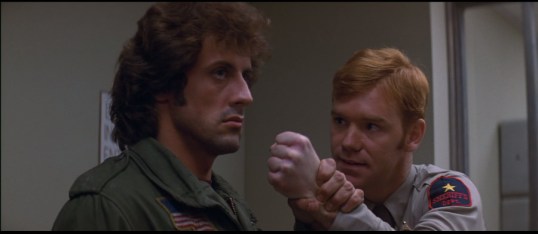
When Teasle tries to escort Rambo to the city limits, Rambo walks back into town. That’s his big crime. He gets arrested, and at the station, the deputies start pushing him around. One of them, a veteran deputy named Galt (played with sneering menace by Jack Starrett), is the real problem here. Galt isn’t some young hothead. He’s an older, seasoned deputy who’s clearly been in his role for years, and he’s become entitled on the power of his badge. You can see it in the way he leans into the booking process, the casual cruelty in his eyes, the way he treats Rambo like a stray dog he’s finally allowed to kick. During the shaving scene, as deputies try to clean Rambo up after the arrest, Galt is the one who holds Rambo down, restraining him while another deputy wields the straight razor. He’s not waving the razor himself, but that almost makes it worse—he’s the enforcer, the guy who pins you in place while someone else does the dirty work. It’s a veteran cop who knows exactly how to exert control without getting his own hands bloody. That makes Galt far more chilling than some screaming bully. He represents the rot of unchecked authority, the way small-town power can curdle into casual sadism over time. And that whole humiliating process—being held down, having a straight razor brought to his face—triggers a full-blown flashback for Rambo. Then something clicks. Rambo explodes, beats down half the station, and escapes into the nearby mountains.
Now the hunt begins. Teasle calls in the State Patrol, the National Guard, and eventually his old mentor, Colonel Trautman (Richard Crenna), who knows exactly what kind of animal they’re chasing. Trautman warns Teasle that Rambo isn’t just a drifter; he’s a trained killer with a “purple heart, a silver star, and a congressional Medal of Honor.” And here’s the core irony: Rambo doesn’t want to hurt anyone. He just wants to be left alone. But the chase escalates, people die, and by the end, you’re not cheering for the hero to win—you’re hoping he gets some peace.
From an analysis perspective, where First Blood really earns its stripes is its restraint. The action sequences are tense but never escalate into cartoon violence. Rambo uses the forest like a ghost, setting traps, crawling through mud, and surviving on raw squirrel meat. He doesn’t mow down dozens of cops with a machine gun. In fact, the only person he kills is Galt, who falls to his death while hanging off a helicopter because Rambo throws a rock at the chopper. And Rambo immediately looks horrified. That’s the key. Even Galt, as entitled and cruel as he is, isn’t a villain Rambo wants to execute. The kill is accidental, a desperate act of survival. The movie takes its time showing how the very skills that made Rambo a hero in Vietnam—his survival instincts, his aggression, his ability to turn anything into a weapon—now make him a monster in peacetime America. The local cops are out of their depth, but aside from Galt, they’re mostly just scared men doing a job. Nobody else is pure evil. Just broken systems and broken people.
But let’s talk about that novel, because the comparison is crucial for understanding the film’s choices. David Morrell’s First Blood is a much darker animal. In the book, Rambo is more feral, less a wounded hero and more a walking death sentence. He kills multiple cops, not by accident or in self-defense, but with cold, tactical efficiency. The novel has no Colonel Trautman to serve as a moral anchor—Trautman is there, but he’s just as ruthless. And the ending? Devastating. In Morrell’s version, Rambo and Teasle essentially murder each other in a final, bloody standoff. Trautman finishes Rambo off with a shotgun blast to the gut. There’s no catharsis, no plea for understanding. Just bodies and regret. The tone is nihilistic to the core: the system destroyed these men long before the first page, and there was never any hope. Kotcheff’s film pulls back from that abyss. It keeps the violence lean and mostly off-screen. It gives Rambo that famous final monologue where he sobs about his friend dying next to him, about protesters spitting on him, about not being able to turn off the war inside his head. That scene isn’t in the book—not like that. The movie says, “This man is suffering, and maybe he can still be saved.” The novel says, “This man is already dead, and he’s taking everyone with him.” Both are valid responses to Vietnam, but the film’s slightly toned-down approach is why Rambo became an icon instead of a footnote.
From a performance standpoint, Stallone gives the work of his career here. Forget the grunting one-liners of later sequels. In First Blood, he barely speaks, and when he does, his voice cracks. Watch his eyes during that final monologue. After Trautman finally talks him down, Rambo dissolves into a sob. “Nothing is over!” he screams at Trautman. “You don’t just turn it off!” It’s raw, uncomfortable, and genuinely moving. You realize that the whole movie has been one long panic attack for this character. The Rambo that pops up in Rambo: First Blood Part II is a cartoon superhero. The Rambo here is a guy who needed a therapist and a hug about thirty years ago. That vulnerability is the film’s great deviation from the source material. Morrell’s Rambo never asks for understanding. Kotcheff’s does. And that small shift in tone—from nihilism to wounded humanity—is what elevates the film from a grim exploitation picture to a legitimate character study.
On the technical side, Ted Kotcheff’s direction is patient and atmospheric. He shoots the Pacific Northwest like a character—vast, wet, dark, and full of hiding places. The chase scenes are grounded, with long takes and practical stunts. When Rambo jumps off a cliff into a tree and lands with a thud that sounds real, it hurts. There’s no CGI safety net. Jerry Goldsmith’s score is mournful, with lonely woodwinds and a simple, haunting main theme that never pumps you up for a fight. It just makes you sad. The movie even has the guts to end on a downer—but not as brutal as the book’s. Rambo surrenders, crying in Trautman’s arms, and the final shot is him walking away in handcuffs into the rain. No freeze-frame high five. No sequel tease. Just rain. And yet, compared to the novel’s blood-soaked finale, that rain feels almost like mercy. That’s tonal balancing at its finest: the film acknowledges the darkness without drowning in it.
Of course, the cultural memory of First Blood has been completely buried by its sequels. Most people under thirty know Rambo as the muscle-bound machine gun guy from memes and video games. But the original is closer to a western like The Deer Hunter meets a paranoid 70s thriller like The French Connection. It’s a movie about a country that used its soldiers and then discarded them. Teasle represents the willful ignorance of middle America—“I don’t care about your war” is basically his attitude. And Rambo represents the bill coming due. Galt, as that entitled veteran deputy, represents the everyday cruelty of those who’ve held power too long and forgotten what it’s for—the guy who doesn’t need to swing the blade because he’s the one holding you still. That theme hits even harder today, decades later, when veterans are still fighting for basic support and stories of badge-heavy misconduct still dominate headlines. The novel took that theme to its logical, horrific conclusion: no survivors, no lessons learned. The film pulls back just enough to let you breathe, and that one small change turned First Blood from a bleak cult artifact into a mainstream classic. You can argue which version is more honest. But you can’t argue that Stallone and Kotcheff made the right call for the screen.
First Blood rules. It’s a rainy, sad, surprisingly smart action movie that will stick with you longer than any explosion-fest. It’s also a masterclass in adaptation, showing how a slight shift in tone—from nihilistic to wounded—can transform a story without betraying its core. Brian Dennehy is perfect as the stubborn but not evil sheriff. Jack Starrett makes Galt a quietly terrifying portrait of bureaucratic sadism, a veteran deputy who’s learned to love the leash and the privilege of pinning a man down while someone else does the cutting. Richard Crenna brings real weight as Trautman, a father figure who knows he helped raise a weapon he can no longer control. And Stallone acts his soul out. When he whispers “I could have killed them all” in the final scene, he’s not bragging. He’s confessing. That’s why First Blood is a classic. It’s not a recruitment poster. It’s a eulogy—just a little less hopeless than the novel that birthed it. Four stars, easily. Just don’t go in expecting explosions every five minutes. Go in expecting to feel bad, and you’ll leave feeling like you watched something real.
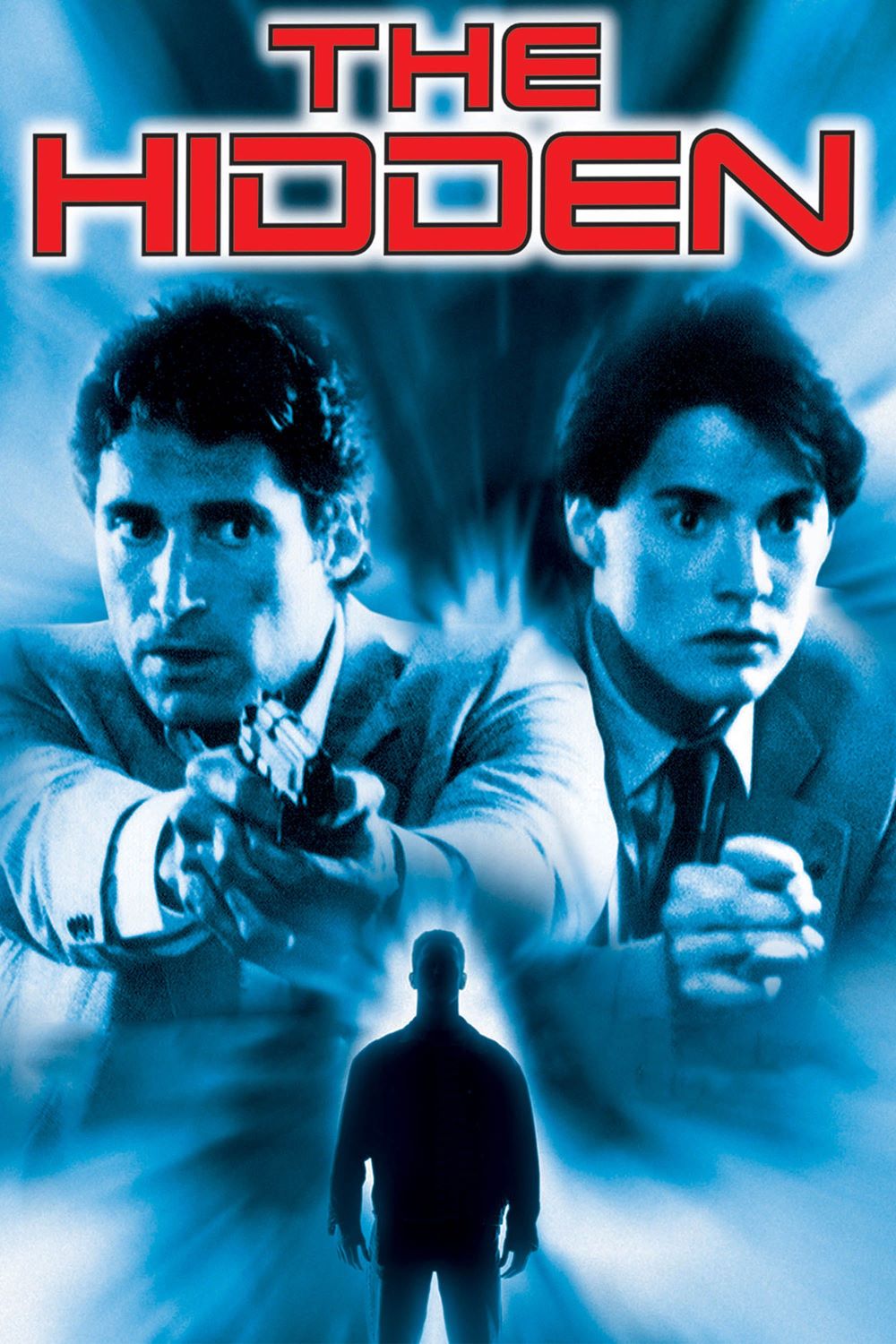
The Hidden is a guilty pleasure from 1987, a sci-fi action romp that barrels into B-movie territory with zero brakes and maximum glee. It’s the kind of flick you stash away for those late-night binges when no one’s judging.
Right from the explosive opener, a squeaky-clean bank clerk named Jack DeVries flips the script. He storms a Wells Fargo branch like a one-man apocalypse, gunning down guards and peeling out in a stolen Ferrari for a high-octane chase that leaves LAPD scrambling. Cops riddle him with bullets in a spectacular crash, but as he flatlines in the hospital, out slithers a pulsating alien parasite—a glowing, tentacled slug that prizes luxury cars, blaring rock anthems, and indiscriminate slaughter above all else.
It wastes no time hopping into fresh meat, turning an arms dealer into a walking arsenal, then a sultry stripper who turns deadly seduction into a bloodbath. Cue Detective Tom Beck, Michael Nouri’s world-weary LAPD vet with divorce papers and a pint-sized daughter sharpening his edges. He teams up with the enigmatic FBI agent Lloyd Gallagher, Kyle MacLachlan dialing up the eerie charm like he’s fresh off Blue Velvet. Gallagher’s no standard G-man—he skips the coffee, eyes suspects like prey, and knows way too much about this interstellar joykiller. Beck’s gut screams “weirdo,” but with bodies piling up, he’s along for the parasitic ride. Their mismatched partnership becomes the beating heart of this wild chase.
Diving deeper into why The Hidden earns its guilty pleasure crown, it’s all about that unapologetic mash-up of genres. Think Lethal Weapon‘s buddy-cop fireworks fused with The Thing‘s body-horror paranoia, wrapped in a low-budget package that punches way above its weight.
The alien doesn’t just possess—it corrupts with cartoonish vice. It blasts Metallica’s Master of Puppets while mowing down traffic, guzzles ice cream cones mid-rampage, and even puppeteers a German Shepherd into a jogger-shredding beast. Hosts shrug off shotgun blasts, car wrecks, and point-blank headshots, laughing through the pain like invincible demons. This cranks the tension during chases from neon-lit strip joints to posh art auctions gone haywire.
Picture Brenda Lee, played with fierce allure by Claudia Christian, grinding on a mark before ventilating him and trading bullets with highway patrol—it’s equal parts sexy, scary, and stupid fun. Then there’s the mannequin factory showdown, a claustrophobic bullet ballet with plastic dummies exploding in slow-mo glory. Director Jack Sholder, hot off A Nightmare on Elm Street Part 2, keeps the pedal floored across 98 taut minutes. He blends practical effects that ooze tangible grossness—no lazy CGI, just squelching tentacles and slime trails that still unsettle on modern screens. The creature’s big reveal, bursting from a gut in a hospital bed? Pure visceral nightmare fuel that lingers like bad takeout.
But let’s talk about the real magic: Nouri and MacLachlan’s chemistry, which transforms potential cheese into something oddly heartfelt. Beck is the everyman anchor—tough exterior hiding a soft spot for his ex and kid. She clocks Gallagher’s off vibes immediately, hiding behind Dad during their first meet-cute awkwardness. Gallagher’s the alien hunter in human skin, pursuing his nemesis from the galaxy’s edge to Earth. MacLachlan nails the wide-eyed alien tourist act: fumbling forks at pizza joints, blanking on human etiquette, yet unleashing a phaser-like zapper with cold precision.
Their dialogue zings with natural friction—Beck barking “What the hell are you?” while Gallagher parries with vague cosmic lore. It builds to warehouse confessions amid flying lead. It’s 48 Hrs. with extraterrestrials, punctuated by hilarious side beats: Beck’s partner Cliff Willis (Ed O’Ross) biting the dust early, precinct captain Ed Malvane (Clarence Felder) getting briefly slimed into a foul-mouthed tyrant, even a senator’s rally turning into invasion bait. The supporting roster shines without stealing thunder—Christian’s tragic dancer, Richard Brooks’ scumbag john. They all flesh out LA’s underbelly as the perfect playground for alien anarchy.
Layer on the sly socio-satire, and The Hidden reveals sneaky smarts beneath the schlock. This parasite’s a yuppie id unleashed, embodying Reagan-era ’80s gluttony: crashing Porsches, bankrolling hooker sprees, amassing arsenals. All while plotting to hijack presidential hopeful Senator Holt for an Oval Office coup that’d summon its mothership armada. It’s a gleeful middle finger to excess, with the slug reveling in what humans suppress—pure hedonistic rampage from Malibu beaches to political podiums. Sholder doesn’t belabor the point; he lets the absurdity sell it. Like the arms dealer’s arsenal haul or the dog’s park massacre underscoring unchecked impulses.
Sound design throbs with synth-wave synths and guitar riffs that propel every stunt. Michael Convertino’s score swells dramatically for emotional beats. Dialogue veers from pulpy gold (“Pain? What’s that?”) to poignant, especially Gallagher schooling Beck on alien resilience versus human spirit.
Flaws? Sure—the third act rushes to a flamethrower climax and bittersweet farewell. Some effects betray the budget in brighter scenes, and plot holes gape if you squint (how’d the slug learn English so fast?). Yet it owns every imperfection, turning cheese into charm.
Ultimately, The Hidden endures as peak cult guilty pleasure, outshining flashier ’80s peers by blending brains, brawn, and balls-to-the-wall entertainment. It foreshadows Men in Black‘s fish-out-of-water agents and Venom‘s symbiote chaos. All while delivering practical FX wizardry that CGI eras envy. Nouri’s magnetic lead turn should’ve rocketed him higher; MacLachlan’s proto-Lynchian quirkiness fits like a glove. Stream it on whatever dusty platform hosts it, or snag a VHS for authenticity—pair with beer and zero expectations for two hours of adrenaline-spiked joy.
The finale’s sacrificial gut-punch lands because you’ve bonded with these oddballs, capped by Beck’s wry nod to humanity’s messy soul. It’s dumb when it wants, deep when it surprises, always a rush. Slug-slinging sci-fi doesn’t get guiltier or greater. Dive in, emerge grinning, no regrets.
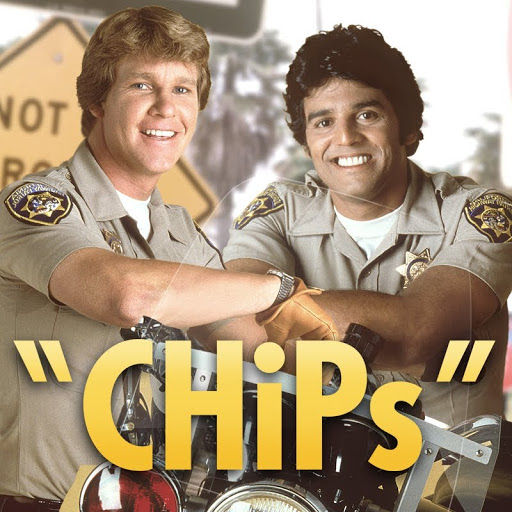
Welcome to Late Night Retro Television Reviews, a feature where we review some of our favorite and least favorite shows of the past! On Mondays, I will be reviewing CHiPs, which ran on NBC from 1977 to 1983. The entire show is currently streaming on Prime!
This week, two sets of thieves cause trouble!
Episode 4.10 “Forty Tons Of Trouble”
(Dir by Gordon Hessler, originally aired on January 11th, 1981)
A group of criminals is stealing equipment from construction sites and selling it on the black market. An attempt to steal a loader leads to it rolling down a Los Angeles street until Baker is able to jump onto it and crash it into a (hopefully) abandoned building. Getraer points out that Baker just destroyed a building. Baker shrugs and says he’s always wanted to do that.
A different group of criminals is stealing parts for their drag racer. The CHiPs have their own car entered into the drag races. Of course, it’s driven by Ponch.
After two accidents on the highway and several chases, Baker and Ponch (but mostly Ponch) capture the bad guys. Paula Kohl (Mary Louise Weller), the owner of Kohl Construction, appreciates the efforts of Baker and Ponch (but mostly Ponch).
In other words, this was a typical episode of CHiPs. Still, it’s memorable because of the supporting cast. Amongst the construction site thieves is Robert Englund. Englund thinks that Sarge (Taylor Lacher) is taking to many risks when it comes to trying to steal loaders and bulldozers but Sarge is like, “I got it under control.” Meanwhile, amongst the drag race thieves, is Chris Mulkey. Mulkey doesn’t get to do much but he does get two scenes where he smirks at Ponch. Sadly, both characters end up getting arrested during this episode but have no fear. Robert Englund went on to play Freddy Krueger. Chris Mulkey went on to play the sleazy but strangely likable Hank Jennings on Twin Peaks.
As for the rest of the episode — hey, I don’t ask for much from CHiPs. As long as there’s a good crash scene and a lot of cool cars, I’m happy. This episode delivered. One could ask why Ponch is always the one who gets to do the cool things, like driving in the race and taking Paula out on a fancy date. Earlier seasons usually tried to portray Ponch and Baker as being equals. This season, though, has clearly been The Ponch Show. It’s a legitimate criticism but …. eh. Sometimes, you just want to watch a chase or two.
48 Hrs. begins with a violent and bloody jailbreak. The fearsome Billy Bear (Sonny Landham) helps his criminal associate, Albert Ganz (James Remar), escape from a chain gang and kills several guards in the process. Billy and Ganz then head to San Francisco, where they start killing their former associates while searching for Luther (David Patrick Kelly). Another bloody shootout leaves several detectives dead and SFPD Detective Jack Cates (Nick Nolte) looking for revenge.
That’s not the way you might expect one of the most famous comedies of the 80s to begin. It’s not until Jack arranges for another associate of of Ganz’s to be released from prison for 48 hours that anything humorous happens in the film. However, because Reggie Hammond is played by Eddie Murphy, 48 Hrs. quickly becomes very funny.
Murphy was appearing on Saturday Night Live when he was cast in 48 Hrs, in a role that was written with Richard Pryor in mind. One of the first things that Murphy requested was that the character’s name be changed from Willie Biggs to Reggie Hammond. Murphy made the role his own and watching him, it’s hard to believe that he was only 21 and also that 48 Hrs was his first film. Murphy performs with the confidence of a natural movie star. He’s good in the film’s most famous scene, where he pretends to be a cop and talks down an entire bar full of rednecks. (I can’t repeat his most famous line but everyone knows it.) But Murphy is even better in the scenes where he’s just reacting to Nolte’s slovenly cop.
The comedy in 48 Hrs comes from the mismatched partnership and initially hostile chemistry of Jack Cates and Reggie Hammond. Cates has a job to do while Reggie, understandably, wants to enjoy as much freedom as he can before he gets sent back to prison. The humor is so effective because it’s almost entirely character-based. There are no gags but there are two well-written characters with differing ways of looking at the world who have to learn how to work with each other. The two of them start out disliking and distrusting each other but ultimately become best friends, even if Jack does punch Reggie and Reggie does keep trying to steal Jack’s lighter. Because this is a Walter Hill movie, there’s still a lot of action. Nolte and Murphy may make you laugh but there’s nothing funny about full-on psycho performances of James Remar and Sonny Landham. 48 Hrs. not only allows Murphy and Nolte to show off their comedic ability but it also allows them to be true action heroes.
Popular with critics and audiences, 48 Hrs. was the most commercially successful film of 1982. It set the standard for most buddy-cop movies to this day and it introduced the world to Eddie Murphy.
Though the Academy of Motion Picture Arts and Sciences claim that the Oscars honor the best of the year, we all know that there are always worthy films and performances that end up getting overlooked. Sometimes, it’s because the competition too fierce. Sometimes, it’s because the film itself was too controversial. Often, it’s just a case of a film’s quality not being fully recognized until years after its initial released. This series of reviews takes a look at the films and performances that should have been nominated but were, for whatever reason, overlooked. These are the Unnominated.
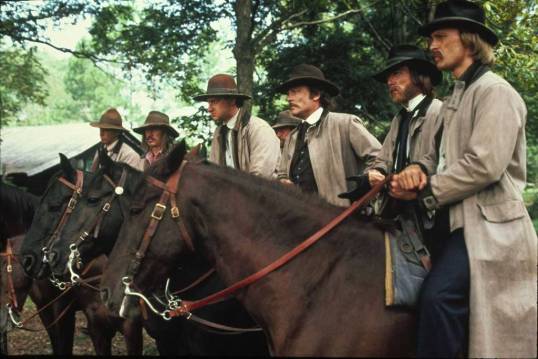
First released in 1980, The Long Riders is one of the many films to tell the story of the James/Younger Gang.
A group of former Confederate guerillas who became some of the most notorious bank robbers to roam post-Civil War America and who were based in Missouri, the brothers who made up the James/Younger Gang were hunted by the Pinkertons and beloved by the citizens who viewed them as being 19th Century Robin Hoods. Following a disastrous attempt to rob a bank in Northfield, Minnesota, the Younger brothers were captured by the government while Jesse and Frank James made it back to Missouri. Jesse was shot in the back by Bob Ford while Frank subsequently surrendered to authorities and made a good living on the lecture circuit.
The Long Riders tells the story of the gang, from their first encounter with the heavy-handed Pinkertons to the Northfield raid to Frank’s eventual surrender. Director Walter Hill both celebrates the legend of the James/Younger Gang while also emphasizing that all the members of the gang were also individual humans who had their strengths and their flaws. Hill emphasizes the idea of the gang being a group of post-war rebels, still fighting a war against a government that is more interested in protecting banks than looking after people. The Long Riders deconstructs the legend while also celebrating it.
The main thing that sets The Long Riders apart from other films about the James/Younger Gang is the fact that the brothers are played by actual brothers. David, Keith, and Robert Carradine plays the Youngers. Randy Quaid plays Clell Miller while Dennis Quaid assumes the role of the cowardly Ed Miller. Nicholas and Christopher Guest make a memorably creepy impression as Charley and Bob Ford. And finally, Jesse and Frank James are played by James and Stacy Keach. (The Keaches also worked on the film’s script). And while Stacy is definitely the more charismatic of the Keach brothers, the film makes good use of James’s rather stoic screen presence. While the rest of the gang enjoys the outlaw life, James Keach’s Jesse is rigid, serious, and ultimately too stubborn and obsessive for his own good.
Now, the casting might sound like a gimmick but it works wonderfully. When Clell chooses the gang over Ed, it carries an emotional weight because we’re watching real brothers reject each other. The comradery between the Carradines carries over to the comradery between the Youngers and it also informs their occasional rivalry with the better known James brothers. While it is Stacy Keach and David Carradine who ultimately dominate the film, every brother in the cast makes a strong impression. Also giving a memorable performance is Pamela Reed as a defiantly independent Belle Starr, who loves David Carradine’s Cole Younger but marries Sam Starr (James Remar). The knife fight between Carradine and Remar is one of the film’s highlights, as is the violent and disastrous attempt to rob the bank in Northfield.
The Long Riders is an exciting and ultimately poignant western but sadly, it received not a single Oscar nomination, not even for the stunning cinematography or Ry Cooder’s elegiac score. Fortunately, just like the legend of the James/Younger Gang, The Long Riders lives on.
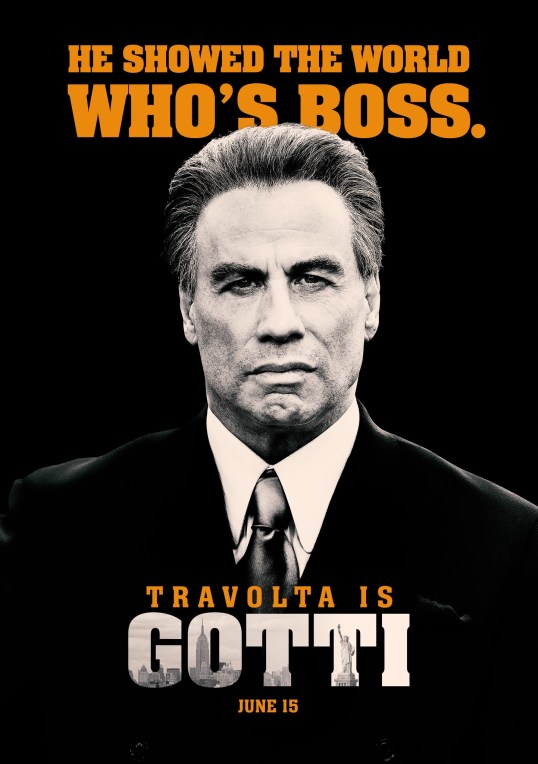
Few recent films have been as misunderstood as Gotti.
When this film was first released in 2018, it was slammed by critics and it flopped at the box office. On Rotten Tomatoes, it managed a score of 0% from the critics. At the same time, the opening day audience score was 80%. (Over subsequent days, the audience score would drop to 46%.) This disparity was blamed on studio employees inflating the audience score, though I think it’s more likely that, after months of negative press about the film’s troubled productions, critics were already looking forward to slamming the film before they even had a chance to see it. At the same time, the buzz on Gotti was so bad that the opening day audience was made up of a combination of John Travolta die-hards (whoever they may be) and people who were expecting such a trainwreck that all Gotti had to do to surpass their expectations was to occasionally be in focus.
Then again, it could be that some members of the audience understood what I instinctively understood when I first watched Gotti. Gotti is not really a film about John Gotti, the flamboyant New York mob boss who ruled the streets with an iron fist and who eventually ended up dying of cancer in prison. Instead, whether it was the filmmaker’s actual intention or not, Gotti is a film about the audience’s fascination with not only gangsters but also the movies that have been made about them.
It’s true that John Travolta may be playing someone namned John Gotti but the film goes out of its way to remind you that he’s not the real John Gotti. The film is full of archival news footage of the real John Gotti, either laughing it up with reporters or smirking while sitting in a courtroom. Every time that we’re shown footage of the real John Gotti, we’re reminded of the fact that, at not point during the film, does Travolta look anything like John Gotti. Add to that, the real Gotti is always smirking whereas Travolta always looks somewhat grim. At the time this film came out, many claimed that this was evidence of lazy filmmaking but I viewed it as being a Brechtian distancing device. Whenever the real Gotti makes an appearance, we’re reminded that we’re just watching a movie and then we’re encouraged to ask ourselves why we would want to watch a movie about such a disreputable figure.
The movie opens with John Travolta standing next to the Brooklyn Bridge and speaking directly to the camera. Though Travolta is meant to be speaking to us as John Gotti, the sight of him standing near a bridge in New York will automatically remind some viewers of a previous Travolta film, Saturday Night Fever. The character that Travolta played in Saturday Night Fever, Tony Manero, has come to epitomize New York in the 70s. The film suggests that, in much the same way, Gotti epitomized New York in the 80s and 90s. Gotti, the film is saying, is as much of an icon of the popular imagination as Tony Manero dancing in a white suit.
Why is Gotti speaking directly to us in that scene? It may seem like a framing device until, a few minutes later, we see a bald and sickly Gotti in a prison meeting room, telling his life story to his son, John, Jr. (Spencer LoFranco). Gotti talking in prison is then established as the narrative’s other framing device. So, why was Gotti speaking to us on the bridge and why did he look so healthy and have a full of head of hair when the film has made it clear that the newly bald Gotti is going to die in prison? When I first saw the film, my initial thought was that the Gotti who speaks directly to the audience was meant to be a ghost. But then it occurred to me that he’s actually not meant to be John Gotti at all. Instead, the Gotti who talks to us on the bridge is meant to be our popular conception of what gangsters like John Gotti as like. He’s what we imagine gangsters to be — i.e., tough-talking, well-dressed, and played by an iconic actor. As such, the film’s narration is not being provided by John Gotti. Instead, it’s being provided by the person that we imagine someone like Gotti to have been.
Is the imprisoned Gotti meant to be the real Gotti? Perhaps. However, it’s hard not to notice that, over the course of the film, Gotti’s son never ages. Though several decades pass, Gotti’s son always looks like he’s in his mid-twenties. When he visits his father in prison and talks about having teenage children of his own, it feels odd because he barely looks old enough to be out of high school. That may seem like lazy filmmaking but again, I would argue that this is a distancing device. It’s a reminder that we’re not watching reality. Instead, we’re choosing to watch actors pretending to be gangsters.
Once you accept that Gotti is a film not about John Gotti but instead about those of us in the audience who are watching, the film makes a lot more sense. The film’s cliches about life in the Mafia are revealed to be not so much the result of an uninspired script as they’re an homage to American folklore. Of course, there’s going to be a scene where Gotti tells his children never to rat on their friends. Of course, there’s going to be random shootings and burly men demanding respect. This is a gangster movie, after all. By populating the cast with people who you normally wouldn’t expect to see playing members of the Mafia — Stacy Keach, Chris Mulkey, Pruitt Taylor Vince — Gotti continually reminds you that you’re watching a movie. The real mafia isn’t like this, Gotti is saying, but the mafia of the popular imagination is. Why are we horrified by real-life crime and yet we flock to movies that claim to recreate it for our entertainment? This is the issue at the heart of Gotti.
Gotti’s flaws are there to remind us that we’re just watching a movie. They’re also there to make us wonder why we’re watching that particular movie. Gotti asks us why audience idolize killers like John Gotti. Why do we turn them into folk heroes? Is it because we imagine them to be characters in films as opposed to actual human beings? Whether or not one feels that the film succeeded in its goal, this is an offer that you cannot refuse.
From everything that I had heard and seen over the past few years, I was under the impression that this 1982 film was the ultimate in mindless action. I figured that the film was basically just two hours of Sylvester Stallone hiding in the woods, firing a machine gun, riding a motorcycle, and eventually blowing up a small, bigoted town. It wasn’t a film that I was in any particular hurry to experience but I knew it was one that I would have to watch eventually, if just because of how many filmmakers have cited the film as an influence. On Sunday night, First Blood aired on the Sundance Channel and, for the first time, I watched it all the way through. What I discovered is that there’s a lot more to First Blood than I had been led to believe.
Now, don’t get me wrong. It’s definitely an action film. Stallone spends a lot of time hiding in the woods, firing a machine gun, riding a motorcycle, and blowing up a town. Somewhat improbably, only one character actually dies over the course of the film, though quite a few end up getting maimed and wounded. There’s even a close-up of Stallone stitching up a nasty gash on his arm, which totally made me cringe. But, even with all the gunfire and explosions, First Blood has more on its mind than just carnage. It’s a brooding film, one that angrily takes America to task for its treatment of its veterans and outsiders. In its way, it’s an action film with a heart.
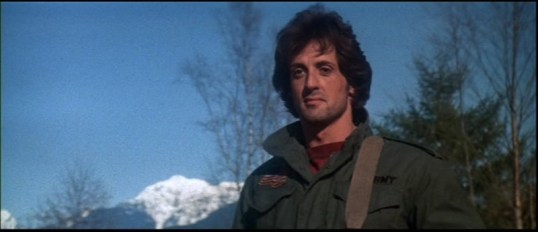
Sylvester Stallone plays John Rambo, a troubled drifter who is still haunted by not only his experiences in Vietnam but also by the feeling that his own country doesn’t want him around. When Rambo, with his unkempt hair and wearing a jacket with an American flag patch prominently displayed, shows up in the town of Hope, Washington, it’s not to cause trouble. He just wants to see an old friend, a man with whom he served. Unfortunately, his friend has died. The man’s bitter mother says that he got cancer from “that orange stuff they were spraying around.” Even though the war is over, it’s still killing the only people who can possibly understand how Rambo feels about both his service and his uncertain place in American society.
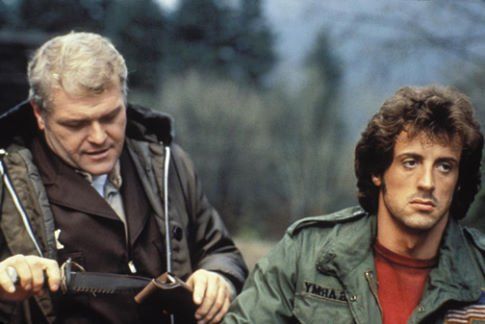
As Rambo walks through the town, he’s spotted by Sheriff Will Teasle (Brian Dennehy). Rambo just wants to get a cup of coffee and relax. Teasle, however, views Rambo as being a stranger and, therefore, a possible threat to his town. Teasle wants Rambo to leave. Rambo wants to know why, after everything that he’s sacrificed for his country, he’s being told that he needs to get a haircut. From this simple conflict — a misunderstanding really, as Teasle doesn’t know that Rambo is mourning the death of his friend and instead interprets Rambo’s sullen silence as being a threat — an undeclared and unwinnable war soon breaks out.
Technically, Teasle is the film’s villain. He’s the one who arrests Rambo for vagrancy. It’s his abusive deputies who cause Rambo to have the flashbacks that lead to him breaking out of jail. It’s Teasle’s arrogance that leads to him ignore the warnings of Rambo’s former commanding office, Sam Trautman (Richard Crenna). And yet, Teasle himself is never portrayed as being an evil man. Instead, Dennehy plays Teasle as being well-meaning but stubborn. It’s been written that the most compelling villains are the ones who don’t realize that they’re the villain and that’s certainly true in Teasle’s case. Teasle’s job is to protect the town and its citizens and that’s what he’s determined to do. If his actions become extreme, it has less to do with any deliberate cruelty on his part and everything to do with the fact that, towards the end of the film, he finally figures out that he’s in way over his head.
Once Rambo has disappeared into the woods and maimed (but not killed) all of Teasle’s deputies, he only has one request and that’s to be left alone. He simply wants to stay in the woods, hunting for food and free from a society that has nothing to offer him during peacetime. What’s interesting is that, at the start of the film, everyone wants Rambo to just disappear. He’s a reminder of not just the turmoil of the Vietnam era but also the fact that Vietnam was the first war that America lost. Rambo’s presence is viewed as being like an ugly scar that you wish would just fade away. However, once Rambo does actually vanish, people won’t stop looking for him. As opposed to the later films in the franchise, the Rambo of First Blood doesn’t want to fight anyone. Rambo just wants to be left alone in solitude and considering the way that he’s treated by the town of Hope, it’s hard to blame him.
And so, you end up sympathizing with this John Rambo. Even thought he’s blowing up a town during the Christmas season and there’s a few scenes where he’s kind of scary, it’s impossible not to feel that he has a right to his anger. You find yourself wishing that the Sheriff had just left him alone or that maybe Rambo had just taken Teasle’s earlier advice and left town. Because, as you watch the film, you know that 1) there was no good reason why any of this had to happen and 2) things probably aren’t going to end well for either John Rambo or Will Teasle.
First Blood was based on a novel that was first published in 1972. The film spent nearly a decade in development, as various directors, screenwriters, and actors circled around the project. At one point, First Blood was envisioned as an anti-war film that would have been directed by Sidney Lumet and which would have featured a bearded Al Pacino lurking through the wilderness and killing not only Teasle but also several deputies and national guardsmen. When Stallone agreed to star in the film, he also rewrote the script, transforming Rambo into a sympathetic outsider who goes out of his way not to kill anyone. The end result was an underdog story that audiences could embrace.
Seen today, it’s interesting to see how many familiar faces pop up in First Blood. For instance, a young and really goofy-looking David Caruso pops up and totally overacts in the role of the only sympathetic deputy. A less sympathetic deputy is played by Chris Mulkey, who would go on to play other unsympathetic characters in a huge number of movies and TV shows. Interestingly enough, the most sadistic of the deputies was played by Jack Starrett, who directed a several classic B-moves in the 70s. (One of Starrett’s films was The Losers, in which a bunch of bikers were sent to Vietnam to rescue an American diplomat.)
As opposed to many of the films that it subsequently inspired, First Blood holds up surprisingly well. It may be violent but it’s violence with a heart.
Karl (Ted Marcoux) is a serial killer who works in an electronics store and who steals address books and uses them to pick his victims. His latest stolen address book belongs to Terry (Karen Allen). Before Karl can start killing Terry’s family and friends, he is killed in a car accident. Because there is a lightning storm going on at the same time, the dead Karl is able to transfer his evil soul into the electrical grid. Traveling from appliance to appliance, Karl starts to kill all of Terry’s friends and co-workers. A microwave oven. A hand dryer. A dishwasher. If it is electrical, Karl can use it to kill. Fortunately, Terry knows a legendary hacker (Chris Mulkey) who can help her fight back.
Like Prison, Destroyer, and The Horror Show, Ghost in the Machine is another dumb movie about a psycho who gets his soul transformed into electricity. Ghost In The Machine was also obviously influenced by The Lawnmower Man and the entire movie is full of early 90s paranoia about the internet and computers in general. Rachel Talaly, who got her start with the Nightmare on Elm Street franchise and who has recently directed some of the best received episodes of Doctor Who, does a good job with the deaths but cannot do anything with the lousy script and unlikable characters. Nearly everyone who dies is killed because they know Terry but that never seems to bother her.
I think every 90s kid, or at least every 90s male, watched Ghost In The Machine on HBO and had a crush on Shevonne Durkin.
When med student Rick Westford (James Spader) is found hung at the free clinic where he worked, the police say that he committed suicide. Rick’s estranged twin brother, John (James Spader), does not agree and launches an investigation of his own. With the help of Rick’s co-worker, Chris (Cynthia Gibb), John discovers that Rick may have learned the identity of a serial killer who has been copying the crimes of Jack the Ripper and murdering prostitutes in Los Angeles. However, the killer knows that John is getting close to discovering his identity so the killer sets out to frame John not only for the prostitute murders but for the murder of his brother as well.
Jack’s Back is a movie that deserves to be better known than it is. James Spader gives two great performances, as both Rick and John. He and Cynthia Gibb make a good team and Jack’s Back actually does some unexpected things with their relationship. Jack’s Back was directed by Rowdy Herrington, who is best known for Roadhouse and Gladiator. Jack’s Back is part murder mystery, part action thriller, and part horror movie and Herrington does a good job of switching back and forth through Jack’s Back constantly shifting tone. Because this is a low-budget movie with a small cast, there really are not enough suspects to make the murderer’s identity a surprise but Spader, Herrington, and Gibb always keep things interesting.
This is a film that really does deserve to be better known.
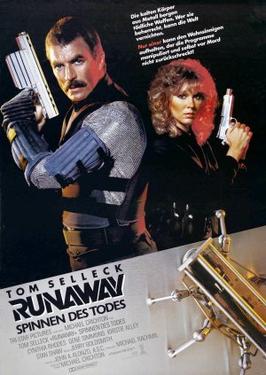 The year is 1991 and humans are using robots for everyday tasks. Because the budget is low and Michael Crichton had already done Westworld, none of the robots are humanoid or capable of original thought. The majority of them are boxy and they look harmless until they malfunction. All police departments now have a division of cops trained to deal with robots. Being a part of the “runaway squad” is not prestigious but it’s perfect for Sgt. Jack Ramsey (Tom Selleck), a good cop who suffers from a crippling fear of heights.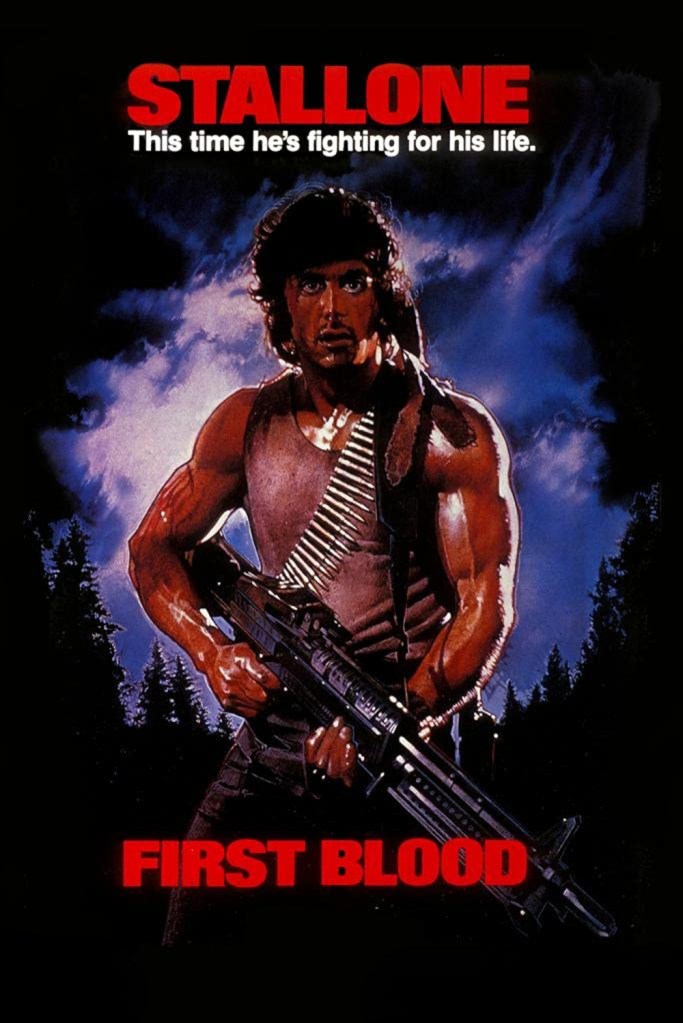



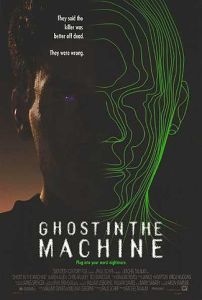 Karl (Ted Marcoux) is a serial killer who works in an electronics store and who steals address books and uses them to pick his victims. His latest stolen address book belongs to Terry (Karen Allen). Before Karl can start killing Terry’s family and friends, he is killed in a car accident. Because there is a lightning storm going on at the same time, the dead Karl is able to transfer his evil soul into the electrical grid. Traveling from appliance to appliance, Karl starts to kill all of Terry’s friends and co-workers. A microwave oven. A hand dryer. A dishwasher. If it is electrical, Karl can use it to kill. Fortunately, Terry knows a legendary hacker (Chris Mulkey) who can help her fight back.
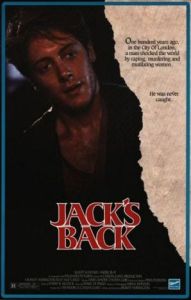 When med student Rick Westford (James Spader) is found hung at the free clinic where he worked, the police say that he committed suicide. Rick’s estranged twin brother, John (James Spader), does not agree and launches an investigation of his own. With the help of Rick’s co-worker, Chris (Cynthia Gibb), John discovers that Rick may have learned the identity of a serial killer who has been copying the crimes of Jack the Ripper and murdering prostitutes in Los Angeles. However, the killer knows that John is getting close to discovering his identity so the killer sets out to frame John not only for the prostitute murders but for the murder of his brother as well.
