The world of cinema lost one of it’s own with the death of British filmmaker Tony Scott (brother of filmmaker Ridley Scott). The circumstances of Tony Scott’s death has now been confirmed and could be found and read easily on most on-line news site.
This post is not to focus on Tony Scott’s death but on the life he lived and how his contribution to the art of filmmaking. Tony Scott has been a major influenc on me and those who grew up during the 80’s and 90’s. His films were huge commercial successes but also unique in that he tried to advance the genre of action filmmaking beyond the bullet point steps on how to make them that other filmmakers could never get beyond.
Tony Scott experimented and innovated with the action genre these last ten or so years to mixed results, but no one could ever say that his visual style was ever boring. Just like his brother Ridley, Tony Scott was a visual director first and foremost, but he also had a way in getting the most out of the cast he was given. It didn’t matter whether they were award-winning veterans like Denzel Washington or up-and-coming stars like Keira Knightley and Chris Pine. His action films weren’t just all about the visual and auditory overload his contemporaries only focused on. Tony Scott used his actors and got from them good to great performances which raised what would’ve been your typical action film to something more.
One of my favorite scenes Tony Scott ever did was also from one of his films I consider one of his best. It’s the last main sequence for his 2001 spy thriller, Spy Game, which starred Robert Redford and Brad Pitt. It was a film that was the passing of the torch from one blue-eyed star of Hollywood’s yesteryear to the current blue-eyed star. This film could’ve been all about action and explosions and techno-spy babble, but it instead became a great exercise in how to create an action-thriller that allowed for dialogue to become the engine that moved the action.
This scene is a favorite because it was the culmination of the machinations and secret plannings of Redford’s aging spymaster, Nathan Muir, to try and save his wayward protege in Brad Pitt’s Tom Bishop. While it would be best for people to watch this scene having watched the rest of the film beforehand, even just watching Redford take control of the room is a clue to how well Tony Scott allowed his actors to work the scene instead of forcing them to do it his way. It’s no wonder that Denzel Washington, considered to be the best actor of his generation, kept working with Tony over and over for the past decade.
The Screen Actors Guild nominations were announced on Wednesday morning and I’m just going to be honest. I am not happy. The SAG nominations have a pretty good track record as an Oscar precursor, largely because the Actors’ Branch is the largest branch of the Academy. The Actors Branch, of course, is totally made up of members of the SAG though not every member of SAG is in the Actors’ Branch. As such, there’s usually one or two SAG nominations who don’t get an Oscar nomination but, on the whole, SAG is a pretty good precursor of who is ultimately going to receive an Oscar nomination next January.
So, why am I upset?
Well, the SAG nominated some very good and deserving performers this year but somehow, they did not nominate Michael Shannon for Take Shelter. They did not nominate Carey Mulligan for Shame. They did not nominate Andy Serkis for Rise of the Planet of the Apes. They did not nominate The Guard’s Brendan Gleeson. And, worst of all, they did not nominate Michael Fassbender for Shame.
My personal theory is that Fassbender’s brave performance left the other members of the SAG feeling small, in more ways than one.
Here’s what did get nominated:
Outstanding Performance By A Cast In A Motion Picture Bridesmaids
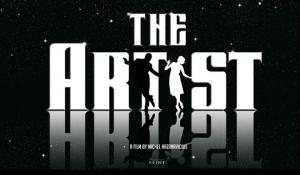
The Artist
The Descendants
The Help
Midnight in Paris
Outstanding Performance By A Male Actor In A Leading Role
George Clooney, The Descendants
Demian Bichir, A Better Life
Leonardo DiCaprio, J. Edgar
Jean Dujardin, The Artist
Brad Pitt, Moneyball
Outstanding Performance By A Female Actor In A Leading Role
Michelle Williams, My Week With Marilyn
Glenn Close, Albert Nobbs
Viola Davis, The Help
Meryl Streep, The Iron Lady
Tilda Swinton, We Need to Talk About Kevin
Outstanding Performance By A Male Actor In A Supporting Role
Nick Nolte, Warrior
Kenneth Branagh, My Week With Marilyn
Armie Hammer, J. Edgar
Jonah Hill, Moneyball
Christopher Plummer, Beginners
Outstanding Performance By A Female Actor In A Supporting Role
Octavia Spencer, The Help
Berenice Bejo, The Artist
Jessica Chastain, The Help
Melissa McCarthy, Bridesmaids
Janet McTeer, Albert Nobbs
On the plus side, the SAG showed absolutely no love for David Fincher’s rip-off of The Girl With The Dragon Tattoo. Also, it’s nice to see Jonah Hill’s performance in Moneyball hasn’t been totally overshadowed by Brad Pitt’s more showy performance. Also, it’s looking more and more like Bridesmaids is going to be a factor in this year’s Oscar race and the more I think about it, the more I like the idea of that.
Earlier today, the Broadcast Film Critics Association announced their nominations for the 17th Annual Critics’ Choice Awards. The BFCA is the largest of the so-called “major” critics’ groups (and, interestingly enough, it’s also the newest and the least prestigious) and it has a fairly good track record of predicting the actual Oscar nominations. The awards themselves will be handed out on January 12th, 2012 in a self-important, kinda seedy ceremony that will be broadcast on VH-1.
BEST PICTURE The Artist
The Descendants
Drive
Extremely Loud & Incredibly Close
The Help
Hugo
Midnight in Paris
Moneyball
The Tree of Life
War Horse
BEST ACTOR
George Clooney – The Descendants
Leonardo DiCaprio – J. Edgar
Jean Dujardin – The Artist
Michael Fassbender – Shame
Ryan Gosling – Drive
Brad Pitt – Moneyball
BEST ACTRESS
Viola Davis – The Help
Elizabeth Olsen – Martha Marcy May Marlene
Meryl Streep – The Iron Lady
Tilda Swinton – We Need to Talk About Kevin
Charlize Theron – Young Adult
Michelle Williams – My Week With Marilyn
BEST SUPPORTING ACTOR
Kenneth Branagh – My Week With Marilyn
Albert Brooks – Drive
Nick Nolte – Warrior
Patton Oswalt – Young Adult
Christopher Plummer – Beginners
Sir Andrew Serkis – Rise of the Planet of the Apes
BEST SUPPORTING ACTRESS
Berenice Bejo – The Artist
Jessica Chastain – The Help
Melissa McCarthy – Bridesmaids
Carey Mulligan – Shame
Octavia Spencer – The Help
Shailene Woodley – The Descendants
BEST YOUNG ACTOR/ACTRESS
Asa Butterfield – Hugo
Elle Fanning – Super 8
Thomas Horn – Extremely Loud & Incredibly Close
Ezra Miller – We Need to Talk About Kevin
Saoirse Ronan – Hanna
Shailene Woodley – The Descendants
BEST ACTING ENSEMBLE The Artist
Bridesmaids
The Descendants
The Help
The Ides of March
BEST DIRECTOR
Stephen Daldry – Extreme Loud & Incredibly Close
Michel Hazanavicius – The Artist
Alexander Payne – The Descendants
Nicolas Winding Refn – Drive
Martin Scorsese – Hugo
Steven Spielberg – War Horse
BEST ORIGINAL SCREENPLAY The Artist – Michel Hazanavicius 50/50 – Will Reiser Midnight in Paris – Woody Allen Win Win – Screenplay by Tom McCarthy, Story by Tom McCarthy & Joe Tiboni Young Adult – Diablo Cody
BEST ADAPTED SCREENPLAY The Descendants – Alexander Payne and Nat Faxon & Jim Rash Extremely Loud & Incredibly Close – Eric Roth The Help – Tate Taylor Hugo – John Logan Moneyball – Steven Zaillian and Aaron Sorkin, Story by Stan Chervin
BEST CINEMATOGRAPHY The Artist – Guillaume Schiffman Drive – Newton Thomas Sigel Hugo – Robert Richardson Tree of Life – Emmanuel Lubezki War Horse – Janusz Kaminski
BEST ART DIRECTION The Artist – Production Designer: Laurence Bennett, Art Director: Gregory S. Hooper Harry Potter and the Deathly Hallows Part 2 – Production Designer: Stuart Craig, Set Decorator: Stephenie McMillan Hugo – Production Designer: Dante Ferretti, Set Decorator: Francesca Lo Schiavo The Tree of Life – Production Designer: Jack Fisk, Art Director: David Crank War Horse – Production Designer: Rick Carter, Set Decorator: Lee Sandales
BEST EDITING The Artist – Michel Hazanavicius and Anne-Sophie Bion Drive – Matthew Newman The Girl With the Dragon Tattoo – Kirk Baxter and Angus Wall Hugo – Thelma Schoonmaker War Horse – Michael Kahn
BEST COSTUME DESIGN The Artist – Mark Bridges The Help – Sharen Davis Hugo – Sandy Powell Jane Eyre – Michael O’Connor My Week With Marilyn – Jill Taylor
BEST MAKEUP Albert Nobbs
Harry Potter and the Deathly Hallows Part 2
The Iron Lady
J. Edgar
My Week With Marilyn
BEST VISUAL EFFECTS Harry Potter and the Deathly Hallows Part 2
Hugo
Rise of the Planet of the Apes
Super 8
The Tree of Life
BEST SOUND Harry Potter and the Deathly Hallows Part 2
Hugo
Super 8
The Tree of Life
War Horse
BEST ANIMATED FEATURE The Adventures of Tintin
Arthur Christmas
Kung Fu Panda 2
Puss in Boots
Rango
BEST ACTION MOVIE Drive
Fast Five
Hanna
Rise of the Planet of the Apes
Super 8
BEST COMEDY Bridesmaids
Crazy, Stupid, Love
Horrible Bosses
Midnight in Paris
The Muppets
BEST FOREIGN LANGUAGE FILM In Darkness
Le Havre
A Separation
The Skin I Live In
Where Do We Go Now
BEST DOCUMENTARY FEATURE Buck
Cave of Forgotten Dreams
George Harrison: Living in the Material World
Page One: Inside the New York Times
Project Nim
Undefeated
BEST SONG
“Hello Hello” – performed by Elton John and Lady Gaga/written by Elton John and Bernie Taupin – Gnomeo & Juliet
“Life’s a Happy Song” – performed by Jason Segel, Amy Adams and Walter/written by Bret McKenzie – The Muppets
“The Living Proof” – performed by Mary J. Blige/written by Mary J. Blige, Thomas Newman and Harvey Mason, Jr. – The Help
“Man or Muppet” – performed by Jason Segel and Walter/written by Bret McKenzie – The Muppets
“Pictures in My Head” – performed by Kermit and the Muppets/written by Jeannie Lurie, Aris Archontis and Chen Neeman – The Muppets
BEST SCORE The Artist – Ludovic Bource Drive – Cliff Martinez The Girl With the Dragon Tattoo – Trent Reznor & Atticus Ross Hugo – Howard Shore War Horse – John Williams
The BFCA has obviously made a lot of nominations and some of them are interesting but I have to be honest: the BFCA as an organization annoys me with how they’re always bragging about how big they are and how they’re so good at celebrating the conventional establishment wisdom. So, I’ll just say that its nice to see Hanna getting at least some sort of recognition (even if that recognition is kinda minor.)
The Los Angeles film critics weren’t the only ones to vote on their favorites of 2011 today. The Boston Society of Film Critics voted today as well. Now, as I’ve stated quite a few times on this site, I’m a Southern girl and I have a feeling that if I ever went up to Boston, everyone up there would ignore the fact that I’m an Irish Catholic and would probably just make fun of my accent. Eventually, the conversation would turn to politics and I would let slip the fact that not only am I not a Democrat but I didn’t even vote for Barack Obama in 2008. A big fight would follow and I imagine we wouldn’t even get around to talking about our favorite movies…
Sorry, I lost my train of thought there. Anyway, the BSFC voted and here’s what they came up with:
Best Picture: “The Artist”
Runners-up: “Hugo” and “Margaret”
Best Director: Martin Scorsese, “Hugo”
Runner-up: Michel Hazanavicius, “The Artist”
Best Actor: Brad Pitt, “Moneyball”
Runners-up: George Clooney, “The Descendants” and Michael Fassbender, “Shame”
Best Actress: Michelle Williams, “My Week With Marilyn”
Runner-up: Meryl Streep, “The Iron Lady”
Best Supporting Actor: Albert Brooks, “Drive”
Runner-up: Max Von Sydow, “Extremely Loud and Incredibly Close”
Best Supporting Actress: Melissa McCarthy, “Bridesmaids”
Runner-up: Jeannie Berlin, “Margaret”
Best Screenplay: Steven Zaillian, Aaron Sorkin and Stan Chervin, “Moneyball”
Runner-up: Kenneth Lonergan, “Margaret”
(If I was writing for AwardsDaily.com, I guess this is where I would say, NO MOVIE HAD A BETTER SCREENPLAY THAN THE SOCIAL NETWORK)
Best Cinematography: Emmanuel Lubezki, “The Tree of Life”
Runner-up: Robert Richardson, “Hugo”
Best Documentary: “Project Nim”
Runner-up: “Bill Cunningham New York”
Best Foreign-Language Film: “Incendies”
Runners-up: “A Separation” and “Poetry”
Best Animated Film: “Rango”
Best Film Editing: Christian Marclay, “The Clock”
Runner-up: Thelma Schoonmaker, “Hugo”
Best New Filmmaker: Sean Durkin, “Martha Marcy May Marlene”
Runner-up: J.C. Chandor, “Margin Call”
Best Ensemble Cast: “Carnage”
Runner-up: “Margaret”
Best Use of Music in a Film: (tie) “Drive” and “The Artist”
Runner-up: “The Descendants”
Special Commendations:
Ben Fowlie, Sara Archambault and Sean Flynn of DocYard
The Museum of Fine Arts for “The Clock”
The Brattle Film Foundation
Best Rediscoveries:
“The Shooting” at the Harvard Film Achive
“The Makota Sisters” at the Museum of Fine Arts
“Deep End” at the HFA
“Days and Nights in the Forest” at the HFA
“Children of Hiroshima” at the HFA
Obviously, the Boston Film Critics were big fans of Kenneth Lonergan’s film Margaret. Margaret was actually filmed in 2007 but, because of various lawsuits between Longergan and the film’s producers, it was not actually released until September of this year. Unfortunately, it only played down here for about a week and I didn’t get a chance to see it but hopefully, I will in the future. If nothing else, I want to see it so I can have something other than politics to talk about if I ever go up to Boston.
One thing about Oscar Season is that you have so many different groups of people tossing around so many different awards that occasionally, you’ll miss a few. The nominations for the Satellite Awards were announced last Friday but I missed them, largely because nobody really seems to care about the Satellite Awards. Well, almost nobody. I care about them because — even when they were known as the Golden Satellites — the Satellite Awards are consistently more interesting than the more mainstream awards. (For instance, last year, the Satellite Awards had the guts to honor the one and only true girl with the dragon tattoo, Noomi Rapace.)
Best Picture
The Artist
The Descendants
Drive
The Help
Hugo
Midnight in Paris
Moneyball
Shame
Tinker, Tailor, Soldier, Spy
War Horse
What? No love for David Fincher’s rip-off of TheGirl With The Dragon Tattoo? The AwardsDaily folks must be throwing a fit. (They’ve been promoting Fincher’s rehash with the same enthusiasm that they attempted to promote Nine two years ago.)
Best Actor
George Clooney in The Descendants
Leonardo DiCaprio in J. Edgar
Michael Fassbender in Shame
Brendan Gleeson in The Guard
Ryan Gosling in Drive
Tom Hardy in The Warrior
Woody Harrelson in Rampart
Gary Oldman in Tinker, Tailor, Soldier, Spy
Brad Pitt in Moneyball
Michael Shannon in Take Shelter
It’s nice to see Brendan Gleeson get some love. It’s also interesting to note that Michael Shannon’s performance in Take Shelter has been getting a lot of recognition. Count me among those who hopes that Shannon gets, at the very least, a nomination for giving a great performance in a horror film.
Best Actress
Glenn Close for Albert Nobbs
Olivia Colman in Tryannasour
Viola Davis for The Help
Vera Farmiga in Higher Ground
Elizabeth Olsen in Martha Marcy May Marlene
Meryl Streep in The Iron Lady
Charlize Theron in Young Adult
Emily Watson in Oarnges and Sunshine
Michelle Williams in My Week With Marilyn
Michelle Yeoh in The Lady
Much as the Satellites recognized the work of Noomi Rapace last year, this year they continue to at least nominate some great performances that are being ignored by the mainstream. In a perfect world, both Verma Farmiga and Higher Ground would be major contenders.
Best Supporting Actor
Kenneth Branagh in My Week With Marilyn
Albert Brooks in Drive
Colin Farrell in Horrible Bosses
Jonah Hill in Moneyball
Viggo Mortensen in A Dangerous Method
Nick Nolte in Warrior
Christopher Plummer in Beginners
Andy Serkis for Rise of the Planet of the Apes
Christoph Waltz in Carnage
Hugo Weaving in Oranges and Sunshine
Wouldn’t it be cool if Andy Serkis actually got an Oscar nomination? It’s also nice to see Jonah Hill finally getting some recognition for Moneyball. Brad Pitt has been honored largely for playing Brad Pitt in that film. Hill actually gave a performance.
Best Supporting Actress
Jessica Chastain in The Tree of Life
Elle Fanning in Super 8
Lisa Feret in Mozart’s Sister
Judy Greer in The Descendants
Rachel McAdams in Midnight in Paris
Janet McTeer in Albert Nobbs
Carey Mulligan in Shame
Vanessa Redgrave in Coriolanus
Octavia Spencer in The Help
Kate Winslet in Carnage
I haven’t seen Shame yet but Carey Mulligan is one of my favorite actresses and she deserved an Oscar for her performance in An Education. It’s also nice to see Judy Greer getting some recognition for giving one of the few performances in The Descendants that’s actually going to pass the test of time.
I don’t know much about the Washington Area Film Critics Association but, just judging from the films that they chose to nominate for being the best of 2011, they would appear to have better taste than most film critics.
(Seriously, film critics are the worst.)
They announced their picks for the best of 2011 earlier today and here’s a complete list of their nominees and winners. If nothing else, this year’s Oscar race is certainly shaping up to be a bit more interesting than last years.
Best Film: *The Artist
The Descendants
Drive
Hugo
Win Win
Best Director:
Woody Allen (Midnight in Paris)
Michel Hazanavicius (The Artist)
Alexander Payne (The Descendants)
Nicolas Winding Refn (Drive) *Martin Scorsese (Hugo)
Best Actor: *George Clooney (The Descendants)
Jean Dujardin (The Artist)
Michael Fassbender (Shame)
Brad Pitt (Moneyball)
Michael Shannon (Take Shelter)
Best Actress:
Viola Davis (The Help)
Elizabeth Olsen (Martha Marcy May Marlene)
Meryl Streep (The Iron Lady)
Tilda Swinton (We Need to Talk About Kevin) *Michelle Williams (My Week with Marilyn)
Best Supporting Actor:
Kenneth Branagh (My Week with Marilyn) *Albert Brooks (Drive)
John Hawkes (Martha Marcy May Marlene)
Christopher Plummer (Beginners)
Andy Serkis (Rise of the Planet of the Apes)
Best Supporting Actress:
Bérénice Bejo (The Artist)
Melissa McCarthy (Bridesmaids)
Carey Mulligan (Shame) *Octavia Spencer (The Help)
Shailene Woodley (The Descendants)
Best Acting Ensemble: *Bridesmaids
Harry Potter and the Deathly Hallows Part 2
The Help
Hugo
Margin Call
Best Adapted Screenplay: *Alexander Payne and Nate Faxon & Jim Rash (The Descendants)
Tate Taylor (The Help)
John Logan (Hugo)
Steven Zaillian and Aaron Sorkin (Moneyball)
Bridget O’Connor & Peter Straughan (Tinker, Tailor, Soldier, Spy) Best Original Screenplay:
Woody Allen (Midnight in Paris)
Michel Hazanavicius (The Artist)
Tom McCarthy (Win Win)
Annie Mumolo & Kristen Wiig (Bridesmaids) *Will Reiser (50/50)
Best Animated Feature:
The Adventures of Tintin
Arthur Christmas
Puss in Boots *Rango
Winnie the Pooh
Best Documentary:
Being Elmo: A Puppeteer’s Journey
Buck *Cave of Forgotten Dreams
Into the Abyss: A Tale of Death, A Tale of Life
Project Nim
Best Foreign Language Film:
13 Assassins
Certified Copy
I Saw the Devil
Pina *The Skin I Live In
Best Art Direction:
Lawrence Bennett, Production Designer, and Gregory S. Hooper, Art Director (The Artist)
Stuart Craig, Production Designer, and Stephenie McMillan, Set Decorator (Harry Potter and the Deathly Hallows Part 2) *Dante Ferretti, Production Designer, and Francesca Lo Schiavo, Set Decorator (Hugo)
Jack Fisk, Production Designer, and Jeanette Scott, Set Decorator (The Tree of Life)
Rick Carter, Production Designer, and Lee Sandales, Set Decorator (War Horse)
Best Cinematography:
Guillaume Schiffman (The Artist)
Robert Richardson (Hugo)
Manuel Alberto Claro (Melancholia) *Emmanuel Lubezki (The Tree of Life)
Janusz Kaminski (War Horse)
Best Score: *Ludovic Bource (The Artist)
Cliff Martinez (Drive)
Trent Reznor & Atticus Ross (The Girl with the Dragon Tattoo)
Howard Shore (Hugo)
John Williams (War Horse)
This is my favorite time of year. It’s Oscar season, the time when films and actors manuever to win nominations and awards. This is the time of year when anything seems possible, when you think that maybe Exit Through The Gift Shop will get a best picture nomination or perhaps Christopher Nolan will be nominated for best director for Inception. In short, this is the month and a half before bitter disillusionment sets in.
During Oscar season, several mysterious groups hand out awards of their own. These groups are made up of critics desperately trying to convince themselves that they matter and the awards that they hand out are often seen as an indicator of what will eventually end up getting nominated. Last year, just about every single critical group named The Social Network as best picture and David Fincher as best director and we all remember how little that actually meant once it came time for the actual Academy Awards to be handed out.
Earlier today, the New York Film Critics Circle helped to start things off by announcing their picks for the best of 2011. Reportedly, they held off a day on selecting their picks so that they could attend a special screening of David Fincher’s remake of The Girl With The Dragon Tattoo. And how did that work out? Well, check out what won:
Best picture: “The Artist”
Best director: Michael Havanavicius, “The Artist”
Best actor: Brad Pitt (“Moneyball,” “Tree of Life”)
Best actress: Meryl Streep (“The Iron Lady”)
Best supporting actor: Albert Brooks (“Drive”)
Best supporting actress: Jessica Chastain (“The Tree of Life,” “The Help” and “Take Shelter”)
Best screenplay: Steve Zaillian and Aaron Sorkin, “Moneyball”
Best cinematography: Emmanuel Lebezki, “Tree of Life”
Best non-fiction film (documentary): “Cave of Forgotten Dreams”
Best foreign language film: “A Separation”
Best first feature: “Margin Call”
Just a few comments on these awards: I have yet to see The Artist but I’m really looking forward to it. I have a feeling I’m either going to love it or else I’m going to hate it with a passion. It just appears to be one of those films. I also haven’t seen Margin Call because its subject matter — Wall Street — makes me go “Bleh!” But I may have to see it now because it appears to be becoming a bit of an awards dark horse.
I have a feeling that Brad Pitt’s going to win an Oscar for his performance in Moneyball but I really didn’t think it was anything that special. I thought Pitt was likable but not much else. Some of that could have had a bit to do with the fact that I couldn’t really follow the film as I’m about as interested in baseball as I am in Wall Street. Hopefully, I won’t have to sit through another Aaron Sorkin acceptance speech at next year’s Oscar ceremony. Seriously, there’s only so much time I can spend listening to a pompous millionaire talking about how he thinks the world works.
I haven’t seen The Iron Lady yet but its going to be boring and people are going to feel obligated to pretend like they got something out of it.
Finally, yay to the NYFCC for awarding both Albert Brooks and Werner Herzog’s The Cave of Forgotten Deams.
Here’s one thing I’ve learned about relationships – sometimes, you have to compromise. Sometimes, you have to do things for your man that you’d rather not do and you have to pretend like you’re enjoying it and sometimes, you even have to do it several times before you get what it is that you want. Case in point: I recently went to two sports films with Jeff.
Now, I have to be honest. I don’t know much about sports in general and quite frankly, I really have next to no desire to know. Why am I so indifferent to this thing that most men appear to be incapable of living without? Well,
1) I have asthma and therefore, I never got to play any of the games that all the other kids were playing. This led to me becoming bitter towards those who could actually breathe and have fun at the same time and,
2) I’m a girl.
My indifference to sports tends to extend even to cinematic sports. Seriously, most sports-related films either put me to sleep or lead to me making a lot of snarky comments under my breath. However, I recently forced Jeff to accompany me to see One Day, which is one of the most girly movies ever made. In fact, it was such a girly movie that I’ve had to see not one but two sports movies with Jeff. The first was Warrior and the second (which we saw on Saturday) was Moneyball.
I don’t quite feel qualified to review Moneyball because, to be honest, I couldn’t make heads or tails of what was going on during most of the film. Normally, I would just say that this was a sign of failure on the film’s part but the audience around me really seemed to love this film and so did Jeff. So, I’m going to refrain from judging Moneyball too harshly. Instead, I’ll simply state that this film was not for me but if you’re a baseball fan (and you really love to get into the nitty gritty details of how a baseball team is put together), chances are that you’ll enjoy this film.
Fortunately, there are a few things that help make Moneyball a tolerable experience even for a sport illiterate like me. The film tells the story of Billy Beane, the general manager of the Oakland A’s and how he turned the A’s into a winning team by revolutionizing the way that teams are put together. I’m not really sure what he did that was revolutionary because the film itself really doesn’t spend too much time explaining how his method is different from the previous method. It spends a lot of time telling us that his approach is different but Aaron Sorkin’s script seems to assume that everyone in the audience already knows how baseball works. (That’s not necessarily a slam against the film, either. It’s a baseball movie, after all.) Luckily, Brad Pitt, who gives such a mature and multi-faceted performance here that you hope that Billy succeeds even if, like me, you’re not really sure what he’s talking about half the time, plays Billy Beane. Seriously, this was the first time I’ve ever watched Brad Pitt and forgotten that I was watching Brad Pitt. Pitt is ably supported by Jonah Hill, who plays his assistant and is largely responsible for introducing Pitt to the “new” system. Hill plays his scenes with all the enthusiasm of a high school nerd who has finally forced the cool kids to acknowledge how much smarter he is than them. It’s a truly endearing performance and again, you find yourself rooting for Hill even if you can’t quite understand what he’s going on about half the time.
Again, if you’re a sports fan or a fan of statistics (which I am not because seriously, math is just one big bleh to me), you’ll find a lot of to enjoy in Moneyball. I wish the film had been a bit more accessible for someone like me but obviously, I’m not that target audience and, regardless of whether you’re a sports fan or not, director Bennett Miller keeps the action moving quickly and the performances of Pitt and Hill both hold your attention.
Warrior takes place in the world of “mixed martial arts,” which I assume is the new big sport. I say assume because I actually know even less about the world of mixed martial arts than I do about baseball. Before going in to see Warrior, all I knew about MMA and the Ultimate Fighting Championship was that Russell – one of the most unlikable Big Brother houseguests ever – was apparently a UFC contender. Or maybe it was Jesse. I don’t know. I have trouble keeping all the Big Brother houseguests straight, to be honest.
Warrior is the story of two brothers. One of them is a bitter, pill-popping ex-Marine who fights because he’s angry at the world. Tom Hardy plays him. The other is played by Joel Edgerton and is presented as a happily married teacher who is fighting because he’s flat broke and in danger of losing his home. The two brothers haven’t spoken in years and about the only thing they have in common (beyond the fact that they’re both good at fighting) is a shared hatred for their father (a quite poignant Nick Nolte, doing wonders in a role that seems almost too perfect for him), a recovering alcoholic who sees his sons as his only hope for redemption. Ultimately, the parallel fighting careers of the two brothers leads to a surprise family reunion in Atlantic City where they find themselves both competing in the same brutal, winner-take-all tournament.
Warrior tells a pretty familiar story and there are a few plot developments (such as Hardy’s AWOL status from the Marines) that feel undeveloped but the film still works about a hundred percent better than it has any right to. Director Gavin O’Connor wisely takes a low-key approach to the film’s more melodramatic moments and brings a sense of gritty realism to the beginning of the film that provides quite a contrast to the later gaudiness of Atlantic City. Nolte and Edgerton both give excellent performances and, after years of being best known for his mug shot, it’s nice to see what a strong and multifaceted actor Nick Nolte actually is. However, the film truly belongs to Tom Hardy. In this film, Hardy is a true force of nature and gives a performance that is both frightening and sympathetic at the same time. You want to reach out and give the poor guy a hug even though you know he might end up killing you in response.
Coming out of Warrior, I still didn’t know much about MMA but I did know that I had just seen a well-made, emotionally satisfying film.
My weekend was full of sleep, coughing and just vegetating in front of my bedroom tv as I tried to get better from my bout of the cold and flu. For some reason or another AMC channel decided to hold a mini-marathon of David Fincher’s classic neo-noir thriller, Seven, and I must say that I probably saw all three straight showings before sleep finally took over. It surely made for some very unusual, drug-induced dreams.
I’ve always seen Seven as Fincher at his most exploitative best. If there was ever a modern grindhouse exploitation film of the past twenty years I would have to consider Seven as one of them. From start to finish the film just felt grimy and made one feel dirty just for having seen it. Take away all the gloss and veneer afforded Fincher due to modern film technology and techniques this film was grindhouse to its core. No better scene exemplifies and solidifies Seven as a grindhouse exploitation film than it’s shocking, nihilistic ending which bucked traditional Hollywood happy ending (or at least and ambiguous one).
It’s been made famous due to the powerful performances from the three leads who dominate the scene. It is almost played off like a stage play with some gorgeous camera work from cinematographer Darius Khondji switching from Morgan Freeman to Kevin Spacey to Brad Pitt with mathematical precision as the scene unfolds through very strong dialogue by screenwriter Andrew Kevin Walker.
The performances shown by Spacey is both chilling and otherworldly as the sociopathic John Doe urging Pitt’s Det. Mills to become wrath and punish him for his sin of envy. Looking helpless and desperate is Freeman’s Det. Somerset trying to talk some sense and decency to the rapidly unraveling Mills who has just learned that what is inside the box he’s been screaming for is his wife’s head.
The fact that the unfolded and ended the way it did honors the grindhouse sensibilities of past exploitation films where the good guys never always win and even when they do it’s at a very heavy cost to the victor. This climactic ending to Seven is so nihilistic that when the film was first shown in 1995 many walked out grumbling at such a dark and heavy ending. Where was the Hollywood happy ending everyone was so used to. There was no cavalry charging last second to save the day. No deus ex machina intervening to show that Mill’s wife was still alive. No, Fincher and crew knew they had something special in their hands and went full tilt to see it through.
It’s no wonder I still consider Seven to be David Fincher’s best film to date.
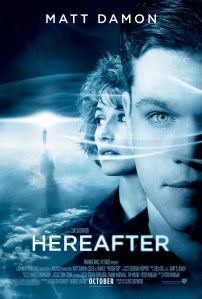
Hereafter is a very serious film about a very serious topic, death. Following three separate but ultimately connected stories, the film attempts to explore death and the question of what happens after death from three different angles — intellectually, emotionally, and spiritually. I really wanted Hereafter to be a great film. So did the film’s makers, which is precisely why Hereafter fails.
The intellectual consideration of death is represented by the character of Marie (Cecile De France), a French journalist who, at the start of the film, drowns in a tsunami and is, for a few minutes, clinically dead. Before she is eventually revived, she has a classic near-death experience: the bright light, the people waiting to greet her, the whole deal. After this experience, Marie is compelled to investigate whether or not there truly is such a thing as an afterlife. As she does so, Marie finds herself shunned by her resolutely secular friends and grows increasingly distant from her skeptical (and rather condescending) boyfriend.
The emotional response to death is represented in the story of twin brothers, Marcus and Jason (played by Frankie and George McLaren). The two boys live in London with their drug-addicted mother and share a strong (and, to be honest, kinda creepy) bond. Jason, while simply trying to return home with some drugs for his detoxing mother, is roughed up by some bullies and ends up running out into the middle of the street. Naturally, since this is a movie, Jason is hit by a truck as soon as he steps off the curb. Jason is killed and Marcus is taken away by social services and put into a foster home. Marcus continues to carry Jason’s cap with him and soon starts tracking down local English psychics in an attempt to talk to his brother again.
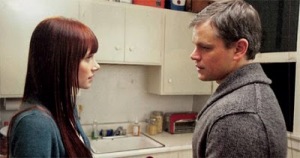
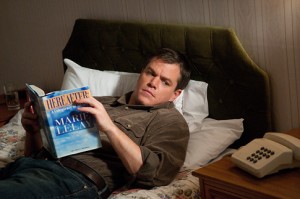
Finally, the spiritual aspect is detailed in the film’s most interesting story. This story features Matt Damon as George Lonegan, a psychic who can speak with the dead. After years of being a minor celebrity, George burned out and went into a self-imposed exile. He now works at a factory while his brother (Jay Mohr, who looks incredibly puffy in this movie) keeps trying to find ways to convince George to get back into the business of talking to dead for fun and profit. After George reluctantly gives a reading to Richard Kind, he finds himself being dragged back into his old life.
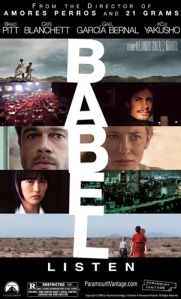
A lot of viewers and critics have compared Hereafter to Alejandro González Iñárritu’s 2006 masterpiece, Babel. Both films follow three separate but connecting stories and both films are concerned with the theme of death and how it connects us all. As well, Babel featured Brad Pitt in a serious role and Hereafter features Matt Damon. The main difference, however, is that Babel was a great film but Hereafter is basically an uneven mess.
Whereas Babel featured three strong stories, Hereafter features 1 compelling story (that would be Damon’s) which is compelling solely because Matt Damon is a talented enough actor that he can apparently perform miracles. He’s probably about as likable as he’s ever been in the role of George but he also wisely plays the role as being just a little bit off. Even though the film makes the mistake of never really going into the details of just what exactly caused George to give up being a psychic, Damon is so good in the role that you’re willing to take him at his word that he had a good reason. Probably the highlight of the film (and one of the few sections to really inspire any sort of real emotional response) is an extended sequence where Damon befriends and the manages to alienate an insecure, single woman played by Bryce Dallas Howard. Damon and Howard have a scene that involves eating while blind-folded that manages to be both powerfully erotic and wonderfully romantic at the same time. If the entire film had been about them, Hereafter would have been a much better movie.
Unfortunately, we’ve got to slog through two other stories.
Cecile La France gives an excellent performance as Marie and the opening tsunami scene is truly terrifying. For someone like me, who cannot swim and risks having a panic attack if she even stands near the deep end of a swimming pool, the tsunami scene was almost impossible to watch. I had to put my hands in front of my eyes and watch the scene through my fingers. However, once she drowns, Marie sees a vision of the afterlife that — as a harbinger of things to come — is rather dull. I mean, with everything that can supposedly be done in movies today, the best that Hereafter can give us is a bland white light. Once Marie returns to Paris and starts her investigation, La France remains a sympathetic presence and the film actually does a pretty good job of showing just how condescending most supposedly “liberal” men are whenever a woman starts to stray from the established orthodoxy. But, unfortunately, her story is just never that interesting. Marie decides to write a book about the afterlife. As a writer myself, I have to say that there is nothing more boring than watching someone else write.
As for Marcus, I was shocked just how little I cared about him or his attempts to contact his brother. I come from a very close family and I have a very strong bond with all three of my sisters and, among them, I am notorious for crying at any movie that deals with that sort of sibling bonding. Yet I sat through the saga of Marcus and Jason without shedding a tear and I felt terrible about it. I really wanted to cry. I really wanted to have some sort of emotional response to the story but I just never believed it. I hate to say this but honestly, a lot of this was due to the fact that the McLaren twins are such bad actors. Director Clint Eastwood has said that he specifically cast them because they weren’t professional actors and therefore, they wouldn’t introduce any false “sentimentality” into the mix. But dammit, it was a sentimental story. Sentiment is not necessarily a bad thing and just because something is sentimental, that doesn’t make it false.
So, what exactly went wrong with Hereafter? The film opens strongly with a terrifying tsunami and the final 30 minutes are also undeniably touching (if also a bit contrived). It’s everything that happens in between those two points that ruins Hereafter. Director Eastwood, obviously looking to avoid that dreaded curse of being sentimental, keeps the whole film very low-key and realistic. Other than the opening tsunami, there are no big wow moments but to be honest, isn’t that what movies are for? If you’re going to make a movie that specifically shuns the wow moment, you better have something compelling (a perfect script or an entire cast giving a compelling performance as opposed to just a handful of them) to take its place. Hereafter doesn’t and, as a result, the movie drags. This, honestly, has got to be one of the slowest, most boring movies I’ve ever seen. If director Eastwood’s westerns and actions films can all be seen as homages to Sergio Leone and Don Siegel, I think Hereafter must be an homage to some of Andy Warhol’s intentionally dull films. Whereas Warhol, at the very least, gave us Joe Dallesandro to look at, Eastwood gives us Jay Mohr. It’s not a fair trade.
I don’t know how much of Hereafter should be blamed on Eastwood and how much should be blamed on the script written by Peter Morgan. Here’s a quote from Morgan that appeared in The Hollywood Reporter:
“It’s quite spiritual material, and quite romantic, too. It’s the sort of piece that’s not easy to describe and in the hands of different filmmakers could end up as wildly different films. Quite unlike some of my other material, which I think there were only certain ways that you could shoot it. It’s really not just another boring Hollywood movie with the same old boring Hollywood actors, although I see the point that the public and sick of paying $10.00 to see a movie with same old faces and the same gramma of story telling.”
And to that, all I can say is “Shut up, Peter Morgan!”
This is not spiritual material as much as it’s just a bunch of vaguely New Age platitudes being delivered by a mainstream screenwriter who apparently doesn’t have the guts to come down either firmly for or against an afterlife. This is the type of feel-good BS that leads to thousands of people every year giving up their life savings to some fraud who claims he can deliver messages from beyond. Morgan’s script goes out of its way not to actually define the afterlife. Is it heaven or is it Hell? Is there a God? Do the worthy go to Heaven? Are souls saved? Or are they just ghosts who are waiting for us to be willing to let them go? These are all questions that would have been considered by a good film but Hereafter doesn’t consider them. Oh, don’t get me wrong. It pretends to bring them up but only so the movie can shrug and go, “I guess nobody knows.” And to that I say, either take a position or don’t expect everyone else to pay money just to listen to you duck the question because you’re too scared of alienating mainstream critics or audiences.
(Myself, I do believe that those who love us are always with us in some way even if I don’t believe in a literal afterlife. And while I know that answer might seem vague, you should also consider that I’m not the one spending millions of dollars to make a movie celebrating that vagueness.)
Morgan’s script also make its a point to incorporate real-life events into his contrived narrative. As a result, the London Subway bombings and the Thailand Tsunami are both used as convenient plot points in much the same way that The Curious Case of Benjamin Button used Hurricane Katrina. I felt it was ghoulish when Button did it and, the more I think about it, it’s equally ghoulish in Hereafter. It’s hard not to feel that the film’s saying, “Too bad all those real people died but what’s important is how these events impacted the lives of a bunch of fictional characters.”
Hereafter’s main problem is that it simply tries too hard to be great. You get the feeling that every scene and line has been calculated to make you go, “Wow, what genius!” As a result, even the scenes that work still somehow feel very dishonest. The end result is a very insincere film about some very sincere concerns.