Horror On The Lens: Snowbeast (dir by Herb Wallerstein)


A killer yeti is ruining a resort’s Snow Carnival.  Can Bo Svenson, Clint Walker, and Robert Logan set aside their differences and work together to defeat the monster before Sylvia Sidney is forced to shut the whole thing down?  Let’s hope so!

Originally made for television in 1977 and subsequently included in a hundred Mill Creek box sets, Snowbeast is an surprisingly enjoyable and, at times, rather intense little horror movie.  There’s nothing scarier than an angry yeti!

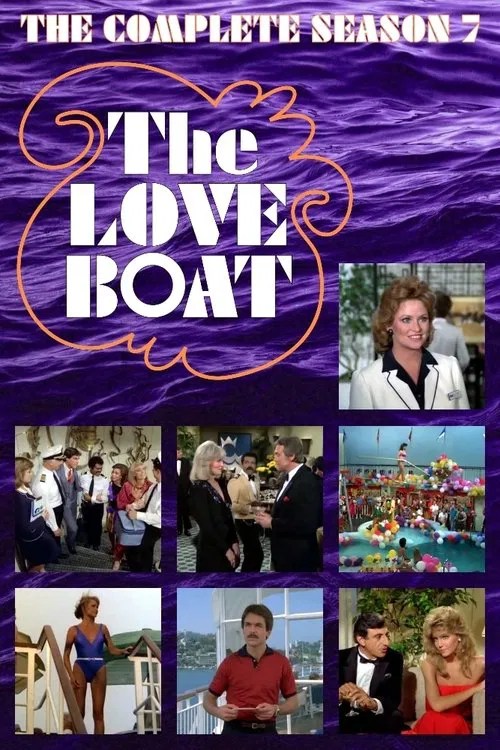
Retro Television Review: The Love Boat 7.19 and 7.20 “Hong Kong Cruise: Polly’s Poker Palace/Shop Ahoy/Double Date/The Hong Kong Affair/Two Tails of a City”


Welcome to Retro Television Reviews, a feature where we review some of our favorite and least favorite shows of the past!  On Wednesdays, I will be reviewing the original Love Boat, which aired on ABC from 1977 to 1986!  The series can be streamed on Paramount Plus!

This week, The Love Boat goes to Hong Kong!

Episodes 7.19 and 7.20 “Hong Kong Cruise: Polly’s Poker Palace/Shop Ahoy/Double Date/The Hong Kong Affair/Two Tails of a City”

(Dir by Richard Kinon, originally aired on February 4th, 1984)

This week, the Love Boat crew has been assigned to command a cruise to China.  And while the boat might be docked in Hong Kong instead of the usual Mexico, the question remains the same:

Yes, how coked up is Julie?

Well, she’s not as coked up as usual.  In fact, this is the rare Season 7 episode in which Julie actually gets to do something more than just smile at people as they board the ship.  So, I’d say this episode only rates a 7 out of 10 on the How Coked Up Is Julie scale.

As for Julie and Vicki, they fall for two brothers (Leigh McCloskey, Lee Majors II).  As always, Julie serves as Vicki’s mentor while Captain Stubing runs the ship.  However, this time, it turns out that the guy that Julie likes actually likes Vicki instead.  Vicki really likes him too.  I would point out that Vicki is likely either 16 or 17 in this episode.  (Jill Whelan was 18.)  So, really, she and Julie probably shouldn’t both be after the same man.  The guy is closer in age to Vicki than Julie but still, watching this episode, I couldn’t help but think that it might be time for Vicki to get off the boat and actually experience life on dry land.  Seriously, she’s nearly 18 and she still spends all of her time talking to elderly passengers.  Leigh McCloskey and Lee Majors II are literally the only two people close to her age to board the ship.  She really doesn’t have much choice but to fall in love with one of them.

Meanwhile, a senator (Efrem Zimbalist, Jr.) fell in love with Donna Reed, despite the misgivings of his closest advisor (Ben Murphy).  A retired spy (Gene Kelly) fell for a mysterious woman (Yvette Mimieux) and this somehow led to Gopher and Isaac putting on trench coats and following the couple through Beijing.  And Brenda Vaccaro tried to stop using her credit card.  The crew, for some reason, tried to help her.

None of these stories were very interesting, though I did relate to Brenda Vaccaro’s passenger.  This was a travelogue episode, with the boat sailing to Hong Kong and the crew somehow managing to see every famous sight in China over the course of two days.  This episode was shot on location.  I always enjoy it when I can tell the actors are actually delivering their lines in the middle of the ocean.  At the same time, the scenes that took place in China did not make me want to visit the country.  If anything, they left me feeling bad for Hong Kong.  This episode was filmed before the British handed Hong Kong over to China and it was a shame to think that all the little kids who appeared in the episode were fated to eventually become citizens of a communist country.  Needless to say, the name Mao was never mentioned during this episode.  Neither was the Cultural Revolution.

Come back to America, Captain Stubing.  The country needs you.

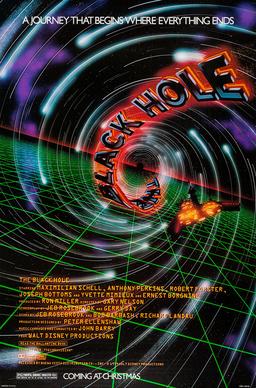
The Black Hole (1979, directed by Gary Nelson)


It’s the Future!  The USS Palamino is on a mission to explore deep space.  On the Palamino are Captain Dan Holland (Robert Forster), Dr. Alex Durant (Anthony Perkins), Lt. Charlie Pizer (Joseph Bottoms), Dr. Ellen McRae (Yvette Mimieux),  a trash can-looking robot named Vincent (voiced by Roddy McDowall), and a hard-drinking, out-of-place journalist named Harry Booth (Ernest Borgnine).

The Palamino has nearly completed its mission when it comes across a black hole.  They also come across the USS Cygnus, a ship that disappeared 20 years ago.  Boarding the Cygnus, they discover that it is ruled over by Dr. Hans Reinhardt (Maximilian Schell) and that the crew appeared to be made up of robots.  Dr. Reinhardt plans to direct his ship to fly through the Black Hole.  Dr. Durant is inspired by Reinahrdt’s determination to discover what lies on the other side.  The rest of the crew is suspicious of Reinhardt, especially after they meet Maximillian, the hulking red robot that serves as his bodyguard.

One of the studio’s first attempts to make a film for grown-ups, The Black Hole was also the first Disney film to receive a PG rating.  The Black Hole has a lot going for it.  The cast is stacked with talent.  (I haven’t even mentioned Slim Pickens as the voice of a beat-up robot.)  The plot is interesting and I think anyone watching will be able to relate to Reinhardt and Durant’s desire to explore what lies inside of the Black Hole.  Even when seen today, the special effects hold up fairly well.  Maximillian is actually frightening at times.   There are some violent moments that definitely earn that PG rating.

It’s just too bad that the movie is so damn boring.

The Black Hole is a movie that calls out for a director like Nicholas Meyer or even Douglas Trumbull.  Instead, the movie was directed by Gary Nelson, a television director who lets the story plod along at a slow pace. The movie goes through the motions but it never really captures the wonder or the excitement of being in space.  The journey through the Black Hole is visually impressive but it takes forever to get there and then it’s over too quickly.  Disney spent so much time on the special effects that they forgot to come up with a script worthy of them.

The Black Hole is a film that should have been much better than it was.  As long as Disney is remaking all of their old films, I say it’s time to remake The Black Hole.  Get the right director and make it the film that it should have been.

I Watched Perry Mason: The Case Of The Desperate Deception (1990, Dir. by Christian I. Nyby II)


Marine Captain David Berman (Tim Ryan, who looked a lot like Bruce Willis) gets a transfer to Paris so that he can track down Dieter Krugman, a Nazi war criminal who killed his grandparents and crippled his mother (Teresa Wright).  He is told that Krugman is now living under the name of Felix Altmann.  David confronts Altmann at a health spa but, when someone else shoots Altmann, David is framed for the crime.  Luckily, Perry Mason (Raymond Burr) is an old friend of the family’s.  He and Ken Malansky (William R. Moses) hop on the first plane to Paris and Perry starts to read up on the Uniform Code of Military Justice so that he can defend David.  Della (Barbara Hale) stays behind in Denver but Perry calls her a few times.

This was a good entry in the Perry Mason film series.  The mystery was intriguing and the acting — from Ian Bannen, Ian McShane, Terry O’Quinn, Yvette Mimieux, and Paul Freeman — was excellent all around.  Especially good was Teresa Wright as David’s mother.  Some of her scenes were chilling and she gets a great moment at the end of the movie.  Raymond Burr is as good as always but, for the first time, William R. Moses really feels like he belongs in the movie.  This is the first time that I’ve seen Ken without wishing he was Paul.

It’s too bad Della had to stay back in America.  I bet she would have enjoyed seeing Paris with Perry.

Horror on TV: One Step Beyond 2.27 “The Clown” (dir by John Newland)


Tonight’s episode of One Step Beyond originally aired on March 22nd, 1960.  The title of this episode?

The Clown.

Scared yet?

You should be.  Clowns are creepy!

Watch the episode below and find out just how creepy!

Enjoy!

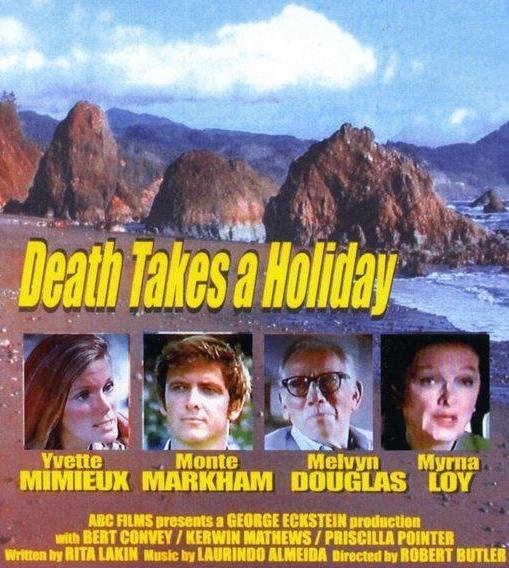
Retro Television Review: Death Takes A Holiday (dir by Robert Butler)


Welcome to Retro Television Reviews, a feature where we review some of our favorite and least favorite shows of the past!  On Sundays, I will be reviewing the made-for-television movies that used to be a primetime mainstay.  Today’s film is 1971’s Death Takes A Holiday!  It  can be viewed on YouTube.

For a few days in 1971, no one dies.

The Vietnam War continues but there are no casualties.  There are natural disasters but no one loses their life.  Doctors are stunned.  World leaders start to panic.  An emergency session of the UN is called to debate what to do about living in a world where no one is dying.  One gets the feeling that the world’s leaders prefer it when people are dying in wars and disasters.

Death has taken a holiday.

Death (Monte Markham) has become confused as to why humans so desperately want to live despite the fact that the world in which they exist is not always a happy one.  He is particularly confused by the elderly Judge Earl Chapman (Melvyn Douglas), who has suffered multiple strokes and other ailments and yet has always resisted whenever Death has come for him.  Death decides to take his holiday on the isolated beach where the Judge and his family are spending their weekend.  Though Death introduces himself as being David Smith, the Judge recognizes him.  It turns out that the Judge was always aware of death lingering around him and his family.

Death, for his part, has fallen in love with the Judge’s headstrong and rebellious daughter, Peggy (Yvette Mimieux).  In fact, Peggy was meant to die on the beach but, as soon as Death saw her drowning, he decided not to take her and instead allowed her to wash up back on the beach.  Death explains to the Judge that he can only spend so much time on vacation and that soon, people will start dying again.  Death says that he’ll be taking Peggy to the afterlife after the weekend ends.  The Judge tries to change his mind but Death is in love and he wants Peggy to be with him.

An adaptation of a play that inspired both 1934’s Death Takes A Holiday and 1998’s Meet Joe Black, the 1971 version of Death Takes A Holiday is a well-acted and intelligent made-for-television movie, one that eschews heavy-handed drama in favor of being a rather low-key meditation on what it means to both live and to die.  Melvyn Douglas and, as his wife, Myrna Loy both give poignant performances and Douglas even manages to sell the potentially maudlin moment where he explains why he has always clinged to life.  Monte Markham may not be the first actor who comes to mind when you think of someone to cast as the human form of Death but he does a good job in the role and he and Yvette Mimieux have a wonderful chemistry together.  The beach scenery is lovely and the story is an interesting one.  Clocking in at just 73 minutes, this version of Death Takes A Holiday is the best of all of them.

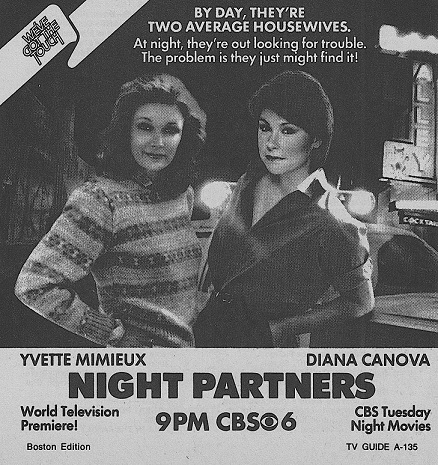
Retro Television Review: Night Partners (dir by Noel Nosseck)


Welcome to Retro Television Reviews, a feature where we review some of our favorite and least favorite shows of the past!  On Sundays, I will be reviewing the made-for-television movies that used to be a primetime mainstay.  Today’s film is 1983’s Night Partners!  It  can be viewed on Tubi.

Lauren Hensley (Diana Canova) is a divorced mother who has a nice house in Bakersfield, California.  Her best friends and neighbors are housewife Elizabeth McGuire (Yvette Mimieux) and Elizabeth’s husband, a cop named Glenn (Arlen Dean Snyder).  One night, after spending the day with the McGuires, Lauren returns to her home and is attacked by three burglars.

For Lauren, the crime is not even the worst part of the night.  The worst part is when the police don’t even seem to care that much about her suffering and instead take a “just-the-facts” approach to getting the details to what she’s been through.  Glenn attempts to explain to both Lauren and Elizabeth that cops see terrible things every day and, if they seem desensitized to it all, that’s just their way to handling the stress of the job.  Lauren, however, feels that the cops need a unit that provides the same support for victims that the criminals receive from their lawyers and social workers.

At a community meeting, Lauren proposes her idea to the police chief, John Wilson (Larry Linville).  When Wilson replies that there is no money in the budget, Lauren suggests that maybe the program could be staffed by volunteers.  She then proceeds to volunteer herself and Elizabeth.  Wilson agrees, but on the requirement that Lauren and Elizabeth first attend the police academy and train with the officers.  Under the watchful eye of the gruff but kindly Joe Kirby (M. Emmet Walsh), the two middle-aged housewives run obstacle courses and learn about conflict resolution.  And while the conflict resolution lessons make sense, I’m not sure what the point of having them do the obstacle course was.

Eventually, Lauren and Elizabeth become quite good at their jobs, providing comfort to the victims and getting information that helps the police put away criminals, like the serial rapist (a young M.C. Gainey) who has been stalking the streets of Bakersfield.  Of course, it takes them a while to get good at the job.  When Elizabeth and Lauren are first sent out on the streets, they can’t even keep the police codes straight and they accidentally call in a robbery code when they’re instead just letting the dispatcher know that they’re on break.  Bizarrely, when Lauren and Elizabeth are not at a crime scene talking to a victim, they’re just supposed to drive around in a beat-up patrol car.  Neither one of them has the power to arrest anyone because they’re just volunteers.  In fact, they’re supposed to stay out of the way until the police specifically call for them to come to a crime scene.  So, why are they patrolling the city like real cops?  It seems like that would basically be a lawsuit waiting to happen.

Night Partners was obviously designed to serve as a pilot for a series where Laruen and Elizabeth would comfort victims and help to solve crimes.  The two lead actresses are likable and M. Emmet Walsh is particularly effective as their supervisor.  That said, the film itself can’t decide if it wants to be a hard-hitting crime drama or a comedy about two housewives trying to make it as cops.  Of course, there’s no reason why it couldn’t be both.  Some of the best cops shows have had elements of dark, gallows humor.  But this film’s tone is so inconsistent that the comedic scenes seem to be taking place in an entirely different universe from the dramatic scenes.

As someone who strongly believes that the right of the victims need to be given as much weight as the rights of the criminals, I appreciated the film’s message.  I just wish it had been delivered a bit more effectively.

Hit Lady (1974, directed by Tracy Keenan Wynn)


Beautiful blonde Angela de Vries (Yvette Mimieux) shows up at a Texas barbecue and starts to chat up over-the-hill but very wealthy cowboy Buddy McCormick (Keenan Wynn).  Buddy thinks that he has hit the jackpot and when Angela suggests that they go off together for some alone time, he doesn’t turn her down.  Unfortunately for Buddy, the only reason Angela was talking to him was so she could get him alone and kill him with no witnesses!

(Buddy is played by Keenan Wynn because his son, screenwriter Tracy Keenan Wynn, directed this made-for-TV movie.  Angela is played by Yvette Mimieux because she got tired of only being cast in bland roles so she wrote a script with a juicy lead role for herself.)

Angela is a contract killer but she wants to get out of the business so that she can settle down with her seemingly oblivious boyfriend, a photographer named Doug (Dack Rambo).  Angela’s boss, Roarke (Clu Gulager), insists that Angela carry out one last hit.  He wants her to take down labor leader Jeffrey Baine (Joseph Campanella).  Angela really needs the money so she eventually accepts the job.  Roarke wants Baine’s death to look like an accident so that means Angela is going to have to learn everything that she can about Baine and his life.  When she learns that Baine loves Mozart, she decides to arrange an “accidental” meeting with him at a concert.  Is Angela the only contract killer in Los Angeles?  Couldn’t Roarke have found someone willing to do the job without so many preconditions?

Angela does meet Baine and, of course, the two of them start to fall in love.  Is Angela willing to both betray her boss and her boyfriend or will she carry out the hit?

Hit Lady is very much a product of the 70s, with one scene actually taking place at a disco.  Mimieux gives a good performance in a part that she wrote for herself and I’m sure many viewers will appreciate the lengthy amount of time she spends wearing just a bikini.  Mimieux gets to do most of the action movie things that, at the time, only men were usually allowed to do and she looks both good and convincing doing them.  Unfortunately, the love story with Jeffrey Baine does not work because the rough-hewn Campanella is not convincing as a Mozart-loving romantic lead and he and Mimieux never seem as if they really have any deep feelings for each other.  It’s easier to understand why Campanella would be attracted to Mimieux but than why she would be attracted to him.  That storyline probably would have worked better if Campanella had switched roles with Clu Gulager.  Hit Lady ends with an obvious twist but fans of 70s cheese and Yvette Mimieux should enjoy it.

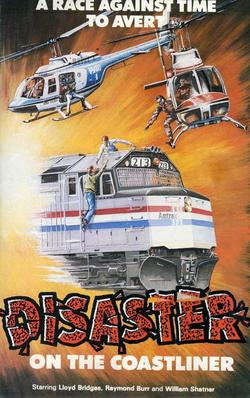
Disaster on the Coastliner (1980, directed by Richard C. Sarafian)


A completely computerized passenger train is traveling across the country, with the Vice President’s wife as one of the passengers.  When Jim Waterman (Paul L. Smith), a man who blames the railroad for the death of his family, manages to hijack the train he plans to ram into a locomotive until his demands a met.  He wants railroad president Estes Hill (Raymond Burr) to take responsibility for the crash that killed his wife and children.  With Waterman determined to crash the two trains, it falls to dispatchers Al Mitchell (Lloyd Bridges) and Roy Snyder (E.G. Marshall) to try to figure out a way to stop the collision.  Helping them out on the train is a con artist named Stuart Peters (William Shatner!) who may be wanted by the police but who is still willing to do whatever it takes to save his fellow passengers.

Disaster on the Coastliner is an above-average made-for-TV disaster movie.  Even though it was obviously made for a low-budget and that the majority of the money was probably spent on securing the B-list cast, there are enough shots of the train careening on the tracks to bring happiness to the hearts of most disaster movie fans.  The cast is full of the type of people who you would typically expect to find in a movie like this, people like Raymond Burr, Lloyd Bridges, and William Shatner.  Bridges, interestingly enough, gives the same performance here that he gave in Airplane! and when he starts ranting about how everything’s computerized, he sounds like he could be reciting dialogue from that film.  The only difference is that Airplane! was a comedy while Disaster On The Coastliner is meant to be a drama.  Raymond Burr also does a good job hamming it up as the president of the railroad.  He spends most of the movie sitting behind his desk and looking annoyed, which was pretty typical of Burr in the years after Perry Mason and Ironside. 

For a lot of people, the main appeal of this film will be seeing what William Shatner was doing in between Star Trek movies.  This is a typical early 80s Shatner performance, when he was still trying too hard to win that first Emmy but also when he had just starting to develop the self-awareness necessary to poke fun at his own image.  Shatner really digs into the role of a conman with a heart of gold.  He delivers his lines in his trademark overdramatic style but, in scenes like the one where he sheepishly discovers that a door that he’s been pounding on was unlocked all the time, Shatner actually seems to be in on the joke.  Shatner also did his own stunts in this film, including one where he had stand on top of a speeding train.  In his autobiography, Shatner wrote that he wasn’t even wearing a safety harness in the scene so give it up for Bill Shatner.  That took guts!

Fast-paced and agreeably unpretentious, Disaster On The Coastliner is an enjoyable runaway train movie.


Sundance Film Review: Circle of Power (dir by Bobby Roth)


With the Sundance Film festival currently taking place in Utah, I am currently reviewing films that originally made a splash at the Sundance Film Festival!

(a.k.a. Circle of Power, Mystique, Naked Weekend, and probably a handful of other titles)

The Sundance Film Festival wasn’t always the Sundance Film Festival.

Up until 1984, it was known as the US Film Festival.  Because of the involvement of Robert Redford, it was something of a big deal but still nowhere as big a deal as it is today.  In fact, many of the films that were showcased and celebrated at the US Film Festival have slipped into obscurity.  While winning an award at the US Film Festival may have been nice a ego boost for an independent filmmaker, it certainly didn’t bring a film anywhere near the amount of attention that winning at Sundance does now.

Take the long and strange saga of Circle of Power, for instance.

From my own research, it appears that Circle of Power was originally filmed in 1980.  At that time, it was called Mystique.  It premiered at the Chicago International Film Festival in 1981.  A year later, under the title Circle of Power, it played at the US Film Festival.  It was awarded the Dramatic prize (which was the forerunner for Sundance’s Grand Jury Prize).

After that, it still took Circle of Power two years to achieve national distribution.  In 1984, when it was reviewed by Roger Ebert, the film had been released as Naked Weekend, a title that was as commercial as it was misleading.  (There is nudity in the film but probably not the type of nudity that Naked Weekend‘s audience was expecting.)  By the time the film was finally released on VHS, it had picked up yet another title: Brainwash.

That’s the poster for Brainwash at the top of this video.  There are two images on that poster.  One is of a woman holding a riding crop and showing off her bra.  The other is of a naked man in a cage.  Only the latter image actually appears in the movie.

The film’s distributors were obviously trying to sell Circle of Power as an exploitation film.  Actually, it’s not.  It’s … well, it’s hard to describe what exactly it is.  It starts out with a title card, informing us that what we’re about to see is based on a true story.  The rest of the film deals with a group of executives and their wives who are required to spend the weekend attending a “training course” at a beautiful hotel.  The weekend gets off to a good start, with lots of dancing and laughing.  Of course, none of the executives seem to notice that the hotel staff is watching them with a mix of scorn and pity.

(The film continually contrasts the privileged white executives with the largely black and Hispanic hotel staff.)

Before the training sessions begin, all of the executives and their wives are forced to sign a paper that states they understand that they will be psychologically and physically abused over the weekend.  Only one executive objects and he is quickly bullied into signing by his co-workers.  Apparently, they can’t do the training unless everyone agrees to sign.

The men and the women are separated.  (Interestingly, all of the executives are men.)  The men are “trained” by Bianca Ray (Yvete Mimieux, who is chilling in her final performance to date) while the women are left with Jordan Carelli (John Considine).  The training turns out to be a combination of ego stripping and physical abuse.  One overweight executive (Walter Olkewicz) is ordered to strip naked and is then locked in a cage, where food is dumped on him.  An alcoholic is forced to lay down in a coffin.  Soon, everyone is covered in bruises.  What’s remarkable is that only one executive and his wife actually seems to find any of this to be objectionable.  In fact, everyone else reacts to the abuse by hugging their abusers and crying for joy.

It’s a strange little film, one that often seems to be unsure of what it’s saying but which, at the same time, still possesses an undeniable power.  The film may be 38 years old but brainwashing is a timeless subject.  One need only spend an hour or two on twitter to see how easily people can be brainwashed.  While the film probably disappointed those seeking a naked weekend, it’s still an undeniably watchable oddity.

Previous Sundance Film Reviews:

  1. Blood Simple
  2. I Don’t Feel At Home In This World Anymore