Brad reviews CITY ON FIRE (1987), starring Chow Yun-Fat, and directed by Ringo Lam!


Ringo Lam’s CITY ON FIRE is one of the first movies starring Chow Yun-Fat that I really wanted to see after I had made my way through the John Woo films. Chow worked with Ringo on a total of 5 films from 1987 – 1992, and they’re a gold mine. I have previously reviewed PRISON ON FIRE and FULL CONTACT, so I decided now was a good time to take a fresh look at this one.  

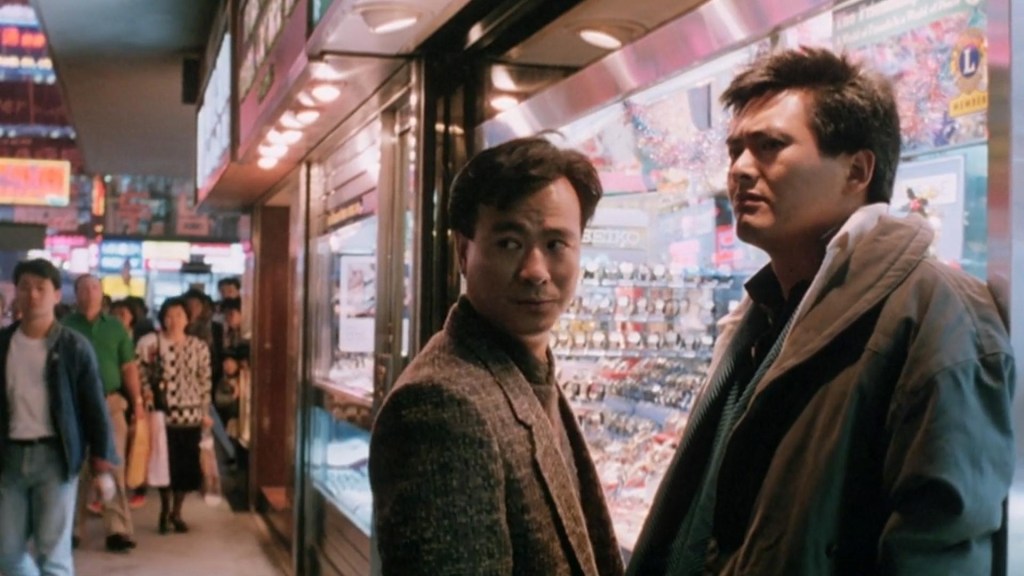
Opening with an awesomely 80’s, neon-drenched saxophone solo from Teddy Robin Kwan, CITY ON FIRE tells the story of undercover cop Ko Chow (Chow Yun-Fat). He’s practically forced by his handler on the force, Inspector Lau (Sun Yueh), to infiltrate a violent gang of jewel thieves. The problem is that he has a history of getting in way too deep, so deep that he forgets where the job ends and his real life begins. It happens again when he’s able to get close to the leader of the thieves, Fu, played by his KILLER co-star, Danny Lee. When the gang hits a jewelry store with Chow in tow, and with the cops on their trail, everything goes to hell. Some store employees are killed, some gang members are taken out, and Chow even takes one in the gut. As the survivors meet back up at the warehouse, it becomes clear that there’s a mole in their midst, even though not everyone wants to admit it.

Does that premise sound familiar to you? If you’re a big fan of Quentin Tarantino and RESERVOIR DOGS, you can’t help but recognize how strongly his film was influenced by CITY ON FIRE. The influence is clear, especially in the broad strokes of the plotline and at the famous finale, but these are two very different crime films in execution, and they’re both excellent in their own ways.
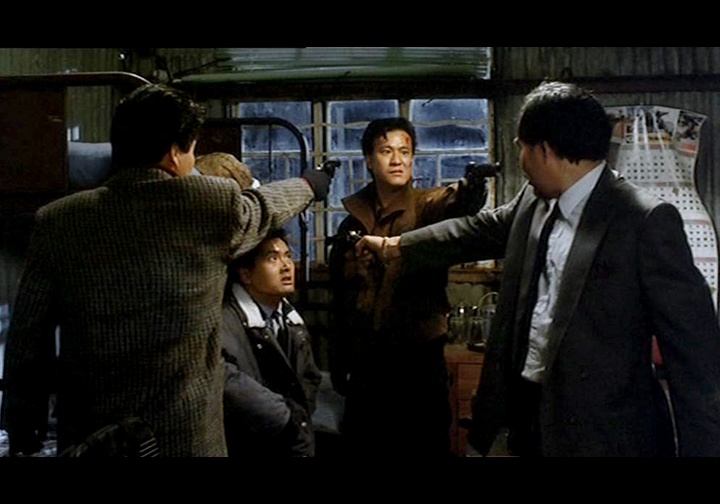
In the late 80’s, some of the best action and crime films in the world were being made in Hong Kong. So many of the films had a reckless energy, which seems to be especially evident in director Lam’s works. In contrast to John Woo’s stylish action scenes, Lam’s scenes aren’t polished. They’re more grounded, they’re chaotic, and they’re not “cool” at all. For example, the film opens with an undercover named Chan Kam-Wah (Elvis Tsui) being called out and murdered in the middle of a busy market. Stabbed multiple times with a big butcher knife while desperately fighting for his life, the scene plays out in a realistic, clumsy, and very bloody way. In other words, it’s painful to watch without a slow-mo tracking shot in sight. We know immediately that no one is safe, and there’s a palpable tension as the undercover cop / criminal drama plays out that really works for the film.

Chow Yun-fat is fantastic, with his performance winning him his 2nd consecutive Hong Kong Film Award for Best Actor. He’s not the impossibly cool heroic bloodshed hero of the prior year’s A BETTER TOMORROW. Rather, while he’s charming in certain early scenes with his girlfriend Hung (Carrie Ng), when he starts his new assignment, you can see that he’s completely exhausted with his life as an undercover cop, a life that seems to have broken him emotionally. You can almost feel an impending doom with his character that lingers over the film, turning it into something different than your average cops and robbers story. In the other major lead of the film, Danny Lee is so good as the leader of the gang of jewel thieves, Fu. He’s very professional, and once he’s accepted Chow into their ranks, he’s very friendly and personable to him. In these moments, you can see how the two men could bond. But Fu’s also shown that he will kill anyone who gets in his way, so you know it’s inevitable that the two will collide head-on at the end. When it comes, it hits hard.

I highly recommend CITY ON FIRE to any person who enjoys gritty crime films. The action is brutal, the lead performances are excellent, and the drama of the story will leave you emotionally drained as the end credits roll. I can see why it would have had a major impact on a lover of Hong Kong cinema like a young Tarantino!

CITY ON FIRE is currently streaming on Prime Video, PlutoTV, Tubi, and Plex.
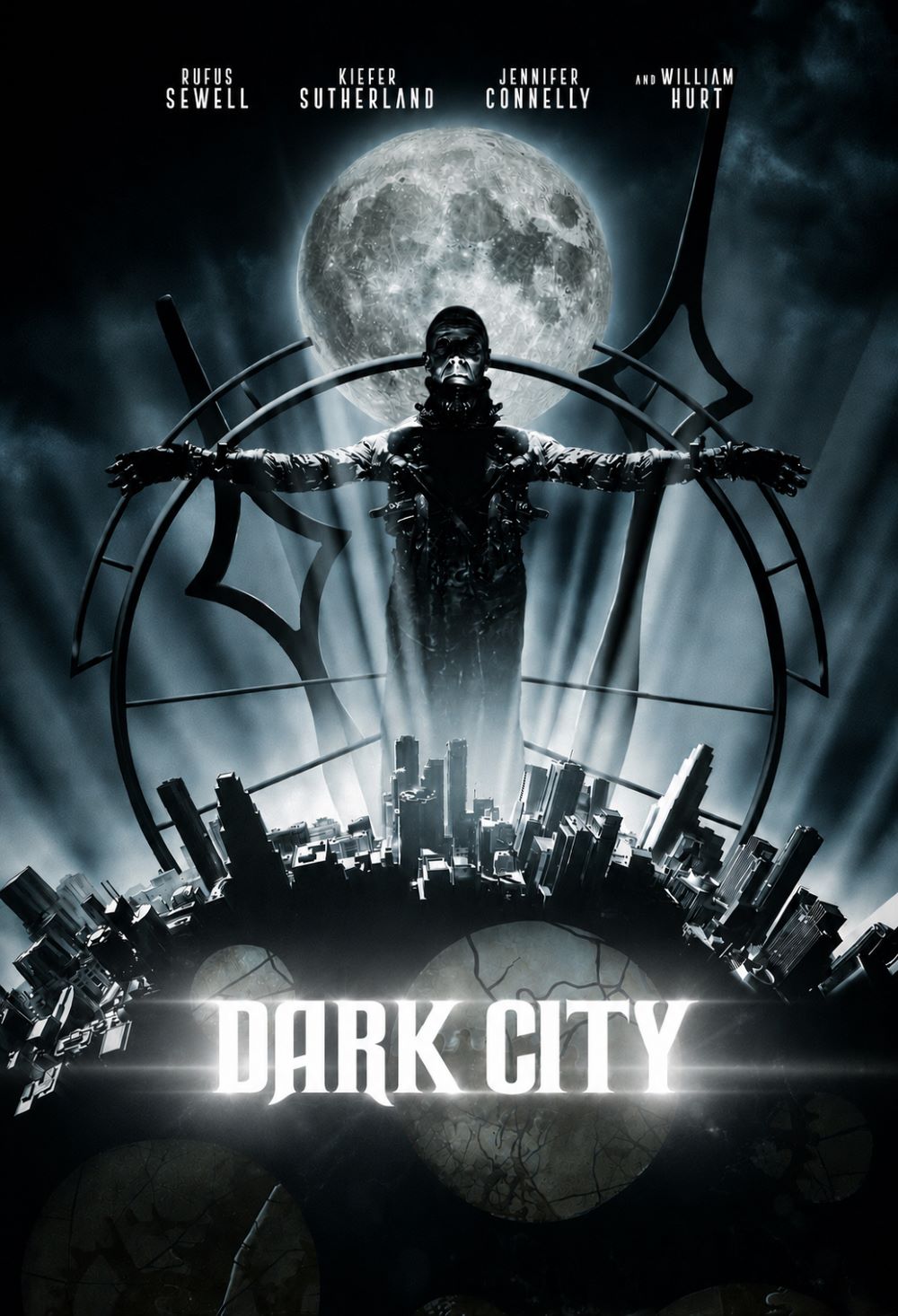
Review: Dark City (dir. by Alex Proyas)


“First there was darkness. Then came the strangers.” — Dr. Schreber

Dark City opens like a half-remembered nightmare, and that’s exactly the kind of vibe the movie sustains from start to finish. Alex Proyas builds a world that feels trapped between a detective story, a fever dream, and a sci-fi conspiracy, and the result is one of the most atmospheric films of the late ’90s.

What makes Dark City so distinctive is the way it treats its setting like an active force rather than a backdrop. The city itself feels oppressive and unstable, all sharp angles, heavy shadows, looming buildings, and damp streets that seem permanently stuck in the middle of the night. That visual approach owes a lot to German expressionism, with its warped architecture and unnatural spaces, and Proyas uses that legacy to make the city feel psychologically trapped and visually wrong in the best way. You can see the noir influence too, especially in the low-key lighting, the sense of fatalism, and the way the whole film feels like a detective story pushed through a nightmare filter.

The sci-fi side of the film is just as memorable because it doesn’t rely on shiny futurism. Instead, it leans into mystery, memory loss, and identity breakdown, which gives it a more unsettling and human quality. That’s part of why the film works so well: the weirdness is not just decorative, it’s built into the story’s central questions. The result is a movie that feels cerebral without becoming cold, and atmospheric without losing narrative momentum. Even when the film is being highly stylized, it still moves with purpose, and that keeps the viewer locked in.

The performances help sell all of that, especially Rufus Sewell as John Murdoch. He has to carry the audience through confusion, paranoia, and growing dread, and he does it with a mix of physical vulnerability and stubborn intensity. William Hurt gives the film a weary, grounded presence, while Kiefer Sutherland turns Dr. Schreber into one of those slippery, unforgettable supporting characters who always seems one step ahead of the audience. Jennifer Connelly brings warmth and melancholy to the film, which matters a lot because her character gives the story a human anchor amid all the conceptual chaos. The cast doesn’t play the material like it’s just an exercise in style; they commit to the oddness while keeping the emotional stakes legible.

What’s especially impressive is how the acting matches the movie’s visual language. A lesser cast could have made this feel overcooked or self-conscious, but here the heightened performances fit the artificial, dreamlike quality of the world. The characters are somewhat archetypal, yet that works because the film is so interested in identity as something constructed, remembered, and manipulated. In that sense, the performances aren’t just good in isolation; they’re part of the movie’s design, helping it feel like a living puzzle instead of a hollow aesthetic showcase.

The film’s influence on later sci-fi thrillers is hard to miss. A lot of movies after Dark City seem to borrow its basic flavor: the paranoid atmosphere, the reality-questioning premise, the noir-scifi crossover, and the feeling that the world itself is a conspiracy. Films like The Matrix, Memento, Minority Report, Equilibrium, and even Sin City all exist in a creative space that Dark City helped sharpen or popularize, whether directly or indirectly. It didn’t always get the mainstream recognition of some of those titles, but in terms of tone and visual influence, it was incredibly important.

Part of that legacy comes from the way Dark City captured a very specific late-’90s anxiety: the fear that memory, identity, and reality could all be manufactured. That idea became a major engine for sci-fi thrillers moving forward, especially films that wanted to combine philosophical unease with stylized action or mystery. Even the movie’s look, with its blend of noir shadows and surreal production design, became a kind of template for how to make sci-fi feel adult, moody, and psychologically unstable. It helped prove that science fiction didn’t need clean lines and sterile futures to feel intelligent; it could be dirty, haunted, and expressionist.

Dark City remains such a strong film because it understands that style and theme should feed each other. The shadows, the tilted buildings, the endless night, and the fractured sense of self all point in the same direction, creating a unified experience that feels deliberately unsteady. That’s why it lingers: not just because it looks incredible, but because it turns visual design into emotional pressure. It’s a smart, strange, and beautifully murky piece of sci-fi noir that helped clear the way for a whole wave of thrillers that wanted to feel just as paranoid and disorienting.

In the end, Dark City is the kind of movie that rewards both first-time viewers and people revisiting it years later. The plot twists are memorable, but the real achievement is the atmosphere, which is so complete it almost becomes the main character. Proyas made a film that feels like it came from the crossroads of German expressionism, classic noir, and modern sci-fi anxiety, and the result is a cult landmark that still casts a long shadow over the genre.

Live Tweet Alert: Join #FridayNightFlix for Under Siege!


As some of our regular readers undoubtedly know, I am involved in a few weekly watch parties.  On Twitter, I host #FridayNightFlix every Friday and I co-host #ScarySocial on Saturday.  On Mastodon, I am one of the five hosts of #MondayActionMovie!  Every week, we get together.  We watch a movie.  We tweet our way through it.

Tonight, at 10 pm et, I will be hosting #FridayNightFlix!  The movie?  1992’s Under Siege!

If you want to join us this Friday, just hop onto twitter, find Under Siege on Prime, start the movie at 10 pm et, and use the #FridayNightFlix hashtag!  I’ll be there happily tweeting.  It’s a friendly group and welcoming of newcomers so don’t be shy.

See you there!


Scenes That I Love: Rome, Open City


Since today is Roberto Rossellini’s birthday, today’s scene is one of the most powerful of all time.

From Rossellini’s 1945 anti-Nazi masterpiece, Rome, Open City, this scene features Anna Magnani as Pina. For the first part of the film, Pina has been a major character. We see much of occupied Rome through her eyes. We watch as she risks her life to help the Resistance and, because we’ve seen so many movies, we assume that the filmmakers will protect her because she’s the main character. In this devastating scene, Rossellini shows us that no one is safe in an occupied city, not even a pregnant woman.

It’s just another day in Rome.

John Milius later paid homage to this scene in Red Dawn.

4 Shots From 4 Films: Special Roberto Rossellini Edition


4 Shots From 4 Films is just what it says it is, 4 shots from 4 of our favorite films. As opposed to the reviews and recaps that we usually post, 4 Shots From 4 Films lets the visuals do the talking!

120 years ago, on this date, the great Italian neorealist director (and husband of Ingrid Bergman and father of Isabella Rossellini), Roberto Rossellini was born in Rome.  It’s time for….

4 Shots From 4 Roberto Rossellini Films

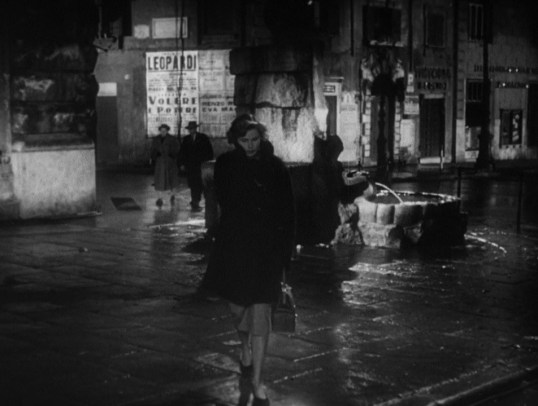
Rome, Open City (1945, dir by Roberto Rossellini, DP: Ubaldo Arata)

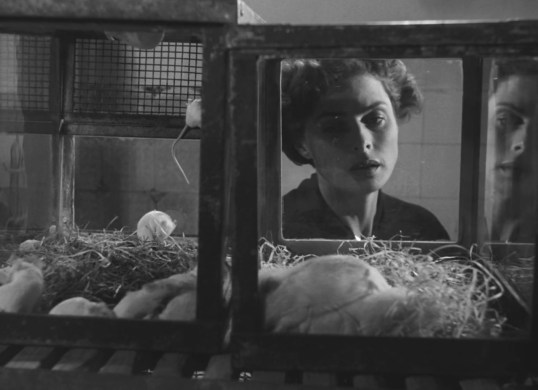
Europe ’51 (1952, dir by Roberto Rossellini, DP: Aldo Tonti)

Fear (1954, dir by Roberto Rossellini, DP: Carlo Carlini, DP: Heinz Schnackertz)

Journey to Italy, (1954, dir by Roberto Rossellini, DP: Enzo Serafin)

Brad reviews PROJECT GUTENBERG (2018), starring Chow Yun-Fat & Aaron Kwok!


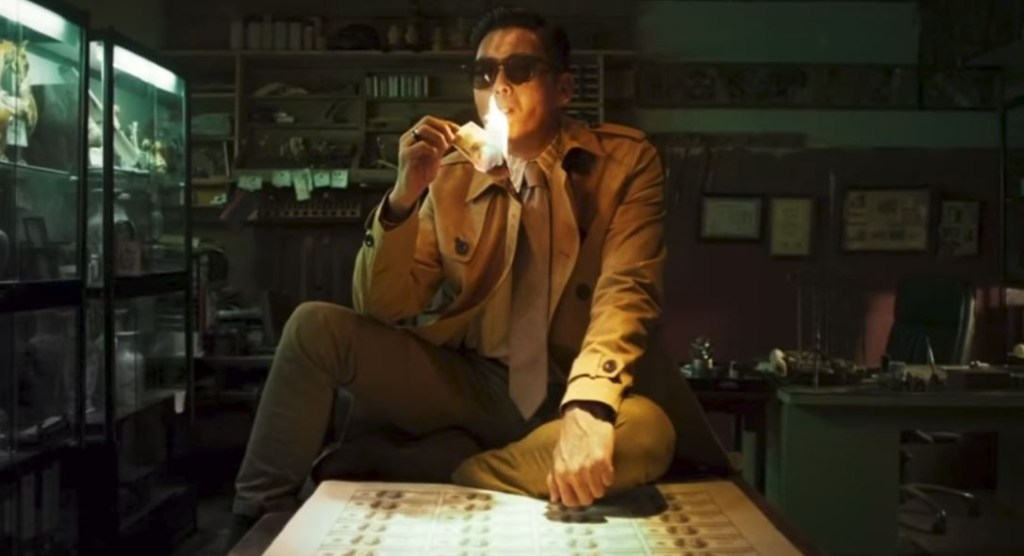
There was a time when Chow Yun-Fat was one of the hardest working actors in show business. He had 11 different films come out in 1987 alone, and his dedication to making movies would eventually lead him to superstardom all around the world by the turn of the century. Alas, even the greats must eventually slow down and by the end of the 2010’s, it felt like he had practically retired. He only starred in one film between 2017 and 2019. That film was 2018’s PROJECT GUTENBERG, and to say I was looking forward to the film would be quite the understatement. The filmmakers knew how to draw me in as the trailer recreated Chow’s famous scene from A BETTER TOMORROW where he lights his cigarette with a counterfeit $100 bill. The movie promised to play up his most iconic on-screen images, and I was down for it!

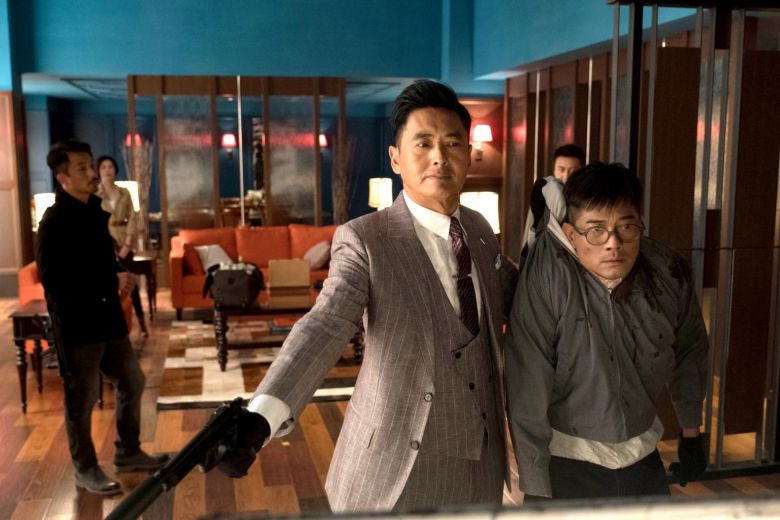
PROJECT GUTENBERG introduces us to an artist named Lee Man (Aaron Kwok), who’s been arrested in Thailand and taken to Hong Kong. The local police interrogate him for information about a ruthless counterfeiter known as “Painter.” Reluctant to talk at first due to fear, Lee is convinced that he must provide some information, or he could spend the rest of his life in jail. He eventually begins to tell the story of his time with the elusive criminal mastermind, played by Chow Yun-fat, through a series of flashbacks. Director Felix Chong (writer of the INFERNAL AFFAIRS and OVERHEARD trilogies) has crafted a story that seems like the confession of small fish being used to bait a big fish, before eventually turning into something much more sinister and fascinating. I won’t say anything else about the plot as there’s much fun to be had in watching it unravel!

I’m going to state right up front that Chow Yun-Fat is in prime form. Some actors age with grace, and then there’s the 63-year-old Chow of this film, who’s managed to age with almost a mythic gravitas. This film masterfully highlights his incredible charisma, recreates iconic images of his past gunplay, and then turns it all on its head by making Painter into one of the most evil bastards he’s ever played on screen! It’s an incredible use of his legendary career to provide levels of depth that no words on paper ever could.

Even with the iconic images of Chow Yun-Fat, PROJECT GUTENBERG would not work nearly as well if it wasn’t also a captivating crime thriller. Its counterfeit money operations, double-crosses, gun battles and international intrigue pulled me in, and I found myself on the edge of my seat at times as the story unfolded. The last 30 minutes of the film made me question everything I’d seen up to that point, but in a way that did not take away one moment of my enjoyment. It’s not a completely unique ending, as film lovers will certainly notice, but it works.  

Aaron Kwok’s character of Lee Man is weak in comparison to Painter, but the actor navigates the tightrope of showing just enough emotional desperation that we understand why he’s doing what he does. When the plot starts taking some crazy twists and turns, I was still right there with him. I’ve always liked Aaron Kwok, and even with his bad haircut in the film, I still thought he did a fine job. I also want to shoutout actress Zhang Jingchu (RUSH HOUR 3, OVERHEARD), who plays the woman that Lee Man loves. Her character drives a lot of Lee’s actions in the film, and I found her very beautiful and compelling. Last, but not least, Liu Kai Chi (KILL ZONE, CALL OF HEROES) gets one of the best supporting roles in the film as a vital member of the counterfeiting team who befriends Lee before making an unforgivable mistake.    

PROJECT GUTENBERG was a critical and box office smash when it was released in China in the fall of 2018. It won Best Picture, Director, Screenplay, Cinematography and Editing at the 2019 Hong Kong Film Awards. On a budget of around $40 million dollars, it would bring in over $150 million in China alone, on its way to around $200 million worldwide. It’s a slick crime thriller that serves as a reminder that in the right role, Chow Yun-fat is still one of the great movie stars on the planet. This film understands that, bet the house, and won big.

PROJECT GUTENBERG is currently streaming on the free “Fawesome” streaming service.

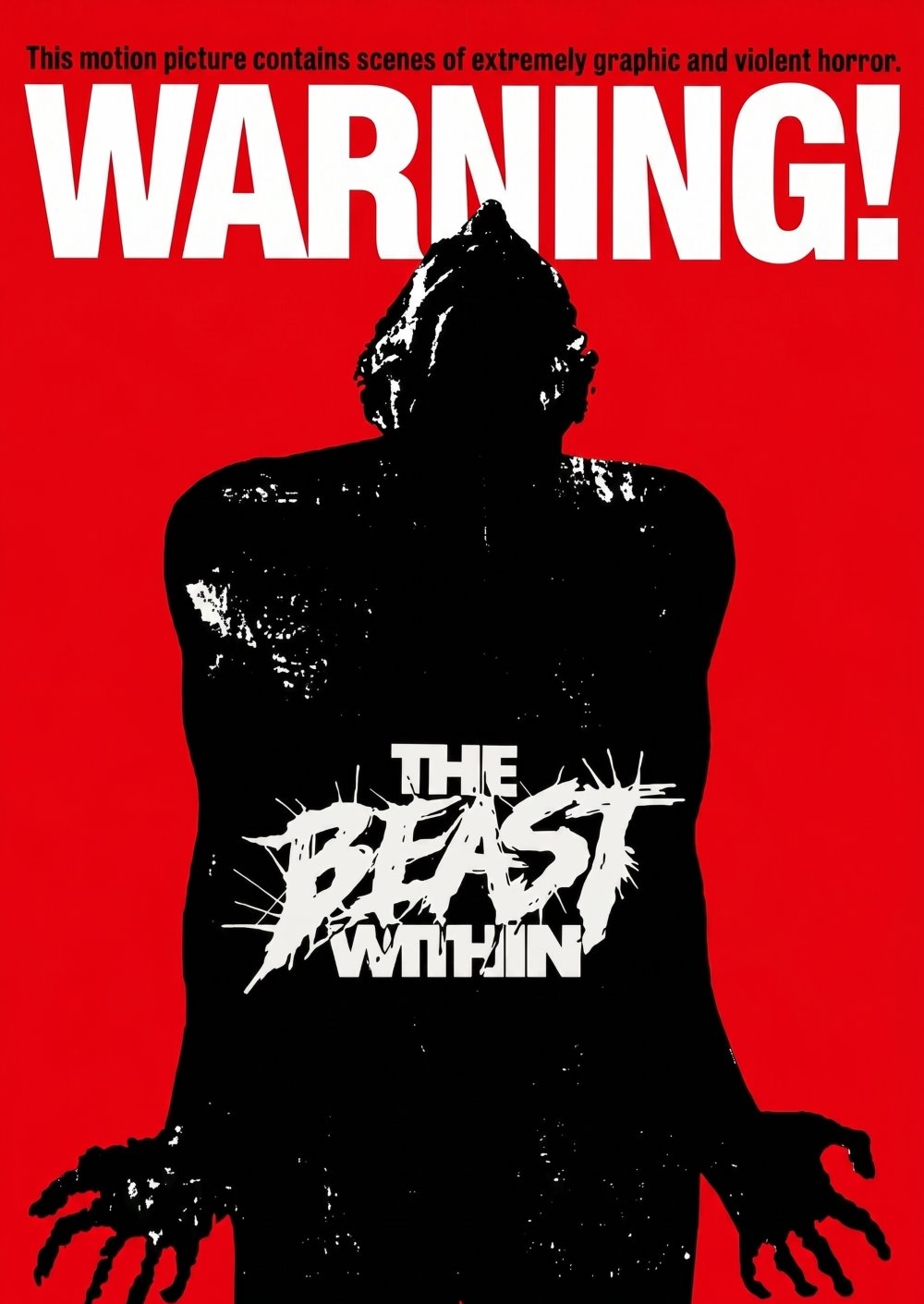
Guilty Pleasure No. 115: The Beast Within (dir. Philippe Mora)


The Beast Within (1982), directed by Philippe Mora, is one of those strange, sticky relics of early ’80s horror that feels like it crawled out of a drive-in double feature and just kept mutating long after the credits rolled. It’s not a good film—let’s just get that out of the way early—and it barely qualifies as a coherent one, but it lands squarely in that fascinating gray area where failure and ambition collide. This is the kind of messy, overstuffed genre hybrid that earns its reputation less through quality and more through sheer, stubborn weirdness. It’s got ambition in odd places, tonal swings that don’t quite land, and a sincerity that almost convinces you it knows what it’s doing. Almost.

What makes The Beast Within so compelling is how aggressively it borrows from exploitation cinema without ever fully committing to being exploitative in tone. All the raw ingredients are here: sexual violence, grotesque bodily transformation, cannibalistic undertones, grave robbing, demonic suggestion, and generational curses. It’s like Mora raided the entire playbook of grindhouse staples and tried to stitch them together into something resembling a prestige Southern Gothic drama. The result is a tonal contradiction that becomes the film’s defining trait. You’re watching material that, in another context, would lean hard into sleaze or pulp sensationalism, yet here it’s played with a stiff, almost theatrical seriousness.

The film opens with one of its most infamous sequences—a brutal assault in the woods by something that is distinctly not human. It’s uncomfortable, lurid, and feels like the start of a much nastier film than what ultimately unfolds. Seventeen years later, the child born from that attack begins to change, physically and psychologically unraveling as something monstrous pushes its way to the surface. From there, the narrative spirals into a hazy blend of small-town mystery, family melodrama, and creature feature chaos, with buried secrets clawing their way into the present.

There’s a clear attempt to elevate all of this with Southern Gothic sensibilities. The setting leans heavily into decay and repression—sweltering air, crumbling structures, and a community weighed down by unspoken sins. Characters behave as if they’ve wandered in from a Tennessee Williams play, all strained emotions and suppressed truths, but the film keeps undercutting that mood with bursts of grotesque horror. It’s an awkward balancing act that never quite works. If anything, the material might have been better served by leaning into something closer to a Joe R. Lansdale tone—meaner, pulpier, and more self-aware—rather than reaching for a kind of literary weight it can’t sustain.

Still, what keeps The Beast Within watchable—sometimes even oddly engaging—is how seriously everyone takes it. Ronny Cox and Bibi Besch play the parents with unwavering commitment, treating the story as a straight drama about a family unraveling under impossible circumstances. Their performances don’t wink at the audience or acknowledge the absurdity creeping in around the edges, and that refusal to break tone actually works in the film’s favor. It creates a strange tension where the more ridiculous the plot becomes, the more grounded the performances try to keep it.

Paul Clemens, as the afflicted son Michael, is tasked with carrying the film’s most extreme elements, and he does what he can within the limits of the material. His performance is less about subtlety and more about physical deterioration and panic as his body betrays him, but he sells the desperation well enough to keep things from completely falling apart. When the transformation finally takes center stage, the film dives headfirst into full-on creature horror, complete with practical effects that are equal parts impressive and absurd. They’re messy, tactile, and unmistakably of their era—exactly the kind of thing that feels right at home in a late-night grindhouse slot.

And then there’s L.Q. Jones as Sheriff Poole, who shows up like icing on top of this bizarre, overcooked cake. Jones brings that weathered, lived-in presence he honed across decades of Westerns and genre films, and he slips into this decaying Southern setting effortlessly. There’s a quiet authority to his performance that helps ground the film, even when everything else is threatening to spiral into nonsense. He doesn’t overplay the role or try to elevate it beyond what it is, but his presence adds a layer of credibility that the film desperately needs. It’s like he wandered in from a more confident, self-aware movie and decided to play it straight anyway, and somehow that makes the chaos around him feel just a little more intentional.

Visually, Mora leans into atmosphere when he can, giving the film a hazy, humid texture that reinforces its Southern Gothic aspirations. The town feels insular and vaguely cursed, like it’s been rotting from the inside out long before the events of the film begin. There are moments where the imagery and tone almost align into something genuinely evocative, but they’re fleeting, quickly swallowed up by the film’s inability to maintain a consistent identity.

That lack of cohesion is ultimately what keeps The Beast Within from being anything close to a good film, but it’s also what makes it linger in your mind. It’s constantly shifting—family drama one minute, body horror the next, then veering into supernatural mystery without warning. That unpredictability gives it a kind of scrappy energy, like it’s trying to reinvent itself scene by scene. Most of those attempts don’t quite land, but they’re rarely dull.

What’s surprising is the film’s underlying sincerity. For all its exploitation trappings, this isn’t a cynical or lazy effort. There’s a genuine attempt here to grapple with themes of inherited trauma, guilt, and the inescapability of the past, even if those ideas get buried under layers of monster makeup and narrative clutter. That earnestness creates an odd charm, making it easier to forgive the film’s many missteps.

In the end, The Beast Within sits comfortably in guilty pleasure territory. It’s not something you’d point to as an overlooked gem, and it certainly doesn’t rise to the level of a true grindhouse classic, but it has all the markings of one. It’s messy, uncomfortable, tonally confused, and packed with more ideas than it knows what to do with—but it’s also strangely compelling because of that. Not great, not even good, but just effective enough in flashes to make the whole experience worthwhile. It’s the kind of film that sticks with you less for what it achieves and more for how bizarrely it tries.

Previous Guilty Pleasures

  1. Half-Baked
  2. Save The Last Dance
  3. Every Rose Has Its Thorns
  4. The Jeremy Kyle Show
  5. Invasion USA
  6. The Golden Child
  7. Final Destination 2
  8. Paparazzi
  9. The Principal
  10. The Substitute
  11. Terror In The Family
  12. Pandorum
  13. Lambada
  14. Fear
  15. Cocktail
  16. Keep Off The Grass
  17. Girls, Girls, Girls
  18. Class
  19. Tart
  20. King Kong vs. Godzilla
  21. Hawk the Slayer
  22. Battle Beyond the Stars
  23. Meridian
  24. Walk of Shame
  25. From Justin To Kelly
  26. Project Greenlight
  27. Sex Decoy: Love Stings
  28. Swimfan
  29. On the Line
  30. Wolfen
  31. Hail Caesar!
  32. It’s So Cold In The D
  33. In the Mix
  34. Healed By Grace
  35. Valley of the Dolls
  36. The Legend of Billie Jean
  37. Death Wish
  38. Shipping Wars
  39. Ghost Whisperer
  40. Parking Wars
  41. The Dead Are After Me
  42. Harper’s Island
  43. The Resurrection of Gavin Stone
  44. Paranormal State
  45. Utopia
  46. Bar Rescue
  47. The Powers of Matthew Star
  48. Spiker
  49. Heavenly Bodies
  50. Maid in Manhattan
  51. Rage and Honor
  52. Saved By The Bell 3. 21 “No Hope With Dope”
  53. Happy Gilmore
  54. Solarbabies
  55. The Dawn of Correction
  56. Once You Understand
  57. The Voyeurs 
  58. Robot Jox
  59. Teen Wolf
  60. The Running Man
  61. Double Dragon
  62. Backtrack
  63. Julie and Jack
  64. Karate Warrior
  65. Invaders From Mars
  66. Cloverfield
  67. Aerobicide 
  68. Blood Harvest
  69. Shocking Dark
  70. Face The Truth
  71. Submerged
  72. The Canyons
  73. Days of Thunder
  74. Van Helsing
  75. The Night Comes for Us
  76. Code of Silence
  77. Captain Ron
  78. Armageddon
  79. Kate’s Secret
  80. Point Break
  81. The Replacements
  82. The Shadow
  83. Meteor
  84. Last Action Hero
  85. Attack of the Killer Tomatoes
  86. The Horror at 37,000 Feet
  87. The ‘Burbs
  88. Lifeforce
  89. Highschool of the Dead
  90. Ice Station Zebra
  91. No One Lives
  92. Brewster’s Millions
  93. Porky’s
  94. Revenge of the Nerds
  95. The Delta Force
  96. The Hidden
  97. Roller Boogie
  98. Raw Deal
  99. Death Merchant Series
  100. Ski Patrol
  101. The Executioner Series
  102. The Destroyer Series
  103. Private Teacher
  104. The Parker Series
  105. Ramba
  106. The Troubles of Janice
  107. Ironwood
  108. Interspecies Reviewers
  109. SST — Death Flight
  110. Undercover Brother
  111. Out for Justice
  112. Food Wars!
  113. Cherry
  114. Death Race

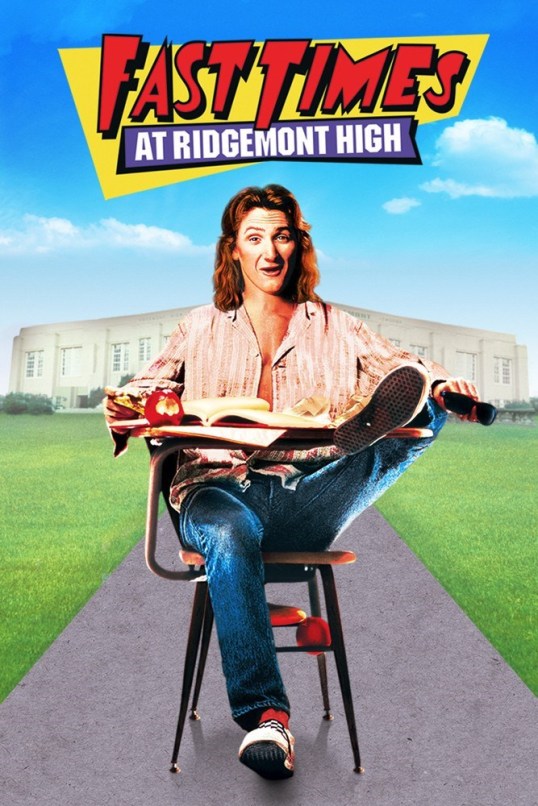
Scenes That I Love: Fast Times At Ridgemont High


Today, we wish a happy birthday to director Amy Heckerling!

In this scene from the Heckerling-directed 1982 film Fast Times At Ridgemont High, Brad finally gets a moment of triumph.  Played by Judge Reinhold, Brad spends most of this movie being humiliated.  He kind of deserves it because he can definitely be a bit full of himself, especially when he was working at All-American Burger.  But, at the same time, he’s there for his sister when she needs someone and, for a character in a 1982 teen comedy, he’s refreshingly nonjudgmental.

In this scene, poor Brad has been reduced to working at an all-night convenience store.  Wherever Brad works, he appears to be destined to have to wait on Jeff Spicoli (Sean Penn.)  When James Russo attempts to hold him up, Brad finally snaps and becomes the hero that he’s always wanted to be.

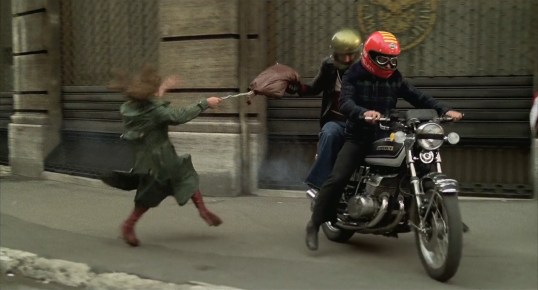
4 Shots From 4 Films: Special Ruggero Deodato Edition


4 Shots From 4 Films is just what it says it is, 4 shots from 4 of our favorite films. As opposed to the reviews and recaps that we usually post, 4 Shots From 4 Films lets the visuals do the talking!

Today would have been the 87th birthday of the great Italian director, Ruggero Deodato!  And that, of course, means that it’s time for….

4 Shots From 4 Films

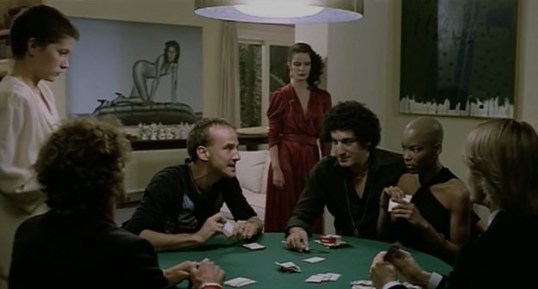
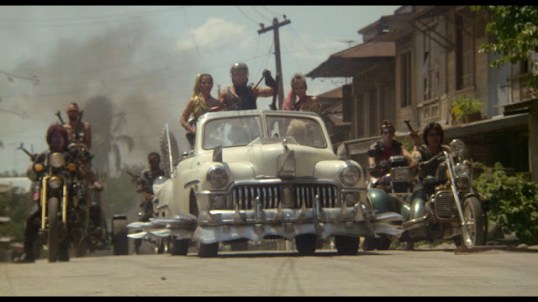
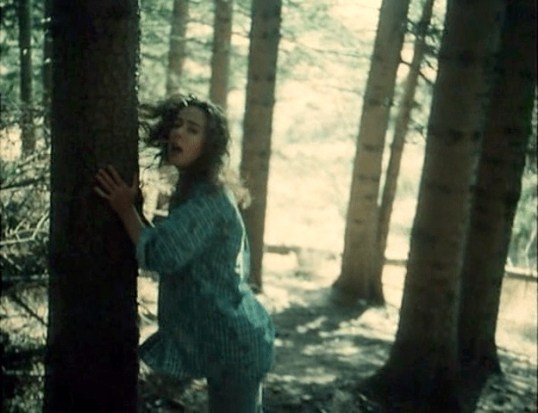
Live Like A Cop, Die Like A Man (1976, dir by Ruggero Deodato, DP: Guglielmo Mancori)

The House On The Edge of the Park (1980, dir by Ruggero Deodato, DP: Sergio D’Offizi)

Raiders of Atlantis (1983, dir by Ruggero Deodato, DP: Robert D’Ettore Piazzoli)

Body Count (1986, dir by Ruggero Deodato, DP: Emilio Loffredo)