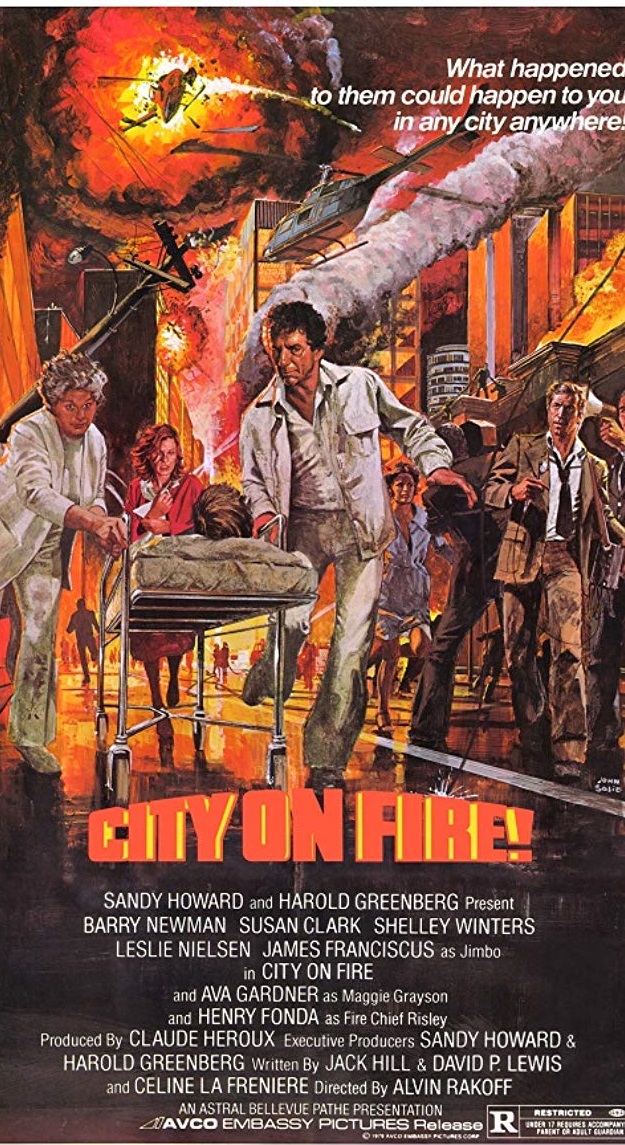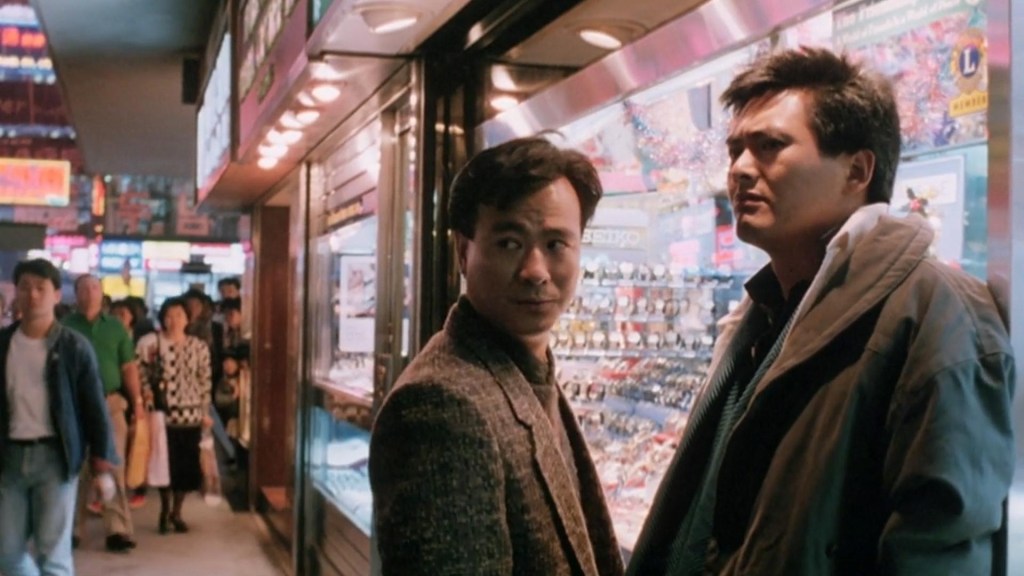
Ringo Lam’s CITY ON FIRE is one of the first movies starring Chow Yun-Fat that I really wanted to see after I had made my way through the John Woo films. Chow worked with Ringo on a total of 5 films from 1987 – 1992, and they’re a gold mine. I have previously reviewed PRISON ON FIRE and FULL CONTACT, so I decided now was a good time to take a fresh look at this one.
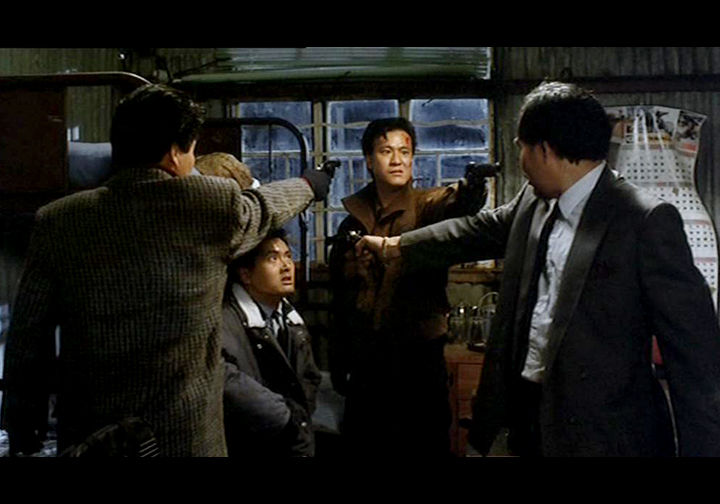
Opening with an awesomely 80’s, neon-drenched saxophone solo from Teddy Robin Kwan, CITY ON FIRE tells the story of undercover cop Ko Chow (Chow Yun-Fat). He’s practically forced by his handler on the force, Inspector Lau (Sun Yueh), to infiltrate a violent gang of jewel thieves. The problem is that he has a history of getting in way too deep, so deep that he forgets where the job ends and his real life begins. It happens again when he’s able to get close to the leader of the thieves, Fu, played by his KILLER co-star, Danny Lee. When the gang hits a jewelry store with Chow in tow, and with the cops on their trail, everything goes to hell. Some store employees are killed, some gang members are taken out, and Chow even takes one in the gut. As the survivors meet back up at the warehouse, it becomes clear that there’s a mole in their midst, even though not everyone wants to admit it.
Does that premise sound familiar to you? If you’re a big fan of Quentin Tarantino and RESERVOIR DOGS, you can’t help but recognize how strongly his film was influenced by CITY ON FIRE. The influence is clear, especially in the broad strokes of the plotline and at the famous finale, but these are two very different crime films in execution, and they’re both excellent in their own ways.
In the late 80’s, some of the best action and crime films in the world were being made in Hong Kong. So many of the films had a reckless energy, which seems to be especially evident in director Lam’s works. In contrast to John Woo’s stylish action scenes, Lam’s scenes aren’t polished. They’re more grounded, they’re chaotic, and they’re not “cool” at all. For example, the film opens with an undercover named Chan Kam-Wah (Elvis Tsui) being called out and murdered in the middle of a busy market. Stabbed multiple times with a big butcher knife while desperately fighting for his life, the scene plays out in a realistic, clumsy, and very bloody way. In other words, it’s painful to watch without a slow-mo tracking shot in sight. We know immediately that no one is safe, and there’s a palpable tension as the undercover cop / criminal drama plays out that really works for the film.
Chow Yun-fat is fantastic, with his performance winning him his 2nd consecutive Hong Kong Film Award for Best Actor. He’s not the impossibly cool heroic bloodshed hero of the prior year’s A BETTER TOMORROW. Rather, while he’s charming in certain early scenes with his girlfriend Hung (Carrie Ng), when he starts his new assignment, you can see that he’s completely exhausted with his life as an undercover cop, a life that seems to have broken him emotionally. You can almost feel an impending doom with his character that lingers over the film, turning it into something different than your average cops and robbers story. In the other major lead of the film, Danny Lee is so good as the leader of the gang of jewel thieves, Fu. He’s very professional, and once he’s accepted Chow into their ranks, he’s very friendly and personable to him. In these moments, you can see how the two men could bond. But Fu’s also shown that he will kill anyone who gets in his way, so you know it’s inevitable that the two will collide head-on at the end. When it comes, it hits hard.
I highly recommend CITY ON FIRE to any person who enjoys gritty crime films. The action is brutal, the lead performances are excellent, and the drama of the story will leave you emotionally drained as the end credits roll. I can see why it would have had a major impact on a lover of Hong Kong cinema like a young Tarantino!
CITY ON FIRE is currently streaming on Prime Video, PlutoTV, Tubi, and Plex.