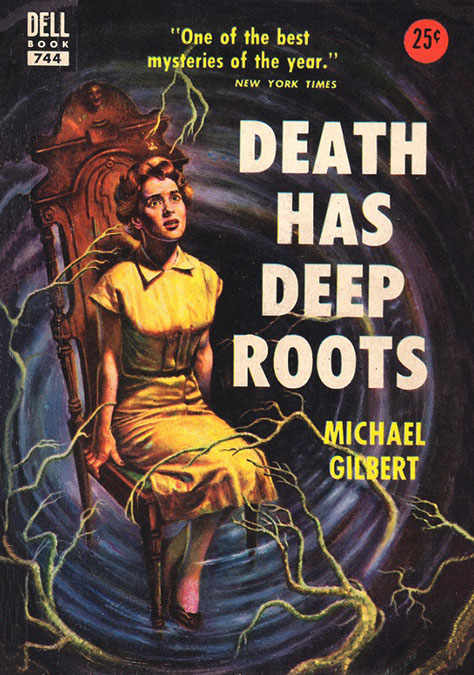
by E. Harper Johnson
This cover is from 1951.
by E. Harper Johnson
This cover is from 1951.
Directed by animator Tristan Zammit, this music video for Metallica finds the legendary metal band playing in a haunted house while surrounded by specters and other beings.
Enjoy!
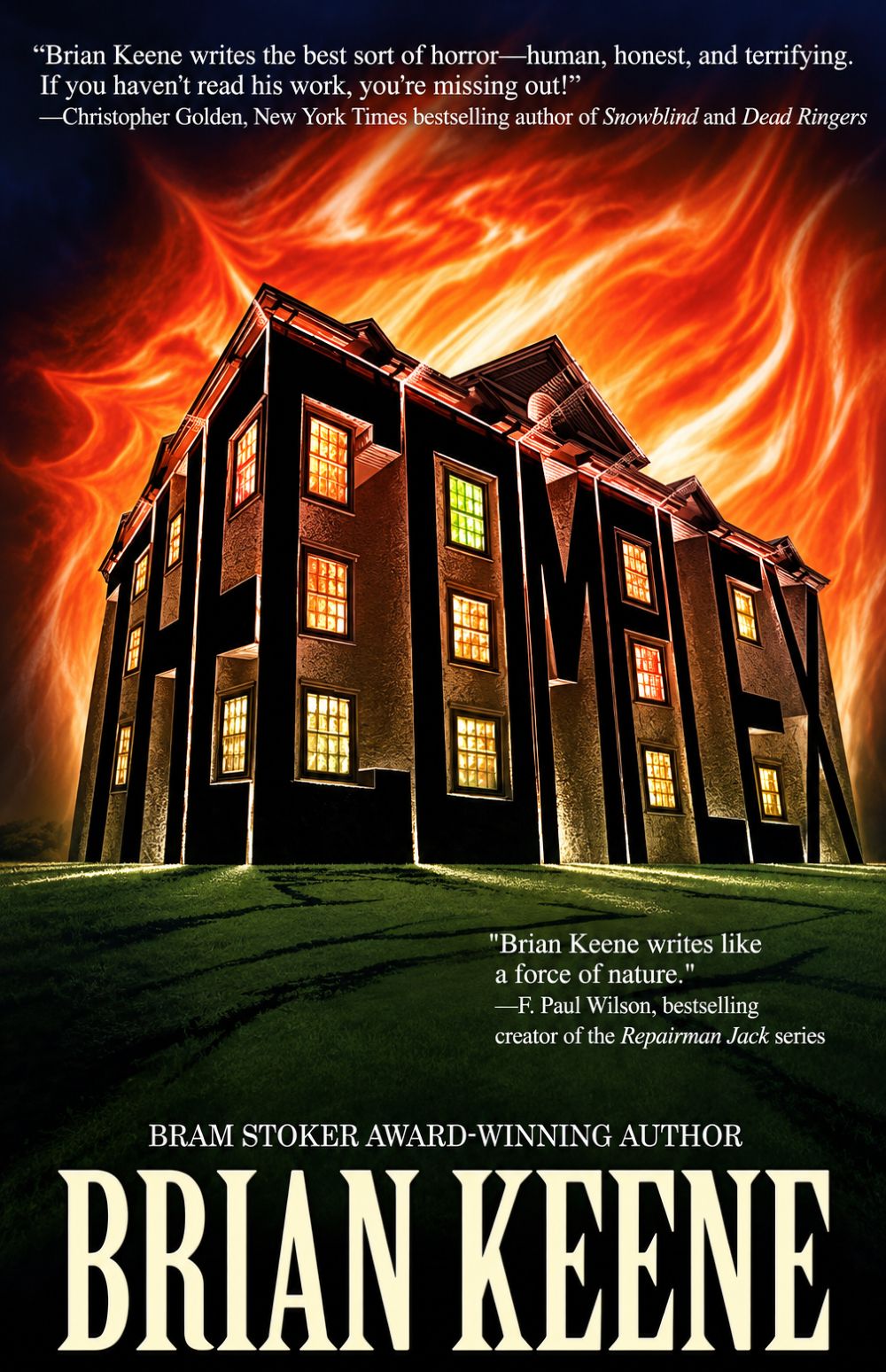
“The only thing they have in common is the unstoppable horde that wants to kill them.” — The Complex
Brian Keene’s The Complex takes a simple horror premise and gets a lot of bloody mileage out of it: a group of apartment residents suddenly find themselves under attack by naked, homicidal strangers, and surviving means trusting people they barely know. There’s no comfortable adjustment period, no time to assemble the perfect team, and certainly no guarantee that being decent will keep anyone alive. It’s a nasty, fast-moving siege novel whose biggest strength isn’t just its willingness to get vicious. It’s the way Keene turns an ordinary collection of neighbors into people worth worrying about before putting them through absolute hell.
The setting is Pine Village, an apartment complex in rural Pennsylvania. It’s the kind of place where people live close together without necessarily sharing much of their lives. Everyone has private problems, personal baggage, and assumptions about whoever lives nearby. Then a mob of crazed attackers arrives, and those everyday boundaries become meaningless. Suddenly, the person on the other side of the wall isn’t just background noise or an occasional annoyance. They might be your only chance of making it through the next few minutes. That shift gives the book a strong foundation beneath all the violence.
What makes the setup effective is how little preparation the characters receive. Keene introduces the residents as the situation starts unraveling, moving between apartments rather than spending ages establishing a normal world we already know is about to collapse. The present-tense narration adds to that feeling of being trapped inside an unfolding emergency. There’s a useful bluntness to the approach: people notice something wrong, try to understand it, and discover that understanding is a luxury they don’t have. The novel is at its strongest when it keeps that gap between recognizing danger and reacting to it painfully narrow.
The attackers are particularly unsettling because they occupy an uncomfortable space between recognizable human beings and something much harder to process. They have the relentless aggression associated with zombies, but describing them that way doesn’t quite capture their menace. Their nakedness removes the ordinary visual clues that help people categorize strangers, while their weapons and savage behavior turn the familiar human body into something threatening. Keene doesn’t need elaborate creature designs to make the situation grotesque. The horror comes from people behaving in ways that make ordinary social expectations completely useless. There’s nothing to negotiate with and very little time to hesitate.
Then there’s the Tick Tock Man, a hulking attacker whose mechanical head movements and incongruous Hello Kitty tattoo make him stand out from the surrounding chaos. He’s the sort of horror image that works because the details don’t comfortably belong together. The tattoo is almost absurd, but that absurdity makes the violence more disturbing rather than less. Amid a largely collective threat, he gives the terror a memorable individual presence. A murderous crowd can become anonymous after a while; one bizarre, recognizable figure gives both the characters and the reader something specific to dread.
Still, the residents are what keep The Complex from becoming an extended exercise in creative dismemberment. The ensemble includes a suicidal horror writer, a single mother, an aging veteran, an elderly woman, a transgender woman named Stephanie, and a serial killer known as the Exit. That’s a potentially overstuffed lineup, but the shared emergency gives these very different people a reason to occupy the same story. Their usefulness to one another doesn’t necessarily correspond to how respectable, stable, or approachable they might appear beforehand. Keene gets considerable tension out of that mismatch between someone’s social identity and what they can actually contribute under pressure.
The Exit deserves particular attention because he isn’t just another colorful addition to the cast. He’s a recurring figure in Keene’s fiction, appearing in the connected stories “I Am an Exit” and “This Is Not an Exit,” collected in Jack’s Magic Beans. His presence connects The Complex to Keene’s wider body of work, but you don’t need that background to appreciate what he brings to this nightmare. Having a serial killer among the survivors changes the usual siege dynamics: someone who would ordinarily be the threat becomes a potentially invaluable ally against something even worse. His familiarity with violence gives the residents an advantage while making their dependence on him deeply uncomfortable. They aren’t simply cooperating with neighbors they’ve overlooked; they’re benefiting from the abilities of someone they would otherwise have every reason to fear. It adds a nasty moral wrinkle to their survival without turning him into a conventional hero.
Stephanie also gives the novel room to explore the difference between how someone understands herself and how other people see her. In a story built around strangers becoming unwilling allies, that distinction matters. Survival requires the residents to recognize one another as people rather than settle for whatever category seems easiest. The book’s human element isn’t separate from its horror machinery; it’s part of what makes that machinery work. Violence forces everyone into proximity, but cooperation requires something more. That’s a more interesting emotional basis for a siege story than simply dividing the cast into obvious heroes and disposable victims.
Keene’s handling of action is another major selling point. The novel has a cinematic quality, but not merely because it’s easy to imagine the blood on a screen. Its central situation produces immediate, understandable objectives: get away from danger, find shelter, stay together, and figure out whether escape is possible. The apartment setting keeps those goals close and urgent. There isn’t much room for the characters—or the narrative—to wander off. For readers who enjoy horror that keeps applying pressure rather than pausing for extensive explanation, that concentration is a considerable advantage.
The downside is that the same stripped-down approach can leave parts of the experience feeling underdeveloped. The dialogue sometimes has the efficiency of movie dialogue, delivering what a scene needs without always sounding entirely natural. Likewise, an ensemble this varied invites curiosity that a relentless survival plot can’t always satisfy. The character concepts are compelling, but the book’s commitment to forward motion limits how long it can sit with them. Whether that feels like a flaw depends on what you want from it: a sustained nightmare benefits from momentum, while a richer character study would need more breathing room.
The ending is likely to be the biggest dividing line. Keene doesn’t provide a tidy explanation for the outbreak, and the conclusion leaves substantial questions unanswered. Its abruptness recalls the ending of his zombie novel The Rising, which similarly split readers between those who appreciated being left hanging and those who felt the story stopped just when it needed to deliver a payoff. The comparison isn’t exact—The Rising received a direct continuation in City of the Dead—but the potential frustration is familiar: after becoming invested in the characters’ struggle, some readers will want more closure than Keene gives them here. There’s still a strong argument for leaving things uncertain. People caught in a catastrophe wouldn’t automatically discover its cause, and withholding answers preserves the sense that the world has become incomprehensible. But uncertainty and satisfaction aren’t interchangeable. The book works better as an immediate survival experience than as a mystery promising a fully worked-out solution.
For all its bloodshed and relentless action, The Complex works best when it makes you care about the people caught in the middle. Its viciousness matters because Keene gives the endangered residents enough individuality to make their situation more than a body-count exercise. The gore is plentiful, the central threat is unnerving, and the unlikely alliances provide an emotional thread through the carnage. Some dialogue could be smoother, and the unresolved ending won’t satisfy everyone, but those limitations don’t erase the effectiveness of the ride. This is lean, mean survival horror with a human center: an ugly night shared by people who never expected to need one another quite so badly.
In 2017’s Victory by Submission, Tommy Hendricks (Brett Prieto) is a UFC fighter who thinks that he wants to be champion more than anything else in the world. He’s following in the footsteps of his boxer father (Alan Autry) and also his older brother (Josh Thomson), an up-and-coming UFC fighter who was killed in Iraq. When Tommy allows himself to be trained by the ruthless Steve Henderson (James Price), he wins his chance to go up against the most dangerous man in the world, UFC champion Crazy Dan McGuire (Casey Olson). But will he be willing to sacrifice his soul for victory?
For what it is—a fighting film with a faith-based theme—it isn’t bad. The story won’t take anyone by surprise, but the fights are well-directed and the actors all give decent performances. Speaking for myself, I appreciated the film’s message, which was that there are some things that are more important than seeing how much blood you can spill in the ring. The conclusion of the fight was a bit unbelievable. When an angry Steve said that the fans were upset because they felt like they had been cheated out of the money that they paid for the tickets to see the fight, I couldn’t help but feel that, as sleazy as he was, he kind of had a point.
Eric Roberts does appear in this film, playing a very enthusiastic fight promoter. It’s a small role but it’s always nice to see Eric in an energetic mood.
Previous Eric Roberts Films That We Have Reviewed:
Welcome to Late Night Retro Television Reviews, a feature where we review some of our favorite and least favorite shows of the past! On Fridays, I will be reviewing SLEDGE HAMMER!, a cop comedy which ran on ABC from 1986 to 1988. The entire series can be found on Prime!

This week, Sledge goes on television.
Episode 1.11 “To Live and Die on TV”
(Dir by Daniel Attias, originally aired on December 13th, 1986)
The Million Dollar Question is the most popular game show on television. Hosted and produced by Bob Kenny (Peter Marshall), the show is famous for the fact that no one has ever won the million dollars. That’s a good thing because Bob doesn’t actually have a million dollars to give anyone. When one contestant gets too close to winning the top prize, Bob has him murdered.
Sledge Hammer and Doreau does some research and discover that Bob has a history of declaring bankruptcy. Doreau also figures out that only stupid-looking people are cast on The Million Dollar Question in order to ensure that they won’t win. Naturally, this leads to Sledge Hammer going undercover as a contestant. With Doreau secretly supplying him with the answers, Sledge gets closer and closer to the million. Bob comes up with a plan to kill Sledge on live television….
This episode was fairly amusing satire of game shows. The Million Dollar Question successfully predicted Who Wants To Be A Millionaire? Of course, nowadays, it’s a lot easier to be a millionaire than it was back in 1986 or even 2000. One million dollars in 1986 is the equivalent of three million dollars today. It seems a bit odd that Bob Kenny couldn’t afford to pay that but, then again, the whole point of the episode was that game show hosts are not to be trusted.
I enjoyed Doreau giving Hammer the answers to some of the easiest questions ever asked. Peter Marshall seemed to be having as the sleazy Bob and, as always, David Rasche was amusingly clueless. When he’s told that Trivial Pursuit is a game the requires brains, Hammer replies that the only thing he pursues is justice and all that requires is bullets.
This was a good episode that reminded me that being a millionaire used to mean something.

Tonight, I had one eye on The Giant Spider Invasion and one eye on Game One of the World Series. The movie was set in Wisconsin and, of course, this year’s World Series features the team from Wisconsin’s biggest city. While the movie showed me that women in rural Wisconsin apparently didn’t own pants in the 1970s, the game showed me that both the Brewers and the Rays more than deserve to be representing their leagues in the World Series.
The Brewers won Game 1 by a score of 3-2. I’m an American League girl so I’m cheering for the Rays but I wasn’t upset to see the Brewers win. The Brewers played a good game and so did the Rays. Someone had to win and, in this case, it was the Brewers. If the Brewers had beaten the Rangers, I would be mad.
Congratulations to the Brewers on winning their first World Series game!
Go Rays!

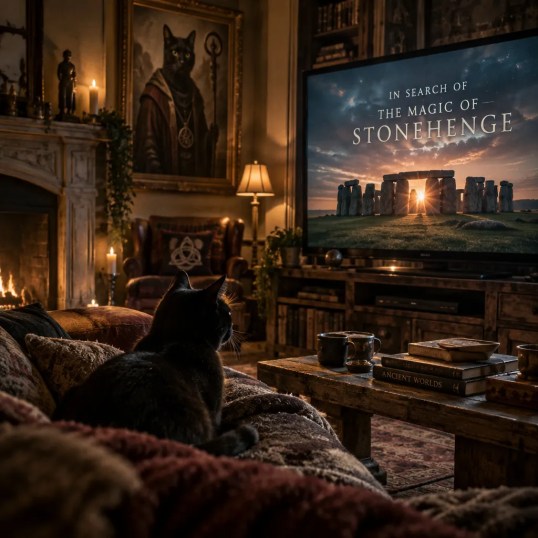
Tonight, on In Search Of…., Leonard Nimoy guides us through an investigation of Stonehenge!
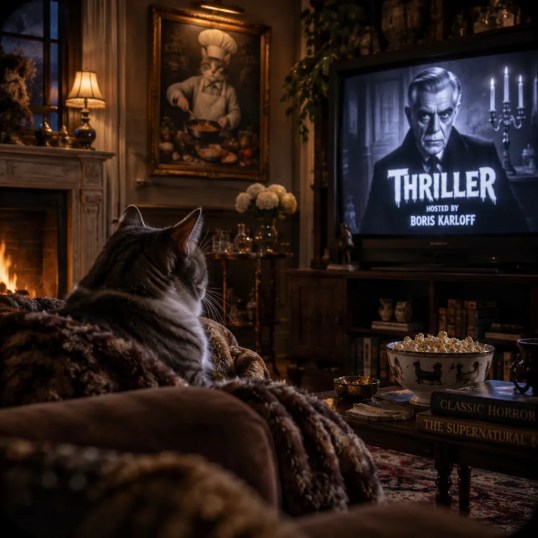
For tonight’s excursion into televised horror, we have an episode of Thriller!
This episode is called La Strega and it deals with an artist (Alejandro Rey) who saves a young woman (Ursula Andress) from drowning. It turns out that the local villagers believe that the woman is a witch. The artist has no time for superstition and takes the woman back to his home. She starts as his model and then becomes his lover. She may not be a witch but her mother (Jeanette Nolan) definitely is…
And, of course, this episode is introduced by the one and only Boris Karloff!
The episode premiered on January 15th, 1962.
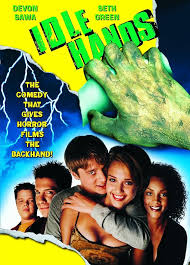 Anton (Devon Sawa) is a teenager who is so busy getting high and sitting on the couch that it takes him a few days to realize that his right hand has been possessed and has murdered his parents. The hand also kills his two best friends (Seth Green and Elden Henson), but fortunately, they’re able to stick around and talk to him as members of the living dead. Meanwhile, all Anton wants to do is go out on a date with the hot girl next door, Molly (Jessica Alba). Meanwhile, a demon hunter (Vivica A. Fox) is searching for the evil force that has possessed Anton’s hand.
No wonder we all loved this movie in 1999!
Watching the film today, I’m still impressed by the energy of Idle Hands, even if the movie seems to be trying too hard to imitate the zaniness of Sam Raimi. It’s interesting to compare Devon Sawa’s performance here to his more serious turn in Final Destination. I remember that the film was controversial when it first came out because the Columbine shootings were still fresh on everyone’s mind and people weren’t in the mood to laugh at a homicidal teenager, even one who was ultimately not responsible for the actions of his possessed hand. Seen today, the action in Idle Hands is too broad to really be taken seriously as a potentially bad influence.
There wasn’t a teenage boy alive in 1999 who didn’t have a crush on Jessica Alba, but also there wasn’t a boy who didn’t know the awkwardness of not feeling like he could control himself. Sure, we may not have had a possessed hand, but we still always seemed to do the wrong thing at the exact moment that everyone else was watching. If Anton thinks having a possessed hand is bad, just imagine waking up with a big zit on your forehead or forgetting how to put sentences together just because a girl looked in your direction. That’s one reason why Idle Hands is more fondly remembered than some of the other teen horror films from that era. It captures a certain teenage awkwardness. We’ve all been there.
Welcome to Retro Television Reviews, a feature where we review some of our favorite and least favorite shows of the past! On Fridays, I will be reviewing St. Elsewhere, a medical show which ran on NBC from 1982 to 1988. The show can be found on Daily Motion.
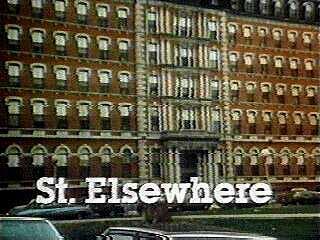
This week, Bobby Caldwell faces his future.
Episode 4.16 “Family Affair”
(Dir by Bruce Paltrow, originally aired on February 12th, 1986)
This episode deals with the fallout of the assassination of Sen. Gordon Endicott. As I watched it, I found it surprising that the doctors and the patients didn’t seem too shaken by the fact that a presidential contender had been shot in the chapel. One could argue that this was meant to show that violence in the United States had become so commonplace that people barely noticed it. I think it has more to do with bad writing. There is no real emotional impact to the Endicott family drama because the Endicotts themselves never come across as actual human beings. They’re thin stand-ins for the Kennedy family, and the show doesn’t seem to know what it wants to say about them. St. Elsewhere was an undeniably liberal show, and the Endicotts, with their sense of noblesse oblige, are clearly meant to evoke nostalgia for the Kennedy era. At the same time, the show can’t quite convince itself that the Kennedy era was all it was cracked up to be.
The Endicott story comes to an end here. Augusta survives her heart surgery. Her granddaughter goes into labor and gives birth to the first Endicott of the next generation. Augusta’s grandsons argue over who will lead the family. It falls flat. That’s especially true in 2026, when the Kennedys are no longer deified. Today the name Kennedy is just as likely to bring to mind vanity congressional campaigns as it is Camelot.
(For all the effort St. Elsewhere put into recreating the Kennedy family, no effort is made to recreate Mary Jo Kopechne.)
Far more compelling is the story of Bobby Caldwell, who struggles to carry on as a doctor despite his AIDS diagnosis. At first, only Westphall, Auschlander, and Morrison know. Morrison tells Fiscus, mostly to get Fiscus to stop giving Caldwell a hard time about his scar. Westphall tells Dr. Craig. Craig confronts Caldwell, says “Tough break,” and then asks him to leave the hospital. Craig also says he had no idea Caldwell was, in Craig’s words — not mine — “a fag.” Caldwell says that he’s not but the implication is clear. In Craig’s eyes, the virus is a punishment.
Caldwell’s illness makes Fiscus hesitant about sleeping with Clancy, at least until Fiscus’s own AIDS test comes back. Bobby’s ex, Joan Halloran (Nancy Stafford), gets tested and is relieved to discover she’s negative. When Joan complains that she’s never done anything to deserve getting sick, Morrison tells her that AIDS is a disease, not a metaphysical judgment. I’m glad someone finally pointed that out.
Caldwell resolves to kill himself in his apartment, but just as he’s about to take a lethal objection, someone knocks on his door. The young daughter of the woman who lives above him needs help with a leak in their bathroom. Caldwell realizes that having AIDS doesn’t mean he can’t help people.
In the end, Caldwell does leave St. Eligius. He tells Westphall that he’s moving to California to work at an AIDS hospice. He takes one last look around the hospital and then exits both St. Eligius and the show.
I have to admit I was really moved by the episode’s final image of Caldwell stepping outside. He hasn’t always been my favorite character. When he was first introduced in the second season, he seemed bland. During the third season, the show didn’t know what to do with him. He spent much of the fourth season treating everyone else terribly. But in this episode, Caldwell finally seemed like a real person. Mark Harmon’s performance, especially in those last moments, was outstanding.
Goodbye, Bobby Caldwell.

