Horror Film Review: Clayface (dir. by James Watkins)


“Even if it kills me, I’ll be better off than I am now.” — Matt Hagen

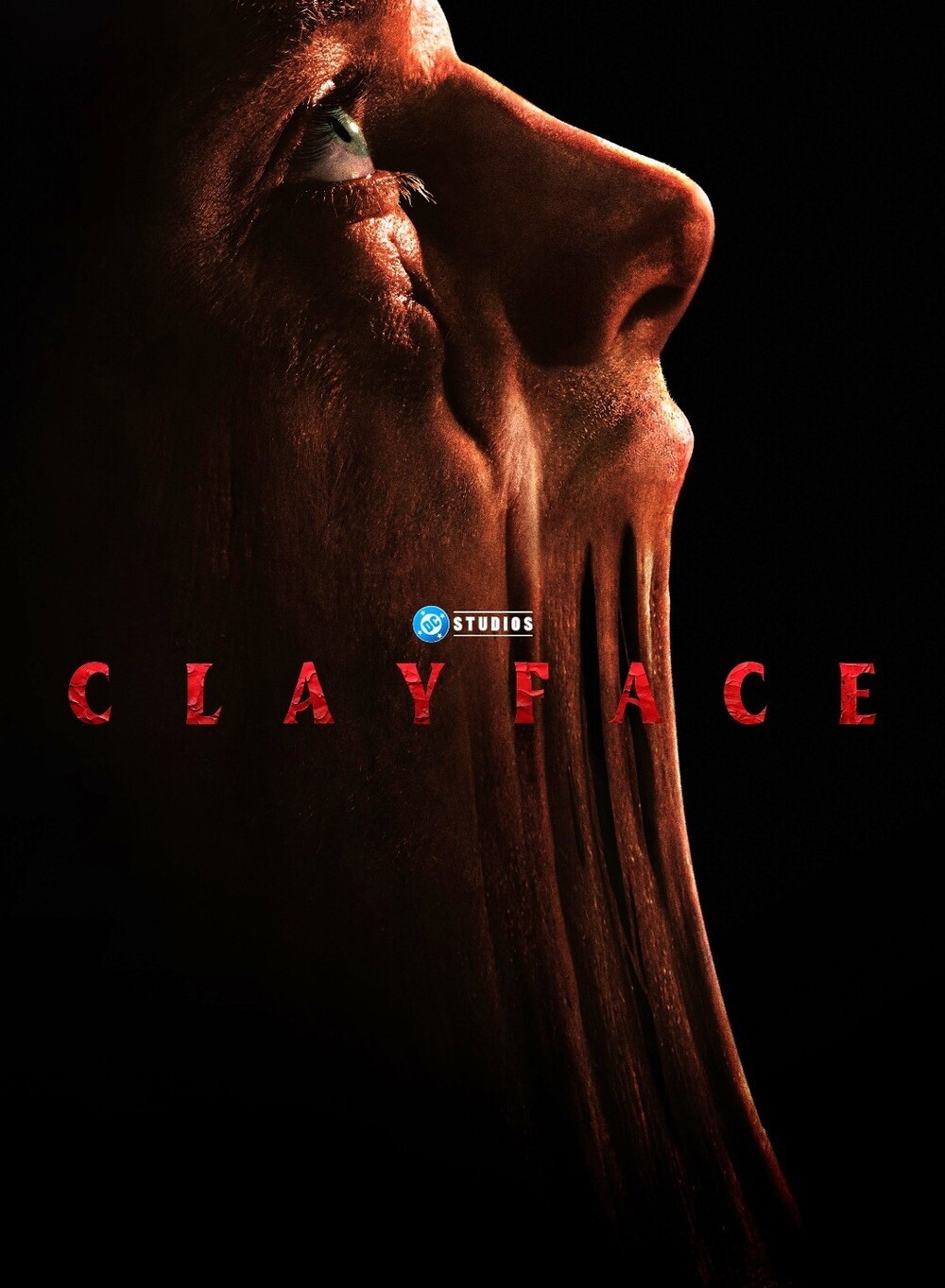
The most unsettling thing about Clayface isn’t watching a man lose his face; it’s realizing how much of his life was built around having the right one. James Watkins’ take on the DC villain turns that insecurity into a nasty little body-horror tragedy, following someone who has confused being desirable with being worth something. Beneath the collapsing features and increasingly grotesque transformations is a recognizable fear: that losing the thing people admire about you means losing their interest altogether. The film doesn’t explore that idea as deeply as it could, but it gives the horror a compelling emotional foundation beyond the spectacle of a comic-book monster taking shape.

At the center is Matt Hagen, played by Tom Rhys Harries, an actor whose rising career is derailed by a disfiguring attack. His appearance has opened doors for him, and losing it threatens more than his next role. It destroys the version of himself he thought he could count on. Desperate for a way back, he turns to Dr. Caitlyn Corr, played by Naomi Ackie, whose experimental treatment promises to repair the damage. Naturally, the results come with complications. The interesting question isn’t whether the miracle will turn into a nightmare, but how much Matt is willing to overlook once he starts recognizing himself in the mirror again.

That desperation makes Matt more compelling than a character who simply gets powers and becomes dangerous. His problem begins before his body starts changing: he already depends on other people to tell him what he’s worth. That insecurity connects naturally to his profession. An actor who can physically become someone else sounds like a wish fulfilled, until transformation stops being a choice. There’s a cruel logic to giving someone obsessed with recovering his identity a body that won’t hold one. The screenplay occasionally spells things out too neatly, but the central idea gives the nastiness something to work with beyond its shock value.

Harries does a lot to keep that idea grounded. He makes Matt’s appeal believable without turning him into someone whose suffering automatically excuses everything he does. His desperation is understandable even when his choices become selfish or disturbing, and the performance handles that balance well. His humiliation doesn’t immediately become theatrical rage. It lingers, making him defensive, needy, and increasingly willing to justify himself. Even when the movie pushes him toward more recognizable villain territory, Harries preserves traces of the frightened person underneath. Matt doesn’t have to remain likable to remain interesting, and the performance understands the difference between earning sympathy and demanding it.

Ackie gives the film another human connection that it needs. Corr could have been little more than the scientist who introduces the treatment and explains why everybody should be worried. Instead, her warmth complicates a relationship already shaped by unequal needs. Matt wants his life back; she wants her work to succeed. Those desires overlap without being identical, making their connection more engaging than the mechanics of the experiment. The romantic element also gives their scenes a tragic-monster quality. Not every emotional beat lands with equal force, but the performances keep their relationship from feeling like a mandatory break between transformations.

Those transformations are where Watkins delivers the movie’s most immediate pleasures, assuming “pleasures” is the right word for watching somebody’s anatomy stop cooperating. The real discomfort comes from the instability. A face should stay recognizable even when everything else changes, and Clayface makes that familiarity feel temporary. The makeup and prosthetic work give Matt’s deterioration an unpleasant physical texture, encouraging a queasy fascination with damage that’s difficult to look at and harder to ignore. At its best, the body horror feels wet, awkward, and difficult to contain rather than polished into something comfortably spectacular. There’s enough physical nastiness here to give Matt’s desperation a genuinely disturbing shape.

Even without the DC Comics pedigree or the connection to Batman, Clayface would still be a compelling body-horror film. The recognizable name might get people interested, but Matt’s desperation, the disturbing effects, and the tragedy of losing control over his identity are what make it work. There’s no need to know where he fits into Gotham or who he might eventually fight. His story has enough emotional weight and gruesome imagination to stand on its own. The comic-book background adds another layer, but it isn’t holding the movie together. That independence makes it feel like an actual horror story rather than franchise homework dressed up with gore.

For an R-rated body-horror film, though, Clayface plays it surprisingly safe. That might sound odd given the grotesque imagery, but graphic violence and genuinely unsettling ideas aren’t the same thing. There are moments when Matt’s transformation seems ready to take the movie somewhere stranger, only for it to retreat toward familiar revenge-thriller territory. The issue isn’t simply that it needs more blood or more elaborate effects. A more Cronenbergian approach could have pushed further into how his changing body alters his desires, his relationships, and his understanding of himself. The film is willing to make Matt look monstrous, but more hesitant to explore what becoming something other than human might actually feel like.

That restraint becomes especially noticeable as Matt gains control over his abilities. Early on, his body feels like a threat he can’t escape. Later, it increasingly becomes a weapon. The shift makes sense for the story, but it changes the experience from watching someone endure a nightmare to watching him inflict one. There’s nasty fun in that, especially when the film embraces its lurid side, but his inability to trust his own body generates more unease than his ability to make other people afraid of it. As the confrontations become more conventional, the movie sacrifices some of the uncertainty that makes its earlier stretches so effective.

The comparisons with The Fly and Darkman are hard to avoid, from scientific possibility curdling into catastrophe to the disfigured man pursuing revenge. The relationship between appearance and personal value also invites comparisons with The Substance. Those connections help explain the film’s appeal, but they highlight what feels underdeveloped, too. Clayface has an industry full of people who judge surfaces and a protagonist whose surface becomes impossible to maintain. That’s fertile ground. Sometimes the movie digs into it; sometimes it settles for a familiar revenge beat with a more disgusting visual payoff. The latter can be entertaining without being quite as satisfying.

Even with those reservations, Clayface succeeds because enough humanity survives beneath the grotesquerie. Harries gives the film a wounded center, while Ackie helps keep its emotional stakes from disappearing into the effects work. Watkins delivers the gruesome spectacle, but the sadness underneath gives it staying power. The film doesn’t fully realize its strongest ideas, and its reluctance to follow them into truly uncomfortable territory keeps it from becoming something exceptional. Still, its best moments make physical transformation feel painfully personal. Matt can change his appearance, but finding a face he can live with turns out to be the harder problem.
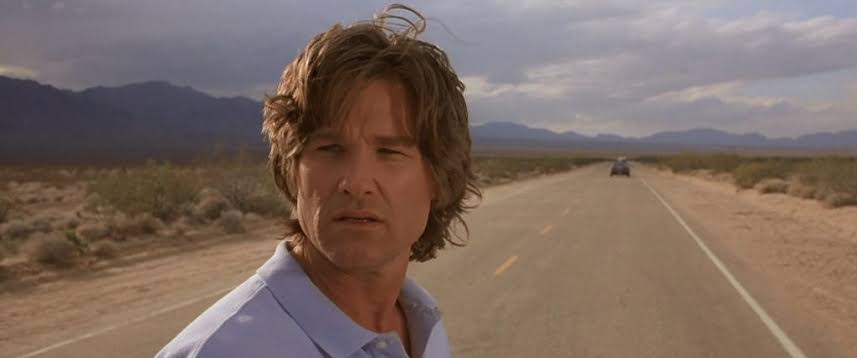
Brad reviews BREAKDOWN (1997), starring Kurt Russell!


Kurt Russell is one of those actors that I always remember liking. When I was coming into my own as a lover of movies in the mid-80s, it seemed that he was everywhere in my life. Fox 16 out of Little Rock played THE MEAN SEASON constantly, my brother and I loved to rent BIG TROUBLE IN LITTLE CHINA, and my mom’s favorite movie was OVERBOARD. In some ways, he was like an extended member of the family! Even though he’s now 75 years old, if Russell is in a film or TV show, there’s a good chance I’m watching it. Well back in 1997, I went to see his BREAKDOWN in the theater, and I still find myself watching it just about every year to this day. I just enjoy it no matter how many times I watch it. Most people call it a suspense thriller, but this story is a genuine horror show for me.

Russell plays Jeff Taylor, a man traveling cross-country with his wife, Amy (Kathleen Quinlan). When their vehicle breaks down in the middle of the desert, it seems that they’re almost forced to take the help of a passing truck driver. Amy agrees to go with him to get assistance while Jeff stays behind with their vehicle. It’s the kind of situation any couple could find themselves in. The problem here is that when Jeff is able to get his vehicle running again and makes his way to the roadside diner where Amy’s supposed to be, she’s nowhere to be found. Even worse, everyone acts like they’ve never heard of her or seen her before. From that point on, the movie focuses on Jeff’s desperate search for his wife, and the more he learns about the people who took her, the more dangerous things become.

Here’s the thing about BREAKDOWN that has always made it work so well for me. The idea of a wife being taken from her husband, out in the middle of nowhere, with no explanation and no clear way to get her back, is terrifying. When I think of some of the long, lonesome stretches of interstate my wife and I have driven through in rural Wyoming, I’m not exactly sure what I’d do if our vehicle just stopped working. And one thing about Kurt Russell’s character here, he’s not some tough guy like Snake Plissken or Jack Burton. This character is named Jeff, and he’s preppy looking in his sunglasses, khakis and polo shirt. He kind of reminds me of myself at first, which means I know he’s in trouble! The brilliance of the film’s setup is that it takes an ordinary situation involving ordinary people and then turns it into the sort of nightmare that I wouldn’t wish on anybody.

Russell excels as the normal husband completely driven by the desperation to find his wife. He makes us feel what Jeff is going through, and that’s a huge part of why the movie works as well as it does. When he gets angry, we understand why. When he takes risks, we understand what’s driving him. I find myself completely invested in his predicament and want him to find Amy just as badly as he does. And then there’s J.T. Walsh, who’s particularly chilling as the truck driver, Red Barr. He seems like such a nice guy when he offers help but then seems like a despicable guy when he tells the police later that he’s never met Jeff or Amy before. The thing is, he’s basically playing the character the same in both scenes, which makes the whole thing quite unsettling. It’s an incredible performance and serves as a reminder of what a shame it was that J.T. Walsh would pass away the next year at just 54 years of age.

Another thing that works well is Kathleen Quinlan’s performance as Amy. She doesn’t get a lot of screen time, as we hang out with her and Jeff on the road for a little while before she gets kidnapped, but she gives off such an appealing vibe that helps establish a solid, likable relationship with her husband. To me that short time is vital as it helped me stay invested in Jeff’s search. I mean, who wouldn’t want her back?! Finally, I also want to give a shout-out to M.C. Gainey and Jack Noseworthy, who play a couple of really bad guys helping Red. This movie has some damn good villains.

Watching BREAKDOWN yet again, I still think it’s a near perfect thriller. Kurt Russell is terrific, the suspense holds up, and the story still resonates with me, maybe now more than ever. After all these years, I still find myself getting caught up in Jeff’s desperate search for Amy, and thinking about what I’d do if something like this ever happened to my lovely wife, Sierra. That thought remains every bit as scary as it did the first time I saw the film. I can’t recommend it highly enough.

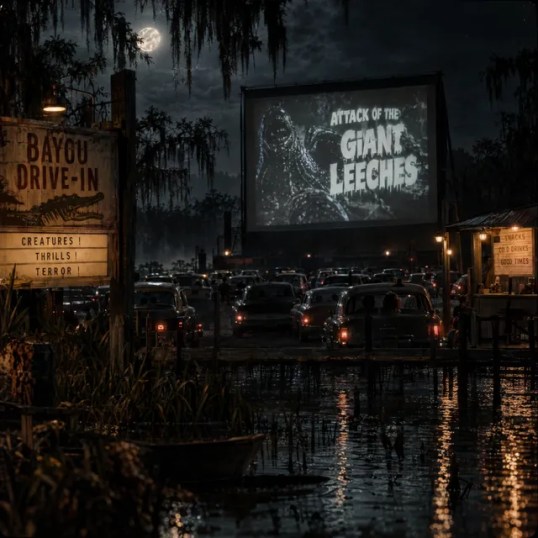
Bonus Horror On The Lens: Attack of the Giant Leeches (dir by Bernard Kowalski)


I love the 1959 film, Attack of the Giant Leeches.

The set up is a classic one.  In the humid bayous, a sweaty and unappealing store owner (Bruno VeSota) discovers that his much younger wife (the great Yvette Vickers) has been cheating on him.  In one scene, he forces his wife and her lover to enter the swamp.  It’s terrifying because the swamp is full of …. GIANT LEECHES!  I’m a Southern girl.  I’ve spent some time in the bayous.  Let me tell you, swamps are creepy enough without the addition of giant leeches.

Full of sultry melodrama and bayou atmosphere, Attack of the Giant Leeches is one of the best of the giant monster films of the 50s.  It’s amazing was radiation can do!

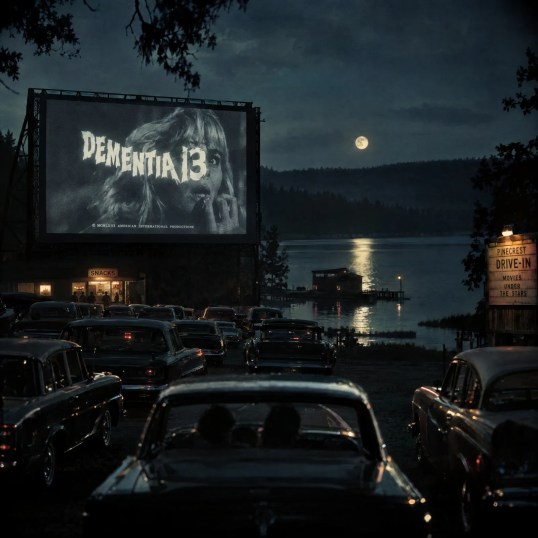
Horror On The Lens: Dementia 13 (dir by Francis Ford Coppola)


1963’s Dementia 13 is a significant film for another reasons.

For one, it’s the mainstream feature film debut of Francis Ford Coppola.  (Coppola has said that he directed two softcore films before Dementia 13 but they’ve been lost to history.)  Both Coppola’s screenplay and his direction were heavily influenced by the early giallo films that were coming out of Italy.  One could argue that this is the first American film to pay homage to Mario Bava.

Dementia 13 is also the first film on which Coppola ever went overbudget.  This film is literally the start of an era.

Coppola himself has been critical of Dementia 13.  Producer Roger Corman was not happy with the first cut of the film and added a few scenes that took away from Coppola’s pacing.  That said, it’s still an atmospheric and creepy forerunner to the American slasher film.  The scene in which Launa Anders goes for a swim has been duplicated in numerous other films and it’s still effective in the way that it chops away at the audience’s sense of security.  It certainly freaks me out.  Of course, I’m not much of a swimmer.  I’m a good drowner, though.

Here is today’s Horror on The Lens, Dementia 13!


Live Tweet Alert: Join #ScarySocial For The Raven!


As some of our regular readers undoubtedly know, I am involved in a few weekly live tweets on Twitter and Mastodon.  I host #FridayNightFlix every Friday, I co-host #ScarySocial on Saturday, and I am one of the five hosts of #MondayActionMovie!  Every week, we get together.  We watch a movie.  We tweet our way through it.

Tonight, at 10 pm et, #ScarySocial presents 1963’s The Raven!

If you want to join us this Saturday, just hop onto twitter, start the movie at 10 pm et, and use the #ScarySocial hashtag!  It’s a friendly group and welcoming of newcomers so don’t be shy.

The Raven is available on Prime!  See you there!

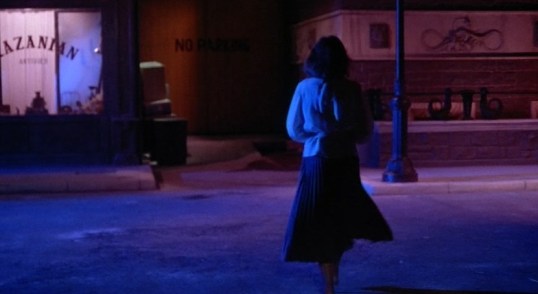
Horror Scenes That I Love: Irene Miracle Takes A Swim in Dario Argento’s Inferno


Inferno (1980, dir by Dario Argento)

For today’s scene that I love, here is a classic scene from 1980’s Inferno, Dario Argento’s follow-up to Suspiria. In this scene, Irene Miracle takes a fateful swim. I’ve seen this film several times and this sequence still creeps me out! Not only does it remind me of my own very strong fear of drowning but I also wish someone had been there to say, “Don’t do that, you’re going to ruin that pretty dress!”

This scene is Argento at his most dream-like and frightening.

4 Shots From 4 Horror Films: October 24th


4 Shots From 4 Films is just what it says it is, 4 shots from 4 of our favorite films. As opposed to the reviews and recaps that we usually post, 4 Shots From 4 Films is all about letting the visuals do the talking.

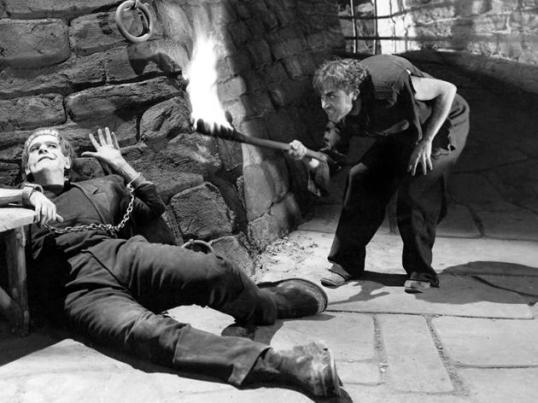
4 Shots From 4 Horror Films

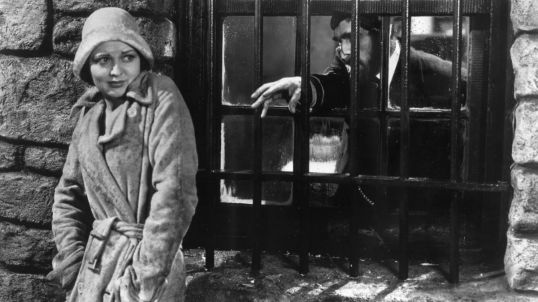
Frankenstein (1931, dir by James Whale, DP: Arthur Edeson)

The Old Dark House (1932, dir by James Whale, DP: Arthur Edeson)

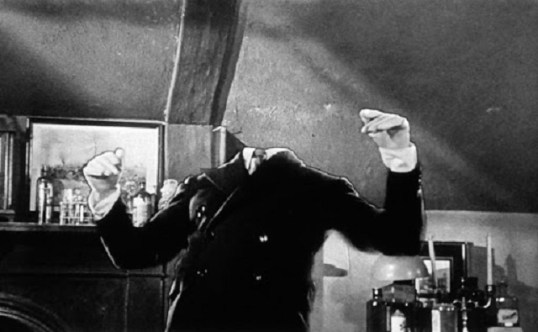
The Invisible Man (1933, dir by James Whale, DP: Arthur Edeson)

Bride of Frankenstein (1935, dir James Whale, DP: John J. Mescall)

Hands Off, Micro Short Film Review by Case Wright


As of now, this micro short has only been viewed 71 times. I haven’t seen this yet, but I am slightly hopeful that it won’t be hot garbage. Here we go!

This short is only 2 minutes and 18 seconds and he starts with…exposition. UGHHGH.

The protagonist, who I will refer to as Mr. Exposition-pants, is walking in the woods on his phone and explaining in great detail why he is there. Apparently, Mr. Exposition-pants took a photography class and is now taking pictures in the woods. Got all that? If not, please rewind and he’ll go over it again for 25% of the film’s total length!

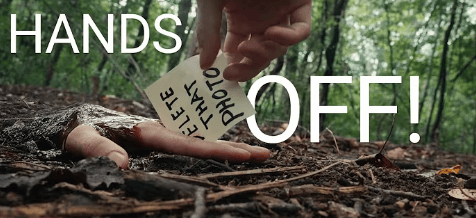
Mr. Exposition-pants finds a severed hand and calls the police? No, he takes a photo and sees another hand that has a note that reads – “Delete that photo”. He does eventually call the police and it’s a demon on the other end. Then, I couldn’t understand what was happening.

You could watch this film or literally do ANYTHING else.