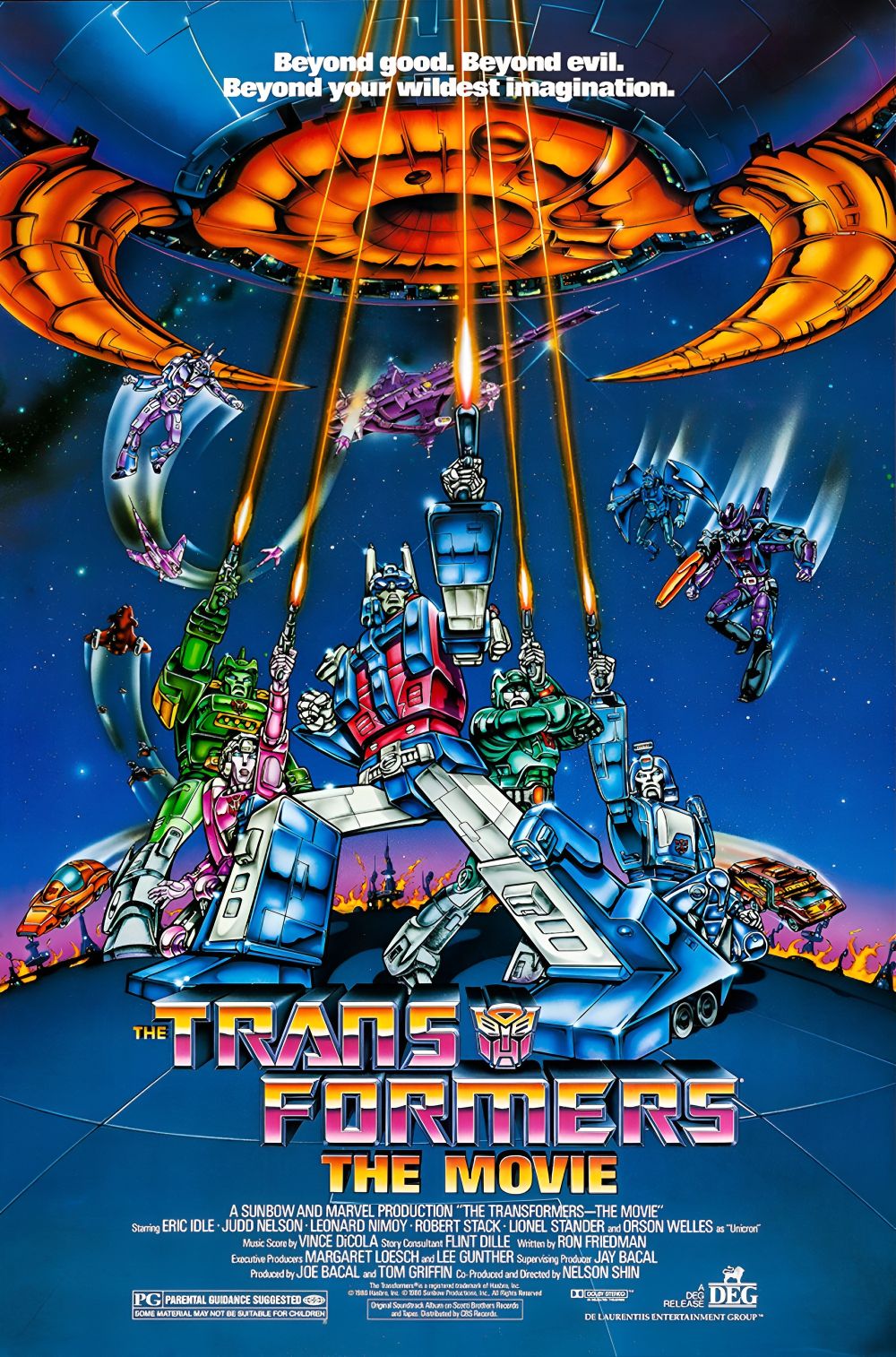
The Transformers: The Movie (dir. by Nelson Shin) Review


“Such heroic nonsense.” — Megatron

The Transformers: The Movie from 1986 was a must-see for me as a 13-year-old boy, but the anticipation of watching it and the actual experience were two entirely different things. The former was filled with excitement, the kind that comes from counting down the days until you finally get to see your favorite characters on the big screen. The latter, however, was something else entirely—a scarring moment that taught me, in the final year before entering high school, that not even afternoon cartoon characters were exempt from onscreen deaths. It was a harsh lesson in the unpredictability of storytelling, and it left an impression that has lasted a lifetime. And I wasn’t alone. The film shocked and scarred millions of children who flocked to theaters or gathered around their VHS players, expecting their beloved Transformers cartoon to simply be bigger and louder on the big screen. Instead, they were met with the brutal, unforgiving reality of watching their favorite characters die in battle, one after another.

The film was released during the height of Transformers mania in the mid-1980s, a time when the toy aisle was dominated by Hasbro’s robotic heroes and villains. But here’s the thing: The Transformers: The Movie wasn’t just about selling toys—it was about replacing them. Hasbro had a new line of Transformers ready to hit the shelves, and the movie served as a way to phase out the older generation of characters. The result? A shockingly brutal narrative that saw many fan-favorite characters meet their end in ways that were far removed from the relatively tame Transformers TV series. This wasn’t just a Saturday morning cartoon stretched to feature length; it was a full-blown sci-fi epic with stakes that felt real, and consequences that were permanent. For kids like me, who grew up watching the TV show, the film was a jarring wake-up call. The deaths of major characters like Ironhide, Prowl, and even Optimus Prime himself were not just unexpected—they were traumatic. It’s no exaggeration to say that The Transformers: The Movie left an entire generation of children with lasting emotional scars, all because it refused to sugarcoat the cost of war.

And yet, that’s exactly why it worked. The film’s willingness to go dark and take risks is what set it apart from so much of the animated fare of the era. The story picks up in the year 2005, with the Autobots and Decepticons still locked in their eternal struggle. The Decepticons, led by the ever-scheming Megatron, launch a full-scale assault on Autobot City on Earth, and the battle that follows is one of the most intense and visually stunning sequences in the film. The animation, while a product of its time, holds up surprisingly well, with vibrant colors and dynamic action that still feels exciting today. But what really sticks with you is the emotional weight of the story. The film doesn’t shy away from showing the cost of war, and the loss of life—even for animated robots—feels genuine. It’s a far cry from the often lighthearted and episodic nature of the TV series, and that contrast is part of what makes the movie so memorable.

At the heart of the film’s emotional impact is Peter Cullen’s iconic performance as Optimus Prime. Cullen’s voice work in the Transformers TV series had already made Optimus Prime a beloved figure, but in the movie, his role takes on an even greater significance. Though his screen time is brief, Cullen’s delivery of Optimus’s final words—“Until that day, ‘till all are one”—is nothing short of legendary. It’s a moment that has been etched into the minds of fans for decades, a testament to Cullen’s ability to convey both strength and vulnerability in a single line. Even now, nearly 40 years later, that scene remains one of the most powerful in the entire Transformers franchise. Cullen’s work helped elevate Optimus Prime from a toy commercial mascot to a genuine hero, and his influence can still be felt in every iteration of the character that has followed.

The film’s legacy is a fascinating study in how a movie can transcend its origins. On paper, The Transformers: The Movie was a 90-minute commercial designed to sell a new wave of toys. But in practice, it became something much more. The bold storytelling choices, the emotional depth, and the sheer audacity of killing off major characters in a children’s animated film ensured that it would be remembered long after the toys it was promoting had been forgotten. For the kids who saw it in theaters or on VHS, the film was often their first exposure to the idea that stories could have real consequences, and that heroes didn’t always make it out alive. It was a formative experience, one that left a lasting impression and helped shape the way a generation of fans engaged with media.

Of course, the film isn’t without its flaws. The pacing can feel uneven at times, and some of the new characters introduced in the movie—like the Dinobots and the Junkions—don’t get as much development as they deserve. The humor, while present, sometimes feels out of place amidst the darker tones of the story. But these quibbles do little to detract from the overall impact of the film. The Transformers: The Movie is a product of its time, but it’s also timeless in the way it handles its themes of sacrifice, leadership, and the cost of war. It’s a film that refuses to be pigeonholed as just a kids’ movie, and that’s part of its enduring appeal.

Today, The Transformers: The Movie holds a special place in the hearts of those who grew up with it. It’s a cult classic, a film that’s celebrated as much for its flaws as for its strengths. For many adults, revisiting the movie is like opening a time capsule, a chance to reconnect with the wide-eyed child they once were, the one who sat in front of the TV or the big screen, completely unprepared for the emotional rollercoaster they were about to experience. The film’s legacy is a testament to the power of storytelling, and to the idea that even something as seemingly commercial as a toy-based animated movie can leave a lasting impact. Whether you’re a lifelong Transformers fan or just someone who appreciates a good underdog story, The Transformers: The Movie is a film that’s well worth revisiting. Just be prepared for a few emotional gut punches along the way.
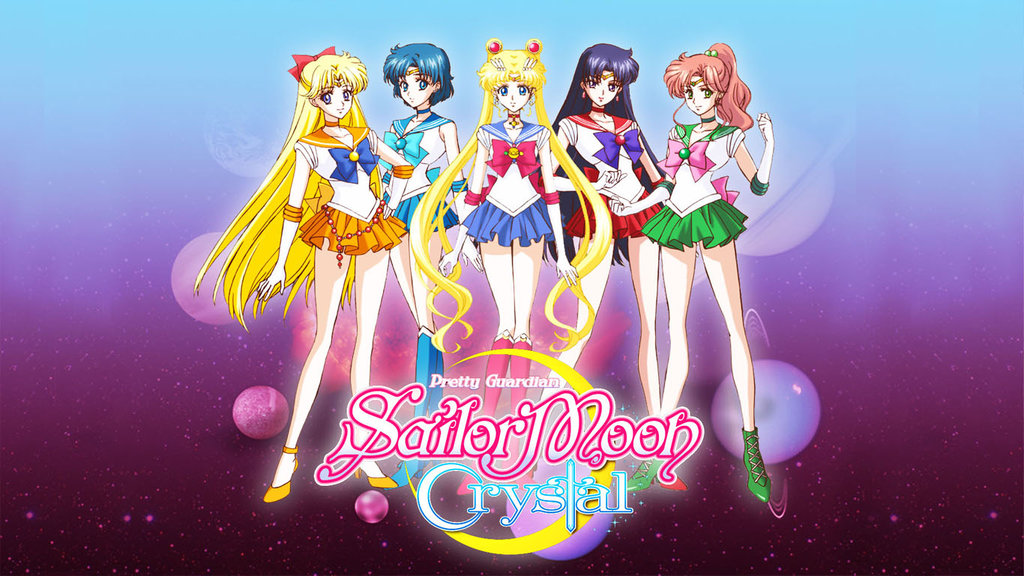
Trailer: Pretty Guardian Sailor Moon Crystal


sailor-moon-crystal

“Mūn Purizumu Pawā, Meikuappu!”

When it was announced in the summer of 2012 that a new Sailor Moon anime series was in production the anime fandom was all a-twitter about the news. Whether one was male or female, Sailor Moon was a major part of the viewing regimen of anime fans young and old.

It’s now two year since that announcement and we finally have the first trailer of the return of Sailor Moon back on the airwaves. The series title will be Pretty Guardian Sailor Moon Crystal, but it will most likely be shortened to just Sailor Moon Crystal to keep it simple. Toei Animation will be the studio doing the animation work while the series will premiere on the network Niconico in Japan while it will also stream on the website streaming service Crunchyroll.

It’s been over 20 years since the original Sailor Moon series went off-the-air and to say it’s back with a brand new season has made anime fans ecstatic (grumblings about the change in animation style notwithstanding) the world over.

Sailor Moon Crystal to premiere on July 5, 2014.

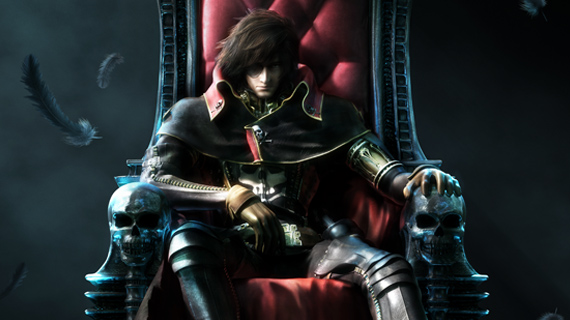
Trailer: Space Pirate Captain Harlock


TAEU_news_harlock_retour_3d

I first saw a clip of this trailer at Anime Expo 2010. It was a just a pilot trailer that TOEI Animation released earlier that year at Kawaii-Kon to show people that they were indeed producing a 3D CG anime film of the classic Leiji Matsumoto space opera manga and anime of the late 70’s. Space Pirate Captain Harlock, in addition to Space Battleship Yamato, were the Japanese answer to George Lucas’ Star Wars (though some would say that these two anime series were original on their own). Still, they were huge hits and very popular both inside and outside Japan. Scores of kids who grew up during the 80’s saw their first major introduction to anime from these two anime.

It’s been awhile since there’s been any new Captain Harlock anime releases. With CG technology having improved exponentially over the years it looks like TOEI Animation saw it high time to release a new Captain Harlock anime. It’s been three years since the release of the pilot trailer over at Kawaii-Kon 2010, but it looks like the wait for the Space Pirate Captain Harlock movie is coming close to an end.

The 3D CG anime film will see a Japanese release sometime in the Fall of 2013.

Here’s an English-narrated trailer that Toei released for the international crowd. I prefer the original Japanese above even if I could only understand a tenth of what was being said.

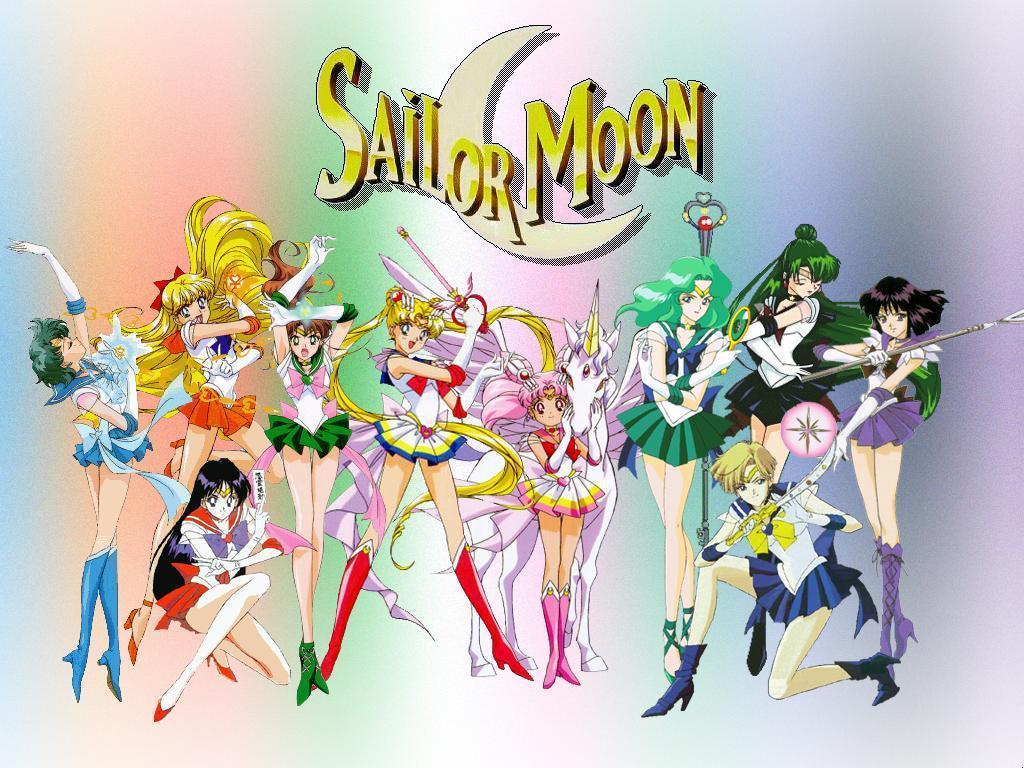
Anime You Should Be Watching: Sailor Moon


With the recent announcement, it’s fitting that the anime being recommended today is of the best known magical girl series in the US, and possibly the world, Sailor Moon.

Sailor Moon is one of those rare anime that can be considered legendary.  Years from now, people will likely have forgotten the latest fanservice filled fluff show (not that there’s anything wrong with them) but consider that it’s been nearly 10 years since Sailor Moon has had any exposure on television, and it’s still one of the most beloved franchises ever.  Sailor Moon, along with Dragon Ball Z, and Gundam Wing, can be credited with really kick starting the anime boom of the late 90’s, early 00’s here in the US.  This was all thanks to Cartoon Network putting them on what was then a prime cartoon block, Toonami.  Unlike the current version of Toonami, which airs in the wee hours and only on Saturday, this block was shown Monday – Friday and during the after school afternoon hours.  Millions would rush home to tune in and watch these crazy “new” cartoons from Japan.  But Sailor Moon had already gotten a foothold in the US.  It wasn’t nearly as successful, but a full 3 years prior to its appearance on Toonami, it had arrived on syndicated broadcast.  Sadly, due in large part to poor time slots, the show didn’t have the success that was hoped.  But that all changed when Turner broadcasting picked up the rights and eventually put it on the Toonami block.  The rest is history.

The show itself wasn’t particularly unique.  The magical girl genre had existed before Sailor Moon, and unfortunately, it didn’t see a major boost after Sailor Moon.  One might think that Sailor Moon was just the right show at the right time, but such a thought would be a great disservice to the story that was crafted by Naoko Takeuchi.  Her story of a young girl growing up from a crybaby to a strong young lady is one that is still enjoyable to this day.  It emphasizes the importance of friendship and teamwork, and the cast of characters is largely so likeable that you can’t help but root for them.  Even some of the villains turn out to be sympathetic characters from certain viewpoints.  The fact that the show got 5 seasons, 200 episodes plus 3 movies a handful of specials and OAVs, a live action show, and 25 musicals, is a testament to its popularity.

Why you should watch:

This is overall just a thrilling series to watch.  Deep down you know that good is going to triumph, that Sailor Moon will come out on top, but when you’re in the moment, sometimes you just don’t know!  A prime example is in the first season.  Normally I try to avoid spoilers in my posts, but this is a 20 year old franchise.  Still, spoilers ahead.  Ready?  I warned you.  Ok, in the climactic battle in the first season, all the Sailor Soldiers except for Sailor Moon herself die.  Don’t worry!  They get better.  Even though the butchered English dub version goes to great lengths to edit their deaths out, somehow you just know that they died.  In the original version, you clearly see their heroic deaths, and it leaves such an impact that it’s a shame it was edited out.  While character deaths aren’t uncommon in anime being broadcast in Japan, it was almost unheard of for a children’s show to have that kind of content here in the US.  That kind of uncertainty leaves you on the edge of your seat.  The battles between the Sailor Soldiers and the villains are just that compelling, and neither side comes across as being much more overpowered than the other.  The cast of characters is large enough to where you can find someone that you want to root for, and someone you can’t help but hate (I’m looking at you, Chibi Usa!).  It runs the whole gamut of emotions, from happiness to sadness and everything in between.  When a show can make you feel something for the characters, especially an animated show, then you know it’s been done right.

Why you shouldn’t watch:

Playing Devils Advocate is difficult for me, because if I say you should watch it, then frankly I don’t see why you wouldn’t want to.  However, this is first and foremost an anime for girls.  And it’s made for younger girls than I’d wager a good amount of our readership is.  The show, especially in the early episodes, spends a decent amount of time with some of our heroines having stars in their eyes, dreaming about boys.  It’s very pink, and it’s very sparkly, and I certainly wouldn’t judge any guys who just can’t stand that much girly stuff. (wimps)  Also, it is 200 episodes long, so this isn’t nearly as tightly written as the manga.  There are a lot of episodes featuring a “monster of the week”, basically a one shot monster that is an underling to the main villians which is there just to be dispatched by our heroines.  The show could easily have been condensed down to 1/3 or so of the episodes and still told the same story.  So the original should only be tackled by those that have a lot of spare time.  200 episodes isn’t something you can tackle in just one sitting.

With the announcement of a new Sailor Moon project, while there’s only speculation at this point, the prevailing thought is a more accurate to the source material version with much of the filler cut out will be in the works.  Much like what Dragon Ball Z did with Dragon Ball Z Kai.  Along with Kodansha releasing the Sailor Moon manga here, this is looking to be a new golden age for Sailor Moon.  Whether or not the new anime will be able to recapture the magic from the first is unknown, but you owe it to yourself to familiarize yourself with the original, and find out just why it was so responsible for a generation of girls and boys becoming anime fans.  And I’ll end this now with a word from our main heroine:

Anime You Should Be Watching

Anime of the Decade


Epic.  Has there ever been a word that has been run into the ground so much that it’s practically lost all meaning?  Pounding a bunch of noobs at Halo isn’t epic.  The meal you just had isn’t epic.  Anything that spawned from 4chan isn’t epic.  Do you know what does deserve the title of epic?  One Piece.  Make no mistake, I’m not saying One Piece is the greatest anime of all time.  However, the sheer scale of the story, and the high level of consistency maintained for 13 years and counting qualify One Piece to confidently call itself epic.

The story revolves around a boy named Monkey D. Luffy who’s goal is to become the King of the Pirates.  But Luffy is no ordinary boy.  He ate a Devil’s Fruit, which grant their users strange powers in exchange for losing the ability to swim or float.  Quite the handicap for someone who wishes to live their lives on the high seas to be sure.  Luffy’s particular fruit was the Gum-Gum fruit, which turns him into a rubberman, allowing his body to stretch to great lengths, and also making him immune to most projectile attacks.  The exception being anything with an edge to it.  So, while he can repel bullets and cannonballs, arrows would prove to be deadly to him.  But, Luffy is the sort who will just charge straight ahead, without fear for his own safety, and unleash all manner of attacks using his unique makeup.

But before you get to thinking that Luffy always kicks ass and takes names, make no mistake, he gets his ass handed to him.  A lot.  But a big part of Luffy’s strength is the fact that he doesn’t let adversity get him down.  He’s very much of the motto “If at first you don’t succeed, punch them even harder the next time!”  Unlike with some shows where the hero has to gain a new superpower to defeat a foe that just beat them, ala Dragon Ball Z, Luffy is often able to just come back and win without needing to rely on such things.  Granted, there are a few times where he has to come out with a whole new move, but it just feels so much more believable and causes you to roll your eyes less than with some other shonen fare like the aforementioned DBZ and Bleach.

Now, becoming the Pirate King is no easy task, and one couldn’t possibly do it all alone.  A lot of the charm of One Piece lies in the cast of characters that Luffy has for a crew.  To avoid any spoilers for anyone who is either just starting or plans to start, I won’t list the entire crew.  Heck, at the point where I’m at in the series, I think there have even been one or two more crew members added in the recent episodes that I don’t know about yet.  So, I’ll limit the crew to his pre-Grand Line bunch.

The first person to join Luffy on his adventures is Roronoa Zoro (some translations call him Zolo since L’s and R’s are interchangeable in Japanese, but Zoro just looks better to me) who is a swordsman that uses three katana when he fights, one in each hand and one in his mouth.

As I said, they don’t always win, and often get their ass handed to them pretty bad.  And this is a kid’s show!  Zoro usually is a fairly cool and collected type who doesn’t let Luffy’s idiotic nature get the best of him, and isn’t phased by many things they encounter no matter how bizarre, although no one is completely immune to Luffy’s nonsense.

The next member to join up with Luffy was Nami.  She was a thief who stole from pirates, although it was for a good reason and was one of my favorite arcs in the series.  She’s also an expert navigator who is capable of reading weather patterns and plotting the safest course through practically anywhere.

Nami has a love for treasure and money in general, and she’ll do most anything to get her hands on it.  However, she’s not much on fighting and will avoid it if it all possible.  After all, hard to spend money when you’re dead!  An interesting bit would be that Nami definitely, ummm, grows throughout the course of the show.  This is a picture of her in an early appearance:

Now compare that to one from later on in the series:

I guess Nami is just a growing girl, and I thank Oda for being the pervert that I assume him to be!

The next one to join the crew is probably my least favorite of them all, Usopp.  Maybe it’s his voice, or perhaps it’s his character design, or maybe I just don’t like his attitude.  Whatever the case, I don’t really care much for him.  Two things to know about Usopp, 1) He’s a liar and 2) he’s a coward.  He makes Nami look downright heroic with the extents he goes to stay out of any danger.  That’s not to say he won’t fight when the chips are down.  Luffy would never allow anyone who actually ran away from their duty on their crew.  Just that whenever he fights, he works best when he can use his lies and his considerable sniping skills.

The last of the crew I’ll mention here is their cook, Sanji.  Sanji can basically be summed up as a guy who just plain tries way too hard to get women.

Unfortunately for him, Nami can smell a chump like that a mile away, so she takes full advantage of it whenever she can.  Despite his obvious weakness for women, Sanji is a very good fighter, using kicks as his weapon as he believes a chef must not harm his hands.  However, he is very chivalrous, in that he refuses to ever kick a lady.  Obviously this is a bit of a handicap at times, as not every opponent they run into are men.  But, barring that, he doesn’t back down from a fight if one is picked with him.

These are the crew members that Luffy takes with him to the Grand Line.  Having only gotten up to episode 356 myself (the anime is at over 450 eps right now) I only know of 4 other crew members that join them after they reach the Grand Line, and that may have increased.  So, for the sake of giving people something to look forward to on their own, I won’t be introducing them.

As one can see, One Piece has a fairly unique character design.  This does take a little getting used to.  I held off on watching One Piece for years because of it, but they do grow on you after awhile.  Sure, the women have impossibly thin waists, and most of them have ridiculously large busts (thank you Oda!), but after awhile it stops bothering you and you are able to enjoy the story being told.  And what a story it is!  I can’t think of another series, anime, manga, or novel, that can run for so long and still be entertaining.  We’re talking 60 volumes, which is well over 400 chapters of material written over a 13 year time span.  For the anime, it’s currently on episode 480 and has been running for 11 years while maintaining consistently high ratings.  If I had to hazard a guess as to it’s lasting popularity, I’d say it’s Luffy’s enthusiasm and simplistic way of living.  He’s not some moody, woe-is-me type, nor is he fighting the forces of evil to save the world.  In fact, if you want to get downright technical, he is one of the forces of evil that is working to destroy the world.  At the core, this is about a pirate going up against the world government.  He may not pillage and kill townsfolk, but evil really is how you view it.  From the standpoint of the Marines, he is a criminal.  But for the countless people who he has helped in his quest to become the Pirate King, he’s a sort of folk hero.

I feel that this is the anime of the decade largely because of its enduring popularity.  It’s by far the highest selling manga of all time in Japan, having sold over 200 million copies.  Additionally, it holds the record for the most copies of a single book sold when volume 60 sold 3.4 million copies in it’s first print run alone, shattering the previous record set by Harry Potter and the Order of the Phoenix.  In 2010, while an exact figure has not been made public, based on volumes sold and standard royalty agreements, it’s estimated that Eiichiro Oda made over $24 million.  That’s in one year, not over his lifetime.  That is an insane amount of money for a manga author.  And the thing is, success hasn’t made him lazy.  In the 13 years he’s been writing it the longest break he took was a 3 week break once, this year, and that was in part to set up the time skip he had planned.  And when you realize that he’s serialized in Weekly Shonen Jump, which as the name implies is a weekly publication, the fact that he’s written chapters nearly every week for 13 years without jumping the shark is quite amazing.  Further, according to Eiichiro Oda, while he does have an ending planned, the manga is only halfway done.  60 compiled volumes, well over 500 chapters, spawning 480 anime episodes, 10 movies, plus various tv specials and it’s only halfway done?

The only word that can properly describe that is epic.