Welcome to Late Night Retro Television Reviews, a feature where we review some of our favorite and least favorite shows of the past! On Saturdays, I will be reviewing Saved By The Bell, which ran on NBC from 1989 to 1993. The entire show is currently streaming on Prime and Tubi!
Screech has the worst friends in the world.
Episode 1.18 “Screech’s Birthday”
(Dir by Don Barnhart, originally aired on November 14th, 1992)
Screech is upset because all of his “friends” (and his robot, Kevin) forgot his birthday. His friends decide to make it up to him by throwing him a small party in Mr. Belding’s office. However, in order to use Belding’s office, they need control of the halls so they come up with an elaborate scheme to get hall monitor Neil (Jesse Wilson) fired so that Screech can take his place. However, Screech takes his job too seriously and sends everyone to detention, including almost everyone who is supposed to be at his party.
Oh my God, what is Zack going to do!?
Zack uses the PA system to ask that Slater, Lisa, Jessie, Kelly, and Screech come to the principal’s office.
Seriously, that’s all he does.
A few thoughts:
First off, the only reason that Zack his available to call everyone to the principal’s office is because Screech doesn’t send him to detention despite the fact that he catches Zack in the hallway without a hall pass. Now, you might think Zack has immunity because he’s Screech’s best friend but Screech previously sent Lisa — the girl he loves — to detention so why would he give Zack a break? Add to that, Screech is mad at Zack for forgetting his birthday. So, I would think Zack would especially be someone that Screech would want to punish.
Secondly, why couldn’t they just throw Screech a surprise party at Zack’s house? Or Slater’s house? Or the Maxx? Or anywhere other than Belding’s office?
Third, this episode does feature two of my favorite supporting characters, Neil the nasty hall monitor and Mr. Dewey (Patrick Thomas O’Brien), the burned out teacher. Sadly, this was Neil’s only appearance.
Fourth, this episode was filmed for the first season and aired in syndication as a part of the first season but, for some reason, NBC didn’t air the episode until the fourth season. It’s really not any worse than the typical Saved By The Bell episode so it’s odd that NBC held off on airing it for so long.
Fifth, always remember your friends’s birthdays. It’s not that hard!
Matthew Perry played the boyfriend of Kirk Cameron’s sister. He drank too much, he crashed his car, and he died. This is one of those very special episodes that one might roll their eyes at, if not for the fact that it guest starred Perry. Because it did guest star Perry, it was very sad to watch.
Homicide: Life On The Street (Peacock)
A review for this episode will be dropping tomorrow.
Kyōryū Sentai Zyuranger (Shout TV)
In this show, from Japan, a group of teenagers used the power of the dinosaurs to defeat a witch. I watched three episodes on Saturday. The stop-motion dinosaurs and tigers were cute.
The Right Time (YouTube)
This was a 90s music show that was hosted by singer Tom Jones. I watched two episodes on Friday. The first one was called “Pop Music” and I enjoyed it. The second one was called “Gospel Music” and it was a little dull.
Saved By The Bell (Tubi)
A review for this episode will be dropping later tonight.
Who’s The Boss (Prime)
On Friday, after Jeff and I finished up The Trip, Amazon took us straight into this Tony Danza-starring sitcom. We watched the first episode, which was pretty forgettable. (Danza is a former baseball player turned housekeeper and no one can believe it.) The theme song kind of got stuck in my head though.
WKRP In Cincinnati (DVD)
Jeff and I watched several episodes of this 70s sitcom over the week. Even if the humor was a bit dated, it was a funny show. Herb Tarlek’s suits were amazing.
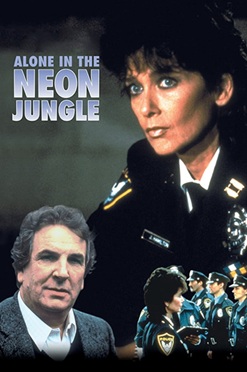
Alone In The Neon Jungle takes place in a Pittsburgh police precinct that is supposedly so crime-ridden that it is called The Sewer. After two cops are arrested while committing a burglary, the Chief of Police (Danny Aiello) sends tough Captain Jane Hamilton (Suzanne Pleshette) to take over the precinct. Her mission? To enforce discipline and root out police corruption!
There’s a lot of corruption to root out. Crime boss Nahid (Tony Shalhoub) has half the precinct on his payroll and corrupt cops like Brad Stafowski (Jon Polito) are quick to to drag new transfers, like Todd Hansen (Jon Tennery), into the rackets. Along with enforcing the dress code and cleaning up the streets, Jane also has to figure out who is responsible for the murder of one of her sergeants.
This made for TV movie was probably meant to be a pilot for a weekly television series. It just has the sort of feel to it. It features just about every cop cliche imaginable, from the weary detective who comes to respect the new boss to the crime lord who claims to be a respectable businessman. The main problem is that the precinct never seems as bad as its described. For a place called The Sewer, the streets are surprisingly clean. The majority of the crimes committed seem to be burglary and prostitution. If you’re a cop and that’s all you have to deal with in a big city like Pittsburgh, count yourself lucky. The precinct never lives up to the title “Neon Jungle” and no one’s ever alone in it.
Suzanne Pleshette does a good enough job in the lead role. By this point in her career, Pleshette’s voice was as deep as the voice of the toughest patrolman around. It worked for her.
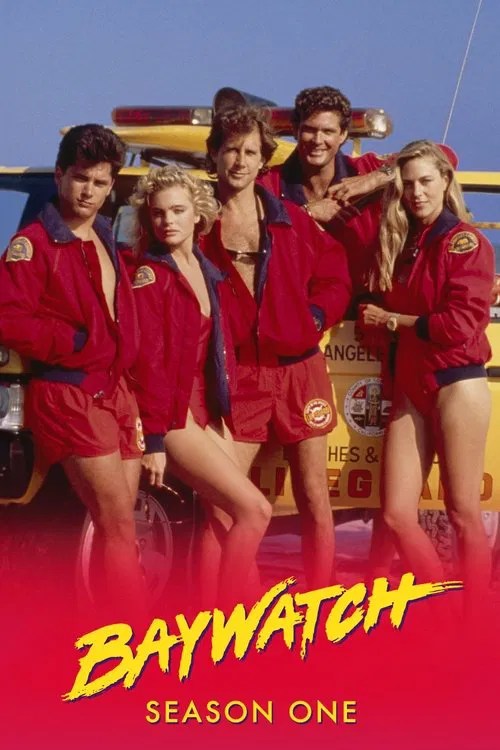
Welcome to Retro Television Reviews, a feature where we review some of our favorite and least favorite shows of the past! On Saturdays, I will be reviewing Baywatch, which ran on NBC and then in syndication from 1989 to 2001. The entire show can be viewed on Tubi.
This week …. oh, who cares? Season one is nearly over.
Episode 1.20 “Old Friends”
(Dir by Douglas Schwartz, originally aired on March 30th, 1990)
Cort is shocked when he thinks he sees his old friend, Lance (Jeff Lester), piloting a boat. But Lance is dead! Nope, it turns out that Lance faked his death and now he wants Cort to help him commit insurance fraud. Cort doesn’t want to do anything of the sort but he is kind of in love with Lance’s sister (Susan Diol).
Oh, who cares? It’s a typical Cort story. Apparently, Cort is some sort of international bad boy, even though he just comes across as being a beach bum. Cort stories are always kind of boring because Cort has never made much sense as a character.
Meanwhile, Mitch, Craig, and Garner go camping. Mitch goes hang gliding. He ends up crashing into a tree and then getting attack by a snake. Craig uses his hang glider to search for Mitch. Craig finds him but his radio breaks down so Garner — who has never hang glided before — decides to use the one remaining hang glider to search for his friends. A gust of wind takes Garner from the mountains to the beach. Eventually, Mitch and Craig are rescued. No one dies. Snake bites aren’t that dangerous, I guess.
This was a weird episode. The first season of Baywatch premiered on NBC. NBC cancelled the show after the first season and this episode definitely feels like a show on its way out. The whole episode looks and feels cheap. There’s a noticeable lack of extras on the beach. The hang gliding scenes are not particularly convincing. Everything about the episode practically shouts, “Nearly bankrupt!” Even Hasselhoff apparently didn’t want to do too much with this episode as he spends almost the entire running time delirious from the snake bite.
This episode had one funny moment. Mitch, losing control of his hang glider, yells into his radio, “Is anyone there!?” Cut to Craig and Garner at the campsite, totally ignoring the radio. I guess it makes sense. Why would a lifeguard pay attention when someone was doing something that could potentially get him killed?
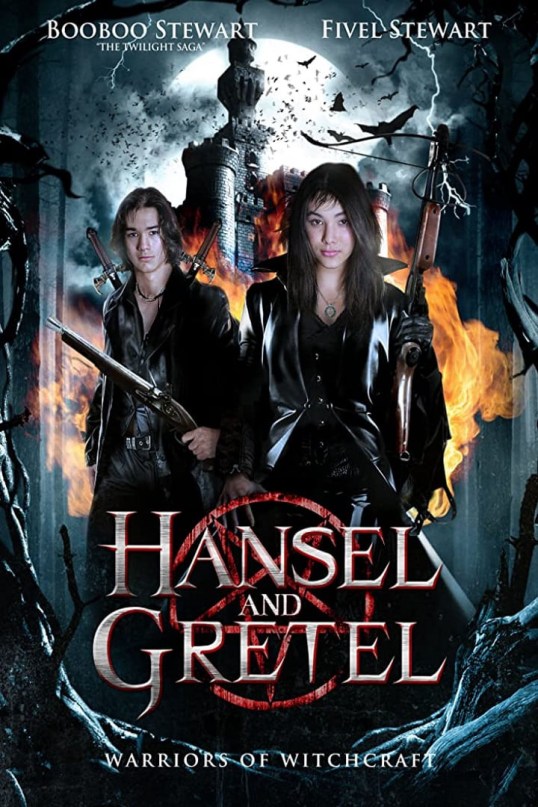
In 2013’s Hansel & Gretel: Warriors of Witchcraft, Ella (Fivel Stewart) and Jonah (Booboo Stewart) are twins who are sent to an exclusive private school. The private school is so exclusive that many of the students are the descendants of former students. If you don’t have the right lineage, you’re not attending this school.
Ella and Jonah soon discover that this isn’t your everyday private school. Instead, the student body is made up of witches and wizards and so are the majority of the teachers. Ella and Jonah also discover that they are being targeted. Can they defeat the other witches and wizards and will their school ever beat Hogwarts at Quidditch?
Now, technically, Hogwarts is never mentioned in this film and no one ever plays Quidditch but it doesn’t take a genius to figure out which insanely popular series of books and films inspired Hansel & Gretel: Warriors of Witchcraft. There are a few references to witches in the woods and children being eaten but this film definitely has more in common with the works of J.K. Rowling than the work of the Brothers Grimm. It’s a fairly silly film but it’s enjoyable enough, if you’re a fan of director David DeCoteau’s unique aesthetic. That means plenty of cheap special effects, a few names in the cast, one scene of gratuitous shirtlessness for Booboo Stewart, and an open-ended conclusion, just in case someone was willing to pay for a sequel.
Eric Roberts plays Mr. Sebastian. He’s the kind-hearted headmaster at the school. He doesn’t appear in many scenes but, as always, it’s nice to see Eric Roberts playing a nice guy for once. At one point, Mr. Sebastian explains what is going on at the school and it doesn’t make the least bit of sense but I guess that’s magic for you.
Previous Eric Roberts Films That We Have Reviewed:
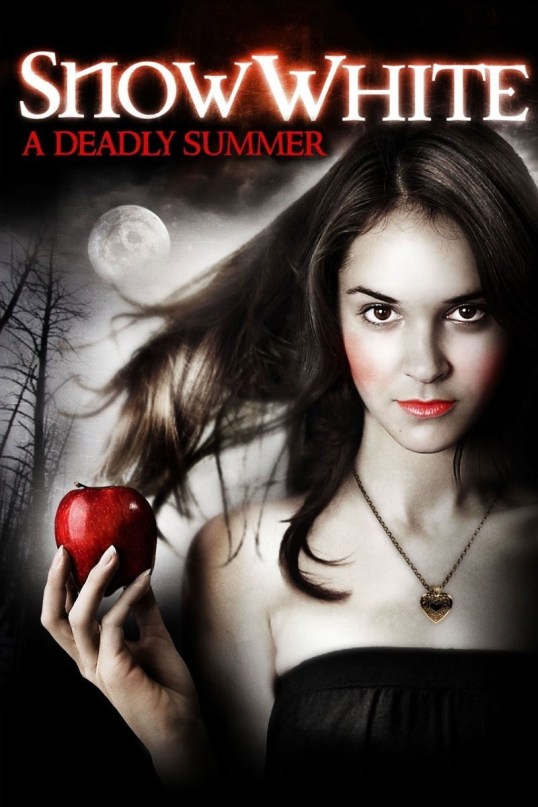
In 2012’s Snow White: A Deadly Summer, Snow (Shanley Caswell) is the teenage daughter of Grant (Eric Roberts). Snow has been acting out ever since her mother died and Grant married Eve (Maureen McCormick). Snow doesn’t feel that Eve loves her father and Eve is incredibly jealous of Snow. In fact, Eve spends a lot of time standing in front of a mirror and talking about how much she doesn’t like her stepdaughter.
One morning, after Eve has convinced Grant that Snow is dangerously out-of-control, Snow is abducted and taken to one of those awful boot camps. It’s the type of place where spoiled teenagers are taught discipline and good conduct. At least, that’s how it advertises itself. In truth, it’s a terrible place in the middle of the woods where the guards are sadists and no one is allowed the least bit of freedom. Eve is planning on having Snow murdered at the camp so that she can have Grant all to herself. Will Snow be able to escape?
Directed by David DeCoteau, this film doesn’t really have as much to do with Snow White as you might expect from the title. Yes, Eve spends a lot of time talking in front of the mirror but the mirror itself never talks back. That said, it’s actually a pretty entertaining film. Casting Maureen McCormick as the Wicked Stepmother is a brilliant move and McCormick seems to really get into playing a villain. (At times, she seems to be channeling Florence Henderson.) Even more importantly, the film exposes the whole boot camp racket. I can remember the old talk shows where out-of-control teens would be sent to “boot camp.” The audience would always go crazy whenever the “drill sergeants” started yelling at the teens but, to me, it always seemed like being sent to one of those boot camps would actually make someone ever angrier than they were before. That would certainly be true in my case.
I know what you’re saying, though. “Lisa Marie, what about Eric Roberts?” It’s interesting to see Eric Roberts playing a generally likable and sympathetic character here. He gets to do a bit more than he usually does in films like this and he give a good performance. You really worry about what’s going to happen to him when Maureen McCormick has him to herself.
The film ends with a nice little twist, though it’s probably one that you’ll see coming. That said, this is still one of David DeCoteau’s better films.
Previous Eric Roberts Films That We Have Reviewed:
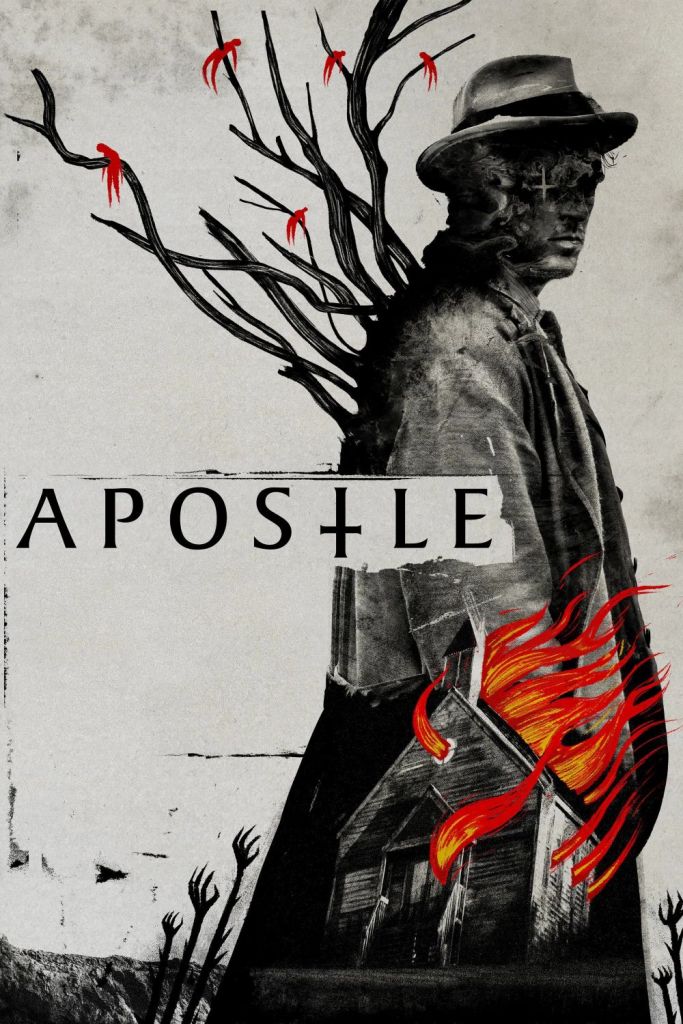
Apostle is one of those films that feels like Gareth Evans deliberately swerved away from the kinetic precision of The Raid and The Raid 2, as if to test whether he could still dominate the screen without back‑to‑back martial‑arts set pieces. The result is not a clean crowd‑pleaser, but a grim, blood‑soaked folk‑horror descent that trades velocity for dread, atmosphere, and the slow peeling away of civilized surfaces until what’s left is pure cruelty. It’s ambitious, dense, and at times unwieldy, but it is never the kind of hollow, algorithm‑friendly Netflix original that feels assembled by committee. The film leans into a slow‑burn approach, letting its cult setting and religious unease simmer before it erupts into something truly grotesque.
Set in 1905, Apostle follows Thomas Richardson, played by Dan Stevens with the exact right mix of haunted intensity and bruised arrogance, as he infiltrates a remote island cult to rescue his kidnapped sister. That setup sounds straightforward enough, but Evans uses it as a trapdoor into a much uglier story about faith, coercion, exploitation, and the grotesque systems people build when belief curdles into power. The cult is not merely spooky window dressing; it’s a functioning social organism with labor, hierarchy, punishment, and ritual, which gives the film a more grounded menace than a simple haunted‑house scenario. The island’s wrongness is not just in its rituals, but in the way ordinary domestic life has been turned into a kind of ongoing penance.
What makes Apostle compelling is how patiently Evans allows the island to breathe before he starts tearing it apart. The first half is almost methodical in the way it maps the place: the political tension within the cult, the uneasy alliances, the daily routines, the controlled scarcity, and the sense that every face hides some compromise. That slow construction is crucial, because once the film starts revealing what the island is actually built on, the horror lands with more force. It does not chase jump scares; it lets the audience sit inside the wrongness until the wrongness starts to feel inevitable. The film’s real horror is in the way it treats belief as a system of control rather than a source of comfort.
Michael Sheen is the other major pillar here, and he gives the film a wickedly slippery center as Malcolm, the island’s charismatic prophet. Sheen plays him as part messiah, part salesman, part exhausted tyrant, which is exactly the right tone for a character whose authority depends on performance. He isn’t merely loud or theatrical; he’s persuasive, and that is much scarier. The film understands that the most dangerous religious figures are often not the ones who snarl the loudest, but the ones who can make oppression sound like purpose. Dan Stevens plays beautifully against that energy, keeping Thomas in a state of wary observation until desperation forces him into action. The two actors give the movie a dramatic spine sturdy enough to support all the blood and theology around them.
Evans’ direction is, unsurprisingly, the film’s great technical asset. Even when Apostle feels overloaded, it never feels careless. He stages the island as an environment of mud, wood, fog, and decay, and his eye for spatial clarity keeps the film legible even when the narrative starts layering on secrets and hidden machinery. If The Raid was about velocity and geometry, Apostle is about pressure and contamination. The violence, when it arrives, still carries the director’s unmistakable talent for framing brutality on screen: every blow lands with a clarity and weight that makes the gore feel integral rather than gratuitous. But in Apostle he deftly dips his filmmaking talents into the world of gothic folk horror, slotting his sensibility alongside classics like The Wicker Man, Witchfinder General, and The Witch. The island’s rituals, its mix of agrarian dread and religious paranoia, and its sense of a sealed community preparing for a bloody reckoning all echo those earlier works, while Evans colors them in his own grimy palette.
There’s also something interesting about how the film handles world‑building. It is overstuffed, yes, but it is overstuffed in a way that feels earned rather than random. The island has systems, factions, and ugly little bureaucracies of suffering, and the film keeps revealing new layers of control and corruption until the whole place feels like a machine designed to consume bodies and faith at the same time. Some viewers will see that density as a flaw, and they’re not entirely wrong; Apostle can feel a little overextended, as if Evans has too many ideas he wants to wring out of the same pressure cooker. But it could also be argued that the excess is part of the film’s personality. It’s not elegant horror. It’s horrified by its own abundance.
Thematically, Apostle works best when it treats religion not as a decorative taboo, but as a field of contesting desires. The film isn’t interested in simple anti‑faith provocation. Instead, it examines what happens when belief becomes a resource to be managed, weaponized, and monetized. The cult claims to reject corruption from the outside world, but its inner life is every bit as predatory, which makes the island feel less like an isolated aberration and more like a compressed version of the larger world Thomas came from. That’s one of the movie’s smartest ideas: the mainland and the island are different expressions of the same rot. The difference is only one of scale and visibility.
As a horror film, Apostle is strongest when it is patient and weakest when it has to juggle too many moving parts at once. The final stretch escalates into an effectively feral confrontation, but the movie occasionally risks losing the eerie precision of its setup in favor of sheer attritional chaos. Still, even that chaos has a purpose. Evans is not just trying to shock; he’s trying to show what happens when systems of belief collapse under the weight of their own lies. The result is messy, unpleasant, and often very good. It is also one of the more distinctive Netflix originals of its era, precisely because it refuses to be easy or tidy.
Apostle feels like a filmmaker known for kinetic precision making a movie about spiritual and social collapse, and the contradiction works in its favor. Even as he steps into the domain of gothic folk horror, Evans never loses his gift for filming violence or his sense of where the camera should sit in relation to pain. It has the rough edges of an ambitious film reaching for too much, but those edges are part of what makes it memorable. Part of the reason the film is underappreciated as quietly as it is may be that it arrived with a reputation attached: if Evans did not already have a name as a master of action filmmaking, Apostle might be celebrated more openly as a standalone horror achievement. Sometimes moving out of one’s comfort zone and still succeeding is exactly what gets held back by one’s reputation for what they’re “supposed” to be good at.
Between the bleak atmosphere, the commanding performances, the grim folk‑horror imagery, and Evans’ refusal to soften the ugliness of his subject, Apostle stands as a smart, vicious, and unusually committed piece of genre filmmaking. It may not be the Gareth Evans movie action fans expected, but it is very much the one horror fans deserved.
1983’s Star 80 features one of Eric Roberts’s best and most disturbing performances. On the one hand, it’s the film that proved Roberts’s talent. On the other hand, it’s a film in which he does such a good job bringing the repellent Paul Snider to life that he reportedly struggled to convince casting agents that he could characters who weren’t shady and/or mentally unstable.
In this scene, Roberts-as-Snider gets his look down. Snider, a man who has no real identity beyond his desire to be somebody, tries to disguise his emptiness through the right haircut and the right clothes.
I’ve been a fan of James Woods going back to the last half of the 1980’s. As a person who practically lived at the video store in the late 80’s, that period of time was a particularly strong time in Woods’ career and he had emerged as one of those actors whose body of work I wanted to see. With classics already to his name, such as ONCE UPON A TIME IN AMERICA, and having just received his first Oscar nomination for Oliver Stone’s SALVADOR, Woods was doing excellent work in both films and TV.
In 1986, the same year of his Oscar nomination, James Woods won the Primetime Emmy for outstanding lead in a miniseries for his role as a schizophrenic in the film THE PROMISE, which also starred James Garner. Interestingly, he would win the same award 3 years later when he played the founder of Alcoholics Anonymous in MY NAME IS BILL W, again costarring James Garner. James Woods has always spoken so highly of Garner and their work together. That time also found Woods bringing his incredible on-screen intensity to films like BEST SELLER, COP, and TRUE BELIEVER. Each of these films showcase Woods at his very best. These were the kinds of films I was looking for at that time in my life, and that great work turned me into a lifelong fan.
The 90’s saw Woods transition from lead actor in films like THE HARD WAY and DIGGSTOWN (two personal favorites) to supporting roles in films like THE GETAWAY, THE SPECIALIST (co-starring Lisa’s hero Eric Roberts) and CASINO. He was still consistently incredible in these roles, no matter the size of the role or the quality of the film. He received his 2nd Oscar nomination for playing the horrific racist Byron De La Beckwith in Rob Reiner’s GHOSTS OF MISSISSIPPI. His performance is pure evil personified on screen. A couple of years later, Woods would play Hades in the Disney film HERCULES, an experience he treasured personally. Some of his best work in the 90’s was again on TV, with the film INDICTMENT: THE MCMARTIN TRIAL being a real standout. Woods was great at portraying lawyers on screen and this is some of his best work!
One of the coolest things about James Woods to me is the kindness he has shown me on social media in recent years. I have asked him questions about his movies and what it was like working with certain co-stars, and he has taken the time to answer them directly. He has commented on my film reviews of his work, even sharing them out with his millions of followers on multiple occasions. In my wildest dreams, 15 year old Brad could not have imagined an actor of the quality and success of James Woods taking time out to show me appreciation for simply enjoying his incredible work.
Happy Birthday Mr. Woods! Thanks for sharing your talents with all of us and showing that you actually appreciate your fans!