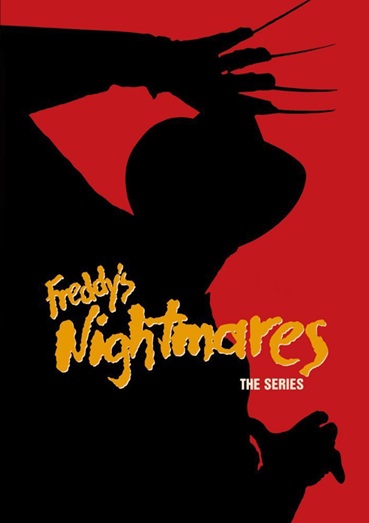
Welcome to Late Night Retro Television Reviews, a feature where we review some of our favorite and least favorite shows of the past! On Fridays, I will be reviewing Freddy’s Nightmares, a horror anthology show which ran in syndication from 1988 to 1990. The entire series can be found on Tubi!
This week, Freddy has a message!
Episode 2.9 “Monkey Dreams”
(Dir by Robert Englund, originally aired on December 3rd, 1989)
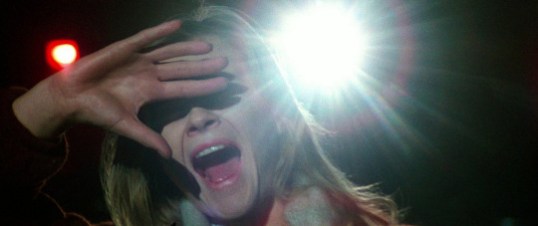
At a college science lab, Joe (Joseph Cali) tries to communicate with aliens. Next door, Jeannie (Sharon Mahoney) tries to teach her monkey to speak. When Joe starts getting strange messages on his computer, he thinks that it’s an alien code. Then it turns out that it’s actually just the monkey trying to type out its name on its own computer. Joe is then murdered by his bookie.
Meanwhile, Dr. Lynch (Sherman Howard) is using the monkey for some experiments to see how much pain a living creature can take. Dr. Lynch seems to change his mind when he hears the monkey speak. But it turns out that we were just seeing the monkey’s dream.
“Think about it!” Freddy tells us.
Freddy Krueger, animal rights activist? I guess it makes sense when you consider that Robert Englund directed this episode. The episode’s message was heartfelt but it seemed a bit out-of-place on a show about a undead child molester. Whatever message you want to deliver, Freddy Krueger probably isn’t the best one to do it.
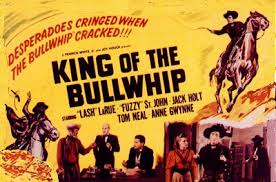
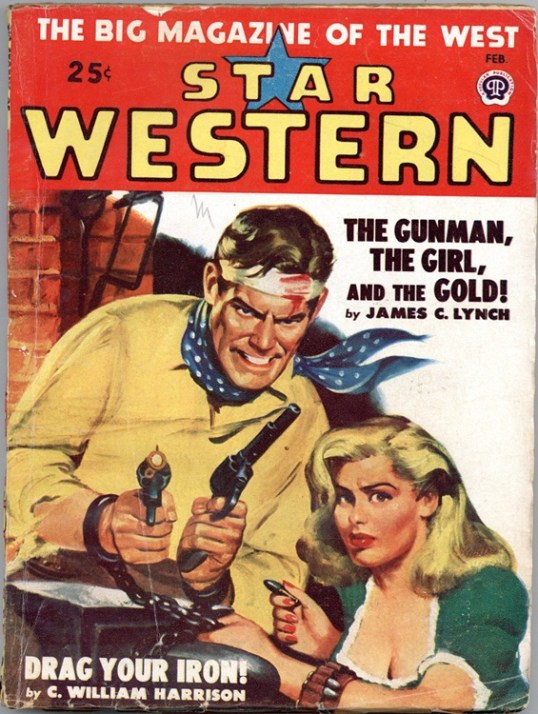
Tioga City has a problem. A masked outlaw known as El Azote keeps holding up James Kerrigan’s (Jack Holt) bank. Because El Azote carries a bullwhip, the case is assigned to Marshal Lash LaRue (Humphrey Bogart lookalike Lash La Rue) and his loyal sidekick, Fuzzy Q. Jones (Al St. John). Lash also always carries a bullwhip and because no one in town knows that Lash is actually a marshal, they all assume that he must be El Azote. Shady bar owner Benson (Tom Neal) offers to make a deal with Lash and Fuzzy but then he betrays them the first chance that he gets.
This is one of Lash La Rue’s better movies, which may sound like faint praise when you consider the quality of the typical La Rue film but this is actually a fairly engrossing production. Running under an hour, this Poverty Row western tells its story quickly and it ends with a genuinely exciting bullwhip battle. La Rue may not have been the best actor amongst the B-western stars of the era but he knew how to whip it and to whip it good.
The main attraction here is Tom Neal, playing another shady character. Tom Neal was a tough character both off-screen and on and he brings an authentic edginess to his character, one that was missing from most Poverty Row westerns. Tom Neal is best-known for starring in Detour. A former amateur boxer who hung out with gangsters and dated their girlfriends, Neal was an up-and-coming star until one day in 1951, when he beat up actor Franchot Tone so severely that Tone spent weeks in the hospital with a concussion. Neal’s career never recovered from the notoriety and he quit acting to become a landscaper. In 1965, he was back in the headlines after he was charged with murdering his wife. Convicted of involuntary manslaughter, he served six years in prison and died shortly after he was paroled. He was 58 years old.
Finally, King of the Bullwhip was directed by Ron Ormond, who will always be best known for films such as Mesa Of Lost Women and the infamous If Footmen Tire You, What Will Horses Do? It takes all types to make a B-western.
Welcome to Retro Television Reviews, a feature where we review some of our favorite and least favorite shows of the past! On Fridays, I will be reviewing St. Elsewhere, a medical show which ran on NBC from 1982 to 1988. The show can be found on Daily Motion.
This week, things continue to be awkward in Boston.
Episode 3.16 “Saving Face”
(Dir by Charles Braverman, originally aired on January 16th, 1985)
This episode of St. Elsewhere was even busier than usual.
Tough-as-nails Dr. Mary Woodley (Karen Austin) has been hired to oversee the ER. Dr. Fiscus isn’t happy about it. He’s going to have to work for a woman? Agck!
Dr. Cavanero is also not happy. Of course, the last time that St. Eligius hired a new female doctor, Cavanero told everyone at the hospital that she was a lesbian and, for some reason, this led to the doctor having to leave town. (It was the 80s.) Maybe, just maybe, there are reasons to have doubts about Cavanero’s professionalism.
Dr. Westphall shows Dr. Woodley around the hospital and, as usual, comes across as being the saddest man on the planet.
Dr. Westphall informs Jack that he will be allowed to continue on as a resident. However, Westphall also rather glumly states that he will be watching Jack from now on. Jack better not screw up or Westphall will “come down” on him. Personally, I think Westphall is too depressed to really do much of anything.
Feeling guilty about Murray’s death, Elliott brings Mrs. Hufnagle a ham. Mrs. Hufnagle has an allergic reaction and ends up back in the hospital. “She thinks I tried to kill her!” Elliott says.
A teenager (Tim Van Patten) brings in his pregnant girlfriend, who has OD’d. Dr. Woodley says she is required to call family services. Myself, I started shouting, “I am da futah!” as soon as Tim “Stegman” Van Patten showed up on the screen.
Dr. Caldwell performs extensive plastic surgery on a disfigured young woman. When Dr. Ehrlich says that the patient looks like she got hit with the “ugly stick,” Caldwell kicks Ehrlich off his team.
Nobody wants to work with Ehrlich! Dr. Craig declines to invite Ehrlich to his 34 year anniversary party. Cavanero agrees to take Ehrlich as her date. “What are you doing here!?” Craig snaps as soon as he sees Ehrlich in his living room.
Dr. Craig’s younger brother, William (Lou Richards), also shows up. He was invited at Ellen’s insistence, despite the fact that William and Mark haven’t spoken in over four years. Mark feels that William has wasted his life and his potential. But when William proves to be the life of the party, it becomes apparent that Mark is actually jealous of how likable his younger brother is.
In the kitchen, Mark and William have a long conversation. William admits that he’s struggling to pay the bills. Mark writes him a check. For a few minutes, the brothers actually reconcile.
However, Mark later hears William joking about how much money surgeon’s make and he loses his temper. In front of the entire party, he calls out William and reveals that he doesn’t have a dime to his name.
That night, after everyone else has left and William has gone to the guest room, Ellen tells Mark that he should apologize. Mark agrees and says he’ll do it in the morning.
Later, during the night, Mark steps out of his bedroom and discovers that William has gone home. He left behind the check, which he ripped in half. Mark stares at the check and starts to cry.
This was another episode that did a good job balancing the serious and the humorous. Dr. Ehrlich’s inability to say the right thing will never not be funny. For that matter, the same can be said of Dr. Craig’s general irritation with everything. And yet, seeing Dr. Craig break down and cry was truly heartbreaking. Dr. Craig and Dr. Ehrlich share an inability to socialize and a habit of screwing up even the kindest of gestures. Even when they try to do the right thing, they somehow always manage to screw it up.
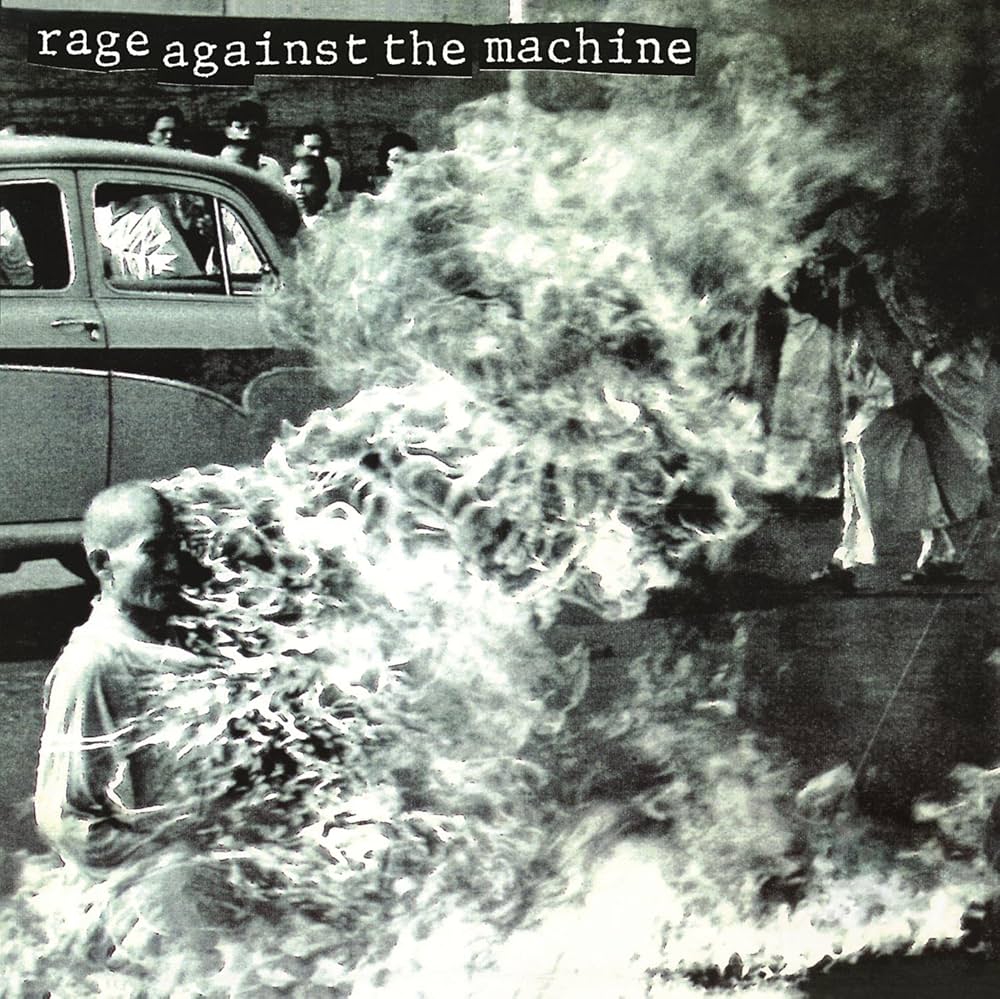
Rage Against the Machine’s “Know Your Enemy” from their self-titled debut album is basically the band’s mission statement turned into a grenade. From the opening riffs, it’s all tension and rebellion — Zack de la Rocha warning you that conformity isn’t accidental. The way the track builds is pure RATM: pounding drums from Brad Wilk, Tim Commerford’s bass grinding underneath, and Tom Morello teasing distortion like he’s revving an engine that’s about to explode. If “Bulls on Parade” was about militarism meeting consumerism, “Know Your Enemy” feels like its philosophical origin — the moment the band first decided to flip the system the finger.
There’s something timeless about how direct Zack’s lyrics are. He’s not dressing it up or hiding behind metaphor. Instead, he’s confronting the listener with raw contradictions — America’s promise versus its reality. It’s one of those songs that sounds angrier the more you listen to it, especially when you start catching the subtler digs at political hypocrisy. And when Maynard James Keenan from Tool shows up for a brief vocal cameo in the bridge section, it turns into a call-and-response of defiance — like a friend lending backup in a street fight. Much like how Neil Young’s “Southern Man” has found renewed resonance in today’s social and political atmosphere, Rage Against the Machine has never really lost its relevancy since its release — if anything, time has only magnified what they were shouting about.
Then comes the real highlight: Tom Morello’s solo at around 3:52. It’s one of those moments that remind you why guitarists worldwide still study every flick of his wrist. He doesn’t just shred — he makes the guitar squeal, squeak, and snarl, using those killswitch stutters and wah pedal manipulations that became his signature. It’s funky but chaotic, calculated but wild — exactly what the song’s message is about: controlled rebellion. You can hear him bending sound itself to match Zack’s rage, turning pure technique into expression.
As a companion to “Bulls on Parade,”“Know Your Enemy” is Rage in its rawest form — the blueprint before the refinement. It’s less groove-driven and more ideological, but the fire’s the same. If “Bulls on Parade” is the anthem you blast while staring down the machine, “Know Your Enemy” is what you play while figuring out how it works — and how to dismantle it. Listen to them back-to-back and you’ll hear the evolution of rebellion itself, one riff at a time.
Know Your Enemy
Huh Yeah, we’re comin’ back in with another bombtrack Think ya know it’s all of that, huh Ayo, so check this out, yeah
Know your enemy Come on
Born with insight and a raised fist A witness to the slit wrist As we move into ’92 Still in a room without a view Ya got to know, ya got to know That when I say go, go, go Amp up and amplify, defy I’m a brother with a furious mind Action must be taken We don’t need the key, we’ll break in Something must be done About vengeance, a badge and a gun ‘Cause I’ll rip the mic, rip the stage, rip the system I was born to rage against ’em Fist in ya face in the place and I’ll drop the style clearly Know your enemy
Know your enemy Yeah Ayo, get with this, ugh
Word is born Fight the war, fuck the norm Now I got no patience So sick of complacence With the D, the E, the F, the I, the A, the N, the C, the E Mind of a revolutionary, so clear the lane The finger to the land of the chains What? The “land of the free”? Whoever told you that is your enemy Now something must be done About vengeance, a badge, and a gun ‘Cause I’ll rip the mic, rip the stage, rip the system I was born to rage against ’em Now action must be taken We don’t need the key, we’ll break in
I’ve got no patience now So sick of complacence now I’ve got no patience now So sick of complacence now Sick of, sick of, sick of, sick of you Time has come to pay
Know your enemy
(guitar solo @3:52)
Come on Yes, I know my enemies They’re the teachers who taught me to fight me Compromise, conformity Assimilation, submission Ignorance, hypocrisy Brutality, the elite All of which are American dreams All of which are American dreams All of which are American dreams All of which are American dreams All of which are American dreams All of which are American dreams All of which are American dreams All of which are American dreams
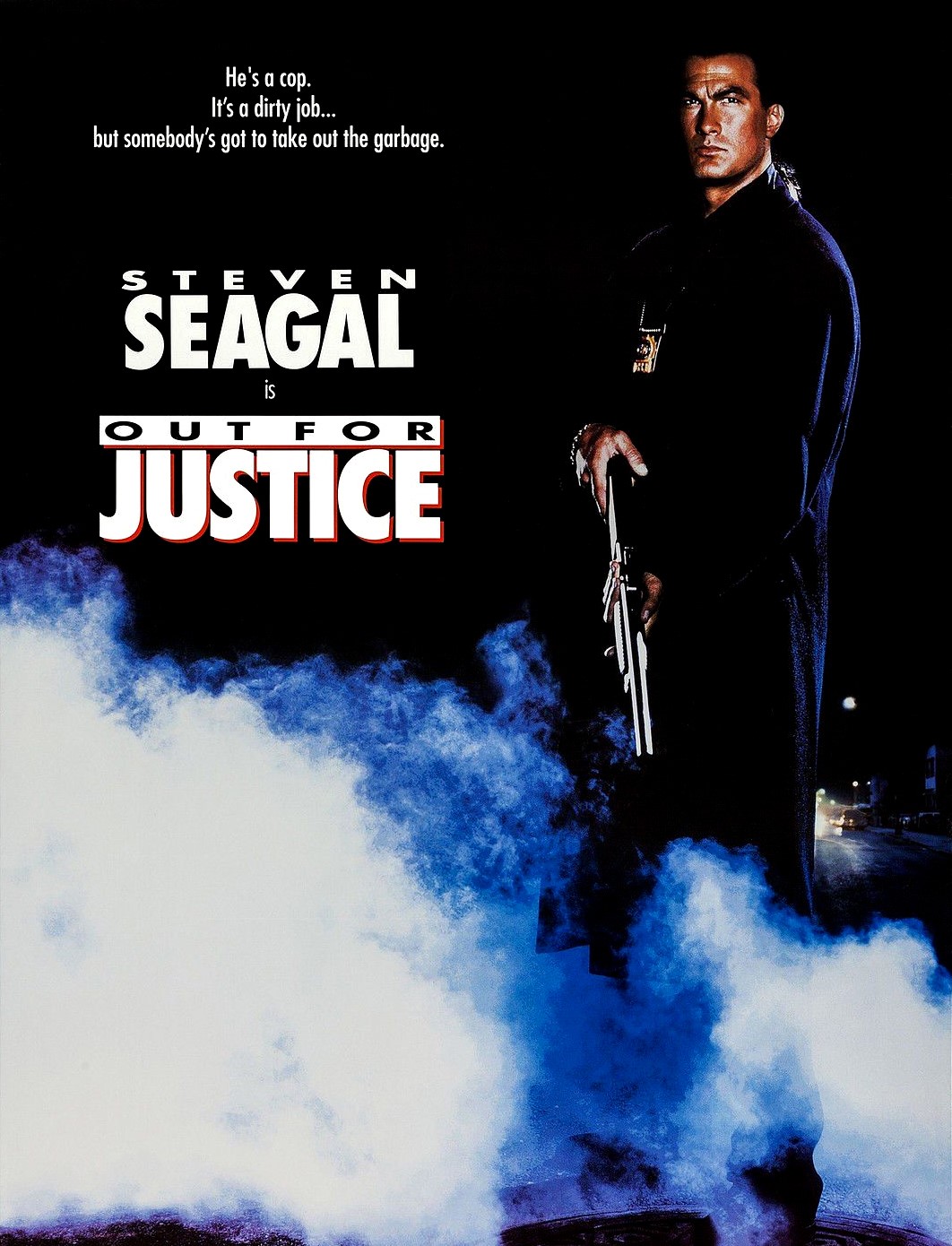
Out for Justice is the kind of movie that leans so heavily on its star’s ridiculous swagger that it stops being merely bad and ridiculous and becomes entertaining in a “can’t‑look‑away from the car‑crash” sort of way. It’s not a polished or especially sophisticated action film, but it has a rough, gleefully over‑the‑top energy that makes it a perfect guilty pleasure, the kind of early ’90s action crime movie that works less because of craft and more because of attitude, bruises, and sheer confidence.
At its core, Out for Justice is a revenge story so simple it barely bothers pretending to be anything else. Steven Seagal plays Gino Felino, a Brooklyn cop chasing the man responsible for his partner’s death, and the plot mostly functions as a chain of excuses to send him from one grimy neighborhood stop to the next, collecting broken noses and wounded pride along the way. That stripped‑down structure is part of the movie’s charm, because there’s no attempt to dress it up with complicated twists or emotional depth; it’s all forward momentum, all hard stares, all macho problem‑solving by fist and elbow.
One of the things that gives Out for Justice its off‑kilter charm is how every actor in the cast seems to have read the script as an invitation to extremes. Performances swing violently between scenery‑chewing over‑the‑top theatrics and barely‑there, almost sleepwalking subtlety, with almost nothing in the middle. Either you’re shouting, staring down suspects inches from their faces, or you’re slouched in the background mugging in silence. It shouldn’t work, but the sheer imbalance in energy somehow makes the film feel like a live wire instead of a flat ’90s programmer.
Nowhere is that more obvious than with William Forsythe’s villain, Richie Madano, who plays the role so far “out there” that it’s hard not to wonder if he was actually on a lot of coke like the character was written to be. He leans into every sneer, every twitch, and every unhinged stare until he starts to look less like a character and more like a walking drug‑induced nightmare. There’s a manic, unpredictable edge to his performance that makes him feel genuinely dangerous, even when the dialogue around him is pure tough‑guy parody. It’s a kind of commitment that could easily tip into self‑parody, but Forsythe owns it so completely that he ends up grounding the film’s madness instead of derailing it.
What really makes Out for Justice memorable is how fully it leans into Seagal’s absurd screen persona. He’s at his best here when he’s acting like a man who believes every room belongs to him, and that attitude gives the movie a weird, shameless energy that a lot of his later work lacked. Even when the dialogue is clunky or the Brooklyn swagger feels more imagined than lived‑in, Seagal’s self‑serious delivery turns the whole thing into a performance art piece of tough‑guy certainty. The film is unintentionally funny at times, but that only adds to the appeal, because it makes the movie feel even more like a relic from a time when action stars could be gloriously excessive without irony.
The action is the main draw, and this is where Out for Justice earns most of its reputation. The fights have that satisfying, bone‑crunching roughness that makes the violence feel tangible instead of slick, and the movie keeps finding excuses to escalate from intimidation to outright brutality. Seagal’s style here is less flashy than some of his contemporaries, but that works in the film’s favor because the choreography has a mean, close‑quarters edge to it. The result is a movie that often feels like it’s trying to win by sheer stubbornness, and honestly, that suits it perfectly.
There’s also a strong sleaze factor running through the whole thing, and that’s another reason it works as a “bad but good” movie. The neighborhoods feel dirty, the criminals are exaggerated to the point of cartoonish menace, and the film’s idea of atmosphere is basically to keep everything sweaty, smoky, and angry. Forsythe’s villain, in particular, leans so extravagantly into that sleaze that he ends up giving the film a properly nasty center. A lot of the supporting characters are basically there to be insulted, questioned, or thrown into a wall, but the movie gets enough mileage out of that rhythm that it never really becomes boring.
Still, there’s no reason to pretend Out for Justice is secretly elegant. The script is thin, the character work is mostly functional, and the movie often feels like it was assembled to move from one confrontation to the next as efficiently as possible. Some of the scenes drag, and the film’s macho posturing can wear thin if you’re not already in the mood for this kind of energy. It also has that peculiar Seagal‑era problem where the movie wants him to be a street‑level man of the people, but the character sometimes comes across more like a self‑mythologizing neighborhood warlord than an actual human being. That disconnect is part of the fun, but it is still a disconnect.
What keeps Out for Justice from becoming a throwaway is the confidence behind the nonsense. It feels like a movie made by people who believed that attitude could substitute for sophistication, and in this case, they were mostly right. The pacing may be uneven, the story may be paper‑thin, and the acting may veer into laughable territory, but the movie never loses its nerve, and that gives it a strange kind of integrity. It doesn’t apologize for being dumb, and that unashamed commitment is exactly why it has aged into cult‑status entertainment instead of disappearing into the pile of generic action forgettables.
That’s why Out for Justice works so well as a guilty pleasure. It’s violent, ridiculous, and very much stuck in its own macho time capsule, but those flaws are inseparable from the appeal. The movie’s “bad but good” vibe comes from the way it accidentally becomes bigger and funnier than it likely intended, while still delivering enough real action‑movie satisfaction to justify the ride. It’s the kind of film that invites eye‑rolling and cheers in almost equal measure, and that balancing act is what makes it such a durable little cult object.
In the end, Out for Justice is not a masterpiece, and it doesn’t need to be. It’s a bruised, swaggering, over‑confident slab of early ’90s action cheese that knows how to sell its own nonsense with just enough force to make it lovable. To borrow from film reactor EOM Reacts (who is hilarious, by the way), “This whole movie screams cocaine.” If you want clean storytelling or nuanced performances, it will probably frustrate you. If you want a hard‑edged, trashy, surprisingly watchable Seagal vehicle that embodies the “bad it’s good” spirit—including a cast that either chews every morsel of the scenery or fades into the wallpaper—Out for Justice hits the mark.
Also, be on the look out for a quick cameo of Kane Hodder (who played Jason Voorhees for many of the franchise’s many sequels) as a gang member and for Dan Inosanto (teacher to Bruce Lee and Chuck Norris) as a character named “Sticks.”
As some of our regular readers undoubtedly know, I am involved in a few weekly watch parties. On Twitter, I host #FridayNightFlix every Friday and I co-host #ScarySocial on Saturday. On Mastodon, I am one of the five hosts of #MondayActionMovie! Every week, we get together. We watch a movie. We tweet our way through it.
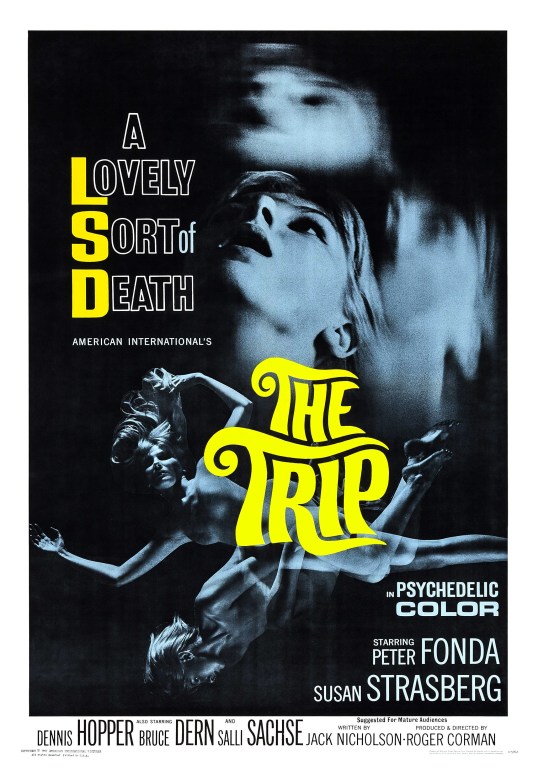
Tonight, at 10 pm et, I will be hosting #FridayNightFlix! The movie? 1967s The Trip!
If you want to join us this Friday, just hop onto twitter, find The Trip on Prime, start the movie at 10 pm et, and use the #FridayNightFlix hashtag! I’ll be there happily tweeting. It’s a friendly group and welcoming of newcomers so don’t be shy.
4 Or More Shots From 4 Or More Films is just what it says it is, 4 shots from 4 of our favorite films. As opposed to the reviews and recaps that we usually post, 4 Shots From 4 Films lets the visuals do the talking!
Today, we pay tribute to the year 1982 with….
4 Shots From 4 1982 Films
The House By The Cemetery (1982, dir by Lucio Fulci)
The New York Ripper (1982, dir by Lucio Fulci)
Friday the 13th Part II (1981, dir by Steve Miner)
Love him or hate him, no one better epitomized an era than David Lee Roth. There’s no one else like him and regardless of how he may sound or look now, he was one of the greatest frontmen in the history of rock and roll.
There’s no director credited for this video. Peter Angelus seems like a good guess.