Horror Scenes I Love: Udo Kier in Suspiria


Today would have been the 82nd birthday of the great German actor, Udo Kier.

Today’s scene that I love features Kier in the only version of Suspiria that matters, the original one directed by Dario Argento.  In this scene, Kier discusses witchcraft with Jessica Harper.

4 Shots From 4 Horror Films: Special Jack Arnold Edition


4 Shots From 4 Films is just what it says it is, 4 shots from 4 of our favorite films. As opposed to the reviews and recaps that we usually post, 4 Shots From 4 Films lets the visuals do the talking!

110 years ago today, future director Jack Arnold was born in Connecticut.  Arnold started his film career making documentaries and he ended it directing episode of The Brady Bunch and The Love Boat.  In between all of that, he directed some of the best-remembered “creature” films of the 1950s.  Anytime you see a movie featuring giant monsters, you’re seeing a film that owes a debt to the work of Jack Arnold.  Arnold also directed the classic Creature of the Black Lagoon.

Today, in honor of Jack Arnold, TSL is proud to present….

4 Shots From 4 Jack Arnold Films

It Came From Outer Space (1953, dir by Jack Arnold, DP: Clifford Stine)

Creature From The Black Lagoon (1954, dir by Jack Arnold, DP: William E. Snyder)

Tarantula (1955, dir by Jack Arnold, DP: George Robinson)

The Incredible Shrinking Man (1957, dir by Jack Arnold, DP: Ellis W. Carter)

October Positivity: One More Round (dir by Chip Rossetti)


2015’s One More Round tells the story of Jack “The Jackhammer” Taylor (played by Tommy Lee Thomas).

Once upon a time, Jack Taylor was a big-time boxer, a contender to be worldwide champ.  But eventually, he burned out on boxing.  On the night of the “big fight,” he failed to show up.  Now, he works at a furniture store.  He spends most of his time sleeping and having dreams of the life he once had.  When he makes a big sale, his boss tries to steal Jack’s commission.  That’s not a good thing because Jack really needs that commission.  His wife is getting frustrated with Jack’s inability to get his life together.  His scheming mother-in-law all sorts of lies about him.  Jack’s in trouble!

Finally, Jack does the one thing that he swore he would never do again.  He returns to boxing.  He steps into the gym that is owned by his uncle (Kevin Sorbo) and asks for another chance.  He trains with Franco Turelli (Franco Columbu).  He prepares for the fight against the fearsome B.A. Fontana (T.C. Stallings), a fighter who is so aggressive that he even takes a swing at a referee at one point.  Throughout it all, Jack prays and feels that God is leading him back into the ring.

Along with Kevin Sorbo, there are some familiar faces in One More Round.  Jeremy London appears as Brock Thornhill (now there’s a villainous name!), a man who courts Jack’s wife during their separation.  Donald James Parker of Gramps Goes To College fame appears as one of Jack’s co-workers.  It’s actually interesting to see Parker here because this is one of the few Donald James Parker performances in which he’s not playing a character who comes across as being super-aggressive and bitter.  Instead, he just comes across as being a nice old man who reads the Bible and offers up spiritual advice.  Parker’s character here comes across as who Parker was trying to play in Gramps Goes To College before that film became about Gramps telling off all the pointy-headed, liberal intellectuals who make up the academic world.  This film features the nice version of Gramps!

That said, the majority of this movie is taken up with boxing.  I actually like most boxing films.  There’s something thrilling about watching two men punch each other until one of them collapses.  I mean, it’s the type of thing to which I should probably object on humanitarian grounds but I can’t help myself.  Boxing is (usually) exciting.  The best boxing films present the fight as being modern-day gladiatorial combat.  Unfortunately, the boxing scenes in One More Round aren’t particularly impressive.  The low-budget is obvious as the film cuts from scenes inside the ring to shots of people in the audience, all pretending to be watching a boxing match.  Neither one of the actors playing the boxers is particularly believable as a professional fighter.

In the end, I always have my doubts about any film that suggests that God picks sides when it comes to sports.  I’d like to think that God would be like me and just hope that both teams have fun.

Late Night Retro Television Review: Pacific Blue 5.1 “Reckoning”


Welcome to Late Night Retro Television Reviews, a feature where we review some of our favorite and least favorite shows of the past! On Tuesdays, I will be reviewing Pacific Blue, a cop show that aired from 1996 to 2000 on the USA Network!  It’s currently streaming everywhere, though I’m watching it on Tubi.
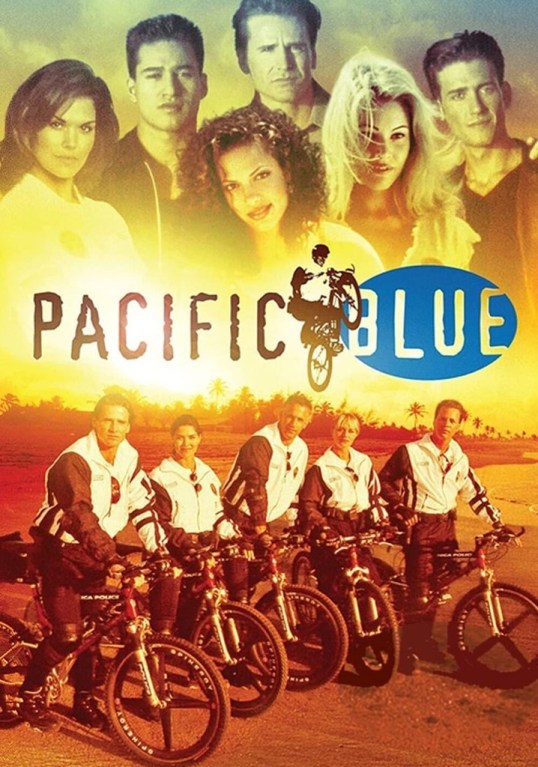
This week, we start the fifth and final season of Pacific Blue.

Episode 5.1 “Reckoning”

(Dir by Terence H. Winkless, originally aired on July 18th, 1999)

The fifth season begins with an episode that, even by the standards of Pacific Blue, is problematic and dumb.  Where to begin?

This episode picks up from where the fourth season ended.  John Patrone is dead.  Bruce Best (Kevin McClatchy), the father of a teenage girl who killed herself after being raped by Patrone, has been arrested for the crime.  Bobby has been arrested for tossing the rifle that Patrone used in the harbor.  Because Bobby discussed his plans with Granger, Jamie, and Monica, they’ve all been suspended from the force pending the results of an Internal Affairs investigation.

When Assistant District Attorney Tucker (Michelle Clunie) meets with Bobby and TC, Bobby does the usual smug act that all of the members of the bike patrol do whenever they’re in trouble.  Bobby starts making demands for a deal that will protect the other three rookies.  Tucker proceeds to charge Bobby with being an accessory to first degree murder.  Ha!  Take that, Bobby.

TC files a formal complaint against Susan Jessop of Internal Affairs, accusing her of sexual harassment and bias.  Jessop is taken off the case but Jessop’s boss, Captain Sharp (Gretchen German), turns out to be just as strange as Jessop.  (If I had to guess, I’d say that Holly Gaginer had some sort of scheduling conflict that kept her from returning as Jessop and the writers just crossed out Jessop’s name in the script and substitued Sharp’s.)  TC is suspended from his command.  Cory is named the new temporary commander of Pacific Blue.  Cory is also the union rep for the three rookies who are being investigated.  How can she both be in management and the union at the same time?

Chris gets mad at TC for getting suspended.  She wants to transfer to Homicide and now, being married to him could be a career liability.  They have a big argument on the pier.  Cory, who really should be too busy running the department to get involved in any of this, sits on her bicycle on watches.

When it’s time for Bruce and Bobby to be taken to the courthouse for their arraignment, a man fires a shot at Bruce.  Bruce falls to the ground.  Oh wait, that’s not Bruce.  That’s TC disguised at Bruce!  And luckily, he was wearing a bulletproof vest!  Patrone’s lawyer, Steve Plana (Eddie Garcia), is arrested for setting up the assassination attempt.

In the courtroom, veteran television producer Steven J. Cannell shows up as the no-nonsense judge.  Tucker starts to call witnesses.  Things aren’t looking good for Bobby and Bruce.  Suddenly, Father Crane (John Kirby) stands up in the back of the court and announces that Bobby and Bruce are innocent.  Father Crane first explains that he was the one who threw the rifle into the harbor.  He says he did it after Bobby came to him for advice.  Father Crane then goes on to say that he was the one who shot Patrone because that was the only way to stop Patrone’s reign of terror.  Bobby and Bruce have been covering for him!

Bobby and Bruce are released and exonerated.  Father Crane is convicted.  TC later visits Crane in jail and says that he knows Crane is lying about both killing Patrone and tossing the rifle in the harbor.  TC mentions that Crane is going to be transferred to a state prison where Patrone “had a lot of friends.”  What TC, who has been reinstated as commander of Pacific Blue, does not do is apparently tell anyone that Crane is obviously not guilty.  For his part, Crane says that it will be a chance for him to minister to those who really need it.  You know, Father Crane, you could have just applied to be a prison chaplain.  You didn’t have to confess to a murder you didn’t commit.

Bobby takes the recovered rifle and gives it back to Bruce.  Bobby admits that Crane lied about tossing the gun.  Bruce admits that he killed Patrone.  Bobby says that he still feels like Bruce did the right thing.  Bruce thanks Bobby for looking out for him.  Hey, guys, there’s an innocent man — A PRIEST! — going to prison for you idiots!  Is that somehow not an issue?

Chris tells TC that she knows Father Crane lied about being the murderer.  She also says that she doesn’t feel like TC deserves his command.  He let Bobby get away with destruction of evidence.  He’s letting Bruce get away with murder.  Finally, someone’s speaking some sense!  Not that it matters.  The episode ends with the conversation.  Knowing Pacific Blue, I doubt any of this will ever be brought up again.

This episode really annoyed me.  Father Crane is going to prison but I guess we’re not supposed to care because at least Bobby is off the hook.  Does anyone on Pacific Blue ever take responsibility for their mistakes?  This is the fourth episode to feature Jamie complaining about Internal Affairs harassing her because she lied on her application to become a police officer.  Gee, Jamie — MAYBE YOU SHOULDN’T HAVE LIED IN THE FIRST PLACE!  And now Bobby has basically decided that some murders are okay.  Where does it end with these people?

At least this is the last season.
SOV Horror Review: Limbo (dir by Tina Krause)


In 1999’s Limbo, Katherine (Jessica Krause) is a young woman who lives in a city, perhaps in an abandoned warehouse. At night, she goes to the bar, where the regulars eye her with a mix of suspicion and lust. Sometimes, she takes someone home with her. Every night, she appears back at the bar and almost the same dialogue is repeated by those who see her. She takes someone home. She kills them… or does she? The waitress (Tina Krause, who also directed) appears at Katherine’s home. Voices are heard. Sped-up images are randomly spliced through the film. The camera tracks down empty hallways and through desolate alleys. Sometimes, the images are so dark that you can’t even make out what’s happening onscreen. Voices are heard, but it’s not always easy to tell who is speaking or why. The imagery becomes increasingly bizarre. Are we seeing the inside of Katherine’s head, or are we seeing something else? The viewer will have to decide that for themselves…

Actually, for all of the bizarre imagery and strange dialogue, it’s not that hard to figure out what’s happening with Katherine. The film itself is called Limbo, and the film’s final twist isn’t really a surprise. But I also think it’s fairly obvious that this is a film that’s more about visuals and style than anything else. The story is less about what happens and more about how it’s all visualized. The film plays out in a frenetic, dream-like fashion, with the dream sometimes crossing the line and becoming a nightmare. The film’s visual style captures the feeling of being overwhelmed by sensation and giving yourself over to the chaos of everyday life. The film doesn’t always make sense because it takes place in a world that doesn’t particularly make sense. I’ve read a few online reviews that have compared this film’s imagery with the work of David Lynch. I wouldn’t go that far. Lynch may have been a surrealist, but regardless of how odd his films got, there was always a feeling that he was in control and that each image reflected something he wanted to say. Limbo, on the other hand, always feels like it’s one scene away from spinning away from both the cast and the director. Occasionally, that’s kind of exciting.

In many ways, Limbo represents everything I like about SOV filmmaking. It’s a passion project, one made free from the constraints of having to please the biggest possible audience. The stark images capture the grunginess of life on the outskirts of society, and the imperfect sound design fits in perfectly with the bizarre visuals. It’s a film that keeps you off-balance. When Jessica walks along city streets, more than a few passersby stop to stare straight at the camera. It gives the entire production a raw authenticity. Director Tina Krause was herself a veteran of many SOV horror films. For her directorial debut, she took the SOV format to its logical, self-indulgent extreme. The resulting film is occasionally compelling, occasionally annoying, sometimes shallow, and sometimes insightful. It’s a chaotic mess, but it’s also the type of statement that could never be made by a mainstream studio. It’s Limbo.


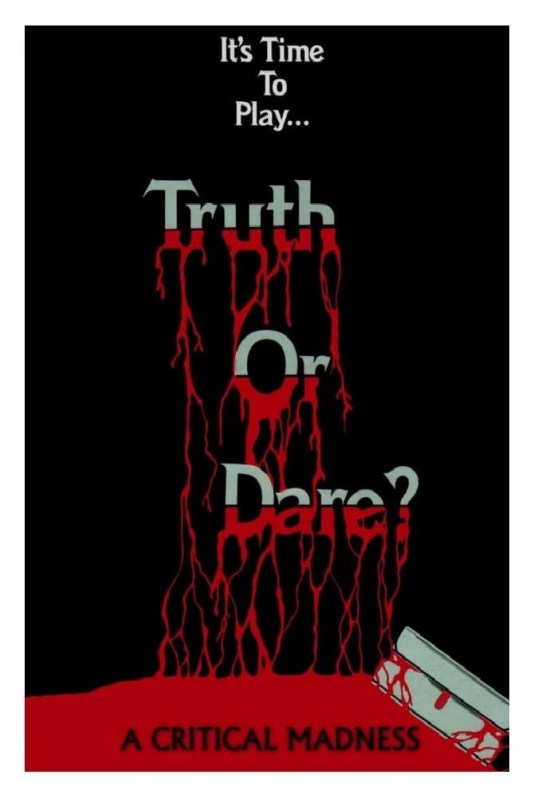
October Hacks: Truth or Dare? — A Critical Madness (dir by Tim Ritter)


The 1986 direct-to-video epic Truth or Dare tells the story of Mike Strauber (John Brace). One day, Mike came home from work and discovered his wife (Mary Fanaro) having sex with his best friend, Jerry (Bruce Gold). Needless to say, Mike is not happy about this development. Mike wanders aimlessly around town, thinking about his past with Sharon and also remembering a childhood game of Truth or Dare. (In the flashbacks, young Mike is played by AJ McLean, who would grow up to be a Backstreet Boy.) Mike considers suicide but, instead, he picks up a hitchhiker and then spends a while mutilating himself at her request.

This pretty much sets up the pattern that dominates the rest of the film. Mike mutilates himself and gets sent to a mental hospital. Mike gets released from the mental hospital and immediately does something that gets him sent back. Mike has hallucinations that lead to him mutilating more and more of himself. He cuts off his face and is soon walking around with a copper mask. Mike gets released due to overcrowding and budget cuts. Mike gets sent back to the asylum. Mike goes on a rampage. Eyes are poked out of their sockets, people are run over by Mike’s car, and—in the film’s most infamous scene—Mike drives around while holding a bloody chainsaw right out the driver’s side window. Surprisingly, people are more than willing to stand still and wait for Mike to reach them. This is definitely a case where maybe they shouldn’t have been so polite.

This is one of those independent horror films that wins points on the basis of pure audacity. One gets the feeling that writer/director Tim Ritter was eager to see just how far he could push things and things do indeed get pushed very far. At the same time, the film is so amateurish in its execution that it’s impossible to really get offended by it. Despite some decent self-mutilation effects, you never get the feeling that the movie is trying to trick you into thinking that you’re watching anything that could be considered realistic. It’s an elaborate and, at times, rather juvenile joke. It’s about as pure a film as you can get, one that was made with absolutely no consideration given to what most would consider to be in good taste. Films like this could never be made by a studio but they could be made by someone who had access to a video camera. That was the whole appeal of indie horror filmmaking.

That said, I should note that Tim Ritter has said that he was actually replaced a day into filming by producer Yale Wilson. So, how much of the film’s vision is due to Ritter and how much of it is due to Wilson is anyone’s guess. Tim Ritter was seventeen when he wrote and sold the script and 18 when the film went into production. He’s still making films to this day. The unique aesthetic of Tim Ritter lives on!

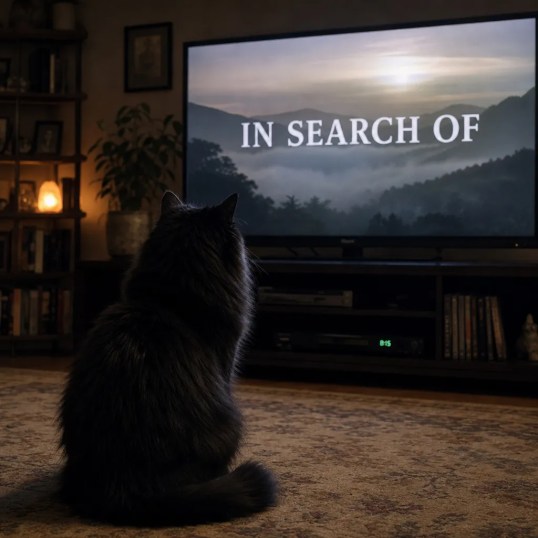
Bonus Horror On TV: In Search Of Bigfoot


Since we started the day with a documentary about Bigfoot, it seems appropriate to toss one in for the end of the day as well!  This television show comes from 1976.  Leonard Nimoy hosts In Search of Bigfoot!

Can you find him?


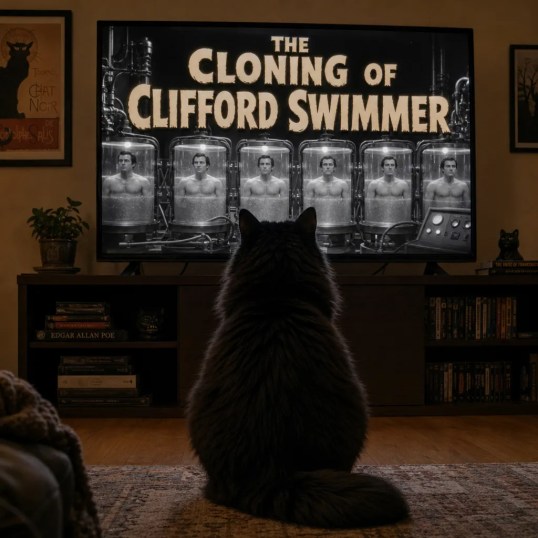
Horror On TV: The Cloning of Clifford Swimmer (dir by Lela Swift)


Tonight’s televised horror is The Cloning of Clifford Swimmer.  Peter Haskell stars as Clifford Swimmer, an angry jerk who is unhappy with his marriage.  He’s come up with a plan, though.  He’s going to have himself cloned and then, after leaving his clone with his family, he’ll be free to live his life.  However, Swimmer discovers that things never work that simply when it comes to creating a clone.  This is a clever story with a great twist at the end.

It originally aired on November 1st, 1974 as a part of ABC’s The Wide World of Mystery. 

The TSL’s Horror Grindhouse: Amityville 3-D (dir by Richard Fleischer)


In 1983’s Amityville 3-D, Tony Roberts plays John Baxter, a journalist who is a professional skeptic. He made his fame by exposing con artists who pretend to have had supernatural experiences. He doesn’t buy that the famous house in Amityville is haunted. In fact, he’s so confident that there are no such things as evil spirits that he buys the house and moves in with his teenage daughter, Susan (Lori Loughlin). Soon, Susan and her best friend Lisa (Meg Ryan)—HEY! THAT’S MY NAME!—are fooling around with a Ouija board and people close to John are dying.

Now, I wish I could tell you that this Amityville film featured either Lori Loughlin or Meg Ryan getting possessed by the Amityville demon, because that probably would have made for a cool movie and it would also give me a chance to make some jokes about why Loughlin was later cursed to appear on Full House. (No, I would not have made any jokes about the college acceptance scandal because, as far as I’m concerned, Loughlin did nothing wrong.) Playing a teenager possessed by a demon would have also been quite a way for Meg Ryan to make her film debut. Unfortunately, neither one of them gets possessed. Instead, the evil in the Amityville house all has to do with a haunted well in the basement. A lot of people do die in this film. The deaths, though, tend to be a bit random. None of them are as disturbing as the deaths from the second film. That’s probably a good thing, as Amityville II is one of the few horror films that I really have a hard time watching.

When Amityville III went into production, Orion Pictures was being sued by George and Kathy Lutz, the two people who lied about the house being possessed in the first place. The Lutzes claimed they owned the term “Amityville.” Eventually, a court ruled that you can’t own the name of a town, especially one that you fled because the Devil was after you. Still, because of the lawsuit, Amityville III was specifically written to avoid mentioning anything specific that happened in the previous films. I guess the studio did this so that the film could be sold as just another haunted house film if the court ruled in favor of the Lutzes. As a result, Amityville III feels rather generic. There’s really only one scene that works, in which the ghost of a character who has just died makes a sudden appearance and smiles sadly before going on their way. Otherwise, things are pretty dull. Not even the presence of Robert Joy can liven things up.

Realizing that they would need a gimmick to get audiences to sit through another Amityville film, Orion decided to shoot this film in 3-D! Just imagine that Amityville Realty sign swinging back and forth and nearly taking off someone’s head in the audience. Scary! This movie came out around the same time as Friday the 13th 3-D and Jaws 3-D. Wow! I hope everyone kept those cardboard glasses that they used back in the day. It’s good to have a souvenir.

The third Amityville film was panned by critics and, while it made money, it didn’t make that much money. Still, the Amityville franchise continued. There are now probably over a hundred Amityville films out there and, God help me, I’m going to watch every one of them.

Previous TSL Amityville Reviews:

  1. The Amityville Horror (1979)
  2. Amityville II: The Possession (1981)
  3. The Amityville Cure (1990)
  4. The Amityville Haunting (2011)
  5. Amityville Death House (2015)
  6. Amityville Toolbox (2016)
  7. Amityville: The Awakening (2017)
  8. The Amityville Murders (2018)
  9. Amityville Cop (2021)
  10. Amityville Emanuelle (2023)
  11. Amityville A.I. (2024)
  12. Amityville La Llorona (2025)

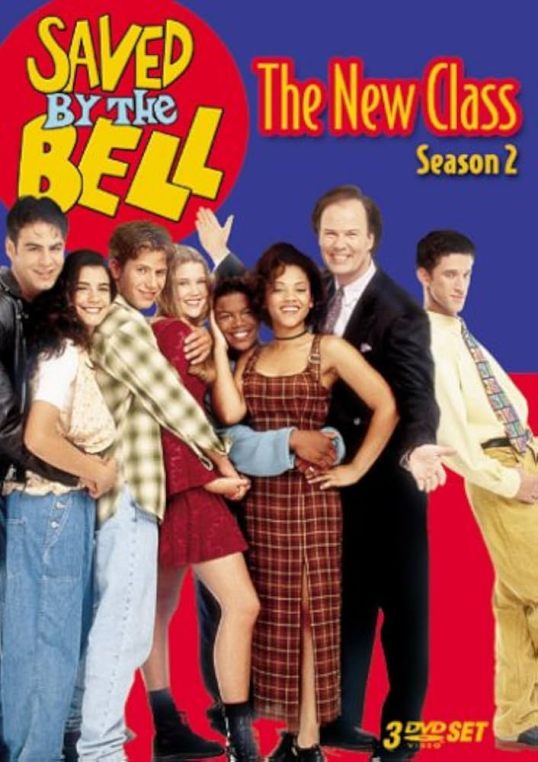
Retro Television Review: Saved By The Bell: The New Class 2.22 “To Cheat Or Not To Cheat”


Welcome to Retro Television Reviews, a feature where we review some of our favorite and least favorite shows of the past!  On Tuesdays, I will be reviewing Saved By The Bell: The New Class, which ran on NBC from 1993 to 2o00.  The show is currently on Prime.

This week, the Gang learns a pointless lesson about cheating.

Episode 2.22  “To Cheat Or Not To Cheat”

(Dir by Don Barnhart, originally aired on December 3rd, 1994)

When I was in high school, my best subjects were always things like History, English, Drama, and Creative Writing.  I excelled at classes that involved creativity, writing, and research.  I absolutely sucked at any class the involved numbers.

In fact, during my senior year, I nearly flunked Algebra II.  It just wasn’t my thing.  I could usually get the right answer.  Indeed, a lot of the time, I would look at a equation and solve it in my head within seconds.  The problem was that I had to “show my work” and my work was always sloppy.  Whenever I had to actually write out the numbers and the steps, I would end up either making a careless mistake or I would double guess myself.

Fortunately, Erin has taken Algebra II the year before me and she had saved all of her tests.  An exam day, I would just wear a short skirt and write all the answers on my inner thigh before going to class.  That was how I passed Algebra II.  If I hadn’t done that, I would have flunked Algebra II and I would have graduated with a normal diploma instead of my neat advanced diploma.

In short, I cheated and I’ve never really regretted or felt bad about it.  I did what I had to do so that I could enjoy the classes that I liked as opposed to spending all year stressing about the one that I struggled with.

This episode of Saved By The Bell: The New Class also deals with cheating though I’m not sure that what happens in the episode actually counts.  A school dance is approaching and Brian wants to take Rachel.  But unless Rachel gets a B on her History midterm, she’s not going to be allowed to go.  When Brian happens to come across a copy of the midterm, he tells Rachel what she should study.  Rachel does so and scores an A.

The show calls this cheating but is it?  Brain doesn’t tell Rachel the answers.  Instead, he simply tells her what to study.  Rachel studies and she passes the exam.  To me, the important thing is that Rachel studied.  To be honest, I don’t see what the big deal is.

The show argues that, since Rachel didn’t know that Brian had seen the exam and didn’t realize that she had “cheated” (instead, she just assumed that Brian had good instincts), Rachel will now think that all she has to do is cram the night before a test and she’ll do well.  But again, so what?  That’s what most people do.  That’s what I did and I had a great time in college.  Seriously, when you’re in school, you shouldn’t be worried about grades.  You should be worried about having the fun that you’re no longer going to be allowed to have after you graduate.

In the end, a guilt-stricken Brian confesses to Mr. Belding and he gets suspended for two days.  As for Rachel, she’s told that she can take a makeup exam.  But why should Rachel be punished when she actually did study the first time and she didn’t know that Brian had seen the test?

This is a dumb episode.  I haven’t even talked about Screech asking Tommy, Bobby, and Lindsay to fake school emergencies so that Screech can “solve” them and hopefully get a good evaluation from Mr. Belding.  (Screech is cheating too!  But the show seems to think it’s only bad when Rachel gets an A.)  If you’re in high school and you’re reading this, go ahead and cheat.  Your teachers are too burned out to care and won’t even remember you were in their class after the school year ends.  Enjoy your life.